Hundreds of Maine Educators Gather in Augusta for 2023 Maine Educator Summit

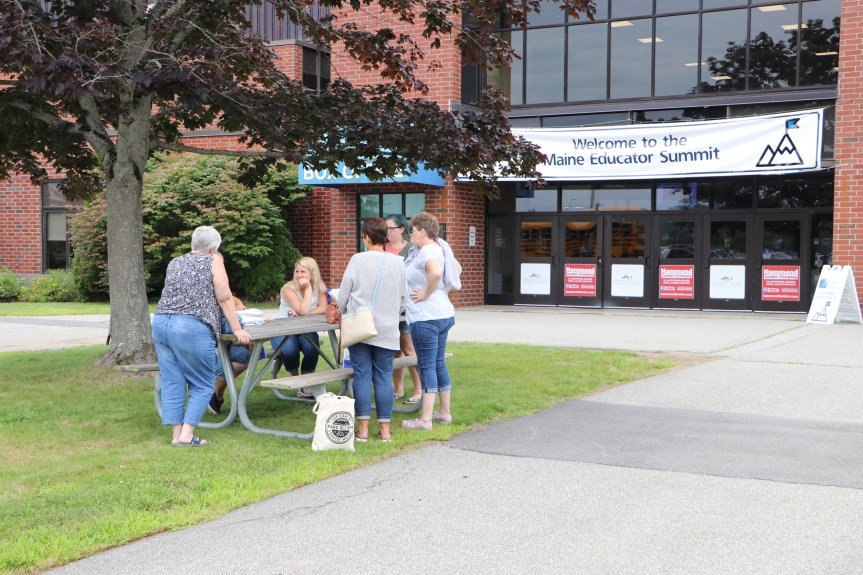
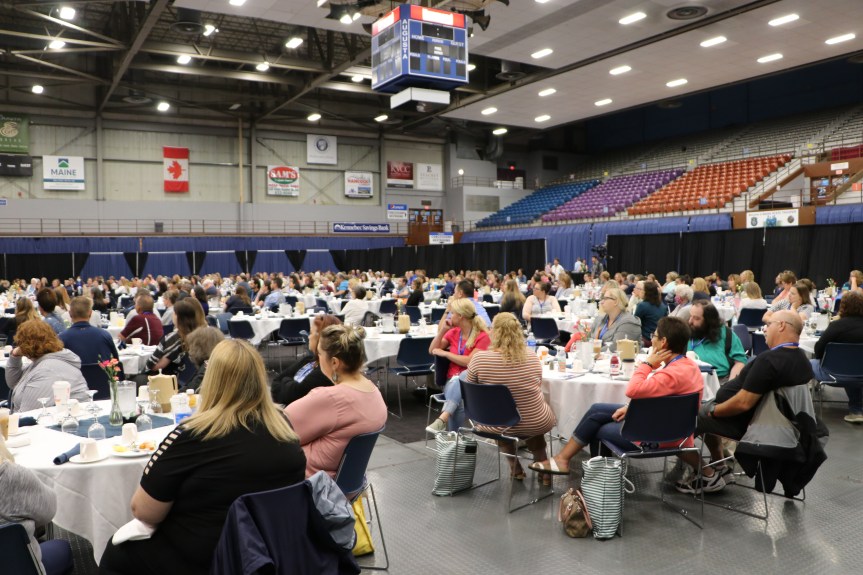
Educators and school/district staff from across Maine gathered at the Augusta Civic Center recently to attend the second annual Maine Educator Summit. Hosted by the Maine Department of Education (DOE), the 2023 Summit offered more than 130 professional learning opportunities and workshops across four days, with topics including school safety, project-based learning, computer science education, student well-being, outdoor education, interdisciplinary instruction, and more. Doubling the previous year’s registration numbers, more than 600 educators attended the Summit which was themed Inspiration, Innovation, and Inclusion.

Beyond professional learning, the Summit also gave educators and school and district staff the opportunity to connect with and learn from each other while building a network and community of Maine’s Education Workforce.

“I feel like this is a place where you would learn a lot of stuff that [may be] different from what you already know,” one social studies teacher told WABI 5. The teacher went on to say that he was able to attend workshops and learn more about topics that were not strictly social studies including social emotional learning and inclusion.

Educators and school/district staff who attended sessions at the summit had the opportunity to fill out a survey to receive contact hours. The survey was completed more than 2,000 times by people attending sessions throughout the event.

Keynote addresses were delivered by Maine Commissioner of Education Pender Makin, 2023 Maine Teacher of the Year Matt Bernstein, and 2015 National Teacher of the Year Dr. Shanna Peeples. An additional lunchtime presentation included recognition of Maine’s 2023 finalists for the Presidential Awards for Excellence in Mathematics and Science Teaching (PAEMST) and the 2023 Maine History Teacher of the Year. Live and Work in Maine, a partner in statewide efforts to recruit and retain Maine’s education workforce, also attended the event providing t-shirt to attendees and to capture interviews for a campaign that aims to recruit people to work in Maine schools and districts.
Check out a video highlight from the four-day event:

Following the second official Summit, the Maine DOE looks forward to continuing to assist educators and school/district staff during the school year including offering a number of professional learning and training opportunities, in addition to refining and planning next year’s annual Maine Educator Summit.

The Maine Department of Education’s 2023 Summit was supported and funded by the American Rescue Plan funds received from the U.S. Department of Education. For more information about the 2023 Educator Summit, visit our website.

Press Release: Mills Administration Announces Maine Jobs & Recovery Plan Initiative to Expand Educator Apprenticeships in Maine Schools

The Mills Administration announced today a new initiative to help Maine schools recruit, train, and retain educators through pre-apprenticeship and apprenticeship programs.

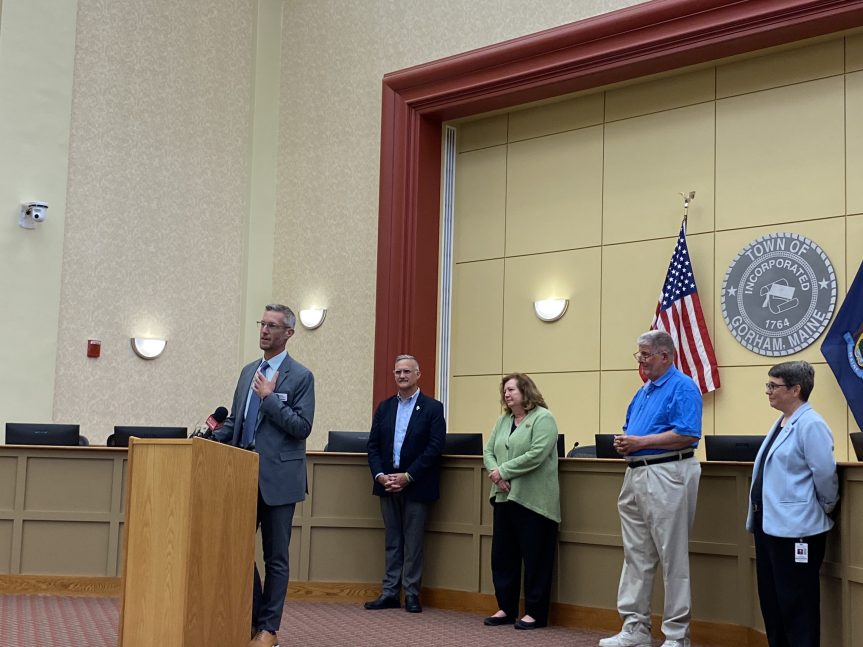
The initiative, funded in part by Governor Mills’ Maine Jobs & Recovery Plan, is part of a larger overall effort by the Mills Administration to connect employers with a skilled workforce and workers with career opportunities. The initiative was unveiled during a visit to the Gorham School District by Commissioner of Labor Laura Fortman and Deputy Commissioner of Education Dan Chuhta.

Under the initiative, schools and other education and community-related organizations can apply for competitive funding, with awards of up to $250,000 to begin local educator pre-apprenticeship and apprenticeship programs to help address Maine’s educator workforce shortage.

“As the daughter of a longtime public school teacher, I deeply and personally understand the lifelong impact that teachers have on their students, schools, and communities,” said Governor Janet Mills. “A teacher can make all the difference in the life of a student, and we should do what we can to ensure that those who want to advance in the teaching profession have the opportunity to do so. These apprenticeship programs are important to help educators take the next step in their careers. Using funding from my Jobs Plan, we will help Maine schools find the teachers they need and support educators on the path to fulfilling careers as they make a difference in the lives of our children.”

The initiative expands a program launched last year at Washington County Community College and the Gorham School District. The Gorham program – supported by the Maine Department of Labor and the Harold Alfond Center for the Advancement of Maine’s Workforce – partners with Southern Maine Community College and the University of Southern Maine to provide classroom training to current education technicians from multiple schools in Cumberland and York counties. These apprentices work in the classrooms during the school day while they advance their career to become certified Education Technicians II, creating a pathway to continue their education and become certified teachers.

The program was created after the Maine Department of Education last year released its Teach Maine plan, in partnership with educators and stakeholders, to bolster the teacher workforce through innovative recruitment and retention strategies, including programs like apprenticeships. With encouragement from the U.S. Departments of Education and Labor, Maine joined several other states in launching apprenticeships in educator occupations with new programs at Washington County Community College and the Gorham School District.

“The Maine Department of Labor works with employers to fulfill their workforce needs and works to connect Maine’s people to high quality jobs. One way that we do this is through mutually beneficial registered apprenticeships,” said Laura Fortman, Commissioner of the Maine Department of Labor.Registered Apprenticeship is an excellent training model for schools to use, as it supports those already working in Maine’s schools to advance down the path of becoming a certified teacher, while continuing to earn an income.”

“The Maine Department of Education is committed to ensuring that everyone who wants to be a teacher in Maine has a pathway into the profession and is supported in the classroom. Teacher apprenticeships and pre-apprenticeships offer a meaningful pathway to recruit, prepare, and support aspiring educators and these programs are aligned to the strategies embedded in our Teach Maine plan to build a robust teacher workforce in our state. We are excited to partner with the Department of Labor to invest in pilot programs that will lead to an effective teacher apprenticeship model for Maine,” said Pender Makin, Commissioner of the Maine Department of Education.

“The Maine Education Association is committed to quality public education for our students and during a time when we have many open positions across the state we need to focus on innovative solutions to attract and retain the best into the profession. While increasing educator pay is crucial, teacher apprenticeship grants can also help show Maine is ready to invest in both the aspirations of our aspiring educators and the growth of our state. Together, we can cultivate a robust teacher workforce and pave the way for generations of students to thrive,” said Grace Leavitt, President of the Maine Education Association.

“As Maine faces a critical shortage of educators, these programs will provide aspiring educators with valuable hands-on experience in real classroom settings. This practical exposure allows aspiring educators to apply theoretical knowledge and develop practical teaching skills under the guidance of experienced mentors.   These programs will play a crucial role in preparing new teachers for the challenges and demands of the classroom, bridge the gap between theory and practice, foster skill development, and contribute to the overall improvement of education systems, said Eileen King, Executive Director of the Maine School Superintendents Association.

“The Educator Apprentice Program has been fundamental in many ways,” said Kathy Dol, a participant in Gorham’s educator apprenticeship program. “The structure of this program, relative to the small class size and expectations, allows for achievable success that has been nothing short of a welcome surprise. You can be sure this program will fit your extended educational goals. Education is a continuous area that allows educators to add to our toolbox that is never filled. That what I gain out of this apprentice program, and I thoroughly enjoy that.”

The expansion of teacher apprenticeship programs is supported by $600,000 in Federal funding, including $100,000 through the Governor’s Jobs Plan and $500,000 through U.S. Department of Labor’s State Apprenticeship Expansion, Equity, and Innovation (SAEEI) Grant. Using these grants, schools can partner with Maine Department of Labor’s Registered Apprenticeship Program to pilot new educator apprenticeship and pre-apprenticeship programs.

The number and size of grant awards will depend on the number of proposals received, anticipated number of apprentices served, and available funds. Interested applicants can find more information here. Proposals are due September 25, 2023.

This grant funding opportunity builds on the investment of $12.3 million awarded to expand apprenticeship through the Governor’s Jobs Plan and other Federal funds. The State’s Registered Apprenticeship Program currently has 1,292 active apprentices and 142 registered sponsors, representing 261 participating businesses in Maine.

Apprentices in Maine who completed their program in the last two years increased their wages, on average, by nearly 40 percent. Nationally, 94 percent of apprentices continue their employment with their apprenticeship sponsoring business once their training is complete.

The Maine Jobs & Recovery Plan is the Governor’s plan, approved by the Legislature, to invest nearly $1 billion in Federal American Rescue Plan funds to improve the lives of Maine people and families, help businesses, create good-paying jobs, and build an economy poised for future prosperity.

Since the Jobs Plan took effect in October 2021, the Mills Administration has delivered direct economic relief to nearly 1,000 Maine small businesses, supported more than 100 infrastructure projects around the state to create jobs and revitalize communities, and invested in workforce programs estimated to offer apprenticeship, career and education advancement, and job training opportunities to 22,000 Maine people.

For more about Maine Jobs & Recovery Plan, visit maine.gov/jobsplan. For more about Maine’s apprenticeship program, please visit here.


Media Release: Maine DOE Announces Inaugural Class of Teacher Leader Fellows

The Maine Department of Education (DOE) launched Maine’s Teacher Leader Fellows today with an inaugural class of five extraordinary educators from across the state. Waterville Senior High School social studies teacher Jessica Graham, Fryeburg Academy national-board certified teacher James St. Pierre, Nokomis Regional Middle School Integrated Technology teacher Keith Kelley, Mattanawcook Academy mathematics teacher Sarah Krause, and national-board certified music teacher Dorie Tripp will work with Maine DOE staff to support Maine’s educators in cross-cutting, interdisciplinary concepts of civics, STEAM, and humanities.

The Teacher Leader Fellows will provide educators across Maine with weekly updates on resources and materials, host monthly professional learning opportunities, and maintain webpages with rich and informative content. To receive weekly communications and monthly professional learning around civics, STEAM, and/or humanities concepts, click here.

“Taking on this new position offers so many opportunities to engage with exactly what I love about teaching—meeting other educators, making connections with community partners, and celebrating community centered student learning. I truly believe that building strong communities and educating engaged citizens is the core mission of schools, and that civic learning happens in every grade and every content area. I am so excited to help connect, celebrate, and create with educators and learners around Maine,” said Waterville Senior High School social studies teacher Jessica Graham.

“Being a teacher leader means connecting and helping others connect. It means gathering the ideas and experiences of the teachers in the state and sharing them in manageable, practical, and efficient ways. We have such a great array of professionals whose knowledge can elevate all students, so to be one of the leaders bringing them together is a privilege,” said Fryeburg Academy national-board certified teacher James St. Pierre.

“To be a teacher you need to know the material and your students. A great teacher never stops learning and the best learning is done by teaching others. I hope, with the other Teacher Leader Fellows, to help educate others and myself until STEAM pours out of all of our classrooms,” said Nokomis Regional Middle School Integrated Technology teacher Keith Kelley.

“As a STEAM Teacher Leader Fellow, I hope to help spread important information and opportunities to the other STEAM educators in Maine. I plan to regularly provide teachers with some meaningful STEAM lessons and activities that can be incorporated into their classrooms. Additionally, as a teacher of mathematics and a fan of the arts, I would like to help others see the beauty in the world of STEAM,” said Mattanawcook Academy mathematics teacher Sarah Krause.

“I’m delighted to be working with the DOE to support Maine teachers! I look forward to working with other educators to learn, collaborate, and to create unique learning opportunities for our students,” said national-board certified music teacher Dorie Tripp.

Meet Maine’s Teacher Leader Fellows

Jessica Graham
Jessica Graham

Jessica Graham is a high school social studies teacher at Waterville Senior High School. She serves as the National Honor Society advisor and Trivia Club advisor and on the district curriculum committee. After working in museum education around the state of Maine for a decade, Jessica transitioned to classroom teaching six years ago and relishes the opportunity to build lasting relationships with students. She is passionate about civics education conceived broadly: helping students practice community in the classroom and in the wider world through conversation, action, and applied knowledge of decision-making processes. Her background in museum work leads her to approach content in an interdisciplinary and experiential way. Her greatest honor as a teacher was receiving Waterville’s annual staff Renaissance Award, a recognition bestowed by the student body.

In her free time Jessica is pursuing a PhD in history from the University of Maine, volunteers as a Girl Scout leader, and enjoys slowly converting her suburban yard into a garden retreat full of native plants and pollinator habitat.

James St. Pierre
James St. Pierre

James St. Pierre is a national board-certified teacher with thirty years of teaching experience at Fryeburg Academy where he has taught courses in English and biology and served as English department chair. In addition to his work at the secondary level, he also holds the position of Lecturer at both Granite State College and White Mountains Community College, where he has taught as an adjunct for two decades. He holds a master’s degree in English Literature from Middlebury College and has presented at state and regional conferences regarding the medium of comics. He is married with two sons and enjoys making comics in his free time.

Keith Kelley
Keith Kelley

A Maine educator for more than 33 years, Keith Kelley is currently teaching Integrated Technology. Having taught Language Arts, Social Studies and serving as the School Librarian, he is now teaching IT at Nokomis Regional Middle School. His students make Robots, Skateboards, 3D print, and build Guitars. He earned his bachelor’s and master’s degrees in Education at UMaine. He has coached soccer, track, and various tech camps. In his free time, he enjoys riding around in his classic mustang with his wife and dogs.

Sarah Krause
Sarah Krause

Sarah Krause is a graduate from the University of Maine with a B.S. in Secondary Education, a B.A. in Mathematics & Statistics, and a Minor in Zoology.

Currently, she is in her twelfth year of classroom experience with AP Calculus, Precalculus, and AP Computer Science Principles as the bulk of her teaching schedule over the years. Other teaching experiences include: Algebra 1 & 2, Geometry, Math Problem Solving, Linear Algebra, Advanced Topics in Mathematics (and elective that explored advanced precalculus topics). Next year she will be adding Intro to Digital Art & Design into her course load.

Sarah is currently teaching at Mattanawcook Academy in Lincoln, Maine, where she also juggles a handful of other roles in the building. Some of those other positions include Math Team Coach, National Honor Society Advisor, Senior Class Advisor, Mentor Teacher, Mathematics Department Head, Technology Team Member, and Cohort/PLC Leader.

Sarah, is in the beginning stages of being part of the #MaineTeachesCS program as a Computer Science Integration (CSI) Educator, and back in 2019, she was a member of the Maine DOE: Mathematics Standards Writing Team.

Moving forward, Sarah is excited to be part of the Maine DOE in this new role as a Teacher Leadership STEAM Fellow with her other teammates in the Office of Innovation.

Dorie Tripp
Dorie Tripp

Dorie Tripp is a national board-certified music teacher with 14 years’ experience teaching elementary music in Maine public schools. Over the years, it has been her mission to promote music instruction that is developmentally appropriate, inclusive, diverse, and engaging. In her quest to do this, she has taken on many roles as a learner and leader. Dorie spent two terms as Vice President of the Maine Music Educators Association, contributed to the Maine Arts Leadership Initiative as a Design Team member, was an active member of the Maine Learning Results writing team for the Visual and Performing Arts, and co-hosted a series of PD sessions for educators during the Covid 19 pandemic. In 2021, she was awarded the MMEA Music Educator of the Year Award. In this next step of her journey, Dorie is looking forward to working with the Maine DOE. She’s excited to practice, share, and support unique learning opportunities for Maine students and educators!

To receive weekly communications and monthly professional learning around civics, STEAM, and/or humanities concepts, click here.

For more information about this or other innovative programs at the Maine Department of Education, contact, Beth Lambert, Acting Chief Innovation Officer and Director of Innovative Teaching and Learning, at beth.lambert@maine.gov.

Maine Department of Education Defines Students with Limited or Interrupted Formal Education (SLIFE)

The Office of English Speakers of Other Languages (ESOL) Programs and Bilingual Programs has released a state definition of a Student with Limited or Interrupted Formal Education (SLIFE). This is a student who meets the following criteria:

  1. Is a multilingual learner;
  2. Has an English language proficiency level (as measured by WIDA assessments) of level 2.0 or below for students in grades 2-3 or level 2.5 or below for students in grades 4-12;
  3. Is at least eight years old; and
  4. Has experienced at least one of the following:
    1. No formal schooling
    2. Interruptions in formal schooling (defined as two or more re-enrollments or two years or more less schooling than typical peers)
    3. Consistent but limited formal schooling outside the United States; and/or
    4. Functions at two or more years below expected grade level in native language literacy and/or math skills relative to typical peers

For the past two and a half years, members of the Maine Department of Education (DOE), the Multilingual Learner Advisory Committee (MLAC), Support Ed, and Agora Learning, have been developing this definition to be specific and easily applied and understood.

Support Ed provided four webinars on SLIFE characteristics and general needs, resources and strategies for serving SLIFE, graduation and post-secondary education guidance and opportunities, and a wealth of resources for educators to refer to. Recordings of webinars are archived here: https://www.maine.gov/doe/learning/multilinguallearner/p

A padlet of SLIFE resources can be found here: https://padlet.com/diane30/maine-department-of-education-supporting-students-with-limit-a2eouyixynryahtm?utm_source=Padlet.

Agora Learning and Support Ed are continuing their work to develop a SLIFE screener to be used by our Maine school districts. Maine DOE will be developing a SLIFE guidance manual and additional professional learning opportunities that will support districts to identify SLIFE and develop SLIFE programming.

If you have questions regarding the Maine DOE SLIFE definition, please contact:

Rebecca Carey: rebecca.carey@maine.gov

Robin Fleck: robin.fleck@maine.gov

Computer Science Mobile Lab – Training Webinars and Support Resources

Join us during Computer Science Education (CS Ed) Week for FREE virtual training for the mobile computer science labs! We’re excited to announce that we’ll be hosting webinars throughout next week to help folks get started with their lab equipment. These will be vendor-provided trainings and will cover the basics of unboxing, configuring, and getting started. Webinars will be live and recorded. Recordings will be posted to the website once they become available.

Additionally, we’ve put together a webpage to provide immediate resources and support for each mobile lab option. These resources offer some quick access information to help get going with the equipment

To check out these resources, learn more about the webinars, and to register, click here. You’ll see the mobile lab options and can find quick start resources as well as the registration links for the webinars.

If you have questions or would like additional information, please reach out to Maine DOE’s Computer Science Specialist, Emma-Marie Banks at emma-marie.banks@maine.gov

WORKSHOP: Creating a Restorative Code of Conduct

As schools continue to adjust to a post-pandemic educational reality, teachers, administrators and students struggle to rebuild a sense of community and safety while undesirable behavior continues to escalate. The Maine School Safety Center, a division of the Maine DOE, believes that the development of an intentional community based on Restorative Practices is the best way to build a sense of safety, equity and belonging, while also responding to behavior in a victim centered, nonpunitive manner that encourages accountability, and restoration to individuals and community.

Restorative Practices in schools work best when initiated using a top-down approach, starting with consensus from all stake holders, followed by a review of district or school-based codes of conduct to ensure that both restorative language and restorative response to undesirable behavior is the standard. Analysis of current policies also allows for modifications that ensure equity for all students, regardless of race, ethnicity, academic ability or socio-economic status.

With this in mind, the Maine School Safety Center will begin our Restorative Practices training with a free of charge workshop, led by Stacey Barlow, Restorative Practices Coordinator of the MSSC and John Hudson, nationally recognized Restorative Code of Conduct expert, designed to help schools evaluate their current code of conduct through an equity lens and then integrate restorative policy and language, the foundation of building a restorative school culture. A Restorative Code of Conduct will put your school or district in alignment with Maine law, as described below:

15-A. School disciplinary policies. When revising the prescribed consequences for violation of the student code of conduct pursuant to subsection 15, paragraph C, a school board shall consider districtwide disciplinary policies that:

B. Focus on positive and restorative interventions that are consistent with evidence-based practices rather than set punishments for specific behavior and avoid so-called zero-tolerance practices unless specifically required by federal or state laws, rules or regulations. For the purpose of this paragraph, “restorative interventions” means school practices that are designed to strengthen relationships, improve the connection to school and promote a strong sense of accountability and that help students learn from their mistakes, understand the impact of their actions on others and find opportunities to repair the harm they have caused through their misbehavior; [PL 2011, c. 614, §7 (NEW).]

Workshop dates/times (same workshop offered in three locations):

  • Monday, November 7, 2022 – USM Portland 9AM – 4PM
  • Wednesday, November 9, 2022 – Augusta Civic Center 9AM – 4PM
  • Thursday, November 10, 2022 – University of Maine, Bangor 9AM – 4 PM

All workshops are free for Maine Educators – Register for Workshops Here

For questions, please contact Stacey Barlow at Stacey.Barlow@Maine.gov (207)446-8313

Media Release: Governor Mills Announces New Initiative to Bring Mobile Computer Science Labs to All Maine Schools

Governor Janet Mills today announced the launch of a new Maine Department of Education (DOE) initiative that will provide every Maine public school with a free mobile computer science lab. The effort, funded through the Governor’s Emergency Education Relief Fund, will enable all Maine students to access high-quality learning experiences that provide real-word training in robotics, programming, augmented and virtual reality, coding, and hardware.

In July, Governor Mills joined governors from across the country in signing a bipartisan national compact on computer science education. As part of the agreement unveiled at the National Governors Association’s Summer Meeting in Portland, all 50 governors pledged to work to expand K-12 computer science education options in their states. The DOE has a comprehensive computer science education plan guided by seven key principles.

“Our economy increasingly depends on workers with training in computer science. This initiative will ensure that students across our state are prepared to succeed in the jobs of the future,” said Governor Janet Mills. “My administration will continue to make sure that all Maine students have a chance to acquire digital literacy skills.”

“Maine is leading the nation by providing equipment to our schools statewide to ensure that every student has a meaningful computer science education with real-world applications,” said Pender Makin, Commissioner of the Maine Department of Education. “These mobile computer science labs will provide every student in Maine, across all grade levels and subject areas, with learning experiences that prepare them for future success.”

“This opportunity from the Mills administration and the Maine Department of Education is a game-changer for the students of Maine. For the first time, all Maine kids will have equal access to a high-quality computer science curriculum and tools in their schools. I am incredibly happy to see that equity is the centerpiece of this new initiative and cannot wait to see what happens next,” said Computer Science Teachers Association (CSTA) Maine Chapter President and 8th Grade Computer Science Teacher Sean Wasson.

Schools will be able to order one of three mobile lab options: Robotics and Programming, Augmented and Virtual Reality, and Coding and Hardware. Each lab contains computer science equipment valued at $5,000 and is designed to be integrated into any content area and skill level. Additionally, the initiative will make available professional learning opportunities for educators tailored to each computer science topic area.

The Maine Department of Education is reaching out to Maine superintendents with detailed information about how to secure mobile labs for schools in their district. More information about each program area can be found on the Maine Department of Education website.

Students with Limited or Interrupted Formal Education (SLIFE) Virtual Professional Development Sessions

The Maine Department of Education and SupportEd are partnering up to provide K-12 Maine educators with four free virtual professional development sessions focusing on Students with Limited or Interrupted Formal Education (SLIFE).

  • Zoom – Conveniently join all virtual PD sessions online via Zoom.
  • Maine Educators – Virtual PD sessions are intended for all Maine teachers grades K-12.
  • 2-hour Sessions – Sessions will last two hours with time to apply strategies included.

SupportEd’s vision is to reimagine the landscape of education for Multilingual Learners (MLs). Specializing in Multilingual Learners (MLs), SupportEd meticulously crafts personalized solutions to fit every partners’ strengths and goals. SupportEd provides educators and administrators with the expertise and resources to help champion the success of MLs within and beyond the classroom. The SupportEd team is comprised of nationally recognized Multilingual Learner experts, best-selling authors, and accomplished researchers — all with extensive experience working in the classroom and/or district.

Download a flyer

Culturally Responsive Teaching and Social Emotional Learning for SLIFE


Thursday, September 22 | 3:00 pm

During this two-hour session, participants will develop an understanding of culturally responsive teaching and social emotional learning for SLIFE. SupportEd will lead participants in defining SLIFE and their characteristics and exploring strategies and tools for creating a culturally responsive school climate that includes social emotional learning practices for SLIFE. Time will also be provided to apply the tools and strategies to their class and school communities.

Effective Instruction of SLIFE  


Thursday, October 20 | 3:00 pm

During this two-hour session, participants will develop an understanding of effective instruction for SLIFE. SupportEd will lead participants in exploring a framework for effective instruction of SLIFE and discussing strategies for supporting SLIFE engagement with and understanding of content learning. Time will also be provided to set goals for supporting the academic needs of SLIFE in all classrooms and schools.

Supporting SLIFE Family and Community Engagement 


Thursday, November 17 | 3:00 pm

During this two-hour session, participants will develop an understanding of how to support SLIFE family and community engagement. SupportEd will lead participants in defining the importance of engaging SLIFE families and community in learning and exploring strategies for partnering with SLIFE families and expanding community collaboration in support of students. Time will also be provided to plan for partnering with SLIFE families and expanding community collaboration.

Supporting Graduation and Post-Secondary Success of SLIFE  


Thursday, December 15 | 3:00 pm

During this two-hour session, participants will develop an understanding of how to support the graduation and post-secondary success of SLIFE. SupportEd will lead participants in discussing barriers and solutions related to graduation and post-secondary success for SLIFE and explore strategies for supporting graduation and post-secondary success of SLIFE. Time will also be provided to apply strategies to plan for implementing strategies for supporting graduation and post-secondary success of SLIFE.

2022 Maine Educator Summit Draws 400 Educators to Augusta

More than 400 educators from across Maine gathered at the Augusta Civic Center for the first annual Maine Educator Summit. The theme for the Summit was Supporting Resilience, Responsiveness, and a Renewed Approach to Education with more than 58 professional learning presentations on a range of topics including interdisciplinary instruction, student wellbeing, school safety, engaging with community, “grow your own” solutions to build the educator workforce, extended learning opportunities, and more.

The Summit also provided an opportunity for educators to connect, build community, and learn from and with one another.

Maine Education Commissioner Pender Makin and inspirational speaker Randy Judkins delivered keynote addresses to the educators.

“It’s extremely important for educators and school leaders to be able to have a space to come together, to network and share ideas, to learn new strategies, and to strengthen their professionalism and resilience as they are about to enter a new school year,” said Makin on the importance of the Summit.

One educator shared that they left feeling as though their enthusiasm for teaching was renewed and they held a greater sense of community and comradery while another shared that they were grateful to have connected with people who can help them implement the practices they learned about at the summit in their classrooms, schools, and districts.

Check out some of the media coverage from the event featuring teaching interviews:

While this is the first official Educator Summit, the Maine DOE looks forward to planning and hosting a summit each year moving forward.