No Cost Mandated Reporter Training Available to School Personnel

In 2015, Maine revised its mandated reporting law, requiring state-approved training for certain professions every four years. Specifically, it includes school personnel described as the following: teachers, guidance counselors, school officials, school bus drivers and school bus attendants.

Maine’s Network of Child Abuse and Neglect Prevention Councils is working to ensure that local school districts are aware of the changes and have the necessary resources to maintain compliance with Maine Statute. The local councils are able to provide in-person training at no-cost to the school districts.

As schools know, child abuse and neglect are serious issues, and school personnel often witness the challenges faced by Maine’s children.  In fact, according to the Office of Child and Family Services’ recent child welfare data, school personnel were responsible for over 20% of the total reported cases of suspected child abuse and neglect.  This demonstrates the importance of providing school personnel the most current, state-approved information for recognizing and reporting child abuse and neglect.  It is important that school personnel feel comfortable, confident, and fully understand their role as a mandated reporter. For information on how to access this free training, contact your local Child Abuse and Neglect Prevention Council or visit the Maine Children’s Trust website. Click here to read the full law. If you have any additional questions please email Denise Trafton at the Maine Children’s Trust, deniset@mechildrenstrust.org.

School Civil Rights Teams Across Maine Help Launch First Annual Day of Welcome

On Friday, October 25, civil rights teams from across Maine participated in a Day of Welcome to celebrate and promote the idea that school communities are for everyone and all the parts of their identities protected under the Maine Civil Rights Act: race and skin color, national origin and ancestry, religion, disabilities, gender (including gender identity and expression), and sexual orientation. The event is sponsored by the Maine Office of the Attorney General through the Civil Rights Team Project (CRTP).

“The Day of Welcome is an important opportunity for us to ensure that all Maine students are included and welcomed in Maine schools,” said Attorney General Aaron M. Frey. “Civil Rights Teams play an important role in engaging our school communities in thinking and talking about issues which relate to the Maine Civil Rights Act. The work of these teams is premised on the belief that our communities and our state are stronger when all are welcome. I encourage all Maine students, families, and all members of our school communities to participate in this Day of Welcome and to work with Civil Rights Teams in their schools. I also encourage members of school communities without a Civil Rights Team to reach out to my office to learn how they can help grow this important program.”

The CRTP is a school-based program that supports student civil rights teams, who engage their school communities in thinking and talking about the six protected categories under the Maine Civil Rights Act. Now in its 24th year, it is available to all Maine schools, grades 3 and up, at no cost. There are currently more than 175 schools participating.

As part of the Day of Welcome, all participating teams created an inclusive welcoming message in their schools.

Schools in the news:


October is National Bullying Prevention Month

We know that Maine schools are actively working to ensure they are providing a safe and inclusive community in which all educators and students feel supported and can thrive.  Bullying prevention takes a team effort, adult modeling and a commitment from the whole community. Educators, families, students and community members can work together to build safe, supportive learning environments for all Maine students.

National Bullying Prevention Month is the perfect time to talk about kindness, encourage and model inclusiveness, and review bullying prevention strategies. It is also a great time to ensure that any student experiencing bullying has a safe, effective way to access support from peers and trusted adults.

Here are some resources that may be of help in understanding, preventing, and addressing bullying in your community.

The U.S. Centers for Disease Control’s comprehensive technical package on the prevention of violence and associated risk behaviors outlines effective prevention practices in 5 strategic areas:

  • Promoting family environments that support healthy development
  • Quality early childhood learning experiences with family engagement
  • Universal school based social emotional learning programs that strengthen youths’ skills
  • Programs and activities that connect youth to caring adults
  • Creating protective community environments

This resource also includes a section on interventions to lessen harm and prevent future risk.

The Collaborative for Academic, Social, and Emotional Learning (CASEL)’s publication on social emotional learning and bullying prevention provides a detailed framework for addressing bullying as part of a school’s social emotional learning program.

Stomp Out Bullying is a comprehensive kid, teacher, and parent-friendly web resource offering:

  • A live Help Chat Line for youth seeking help with bullying situations
  • Resource pages for parents and educators
  • An upcoming resource section devoted to dealing with online cyberbullying.

Looking for homegrown Maine resources?

Crossroads Youth Center’s United Against Bullying Maine offers a bullying prevention school visitor program.

Visit the Creating Safe Maine Schools Coalition for an online guide to bullying prevention and safe schools programs and resources across the state.

For free, online professional development and model policy resources on preventing and responding to bullying, visit the DOE’s bullying prevention page.

PRIORITY NOTICE: Proposed Revisions for Rule Chapter 40; Hearing on October 28, 2019

The Department is proposing revisions to Rule Chapter 40: Medication Administration in Schools to reflect recent statutory changes.

This rule provides directions to public and private schools approved pursuant to 20-A MRSA §2902 in the administration of medication within schools. It is to assist school administrative units in implementing the provision of the medication statute [20-MRSA §254(5)(A-D)] that provides direction for training of unlicensed school personnel in the administration of medication, requires that students be allowed to carry and self-administer prescribed emergency medications; specifically, asthma inhalers or epinephrine auto-injectors with health care provider approval and school nurse assessment demonstrating competency and authorizes any student who attends public school to possess and use topical sunscreen product while on school property or at a school-sponsored event without a note or prescription from a health care provider if the product is regulated by the federal Food and Drug Administration for over-the-counter use for the purpose of limiting skin damage from ultraviolet radiation. In addition, refinements have been made to the proposed rule related to medications related to the care of students with insulin dependent diabetes.

Find the details for proposed changes for Rule Chapter 40 on the Maine DOE Proposed Rule & Rule Changes webpage (proposed rules are listed in order by rule number).

Public Hearing Information for Rule Chapter 40:
October 28, 2019 from 1:00pm- 2:30pm
Room 500 in the Cross State Office Building, 111 Sewall Street, Augusta, Maine
All are welcome to attend and no RSVP is required.  Anyone unable to attend the public hearing may send written comments.

Comment Period Deadline: November 22, 2019

Comments can be submitted to Jaci Holmes at jaci.holmes@maine.gov

Maine Schools Join Others Around The Nation to Recognize National School Bus Safety Week October 21-25

National School Bus Safety Week, scheduled October 21-25 this year, is a public education program that promotes school bus safety. 

Nationally, each day about 480,000 school buses travel the nation’s roads transporting about 25,000,000 students to and from schools and school-related activities. This makes school buses the largest mass transportation program in the nation. 

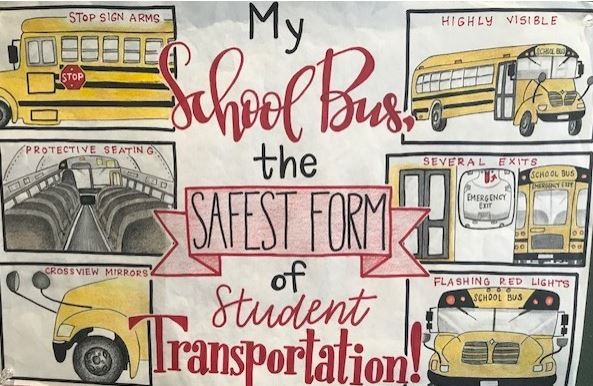
2019 National School Bus Safety Week theme: My School Bus, The Safest Form of Student Transportation!  The theme is derived from the Poster contest the year before.  The 2018 winning poster, depicted above, was drawn by Shivangi Ojha, an 8th Grader at Belton ISD in Temple, Texas. 

In Maine, there are about 3,000 school buses traveling about 30,000,000 miles per year and delivering about 140,000 students. While national ridership of school buses is about fifty percent, about eighty percent of Maine students ride the school bus. Local school transportation teams throughout Maine will educate the public about school bus safety and local transportation safety training during National School Bus Safety Week. 

Transportation is a great equalizer in education, providing students from all economic backgrounds with the opportunity to learn and succeed. Additionally, as pointed out by the National Highway Traffic Safety Administration U.S. Department of Transportation, “School buses are by far the safest way for children to get to and from school.” 

School buses are specifically designed and engineered for safety in order to protect occupants against crashes and incidents on the road. Nearly every part of a school bus has higher standards of safety when compared to ordinary cars. The following school bus safety features are not found on any other passenger vehicle: 

  • School bus seats are above the crash line so that the impact of a vehicle colliding with a school bus hits beneath the seated passengers
  • Passenger seating and crash protection are required for school bus seating systems 
  • A steel cage around the fuel tank that provides bus fuel system integrity 
  • Emergency exits are provided by way of doors, windows and roof hatches 
  • Bus body joint strength that specifies the minimum strength of the joints between panels of the bus body and the body structure 
  • Rollover protection that specifies the minimum structural strength of buses in rollover-type crashes 

More information about National School Bus Safety Week can be found here: https://www.napt.org/nsbsw 

For information about school transportation policy, contact Transportation and Facilities Administrator Pat Hinckley at pat.hinckley@maine.gov 

The National School Bus Safety Week public education program is sponsored by the National Association of State Directors of Pupil Transportation Services (NASDPTS), National School Transportation Association (NSTA), National Association for Pupil Transportation (NAPT), Pupil Transportation Safety Institute (PTSI) and school bus manufacturers and suppliers. 

Cultivating Positivity at Noble Middle School

Submitted by Melinda Luders, Assistant Principal at Noble Middle School. 

If you need a dose of positivity and lots of smiles to start your day, just join the parent morning drop off line at Noble Middle School in Berwick, Maine! It doesn’t matter what day of the week you choose or the weather outside, the morning crew will be there to greet you with a smile. The crew consists of principal Mike Roberts, SRO Fogg and PE teacher Becky Good. We asked Becky to share her story.

It all began a year ago when I volunteered to trade in my lunch and recess duties for everyday morning duty. As the first couple weeks went by I noticed that not everyone was as happy as I, so I got to thinking … How could I start their morning off on more of a positive note? What could I do to make them smile? After all, good energy and positive vibes are contagious; I wanted to build the momentum in our community.

I decided to print and laminate different smile emojis and mount them on paint stirrers. I found that by putting the smiley face in front of my face it would almost always elicit a smile from my passers by. As the weeks and months went by, more and more parents and children arrived with smiles on their faces wondering what crazy thing Ms. Good would be doing next. The response I love the most is when a parent rolls the window down and says, ‘Thanks for making me smile!’

One morning a parent and her four passengers arrived holding emojis up in front of their faces giving back smiles. Our greetings then evolved from smiles to other funny emojis, big head cut outs, Wednesday’s hump day hat, rollerblading in Bruins attire, serving up hot chocolate and sometimes even having a real fire pit where we roast marshmallows for some of the lucky students being dropped off.

The smiles and the kindness kept spreading throughout the school year. One parent even nicknamed Friday as ‘Kind Friday’. He gives each of us a Kind bar as he passes through the line. Another dad would bring coffee and tea on Thursdays. It’s not uncommon that the three of us often get handed an occasional whoopie pie as well.

Another school year has begun and the smiles and waves are still going strong. Even the new 6th grade parents have jumped on board with the positive start to the day. “I couldn’t think of a better way to begin my day.”

BackPack Team at Gorham School District Receives $25,000 Neighborhood Assist Grant

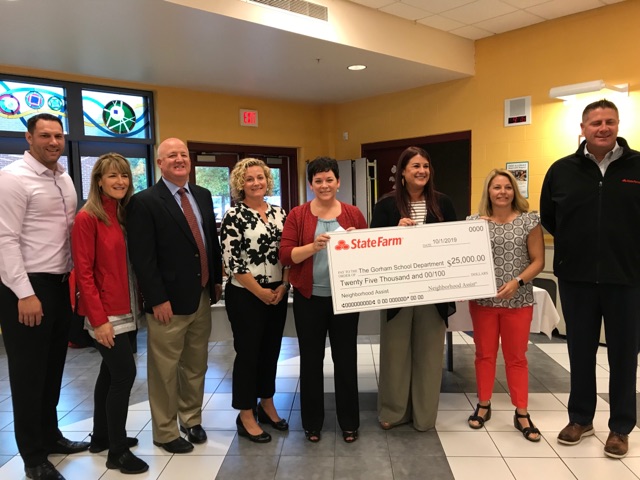
Gorham School District was one of 40 recipients nationwide to receive a $25,000 Neighborhood Assist Grant. They received the award for the efforts with their BackPack Program and School Garden, an initiative that provides food for students and families experiencing food insecurity in the community.

This past June, State Farm accepted 2,000 applications for their Neighborhood Assist grant program.  Submissions represented causes from throughout the country which focused on education, safety, and community development initiatives.  A review committee narrowed down the submissions to the top 200 finalists which were posted online and voted on by the public.  The 40 causes with the most votes each won a $25,000 grant.

Gorham’s BackPack Team Administers weekend food and snack bags to students, offering a school food pantry at the high school, and by growing a school garden which provides fresh produce to the local food pantry during the growing season. The BackPack Program sends food home every weekend with students who would otherwise not have enough food to last through the weekend. Learn more here.

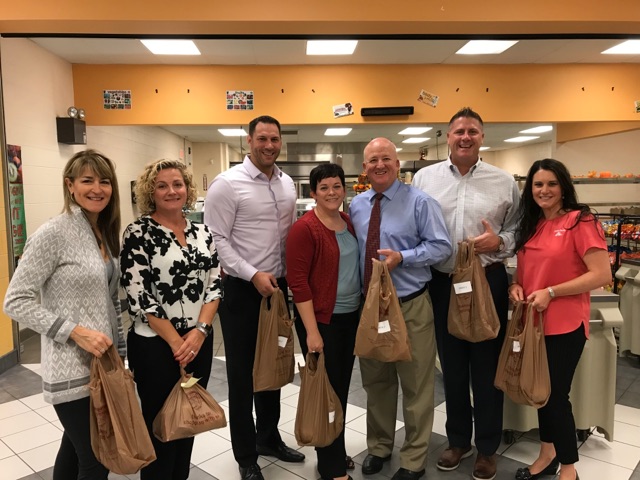
School Administrators holding shopping bags of food.

Priority Notice: Two Free Emergency Management Training Sessions Available This Week Only

The Readiness and Emergency Management for Schools (REMS) Technical Assistance (TA) Center, on behalf of the U.S. Department of Education’s Office of Safe and Healthy Students, is pleased to offer:

Developing Emergency Operations Plans (EOPs) K-12 101 Train-the-Trainer (TtT) Training

When: Thursday, September 26, 2019
Time: 8:00 am – 4:00 pm (Registration begins at 7:30 am)
Where: Senator Inn, 284 Western Ave, Augusta, ME 04330
Cost: NO CHARGE

With this K-12 101 TtT TBR, an expert team will train potential master trainers on the recommended six-step planning process to create a high-quality school EOP, which includes the following:

Step 1: Forming a Collaborative Planning Team
Step 2: Understanding the Situation
Step 3: Determining Goals and Objectives
Step 4: Plan Development
Step 5: Plan Preparation, Review, and Approval
Step 6: Plan Implementation and Maintenance

Read the full description and register here »

K-12 101 Train-the-Educator & SITE ASSESS Trainings

When: Friday, September 27, 2019
Time: 8:00 am – 3:00 pm (Registration begins at 7:30 am)
Where: Senator Inn, 284 Western Ave, Augusta, ME 04330
Cost: NO CHARGE

With this K-12 101 training, an expert team will provide an overview of a recommended six-step planning process to create a high-quality school EOP, which includes:

Step 1: Forming a Collaborative Planning Team
Step 2: Understanding the Situation
Step 3: Determining Goals and Objectives
Step 4: Plan Development
Step 5: Plan Preparation, Review, and Approval
Step 6: Plan Implementation and Maintenance

Read the full description and register here »

Dedham School Receives Riding for Focus Mountain Biking Grant

Submitted by Tim Pearson, Physical Education/Health Teacher at Dedham School, part of AOS #47.

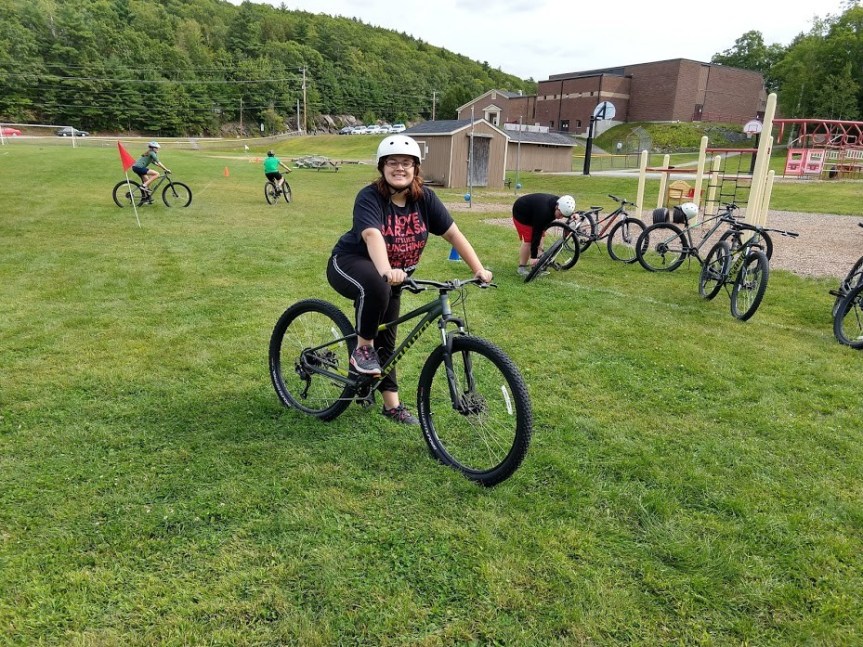
Dedham School is excited to announce it is a grant recipient for the 2019-2020 Specialized Foundation Riding for Focus school program.

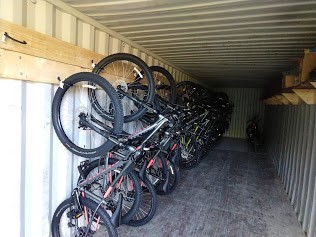
Riding for Focus is a school-based program designed to provide schools with everything they need to get middle school students riding bikes, including a turnkey physical education curriculum, comprehensive teacher training, and a fleet of bike and safety equipment.

Bikes lined up on rack

Riding for Focus provides a combination of cycling, fitness, and academic performance, all while instilling a lifelong passion for cycling for students who participate in the program.

Additionally, the program explores and tracks how cycling can positively affect student learning, health, and wellbeing with a focus for those with learning differences such as ADHD.  Starting this fall, mountain biking will be a regular part of all middle school students curriculum.

For more information contact Tim Pearson at tpearson@dedhamschool.net or 207-843-6498 or check out this YouTube Video about Riding for Focus School Cycling Program.

Seeking Additional Maine Schools for Social Emotional Learning Pilot Program

The Tobacco and Substance Use Prevention and Control Program with the Maine Center for Disease Control and Prevention (MECDC), in partnership with the Maine Department of Education (Maine DOE), is seeking additional schools that would like to implement the social emotional learning (SEL) program, Second Step, funded by a grant through MECDC.

The MECDC received a portion of the State Opioid Response grant to provide community-based substance use prevention as part of the grant’s larger goal to reduce the prevalence of non-medical use of opioids. The Second Step Curriculum is research-based and available for PreK through 8th grades. Many of the skills within the Maine Learning Results for health education in elementary school align with goals of Second Step, such as nurturing skill building and preventing problematic developmental behaviors that are part of the trajectory towards substance use.

If you are interested in adding Second Step to your school’s curriculum and you are not already part of the MECDC pilot or have not already been contacted by the Maine CDC regarding your application from the last round, please complete this brief 5 minute application survey which will be open for submissions until Friday, October 11, 2019.

Please note: If you applied in the last round and have not heard from the Maine DOE or CDC, please feel free to apply again. We may not have had enough information from you in the last application to proceed.

For more information, contact Megan.Scott@maine.gov at Maine CDC or Emily.Poland@maine.gov at the Department of Education.