Get Ready for the 11th Annual Read to ME Challenge in February!

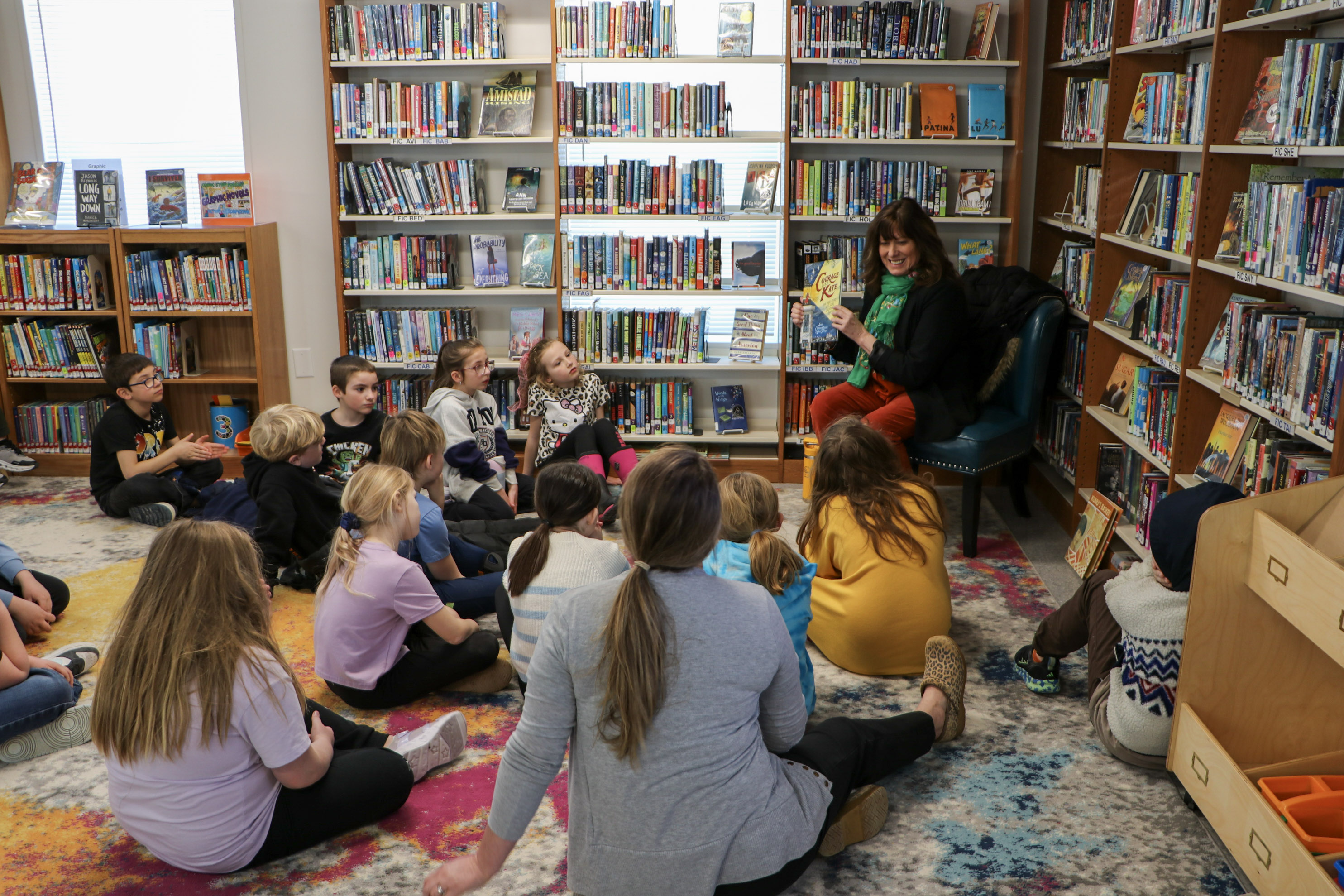
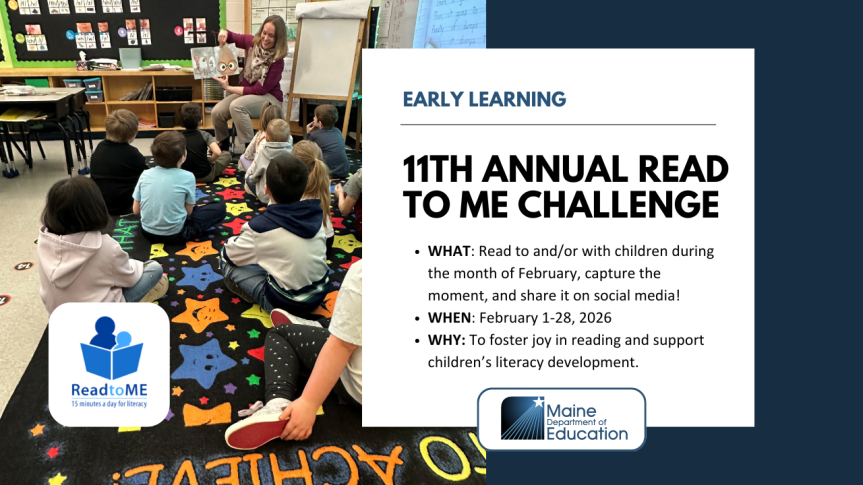
For the 11th consecutive year, the Maine Department of Education (DOE) is partnering with schools and community organizations across the state to promote the Read to ME Challenge, a month-long public awareness campaign held in February.

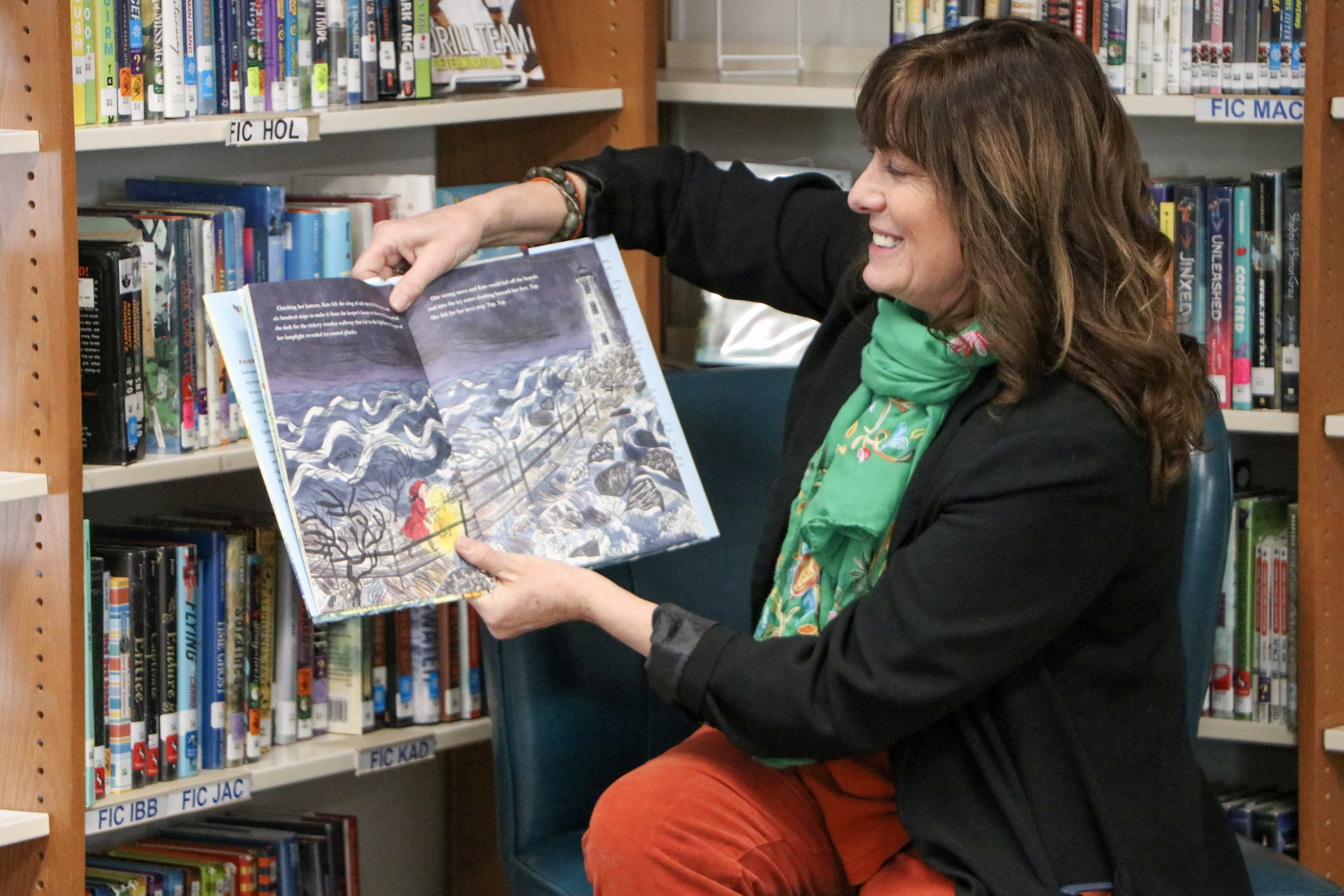
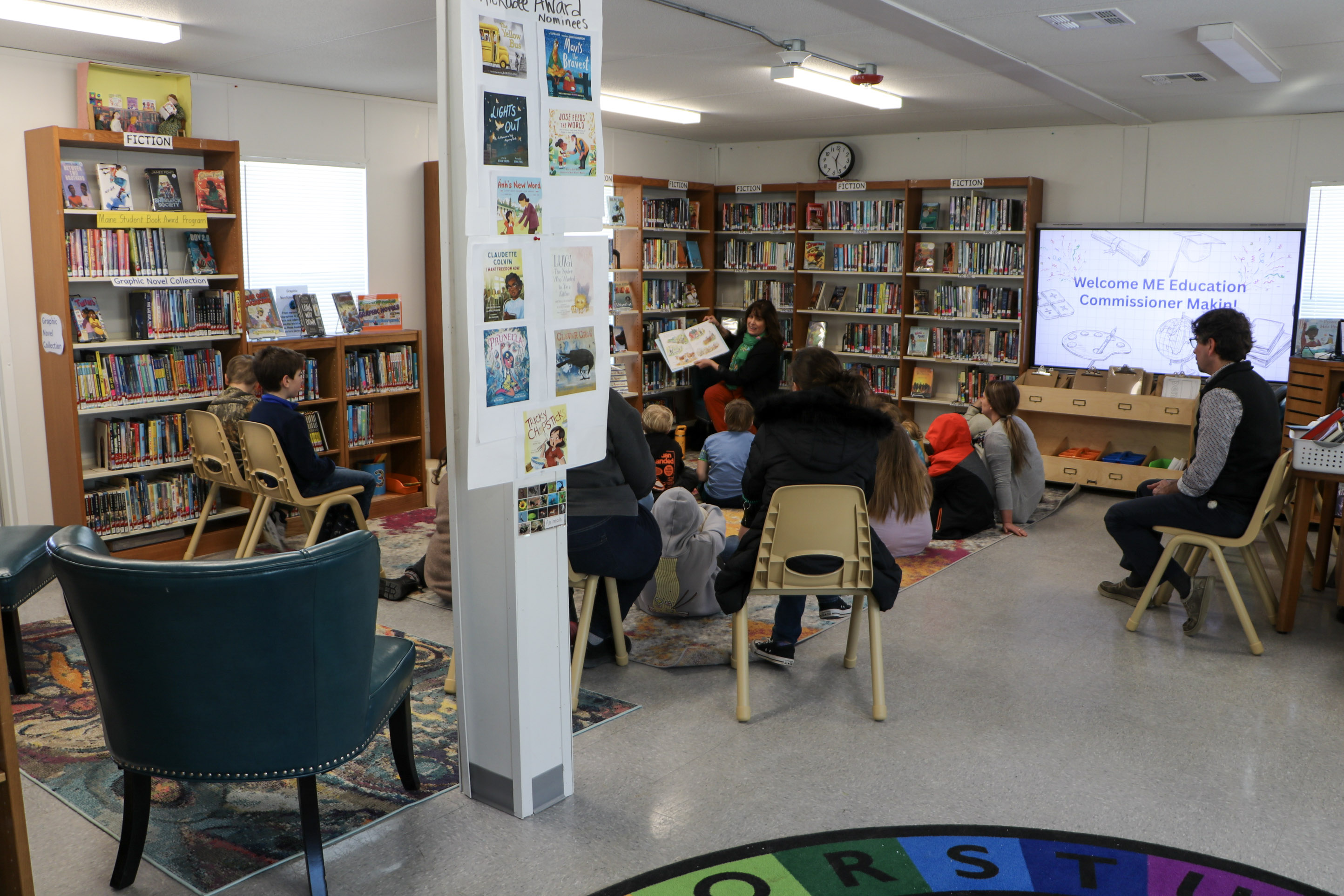
The Read to ME Challenge is designed to foster joy in reading and support children’s literacy development by challenging adults to read to and/or with children during the month of February. Participants are invited to capture these moments through photos or short videos and share them on social media using the hashtag #ReadtoME. Readers are also encouraged to challenge their social media connections to participate, helping the impact of this initiative to ripple across Maine.

The 2026 Read to ME Challenge will kick off the first week of February 2026 and will continue through Read Across America Day on March 2, 2026. While anyone may participate, the Challenge offers a particularly meaningful opportunity for schools, childcare programs, libraries, and community organizations to plan engaging activities that highlight a shared commitment to reading with children.

In support of the Maine State Literacy Action Plan, the Maine DOE is strongly encouraging community organizations to collaborate with schools and families during the 2026 Read to Me Challenge. In past years, a wide range of partners have hosted impactful reading events, including college and high school athletic teams, civic organizations, libraries, recreation departments, and education-focused organizations. A list of suggested ideas to spark planning is included at the end of this article.

Learn more about the Read to ME Challenge on the Maine DOE website. Additional details about the kickoff session will be shared soon.

To share photos of your Read to ME Challenge participation with the Maine DOE, please contact Rachel Paling, Maine DOE Communications Outreach Manager, at Rachel.Paling@maine.gov. You may also use the following social media handles to connect with the Maine DOE, and we will share your #ReadtoME social media posts online:

  • Facebook: @MaineDepartmentofEducation1!
  • Instagram: @mainedepted

Read to ME Challenge Ideas for Community Involvement

  • Invite community members into schools as guest or “mystery” readers and consider asking them to share about their professions.
  • Partner with local fire departments, police departments, hospitals, health care providers, and businesses.
  • Collaborate with public libraries to host special events during the Challenge.
  • Engage civic organizations such as Rotary Clubs, Lions Clubs, Elks Clubs, and Freemasons as guest readers or event sponsors.
  • Include afterschool and youth programs such as Boys & Girls Clubs, YMCAs, 21st Century Learning Programs, and teen centers.
  • Work with community partners to host family literacy or reading nights.
  • Encourage participation from local school board members.
  • Create opportunities for middle and high school students to read to younger learners.
  • Foster friendly competitions among middle and high school teams or clubs to read to children.
  • Use Pine Project books to promote culturally sustaining reading experiences.
  • Explore options to expand access for multilingual families, such as QR codes to texts written in a variety of languages.
  • Incorporate the Challenge into pre-service teacher preparation courses, such as children’s literature or reading methods.
  • Partner with Foster Grandparent Programs and Aging in Place committees.
  • Seek support from literacy volunteer organizations and dyslexia centers.
  • Plan a Community Reads event in which one book is selected for shared reading and discussion across the community.

For further information and questions about the Read to ME Challenge, please contact Lee Anne Larsen, Maine DOE Director of Early Learning, at Leeann.Larsen@maine.gov.

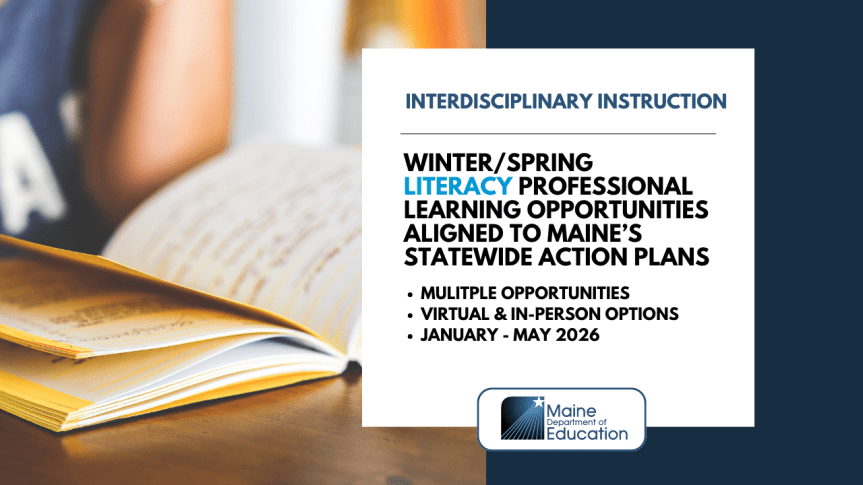
Maine DOE Offers Variety of Literacy Learning Opportunities Aligned to Maine’s Statewide Action Plans

The Maine Department of Education (DOE) Office of Teaching and Learning invites educators from across the state to engage in literacy learning opportunities that are thoughtfully aligned to Maine’s statewide Action Plans.

The quieter winter season often offers a natural moment for reflection and growth. These literacy professional learning opportunities are designed to be supportive, practical, and inspiring—an invitation for educators to use the winter months to strengthen their practice, build shared understanding, and invest in the essential work of literacy.

Together, the below offerings form a menu of literacy learning opportunities available throughout the winter and spring of 2026. Educators are encouraged to engage in the experiences that best meet their interests, roles, and local contexts, whether that means participating in a cohort, attending a single workshop, joining virtual support hours, exploring modular professional learning, or taking part in statewide literacy initiatives.

Winter/Spring 2026 Literacy Professional Learning Opportunities:

Maine Solutionaries Project Literacy Cohort

This professional learning opportunity equips middle and high school teachers with training in four high-impact, interdisciplinary literacy practices that foster lifelong literacy and support successful Solutionary Inquiry-to-Action projects. Through engagement with complex texts, text-based discussion and writing, word study, and collaborative performance tasks, this cohort strengthens students’ reading, writing, speaking, listening, and language skills across content areas.

  • Audience: Grades 4-12 educators
  • Format:
    • In-person kickoff session on January 27, 2026, from 8:30-3:30 p.m. at Maple Hill Farm in Hallowell
    • Weekly virtual learning sessions on Tuesdays from 4-5:30 p.m. from February 3 through March 31 (four weeks focused on Solutionary Learning and four weeks focused on literacy integration)

Participants may earn up to 45 contact hours. Educators are encouraged to attend these sessions in pairs. Please use this link to register.

Spring Integrated Literacy Workshops

Please use this link to register for any of the following integrated literacy workshops:

Integrating Literacy with Mapmaking: Renee Keul will explore the connection between literacy and mapmaking by engaging educators in analyzing and creating maps. This workshop models how spatial reasoning, data visualization, and critical thinking support reading, writing, and communication across content areas, reinforcing literacy as a shared responsibility. This workshop strengthens foundational literacy skills such as decoding symbols, building vocabulary, sequencing ideas, and making meaning across texts through hands-on, interdisciplinary learning.

  • Audience: Pk-12 Educators
  • Date: March 6, 2026, from 9 a.m.-4 p.m.
  • Location: Osher Map Library in Portland (or virtually via Zoom)
  • Contact Hours: seven hours available

Integrating Literacy with Objects and Writing: Deb Johnson and Ronni Blaisdell will share strategies for using real-world artifacts and natural materials to support foundational reading and writing skills. By modeling object-based learning grounded in authentic texts and materials, this workshop demonstrates how interdisciplinary, hands-on instruction strengthens literacy development across grade levels and content areas. This workshop builds vocabulary, comprehension, and writing stamina through close observation and inquiry.

  • Audience: pre-K-12 educators
  • Date: April 10, 2026, from 9 a.m.-4 p.m.
  • Location: Maine Mineral and Gem Museum in Bethel (or virtually via Zoom)
  • Contact Hours: seven hours available    

Reaching Reluctant Readers: Cris Tovani will explore why students disengage from reading and how educators can remove barriers to learning. Grounded in research-based strategies for knowledge building and comprehension, the session equips educators with practical tools to support confident, independent readers across content areas. This workshop addresses engagement, motivation, and access as essential components of effective literacy instruction, particularly for students who are reluctant or struggling readers.

  • Audience: pre-K-12 educators
  • Date: May 15, 2026, from 9 a.m.-4 p.m.
  • Location: Camp Chamberlain in Augusta (or virtually via Zoom)
  • Contact Hours: seven hours available          

Virtual Support Hours: Virtual support will be available on Thursdays following each workshop. These sessions are open to all educators, regardless of whether they attended the corresponding workshops, and are designed to support the application of learning through collaboration, reflection, and shared problem-solving.

  • Graphic Novels for Literacy (workshop already occurred)
    January 8 through February 19, 2026, from 3:30-4:30 p.m. – Zoom registration link

    This is an open, collaborative space to explore how graphic novels support comprehension, vocabulary development, and visual literacy across grade levels and content areas. Participants are encouraged to bring questions, classroom experiences, and ideas aligned with the statewide Action Plans’ interdisciplinary vision.   
  • Integrating Literacy with Mapmaking
    February 26 through April 9, 2026, from 3:30-4:30 p.m. – Zoom registration link
    This is an informal space to explore how map analysis and creation can strengthen vocabulary, comprehension, and meaning making across content areas, reinforcing literacy as a shared responsibility. 
  • Integrating Literacy with Objects and Writing
    April 16 through May 7, 2026, from 3:30-4:30 p.m. –Zoom registration link
    This is a supportive forum to reflect on and apply hands-on strategies that build engagement, motivation, and access to literacy through object-based learning and writing.
  • Reaching Reluctant Readers
    May 14 through June 4, 2026, from 3:30-4:30 p.m. – Zoom registration link
    This is an open forum to extend learning from Cris Tovani’s strategies for engagement and comprehension. Educators can share challenges and explore ways to remove barriers to reading and support confident, independent literacy development.

Additional Literacy Learning Opportunities

  • Literacy Modules for Professional Learning: School administrative units (SAUs) may purchase licenses for AIM Steps to Literacy modules or Keys to Literacy modules at reduced costs and then seek reimbursement once educators have successfully completed the modules. Find additional details here.
  • For ME Instructional Programs: An informational session will be held on January 26, 2026, from 3:30-4:30 p.m. for schools interested in adopting the For ME Instructional Programs (Pre-K for ME, K for ME, 1st Grade for ME, and/or 2nd Grade for ME). These programs are grounded in evidence-based literacy practices, are interdisciplinary and play-based, and are aligned with Maine’s learning standards. Additional details and the Zoom link will be shared in January 2026.
  • Read to ME Challenge 2026: Get ready for this year’s Read to ME Challenge, running throughout the month of February! Details will be shared in January 2026. 

For more information about these professional learning opportunities, please contact Maine DOE Interdisciplinary Instruction Team Coordinator Kathy Bertini at Kathy.Bertini@maine.gov.

Titles II-A and IV-A funds received from the U.S. Department of Education (ED) support the implementation of these projects. These projects have an award totaling $99,569.00 of which 38% is federally funded and directly attributed to project implementation. The contents are those of the author(s) and do not necessarily represent the official views of, nor an endorsement by, ED or the U.S. government.


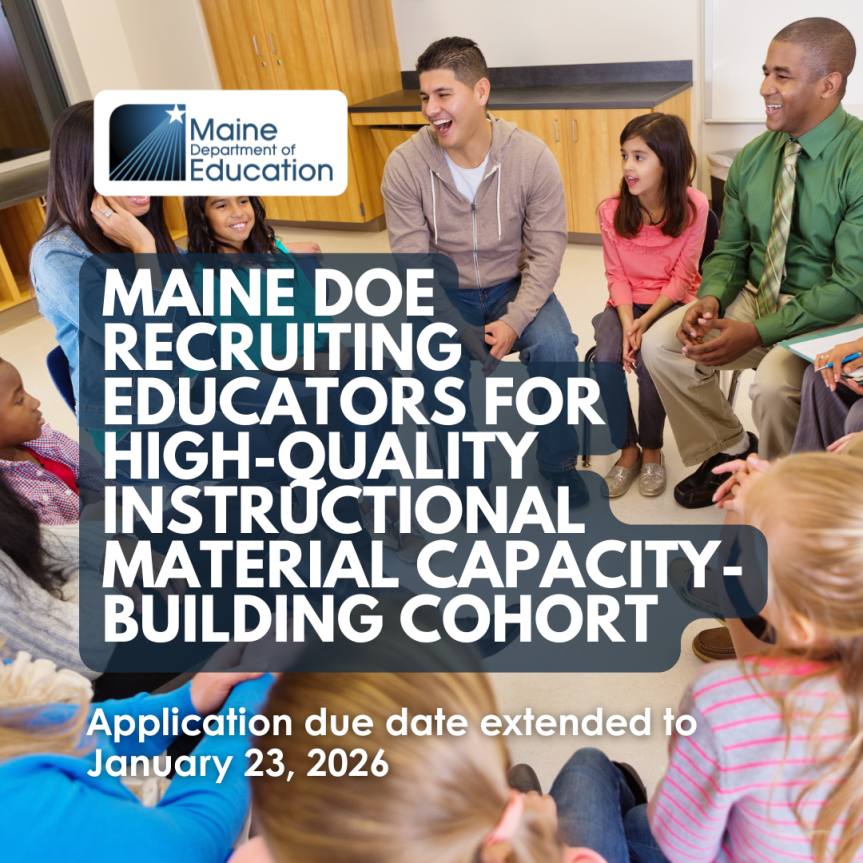
Maine DOE Recruiting Educators for High-Quality Instructional Material Capacity-Building Cohort

The Maine Department of Education (DOE) is recruiting 30 certified educators to participate in a statewide capacity-building cohort, a key component of Maine’s coordinated Literacy and Numeracy Action Plans. These plans outline a comprehensive system of supports designed to develop lifelong learners who can engage confidently and competently with the world through strong reading and math skills.

This cohort is intended to build educator capacity to evaluate, select, and implement high-quality instructional materials (HQIM), helping to ensure that all students in Maine have access to rigorous, standards-aligned, and culturally responsive instruction. Educators from all nine superintendent regions of Maine will deepen their own expertise, while also preparing to serve as regional leaders and facilitators of HQIM-focused professional learning.

Participants will engage in a sequenced professional learning experience that includes:

  • A virtual orientation and kickoff meeting (one hour).
  • Two days of in-person training focused on understanding nationally recognized HQIM evaluation criteria and rubrics, applying these tools to analyze instructional material with an emphasis on equity and standards alignment.
  • Three virtual sessions (two hours each) to develop guidance documents, resources, and professional learning to support school administrative unit (SAU)-level HQIM adoption.
  • Individualized coaching and peer collaboration.
  • A virtual reflection session (one hour).

Participants will be expected to complete the following deliverables:

  • Pre- and post-cohort surveys.
  • One or more resources or tools to support educators in evaluating, selecting, and implementing HQIM.
  • A professional learning session delivered within their region to build capacity for HQIM evaluation, selection, and implementation.
  • Documentation of the regional session, including materials used and a brief reflection.

Application Process and Timeline

Educators may apply for this opportunity here. Applications havebeen extended to January 23. The Maine DOE will review applications with the goal of ensuring representation across grade levels, regions, professional roles, and school contexts.

Cohort Schedule:

  • Thursday, February 5, 2026, 3:30-4:30 p.m. – Virtual orientation and kickoff
  • Friday, February 27, 2026, 8 a.m.-4 p.m. – In-person, full-day training in the Bangor area
  • Monday, March 16, 2026, 8 a.m.-4 p.m. – In-person, full-day training in the Bangor area
  • Thursday, April 2, 2026, 3:30-5:30 p.m. – Virtual training
  • Thursday, April 16, 2026, 3:30-5:30 p.m. – Virtual training
  • Thursday, May 7, 2026, 3:30-5:30 p.m. – Virtual training
  • Thursday, June 4, 2026, 3:30-4:30 p.m. – Virtual reflection session
  • Monday, August 31, 2026 – Final day to deliver training and provide documentation

Participating educators will be eligible for a $400 stipend upon submission of the completed deliverable package. Trainings attendance will be eligible for contact hours.

For more information, please contact Jennifer Page, Maine DOE MOOSE Project Supervisor, at jennifer.page@maine.gov.

This project is supported by funds received from the U.S. Department of Education through the Governor’s Initiative: Integrating Literacy & Numeracy for Statewide Impact, Activity #4: Building Capacity to Identify and Select High-Quality Instructional Materials. The total award is $41,788.40, of which 40.3% is federally funded and directly attributed to project implementation. The contents of this program do not necessarily represent the official views of, nor an endorsement by, the U.S. Department of Education or the U.S. government.

Maine DOE Recruiting Educators for Statewide Professional Learning Series to Support Multilingual Learners

The Maine Department of Education (DOE) is recruiting 120 certified educators to participate in a statewide professional learning series aimed at supporting multilingual learners (MLs) across the state. Ultimately, this cohort is designed to build educator capacity in evidence-based, language-integrated instruction across all grade levels. This project represents a key component of Maine’s coordinated Literacy and Numeracy Action Plans, which emphasize evidence-based instruction, multitiered systems of support (MTSS), aligned supports, and equitable access for all learners.

This professional learning series is being offered in partnership with SupportEd, a nationally recognized leader in ML instructional design and educator development. Through this project, SupportEd experts will help to deepen the integration of the WIDA English Language Development Standards Framework, strengthen scaffolding practices, and refine classroom tasks and assessments.

Professional Learning Series Details

This opportunity is open to a wide range of educators across Maine. Classroom and content-area teachers, ML specialists, and 660-certified educators are strongly encouraged to participate, as are school administrative unit (SAU) and school leaders, such as directors or coordinators of ML programs. The series also welcomes any certified educator who is committed to providing equitable, language-integrated instruction and is eager to strengthen their practice in the services provided to MLs.

Participants will engage in high-quality professional learning led by national experts in ML instruction. Throughout the series, educators will receive practical, classroom-ready tools and templates designed to support immediate application in their own settings. They will also benefit from statewide networking and collaboration, build strategies aligned to Maine’s Literacy and Numeracy Action Plans, and contribute to the co-development of new Maine-specific instructional resources that will support ML success across the state.

All professional learning sessions run from 3 to 5 p.m. The commitment is six sessions, with two hours per session.

Elementary Cohort (pre-K-Grade 5)  Secondary Cohort (Grades 6-12)  
Session 1: January 20, 2026 Session 2: February 24, 2026 Session 3: March 18, 2026 Session 4: April 7, 2026 Session 5: May 4, 2026 Session 6: June 3, 2026  Session 1: January 22, 2026 Session 2: February 26, 2026 Session 3: March 20, 2026 Session 4: April 9, 2026 Session 5: May 6, 2026 Session 6: June 3, 2026  

Application Process and Timeline

Educators may apply for this opportunity here: Building Capacity for Multilingual Learners in Schools. Applications are due on December 12, 2025, with notification of selection planned for December 19. Selection will prioritize a broad geographic representation, grade-level balance, and diversity of educator roles across Maine’s SAUs.

For more information, please contact Melanie Junkins, Maine DOE Multilingual and Bilingual Education Specialist, at melanie.junkins@maine.gov.

The Statewide Professional Learning to Strengthen Instruction for Multilingual Learners is funded through Title II/Title IV state reservation funds. 

Maine DOE Continues to Expand Access to High-Quality Literacy Professional Development

As part of the Maine State Literacy Action Plan, the Maine Department of Education (DOE) is excited to announce another opportunity for Maine educators to access evidence-based literacy professional learning modules at a reduced cost. This comes in addition to a similar previous announcement in October of 2025.

In the summer of 2024, the Maine DOE provided free access to AIM Institute for Learning and Research’s Steps to Literacy modules. Nearly 650 educators completed more than 20,000 hours of professional learning grounded in the science of reading, including phonological awareness, phonics, decoding, spelling, language expression, writing, emerging literacy, vocabulary, dyslexia, and supports for multilingual learners.

Building on that success, in 2025, to sustain momentum, the Maine DOE has expanded access to AIM modules and launched Communities of Practice (COP) for school teams. These COPs are designed to deepen professional knowledge and build school-level capacity to implement high quality, evidence-based literacy instruction.

Recognizing that access to affordable and user-friendly professional learning is critical, the Maine DOE invited professional learning providers offering asynchronous modules that met established criteria to extend reduced-rate access to Maine educators. The Maine DOE has established master agreements with two providers, enabling school administrative units (SAUs) to purchase high-quality, evidence-based literacy modules at a discounted cost. Details are available here: Maine Department of Education | Literacy Learning Modules.

Reimbursement Opportunity

Between October 1, 2025, and September 30, 2026, the Maine DOE will, as funds allow, reimburse SAUs for the cost of successfully completed modules. Modules must be selected from the approved vendors listed below. SAUs are responsible for the upfront costs. After an educator employed by the SAU successfully completes a module, the SAU mayseek reimbursement by submitting invoices to the Maine DOE. Invoices must be on SAU letterhead and include proof of successful completion for each module, as well as the names of and grade levels taught by the educators who completed the modules. All invoices and documentation should be directed to Maine DOE Preschool Development Grant Manager Renee Reilly at Renee.A.Reilly@maine.gov.

  • Who pays up front: SAUs purchase modules directly from one of the approved vendors listed below.
  • Reimbursement window: This will continue until funding is exhausted or through September 30, 2026—whichever comes first.
  • What to submit: Please submit invoices on SAU letterhead with proof of successful completion for each module and the names of the educators and the grade level(s) taught by the educators. Grade level information is needed to determine the funding source for reimbursement.
  • Where to send: Please email invoices and documentation to Renee Reilly, Maine DOE Preschool Development Grant Manager, at renee.a.reilly@maine.gov.

Professional Learning Module Options

AIM Pathways is an interactive digital training platform that delivers evidence-based content in the science of reading. Each Steps to Literacy module follows a “learn, practice, apply” cycle and includes teaching techniques, demonstration videos, and printable resources to help educators integrate new strategies into classroom practice. Learn more about accessing AIM Pathways modules here.

Keys to Literacy offers a comprehensive, research-backed approach to sustainable literacy improvement. Its courses integrate evidence-based instruction with systems, structures, and leadership practices that support equitable and effective learning environments. All modules are designed for asynchronous, on-demand access, allowing educators to engage in professional learning on their own schedules. Learn more about accessing Keys to Literacy modules here.

Through these master agreements, the Maine DOE is ensuring that Maine educators have affordable opportunities to deepen their expertise and strengthen literacy instruction for all students.

For questions about module content, please contact Dee Saucier, Maine DOE Inclusive Education Literacy Specialist and Dyslexia Coordinator, at danielle.m.saucier@maine.gov. For inquiries about reimbursement, please contact Renee Reilly at renee.a.reilly@maine.gov.

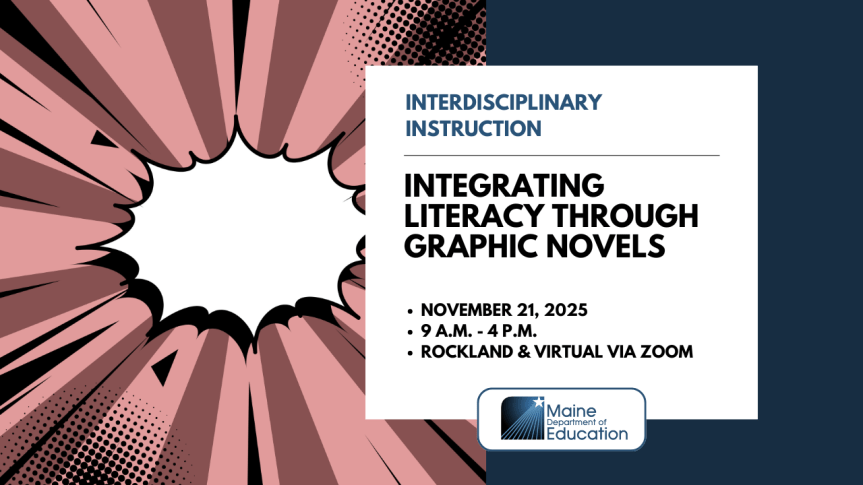
Professional Learning Workshop: Integrating Literacy through Graphic Novels with Marek Bennett

The Maine Department of Education (DOE) Office of Teaching and Learning is excited to kick off the return of the Integrating Literacy series with a full-day deep dive into graphic novels as powerful tools for literacy growth.

From fantasy and humor to history and science, graphic novels are among students’ favorite reads. They’re more than entertainment, though; research shows that the format can strengthen vocabulary, comprehension, and visual literacy.

Join educator and graphic novel author Marek Bennett for an inspiring, hands-on workshop. We’ll explore exemplary texts, unpack the science behind their impact on readers, and create our own graphics.

Educators will leave with:

  • A clear understanding of the research supporting graphic novels for literacy development across grade levels and disciplines.
  • Practical ideas to build a schoolwide culture of reading through graphic storytelling.
  • Concrete strategies to engage students in creating and publishing their own work.

When: Friday, November 21, 2025, from 9 a.m. to 4 p.m.

Where: The Steel House in Rockland (639 Main Street, Rockland, ME 04841)

This free workshop is happening in-person and will be streamed via Zoom for those unable to travel. Bring a lunch or order locally—there are plenty of spots to picnic and connect with fellow educators!

Space is limited! Register today.

This event marks the first in a four-part literacy workshop series offered by the Maine DOE. Other workshops in the Integrating Literacy series include:

  • “Mapmaking: Coding and Decoding” with Osher Map Library on Friday, March 6, 2026, from 9 a.m.-4 p.m. in Portland
  • “Objects (Rocks, Minerals and Gems – Oh My!) and Writing Process” with the Maine Mineral and Gem Museum and Ronni Blaisdell on Friday, April 10, 2026, from 9 a.m.-4 p.m. in Bethel
  • “Engaging Reluctant Readers” with Cris Tovani on Friday, May 15, 2026, from 9 a.m.-4 p.m. in Augusta

To register for any of these workshops, use this registration form.

With questions, please contact Maine DOE Interdisciplinary Instruction Specialist Heather Martin at Heather.Martin@maine.gov.

Maine Department of Education Expands Access to High-Quality Literacy Professional Development

As part of Governor Janet Mills’ recently launched Maine State Reading Action Plan, the Maine Department of Education (DOE) is excited to announce an opportunity for Maine educators to access evidence-based literacy professional learning modules at a reduced cost.

In the summer of 2024, the Maine DOE provided free access to AIM Institute for Learning & Research’s Steps to Literacy modules. Nearly 650 educators completed more than 20,000 hours of professional learning grounded in the science of reading, covering phonological awareness, phonics, decoding, spelling, language expression, writing, emerging literacy, vocabulary, dyslexia, and supports for multilingual learners.

Building on that success, in 2025, to sustain momentum, the Maine DOE has expanded access to AIM modules and launched Communities of Practice (COP) for school teams. The COPs are designed to deepen professional knowledge and build school-level capacity to implement high-quality, evidence-based literacy instruction.

Recognizing that access to affordable and user-friendly professional learning is critical, the Maine DOE invited professional learning providers offering asynchronous modules that met established criteria to extend reduced-rate access to Maine educators. The Maine DOE has established master agreements with two providers, enabling school administrative units (SAUs) to purchase quality, evidence-based literacy modules at a discounted cost. Details are available here: Maine Department of Education | Professional Literacy Modules.

Reimbursement Opportunity

While any Maine educator may purchase modules at the reduced price, Maine’s Preschool Development Grant (PDG) will reimburse SAUs for modules successfully completed by educators working, or supporting, pre-K through grade 3.

  • Who pays up front: SAUs may purchase modules directly from one of the approved vendors (below).
  • Reimbursement window: Through December 15, 2025, SAUs may submit for reimbursement.
  • What to submit: Invoices should be submitted on SAU letterhead with proof of successful completion for each module.
  • Where to send: Please email invoices and documentation to Renee Reilly, Maine DOE PDG Manager, at renee.a.reilly@maine.gov.

Professional Learning Module Options

AIM Pathways is an interactive digital training platform that delivers evidence-based content in the science of reading. Each Steps to Literacy module follows a “learn, practice, apply” cycle and includes teaching techniques, demonstration videos, and printable resources to help educators integrate new strategies into classroom practice. Learn more about accessing AIM Pathways modules here.

Keys to Literacy offers a comprehensive, research-backed approach to sustainable literacy improvement. Its courses integrate evidence-based instruction with systems, structures, and leadership practices that support equitable and effective learning environments. All modules are designed for asynchronous, on-demand access, allowing educators to engage in professional learning on their own schedules. Learn more about accessing Keys to Literacy modules here.

Through these master agreements, the Maine DOE is ensuring that Maine educators have affordable opportunities to deepen their expertise and strengthen literacy instruction for all students.

For additional information or questions related to module content, please contact Dee Saucier, Maine DOE Inclusive Education Literacy Specialist and Dyslexia Coordinator, at danielle.m.saucier@maine.gov. For inquiries regarding reimbursement, please contact Renee Reilly at renee.a.reilly@maine.gov.