Maine DOE Update – March 8, 2024

From the Maine Department of Education


Reporting Items

| Visit the DC&R Reporting Calendar |


News & Updates

Maine DOE Seeks Participants for Climate Education Action Plan Task Force

The Maine Department of Education (DOE) wants your help designing the future of climate education in Maine. If you are a teacher, student or young adult (under 30), school administrator, or education partner, consider filling out the interest form below to be a part of the Maine DOE Climate Education Action Plan Task Force. |  More

Reminder: Regional School Calendar Coordination Between SAUs and CTEs

As a reminder, Regional School Calendars are due by June 1, 2024 for school administrative units (SAU) and private schools, approved for tuition purposes, in coordination with their local secondary career and technical education (CTE) school. This requirement is part of Public Law 2011, Chapter 686 to promote collaboration among local school administrative units that may benefit from inter-administrative unit collaboration beyond CTE. |  More

Celebrating School Social Work Week March 3-9, 2024

The Maine DOE and its staff would like to send our heartfelt appreciation to all school social workers for the immeasurable positive impact you have on our students, communities, and school climate. |  More

Madawaska Shows the Power of Summer Learning Opportunities, Apply for 2024 Funding Today

Last summer, elementary school students throughout Madawaska were provided project-based extended educational learning opportunities with a focus on celebrating the region’s French-Acadian heritage. The 2024 ARP Summer Programming and Enrichment grant application deadline is March 29, 2024 |  More

Worthington Scholarship Foundation 2024 Scholarship Application is Open for Public High School Seniors in Maine

The Worthington Scholarship Foundation is offering scholarships of up to $20,000 to high school seniors from any of Maine’s 134 public high schools, who will attend a Worthington-eligible 4-year college or a community college in Fall 2024. |  More


Maine Schools Sharing Success Stories

Windsor Elementary School Explores Maine Seaweeds with a Little ‘Kelp’ From Their Friends

Windsor Elementary School educators Kristel Anuszewski and Jana Diket recently collaborated with Maine Sea Grant, Chef Andrew Wilkinson from North Coast Seafoods, and other Maine businesses to bring seaweed to the classroom and cafeteria. |  More

Photography and Poetry Gallery at Lyseth Elementary School

Walking into the bright atrium of Lyseth Elementary School in Portland, you are met by giant black-and-white photographs of the 20 students in Leigh Quigley’s 4th-grade class. Hanging from the skylight are even more pictures, pictures that students took after learning photography elements like composition, light, and focal point from professional photographer Liz Bieber. Proud adults gather around, taking pictures of student work. |  More

Five Maine Education Programs Highlighted in National Webinar on Educational Innovation

In December, five Maine educators leading school innovations and working towards systemic change to create powerful outcomes for Maine students were featured in a webinar hosted by The Regional Education Laboratory (REL) Northeast & Islands with nearly 100 educators from across the country present. |  More

| Submit your Maine School Success Story |


Professional Development, Training, and Events

Webinar: Gamifying Your Classroom

In this discussion-based webinar, Maine Department of Education (DOE) Maine Humanities Teacher Leader Fellows Jim St. Pierre and Dorie Tripp host an exchange among teachers who are gamifying their curriculums or who want to learn more about gamification to improve student engagement. |  More

Pre-K Partnership Pilot Grant Informational Session

Is your school administrative unit (SAU) interested in starting or expanding public Pre-K with a community partner for the upcoming 2024-25 school year? If so, the Maine DOE’s Early Learning Team invites you to attend an informational session regarding a Pre-K Partnership Pilot Grant opportunity we anticipate releasing this Spring. |  More

Two Inclusive Education Webinar Series Available: Inclusion for Students with IDD and Complex Needs & Assistive Technology (AT)

The Maine Department of Education (DOE) Office of Special Services & Inclusive Education has two upcoming Inclusive Education Webinar Series planned: Inclusive Education Webinar Series: High Leverage Practice to Promote Inclusion for Students with IDD and Complex Needs and Inclusive Education Webinar Series: Dispelling Myths about Assistive Technology (AT) Devices and Services |  More

| Visit the Professional Development Calendar |


Latest DOE Career/Project Opportunities:

View current Maine Department of Education employment opportunities here
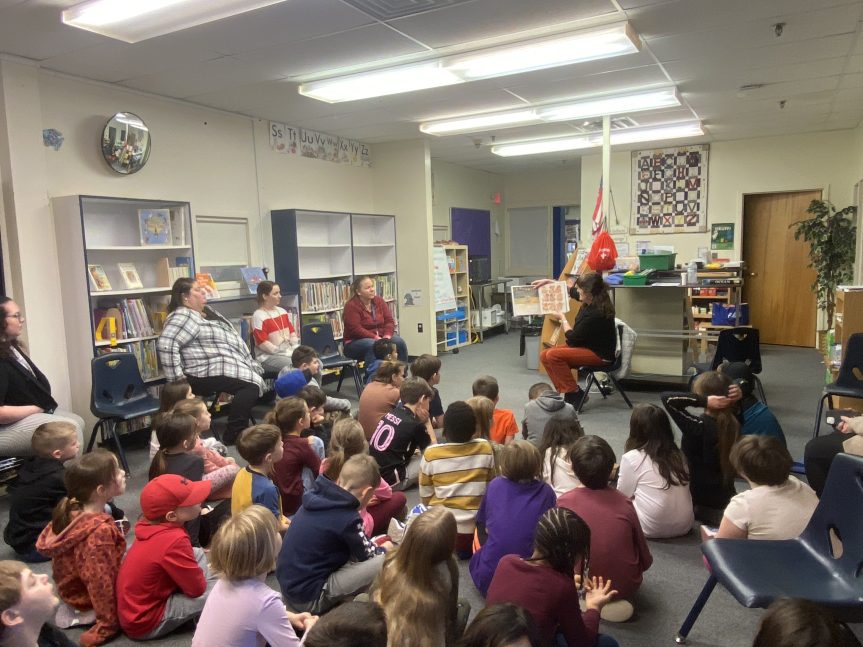


Commissioner Makin Kicks Off Read to ME Challenge at Jameson Elementary School in Old Orchard Beach

The Read to ME Challenge Promotes Literacy by Encouraging Adults to Read to Children for At Least 15 Minutes, Challenge Others

Maine Education Commissioner Pender Makin kicked off Maine’s Read to ME Challenge today by reading Manolo & the Unicorn to second graders at Jameson Elementary School in Old Orchard Beach. The students enthusiastically responded to Makin’s call for them to join the Read to ME challenge themselves and read to an adult or younger child in their lives. They also discussed their favorite books and who the students plan to read to.

The Read to ME Challenge encourages adults to read to children for 15 minutes, capture that moment via a photo or a video, and then post it to social media and challenge others to do the same using the hashtag #ReadtoME. This is the ninth year that the Maine Department of Education (DOE) is collaborating with community organizations and schools on this month-long public awareness campaign to promote the importance of literacy for all of Maine’s students, regardless of age. The DOE will highlight Read to ME Challenge events throughout February through Read Across America Day.

“This is about sharing the love and joy of reading. When you’re able to read together, it creates shared human experiences that transcend everything else that is happening in our electronic world. When you hear the words, and those words create the colors and the shapes in your mind, you can create a whole different world and it’s a very magical and beautiful thing for kids. Reading just 15 minutes a day can help create a lifelong habit for children,” said Commissioner Makin.

The simple act of reading aloud to a child 15 minutes a day for five years results in 27,375 minutes of language exposure, which can put children on the path to high literacy achievement and helps them build knowledge and vocabulary. Research demonstrates a number of benefits to reading to children, from birth through their childhoods and even teenage years, including modeling reading as an enjoyable lifelong activity, stimulating brain development, reducing stress and anxiety, building knowledge of the world, and helping develop the skills necessary to succeed in their lives.

The Maine DOE recently launched $10 million in literacy grants for schools to build the capacity of year-long, core literacy instruction for all students and support core literacy instructional components based on the science of reading, including phonics, phonemic awareness, fluency, vocabulary, and comprehension.

Schools and community organizations can find a toolkit and resources on the Department of Education website and the Department will be sharing videos, photos, and updates from the challenge all month long on social media. Participants in the challenge are reminded to use the hashtag #ReadtoME and to tag the Maine DOE at @MaineDepartmentofEducation1 on Facebook, and @mainedepted on Instagram.

Media Release: Mills Administration Releases Plan to Transform CDS and Improve Special Education Services for Young Children

The Plan Presented to the Legislature by the Maine DOE Would Transition Oversight of Educational Services for Young Children With Disabilities From CDS to Local School Systems over a 3-Year Phase-In 

The Maine Department of Education (DOE) delivered a report today to the Joint Standing Committee on Education and Cultural Affairs of the Maine Legislature detailing recommendations to solve decades-long structural challenges that have limited Maine’s ability to successfully provide special education services to preschool-aged children. The recommendations include a proposal to transition oversight of educational plans for preschool-aged children with disabilities from the Child Developmental Services (CDS) agency to local public school systems.

Today’s recommendations were previewed by Governor Mills in part one of her State of the State Address earlier this week. She declared that Maine’s use of a quasi-governmental organization to provide special education services to preschool-aged children “just isn’t working for Maine kids,” and that “every other state in the nation educates pre-k children with disabilities through their public school systems. Maine should do the same.” Mills urged the Legislature to work with her Administration to fix Child Development Services.

“The Department of Education is proud to offer a plan that, if implemented by the Legislature, will dramatically improve the services and education that Maine provides to our youngest learners with disabilities. This plan reflects best practices and the priorities expressed by educators and school leaders, parents, CDS staff, experts, private providers, and advocates, and it’s the right thing to do. We look forward to working with the Legislature to transform the structures that have held a failed system in place for decades and do right by some of the most vulnerable children in our state,” said Maine Education Commissioner Pender Makin. 

Since CDS was established more than 30 years ago, there have been dozens of statutory revisions and proposed bills to transition oversight of services to public schools, but the laws driving insufficient services have remained in place. Maine is the only state that requires an independent organization, separate and apart from public schools, to oversee the state’s obligation to ensure special educational services for preschool children who require these supports and services. Most other states designate local public schools as responsible for overseeing the provision of educational services for young students with disabilities, either directly or through contracts with local private providers and regional sites.

The Maine DOE’s report recommends a three-year phase-in of the responsibility of educational services for preschool-age children with disabilities from the CDS agency to local school administrative units (SAUs). A pilot year would begin July 1, with several willing SAUs receiving both the funding and the responsibility for the provision of services to preschoolers with disabilities. All SAUs would assume these responsibilities by the fall of 2026. Under this plan, students may be served directly in local public pre-K classrooms or may continue in current placements, with the goal always leading toward full inclusion in the general education setting.

The proposal does not require the establishment or expansion of pre-K programs in local schools, nor does it displace CDS workers or private providers, as all service providers are important partners in ensuring services are available to every child who is eligible. CDS regional service hubs and private community providers who are willing to work with the public schools to ensure services in accordance with federal laws will be critically needed partners to support a successful education system for pre-K students with disabilities.

The State is committed to providing funding to support the transition and to sustain special education services for young children. The Department’s recommended funding model is informed by the Essential Programs and Services (EPS) formula, with allocations for student subsidy counts flowing through the formula, but with the special education and related services funding remaining outside of the formula, paid upfront in quarterly payments requiring no local share. During the pilot for fiscal year 2025, the funding generated by the formula would be provided outside of the formula at 100 percent state share, since the mill rate and total cost of education have already been established and local budgets are in process. $10 million will be included in the supplemental budget request to cover the costs for special education and related services for these children. The State’s budget will also include $4 million for renovation projects for schools looking to start up or expand pre-k programs.

The Maine DOE developed the proposal after engaging in multiple meetings, focus groups, and individual interviews with stakeholder representatives, including parent advocacy groups, superintendents, school board members, educators, public school service providers, private schools and community-based providers, special education directors, and other state experts. It was also developed based on the recommendations from a Public Consulting Group, Inc. (PCG) report commissioned by the Legislature, findings and priorities from the legislated LD 255 and LD 386 advisory groups that met in 2022, U.S. Department of Education Office of Special Education Programs (OSEP) guidance, existing data, national experts, and a thorough examination of the current needs and capacities in our state.

Intensive training and technical support will be provided for schools in developmentally appropriate practices for working with young children and their families and in inclusive educational practices that allow all children to learn together and to receive necessary supports.

The proposal would ensure that Maine is in line with recent guidance from the US Department of Education’s Office of Special Education Programs which reiterates and clarifies the expectation that children with disabilities be educated in the least restrictive environment, alongside their typically developing peers. Under current Maine statutes, public schools are responsible for children with and without disabilities in grades K-12 and for nondisabled pre-K students. Pre-K students with disabilities, however, must enter special education through a separate system for evaluations, individualized educational program (IEP) development, and educational programming – 80 percent of which is currently provided outside of the public school setting.

Maine’s pre-K system is second only to Arkansas in the percentage of students with disabilities who are excluded from the general education settings in local public schools. 12.5 percent of pre-K students in Maine receive education in private, special purpose programs, the most restrictive environment, according to the federal government. The national average for these most restrictive placements is between 1 to 2 percent.

The proposal would also expand the availability of services to children. The current structure makes it difficult for CDS staff members to meet growing needs and find placements in pre-school education classrooms and related special education services due to the overreliance on private providers, pervasive shortages of childcare settings in Maine and nationwide, and the fact that providers are able to choose which students they serve, leaving some children without access to education.

The Maine DOE’s proposal to the Legislature today builds on unprecedented efforts by the Department to improve the services provided by CDS despite current legal constraints. Recent achievements include:

  • In just three years, the Department has supported public schools in serving preschoolers with disabilities so that now more than 20 percent of these children, who were previously excluded from the general education classrooms, are educated in their local schools, in the least restrictive environment, alongside their typically developing peers.
  • The Department has used grant funding to support community readiness assessments and to foster partnerships between local public schools and community-based service providers, childcare settings, and private schools.
  • Trainings and technical assistance in best practices for working with very young students and their families have been provided statewide, with ongoing opportunities for educators, school leaders, and CDS staff to build greater capacities.
  • Preschool startup and expansion grants have been provided to schools statewide, funding plans that implement inclusive practices and strong community partnerships.
  • The Department has supported CDS by increasing staffing, offering workers free college courses toward teacher certification, and increasing wages and benefits.
  • CDS leadership has been provided with a comprehensive organizational improvement plan to bring their student data, accounting systems, and other operations in line with state expectations.

The Maine DOE provided this report to the Legislature as a result of LD 1528 directing the Department to submit a report to the Joint Standing Committee on Education and Cultural Affairs regarding services provided by the CDS System to include a plan for oversight of a free, appropriate public education for eligible children from 3 years of age to under 6 years of age in SAUs. Read the full report here.

Major Capital School Construction Funding Opportunity 

Maine school administrative units (SAUs) may apply for major capital school construction projects through the application posted on the Office of School Facilities website. The application deadline is August 30, 2024.

This new rating cycle provides an opportunity for SAUs to apply for state support to undertake a major capital construction project. If a SAU applied during the last cycle in 2017-2018, they will need to reapply if they wish to be included in this rating cycle.

The Maine Department of Education (DOE) will review completed applications and create a needs-based priority list that will be used to designate projects for funding. The process is governed by Chapter 61 State Board of Education Rules for Major Capital School Construction Projects.

Questions regarding the application should be directed to Scott Brown, Maine DOE’s Director of School Construction, at scott.brown@maine.gov. Questions and answers will be posted here.

Media Release: Maine DOE Podcast Highlights Strategies to Support Staff and Student Wellbeing

Educators Discuss the Strategies They Learned Through a Neuroscience-Based Approach Through the DOE’s Partnership with The Regulated Classroom

On the latest episode of her What Holds Us Together podcast, Maine Education Commissioner Pender Makin talked with three educators about the strategies they learned through the Maine DOE’s partnership with The Regulated Classroom to improve staff and student wellbeing, increase student engagement, and help with regulation.

Special education teacher Jenn Whitney, second grade teacher Cecilia Dube, and first grade teacher Sierra Blake were among the 600 Maine teachers trained as trainers in the Regulated Classroom approach, and they shared how they are using the research-based tools and techniques in their classrooms and training other educators on wellbeing and regulation strategies.

“We continue to hear that student behavior, mental health, and dysregulation create some of the biggest barriers to success in the classroom. The Maine DOE offers several programs for student and staff wellbeing, and I loved talking to three educators who were part of a cohort for one of those programs called The Regulated Classroom. This program leverages what we know about neuroscience and the parasympathetic nervous system, offering practical strategies to help students engage in the learning process,” said Makin during her introduction to the podcast episode.

On the podcast, the educators discussed the techniques and strategies they are using and the results they are already seeing for themselves, other staff, and students. The educators report increased wellbeing, attendance, and engagement at their schools.

The COVID-19 pandemic took a tremendous toll on educator and student wellbeing, with educators reporting increased numbers of dysregulated students, stress, and classroom disruptions. Many educators feel overwhelmed by these pandemic-induced behavioral issues. The Regulated Classroom utilizes a neuroscience-based approach to help educators create calm, engaged, and supportive learning environments by cultivating conditions for felt safety. Felt safety references a regulated state in the body’s stress response system.

The program helps educators recognize and manage their own stress levels. It also helps educators manage increased levels of stress in students, which can be displayed as aggression, poor impulse control, limited attention span, and lack of motivation. Educators received access to a collection of practices and sensory tools to embed into daily routines and activities to promote a more regulated and stable environment for learning. This program supports student achievement and increased job satisfaction for educators.

Listen on AppleSpotify, or other major podcast platforms.

Commissioner Makin Meets with Westbrook High School Future Teachers Academy Students

Commissioner Pender Makin met with the inaugural class of the Future Teachers Academy at Westbrook High School this week. The Academy allows students to explore the teaching profession while still in high school. The experience includes a faculty-directed seminar to explore issues around teaching and education and field-based experiences in school settings. Students spend time every week with a host teacher and prepare and teach their own lesson plans.

Students in this initial cohort are gaining classroom experience in first grade, fourth grade, fifth-grade physical education, ninth-grade science, and ninth-grade social studies.

The Academy provides students with hands-on experience in Westbrook classrooms to explore the ins and outs of teaching, college credit, and a special diploma certificate. Students will continue to receive mentoring support once they graduate, opportunities for student teaching while in college, and the promise of an interview for a Westbrook teaching position when they are ready to pursue their career in education.

The Westbrook Teachers Academy is a fantastic example of Maine “grow your own” efforts to build and sustain the teacher workforce and nurture the passion that students have for teaching.

Apply Today for the 2024 Maine Outdoor Learning Initiative. Applications Due By January 12

Apply Now! Schools and community-based organizations can now apply for the 2024 Maine Outdoor Learning Initiative grants through the Maine Department of Education (DOE). These grants support hands-on, engaging, interdisciplinary outdoor learning and career exploration opportunities that connect students with Maine’s amazing natural environments and landscapes.

Created by Governor Mills, the Maine Outdoor Learning Initiative has included thousands of students throughout the state in its Coastal Ecology and Inland Forestry Programs over the last two years. Read about past programs here: Maine Outdoor Learning Initiative: Past Programs | Department of Education.
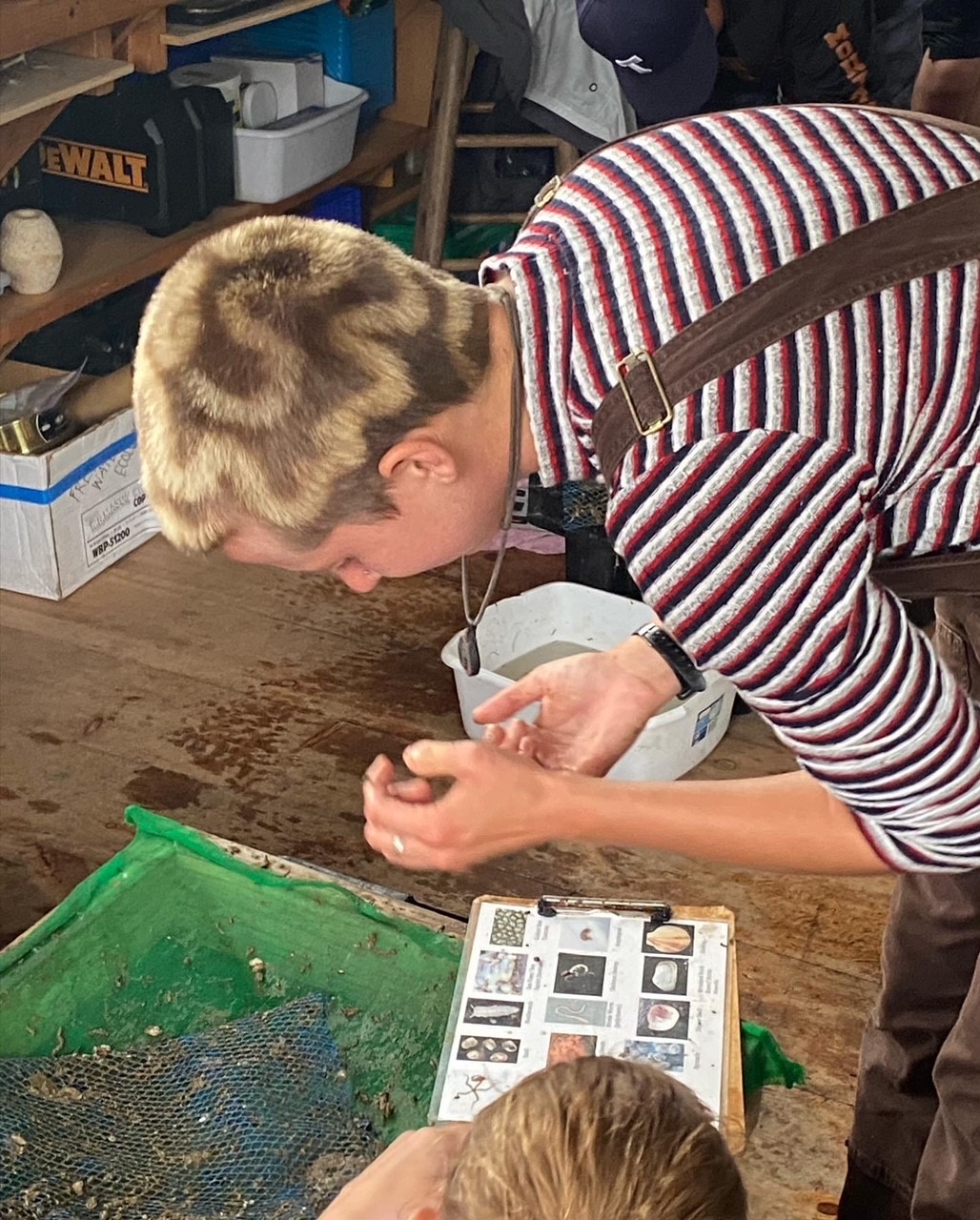
The Maine DOE is excited to build on these successes to reach more students in this expanded program. The 2024 Maine Outdoor Learning Initiative Request for Applications (RFA, also known as grants) is available here: Grant RFPs and RFAs | Division of Procurement Services (maine.gov).  See RFA 202311223. 

Schools, private and nonprofit organizations, municipal Parks and Recreation Departments that are current members of the Maine Recreation and Park Association, and public libraries can apply.  In this sense, “schools” include school administrative Units (SAUs), Career and Technical Education (CTE) Centers or Regions, Education in Unorganized Territories (EUTs), charter schools, and approved private schools located in Maine.  See the RFA for explicit information and definitions on eligibility and allowable uses of funding. 

Grant awards will range from $25,000 to $999,999 with a total of $2,000,000 available. The 2024 Maine Outdoor Learning Initiative grant requires a marketing and outreach plan for reaching students from disadvantaged backgrounds as well as an emphasis on Maine DOE’s Whole Student Framework 

This funding can potentially be used to facilitate outdoor learning programs before, during, or after school; on weekends; during school breaks and/or over the summer. Applications will also be considered for schools and organizations who wish to use the funding to enhance or expand existing outdoor programming. Grants are expected to be awarded in the early spring. All programing must be completed by September 1, 2024. 

This 2024 Maine Outdoor Learning Initiative opportunity is funded in its entirety by the American Rescue Plan Elementary and Secondary School Emergency Relief (ARP ESSER) fund. Learn more about the Maine Outdoor Learning Initiative 

Resources for Educators for Talking with Students About the Conflict Between Israel and Hamas 

School leaders, teachers, and staff are often tasked with helping our students and their families grapple with what’s happening in the news. The Maine Department of Education (DOE) has compiled the following list of resources to assist educators in helping students process the violence, terror, and news coming from the Middle East. 

Discussing the History 

While the current war is between Israel and Hamas, it is important for students to have background on the long history of conflict, attempted peace processes, and the people living in the region.  

Talking with Students 

In the Classroom 

Additional Resources 

Trauma-Informed Resources for School Systems 

The National Child Traumatic Stress Network provides resources that can be filtered by topic, keyword, and audience with a focus on how adults can identify traumatic responses in young people and how to support them.   

For All Ages 

  • If you are an educator in need of additional support, The FrontLine WarmLine is also available from 8am to 8pm, 7 days a week by calling 207-221-8196 or texting 898-211.  
  • For additional support, please reach out to your school-based mental health professionals such as the school counselor or social worker if needed. Parents and students can also call 211 for additional community resources.  If you are a parent and believe your or your child’s mental well-being is in jeopardy, call or text 1-888-568-1112 or emergency responders. 

These resources are neither meant to be exhaustive nor is their inclusion an endorsement of a particular viewpoint. 

Maine DOE Announces No Cost Program to Support Educator Wellbeing and Create Calm and Supporting Learning Environments

600 Educators Can Attend Train-the-Trainer Events Across Maine to Bring Tools and Strategies Back to Their School Communities

The Maine Department of Education (DOE) has partnered with The Regulated Classroom on a program to support educator wellbeing and student engagement at no cost to Maine educators. Six hundred educators can sign up to be trained as trainers in the framework at events across the state and will be able to bring new tools and resources back to their schools.

The COVID-19 pandemic took a tremendous toll on educator and student wellbeing, with educators reporting increased numbers of dysregulated students, stress, and classroom disruptions. Many educators feel overwhelmed by these pandemic-induced behavioral issues. The Regulated Classroom utilizes a neuroscience-based approach to help educators create calm, engaged, and supportive learning environments by cultivating conditions for felt safety. Felt safety references a regulated state in the body’s stress response system.

The program helps educators recognize and manage their own stress levels. It also helps educators manage increased levels of stress in students, which can be displayed as aggression, poor impulse control, limited attention span, and lack of motivation. Educators will have access to a collection of practices and sensory tools to embed into daily routines and activities to promote a more regulated and stable environment for learning. This program supports student achievement and increased job satisfaction for educators.

“The Maine Department of Education is committed to supporting educator and student wellbeing and we’re thrilled to partner with The Regulated Classroom to offer this program at no cost to Maine educators. The Regulated Classroom provides tools and strategies based on brain science that any educator in Maine can infuse into their teaching and daily routines to support themselves and their students in creating calm, safe, joyful, and engaging learning environments,” said Maine Education Commissioner Pender Makin.

“When our nervous system is in a regulated state, the rational part of our brain is online, enabling us to teach and to learn. But when we are in a dysregulated state, the rational thinking part of our brain goes offline and we can’t gather our thoughts and act as we would choose. Environments that feel supportive and safe foster engagement and creative thinking,” said The Regulated Classroom founder Emily Read Daniels, M.Ed., MBA, NCC, SEP™.

Daniels, a New Hampshire school counselor, created The Regulated Classroom in 2020. Since then, it has been implemented in schools and organizations throughout New Hampshire, across the nation, and around the globe.

Ten in-person train-the-trainer certificate events will be held in various regions of the state.

Educators can register for an event at http://www.regulatedclassroom.com/Maine. Maine educators can complete their registration at no cost to them with the code MAINEFREE.

The Maine DOE utilized federal emergency relief funding to offer this program to Maine educators.

Media Release: Maine DOE and Educate Maine Partner to Develop the Teach Maine Center to Support and Grow Maine’s Educator Workforce

The Teach Maine Center will engage, empower, and unite educators across the state to incubate and develop strategies, supports, and professional learning connected to the Teach Maine plan.

The Maine Department of Education (DOE) and Educate Maine have partnered to develop the Teach Maine Center to support and advance a vibrant educator workforce in Maine that enables all students to thrive.

The Teach Maine Center will engage, empower, and unite educators across the state to incubate and develop strategies, supports, and professional learning connected to the Teach Maine plan. Developed in partnership with educators and stakeholders and released last year, Teach Maine focuses on four key themes to develop, support, and sustain Maine’s educator workforce: incentivize recruitment and retention efforts; expand and diversify educator workforce efforts; support educator development, growth, and leadership; and elevate educators and the education profession.

“Maine is a place that values and respects our educators and we are turbocharging that with the Teach Maine Center. The vision is to create a hub by teachers and for teachers that allows them to collaborate, innovate, and lead our profession and public education forward in Maine,” said Maine Education Commissioner Pender Makin.

“We are excited to announce this groundbreaking partnership with the Maine Department of Education to create the Teach Maine Center.  This partnership represents our shared commitment to strengthen, grow and diversify Maine’s educator workforce.  We look forward to this important work and the positive impact it will have on students, teachers, the teaching profession, and the future of education in Maine,” said Educate Maine Executive Director Jason Judd. 

Maine, like most states, continues to experience an educator shortage that was exacerbated by COVID-19. At the same time, educators and schools are faced with increased student and community needs. Increasing collaboration among educators and with businesses and communities will increase educator wellbeing and support them in their teaching.

The initial incubation phase of the Teach Maine Center will focus on increasing stakeholder engagement and collaboration across the business and education sectors; expanding data collection and reporting related to Maine’s educator workforce; advancing and successfully implementing short and long-term teacher recruitment/retention strategies identified in Teach Maine; strengthening professional support for educators through Teach Maine Center programming; and achieving long-term sustainability for the Teach Maine Center, which will be administered by Educate Maine.

Through December 2024, partners will identify and meet with stakeholders around teacher workforce issues, conduct 16 in-person and virtual county-level forums with educators to get input on teacher recruitment and retention, complete a landscape analysis of the educator workforce, solicit statewide educator input on ongoing professional development needs, and launch a marketing campaign focused on encouraging people to join Maine’s educator workforce. In collaboration with key education organizations and the Maine DOE, Educate Maine will assemble an advisory committee to provide input throughout the initial phases of the Center.

The Maine DOE used federal emergency funds to invest in the first phase of the Teach Maine Center.

Read more about the Maine DOE’s efforts to build a vibrant educator workforce.