Maine Department of Education Releases Climate Education Professional Development Grant to Promote Climate Education in Maine Schools

The Maine Department of Education (DOE) is excited to launch a new climate education professional development pilot grant opportunity to support the growth of climate education throughout the state and most especially in underserved communities. This grant initiative was designed out of LD 1902 which passed in the spring of 2022. This grant initiative is designed first and foremost to support teachers and schools. Climate change content and pedagogy can be challenging to approach for many different reasons. It can be a new area for teachers, a subject matter that is challenging to navigate in a school’s community, and an area of education where teachers and schools just don’t know where to get started.  

This initiative asks that schools partner with a non-profit community-based organization because these organizations are integral to communities throughout Maine. They have created, sustained, and grown an incredible framework of outdoor and environmental education opportunities and programs that are tailored to their local regions traits and needs. This initiative will expand on their work to form new connections and expand partnerships between community organizations and schools. These partnerships will support teachers and schools to bring climate education to more of Maine’s students. 

The RFA can be found here, and applications are due on November 3, 2023.

The RFA grant will be phase 1 of 2 initial phases the Maine DOE plans for this effort. Phase 1 will have an application window from early September to October 20th. Phase 1 professional development programs will be awarded for a term from mid-November through the end of August 2024. Phase 2 will build on the successes and learnings of phase one. Phase 2 will have an application window in the winter of 2024 and be designed for programs leading up to and during the school year of 2024-2025. These phases are designed for a wide variety of applicants and programs that might vary in style, content, age, duration, and breadth or depth. 

Applicants should take the time to review the application and ask questions by September 29th (full instructions in the RFA). Just like the program itself, the application can be collaborative with community partners and other local education providers if desired. Applicants that hit priorities one and/or two and cannot connect with a partner or do not know where to start are still encouraged to apply. If the timeline for phase 1 is too tight for applying or the award window does not make sense for this year, phase 2 is a great option with additional time to plan and connect with a partner. 

This program is overseen by Teddy Lyman, the Maine DOE’s new Climate Education Specialist. Teddy will coordinate this program including the application, awards, and deliverables. During the RFA application window, Teddy cannot communicate directly with anyone that might benefit from direct communication that is not publicly available.  

Questions about the RFA should be emailed to Teddy at: Theodore.Lyman@maine.gov by 11:59 pm on September 29th, 2023. Questions and answers will be posted publicly at the link below.  The Climate Education Specialist will also set and execute a wider range of climate education initiatives throughout the state. This will include working with grant recipients, stakeholders, and youth to design, encourage, and build the future of climate education around Maine. 

For more information and updates, check out the DOE climate education webpage.  

A copy of the RFA, as well as the Question & Answer Summary and all amendments related to the RFA, can be obtained at: https://www.maine.gov/dafs/bbm/procurementservices/vendors/grants. 


Maine DOE’s Second Annual Computer Science Showcase Features Innovative Student and Educator Projects

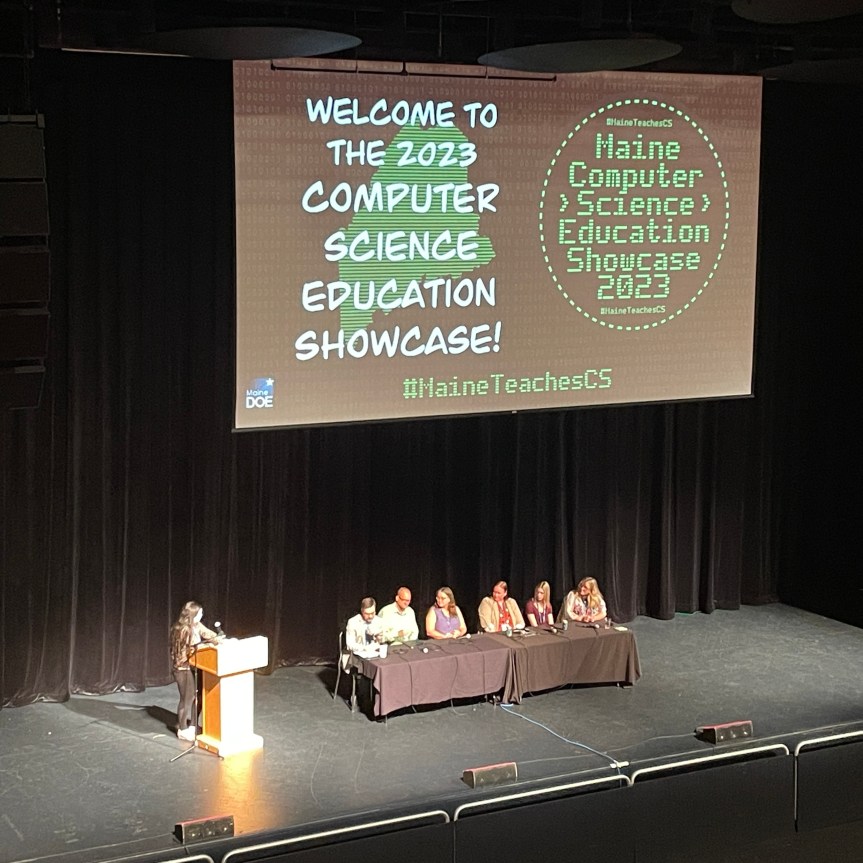
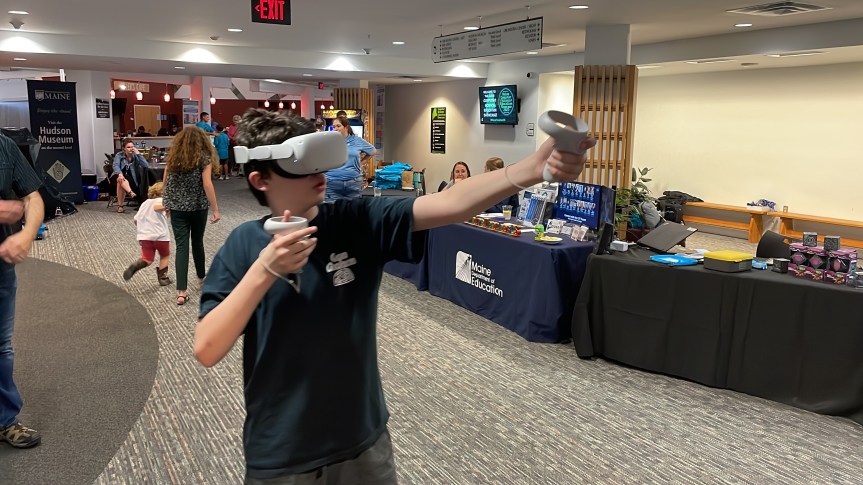
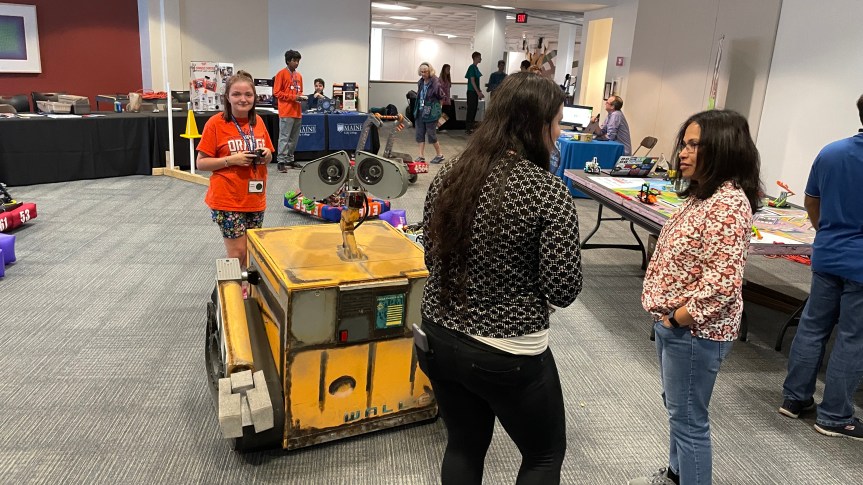
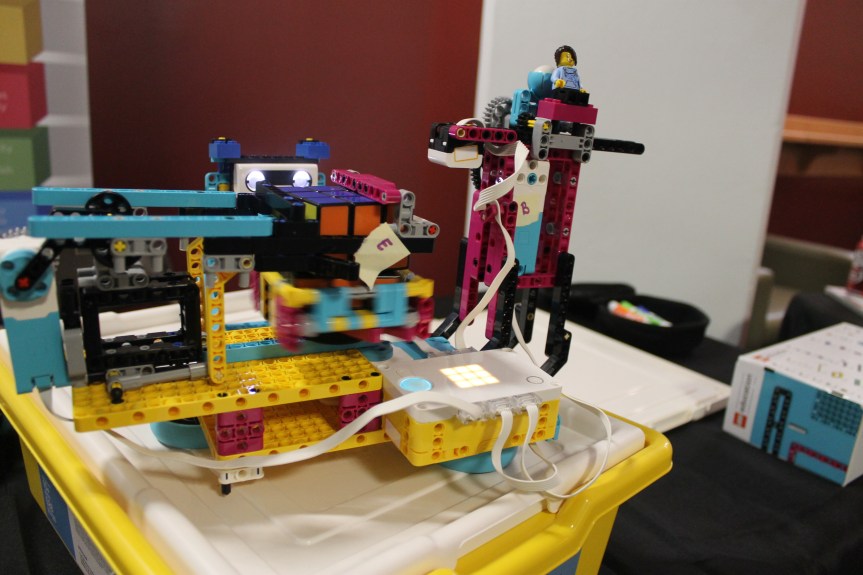
Students and educators from 40 school administrative units (SAUs) across Maine recently participated in the Maine Department of Education’s (DOE) Second Annual Computer Science Education Showcase at the Collins Center at the University of Maine. The Showcase highlighted innovative computer science education programs and projects in schools across Maine, with hands on, interactive exhibits.

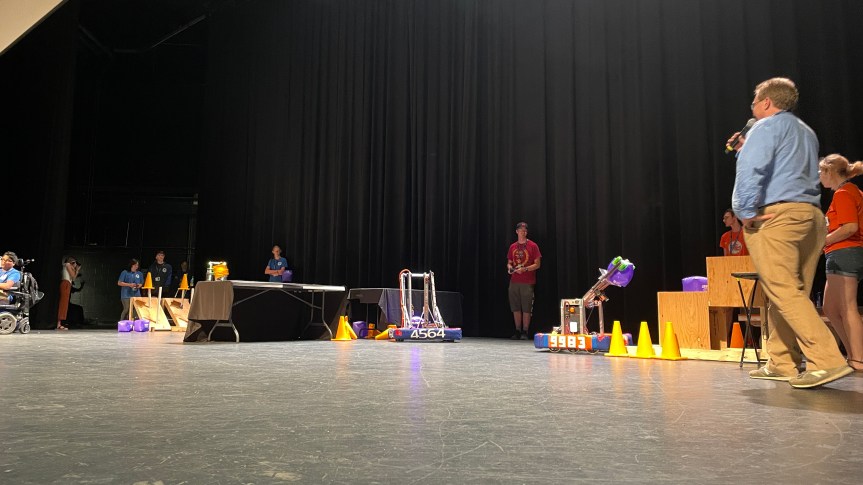
Exhibits featured a variety of computer science education projects, including robotics, artificial intelligence (AI), 3D design, coding, augmented reality/virtual reality (AR/VR), data science, cybersecurity, and more. Robotics students participated in a live demonstration on stage where they had to work together to move objects and overcome structural barriers, requiring teamwork and problem solving.

The Showcase also included a panel discussion with educators, a student, industry representatives, and experts highlighting the importance of computer science education, opportunities for students and educators, and where the field is headed.

“If you can just simply show them and introduce students to these [computer science] concepts, then it opens up a whole world to them. You can be a kid from Maine and do really amazing things in the computer science field,” said Allison Braley, a teacher from RSU 25.

“These are foundational skills we are talking about, and they are across every sector. These are critical 21st century skills that everyone needs regardless of what pathway you choose in life. Kids can stay in Maine, they don’t have to go to Boston or California for these jobs. Employers are here. It doesn’t matter what background you’re from or what zipcode you’re from, this is for every student,” said Angela Oechslie from Project Login.

“If computing is an elective and only for some, you mostly get those students who set out to do that because they see themselves as who society says should do it. The beauty of looking at computer science from pre-k through 12 is that it can be universal, and you can make those opportunities for anybody to stumble across them—it’s young women, it’s those who are the first generation in their family to go to college, it’s kids in rural areas, it’s kids from underrepresented groups. We can diversify the field and we can make the field richer by giving everyone a chance to say that’s the thing I love,” said Penny Rheingans from UMaine.

“Most of the really difficult problems we need to solve over the next 30 years are going to be solved using computer science,” said Judson McIntosh, an Engineering Manager at Tyler Technologies.

Maine continues to lead on computer science education and is the only state to provide interdisciplinary computer science education to all pre-K through grade 12 students in the state. Earlier this year, more than a thousand students from across the state participated in the Maine DOE’s Maine Learning Technology Initiative (MLTI) Student Conference. Students had access to more than 40 sessions that engaged them in essential computer science skills and knowledge, including animation, AI/machine learning, AR/VR, audio editing, CAD/3D Design, robotics, coding, and video game design. More than a dozen of the sessions were led or co-led by students.

Nearly 100 educators from across the state attended a multi-day institute in July, focused around computer science education. Educators spent two and a half days engaging in sessions and collaborating to integrate computer science into their classrooms and upcoming school year activities. Topics included Robotics & Programming, Coding & Hardware, Augmented & Virtual Reality, and much more. The more than 600 participants at this year’s Maine Educator Summit also had access to multiple workshops and sessions related to computer science and technology skills and integration.

Last year, the Mills administration launched a new Maine DOE initiative to provide every Maine school with a free mobile computer science lab. Schools were able to order one of three mobile lab options: Robotics and Programming, Augmented and Virtual Reality, and Coding and Hardware. Each lab contains computer science equipment valued at $5,000 and is designed to be integrated into any content area and skill level. Additionally, the initiative made available professional learning opportunities for educators tailored to each computer science topic area.

Media Release: Maine DOE’s Career Advancement and Navigation Specialists Build Workforce Skills Across Maine

The Maine Department of Education (DOE)’s Adult Education team recently launched a Career Advancement and Navigation Specialist initiative to build workforce skills across Maine. The four state Career Advancement and Navigation Specialists work in different regions of Maine and serve people with the next steps in their careers. They help people explore career options, create impactful resumes, apply for positions, seek further career and skills training, obtain translator services, and connect them with community support resources.

Through Maine Jobs and Recovery Plan (MJRP) funding, Career Navigators have already helped more than 450 workers across the state with their career goals, including a new Mainer who sought a second shift position to support his family. The Career Navigator was able to help him find a position that fit his experience and needs and supported him in the process of getting translation services, applying, interviewing, onboarding, and orientation. Another worker was able transition from a food delivery position to a new job in the court system through his work with a Career Navigator.

Maine’s Career Navigators support workers in their communities, at Adult Education sites and through community-based organizations, by partnering with other agencies including the Career Center and FedCAP Rehabilitations Services, and through a network of relationships with employers in manufacturing, retail, healthcare, and hospitality. To learn more about the Career Navigators, click here. 

Career Navigators share their experiences:

“I spoke with a local recovery group about the ways I can help them when they’re ready for employment.  At the end of the conversation, the facilitator said, ‘Normally when we talk about employment, the conversation feels stressful and difficult.  This is the first time it feels hopeful.’ The best part of this job is being able to help people see hope and help them work towards a different future,” said Kate Points, Career Navigator for York County.

“The work of the Career Navigator in local communities means being able to meet people where they’re at, personally and sometimes even physically. Many of our potential clients have access barriers, both physical and mental. They lack transportation, communication skills, technology access, or not only the knowledge, but the tools or the executive function required to access those resources. Many have experienced shame in asking for help previously and they need an advocate who can provide the kind of high touch service and support that puts them and their needs first when it comes to accessing education and employment. In this way, the impact of Career Navigator services are immeasurable,” said Cassie Robichaux, a Career Navigator for Waldo, Knox, Sagadahoc and Lincoln counties.

“The diversity of the people coupled with how resilient they are in my community amazes me. Although the amount of people I serve is high, I’m driven to help more people because getting to know more wonderful people in my community has been so meaningful,” said Karen Morin, a Career Navigator for Kennebec County.

“Sometimes things get in the way and what was once a clear track becomes riddled with obstacles. Career Navigators help people overcome the obstacles encountered when they are looking for employment and the next step in their career journey. That, to me, has always been a great distinction and huge benefit of career navigation through adult education: we can still support you, even after you’ve graduated and whether you’re affiliated with an educational institution or not,” said Frank Spurr, a Career Navigator for Androscoggin and Oxford Counties.

Since the Maine Jobs and Recovery Plan took effect in October 2021, the Mills Administration has delivered direct economic relief to nearly 1,000 Maine small businesses, supported more than 100 infrastructure projects around the state to create jobs and revitalize communities, and invested in workforce programs estimated to offer apprenticeship, career and education advancement, and job training opportunities to 22,000 Maine people. For more about Maine Jobs & Recovery Plan, visit maine.gov/jobsplan.

What Holds Us Together. Maine Education Commissioner Pender Makin’s Back-to-School Message

It’s time to celebrate the start of a bright new school year! Maine students, teachers, and school staff members are transitioning into familiar rhythms and routines, reconnecting with classmates and colleagues, and forging new micro-communities on the bus, in the classroom, in the cafeteria, and on the playground. Maine’s public schools are outstanding and unique in many ways. For example, we are the only state offering access to Computer Science labs in all schools and for all grade levels, and Maine was one of the first two states in the nation to make the school lunch program free for all students. Highly skilled and exceptionally caring educators are ready to engage, challenge, and support their students, and courageous school and district leaders are encouraging innovative, student-centered practices.  

Maine students have daily opportunities to gain knowledge, practice new skills, and develop competencies as self-directed learners. This year, they will discover new interests and hone new strengths as they learn how to thrive as unique individuals within a diverse community of other unique individuals. Our schools provide critical contexts for students to strive boldly, to fail safely, to learn, persevere, and recommit—and to glean early sparks of wisdom from those experiences to light their paths through adulthood. 

Reflecting our collective investments and commitments, Maine’s local schools provide shape, cohesion, and definition for our communities. Our schools also stand out, especially in times of stark social and political division, as places where people come together to do the most important work of any free society.   

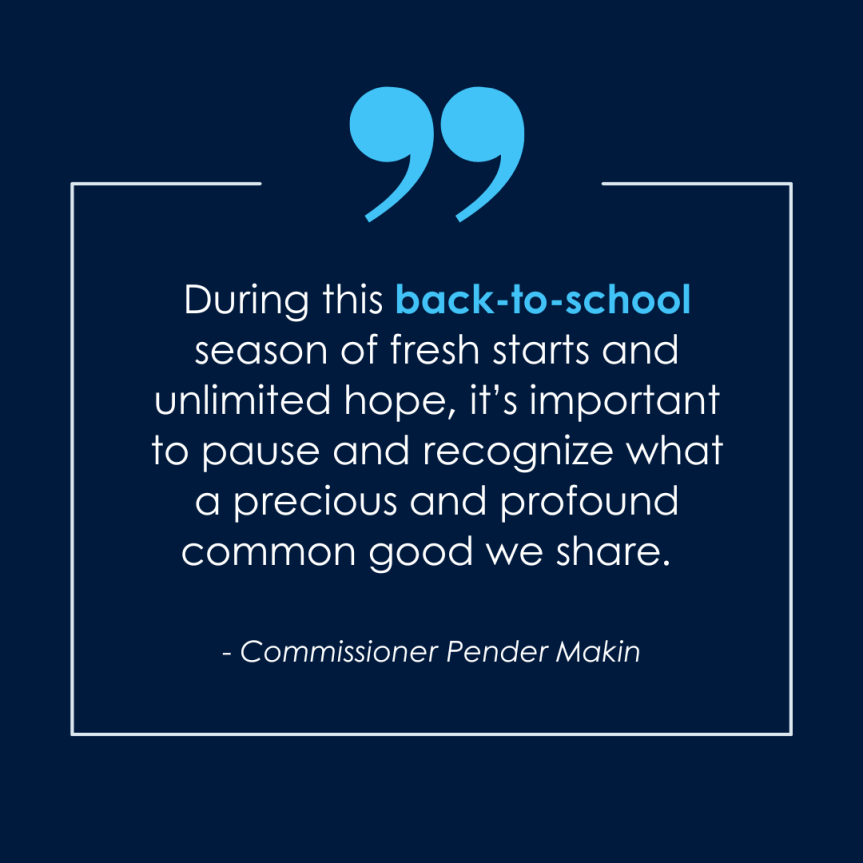
It’s easy to take public education for granted as it’s woven so tightly into the fabric of our lives. So, during this back-to-school season of fresh starts and unlimited hope, it’s important to pause and recognize what a precious and profound common good we share.  

Maine Education Commissioner Pender Makin

Teacher Shortage Areas For 2023-2024 School Year 

The U.S. Department of Education (USDOE) annually designates teacher shortage areas for the purposes of deferment of loan repayments or reductions of teaching obligation. The Maine Department of Education (DOE) recently requested input regarding designated teacher shortage areas for federal reporting and would like to thank all those who submitted information during the comment period. The comments related to teacher shortage enabled the DOE to add additional teaching endorsements to the USDOE proposal. The following are PreK-12 teacher shortage areas for the 2023-2024 school year:

  • General Elementary
  • Early Childhood
  • English for Speakers of Other Languages
  • English/Language Arts (Middle and Secondary Level)
  • Mathematics (Middle and Secondary Level)
  • Science-Physical (Secondary Level)
  • Science-Life (Secondary Level)
  • Science (Middle Level)
  • Physical Education
  • World Languages
  • Visual Arts
  • Teacher of Students with Disabilities (See note below.)

In Maine, the annual teacher shortage list is utilized by the DOE to determine which endorsements are eligible for an emergency certificate.  It should be noted, however, that on October 4, 2022, the U.S. Department of Education Office of Special Education Programs (OSEP) released a memorandum to clarify the requirements of IDEA Part B, which outlines the expectations for the preparation and training of all special education teachers nationwide. Noted in the memo, special education certification or licensure requirements may not be waived.

For federal purposes, the benefits to student financial aid recipients, such as loan cancellations, are indicated in the following regulatory provisions:

  • 34 CFR 682.210(b)(5)(ii), (b)(7), (q), and (s) enable a borrower who had no outstanding Federal Family Education Loan (FFEL) Program loan on July 1, 1987,  but who had an outstanding FFEL Program loan on July 1, 1993, to qualify for deferment of loan repayment under the Stafford Loan Program anytime within the life of the borrower’s loan(s) for up to three years of service as a full-time teacher in a private elementary or secondary school in a teacher shortage area designated by the Department, and as certified by the chief administrative officer of the particular school in which the borrower is teaching;
  • 34 CFR 674.53(c) enables Federal Perkins Loan borrowers who are full-time teachers of mathematics, science, foreign languages, bilingual education, or any other field of expertise where the State educational agency determined there is a shortage of qualified teachers to qualify for cancellation of up to 100 percent of the outstanding balance on the borrower’s Federal Perkins loans; and
  • 34 CFR 686.12(d) enables grant recipients to fulfill their teaching obligation under the Teacher Education Assistance for College and Higher Education (TEACH) Grant Program (regarding the requirement to serve at least four academic years, within eight years of graduation) by teaching in a “high-need field,” which includes academic disciplines/subject areas identified as teacher shortage areas at the time the grant recipient begins teaching in that field.

Stafford Loan and Supplemental Loans for Students (SLS) borrowers who have questions concerning their loans, including the teacher shortage area deferment, can contact the Federal Student Aid Hotline at 1-800-4FED-AID.

Federal Perkins Loan borrowers should contact the school where they received the loan.

For questions related to the 2023-2024 shortage areas, please contact Michael Perry, Acting Director, Office of Higher Education and Educator Support Services, at michael.t.perry@maine.gov.

Media Release: Maine DOE Provides Schools with Additional $2 Million to Expand Summer Learning and Enrichment

The Maine Department of Education (DOE) provided an additional $2 million to 17 school units to expand engaging and meaningful summer learning programs across the state for nearly 1,000 students. The programs focus on helping students recover from the impacts of the pandemic through additional math and literacy instruction, tutoring, hands-on outdoor learning experiences, and family engagement activities. Students have access to meals and get to spend the summer building skills and knowledge and engaging in fun activities with their classmates.  

“These are meaningful summer learning programs that provide students with the academic support they need to recover from the pandemic while also allowing them to explore the outdoor world around them, be creative, engage in project-based learning, build social skills and connections, and have reliable meals,” said Maine Education Commissioner Pender Makin. 

The summer learning opportunities are paid for using federal emergency relief funding and are in addition to the $2.1 million granted to 63 school administrative units (SAUs) to support summer enrichment programming through the Title I Summer Reallocation Grant. 

Expanded Summer Learning and Enrichment Programs 

East Millinocket School Department
East Millinocket School Department’s extended school year program provides students with high-quality tutoring and intensive reading instruction to support learning growth. Students also participate in immersive outdoor learning opportunities at Baxter State Park and other area destinations.   

East Range II CSD 
East Range II School’s summer day program provides students with learning opportunities that will engage them physically, mentally, and creatively. Programming focuses on instruction as well as providing access to mental health, occupational therapy, and speech therapy services that many students do not have access to over the summer. Students also have access to breakfast, snacks, and lunch during the summer program and monthly access to the school’s food pantry program. 

Students also attend Down East Lakes children’s program once a week to provide hands on experience with natural science and will visit Twin Ponds Nature and Discovery Center to learn about aquatic and land species in their area and in Maine. Student use drawings and writings to document their experiences. Families will come together at a nearby lake for a final family engagement day.  

Fiddlehead School of Arts and Sciences Charter School 
Fiddlehead offers students six weeks of camp activities to continue their learning in literacy and math through hands-on, minds-on enrichment activities. Camp activities include art, theater, musical theater, 3D art, young inventors, paper arts, and clay sculpting. All camps end with a showcase for families and there is extended reading time built into all camp schedules to strengthen literacy skills.  

Hancock Public Schools 
Hancock Grammar School offers students a four-week summer program for literacy using evidence-backed practices. Students will also participate in math programming each day.  

Hope Public Schools 
Hope Public Schools offers students summer programming focused on academic enrichment and the opportunity to grow socially and emotionally. The program provides students an immersive learning opportunity in the school garden, where students measure, predict, write, experiment, and read in the garden. Parents and community members join by reading to children in the garden and distributing food to families.  

Madawaska 
Madawaska Elementary School’s extended educational opportunities provide students with additional targeted learning experiences and instruction, exposure to project-based learning and real-world application, critical thinking skills, and social emotional benefits that emerge from confident learners. The program also includes student visits to the Acadian Village to explore history and language, Four Seasons Outdoor Center to explore natural science concepts and apply math concepts to real life examples, and the University of Maine Fort Kent junior learner’s programs and activities. Families also have access to family math night, early learners open house and information night, reading night in the library, and other family and community events.  

Maine Connections Academy 
Maine Connections Academy’s summer program focuses on students who are credit deficient and lack the class completion needed to graduate on time. The program focuses on re-engaging these students and providing supplemental targeted intensive instruction to complete courses required for promotion/graduation. A parent or adult is designated as each student’s Learning Coach and responsible for documenting attendance for the students throughout the summer school period and coordinators work closely with parents and guardians throughout the summer program to ensure parent engagement. 

Otis Public Schools 
Otis Public School’s four-week summer program provides focused literacy and math interventions to students who are furthest from meeting benchmarks. Student also participate in team-building challenges, STEAM opportunities, and physical activities that engage and motivate students in experiential learning. Students take part in experiential learning opportunities at Lamoine State Park and Bangor Children’s Museum. 

Portland Public Schools 
Portland Public Schools offers students a daily summer program focused on students in need of reading and math recovery instruction. The program also prioritizes students who are experiencing homelessness. Reading and math instruction is combined with hands-on enrichment activities and STEAM instruction.  

MSAD 11 (Gardiner) 
In partnership with The Boys & Girls Clubs of Kennebec Valley in Gardiner, MSAD 11 provides students with academic and enrichment programming to support learning recovery and meet the social and emotional needs of students. Students most in need of academic support, students from low-income households, and students who could greatly benefit from extra social interaction and extra-curricular activity during the summer months are prioritized for the six themed weeks of programming. Summer programming features engaging, hands-on activities that promote learning, have real-world applications, and build on students’ sense of exploration, engagement, and belonging. MSAD 11’s summer program provides academic support in math and reading, project-based learning, health and wellness programs, STEM projects including include visits from Chewonki, a robot coding class, and a field trip to The Maine Wildlife Park, visual and performing arts programs, multicultural education, youth leadership and service learning, and parent engagement throughout, including STEM night, Olympian Week, and the Gardiner Public Library Summer Reading Program. On Tuesdays, parents can come with a bag and take a variety of foods home for free that were all donated by Hannaford and the local food bank.   

RSU 14 (Windham) 
RSU 14’s summer program supports students who need additional early literacy and math instruction. Students attend this summer programing 4 days a week for 4 hours a day and get the support they need to he will program prepare students to smoothly transition to the next grade level by strength knowledge of early literacy and numeracy concepts. Staff also engage with families by providing materials and instructions to support their child at home, including make and take activities for parents in both math and literacy and a parent afternoon tea.  

MSAD 15 (Gray) 
The Patriot Arts and Learning Summer Institute uses an arts and STEM integrated approach to address COVID learning gaps in literacy and numeracy in grades K-4. Students in the program receive daily instruction in literacy, numeracy, arts, and STEM. Students are also be provided breakfast, lunch, and outdoor movement time daily. The Patriot Arts and Learning Institute utilizes a “push-in” field trip model to bring unique and fun opportunities to students aligned with learning. Push-in field trips focus on arts and STEM integration including traveling planetarium, Portland Stage, Portland Ballet, animal rescue outreach, and team building activities. MSAD 15 has also partnered with the local recreation departments to provide before and after care for students in the Patriot Arts and Learning Summer Institute. 

MSAD 17 (Oxford Hills) 
RSU 17’s “Camp Achieves” focuses on engage students in learning through fun, active, hands-on math and science lessons and projects. Additionally, language and literacy will be incorporated into the daily activities. Students will hear from and interact with local beekeepers, farmers, and wildlife specialists and engaging in experiential learning at a community garden and Roberts Farm. Tier II interventions will be provided in both literacy and math. At the close of the program, an ‘open house’ will be held for the purpose of students’ sharing projects with their parents.  

RSU 34 (Old Town) 
RSU 34 offers students and families a variety of summer programming to meet their individual needs, including in-person learning opportunities for students in a four-week model, one-on-one and small group high-dosage tutoring for students spanning the entire summer, an engaging virtual asynchronous option for students to engage in weekly learning objectives with on-call support, and ongoing programming for students delivered through school libraries and school garden. 

MSAD 70 (Hodgdon) 
RSU 70’s summer school focuses on helping students fill learning gaps caused by the pandemic and maintain current learning as well as gain proficiency in student specific learning identified. The summer school also provides exploratory experiences to apply learning in engaging ways through field trips and real-life experiences that encourage reading, science, and math. 

RSU 82/MSAD 12 (Forest Hills/Jackman) 
RSU 82/MSAD 12’s summer learning and enrichment program focuses on the academic and wellbeing needs of students and family engagement through academic instruction and projects, family literacy night, family math night, and a showcase event allowing students to present their summer portfolios to their families.   

Veazie Public Schools 
Veazie Public Schools provides students with targeted instruction over the summer in areas where they may have fallen behind due to the pandemic. Programs include small group instruction, one-on-one support, and targeted interventions to help students catch up on missed content and develop the skills they need to ensure future success. School library services are available to students all summer and families have access to at least two free family movie nights at the school. By actively engaging families in the summer school program, the school hopes to promote a sense of community, support student learning, and foster a positive learning environment for all students. 

Media Release: College and Career Success Coordinators Provide Academic and Career Supports and Help Students Transition to College

The Maine Department of Education (DOE) and the Maine Community College System announced that current and prospective community college students across the state now have access to College and Career Success Coordinators to provide them with academic and career supports and assist them with the transition to college. Through Maine Jobs and Recovery Plan (MJRP) funding, the Success Coordinators have already served more than 1,000 students and helped nearly 400 students develop career and academic plans.

College and Career Success Coordinators work alongside existing community college staff to provide students with:

  • Academic support, including navigating learning platforms, goal setting, creating academic plans, and time management strategies.
  • Transition support for students entering community college.
  • Advising, including success coaching, course collection, troubleshooting, promoting self-agency, career planning, and getting to college completion.
  • Resource referrals on and off campus, including tutoring, financial aid, Adult Education services, housing services, scholarships, workforce opportunities, and community supports.

“The transition to college can be daunting, but now Maine students have access to College and Career Success Coordinators to help them manage that transition with ease and get the help they need to succeed at school and beyond. Success Coordinators are there to help students problem solve and assist them with everything from academic planning to housing and job opportunities,” said Maine Education Commissioner Pender Makin.  

Maine Adult Education awarded more than 1,000 high school credentials to adult learners last year, and many of these learners continued their education at Maine’s community colleges. Students earning their high school credentials in 2020-25 qualify for up to two years of free community college, paying nothing in tuition or mandatory fees. Success Coordinators refer students to resources on campus, the state’s Adult Education programs, or partner agencies in the community to help them succeed in their college studies.

Prospective and current students can find the dedicated College and Career Success Coordinator in their county here

“The College and Career Success Coordinator was a huge help to me,” said Jessica Piela, a student in the Respiratory Therapy Program at Kennebec Valley Community College. “She helped me navigate college without making me feel ashamed or judged. I may not have continued my career path if it wasn’t for her and her support.”

“I’ve worked in adult education and college academic support for over 15 years, and I am so happy to continue to serve these students as they take the next steps on their educational journey,” said Audrey Kimball, the Success Coordinator for York County Community College.

Since the Maine Jobs and Recovery Plan took effect in October 2021, the Mills Administration has delivered direct economic relief to nearly 1,000 Maine small businesses, supported more than 100 infrastructure projects around the state to create jobs and revitalize communities, and invested in workforce programs estimated to offer apprenticeship, career and education advancement, and job training opportunities to 22,000 Maine people.

For more about Maine Jobs & Recovery Plan, visit maine.gov/jobsplan.

To read the bios of Maine’s Career Navigators and College and Career Success Coordinators, and learn more about the programs, click here. 

Media Release: Maine DOE Launches ‘Hot Lunch Summer’ to Provide Children With Nutritious Meals Beyond the School Year 

The Maine Department of Education (DOE) announced the return of Hot Lunch Summer, the state’s summer food service program which provides free meals to children beyond the school year. These meals are available at hundreds of sites across Maine and families can locate nearby meal opportunities on the Hot Lunch Summer website HotLunchSummer.com or by texting ‘Summer Meals’ to 914-342-7744.

“Hot Lunch Summer ensures that Maine children can continue to access the healthy and nutritious meals they rely on during the school year,” said Maine Education Commissioner Pender Makin. “No child should worry about going hungry when the school year ends, and we thank the schools and organizations that have stepped up to make the distribution of these meals possible.”

Maine’s Summer Food Service Program is a U.S. Department of Agriculture program offered statewide in areas or at sites where more than 50 percent of the children are eligible for free or reduced meal benefits under the National School Lunch Program or where census track data supports the need. Free meals are provided to children 18 and younger at open meal sites. Eligible sponsoring organizations include schools, nonprofit residential summer camps, government agencies, and tax-exempt organizations including faith-based organizations. This year, rural meal sponsors may offer free meals offsite to further assist in reaching children who are unable to access congregate meal programs.

The Maine DOE launched Hot Lunch Summer last year as a statewide ad campaign to raise awareness of summer meal options and clearly explain the logistics of where, when, and how Maine children and adolescents can access complementary meals. This year, the campaign focuses on reaching households through social media networks and includes an animated video to promote summer meal opportunities which you can view here.

To find nearby summer meal sites, please visit www.HotLunchSummer.com or text “Summer Meals” to 914-342-7744.

###

In accordance with federal civil rights law and U.S. Department of Agriculture (USDA) civil rights regulations and policies, this institution is prohibited from discriminating on the basis of race, color, national origin, sex (including gender identity and sexual orientation), disability, age, or reprisal or retaliation for prior civil rights activity.

Program information may be made available in languages other than English.  Persons with disabilities who require alternative means of communication to obtain program information (e.g., Braille, large print, audiotape, American Sign Language), should contact the responsible State or local Agency that administers the program or USDA’s TARGET Center at (202) 720-2600 (voice and TTY) or contact USDA through the Federal Relay Service at (800) 877-8339.

To file a program discrimination complaint, a Complainant should complete a Form AD-3027, USDA Program Discrimination Complaint Form which can be obtained online at: https://www.usda.gov/sites/default/files/documents/USDA-OASCR%20P-Complaint-Form-0508-0002-508-11-28-17Fax2Mail.pdf, from any USDA office, by calling (866) 632-9992, or by writing a letter addressed to USDA. The letter must contain the complainant’s name, address, telephone number, and a written description of the alleged discriminatory action in sufficient detail to inform the Assistant Secretary for Civil Rights (ASCR) about the nature and date of an alleged civil rights violation. The completed AD-3027 form or letter must be submitted to USDA by:

(1)       mail:

U.S. Department of Agriculture
Office of the Assistant Secretary for Civil Rights
1400 Independence Avenue, SW
Washington, D.C. 20250-9410; or

(2)       fax:

(833) 256-1665 or (202) 690-7442; or

(3)       email:
program.intake@usda.gov

This institution is an equal opportunity provider.

The Maine Human Rights Act prohibits discrimination because of race, color, sex, sexual orientation, age, physical or mental disability, genetic information, religion, ancestry or national origin.

Complaints of discrimination must be filed at the office of the Maine Human Rights Commission, 51 State House Station, Augusta, Maine 04333-0051. If you wish to file a discrimination complaint electronically, visit the Human Rights Commission website at https://www.maine.gov/mhrc/file/instructions and complete an intake questionnaire. Maine is an equal opportunity provider and employer.


Media Release: Maine DOE Awards Additional $800,000 in ‘Strengthening Maine’s Workforce’ Education and Training Grants 

The Maine Department of Education (DOE) announced funding for six additional Strengthening Maine Workforce grants to develop workforce training initiatives, build employer partnerships to address workforce shortages, and expand English language acquisition services.

In total, grants for Strengthening Maine Workforce Projects now totals $4 million invested in 14 projects. Funding for these initiatives is through Governor Mills’ Maine Jobs & Recovery Plan, her plan, approved by the Legislature, to invest nearly $1 billion in Federal funds to improve the lives of Maine people and families, help businesses, create good-paying jobs, and build an economy poised for future prosperity.

Through these grants, Bangor Adult & Community Education will expand English language acquisition programs in the Bangor area, Augusta Adult & Community Education will offer an English as a second Language classes for Maine General Health employees and reduce barriers to employment, OOB/Saco Adult & Community Education will increase career pathways and allow students to earn industry-recognized credentials, Lewiston Adult Education will expand workforce training in healthcare, hospitality, and manufacturing, Mid Maine Regional Adult & Community Education will create a Medical Assistant certification program, and Merrymeeting Adult Education will prepare new Mainers with language acquisition, healthcare certification courses, and partnerships with employers.

“These grants will provide Maine workers with the skills, knowledge, and pathways they need while helping employers address critical workforce shortages. Adult Education programs serve as a hub connecting learners and employers and strengthening Maine’s workforce,” said Maine Education Commissioner Pender Makin.   

“We are excited to be awarded this grant and are proud to serve our community. Our goal as the local adult education program is to strengthen the community and economy through workforce training opportunities,” said Kayla Sikora, Director of Augusta Adult and Community Education. 

“We are thrilled to be a recipient of the MJRP grant, which will directly benefit the growing multilingual learner population in our region. This funding will allow us to provide augmented academic and advising services, and most importantly, enable us to better assist our learners with workforce training and employment opportunities,” said Dave Durkee, Director of OOB/Saco Adult and Community Education. 

Strengthening Maine Workforce Project Grant Recipients: 

Bangor Adult & Community Education: Increasing ELL Opportunities in Greater Bangor 
Total award amount: $93,396 
Bangor Adult & Community Education will partner with Las Palapas and other area restaurants to provide intake, assessment, advising, and instructional time with a national standards-based curriculum to English Language Learners. This project will more than double the access to Multilingual learner services for adult learners in the Greater Bangor Area.

Augusta Adult & Community Education: Maine General Health ELL Programming 
Total award amount: $91,602 
Augusta Adult and Community Education will partner with Maine General Health to provide English as a second Language classes to Maine General Health multilingual employees as well as the addition of a new pre-health class. The program will reduce barriers that may affect their employees from participating in programming by funding transportation, childcare, and technology costs for employees in environmental services and groundskeeping for career advancement and life skills.

OOB/Saco Adult & Community Education: Healthcare and Retail Career Pathways for New Mainers 
Total award amount: $200,000 
OOB/Saco Adult & Community Education will expand career and retail opportunities for Multilingual Learners through existing employer partnerships, and by increasing the capacity of urban programs. Participants will earn industry-recognized credentials of value in Healthcare and Retail Management.

Lewiston Adult Education: Integrated Skills-Based Pipeline Pathways to Employment 
Total award amount: $200,000 
Lewiston Adult Education will partner across Androscoggin and Oxford counties to expand workforce training to the healthcare, hospitality (restaurants and lodging), and manufacturing industries. Lewiston Adult Education will develop and expand adult programs for workforce training and pipeline pathways that can more effectively meet the needs of employers throughout the region. These workforce programs will prioritize the development of the foundational skills that lead to industry-recognized credentials of value, employment, and may also allow for renewal of certifications. The creation of these programs will both expand the HUB’s capacity to provide more training in these identified areas, and it will allow for the creation of new programs that are not currently part of the adult education offerings.

Mid Maine Regional Adult & Community Education: Clinical Medical Assistant Program Expansion 
Total award amount: $82,650 
Mid Maine Regional Adult Community Education will partner with Maine General Health to create a comprehensive, earn-to-learn Medical Assistant certification program to fill one of their largest employment gaps.

Merrymeeting Adult Education: Healthcare Certification Courses for New Mainers 
Total award amount: $129,126 
Merrymeeting Adult Education will prepare new Mainers with language acquisition, healthcare certification courses (CNA), and practical experiences to help learners connect with healthcare community partners and help fill the healthcare worker shortage in Lincoln and Sagadahoc counties.

The Maine DOE’s Adult Education Team funded 8 projects in the first round of funding last October.

Since the  Jobs Plan took effect in October 2021, the Mills Administration has delivered direct economic relief to nearly 1,000 Maine small businesses, supported more than 100 infrastructure projects around the state to create jobs and revitalize communities, and invested in workforce programs estimated to offer apprenticeship, career and education advancement, and job training opportunities to 22,000 Maine people.

For more about Maine Jobs & Recovery Plan, visit maine.gov/jobsplan.

###

New Members Appointed by Governor Mills to the Maine State Board of Education

The Maine Department of Education (DOE) and the Maine State Board of Education today announced the new members of the Board and member reappointments.

The Board consists of nine voting members and two nonvoting student members appointed by the Governor. Board members serve staggered, five-year terms and nonvoting student members serve staggered, two-year terms.

New Maine State Board of Education Student Member:

Phat Gia Thai

Phat Gia Thai of Portland will begin serving his appointment to the State Board of Education as a student member on July 22, 2023. Thai will be a Junior at Deering High School where he is currently an honors and AP student. He is an active member of his school community and a member of many extracurricular activities including Deering High School Student Council, President and Founder of Deering Asian Student Union, Class of 2025 Student Senate, Natural Helpers Club, and the Varsity Tennis Team. Thai has been involved in the organization Seeds of Peace and has led a school mural project in collaboration with the nonprofit organization Painting For A Purpose. He stated, “My main goal in creating this mural was to celebrate the importance of diversity in our community.”

New Maine State Board of Education Member:

Denham Ward, MD, PhD of Bowdoinham was appointed to the State Board of Education on March 20, 2023. Dr. Ward received his BS(EE) at the University of Maine and went on to get his PhD in Systems Science at UCLA. Becoming interested in physiology, he then went to the University of Miami to obtain his MD. Following his residency in Anesthesiology, he started his career in academic medicine at UCLA. Besides his clinical and research interests, he has been heavily involved in medical education, serving as residency program director at UCLA and then as the chair of Anesthesiology at the University of Rochester. While at the University of Rochester, Dr. Ward was President of the Association of Anesthesiology Program Directors. With a major interest in how medical school faculty teach, he became the Associate Dean for Faculty Development at Rochester and was instrumental in developing a Master’s Degree in Health Professions Education. After retiring clinically, Dr. Ward returned to Maine. He was President and CEO of the Foundation for Anesthesiology Education and Research, which gave grants to improve clinical teaching in Anesthesiology. Dr. Ward has been involved with education at Maine Medical Center, helping to start the Academy at the Maine Health Institute for Teaching Excellence and has continued his association with the University of Maine, currently serving on the Honors College Board of Advocates.

Maine State Board of Education Member Reappointments:

Fern Desjardins of St. Agatha was recently reappointed to a second five-year term on the State Board of Education. She has served on the School Construction Committee (currently Chair), Certification & Higher Education Committee, Legislative Action Committee, Maine Charter School Commission, Board Effectiveness Committee, and several other committees of the State Board. She represents the State Board on the Maine Education Policy Research Institute Steering Committee and on other education committees. Desjardins was elected to the Board of Directors of the National Association of State Boards of Education in June 2019 and has served on a number of their committees. She was elected secretary-treasurer of the organization in October 2021. Desjardins worked for 43 years in RSU 33/MSAD 33 as a teacher, elementary school principal, and superintendent of schools before retiring in 2017. She has taught graduate level courses for UMaine as an adjunct faculty member, worked as a facilitator for school systems, and served on various committees and special projects of the Maine DOE. She holds a Doctoral Degree in Educational Leadership and a Master’s Degree in Language Arts from UMaine, a Certificate of Advanced Studies in Educational Leadership from USM, and a Bachelor of Science in Elementary Education from UMFK.

Wendy L. Ault of Wayne was recently reappointed to a second five-year term on the State Board of Education. Ault serves on the Certification & Higher Education Committee (currently Chair), Career & Technical Education Committee, Legislative Action Committee, Student Voices Committee (Co-Chair), and Board Effectiveness Committee. Ault is a graduate of Bates College in Lewiston. She served as the Associate Director of Admissions at the University of Maine at Farmington for 17 years. During her tenure at UMF, she was elected to four terms in the Maine House of Representatives representing part of Kennebec County from 1988 through 1996. She served all eight years as a member of the Joint Standing Committee on Education and Cultural Affairs, serving as its House Chair during her final term. Ault is the Executive Director of the MELMAC Education Foundation.

Fern Desjardins, Chair of the Maine State Board of Education, stated: “The board will benefit from the reappointment of the most senior member of the board, Wendy Ault, who joined the board in October 2017; and the recent addition of Denham Ward, whose vast knowledge and experiences, especially in higher education, greatly supports the board’s efforts in carrying out its duties and responsibilities. I was very impressed with Phat Gia Thai’s testimony at his recent confirmation hearing in front of the Joint Standing Committee on Education and Cultural Affairs and look forward to welcoming him to the State Board in July. I am blessed and deeply humbled by my reappointment to the board and for having had the honor of serving as chair of the board for almost two years. Leading a board of dedicated individuals committed to the board’s mission ‘to provide leadership and to support policy development that promotes equitable access to high-quality educational opportunities for all students in safe, healthy, and inclusive school environments’ is energizing and highly rewarding. As a board, we continue to make great strides toward our vision that all students will receive a high-quality education.”

For more information about the State Board of Education, visit their website https://www.maine.gov/doe/about/leadership/stateboard