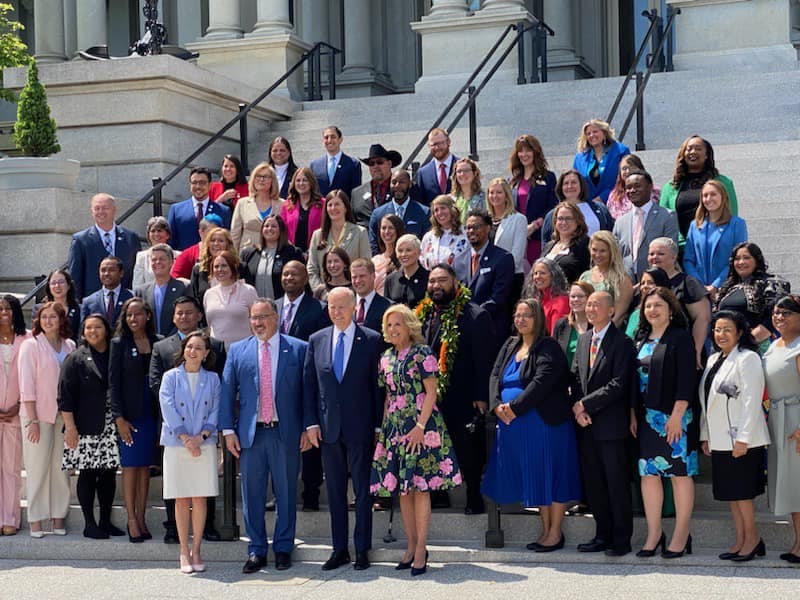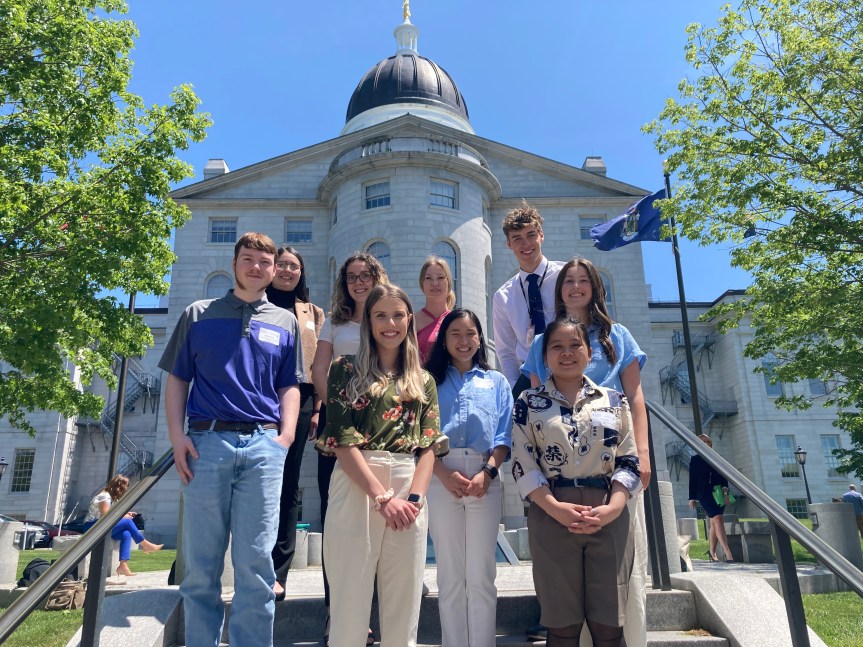
Maine DOE Welcomes 10 Interns This Summer

The Maine Department of Education (DOE) welcomed ten new student interns for the summer who will bring their ideas, energy, voice, and skills to strengthen education in Maine. These students, who will be working on a variety of Maine DOE teams, were selected for the Maine Government Summer Internship Program by the Margaret Chase Smith Policy Institute at the University of Maine. The interns will spend the summer assisting with daily operations and projects at the Maine DOE while gaining professional experience and knowledge and building connection.

Maine Department of Education Interns

Charlotte Buswick is a rising senior at Colby College from Boxford, Massachusetts. She is majoring in History with a minor in Science, Technology, and Society. As an Innovative Education Assistant this summer, she will be working with the MOOSE team to develop online learning modules for students across all grade levels. She is very excited to work with and learn from everyone on the MOOSE team. Outside of work, she enjoys spending time outside, listening to music, reading, and playing guitar.

Nhan Chau is a recent graduate of the University of Maine where she majored in New Media and minored in Graphic Design. She is originally from Ho Chi Minh City, Vietnam and has been living in Maine for the last five years. As a Learning Through Technology Data and Media assistant, she will be working on a multimedia database of the social media presence of MLTI schools, cataloging computer science happenings, and organizing social media content. She is excited to work with her team and help with creating meaningful and impactful social media campaigns. During her free time, she enjoys drawing and creating animations.

Hannah Craig is a recent graduate of Boston University where she earned her degree in International Relations with a focus on International Systems and a minor in Economics. She is originally from Cumberland, Maine and now lives in South Portland. This summer, she will be interning for the Maine Opportunities for Online Sustained Education (MOOSE) team. She is looking forward to learning about curriculum content creation and the process of creating accessible and equitable learning resources for students. In her free time, she enjoys taking care of her plants, watching history documentaries, and spending time with her niece and nephew.

Jilleon Farrell is a graduate of the University of Maine at Orono where she earned her degree in Food Science and Human Nutrition. She is now in graduate school, also at UMaine, and hopes to become a Registered Dietician. She is from Manchester, Maine. As the Resource Administrator Intern, she will be assisting the operation team and updating, maintaining, and organizing operations data to gain exposure to all the opportunities the DOE has to offer this summer.

Natalie Grandahl is a rising senior studying political science at the University of Connecticut. She is from North Monmouth, Maine. As the Communications Intern, she will be creating content, writing for the newsroom, and assisting with the website. She is excited to meet a wide variety of people and to gain knowledge and experience working in government. She enjoys running, reading, and traveling in her free time.

Ryan Hafener is from Hampden, Maine and attends Hampden Academy. After graduating high school, he plans on attending college to pursue a degree in international relations or philosophy. This summer he will be interning in the Commissioner’s Office and working on both the legislative and communications teams. He is excited to get to work with education legislation and to work on media promoting public education. In his free time, he enjoys rock climbing, traveling, reading, and getting outdoors.

Joseph Koenig is a rising senior from Gray, Maine studying at Husson University. He is majoring in Marketing Communications with a minor in Integrated Technology and certificates in Photography, Graphic Design, Web Media, and Digital and Social Media Marketing. This summer, he will be working as the School and Student Supports Communications Assistant where he will be doing outreach to Maine educators, parents, and community members about various educational opportunities. He is most excited about working on projects that have the potential to shape the DOE in years to come.

Madeline Levesque is a rising junior at Husson University studying Graphic/Visual Design with a certificate in Marketing Communications and Photography, and she is from Augusta, Maine. This summer she will be working as the DOE’s Maine Learning Through Technology Digital Design Assistant. She will be updating and designing media forMLTI’s website while also helping to improve outreach about their current programs and events. She enjoys portrait photography, spending time outdoors, and being a member of the Husson Dance Team.

Cora Saddler is a first-year graduate student at the University of Maine at Orono pursuing a degree in English Studies with a concentration in creative writing. After graduate school, she plans on pursuing a career teaching English abroad. She is originally from Cabot, Arkansas but currently lives in Maine. As the Adult Multilingual Education Professional Development Assistant for the Maine DOE, she will be working on providing professional education resources for adult educators throughout the state. In this role, she is most excited about assisting with planning for the Adult Multilingual Learner’s Summer Institute – also known as Camp Sugarloaf. In her free time, she enjoys writing, photography, ice skating, and baking.

Annabelle Williams is a rising junior at the University of Vermont and is from Camden, Maine. She is double majoring in Psychology and Business Administration with a focus on marketing and entrepreneurship. This summer she will be working on the RREV Team in the Office of Innovation as their Communications Strategy Coach. She will be helping the team and their awardee schools effectively communicate their experiences with the program, developing RREV’s social media presence, and creating a user-guide for ENGINE which is their online collaborative platform for Maine educators.
 

Maine DOE, UMS Expand Whole-Student Supports for Maine Schools

More K–12 students and educators in Maine are set to benefit from stronger social, emotional and behavioral supports thanks to Maine PBIS, a collaboration between the University of Maine System and the Maine Department Education (DOE), which is adding 21 new schools to its professional development cohort.

The schools, which will participate in the initiative over the next three years, are located in communities throughout the state, including Berwick, Boothbay Harbor, Brooksville, Bucksport, Damariscotta, Edgecomb, Litchfield, Madawaska, North Berwick, Sabattus, South Portland and Westbrook.

“Teams of educators from these schools will learn and practice together for the next three years, joining more than 30 schools that are currently part of our professional development model and more than 75 schools statewide that have already implemented sustainable supports for Maine students,” says Courtney Angelosante, Maine PBIS coordinator at the University of Maine College of Education and Human Development.

Positive Behavioral Interventions and Supports, or PBIS, is a nationally recognized framework providing a multi-tiered continuum of supports in K-12 schools, promoting positive social and behavioral outcomes for all students. It is based on a community health promotion model. In schools that have implemented PBIS, it is expected that 95% of students will have most of their social, emotional and behavioral needs met before schools have to implement the third, or most targeted tier of interventions.

Maine DOE, in collaboration with UMS, supports schools and districts to implement PBIS through a cohort model that matches Maine-endorsed PBIS trainers and coaches with district and school-level teams. Maine PBIS’s professional development efforts have received national and international attention as a particularly effective example for rural schools and communities.

“Being able to work with our PBIS coaches multiple times a year made our school’s efforts towards Tier 1 implementation much smoother,” says Sierra Bloom, a first-grade teacher at Surry Elementary School, which has already taken part in the UMS-Maine DOE initiative. “Our coaches were always there to support our work directly and led us to a solid foundation for our work in PBIS.”

Bloom adds that being able to work with other schools in the cohort model was beneficial.

“We were able to collaborate and share ideas for success, while also gaining support towards common struggles,” she says.

This summer, Maine PBIS will host a five-day training institute for educators who are part of its professional development cohort. The training, which is limited to 50 participants and will take place at Husson University from July 10–14, will be designed to help teachers identify why a behavior is happening through a variety of assessment tools and procedures, leading to the development of a positive behavior support plan individualized to a student’s strengths and needs. More information about the Maine PBIS Advanced Tiers Summer Institute is online.

“The supportive and inclusive practices of PBIS have elicited overwhelmingly positive responses by administrators, educators, students and families. Our office looks forward to supporting and sustaining schools and districts in this work,” says Tracy Whitlock, Special Projects Coordinator in the Office of Special Services and Inclusive Education at the Maine Department of Education.

The Maine DOE provides funding for the Maine PBIS initiative through a federal State Personnel Development Grant. The funding is helping scale up capacity for PBIS in the state through a UMS Microcredential for PBIS Coaching and Training. The second cohort of educators seeking the micro-credential endorsement will begin in fall 2023. Applications, which are available online, are due June 15.

Seeking Public Comments for a Tydings Amendment Waiver of FY22 ESEA funds and FY23 Carryover of Excess Title I, Part A Funds

Pursuant to the authority granted under section 8401(b) of the Elementary and Secondary Education Act (ESEA), the Maine Department of Education (DOE) intends to submit an application for waivers to the U.S. Department of Education (USDOE).  As required, the Maine DOE is seeking 15 days of public comment from June 7, 2023 – June 21, 2023, on the request to waive the period of availability for Elementary & Secondary Education Act funds and Title I, Part A carryover limitations. 

Requirements from which Maine will be seeking a waiver include: 

A Tydings amendment waiver from Section 421(b) of the General Provisions Act to the U.S. Department of Education (USDOE). The Tydings amendment waiver seeks an extension to the availability of Federal Fiscal Year 2021/State Fiscal Year 2022 Elementary and Secondary Education funds.  Programs affected by this waiver: 

  • Title I, Part A of the ESEA (Improving Basic Programs Operated by LEAs), including the portions of the SEA’s Title I, Part A award used to carry out section 1003 school improvement, section 1003A direct student services, if applicable, and Title I, Part D, Subpart 2 
  • Title I, Part B of the ESEA (State Assessment Formula Grants) 
  • Title I, Part C of the ESEA (Education of Migratory Children) 
  • Title I, Part D, Subpart 1 of the ESEA (Prevention and Intervention Programs for Children and Youth Who Are Neglected, Delinquent, or At Risk) 
  • Title II, Part A of the ESEA (Supporting Effective Instruction) 
  • Title III, Part A of the ESEA (English Language Acquisition, Language Enhancement, and Academic Achievement) 
  • Title IV, Part A of the ESEA (Student Support and Academic Enrichment Grants) 
  • Title IV, Part B of the ESEA (21st Century Community Learning Centers) 
  • Title V, Part B, Subpart 2 of the ESEA (Rural and Low-Income School Program) 
  • McKinney-Vento Education for Homeless Children and Youth Program 

A carryover limitation waiver from Section 1127(a) of the Elementary & Secondary Education Act of 1965, as amended for Federal Fiscal Year 2022/State Fiscal Year 2023 Title I, Part A funds. The carryover limitation waiver seeks to waive the requirement that limits the Maine DOE’s ability to grant to its local educational agencies (LEAs) a waiver of the 15 percent Title I, Part A carryover limitation of more than once every three years. 

The Maine DOE must solicit and respond to public comment on its waiver request as well as provide evidence of the available comment period.  As the Maine DOE moves forward to provide as much flexibility as possible and continued support for expending ESEA federal funds, comments can be submitted to:  Cheryl.Lang@maine.gov. 

Comprehensive Electronic Health Record Pilot Grant Program Request for Applications (RFA #202305111)

The Maine Department of Education (DOE) is accepting applications from school administrative units (SAUs), publicly supported secondary schools, and Education in the Unorganized Territory (EUT) who meet eligibility requirements stated in RFA# 202305111. Using American Rescue Plan, state reservation funds, the Maine Department of Education (DOE) will cover costs of implementing a comprehensive electronic health record (EHR) system of up to $6000, which includes a nominal stipend for a school-designated EHR champion. This widespread pilot aims to show that maintaining an electronic health record is beneficial to both local schools and the State of Maine as it will increase the efficiency of services provided, decrease the burden of reporting health data, allow for data-informed decisions and policy, and increase revenue possibilities with MaineCare.

Eligible schools that are interested in the Comprehensive Electronic Health Record Pilot Grant Program opportunity may access the application through the Grant RFPs and RFAs webpage.

A timeline for the application process is provided below.

  • May 24, 2023 – Request for Applications (RFA) Released
  • June 15, 2023 – RFA Question submission deadline
  • July 12, 2023 – RFA Submission deadline

All questions about the Comprehensive Electronic Health Record Pilot RFA should be submitted to the Grant Coordinator: Emily Poland, Office of School and Student Supports, at Emily.Poland@Maine.gov. 

Reminder: BARR Information Sessions Wednesday and Thursday

Join the Maine DOE to learn more about a funding opportunity for Maine schools to become BARR (Building Assets, Reducing Risks) schools. 

Using American Rescue Plan, state reservation funds, the Maine Department of Education (DOE) will cover all costs of implementing the program for schools new to BARR, and all costs of continued implementation support to existing BARR schools. Additionally, the DOE will provide travel reimbursement and educator stipends associated with participation in the program.  Applications are due by May 26, 2023. Click here to apply.

Sign up for an informational session on: 

Wednesday, May 17, 2023 | 4:00 ET | REGISTER 

or  

Thursday, May 18, 2023 | 4:00 ET | REGISTER 

Join Beth Lambert, Acting Chief Innovation Officer and Director of Innovative Teaching and Learning at the Maine DOE to learn more about this opportunity to implement the BARR system in your school(s). We’ll also be joined by Rob Metz and Jennifer Fox from the BARR Center who will provide an overview of BARR and other Maine educators who are excited to share their experiences and the impact it has had on their schools: 

  • Jennifer Mull-Brooks, Principal, Congin Elementary School 
  • Greg Henderson, School Counselor and BARR Coordinator, Mt. Blue High School 
  • Shelly Lajoie, Counselor and BARR Coordinator, Noble High School 
  • Josh Tripp, Principal, Bucksport High School 

You can also read more about the BARR program here.

BARR was developed over 20 years ago by a high school counselor who felt ineffective because more than 40 percent of her 9th grade students were failing at least one core course and were at risk for not graduating on time. She learned from her school’s principal that this was not just her high school’s problem, but it reflected a troubling national trend. Using strategies from the fields of business and medicine, Executive Director Angela Jerabek created the BARR model and implemented it in the fall of 1998. By spring 1999, 9th grade student failure rate had decreased from 44% the previous year to 20%. Teachers worked together and knew each student – not just from an academic perspective, but from a personal perspective – their interests, strengths, hopes, and dreams. 

Careful implementation and evaluation continued for over 20 years, all with the same findings – students passed more classes, pursued more advanced courses, and graduated on time. The focus of BARR is not just for some students, but all students. Teachers reported increased collaboration, satisfaction, and their ability to use data effectively. School culture and climate was improved. Today, BARR operates in over 250 schools throughout the nation and works in all grade levels, K-12, including in dozens of schools here in Maine.   

“There is no question that BARR has had a positive impact on the students and staff at Sacopee Valley Middle School. We are intervening with students earlier, our meetings are more efficient, and most importantly, our relationships are stronger. Honestly, I couldn’t imagine our school without BARR. It is not a flavor of the month intervention — it is now part of our fabric and is here to stay,” said Amy Vacchiano, counselor and BARR Coordinator at Sacopee Valley Middle School. 

The BARR system uses eight interlocking strategies that build intentional relationships (staff to staff, staff to student, and student to student) and utilizes real-time data to enable schools to achieve concrete academic, social, and emotional outcomes for each and every student. To learn more about BARR visit: https://barrcenter.org/about-barr/barr-model/. 

To be eligible, a school must meet one of the following: 

Learn more about BARR at http://www.barrcenter.org. 

Maine DOE Announces Funding Opportunity for Maine Public Schools to Become BARR Schools

Applications are now open to all willing and qualified public schools who would like to become a BARR (Building Assets, Reducing Risks) school. Click here to apply. Using American Rescue Plan, state reservation funds, the Maine Department of Education (DOE) will cover all costs of implementing the program for schools new to BARR, and all costs of continued implementation support to existing BARR schools. Additionally, the DOE will provide travel reimbursement and educator stipends associated with participation in the program.  Applications are due by May 26, 2023. 

BARR was developed over 20 years ago by a high school counselor who felt ineffective because more than 40 percent of her 9th grade students were failing at least one core course and were at risk for not graduating on time. She learned from her school’s principal that this was not just her high school’s problem, but it reflected a troubling national trend. Using strategies from the fields of business and medicine, Executive Director Angela Jerabek created the BARR model and implemented it in the fall of 1998. By spring 1999, 9th grade student failure rate had decreased from 44% the previous year to 20%. Teachers worked together and knew each student – not just from an academic perspective, but from a personal perspective – their interests, strengths, hopes, and dreams. 

Careful implementation and evaluation continued for over 20 years, all with the same findings – students passed more classes, pursued more advanced courses, and graduated on time. The focus of BARR is not just for some students, but all students. Teachers reported increased collaboration, satisfaction, and their ability to use data effectively. School culture and climate was improved. Today, BARR operates in over 250 schools throughout the nation and works in all grade levels, K-12, including in dozens of schools here in Maine.   

“There is no question that BARR has had a positive impact on the students and staff at Sacopee Valley Middle School. We are intervening with students earlier, our meetings are more efficient, and most importantly, our relationships are stronger. Honestly, I couldn’t imagine our school without BARR. It is not a flavor of the month intervention — it is now part of our fabric and is here to stay,” said Amy Vacchiano, counselor and BARR Coordinator at Sacopee Valley Middle School. 

The BARR system uses eight interlocking strategies that build intentional relationships (staff to staff, staff to student, and student to student) and utilizes real-time data to enable schools to achieve concrete academic, social, and emotional outcomes for each and every student. To learn more about BARR visit: https://barrcenter.org/about-barr/barr-model/. 

To be eligible, a school must meet one of the following: 

Sign up for an informational session on: 

Wednesday, May 17, 2023 | 4:00 ET | REGISTER 

or  

Thursday, May 18, 2023 | 4:00 ET | REGISTER 

Join Beth Lambert, Acting Chief Innovation Officer and Director of Innovative Teaching and Learning at the Maine DOE to learn more about this opportunity to implement the BARR system in your school(s). We’ll also be joined by Rob Metz and Jennifer Fox from the BARR Center who will provide an overview of BARR and other Maine educators who are excited to share their experiences and the impact it has had on their schools: 

  • Jennifer Mull-Brooks, Principal, Congin Elementary School 
  • Greg Henderson, School Counselor and BARR Coordinator, Mt. Blue High School 
  • Shelly Lajoie, Counselor and BARR Coordinator, Noble High School 
  • Josh Tripp, Principal, Bucksport High School 

Learn more about BARR at http://www.barrcenter.org. 

MEDIA RELEASE: Maine DOE Invests $9 Million to Increase School-Based Mental Health Staff and Services

The Maine Department of Education (DOE) announced a $9 million investment, funded through the Bipartisan Safer Communities Act, to increase school-based mental health staff and services in Maine. Expanding Access in School Environments (EASE) Maine will provide grants to nine high-need school administrative units (SAUs) to support efforts to recruit and retain mental health providers and expand services to students.

Eastport Public Schools, Jefferson Public Schools, Lewiston Public Schools, RSU 12, RSU 24, RSU 54, RSU 73, RSU 79, and RSU 85 will receive funding over the duration of this 5-year grant. These SAUs were identified as high need because they had low student to mental health provider ratios relative to the rest of the state and nation. Through the EASE Maine grants, the Maine DOE will partner with these SAUs to develop and implement whole student-focused strategies to meet the unique needs of each community, increase student access to much-needed mental health services, and recruit, retain, and re-specialize staff to support the mental health and wellbeing of students, staff, and families. The funding will enable SAUs to collaborate with one another and with community organizations, state agencies, and other partners to confront growing mental health needs following the pandemic by increasing the number of highly qualified mental health services providers in schools.

“Supporting the mental health and wellbeing of our students is essential to making sure they thrive in the classroom and in their lives. Thanks to the Bipartisan Safer Communities Act, these grants will help schools hire and retain the social workers, counselors, and mental health providers they need to address student mental health needs, which have only grown during the pandemic,” said Maine Education Commissioner Pender Makin.  

“We at RSU 12 are pleased to partner with the Maine Department of Education through the Expanding Access to Supportive Environments in Maine Schools (EASE) grant. This grant will allow us to build our capacity to hire, retain, and develop professionally qualified school-based mental health teams that reflect our community and provide us with much-needed professional development opportunities and technical assistance. Given the mental health challenges many of our students face, this grant couldn’t have come at a more crucial time. We are truly excited about the possibilities and the positive impact this grant will have on our students and community,” said RSU 12 Superintendent Howard Tuttle. 

“We appreciate the conversation and opportunity to help support our students’ social and emotional wellbeing and look forward to making the most of this opportunity,” said RSU 54 Superintendent Jon Moody. 

EASE Maine SAU Allocations (Annually for 5 Years): 
Eastport Public Schools – $65, 541/year
Jefferson Public Schools – $67,947/year
Lewiston Public Schools – $248,644/year
RSU 12 – $92,698/year
RSU 24 – $88,251/year
RSU 54 – $141,655/year
RSU 73 – $110,560/year
RSU 79 – $121,496/year
RSU 85 – $63,208/year

The Maine DOE’s Office of School and Student Supports provides support and resources for all schools in Maine related to student and staff mental health and wellbeing. Learn more here.

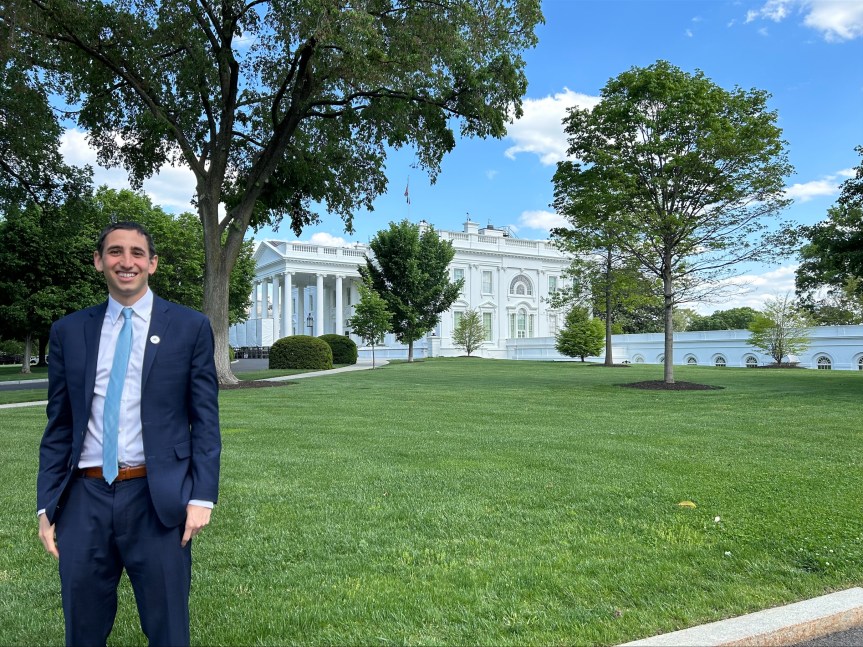
Maine Teacher of the Year Matt Bernstein Honored at White House Ceremony

Maine’s 2023 Teacher of the Year Matt Bernstein joined state teachers of the year from across the country at the White House yesterday for a recognition ceremony with President Biden, First Lady Jill Biden, and US Secretary of Education Miguel Cardona.

Bernstein is a social studies teacher at Casco Bay High School in Portland and was nominated by a former student. Read this interview with Bernstein to learn more about his passion for teaching and his priorities as Maine’s Teacher of the Year.

Teacher Leader Fellows April Professional Development Opportunities

Arts Integration, A Trip to Town Hall, STEAM Powered Makers Learning from Success, and Dig into MOOSE are the professional development topics that our Teacher Leader Fellows will be offering during the week of April 24-27, 2023. These sessions will be delivered live over Zoom and then archived on our website. Please click on the registration links below to join!

Dig into MOOSE: What Impact Do Invasive Species Have on Our Environment?: This session will be an exploration into the MOOSE module while bringing in other resources and materials with connections to the theme of invasive species. As we explore the additional resources, we will be paying specific attention to how this topic can be explored through different lenses of STEAM. Offered April 24, 2023,at 5pm. REGISTER HERE.

A Trip to Town Hall: This session will provide guidance in how to plan a meaningful visit to your local town or city hall for any grade level. Local government sites are an often-overlooked opportunity to get students thinking about themselves as decision-makers. We’ll discuss how to work with students and local officials to plan a fun and educational experience. Offered April 25, 2023 at 6pm. REGISTER HERE.

Arts Integration: In this session we’ll discuss strategies, opportunities, and resources to support arts integration across contents. Offered April 26, 2023. REGISTER HERE.

STEAM Powered Makers Learning from Success: This session will begin our ongoing effort to expand our definition of STEAM. On this trip we will start Learning from Success, understanding how Teamwork (collaboration) and video tools are used to establish roles to use on all STEAM courses. Offered April 27, 2023. REGISTER HERE.