Another Successful Year of Maine’s Agriculture in the Classroom Summer Institute

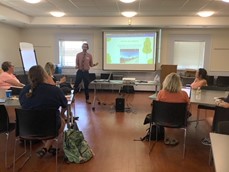
There may only be one place where a teacher can make mozzarella cheese, tend to beehives, and take a virtual farm tour on the same day, the Maine Agriculture in the Classroom Summer Institute. In August, more than 25 educators came together for a 3-day institute at the University of Maine to engage in workshops that focused on including aquaculture facilities, school gardens, the research farm, and more. Educators developed new partnerships and formed ideas for integrating agriculture into their classrooms.

Maine DOE’s MLTI Ambassador, Erik Wade, shared resources on creating virtual tours, demonstrated the usefulness of virtual tours in bringing agriculture into the classroom, and shared resources for educators and students to develop their own tours and engage students in the creation process. Wade’s session also shared resources in agriculture game-based resources that educators can use with students to “gamify” their classrooms and engage students in agricultural simulations.

If you are interested in learning more about virtual tours, game-based agricultural simulations, or integrating technology into your garden or outdoor space, contact MLTI Ambassador, Erik Wade, at erik.wade@maine.gov.

MLTI 2.0 Expands Professional Learning Support by Adding Five New MLTI Ambassadors

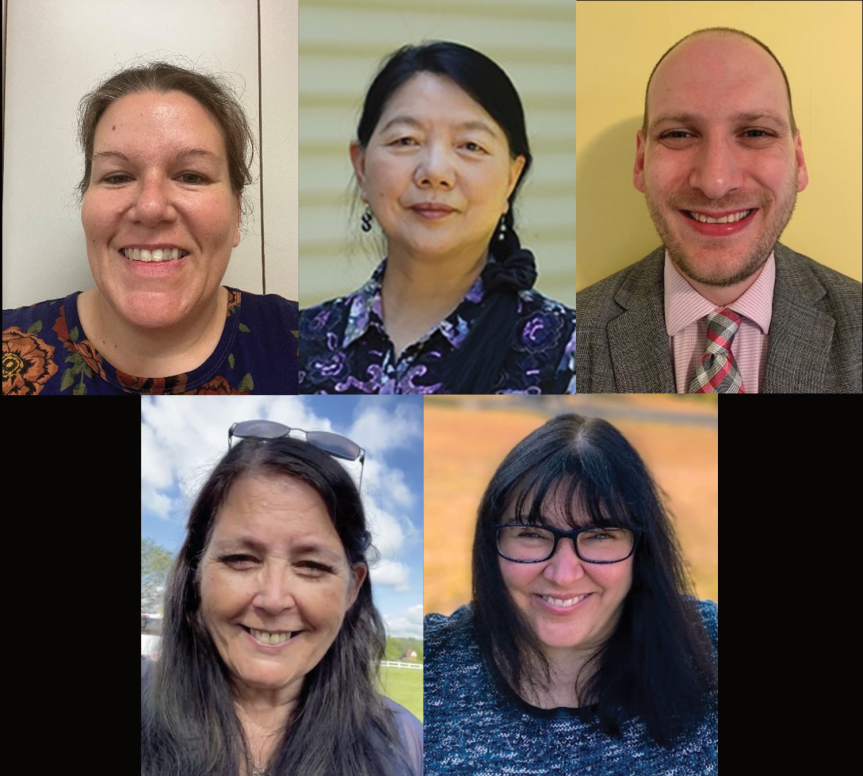
The Maine Department of Education’s (DOE) Maine Learning Technology Initiative (MLTI) 2.0 is excited to share that the Ambassador program is expanding with an additional five distinguished educators joining the team.

MLTI Ambassadors are distinguished educators, on loan from their school for two years, to bring their expertise and experience as a resource and partner with MLTI.

The Ambassador program is a signature program of MLTI 2.0.The full team of ten Ambassadors will deliver professional learning experiences and provide instructional coaching to MLTI-participating schools. The new “Junior Ambassadors” will be working with the established “Senior Ambassadors” to build upon existing relationships across the schools in the MLTI Ambassador Regions in addition the existing connections that they bring to the team.

Nicole KarodNicole Karod

Nicole Karod comes to the MLTI Team from Mt. Ararat Middle School, where she served as a science teacher and last year was the 6-8 remote science teacher.  She has eighteen years of experience as a classroom teacher at the elementary and middle levels including several years teaching in North Carolina.  A graduate of Maine School of Science and Mathematics, Nicole spent her formative years working in numerous roles at the school and worked her way up to directing summer camps for MSSM.  Nicole’s passion for leadership have led into curriculum development, spearheading student leadership opportunities and she currently serves as her district’s teacher past association president.  Nicole holds a Masters in Elementary Education from Gardner Webb University and a Certificate of Advanced Graduate Study in Literacy from the University of New England.  She lives in Damariscotta.

Joshua SchmidtJoshua Schmidt

Joshua Schmidt comes to the MLTI Team from China Middle School, where he served as a mathematics teacher. He has twelve years of experience at the middle level with half of those in Maine and half in his home state of South Dakota.  While working in South Dakota, Joshua worked closely with TIE (Technology and Innovative in Education), where he developed his passion for educational technology.  His experiences with customized learning and data-informed practices led him to China Middle School, where he led work around the mathematics department’s redesign.  That work resulted in shared math choice boards and assessments for all students in grades 5-8 while allowing students to progress through content at their own level and speed. Concurrently, Joshua took on other leadership roles within the school as well as innovative teaching in his classroom through game-based, project-based, real-world, and cross-curricular projects.  Joshua was also part of the Introduction to Experiential Teaching through Technology cohort in 2019 run by current MLTI SLAM Coordinator Kern Kelley. He is currently working on a Master of Education in Instructional Technology with a Certificate in Computational Thinking at the University of Maine.  He lives in Farmingdale with his wife, Krista, and their energetic two-year-old, Corrin.

Yuhong SunYuhong Sun

Yuhong Sun comes to the MLTI Team from Noble High School, where she served as a technology integrator, computer science, and Chinese language teacher. She has twenty years of experience teaching computer and technology-specific classes at the middle and high school levels. As the landscape of technology has changed, Yuhong has learned and expanded her course content to include programming languages, website design, web animation, game design, and Cisco networking. In addition to teaching these subjects, Yuhong has often served as a webmaster and filled technical support roles as well. She also has led many after-school organizations such as the robotics at the middle and high school levels, a web design club, and most recently organizes students to participate in the Samsung Solve for Tomorrow (SST) contest. In 2018, her team was recognized as the Maine state winner team and a top ten national finalist team for a project removing manganese from local drinking water. This project also earned her an Excite Award from Lemelson-MIT InvenTeam Program at MIT in 2018. In 2019, her SST team was once again selected as the Maine state winner team for a project fighting against suicide. Yuhong has been the director of the Noble Exchange Program for over ten years, bringing the students to Noble High School from other countries such as China and Italy. This exchange program has helped increase understanding of cultural diversity, foster friendship and promote mutual respect among people of diverse backgrounds and races. Yuhong loves cooking. During the pandemic, she fully engaged her students with fun extracurricular activities such as Chinese cooking. Yuhong received her M. Ed in Instructional Technology from the University of Maine and previously holds a Master’s Degree in English Literature and Law Degree from Southwest University in Chongqing, China. She holds teacher certification in K-12 Computer, Chinese, and English Language Arts and she is also a National Board Certified Technology Educator. She lives in South Berwick.

Martha ThibodeauMartha Thibodeau

Martha Thibodeau comes to the MLTI Team from the Mt. Blue Regional School District, where she served as a technology training coordinator. She has forty years of experience teaching from early elementary to adult education, working primarily in school districts in Central and Western Maine with seventeen years teaching at Lawrence Junior High School.  In recent years at Mt. Blue, she has focused on technology integration and planning professional development throughout the school year as well as the district’s summer institute.  She has been involved in previous programs such eMINTS and MARTLs in Maine that have given her experience around regional training and statewide collaboration. Martha also holds Curriculum Coordinator certification in addition to multiple teacher certifications as well as certificates from Google, Apple and eMINTS. She holds a Master’s Degree from Thomas College in Computer Technology in Education and an Education Specialist Degree in Educational Technology from Walden University. She lives in Madison.

Tracy WilliamsonTracy Williamson

Tracy Williamson comes to the MLTI Team from Gorham Middle School, where she served as a music teacher.  She has twenty years of experience at the middle level and has taught general music classes, chorus and steel band throughout her career. Tracy was nominated as a semi-finalist for the 2021 GRAMMY Music Educator Award. She is an Apple Certified Teacher and has been a regular presenter at the ACTEM, MMEA and the MLTI Student Conferences, where she advocates for ways to braid music and technology together.  She has long sought to integrate technology such as Soundtrap, WeVideo, EdPuzzle, Google Apps and more into her music classes to promote both efficiency and innovation. Tracy has worked with her students on Project S.U.S.T.A.I.N. (Students Using Soundtrap to Accomplish International Necessity) to compose original music for a worldwide collaborative album supporting the United Nations Sustainable Development Goals. She has created an innovative digital badging program to help students learn to read music. Serving as the middle level repertoire and resources chair for the Maine ACDA (American Choral Directors Association), Tracy has overseen the Maine Youth Honor Choir All-State Festival since 2019. She has also hosted the New England Steel Band Festival several times in Gorham. Tracy received a Master of Music degree from The Boston Conservatory in 2000 focusing on Music Education and Flute Performance and she is currently working on a degree in Media Arts & Graphic Design from Southern New Hampshire University. She lives in Bridgton with her husband, Ben, who is a middle school ELA and Social Studies teacher in Windham.

The Maine DOE MLTI team works hand-in-hand with the MLTI Ambassadors to support the MLTI professional learning plan in addition to the many other components MLTI 2.0. For more information about MLTI 2.0 and its evolution visit the Maine DOE Website or contact Beth Lambert, Director of Innovative Teaching and Learning.

An Opportunity for First-year Educators: One-year Free Membership to ACTEM

The Association of Computer Technology Educators of Maine recently launched a membership opportunity  for first year educators.  ACTEM is a non-profit which supports Maine education professionals by providing professional development, bulk purchasing for software and technology, and professional learning networks/  At the recent annual summer board retreat, a new ACTEM membership level was discussed and created for first-year educators (teachers & administrators).  The new First Year Educator level will be offered at no cost and will include all of the standard individual member benefits except for the opportunity to apply for Professional Development reimbursement.

The ACTEM board hopes that by offering this one-year FREE membership for our new educators, we will encourage them to…

  • See the benefits of belonging to a professional organization
  • Take advantage of the other ACTEM individual member benefits
  • PZpAttend ACTEM conference to build a network of support (at discounted member rate)
  • Continue with this membership in future years

The First Year Educator membership includes these benefits:

  • ACTEM’s quarterly newsletter –The Connected Educator
  • Lunch at the quarterly business meeting at regional sites
  • Discounted registration fee on the ACTEM fall conference
  • Access to ACTEM’s
  • OverDrive eBook and audio book PD library
  • Discounts on software & other items available through our purchasing consortium (as permitted by the vendor).

Check out the What is ACTEM tri-fold brochure that explains more about ACTEM along with details of benefits for the different member levels.  Please forward this information along to all first-year educators in your district.


Media Release: Computer Science Education Showcase Highlights Maine’s Interdisciplinary, Project-Based Approach to Computer Science

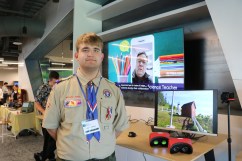
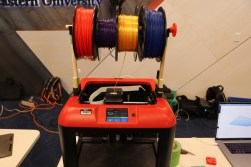
Students and educators from across Maine showed off their computer science skills at the Maine Department of Education’s Computer Science Education Showcase at the Roux Institute. The showcase highlighted innovative computer science education programs in schools across Maine, with hands on, interactive exhibits featuring robotics, artificial intelligence (AI), 3D design and printing, coding, augmented reality/virtual reality (AR/VR), data science, cybersecurity, and more.
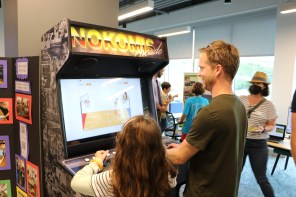
Maine has long been a leader in integrating technology and learning, and that holds true with computer science education. Instead of computer science being a separate course only some students take or an “add on”, Maine provides the support and resources to encourage all schools to provide interdisciplinary, project-based computer science learning experiences that incorporate computational and critical thinking, innovation and design processes, and applied learning at all grade levels and across all subject areas.
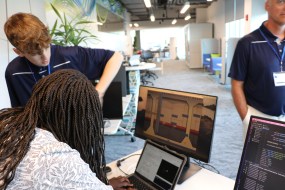
The Computer Science Education Showcase illustrated the state’s approach, with VR headsets transporting users to Maine State Parks which a student developed over the course of last summer, 3D printing demonstrations, a full-size arcade game developed by students, 6th graders demonstrating their block coding skills, a wide array of apps and websites around difference content areas created by students, and a robotics room with world champion level robotics teams. All Pre-K through 12 grade levels were represented, with educators highlighting how they were incorporating computer science education at younger grade levels, including having 5th grade students partner with kindergarten students to teach them basic coding skills and a new mobile makerspace that will rotate between elementary schools offering computer science education for Pre-K through fifth grade students.
Maine Department of Education Commissioner Pender Makin, University of Maine President Joan Ferrini-Mundy, 2022 Presidential Scholar Sirohi Kumar, Bethel second grade teacher Alice Lee, Jackson Labs Vice President for Education Charlie Wray, and the Roux Institute’s Chief Administrative Officer Chris Mallett participated in a panel discussion on how Maine is paving the way for students and teachers to be successful in the world of computer science. The discussion focused on reaching more students, making computer science more accessible to all, taking an interdisciplinary approach to computer science education, and how the critical and computational thinking, collaboration, and creative design skills developed through computer science education are critical to success in nearly every career and 21st century life.
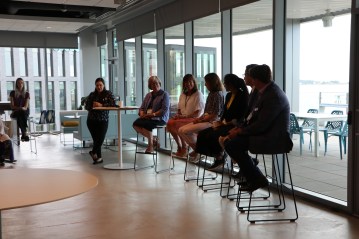
“Computer science is about approaching a problem with optimism, logic, critical thinking, design thinking, creativity and vision. We need to make computer science accessible for every educator and every student and continue this tradition that we’ve started in Maine of interdisciplinary, project-based computer science education across all grades that is really contextualized in a way that is meaningful for kids,” said Education Commissioner Pender Makin.

“There is this perception of computer science that it’s for an elite group, and in reality that’s not the case–it can be used for everything including art, science, and music. I think computer science education should be framed for everyone at a very young age that computer science can solve whatever problem or scenario you have regardless of what field it is,” said Sirohi Kumar a 2022 Presidential Scholar from Mount Desert Island.

“The more we can engage with computer science at the Pre-K through 12 level, the more ready everyone is for whatever comes afterward. These students here tonight are getting a head start with these skills. It’s going to matter for your futures,” said University of Maine President Joan Ferrini-Mundy.

“Building those skills of computer science at the youngest level—problem solving, debugging, innovating, and creativity. These basic skills are really what our young learners need to take off academically,” said second grade teacher Alice Lee from Bethel.
“We now live in a world that is immersed in big data and the amount of data being generated is so tremendous that this next generation has this great opportunity to enter so many career fields where computer science has a touchpoint. It’s not just being a software engineer or computer scientist, but all of us can learn and solve problems with big data and the amount of careers that can come out of good computer science education is endless,” said Jackson Labs Vice President for Education Charlie Wray.

“This concept of computer science for everyone is important. These competencies and literacies are no longer siloed; they work across the spectrum. The logic and reasoning that comes from computer science paired with the creativity of a liberal arts education, it’s the intersection of these skills that all of us have the potential to develop that is going to propel the Maine economy and the Maine workforce of the future,” said the Roux Institute’s Chief Administrative Officer Chris Mallett.

The Maine Department of Education and the Mills administration continue to support and bolster computer science education in Maine:

  • The DOE works continually with educators, business leaders, and others to update and adapt Maine’s statewide computer science education plan and the Department’s work is guided by seven key principles;
  • Governor Mills signed onto Governor Hutchison’s computer science compact;
  • The DOE hired a computer science specialist to work with schools and has committed additional resources to support educators and schools in integrating authentic, project-based Pre-K through 12 computer science education;
  • Governor Mills signed a bill providing $50,000 in professional learning support for educators on computer science, with an emphasis on educators in rural areas and serving marginalized communities, and another $50,000 will be awarded this coming school year;
  • Next month’s Educator Summit will feature several professional learning opportunities for educators on computer science education;
  • The DOE developed its first Pre-K through 12 online computer science learning progression last year focused on computational thinking and a new progression will soon be launched; and
  • The DOE is doubling the number of Maine Learning Technology Initiative (MLTI) Ambassadors that work in schools to support the integration of technology and learning, including computer science education.

###

Commissioner Makin, Senator King, Students Participate in a Robotics Competition to Launch 19th Annual MLTI Student Conference

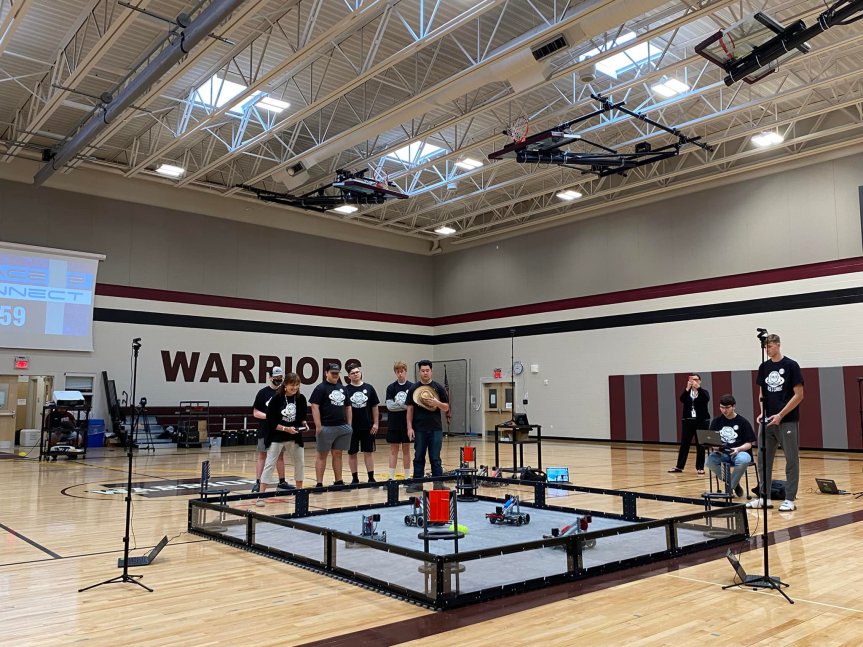
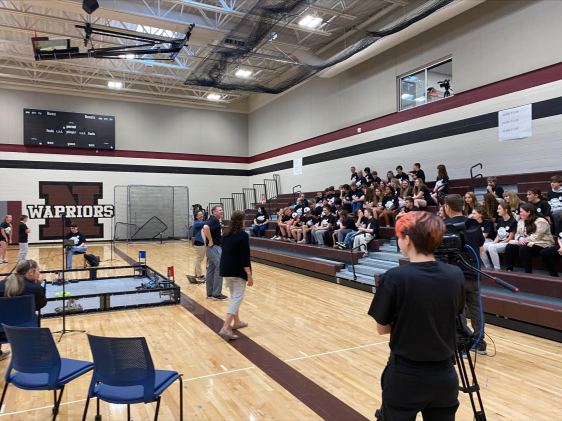
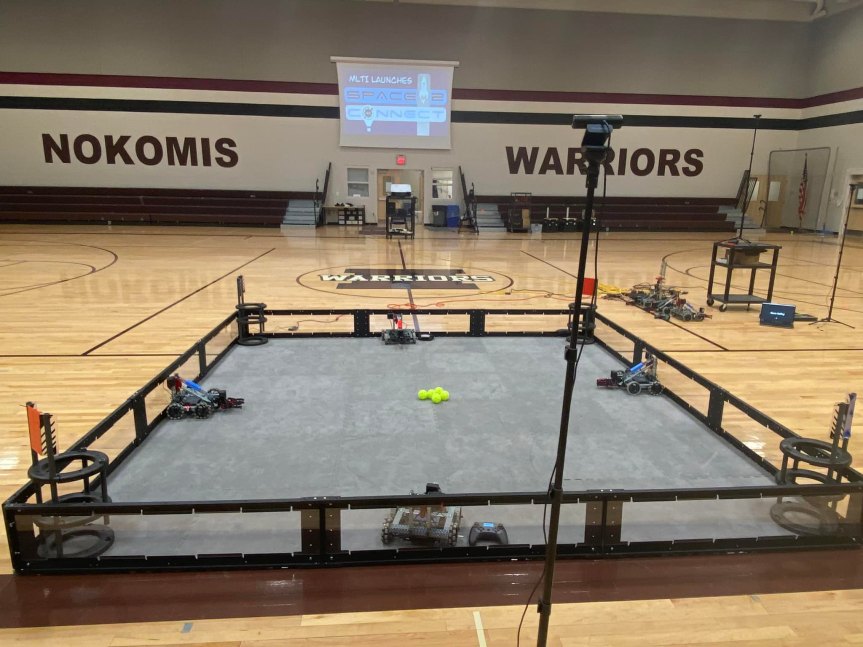
Maine Department of Education Commissioner Pender Makin and Senator Angus King kicked off the 19th annual MLTI (Maine Learning Technology Initiative) Student Conference today by participating in a live robotics competition with students at Nokomis Regional Middle High School.

Makin participated in person while King entered the competition remotely from his office in Washington, D.C. Student teams from schools across the state also competed to see who could get their robot to complete the skills tests the fastest, including nationally-ranked basketball phenom and Nokomis freshman, Copper Flagg. The morning launch session also included a welcome video from Governor Mills and a high-altitude balloon launch into space.

This year’s MLTI student conference was the highest attended in MLTI’s 19-year history with 55 schools, 5,672 students, and 696 educators participating. The theme of this year’s conference was MLTI Launches Space2Connect and included interpretations of space and connection as they relate to Maine students and their use of technology. The new virtual, classroom-based session style allowed students to attend in a classroom setting where they could learn, practice, and create.
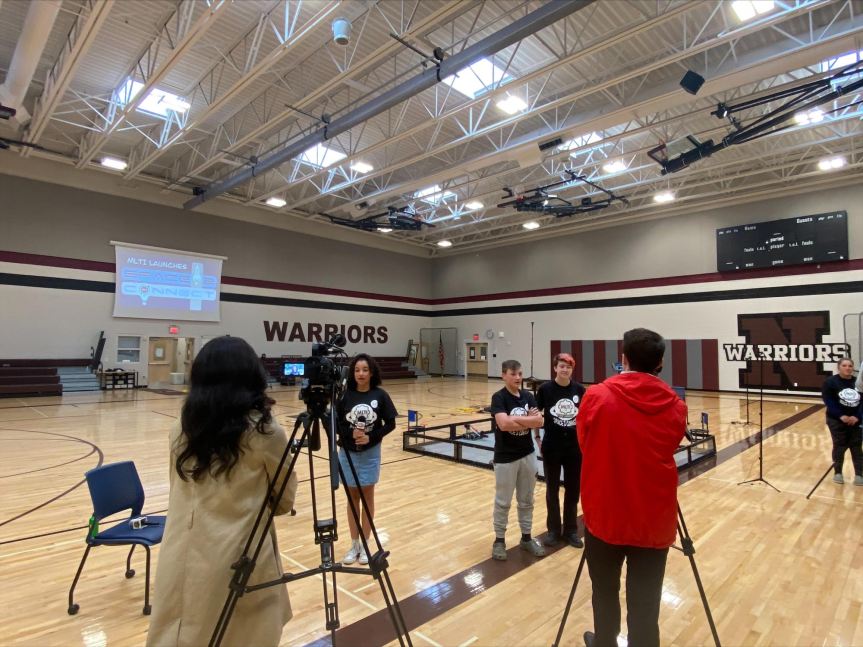
Following the morning launch event, workshop leaders taught the conference participants new skills, provided time for students to practice these new skills, and then supported them as they created something new with what they learned. This new design allowed students to work together as they explored new resources and applications, created with new digital mediums, and collaborated to complete tasks.

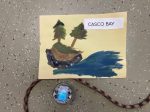
Every school also received shirts for all participants that were designed by an MLTI student, and a 3-D printed medallion that traveled to space and back.

Seeking Five Distinguished Educators for MLTI Ambassador Positions

Are you passionate about professional growth and technology? Do you want to make a difference in Maine schools? Are you currently teaching in a Maine public school? This might be the opportunity you’ve been looking for! 

The Maine Department of Education is hiring five distinguished educators to join our team in supporting MLTI 2.0 professional learning. These are full-time, two-year, contracted, remote positions. The MLTI distinguished educators will provide instructional technology coaching directly to MLTI participating schools and work closely with the MLTI team to implement the MLTI 2.0 program. Ideal candidates will be excited about instructional coaching and innovative technology practices in education, eager to work with other teachers, have outstanding communication skills, and experience with upper elementary, middle, and/or high school pedagogy. 

Distinguished educator positions are set up as an exchange agreement between the Department of Education and your local school district. Through the agreement, the Department pays your local school for the duration of your contract as a distinguished educator, allowing your school to temporarily fill your vacant position and continue to pay you your current rate while you work as a distinguished educator. Once the two-year contract is complete, you will be able to return to your position within that district. 

Still have questions? Contact the Digital Learning Specialists at the Maine Department of Education to learn more: Jonathan Graham, Elementary Digital Learning Specialist at jonathan.m.graham@maine.gov or Emma-Marie Banks, Computer Science and Secondary Digital Learning Specialist at emma-marie.banks@maine.gov.


Exploring the History of Maine Through Robotics

In the fall of 2022, Ann McClellan asked Maxx Pillsbury, a student of the Sphero Bolt coding program at Mt. View Middle School, how he might use the Bolt to tell a story. Both interested in Maine history, Ms. McClellan and Maxx began exploring using the Bolt to tell the story of ten historically significant places in Maine.

Maxx coded his Bolt to be Samuel de Champlain, an explorer who traveled the coast of Maine. Maxx and Ms. McClellan used a rope to model the nooks and crannies of Maine’s rugged coastline and painted designs on paper to represent characteristics of the area being explored.

Once they planned the layout, Maxx programmed the Bolt. While working, Maxx decided he also wanted the Bolt to narrate the history locations. He wrote a script, chose sounds to enhance the audience’s experience, and found music to play.

You can view a video of the robot moving through the project here:

The final product is impressive and took perseverance and critical thinking to problem solve through challenges that presented themselves throughout the process. For instance, placing the Bolt just right was imperative to its success.

“If the angle was just slightly different when it was set down, then it could mess the whole thing up,” Maxx said.

Ms. McClellan agreed, “Directionals and movement controls were challenging. These had to do with speed, angles, and time. We maintained humor, flexibility, and perseverance, so we got through the programming!”

Maxx is eager to apply what he learned from this project to his other classes. “In my history classes, I will already know some history about early explorers in Maine, and in math class, I can use what I learned about ratios with distance, speed, and time.”

For more information about the Sphero Bolt coding program or other ways to integrate computer science into your curriculum, reach out our computer science specialist, Emma Banks at Emma-Marie.Banks@maine.gov or visit: https://www.maine.gov/doe/learning/ltt/computerscience.


Nominate an MLTI Educator for the End of Year Expo!

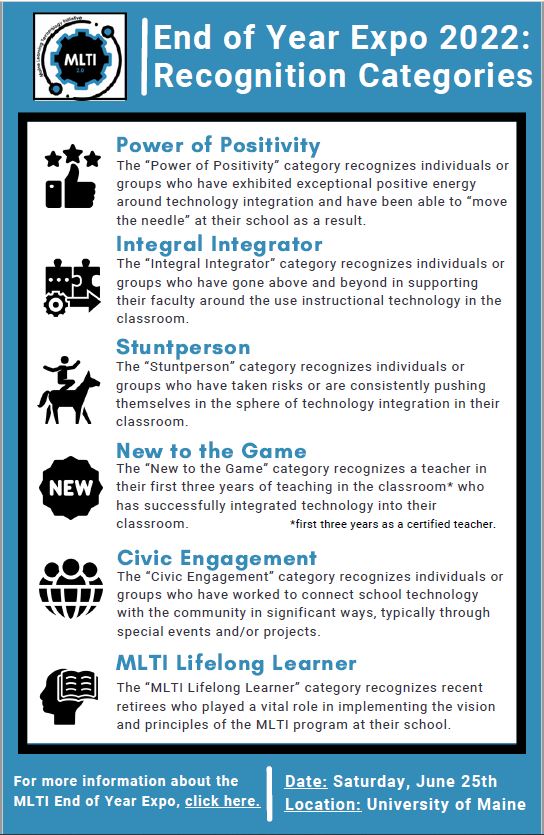
MLTI is launching an End of Year Expo event to celebrate educators and the work they do to support the use of technology in teaching and learning. Are you or someone you know an MLTI educator using technology in fun and innovative ways? Submit an entry to the expo and join us to share these achievements at our exhibition!

The exhibition will take place at the University of Maine in Orono, at the Collins Center for the Arts, on June 25, 2022. All entries will have the opportunity to present at the expo and share their work with other educators. The expo will be free and open to all MLTI educators. Exhibiters will be treated to a luncheon and an awards ceremony after the exhibition to celebrate their exciting use of technology in teaching and learning.

The MLTI End of Year Expo features six categories of recognition. To learn more about these categories, check out this infographic and nominate an educator using this form!

For more information about the MLTI End of Year Expo, check out our website.


30 Days to the MLTI Student Conference- MLTI Launches High Altitude Balloon!

The 19th Annual MLTI Student Conference will be held virtually on Thursday, May 26, 2022, from 8:30am-2:00pm for registered 7&th grade MLTI students. This year’s theme is MLTI launches space2connect, and with the partnership of the UMaine High Altitude Ballooning program, MLTI will be launching a high-altitude balloon into space!

The high-altitude balloon will launch into the stratosphere and can reach up to 118,000 feet or more! MLTI students will be able to track the flight and learn about the recovery of the payload including an estimation of where the balloon will land! MLTI schools attending the conference will receive a special gift that traveled in the balloon up to space that can be displayed in their schools for years to come!

The UMaine High Altitude Ballooning program is made possible by Dr. Rick Eason with funding from the Maine Space Grant Consortium. To learn more about this program please visit the Website- https://umaine.edu/hab/.

For more information, please visit the MLTI Student Conference page or contact Brandi Cota at Brandi.M.Cota@Maine.Gov.

MLTI Launches – Space2Connect! – Student Conference Registration Closing Soon!

Registration is closing on April 8th for 19th Annual MLTI Student Conference, which will be held virtually on Thursday, May 26, 2022, from 8:30am-2:00pm, and will be open to all MLTI 7th and 8th grade students. If you are an MLTI school, you don’t want to miss out on this exciting and innovative day that is planned for MLTI 7&8th grade students!

Conference Sessions

The MLTI student conference will offer a variety of creative and interactive sessions for students. View short trailers of some of the conference sessions below, then head to our student conference website for the full list of sessions and conference details.

Animation, It’s “Wicked Good”!
Bringing Stories Alive
Animate a Rocket Launch
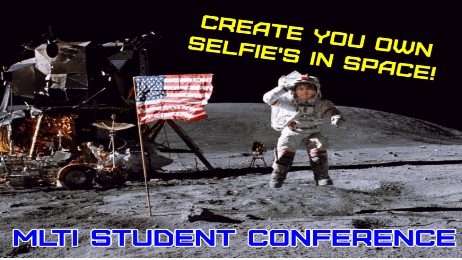
Take a Selfie in Space!
Hello? It’s Me- Student Podcasting

Session Style

We have redesigned the conference to be classroom-based. Workshop leaders will teach your class new skills, provide time for students to practice these new skills, and then support them as they create something new with what they have learned. This new design will allow students to work together as they explore new resources and applications, create with new digital mediums, and collaborate to complete tasks. For more information on our new conference model please watch our video!

This virtual conference will be hosted on Zoom. The sessions will be 90 minutes, with the morning session running from 9:30am-11:00am, and the afternoon session running from 12:00pm-1:30pm. All necessary materials will be provided to schools before the conference so students will have them to create with during the conference.

Registration Information

Registration for the 2022 MLTI virtual student conference will close on April 8, 2022. Please select a lead teacher from your MLTI school to fill out the online registration form. We will be asking for lead teacher contact information, the school information as well as a physical shipping address so we can deliver or ship conference materials directly to the attending school. We will also need the total number of students attending in each grade, and the totals for shirt sizes. We ask that schools complete the registration form by April 8, 2022. For questions regarding registration please reach out to Brandi Cota at Brandi.M.Cota@Maine.Gov.

Important Dates

  • March 10th registration opens
  • April 1st sessions announced
  • April 6th session Q&A with MLTI
  • April 8th Registration Closes
  • April 11th session sign up opens-Form we be sent to registered schools
  • April 28th session sign up closes
  • May 12th session assignments finalized

Further Information

For more information, please visit the MLTI Student Conference page or contact Brandi Cota at Brandi.M.Cota@Maine.Gov.