Media Release: Maine DOE and Educate Maine Partner to Develop the Teach Maine Center to Support and Grow Maine’s Educator Workforce

The Teach Maine Center will engage, empower, and unite educators across the state to incubate and develop strategies, supports, and professional learning connected to the Teach Maine plan.

The Maine Department of Education (DOE) and Educate Maine have partnered to develop the Teach Maine Center to support and advance a vibrant educator workforce in Maine that enables all students to thrive.

The Teach Maine Center will engage, empower, and unite educators across the state to incubate and develop strategies, supports, and professional learning connected to the Teach Maine plan. Developed in partnership with educators and stakeholders and released last year, Teach Maine focuses on four key themes to develop, support, and sustain Maine’s educator workforce: incentivize recruitment and retention efforts; expand and diversify educator workforce efforts; support educator development, growth, and leadership; and elevate educators and the education profession.

“Maine is a place that values and respects our educators and we are turbocharging that with the Teach Maine Center. The vision is to create a hub by teachers and for teachers that allows them to collaborate, innovate, and lead our profession and public education forward in Maine,” said Maine Education Commissioner Pender Makin.

“We are excited to announce this groundbreaking partnership with the Maine Department of Education to create the Teach Maine Center.  This partnership represents our shared commitment to strengthen, grow and diversify Maine’s educator workforce.  We look forward to this important work and the positive impact it will have on students, teachers, the teaching profession, and the future of education in Maine,” said Educate Maine Executive Director Jason Judd. 

Maine, like most states, continues to experience an educator shortage that was exacerbated by COVID-19. At the same time, educators and schools are faced with increased student and community needs. Increasing collaboration among educators and with businesses and communities will increase educator wellbeing and support them in their teaching.

The initial incubation phase of the Teach Maine Center will focus on increasing stakeholder engagement and collaboration across the business and education sectors; expanding data collection and reporting related to Maine’s educator workforce; advancing and successfully implementing short and long-term teacher recruitment/retention strategies identified in Teach Maine; strengthening professional support for educators through Teach Maine Center programming; and achieving long-term sustainability for the Teach Maine Center, which will be administered by Educate Maine.

Through December 2024, partners will identify and meet with stakeholders around teacher workforce issues, conduct 16 in-person and virtual county-level forums with educators to get input on teacher recruitment and retention, complete a landscape analysis of the educator workforce, solicit statewide educator input on ongoing professional development needs, and launch a marketing campaign focused on encouraging people to join Maine’s educator workforce. In collaboration with key education organizations and the Maine DOE, Educate Maine will assemble an advisory committee to provide input throughout the initial phases of the Center.

The Maine DOE used federal emergency funds to invest in the first phase of the Teach Maine Center.

Read more about the Maine DOE’s efforts to build a vibrant educator workforce.

Media Release: Maine DOE Experiences a 40 Percent Increase in Educator Certification Applications

Maine DOE’s Certification Team Processed 40 Percent More Initial and Renewal Certification Applications Over the Summer Compared to Last Year

The Maine Department of Education experienced a 40 percent increase this summer in the number of initial and renewal educator certification applications processed compared to last year. The Maine DOE’s certification team processed more than 11,000 certification applications between June and August.

“While educator shortages persist across our state, this increase is encouraging and the Maine DOE is committed to doing everything we can to build and support the education workforce in our state. This is the most important work of our society and we want people to know that Maine is a state that respects, supports, and empowers our educators. If you want to become an educator in Maine, we want to make sure you have a pathway into the profession and that you are supported in the classroom,” said Maine Education Commissioner Pender Makin.

Maine DOE Educator Recruitment and Retention Efforts and Initiatives:

  • Developing, supporting, and sustaining a robust educator workforce is one of the Maine DOE’s six strategic priorities.
  • Research demonstrates that feeling supported and respected is key to educator recruitment and retention. Maine stands out as a state that respects educators as professionals and the Maine DOE empowers teachers to take risks and be innovative.
  • One of the Mills administration’s first actions was to raise minimum teacher salaries to $40,000.
  • Last year, The Maine DOE released Teach Maine, a comprehensive roadmap to develop, support, and sustain a robust educator workforce in the state. Teach Maine is organized around four key themes: incentivize recruitment and retention efforts; expand and diversify educator workforce efforts; support educator development, growth, and leadership; and elevate educators and the education profession. The report is the result of contributions by education stakeholders throughout Maine, who provided feedback via multiple channels, including regional Think Tanks, focus groups, surveys, organizational meetings, and informal conversations. Additionally, the Department of Education convened an Educator Talent Committee, a core group of internal and external stakeholders, to share their experiences, look at research and trends, and to make recommendations on how to address Maine’s educator shortage.
  • Last month, the Mills administration announced a new initiative to help Maine schools recruit, train, and retain educators through pre-apprenticeship and apprenticeship programs. Under the initiative, schools and other education and community-related organizations can apply for competitive funding, with awards of up to $250,000 to begin local educator pre-apprenticeship and apprenticeship programs to help address Maine’s educator workforce shortage. Read more.
  • The Maine DOE partners with Live + Work in Maine to encourage people to come live and teach in Maine. Through the partnership, all school administrative units (SAUs) have free access to Live + Work’s highly trafficked job board to recruit educators. The partnership has expanded to include a national advertising effort to Live and Teach in Maine and educator-specific content on Live + Work’s website.
  • The Maine DOE invested in the BARR (Building Assets, Reducing Risk Model) for Maine schools. Research has shown that the BARR model results in increased job satisfaction for teachers and higher levels of collaboration. 71 new Maine schools are implementing the BARR model this school year.
  • The Maine DOE’s Educator Summit brought together 600 educators this summer for 4 days of professional learning opportunities with more than 100 workshops. The DOE’s certification and educator excellence teams were on site to support educators and prospective educators, including a job fair on the final day.
  • The Maine DOE also encourages educator leadership by creating opportunities for peer-to-peer professional learning and by establishing statewide teacher cohorts around such areas of interest/expertise as: digital learning/Computer Science, interdisciplinary and project-based learning, innovation and design thinking, BARR schools, literacy, special education, and more. The Maine DOE offers robust professional learning opportunities throughout the year.
  • Maine DOE staff visited 7 summer camps in 2022 and 10 summer camps this summer to speak with counselors about how the skills they develop as camp counselors can lead to opportunities and pathways into the teaching profession.
  • Maine DOE staff serve on the advisory board for the University of Maine System Teacher Residency. The University of Maine System Collaborative received funding through a Congressional Directed Spending earmark supported by Senators King and Collins. The Maine Teacher Residency Program offers paid internships for new teachers and supports student teaching candidates, emergency, and conditionally certified teachers and connects them with teacher education programs to strengthen their preparation and retention.
  • The Maine DOE is working with the Region 1 Comprehensive Center to build state and local staff capacity to collect, analyze, and use educator supply-and-demand data in order to better inform educator recruitment and support efforts. A pilot program will get underway beginning in December.
  • Prospective educators can reach out to the Maine DOE’s educator excellence and certification teams to receive personal support from DOE staff to create their roadmap to becoming a certified teacher in Maine.
  • Through Maine Jobs and Recovery Plan (MJRP) funds, the DOE supported UNE’s Future Teachers of Maine Summer Institute allowing dozens of high school students who have shown an interest in the teaching profession an opportunity to live on campus for a week. Students learn from and with students currently in UNE’s educator preparation program during the weeklong deep dive into the teaching profession and the steps it takes to get into the classroom.
  • Through an AmeriCorps Planning Grant, two York County high schools worked with the Maine DOE to place AmeriCorps members with teachers of first-year students. Those members will not only support students as they navigate high school but will also learn from master teachers and support Maine’s pipeline into the teaching profession.
  • The CDS/AmeriCorps First 4 Partnership is currently looking to recruit, train and empower 17 AmeriCorps members to serve and support children with disabilities with building social emotional skills and school readiness children enrolled in CDS preschools across the state.  The investment in members will not only serve to ensure positive preschool experiences and improve child outcomes for those children, this opportunity will also provide important, dynamic training, 1:1 mentoring and experience for each volunteer to utilize toward certification in the educational field. CDS is committed to building a robust early education workforce. As part of this initiative CDS will support teacher or educational technician licensure for future employment in Maine schools.
  • Maine DOE’s Special Educator Engagement Development & Supports (SEEDS) program provides training and professional learning opportunities to Ed Techs in special education classrooms to support their professional growth and opportunities to achieve their special education teacher certification.
  • The Maine DOE supported passage of LD 753, which Governor Mills signed into law. The bill will allow retired teachers and educational technicians to renew their certification and help fill educator shortages by re-entering the classroom.
  • The Maine DOE worked with US Department of Education to name teacher shortage areas for Maine for SY 23-24. Eligible teachers in those certification areas qualify for enhanced federal student loan forgiveness.
  • The Maine DOE was awarded a $9 million 5-year grant from the US DOE to recruit, respecialize and retain school social workers, school counselors, and school psychologists to work within schools.
  • The Maine DOE is working with CTE schools to expand their education preparation programs beyond Early Childhood Education.
  • The Maine DOE continues to support the EMCC Learning Facilitators program, which offers an alternative, skills-based pathway toward Education Technician III certification. Program participants enroll in a “boot camp” to complete initial coursework and then the rest of their experience is directly in schools under the guidance of EMCC staff and local school mentors.  The Maine DOE supported passage of LD 1366, which opens the door to other institutions of higher education replicating the success of EMCC’s program.

###

Media Release: Maine Department of Education Announces $1.8 Million Climate Education Professional Development Grant Opportunity for Maine Schools

Grants Will Allow Maine Schools to Partner with Climate and Environmental Community Organizations to Strengthen Climate Education Across the State

The Maine Department of Education (DOE) announced a new climate education professional development grant opportunity today to support the growth of climate education throughout the state, especially in underserved communities. This $1.8 million grant initiative was designed out of LD 1902, which was passed by the legislature in 2022 to establish a pilot program to encourage climate education in Maine public schools.

The pilot grant opportunity allows schools to partner with non-profit community-based organizations that play an integral role in Maine communities. This allows schools to get expert knowledge from organizations that have created, sustained, and grown an incredible framework of outdoor and environmental education opportunities and programs that are tailored to their local region’s assets and needs. These partnerships will support teachers and schools to bring climate education to more of Maine’s students.

“These grants can provide Maine educators and schools with the tools, resources, and partnerships they need to provide students with engaging, hands on climate and environmental education. From the mountains to the coast, Maine has enormous natural resources for students to explore and learn from so they can be effective environmental stewards and leaders,” said Maine Education Commissioner Pender Makin.

Priority will be given to communities historically underserved by climate education, socioeconomically disadvantaged communities, and interdisciplinary, place-based, and project-based learning focused activities. The RFA can be found here, and applications are due on November 3, 2023. A second climate education RFA will be announced early in 2024.

Maine continues to be a leader in outdoor learning and climate education. The Maine DOE’s Rethinking Responsive Education Ventures (RREV) initiative, funded through a $16.9 million federal grant, has supported the expansion of outdoor education “classrooms”, programs, professional learning, partnerships, and spaces across the state. Schools across Maine utilized federal relief funding to expand outdoor learning spaces and programs. Governor Mills’ Maine Outdoor Learning Initiative, which just concluded its second year, has provided thousands of Maine middle and high school students with coastal and inland forestry learning and career exploration opportunities during the summer. The Maine DOE recently hired a Climate Education Specialist to support and expand this work with educators, schools, and community partners across the state. You can learn more about the Maine DOE’s climate and outdoor education work here.

###

Media Release: National Governors Association Selects Maine to Participate in Student and Educator Wellbeing Initiative

The National Governors Association (NGA) selected Maine as one of five states to participate in a new initiative launched to bolster the mental health and wellbeing of students and school staff. Through this initiative, the NGA will support the implementation of the BARR (Building Assets, Reducing Risks) model at 71 schools across Maine. BARR is a research-backed model focused on strengthening relationships, reducing high-risk student behavior, and improving academic achievement.

Maine will receive technical support from the NGA and their national and state partners and engage in peer learning opportunities with the other states chosen for the initiative, New Hampshire, North Carolina, Oregon, and Wyoming.

“We know that there’s still a lot of work to do to get over the tremendous impact the pandemic had on student and educator mental health and wellbeing, and we are thankful to the National Governors Association for their leadership on these issues and for including Maine in this critical initiative. Their selection of Maine is a testament to our commitment to support the mental health and wellbeing of students across the state,” said Maine Education Commissioner Pender Makin. “The Maine Department of Education is doing everything we can to strengthen the wellbeing of all students and educators because it’s foundational to student and school success. That’s why we’ve invested in the BARR model because it’s so focused on relationships and can be tailored to meet the unique needs of our schools to help all students and educators thrive.”

“Maine has been a frontrunner with BARR implementation since 2010. I am thrilled to continue our partnership with Commissioner Makin and the Maine Department of Education to bring BARR services to thousands more students in the state. This exciting initiative by the National Governors Association will strengthen our joint efforts, and BARR Center is honored to be Maine’s choice in this endeavor,” said BARR Center Founder and Executive Director Angela Jerabek.

As the school year begins, 71 Maine schools from every region of the state begin their first year of implementation of the BARR model. They join 15 Maine schools that have previously implemented BARR. The BARR model strengthens relationships between educators and between students and educators and utilizes real-time data to support students based on their strengths and connections to school. BARR aligns with the Maine Department of Education’s whole student approach focused on ensuring all students are healthy, safe, engaged, supported, challenged, and prepared. Federal emergency relief funding supported the expansion of the BARR model in Maine schools.

Studies show that the BARR model results in increased student engagement, reduced chronic absenteeism, a 40 percent reduction on average in failure rates after one year of implementation, increased student achievement rates, and a reduction in high-risk student behavior and substance use. BARR reports that the effects are strongest for male students, students of color, students eligible for free or reduced-price lunch, multilingual learners, and students with disabilities. Educators report increased job satisfaction and higher levels of collaboration after implementing BARR.

Noble High School first implemented BARR with half of its 9th grade class in 2014. By the end of the first semester, BARR students had missed roughly half as many days of school as non-BARR students and the school expanded BARR to include all students. Bucksport High School’s graduation rate increased by more than 15 percent after implementing BARR.

BARR is one of several initiatives offered by the Maine Department of Education (DOE) to support student and school staff health and wellbeing and can all be implemented to build off one another to build safe, supportive, and healthy learning environments. You can learn more on the Maine DOE website.

Read the NGA’s announcement.

###

Media Release: Maine DOE’s Career Advancement and Navigation Specialists Build Workforce Skills Across Maine

The Maine Department of Education (DOE)’s Adult Education team recently launched a Career Advancement and Navigation Specialist initiative to build workforce skills across Maine. The four state Career Advancement and Navigation Specialists work in different regions of Maine and serve people with the next steps in their careers. They help people explore career options, create impactful resumes, apply for positions, seek further career and skills training, obtain translator services, and connect them with community support resources.

Through Maine Jobs and Recovery Plan (MJRP) funding, Career Navigators have already helped more than 450 workers across the state with their career goals, including a new Mainer who sought a second shift position to support his family. The Career Navigator was able to help him find a position that fit his experience and needs and supported him in the process of getting translation services, applying, interviewing, onboarding, and orientation. Another worker was able transition from a food delivery position to a new job in the court system through his work with a Career Navigator.

Maine’s Career Navigators support workers in their communities, at Adult Education sites and through community-based organizations, by partnering with other agencies including the Career Center and FedCAP Rehabilitations Services, and through a network of relationships with employers in manufacturing, retail, healthcare, and hospitality. To learn more about the Career Navigators, click here. 

Career Navigators share their experiences:

“I spoke with a local recovery group about the ways I can help them when they’re ready for employment.  At the end of the conversation, the facilitator said, ‘Normally when we talk about employment, the conversation feels stressful and difficult.  This is the first time it feels hopeful.’ The best part of this job is being able to help people see hope and help them work towards a different future,” said Kate Points, Career Navigator for York County.

“The work of the Career Navigator in local communities means being able to meet people where they’re at, personally and sometimes even physically. Many of our potential clients have access barriers, both physical and mental. They lack transportation, communication skills, technology access, or not only the knowledge, but the tools or the executive function required to access those resources. Many have experienced shame in asking for help previously and they need an advocate who can provide the kind of high touch service and support that puts them and their needs first when it comes to accessing education and employment. In this way, the impact of Career Navigator services are immeasurable,” said Cassie Robichaux, a Career Navigator for Waldo, Knox, Sagadahoc and Lincoln counties.

“The diversity of the people coupled with how resilient they are in my community amazes me. Although the amount of people I serve is high, I’m driven to help more people because getting to know more wonderful people in my community has been so meaningful,” said Karen Morin, a Career Navigator for Kennebec County.

“Sometimes things get in the way and what was once a clear track becomes riddled with obstacles. Career Navigators help people overcome the obstacles encountered when they are looking for employment and the next step in their career journey. That, to me, has always been a great distinction and huge benefit of career navigation through adult education: we can still support you, even after you’ve graduated and whether you’re affiliated with an educational institution or not,” said Frank Spurr, a Career Navigator for Androscoggin and Oxford Counties.

Since the Maine Jobs and Recovery Plan took effect in October 2021, the Mills Administration has delivered direct economic relief to nearly 1,000 Maine small businesses, supported more than 100 infrastructure projects around the state to create jobs and revitalize communities, and invested in workforce programs estimated to offer apprenticeship, career and education advancement, and job training opportunities to 22,000 Maine people. For more about Maine Jobs & Recovery Plan, visit maine.gov/jobsplan.

Press Release: 2024 Maine Teacher of the Year State Finalists Announced

Four Maine teachers were announced today as the State Finalists for the 2024 Maine Teacher of the Year program. Second-grade teacher Joshua Chard from Cumberland County, sixth-grade writing and social studies teacher Edith Berger from Lincoln County, fifth-grade science teacher Lacey Todd from Oxford County, and high school science teacher Colleen Maker from Washington County were all selected to move forward in the Teacher of the Year process and were chosen from the 2023 Maine County Teachers of the Year.

“Colleen, Edith, Joshua, and Lacey are all extraordinary educators who care deeply about their students, schools, and communities. They lift up everyone around them, are passionate about their profession, and are true champions of all students and schools in Maine. These four finalists represent the best qualities of Maine’s amazing educators, and I congratulate them on this very well-deserved honor,” said Maine Education Commissioner Pender Makin.

One of the four State Finalists will be named the 2024 Maine Teacher of the Year, an honor awarded each year to one teacher in Maine. The announcement will be in October after the final stages of the selection process are complete. Maine’s Teacher of the Year serves as an advocate for the teaching profession, Maine schools, and students, and represents Maine in the National Teacher of the Year program.

A member of their community nominated each educator for their exemplary service in education and dedication to their students. They were selected by a distinguished panel of teachers, principals, and business community members from a pool of hundreds of other nominated teachers in their communities. The Maine Department of Education, Educate Maine, the Maine State Board of Education, and the Maine County and State Teacher of the Year Association made the announcement about the finalists.

“Maine is fortunate to have so many outstanding educators working to ensure that every learner has what they need to be successful,” said Dr. Jason Judd, Executive Director of Educate Maine. “These state finalists are great examples of all the dynamic and versatile teaching that happens each day in our Maine classrooms. Congratulations to them and their districts. We look forward to working with them as they continue their journey as teacher leaders and ambassadors for the profession.”

“Our teaching workforce drives the quality of our schools and education system here in Maine, and these state finalists exemplify the qualities we look for. They’re innovative, dedicated, and committed to ensuring all Maine learners receive a high quality and supportive education,” said Maine State Board of Education Chair Desjardins. “Congratulations to all!”

“Congratulations to these four wonderful teachers! The hard work, dedication, and love they put into all they do and the commitment they show to their communities, schools, and students is inspiring,” said Matt Bernstein, 2023 Maine Teacher of the Year.  “I am grateful to these four educators for representing the incredible work that happens in classrooms and schools all over Maine. I am tremendously proud of them. It is an honor to know them and learn from them.”

“Maine educators support their students, families, and communities with professionalism, compassion, and commitment,” said Heather Whitaker, 2020 Maine Teacher of the Year and President of the Maine County and State Teacher of the Year Association (MCSTOYA). “Our finalists, who come from all across the state, are leaders in this work. We look forward to learning from their expertise as we work together in our shared commitment to Maine public education.”

More information on the State Finalists and the Maine Teacher of the Year program:

Joshua Chard, East End Community School, Portland, 2023 Cumberland County Teacher of the Year

Joshua Chard
East End Community School, Portland
2023 Cumberland County Teacher of the Year

“Teachers across our state do amazing things in their classrooms every day. Being a finalist for Maine Teacher of the Year provides me with a platform to share and celebrate the incredible work happening in Portland Public Schools and in schools all across Maine. I am humbled and proud to stand among such amazing professionals.” 

2023 Cumberland County Teacher of the Year Joshua Chard is a second and third-grade looping teacher at East End Community School and the drama director at Deering High School in Portland, Maine. His approach to designing and implementing curriculum for young learners always starts through a culturally responsive lens. Joyful relationships are at the heart of everything Chard does in his classroom and he is inspired every day by the honor of lifting up and celebrating his diverse learners. Chard holds a Bachelor of Science degree in Elementary Education with a concentration in theater from the University of Southern Maine, a Master of Science degree in Education with a K-6 Literacy focus from the University of New England, and a Certificate in K-6 Standards Based Mathematics from The American College of Education. He is also certified as a K-12 teacher of English to speakers of other languages. During his 31-year career, he has been an educational technician, has taught fourth and fifth grade, and has been an instructional coach with a focus on mathematics. Chard is proud to teach in two of the most culturally diverse schools north of Boston, having passionately dedicated his entire career to working in high-needs, urban schools, and he is excited to have a platform to share the amazing work that is happening there. Outside of school, Chard can be found participating in local theater as an actor and director and exploring Maine’s beaches and lighthouses with his husband and their grandsons.

Edith Berger
Miller School, Waldoboro
2023 Lincoln County Teacher of the Year  

“Being a part of the Maine County and State Teachers of the Year program is an opportunity to lift the voices and amplify the experiences of all teachers in Maine and beyond. My school, administration, colleagues, and district have supported me in my growth as a teacher leader and I owe the same to others in education no matter where they teach.”

Edith Berger is a teacher of writing and social studies in 6th grade at Miller School in Waldoboro, Maine, RSU 40. Berger has a Bachelor of Arts in Sociology with concentrations in art and architectural history and psychology from Ithaca College and a Masters of Education in Literacy: Writing and the Teaching of Writing from the University of Maine, Orono. She is the 2023 Lincoln County Teacher of the Year. A 2013 Fellow of the Maine Writing Project, her poetry and essays have been published in several anthologies. Berger considers mentoring her mission in life. She is especially passionate about using mentoring to help other teachers integrate civics into their classrooms. Berger feels that sharing excitement, knowledge and strengths with each other benefits teachers across all grade levels and content areas. By explicitly teaching and embedding the traits of good citizenship across the curriculum, she believes children will grow up to respect the rights and beliefs of others and contribute to a civil society. Whether presenting at an international literacy conference about teachers teaching teachers, mentoring new teachers and graduate students in their craft and leadership, or representing social studies in her district and state, Berger demonstrates her commitment to the profession of teaching as well as to the subject of social studies. When not at school or doing other “teachery” things, Berger can be found writing in a noisy coffee shop, reading history geek nonfiction or baking goodies she shouldn’t eat to satisfy her husband’s sweet tooth.

Lacey Todd, Mountain Valley Middle School, Mexico, 2023 Oxford County Teacher of the Year

Lacey Todd
Mountain Valley Middle School, Mexico
2023 Oxford County Teacher of the Year  

“The Teacher of the Year program has provided me with an opportunity to recognize and honor those who have supported my journey in education.  This award represents the hard work and dedication of my teaching team, who support and challenge me every day; my husband, who spends his evenings and weekends working in my classroom; and my parents, who made countless sacrifices to ensure my success as a first-generation college student.”

Lacey Todd is a fifth-grade science teacher at Mountain Valley Middle School in Mexico, Maine. Todd earned her Bachelor of Science in Elementary Education from the University of Maine at Farmington, Master of Education in Inclusion Education and Certificate of Advanced Graduate Study in Literacy K-12 from the University of New England, Education Specialist degree in Teacher Leadership from Walden University, and is a National Board Certified Teacher. Todd grew up in Oxford County, where she continues to live and teach, which is why she takes great pride in being named the 2023 Oxford County Teacher of the Year. Todd is a Maine Science Teachers Association board member, completed a three-year term on the Maine Professional Standards Board, and was selected as a mentor for the national Diversity in STEM Education Summit in 2020 and 2023. She is also a Next Generation Science eXemplar facilitator and advocates for the implementation of the Next Generation Science Standards at all grade levels, especially elementary. Todd is a teacher leader in her district, serving on several committees, including Staff Council, Technology, Certification, and Contract Negotiation, and is a mentor for new and pre-service teachers. Todd is especially passionate about making science education engaging and accessible to all students and regularly seeks out professional learning opportunities that promote collaboration, authentic learning experiences, and inclusion. When she’s not teaching or tending to her menagerie of class pets, you can find her camping or exploring the Maine woods with her husband and their golden retriever, Ruby.

Colleen Maker, Washington Academy, East Machias, 2023 Washington County Teacher of the Year

Colleen Maker
Washington Academy, East Machias
2023 Washington County Teacher of the Year  

“It’s an honor to represent Washington Academy and Washington County in the Maine Teacher of the Year Program, and I’m thankful to my students, colleagues, administrators, community partners, family, and husband, Joshua, for fueling and nurturing my passion and love for teaching. Being part of a program that celebrates teachers across Maine is truly exciting, especially in a state where incredible things are unfolding in our classrooms and communities.”

Colleen Maker teaches biology and marine biology at Washington Academy in East Machias, Maine.  Maker has a Bachelor of Science in Elementary Education from the University of Maine at Machias. Maker is the 2023 Washington County Teacher of the Year. Maker’s pedagogy revolves around experiential learning and emphasizes student engagement through hands-on experiences and community partnerships. She integrates the curriculum with real-world applications, fostering lifelong learners who are productive community members and responsible stewards of their environment. She creates student leadership opportunities by advising homeroom, student council, science club, and sustainability club. As a member of the Equity, Inclusion, and Diversity Committee, she collaborates with colleagues to develop and implement initiatives that foster a safe and accepting environment for all. Her commitment to creating a sense of belonging is evident in her efforts to ensure everyone feels welcomed and valued.

Maker seeks opportunities to engage with other science educators and is a member of the Connected Learning Ecosystems cohort sponsored by the Gulf of Maine Research Institute. She was the 2022 recipient of the prestigious University of Maine Volunteer Pen Award for her dedication to the Washington Academy Community Garden, which donates all produce to the Machias Food Pantry.  Maker is passionate about fighting food insecurity in her community and provides opportunities for students to volunteer by caring for the garden, participating in gleaning initiatives, and supporting personal care share drives. While not teaching, Maker cherishes time with her family camping, playing board games, reading, and exploring beaches.

The Maine Department of Education’s Teacher of the Year program is administered through a unique partnership with Educate Maine, the Maine County and State Teacher of the Year Association (MCSTOYA) and the Maine State Board of Education. Funding for the program is generously provided by Bangor Savings Bank, Dead River, Geiger, Hannaford, Maine Lottery, Pratt and Whitney, the Silvernail Family, and Unum.

For more information about the Maine County Teacher of the Year Program and to see a list of County Teachers of the Year, and Maine Teachers of the Year, visit http://www.mainetoy.org.

###

Press Release: Mills Administration Announces Maine Jobs & Recovery Plan Initiative to Expand Educator Apprenticeships in Maine Schools

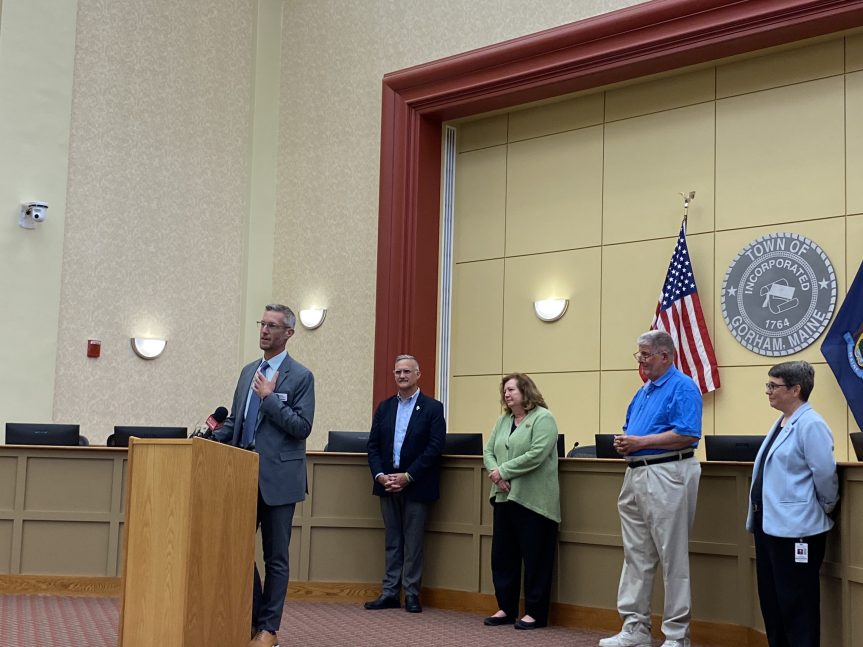
The Mills Administration announced today a new initiative to help Maine schools recruit, train, and retain educators through pre-apprenticeship and apprenticeship programs.

The initiative, funded in part by Governor Mills’ Maine Jobs & Recovery Plan, is part of a larger overall effort by the Mills Administration to connect employers with a skilled workforce and workers with career opportunities. The initiative was unveiled during a visit to the Gorham School District by Commissioner of Labor Laura Fortman and Deputy Commissioner of Education Dan Chuhta.

Under the initiative, schools and other education and community-related organizations can apply for competitive funding, with awards of up to $250,000 to begin local educator pre-apprenticeship and apprenticeship programs to help address Maine’s educator workforce shortage.

“As the daughter of a longtime public school teacher, I deeply and personally understand the lifelong impact that teachers have on their students, schools, and communities,” said Governor Janet Mills. “A teacher can make all the difference in the life of a student, and we should do what we can to ensure that those who want to advance in the teaching profession have the opportunity to do so. These apprenticeship programs are important to help educators take the next step in their careers. Using funding from my Jobs Plan, we will help Maine schools find the teachers they need and support educators on the path to fulfilling careers as they make a difference in the lives of our children.”

The initiative expands a program launched last year at Washington County Community College and the Gorham School District. The Gorham program – supported by the Maine Department of Labor and the Harold Alfond Center for the Advancement of Maine’s Workforce – partners with Southern Maine Community College and the University of Southern Maine to provide classroom training to current education technicians from multiple schools in Cumberland and York counties. These apprentices work in the classrooms during the school day while they advance their career to become certified Education Technicians II, creating a pathway to continue their education and become certified teachers.

The program was created after the Maine Department of Education last year released its Teach Maine plan, in partnership with educators and stakeholders, to bolster the teacher workforce through innovative recruitment and retention strategies, including programs like apprenticeships. With encouragement from the U.S. Departments of Education and Labor, Maine joined several other states in launching apprenticeships in educator occupations with new programs at Washington County Community College and the Gorham School District.

“The Maine Department of Labor works with employers to fulfill their workforce needs and works to connect Maine’s people to high quality jobs. One way that we do this is through mutually beneficial registered apprenticeships,” said Laura Fortman, Commissioner of the Maine Department of Labor.Registered Apprenticeship is an excellent training model for schools to use, as it supports those already working in Maine’s schools to advance down the path of becoming a certified teacher, while continuing to earn an income.”

“The Maine Department of Education is committed to ensuring that everyone who wants to be a teacher in Maine has a pathway into the profession and is supported in the classroom. Teacher apprenticeships and pre-apprenticeships offer a meaningful pathway to recruit, prepare, and support aspiring educators and these programs are aligned to the strategies embedded in our Teach Maine plan to build a robust teacher workforce in our state. We are excited to partner with the Department of Labor to invest in pilot programs that will lead to an effective teacher apprenticeship model for Maine,” said Pender Makin, Commissioner of the Maine Department of Education.

“The Maine Education Association is committed to quality public education for our students and during a time when we have many open positions across the state we need to focus on innovative solutions to attract and retain the best into the profession. While increasing educator pay is crucial, teacher apprenticeship grants can also help show Maine is ready to invest in both the aspirations of our aspiring educators and the growth of our state. Together, we can cultivate a robust teacher workforce and pave the way for generations of students to thrive,” said Grace Leavitt, President of the Maine Education Association.

“As Maine faces a critical shortage of educators, these programs will provide aspiring educators with valuable hands-on experience in real classroom settings. This practical exposure allows aspiring educators to apply theoretical knowledge and develop practical teaching skills under the guidance of experienced mentors.   These programs will play a crucial role in preparing new teachers for the challenges and demands of the classroom, bridge the gap between theory and practice, foster skill development, and contribute to the overall improvement of education systems, said Eileen King, Executive Director of the Maine School Superintendents Association.

“The Educator Apprentice Program has been fundamental in many ways,” said Kathy Dol, a participant in Gorham’s educator apprenticeship program. “The structure of this program, relative to the small class size and expectations, allows for achievable success that has been nothing short of a welcome surprise. You can be sure this program will fit your extended educational goals. Education is a continuous area that allows educators to add to our toolbox that is never filled. That what I gain out of this apprentice program, and I thoroughly enjoy that.”

The expansion of teacher apprenticeship programs is supported by $600,000 in Federal funding, including $100,000 through the Governor’s Jobs Plan and $500,000 through U.S. Department of Labor’s State Apprenticeship Expansion, Equity, and Innovation (SAEEI) Grant. Using these grants, schools can partner with Maine Department of Labor’s Registered Apprenticeship Program to pilot new educator apprenticeship and pre-apprenticeship programs.

The number and size of grant awards will depend on the number of proposals received, anticipated number of apprentices served, and available funds. Interested applicants can find more information here. Proposals are due September 25, 2023.

This grant funding opportunity builds on the investment of $12.3 million awarded to expand apprenticeship through the Governor’s Jobs Plan and other Federal funds. The State’s Registered Apprenticeship Program currently has 1,292 active apprentices and 142 registered sponsors, representing 261 participating businesses in Maine.

Apprentices in Maine who completed their program in the last two years increased their wages, on average, by nearly 40 percent. Nationally, 94 percent of apprentices continue their employment with their apprenticeship sponsoring business once their training is complete.

The Maine Jobs & Recovery Plan is the Governor’s plan, approved by the Legislature, to invest nearly $1 billion in Federal American Rescue Plan funds to improve the lives of Maine people and families, help businesses, create good-paying jobs, and build an economy poised for future prosperity.

Since the Jobs Plan took effect in October 2021, the Mills Administration has delivered direct economic relief to nearly 1,000 Maine small businesses, supported more than 100 infrastructure projects around the state to create jobs and revitalize communities, and invested in workforce programs estimated to offer apprenticeship, career and education advancement, and job training opportunities to 22,000 Maine people.

For more about Maine Jobs & Recovery Plan, visit maine.gov/jobsplan. For more about Maine’s apprenticeship program, please visit here.


Semifinalists for 2024 Maine Teacher of the Year Announced

Eight Maine educators were announced today as the state semifinalists for the 2024 Maine Teacher of the Year.  These distinguished educators, who are members of the 2023 County Teacher of the Year cohort, embody the dedication, innovation, and leadership that are hallmarks of Maine’s outstanding classroom teachers. As representatives of their students, colleagues, and school communities, their selection acknowledges their excellence in teaching and celebrates the collective achievements and commitment of the entire teaching profession in Maine.

The semifinalists for the 2024 Maine Teacher of the Year:

Educators in the Maine Teacher of the Year Program are nominated by a member of their community for their exemplary service in education and dedication to their students. They were selected by a distinguished panel of teachers, principals, and business community members from a pool of hundreds of nominees.

In the next phase of the selection process, the semifinalists will submit professional portfolios, deliver keynote speeches, and participate in an expert panel discussion on educational equity, teacher leadership, and education policy.  The state finalists will be announced in September, and the 2024 Maine Teacher of the Year will be revealed in October. The 2024 Maine Teacher of the Year will serve as an ambassador for the teaching profession, representing Maine in the National Teacher of the Year program.

The  Maine Teacher of the Year program is administered by Educate Maine through a unique partnership with  the Maine Department of Education with support from the Maine County and State Teacher of the Year Association (MCSTOYA) and the Maine State Board of Education. Funding for the program is generously provided by Bangor Savings Bank, Dead River, Geiger, Hannaford, Maine Lottery, Pratt and Whitney, the Silvernail Family, and Unum.

For more information about the Maine County Teacher of the Year Program and to see a list of County Teachers of the Year, and Maine Teachers of the Year, visit http://www.mainetoy.org.

Media Release: Maine DOE Provides Schools with Additional $2 Million to Expand Summer Learning and Enrichment

The Maine Department of Education (DOE) provided an additional $2 million to 17 school units to expand engaging and meaningful summer learning programs across the state for nearly 1,000 students. The programs focus on helping students recover from the impacts of the pandemic through additional math and literacy instruction, tutoring, hands-on outdoor learning experiences, and family engagement activities. Students have access to meals and get to spend the summer building skills and knowledge and engaging in fun activities with their classmates.  

“These are meaningful summer learning programs that provide students with the academic support they need to recover from the pandemic while also allowing them to explore the outdoor world around them, be creative, engage in project-based learning, build social skills and connections, and have reliable meals,” said Maine Education Commissioner Pender Makin. 

The summer learning opportunities are paid for using federal emergency relief funding and are in addition to the $2.1 million granted to 63 school administrative units (SAUs) to support summer enrichment programming through the Title I Summer Reallocation Grant. 

Expanded Summer Learning and Enrichment Programs 

East Millinocket School Department
East Millinocket School Department’s extended school year program provides students with high-quality tutoring and intensive reading instruction to support learning growth. Students also participate in immersive outdoor learning opportunities at Baxter State Park and other area destinations.   

East Range II CSD 
East Range II School’s summer day program provides students with learning opportunities that will engage them physically, mentally, and creatively. Programming focuses on instruction as well as providing access to mental health, occupational therapy, and speech therapy services that many students do not have access to over the summer. Students also have access to breakfast, snacks, and lunch during the summer program and monthly access to the school’s food pantry program. 

Students also attend Down East Lakes children’s program once a week to provide hands on experience with natural science and will visit Twin Ponds Nature and Discovery Center to learn about aquatic and land species in their area and in Maine. Student use drawings and writings to document their experiences. Families will come together at a nearby lake for a final family engagement day.  

Fiddlehead School of Arts and Sciences Charter School 
Fiddlehead offers students six weeks of camp activities to continue their learning in literacy and math through hands-on, minds-on enrichment activities. Camp activities include art, theater, musical theater, 3D art, young inventors, paper arts, and clay sculpting. All camps end with a showcase for families and there is extended reading time built into all camp schedules to strengthen literacy skills.  

Hancock Public Schools 
Hancock Grammar School offers students a four-week summer program for literacy using evidence-backed practices. Students will also participate in math programming each day.  

Hope Public Schools 
Hope Public Schools offers students summer programming focused on academic enrichment and the opportunity to grow socially and emotionally. The program provides students an immersive learning opportunity in the school garden, where students measure, predict, write, experiment, and read in the garden. Parents and community members join by reading to children in the garden and distributing food to families.  

Madawaska 
Madawaska Elementary School’s extended educational opportunities provide students with additional targeted learning experiences and instruction, exposure to project-based learning and real-world application, critical thinking skills, and social emotional benefits that emerge from confident learners. The program also includes student visits to the Acadian Village to explore history and language, Four Seasons Outdoor Center to explore natural science concepts and apply math concepts to real life examples, and the University of Maine Fort Kent junior learner’s programs and activities. Families also have access to family math night, early learners open house and information night, reading night in the library, and other family and community events.  

Maine Connections Academy 
Maine Connections Academy’s summer program focuses on students who are credit deficient and lack the class completion needed to graduate on time. The program focuses on re-engaging these students and providing supplemental targeted intensive instruction to complete courses required for promotion/graduation. A parent or adult is designated as each student’s Learning Coach and responsible for documenting attendance for the students throughout the summer school period and coordinators work closely with parents and guardians throughout the summer program to ensure parent engagement. 

Otis Public Schools 
Otis Public School’s four-week summer program provides focused literacy and math interventions to students who are furthest from meeting benchmarks. Student also participate in team-building challenges, STEAM opportunities, and physical activities that engage and motivate students in experiential learning. Students take part in experiential learning opportunities at Lamoine State Park and Bangor Children’s Museum. 

Portland Public Schools 
Portland Public Schools offers students a daily summer program focused on students in need of reading and math recovery instruction. The program also prioritizes students who are experiencing homelessness. Reading and math instruction is combined with hands-on enrichment activities and STEAM instruction.  

MSAD 11 (Gardiner) 
In partnership with The Boys & Girls Clubs of Kennebec Valley in Gardiner, MSAD 11 provides students with academic and enrichment programming to support learning recovery and meet the social and emotional needs of students. Students most in need of academic support, students from low-income households, and students who could greatly benefit from extra social interaction and extra-curricular activity during the summer months are prioritized for the six themed weeks of programming. Summer programming features engaging, hands-on activities that promote learning, have real-world applications, and build on students’ sense of exploration, engagement, and belonging. MSAD 11’s summer program provides academic support in math and reading, project-based learning, health and wellness programs, STEM projects including include visits from Chewonki, a robot coding class, and a field trip to The Maine Wildlife Park, visual and performing arts programs, multicultural education, youth leadership and service learning, and parent engagement throughout, including STEM night, Olympian Week, and the Gardiner Public Library Summer Reading Program. On Tuesdays, parents can come with a bag and take a variety of foods home for free that were all donated by Hannaford and the local food bank.   

RSU 14 (Windham) 
RSU 14’s summer program supports students who need additional early literacy and math instruction. Students attend this summer programing 4 days a week for 4 hours a day and get the support they need to he will program prepare students to smoothly transition to the next grade level by strength knowledge of early literacy and numeracy concepts. Staff also engage with families by providing materials and instructions to support their child at home, including make and take activities for parents in both math and literacy and a parent afternoon tea.  

MSAD 15 (Gray) 
The Patriot Arts and Learning Summer Institute uses an arts and STEM integrated approach to address COVID learning gaps in literacy and numeracy in grades K-4. Students in the program receive daily instruction in literacy, numeracy, arts, and STEM. Students are also be provided breakfast, lunch, and outdoor movement time daily. The Patriot Arts and Learning Institute utilizes a “push-in” field trip model to bring unique and fun opportunities to students aligned with learning. Push-in field trips focus on arts and STEM integration including traveling planetarium, Portland Stage, Portland Ballet, animal rescue outreach, and team building activities. MSAD 15 has also partnered with the local recreation departments to provide before and after care for students in the Patriot Arts and Learning Summer Institute. 

MSAD 17 (Oxford Hills) 
RSU 17’s “Camp Achieves” focuses on engage students in learning through fun, active, hands-on math and science lessons and projects. Additionally, language and literacy will be incorporated into the daily activities. Students will hear from and interact with local beekeepers, farmers, and wildlife specialists and engaging in experiential learning at a community garden and Roberts Farm. Tier II interventions will be provided in both literacy and math. At the close of the program, an ‘open house’ will be held for the purpose of students’ sharing projects with their parents.  

RSU 34 (Old Town) 
RSU 34 offers students and families a variety of summer programming to meet their individual needs, including in-person learning opportunities for students in a four-week model, one-on-one and small group high-dosage tutoring for students spanning the entire summer, an engaging virtual asynchronous option for students to engage in weekly learning objectives with on-call support, and ongoing programming for students delivered through school libraries and school garden. 

MSAD 70 (Hodgdon) 
RSU 70’s summer school focuses on helping students fill learning gaps caused by the pandemic and maintain current learning as well as gain proficiency in student specific learning identified. The summer school also provides exploratory experiences to apply learning in engaging ways through field trips and real-life experiences that encourage reading, science, and math. 

RSU 82/MSAD 12 (Forest Hills/Jackman) 
RSU 82/MSAD 12’s summer learning and enrichment program focuses on the academic and wellbeing needs of students and family engagement through academic instruction and projects, family literacy night, family math night, and a showcase event allowing students to present their summer portfolios to their families.   

Veazie Public Schools 
Veazie Public Schools provides students with targeted instruction over the summer in areas where they may have fallen behind due to the pandemic. Programs include small group instruction, one-on-one support, and targeted interventions to help students catch up on missed content and develop the skills they need to ensure future success. School library services are available to students all summer and families have access to at least two free family movie nights at the school. By actively engaging families in the summer school program, the school hopes to promote a sense of community, support student learning, and foster a positive learning environment for all students. 

Media Release: College and Career Success Coordinators Provide Academic and Career Supports and Help Students Transition to College

The Maine Department of Education (DOE) and the Maine Community College System announced that current and prospective community college students across the state now have access to College and Career Success Coordinators to provide them with academic and career supports and assist them with the transition to college. Through Maine Jobs and Recovery Plan (MJRP) funding, the Success Coordinators have already served more than 1,000 students and helped nearly 400 students develop career and academic plans.

College and Career Success Coordinators work alongside existing community college staff to provide students with:

  • Academic support, including navigating learning platforms, goal setting, creating academic plans, and time management strategies.
  • Transition support for students entering community college.
  • Advising, including success coaching, course collection, troubleshooting, promoting self-agency, career planning, and getting to college completion.
  • Resource referrals on and off campus, including tutoring, financial aid, Adult Education services, housing services, scholarships, workforce opportunities, and community supports.

“The transition to college can be daunting, but now Maine students have access to College and Career Success Coordinators to help them manage that transition with ease and get the help they need to succeed at school and beyond. Success Coordinators are there to help students problem solve and assist them with everything from academic planning to housing and job opportunities,” said Maine Education Commissioner Pender Makin.  

Maine Adult Education awarded more than 1,000 high school credentials to adult learners last year, and many of these learners continued their education at Maine’s community colleges. Students earning their high school credentials in 2020-25 qualify for up to two years of free community college, paying nothing in tuition or mandatory fees. Success Coordinators refer students to resources on campus, the state’s Adult Education programs, or partner agencies in the community to help them succeed in their college studies.

Prospective and current students can find the dedicated College and Career Success Coordinator in their county here

“The College and Career Success Coordinator was a huge help to me,” said Jessica Piela, a student in the Respiratory Therapy Program at Kennebec Valley Community College. “She helped me navigate college without making me feel ashamed or judged. I may not have continued my career path if it wasn’t for her and her support.”

“I’ve worked in adult education and college academic support for over 15 years, and I am so happy to continue to serve these students as they take the next steps on their educational journey,” said Audrey Kimball, the Success Coordinator for York County Community College.

Since the Maine Jobs and Recovery Plan took effect in October 2021, the Mills Administration has delivered direct economic relief to nearly 1,000 Maine small businesses, supported more than 100 infrastructure projects around the state to create jobs and revitalize communities, and invested in workforce programs estimated to offer apprenticeship, career and education advancement, and job training opportunities to 22,000 Maine people.

For more about Maine Jobs & Recovery Plan, visit maine.gov/jobsplan.

To read the bios of Maine’s Career Navigators and College and Career Success Coordinators, and learn more about the programs, click here.