Maine DOE Welcomes 10 Interns This Summer

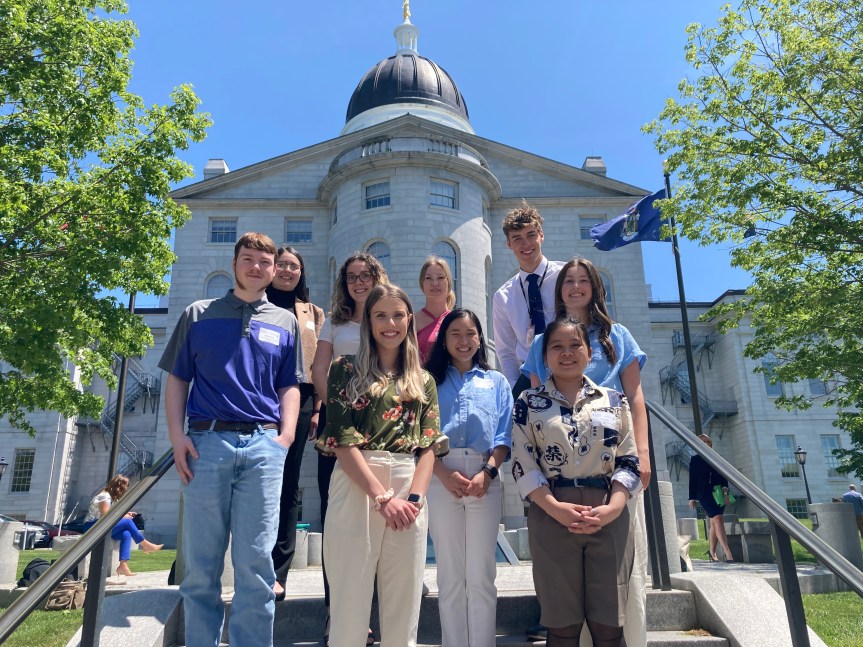
The Maine Department of Education (DOE) welcomed ten new student interns for the summer who will bring their ideas, energy, voice, and skills to strengthen education in Maine. These students, who will be working on a variety of Maine DOE teams, were selected for the Maine Government Summer Internship Program by the Margaret Chase Smith Policy Institute at the University of Maine. The interns will spend the summer assisting with daily operations and projects at the Maine DOE while gaining professional experience and knowledge and building connection.

Maine Department of Education Interns

Charlotte Buswick is a rising senior at Colby College from Boxford, Massachusetts. She is majoring in History with a minor in Science, Technology, and Society. As an Innovative Education Assistant this summer, she will be working with the MOOSE team to develop online learning modules for students across all grade levels. She is very excited to work with and learn from everyone on the MOOSE team. Outside of work, she enjoys spending time outside, listening to music, reading, and playing guitar.

Nhan Chau is a recent graduate of the University of Maine where she majored in New Media and minored in Graphic Design. She is originally from Ho Chi Minh City, Vietnam and has been living in Maine for the last five years. As a Learning Through Technology Data and Media assistant, she will be working on a multimedia database of the social media presence of MLTI schools, cataloging computer science happenings, and organizing social media content. She is excited to work with her team and help with creating meaningful and impactful social media campaigns. During her free time, she enjoys drawing and creating animations.

Hannah Craig is a recent graduate of Boston University where she earned her degree in International Relations with a focus on International Systems and a minor in Economics. She is originally from Cumberland, Maine and now lives in South Portland. This summer, she will be interning for the Maine Opportunities for Online Sustained Education (MOOSE) team. She is looking forward to learning about curriculum content creation and the process of creating accessible and equitable learning resources for students. In her free time, she enjoys taking care of her plants, watching history documentaries, and spending time with her niece and nephew.

Jilleon Farrell is a graduate of the University of Maine at Orono where she earned her degree in Food Science and Human Nutrition. She is now in graduate school, also at UMaine, and hopes to become a Registered Dietician. She is from Manchester, Maine. As the Resource Administrator Intern, she will be assisting the operation team and updating, maintaining, and organizing operations data to gain exposure to all the opportunities the DOE has to offer this summer.

Natalie Grandahl is a rising senior studying political science at the University of Connecticut. She is from North Monmouth, Maine. As the Communications Intern, she will be creating content, writing for the newsroom, and assisting with the website. She is excited to meet a wide variety of people and to gain knowledge and experience working in government. She enjoys running, reading, and traveling in her free time.

Ryan Hafener is from Hampden, Maine and attends Hampden Academy. After graduating high school, he plans on attending college to pursue a degree in international relations or philosophy. This summer he will be interning in the Commissioner’s Office and working on both the legislative and communications teams. He is excited to get to work with education legislation and to work on media promoting public education. In his free time, he enjoys rock climbing, traveling, reading, and getting outdoors.

Joseph Koenig is a rising senior from Gray, Maine studying at Husson University. He is majoring in Marketing Communications with a minor in Integrated Technology and certificates in Photography, Graphic Design, Web Media, and Digital and Social Media Marketing. This summer, he will be working as the School and Student Supports Communications Assistant where he will be doing outreach to Maine educators, parents, and community members about various educational opportunities. He is most excited about working on projects that have the potential to shape the DOE in years to come.

Madeline Levesque is a rising junior at Husson University studying Graphic/Visual Design with a certificate in Marketing Communications and Photography, and she is from Augusta, Maine. This summer she will be working as the DOE’s Maine Learning Through Technology Digital Design Assistant. She will be updating and designing media forMLTI’s website while also helping to improve outreach about their current programs and events. She enjoys portrait photography, spending time outdoors, and being a member of the Husson Dance Team.

Cora Saddler is a first-year graduate student at the University of Maine at Orono pursuing a degree in English Studies with a concentration in creative writing. After graduate school, she plans on pursuing a career teaching English abroad. She is originally from Cabot, Arkansas but currently lives in Maine. As the Adult Multilingual Education Professional Development Assistant for the Maine DOE, she will be working on providing professional education resources for adult educators throughout the state. In this role, she is most excited about assisting with planning for the Adult Multilingual Learner’s Summer Institute – also known as Camp Sugarloaf. In her free time, she enjoys writing, photography, ice skating, and baking.

Annabelle Williams is a rising junior at the University of Vermont and is from Camden, Maine. She is double majoring in Psychology and Business Administration with a focus on marketing and entrepreneurship. This summer she will be working on the RREV Team in the Office of Innovation as their Communications Strategy Coach. She will be helping the team and their awardee schools effectively communicate their experiences with the program, developing RREV’s social media presence, and creating a user-guide for ENGINE which is their online collaborative platform for Maine educators.


Maine DOE, UMS Expand Whole-Student Supports for Maine Schools

More K–12 students and educators in Maine are set to benefit from stronger social, emotional and behavioral supports thanks to Maine PBIS, a collaboration between the University of Maine System and the Maine Department Education (DOE), which is adding 21 new schools to its professional development cohort.

The schools, which will participate in the initiative over the next three years, are located in communities throughout the state, including Berwick, Boothbay Harbor, Brooksville, Bucksport, Damariscotta, Edgecomb, Litchfield, Madawaska, North Berwick, Sabattus, South Portland and Westbrook.

“Teams of educators from these schools will learn and practice together for the next three years, joining more than 30 schools that are currently part of our professional development model and more than 75 schools statewide that have already implemented sustainable supports for Maine students,” says Courtney Angelosante, Maine PBIS coordinator at the University of Maine College of Education and Human Development.

Positive Behavioral Interventions and Supports, or PBIS, is a nationally recognized framework providing a multi-tiered continuum of supports in K-12 schools, promoting positive social and behavioral outcomes for all students. It is based on a community health promotion model. In schools that have implemented PBIS, it is expected that 95% of students will have most of their social, emotional and behavioral needs met before schools have to implement the third, or most targeted tier of interventions.

Maine DOE, in collaboration with UMS, supports schools and districts to implement PBIS through a cohort model that matches Maine-endorsed PBIS trainers and coaches with district and school-level teams. Maine PBIS’s professional development efforts have received national and international attention as a particularly effective example for rural schools and communities.

“Being able to work with our PBIS coaches multiple times a year made our school’s efforts towards Tier 1 implementation much smoother,” says Sierra Bloom, a first-grade teacher at Surry Elementary School, which has already taken part in the UMS-Maine DOE initiative. “Our coaches were always there to support our work directly and led us to a solid foundation for our work in PBIS.”

Bloom adds that being able to work with other schools in the cohort model was beneficial.

“We were able to collaborate and share ideas for success, while also gaining support towards common struggles,” she says.

This summer, Maine PBIS will host a five-day training institute for educators who are part of its professional development cohort. The training, which is limited to 50 participants and will take place at Husson University from July 10–14, will be designed to help teachers identify why a behavior is happening through a variety of assessment tools and procedures, leading to the development of a positive behavior support plan individualized to a student’s strengths and needs. More information about the Maine PBIS Advanced Tiers Summer Institute is online.

“The supportive and inclusive practices of PBIS have elicited overwhelmingly positive responses by administrators, educators, students and families. Our office looks forward to supporting and sustaining schools and districts in this work,” says Tracy Whitlock, Special Projects Coordinator in the Office of Special Services and Inclusive Education at the Maine Department of Education.

The Maine DOE provides funding for the Maine PBIS initiative through a federal State Personnel Development Grant. The funding is helping scale up capacity for PBIS in the state through a UMS Microcredential for PBIS Coaching and Training. The second cohort of educators seeking the micro-credential endorsement will begin in fall 2023. Applications, which are available online, are due June 15.

Press Release: Maine’s 2023 County Teachers of the Year Announced

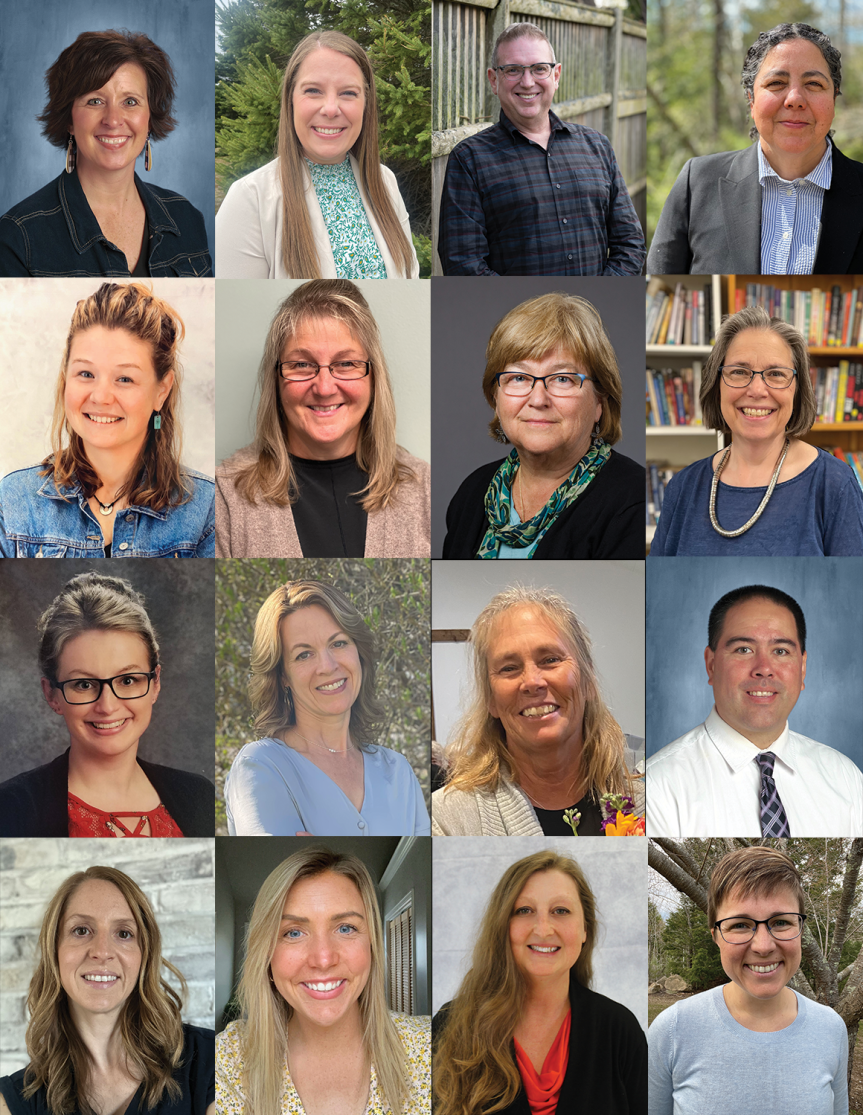
Sixteen Maine teachers were announced as 2023 County Teachers of the Year today at a ceremony in the Hall of Flags at the Maine State Capitol during Teacher Appreciation Week. Governor Janet Mills joined Maine Department of Education Deputy Commissioner Dan Chuhta, Educate Maine Executive Director Jason Judd, State Board of Education Chair Fern Desjardins, 2023 Maine Teacher of the Year Matthew Bernstein, and Maine County and State Teachers of the Year Association Co-President Heather Whitaker to announce and honor the new class of County Teachers of the Year.

More than 500 teachers across Maine were nominated by a member of their school community and these 16 outstanding educators were selected as County Teachers of the Year by a panel of teachers, principals, and business community members within their county. They range from having taught six years to 30, include elementary, middle, high school, and adult education teachers, and teach subjects ranging from science, reading, and social studies to graphic communications, health, and physical education.

Maine County Teachers of the Year serve as ambassadors for teachers, students, and schools throughout their year of service. Throughout the summer, they will continue to participate in an intensive Maine State Teacher of the Year selection process and Maine’s Teacher of the Year will be announced in the fall.

“As the daughter of a longtime public school teacher, I have the deepest respect and admiration for the Maine educators who work tirelessly to equip our students with the knowledge and skills they need to have bright futures,” said Governor Janet Mills. “I congratulate this year’s County Teacher of the Year honorees for their commitment to excellence in education, and most importantly, for their outstanding work in teaching our children.”

“These 16 extraordinary teachers were nominated by colleagues, parents, and students for their passion, leadership, dedication, and the difference they make in the lives of their students and school community. They make each student feel seen and valued, inspire everyone around them, and engage their students in rich, meaningful learning. I want to offer my sincere appreciation for everything that you do and it’s such an honor to celebrate you as Maine’s County Teachers of the Year,” said Maine Education Commissioner Pender Makin.

“We’re excited to announce the tenth County Teacher of the Year cohort in 2023 – a group of outstanding educators who will serve as ambassadors for students, teachers, and quality education in Maine. We’re honored to work alongside them during this year of recognition and are confident that they will continue to inspire and make a positive impact on their students, schools, and communities,” said Educate Maine Executive Director Jason, Judd.

2023 County Teachers of the Year:

The Maine Department of Education’s Teacher of the Year Program is administered through a collaborative partnership with Educate Maine. To learn more about the Teacher of the Year Program visit: https://www.mainetoy.org/. The event was also broadcast live on the Maine Department of Education’s YouTube page.

MEDIA RELEASE: Maine DOE Invests $9 Million to Increase School-Based Mental Health Staff and Services

The Maine Department of Education (DOE) announced a $9 million investment, funded through the Bipartisan Safer Communities Act, to increase school-based mental health staff and services in Maine. Expanding Access in School Environments (EASE) Maine will provide grants to nine high-need school administrative units (SAUs) to support efforts to recruit and retain mental health providers and expand services to students.

Eastport Public Schools, Jefferson Public Schools, Lewiston Public Schools, RSU 12, RSU 24, RSU 54, RSU 73, RSU 79, and RSU 85 will receive funding over the duration of this 5-year grant. These SAUs were identified as high need because they had low student to mental health provider ratios relative to the rest of the state and nation. Through the EASE Maine grants, the Maine DOE will partner with these SAUs to develop and implement whole student-focused strategies to meet the unique needs of each community, increase student access to much-needed mental health services, and recruit, retain, and re-specialize staff to support the mental health and wellbeing of students, staff, and families. The funding will enable SAUs to collaborate with one another and with community organizations, state agencies, and other partners to confront growing mental health needs following the pandemic by increasing the number of highly qualified mental health services providers in schools.

“Supporting the mental health and wellbeing of our students is essential to making sure they thrive in the classroom and in their lives. Thanks to the Bipartisan Safer Communities Act, these grants will help schools hire and retain the social workers, counselors, and mental health providers they need to address student mental health needs, which have only grown during the pandemic,” said Maine Education Commissioner Pender Makin.  

“We at RSU 12 are pleased to partner with the Maine Department of Education through the Expanding Access to Supportive Environments in Maine Schools (EASE) grant. This grant will allow us to build our capacity to hire, retain, and develop professionally qualified school-based mental health teams that reflect our community and provide us with much-needed professional development opportunities and technical assistance. Given the mental health challenges many of our students face, this grant couldn’t have come at a more crucial time. We are truly excited about the possibilities and the positive impact this grant will have on our students and community,” said RSU 12 Superintendent Howard Tuttle. 

“We appreciate the conversation and opportunity to help support our students’ social and emotional wellbeing and look forward to making the most of this opportunity,” said RSU 54 Superintendent Jon Moody. 

EASE Maine SAU Allocations (Annually for 5 Years): 
Eastport Public Schools – $65, 541/year
Jefferson Public Schools – $67,947/year
Lewiston Public Schools – $248,644/year
RSU 12 – $92,698/year
RSU 24 – $88,251/year
RSU 54 – $141,655/year
RSU 73 – $110,560/year
RSU 79 – $121,496/year
RSU 85 – $63,208/year

The Maine DOE’s Office of School and Student Supports provides support and resources for all schools in Maine related to student and staff mental health and wellbeing. Learn more here.

MEDIA RELEASE: Maine Education Commissioner Pender Makin Recognizes Southern Aroostook Community School Employee as State’s RISE Award Honoree

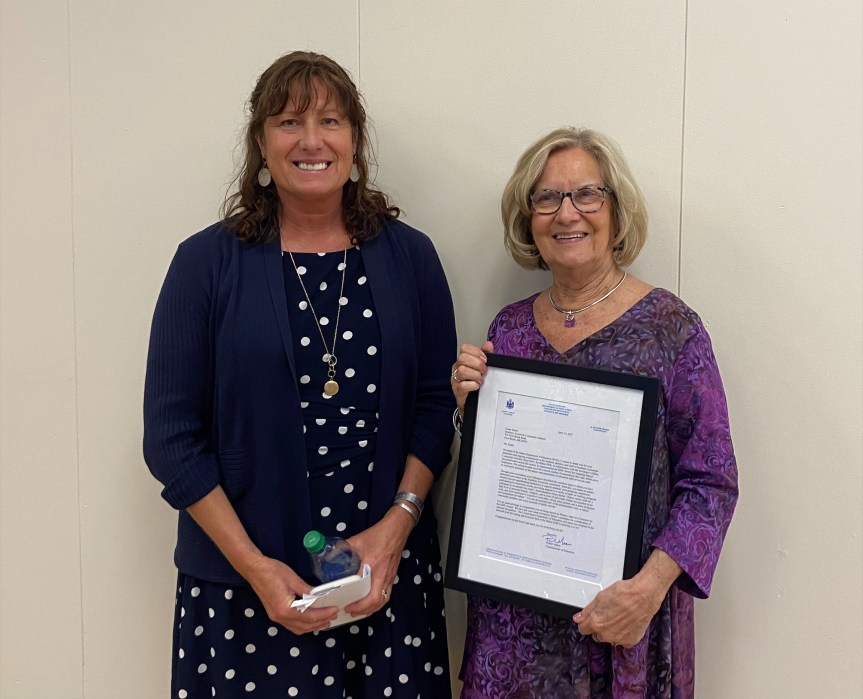
Maine Education Commissioner Pender Makin joined Southern Aroostook Community School leaders and staff to honor Administrative Assistant Elaine Small with the Recognizing Inspiring School Employees (RISE) Award for the extraordinary contributions she has made to students, educators, and the community. Whether it’s spearheading fundraisers to support students’ post-secondary aspirations, participating in community events, providing support to a variety of staff, or working alongside colleagues to coordinate bus routes, Small makes a huge impact each day on the students and staff around her.

Created by Congress in 2019 and overseen by the U.S. Department of Education, the prestigious RISE Award honors non-teaching school employees who provide exemplary service. Small is one of 10 state-level finalists chosen by the Maine Department of Education (DOE) and Governor’s Office out of nearly 90 exceptional nominations submitted to the DOE by school colleagues and community members. She has been selected to represent Maine for consideration as the national RISE Award recipient. The U.S. Department of Education will announce one national honoree this spring.

“The RISE Awards are a moment when we can hold up the unsung heroes who are doing the most intense, personal work of our schools and who are very rarely recognized,” said Maine Education Commissioner Pender Makin while presenting the award. “We are here to celebrate and honor Elaine for her years and years of service to this school community. As I read Elaine’s accolades in her nomination, you could hear the people who she has helped, who she has inspired, and who she has supported with love, care, and dedication. I am in awe of what Elaine has achieved for this school community.”

“Elaine values kids and everything she does is about kids. The number of lives she has touched through her work is inspiring,” said RSU 50 Superintendent Jon Porter while honoring Small. “Elaine really is the glue that keeps everything together, the frontline for what happens here, and the first face people see. She has also been the president of our scholarship program for the last 35 years and has organized support and community events to raise hundreds of thousands of dollars for graduates going on to higher education. Thank you for everything you do.”

“I am deeply honored and completely surprised to be nominated for a RISE Award by my school colleagues. My position here in RSU 50 evolves every single day and that is one of the things I love about it – I am about growth and change in my life and the lives of our students,” said RISE State Honoree Elaine Small. “My hope is to continue the work we do here in our school and our community and to always keep a positive place in our minds and in our hearts, for every student to be successful, while they are with us and as they go forward in their lives.”

RISE nominees demonstrate excellence in the following areas: (A) Work performance; (B) School and community involvement; (C) Leadership and commitment; (D) Local support (from co-workers, school administrators, community members, etc., who speak to the nominee’s exemplary work); (E) Enhancement of classified school employees’ image in the community and schools.

You can read more about Small and all of Maine’s state finalists here and below. Photos available on request.

Maine’s RISE State Honoree
 
Elaine Small
Administrative Assistant
RSU 50Elaine Small has been serving generations of young people in rural Maine, where she maintains the perfect balance of professionalism and love in her work. She can often be found pitching in to lend a helping hand in all areas within the district and school, all while managing the school administrative unit’s (SAU’s) bussing staff, which is a huge feat. Elaine ensures kids can get to school and have access to extracurricular programming, and often times she juggles all of this without a full fleet.

Elaine leads by example, forging a strong relationship between the school and the community and she is a constant presence at community events. She can be found in the auditorium during drama productions, in the stands showing her support to student-athletes, serving as a senior class advisor, and volunteering hundreds of hours to ensure students have access to post-secondary career opportunities. Through her modeling, students are encouraged to get involved in senior citizen luncheons, spaghetti suppers, and local craft fairs. She organizes fundraisers and works tirelessly to get the community involved in the continuing education of Maine students. The success of the So. Aroostook Scholarship Fund and ultimately the workforce in Aroostook County is largely due to her continued efforts for many years.

Maine’s RISE Finalists

Larry Alley
Head Bus Driver/Custodial Staff
Pemetic Elementary School, Southwest Harbor School Department

Kevin Bailey
Facilities-Custodial/Maintenance,
Mid-Coast School of Technology, Region 8

Nichole Bryant
Pre-K Educational Technician
Elm Street School, RSU 16

James Fahey
Outside Security Officer
Bangor High School, Bangor School Department

Ann Heald
Title 1 Education Technician
Madison Elementary School, MSAD 59

Anne Lee
Assistant Cook/Custodial Staff
Tremont Consolidated School, Mount Desert Island Regional School System – at the time of nomination

James Mendoza
Migrant Education Regional Coordinator (Eastern Washington County), Mano En Mano – at the time of nomination

Linda Oster
Transportation/Bus Driver
MSAD 17

Shawn Russell
IT/Communications Director
Rangeley, RSU 78

Media Release: Maine DOE Announces Availability of Maine Learning Through Technology Initiative (MLTI) #TeachWithTech Grants for Schools

The Maine Department of Education (DOE) announced the availability of new Maine Learning Through Technology Initiative (MLTI) #TeachWithTech grants to support school administrative unit (SAU) efforts to meaningfully integrate technology into teaching and learning. The grants provide funding to MLTI educators who want to bring technology into their MLTI schools in a way that is innovative, impactful, and intriguing and will be used to provide supplemental technology to schools.

The supplemental technology available to schools through these grants includes, but is not limited to, 3D printers, laser cutters, video production equipment, specialized cameras, drones, robotics & coding kits, digital microscopes & doc cameras, and audio/podcasting equipment.

“Meaningfully integrating technology into teaching and learning allows teachers to harness the power of technology in a way that deeply engages students, and these tools and resources can be used across content areas and for all grade levels,” said Maine Education Commissioner Pender Makin. “Through these grants, Maine students will be able to access cutting-edge technology tools and build the skills they need to lead and thrive in a high-tech, digital world.”

Maine continues to lead the way with technology learning through innovation and meaningful integration. By focusing on ensuring that students have access to high quality technology-infused learning experiences and incorporating real-world topics and skills, Maine students are better prepared for post-secondary education, their careers, and beyond. From providing ongoing professional learning in technology integration, increasing student leadership opportunities in technology, and providing mobile computer science labs to all Maine public schools, these are just a few of the many ways that Maine is building capacity for and expanding critical access to technology learning for all students.

This grant is designed to offer supplemental technology that is not already provided through the MLTI program; device applications will not be considered. Instead, SAUs are encouraged to think about innovative learning through technology and to submit an application to invest in technology that will create transformative learning experiences for students and supplement the devices already provided. Eligible districts can submit an application for technology supplies and associated professional learning. This will include a plan and narrative that describes and clearly outlines the relationship between the technology and the teaching and learning that it’s being integrated into.

Priority will be given to applicants who:

  • Focus on greatest student impact
  • Serve socioeconomically disadvantaged school districts
  • Prioritize student populations traditionally underrepresented in technology
  • Demonstrate a commitment to pursuing high-quality teaching and learning through technology.

Applications will be reviewed on a rolling basis and in the order in which they are received. Click here to access the application.

For more information about this and other MLTI initiatives, go to https://maine.gov/doe/learning/ltt/mlti/twt

###

Media Release: Maine DOE Announces Inaugural Class of Teacher Leader Fellows

The Maine Department of Education (DOE) launched Maine’s Teacher Leader Fellows today with an inaugural class of five extraordinary educators from across the state. Waterville Senior High School social studies teacher Jessica Graham, Fryeburg Academy national-board certified teacher James St. Pierre, Nokomis Regional Middle School Integrated Technology teacher Keith Kelley, Mattanawcook Academy mathematics teacher Sarah Krause, and national-board certified music teacher Dorie Tripp will work with Maine DOE staff to support Maine’s educators in cross-cutting, interdisciplinary concepts of civics, STEAM, and humanities.

The Teacher Leader Fellows will provide educators across Maine with weekly updates on resources and materials, host monthly professional learning opportunities, and maintain webpages with rich and informative content. To receive weekly communications and monthly professional learning around civics, STEAM, and/or humanities concepts, click here.

“Taking on this new position offers so many opportunities to engage with exactly what I love about teaching—meeting other educators, making connections with community partners, and celebrating community centered student learning. I truly believe that building strong communities and educating engaged citizens is the core mission of schools, and that civic learning happens in every grade and every content area. I am so excited to help connect, celebrate, and create with educators and learners around Maine,” said Waterville Senior High School social studies teacher Jessica Graham.

“Being a teacher leader means connecting and helping others connect. It means gathering the ideas and experiences of the teachers in the state and sharing them in manageable, practical, and efficient ways. We have such a great array of professionals whose knowledge can elevate all students, so to be one of the leaders bringing them together is a privilege,” said Fryeburg Academy national-board certified teacher James St. Pierre.

“To be a teacher you need to know the material and your students. A great teacher never stops learning and the best learning is done by teaching others. I hope, with the other Teacher Leader Fellows, to help educate others and myself until STEAM pours out of all of our classrooms,” said Nokomis Regional Middle School Integrated Technology teacher Keith Kelley.

“As a STEAM Teacher Leader Fellow, I hope to help spread important information and opportunities to the other STEAM educators in Maine. I plan to regularly provide teachers with some meaningful STEAM lessons and activities that can be incorporated into their classrooms. Additionally, as a teacher of mathematics and a fan of the arts, I would like to help others see the beauty in the world of STEAM,” said Mattanawcook Academy mathematics teacher Sarah Krause.

“I’m delighted to be working with the DOE to support Maine teachers! I look forward to working with other educators to learn, collaborate, and to create unique learning opportunities for our students,” said national-board certified music teacher Dorie Tripp.

Meet Maine’s Teacher Leader Fellows

Jessica Graham
Jessica Graham

Jessica Graham is a high school social studies teacher at Waterville Senior High School. She serves as the National Honor Society advisor and Trivia Club advisor and on the district curriculum committee. After working in museum education around the state of Maine for a decade, Jessica transitioned to classroom teaching six years ago and relishes the opportunity to build lasting relationships with students. She is passionate about civics education conceived broadly: helping students practice community in the classroom and in the wider world through conversation, action, and applied knowledge of decision-making processes. Her background in museum work leads her to approach content in an interdisciplinary and experiential way. Her greatest honor as a teacher was receiving Waterville’s annual staff Renaissance Award, a recognition bestowed by the student body.

In her free time Jessica is pursuing a PhD in history from the University of Maine, volunteers as a Girl Scout leader, and enjoys slowly converting her suburban yard into a garden retreat full of native plants and pollinator habitat.

James St. Pierre
James St. Pierre

James St. Pierre is a national board-certified teacher with thirty years of teaching experience at Fryeburg Academy where he has taught courses in English and biology and served as English department chair. In addition to his work at the secondary level, he also holds the position of Lecturer at both Granite State College and White Mountains Community College, where he has taught as an adjunct for two decades. He holds a master’s degree in English Literature from Middlebury College and has presented at state and regional conferences regarding the medium of comics. He is married with two sons and enjoys making comics in his free time.

Keith Kelley
Keith Kelley

A Maine educator for more than 33 years, Keith Kelley is currently teaching Integrated Technology. Having taught Language Arts, Social Studies and serving as the School Librarian, he is now teaching IT at Nokomis Regional Middle School. His students make Robots, Skateboards, 3D print, and build Guitars. He earned his bachelor’s and master’s degrees in Education at UMaine. He has coached soccer, track, and various tech camps. In his free time, he enjoys riding around in his classic mustang with his wife and dogs.

Sarah Krause
Sarah Krause

Sarah Krause is a graduate from the University of Maine with a B.S. in Secondary Education, a B.A. in Mathematics & Statistics, and a Minor in Zoology.

Currently, she is in her twelfth year of classroom experience with AP Calculus, Precalculus, and AP Computer Science Principles as the bulk of her teaching schedule over the years. Other teaching experiences include: Algebra 1 & 2, Geometry, Math Problem Solving, Linear Algebra, Advanced Topics in Mathematics (and elective that explored advanced precalculus topics). Next year she will be adding Intro to Digital Art & Design into her course load.

Sarah is currently teaching at Mattanawcook Academy in Lincoln, Maine, where she also juggles a handful of other roles in the building. Some of those other positions include Math Team Coach, National Honor Society Advisor, Senior Class Advisor, Mentor Teacher, Mathematics Department Head, Technology Team Member, and Cohort/PLC Leader.

Sarah, is in the beginning stages of being part of the #MaineTeachesCS program as a Computer Science Integration (CSI) Educator, and back in 2019, she was a member of the Maine DOE: Mathematics Standards Writing Team.

Moving forward, Sarah is excited to be part of the Maine DOE in this new role as a Teacher Leadership STEAM Fellow with her other teammates in the Office of Innovation.

Dorie Tripp
Dorie Tripp

Dorie Tripp is a national board-certified music teacher with 14 years’ experience teaching elementary music in Maine public schools. Over the years, it has been her mission to promote music instruction that is developmentally appropriate, inclusive, diverse, and engaging. In her quest to do this, she has taken on many roles as a learner and leader. Dorie spent two terms as Vice President of the Maine Music Educators Association, contributed to the Maine Arts Leadership Initiative as a Design Team member, was an active member of the Maine Learning Results writing team for the Visual and Performing Arts, and co-hosted a series of PD sessions for educators during the Covid 19 pandemic. In 2021, she was awarded the MMEA Music Educator of the Year Award. In this next step of her journey, Dorie is looking forward to working with the Maine DOE. She’s excited to practice, share, and support unique learning opportunities for Maine students and educators!

To receive weekly communications and monthly professional learning around civics, STEAM, and/or humanities concepts, click here.

For more information about this or other innovative programs at the Maine Department of Education, contact, Beth Lambert, Acting Chief Innovation Officer and Director of Innovative Teaching and Learning, at beth.lambert@maine.gov.

Media Release: Maine Department of Education Awards $900,000 in RREV Funding to Support Education Innovation

The Maine Department of Education (DOE) today awarded an additional $900,000 in Rethinking Responsive Education Ventures (RREV) funding to support education innovation at Rose M Gaffney Elementary School in Machias, Upper Kennebec Valley Jr/Sr High School, North Haven Community School, RSU 10 schools, Union 103 schools, and Trenton Elementary School. These federal funds will be used to invest in strategies to engage students through outdoor learning, extended learning opportunities, and creating multiple education pathways.

RREV investments now total $8.5 million to 45 awardees. The Maine DOE was awarded $16.9 million from the U.S. Department of Education’s Rethink K-12 Education Models Funding. As one of 11 States to receive funding, Maine created RREV to support the work of visionary educators to develop innovative pilot programs around remote and outside of the classroom learning, including professional development and pilot design classes. Courses in innovative design process are available through several of Maine’s public and private universities at no cost to Maine educators who wish to participate. In addition to the innovative pilot development classes, the Department is also offering asynchronous, innovative principles webinars which are available to all educators in self-paced, independent modules.

“We are going to be creating kits that teachers can grab and go and take to their outdoor learning space. The kits provide engaging activities to supplement classroom learning. Our goal is to increase the amount of outdoor learning happening at school so that we will see happier kids, kids who are more focused and engaged, and kids who appreciate and respect the environment around us. We’re eager to build a large collection of kits that will be fun and engaging,” said Rose M Gaffney Elementary School 5th Grade Teacher Kelly Woodward.

“Caring for honeybees has the potential to deepen our students’ connection with nature and drive their passion for making positive changes for their future and the future of our planet. It also has the potential to build a unique partnership with the community that will help build engagement. We believe that this pilot program, using an apiary and partnering with the Western Maine Beekeepers Association, will have a positive impact on attendance, engagement, and wellbeing for our 4th and 5th graders,” said RSU 10 teacher Maggie Corlett.

“We are using our RREV pilot to step up our programming on outdoor education, wildlife studies, and agricultural studies. We will use these funds to heat our greenhouse so that our egg studies can continue in the greenhouse year-round, we’re establishing a property use agreement with a local nonprofit ski mountain so that our outdoor studies class will have access to a satellite campus and 50 acres of wilderness to explore, and we will purchase boats and equipment for our wildlife studies program,” said Upper Kennebec Valley Jr/Sr High School Principal James Tyler.

“Our purpose was to spark innovation with our students and provide engaging and inspirational opportunities where they can take ownership of their learning. We built off a lot of programs we already have going and wanted to make them even more engaging and available to all of our students. Students will get to see a new greenhouse where they can watch their projects literally grow from seed to product and be able to work them into recipes in a kitchen and sell to their own community members. We will also have a trail built around the school where students can create products and have opportunities for community members to come and participate as part of the school,” said Jonesport-Beals High School Co-Teacher Leader & English Teacher Becky Coffin.

“We have a makerspace building on our school’s campus and we want to transform that into a lifelong learning hub for our k-12 students to use during the day and bring in adults from our community for classes at night. We have an hour and fifteen-minute ferry ride to get here so we have to do a lot for ourselves. We have to train and uplift from within at the grassroots level. Our RREV grant is going to support this lifelong learning hub to work with our town administration to diversify our workforce and help prepare young people and adults for the different kinds of work and professions that we need,” said North Haven Community School Principal Shaun Johnson.

“We named our initiative TREE—Trenton Rethinking Experiential Education—and it’s a k-8 initiative to get our kids outside learning in the community, not just on our school property. We want to think about how all of our students get their needs met want to increase independence, peer relationships, self-awareness, and kids overall mental health,” said Trenton Elementary School teacher Snow Ross.

Schools will use this funding in a variety of innovative ways, including:

  • Rose M Gaffney Elementary School in Machias will create and implement pre-k through 8th grade outdoor education lessons. These lessons will provide learners with the opportunity to use the trail system behind the school and materials to continue their classroom learning in an outdoor setting. The school’s team observed that academic work in an outdoor setting helped learners to be more engaged, happy and focused. By increasing the amount of outdoor learning, students will be supported in their social and emotional growth. RREV funding will be used to create kits with engaging activities for educators to use in an outdoor learning environment and the school will work alongside community partners such as Downeast Coastal Conservancy to implement the lessons.
  • Upper Kennebec Valley Jr/Sr High School will grow their innovative outdoor-based education program to increase student engagement and better prepare students for their lives after high school. By participating in the program, students will develop and exercise a host of skills including problem solving, critical thinking, creativity, communication, collaboration, marketing, salesmanship, and financial management. Valley Outdoors will partner with Baker Mountain, a community non-profit, to ensure all students in grades 5-12 have access to nature-based learning opportunities. Under the guidance of teaching staff, students will be able to use the base lodge and over 50 acres of trails and wooded land at Baker Mountain to engage in project-based learning activities. In addition, the school will scale up current greenhouse operations, expand hands-on project offerings, and develop water exploration and research activities for our wildlife studies program. The SAU anticipates 100% of the student body will be able to engage in at least one integrated unit of study.
  • North Haven Community School will partner with their town administration to support their efforts of economic diversification and workforce development, chiefly in response to the impending impacts of climate change and sea level rise on the long-term viability of the fishing and lobstering industry. In coordination with the community, North Haven Community School will develop programming to support lifelong learning outcomes for both K-12 and adult learners, housed in their auxiliary classroom space dubbed the “Projects Building.”
  • RSU 10 will pilot a program to support students struggling with adverse childhood experiences. The work will provide strategies to enhance engagement, improve attendance, foster resilience skills, and promote positive behaviors. Meroby Elementary and Mountain Valley Middle School will team up to develop and expand The MV Bee Academy in the RSU#10 School District. A bee apiary and storage facility will be built to provide the infrastructure needed for beekeeping experiences. 4th and 5th-grade students will work closely with a local bee club. As their knowledge base grows, these children will mentor other grade levels and share their knowledge with community members. To maintain the sustainability of this program, students will develop a small business. In it, they will sell queen bees, honey, wax products, and other bee-related items.
  • Union 103 schools will support creative opportunities and innovative practices for students and teachers at all of their schools. All students and staff will have access to a new greenhouse which will foster creativity and learning through aquaponics and aquaculture. With an outdoor lab, students will also take part in a space dedicated to learning in ways not yet offered inside the four walls of a classroom, such as a native pollinator garden, raised beds, and fruit trees. A new learning lab with access to a multipurpose classroom will provide a much-needed creative and innovative space for students. This space will provide students and teachers with flexibility to help spark creativity and experiential learning as they continue to foster initiatives throughout the year with involvement in marine science activities with Downeast Institute and author visits each year. All students will also have the opportunity to explore a new walking path and outdoor learning trail around Beals Elementary School.
  • Trenton Elementary School’s TREE-Trenton’s Rethinking Experiential Education is a K-8 initiative that embeds outdoor learning into a child’s school experience that increases independence, peer relationships, self-awareness, and overall mental health. The school will integrate therapeutic services, STEM based learning, and outdoor collaborative experiential learning into the student experiences. They will use field work and place-based learning in the living world in each child’s school day. Students will participate in engaging, outdoor experiences that will help them to build social connections and increase their self-esteem while reconnecting with our natural world. The aim is to increase student attendance, engagement, and self-regulatory skills.

The RREV initiative was also granted a no-cost-extension year, meaning that all 45 pilots will have an extra year to utilize their available funding for their innovative pilots.

For more information on RREV and the pilots, visit https://www.maine.gov/doe/rrev. 

Interviews are available with RREV grant recipients upon request as well as the recording of the announcement featuring RREV grant recipients discussing their projects. 

Governor Mills Announces $15 Million in Maine Jobs & Recovery Grant Funding to Expand Career and Technical Education in Maine

Governor Janet Mills today announced that four Career and Technical Education (CTEs) schools in Maine will receive $15 million in grant funding through her Maine Jobs & Recovery plan for program, equipment, and facility upgrades.

The grant funding will allow the CTEs to build new facilities or add to existing facilities to expand hands on, real-world programs for Maine students in plumbing, electrical, building construction, culinary and hospitality, EMT, welding, and more.

The Governor announced the funding alongside educators and students at Oxford Hills Technical School in Norway, which will receive more than $2 million for a new free-standing building to expand their plumbing, electrician, and building construction tech programs.

Under Governor Mills, CTE enrollment has grown by nearly 11 percent, with an almost 300 percent increase in exploratory program enrollment that allows freshman and sophomores to sample multiple programs to follow their interests.

“I have always been a strong believer in the power of CTEs because they equip students with the skills and hands-on experience needed to take good-paying jobs and have rewarding, lifelong careers in the trades,” said Governor Janet Mills. “That is why I am also so proud of this announcement. We all know that Maine desperately needs more electricians, plumbers, welders, and other skilled workers, and investments like this one through my Jobs Plan will help deliver them. I look forward to watching these CTEs grow and having more students benefit from them.”

“At Maine’s CTEs, students use their hands and their minds to immerse themselves in programs ranging from plumbing and building construction to culinary arts and healthcare,” said Education Commissioner Pender Makin. “CTE students learn real-world skills, gain industry accreditation, take college courses, and build connections with local employers. These grants will allow several of our CTEs to expand to serve growing student interest in the engaging, hands-on programs that Maine’s CTEs offer.”

“This will be a gamechanger for our students. The grant funds will be used to construct a 6000 square foot, free-standing building on campus that will have three classrooms and shop space for our plumbing program and the new electrical technology program. Our building construction program will also use the new building for some aspects of their classes, making this new building a hub for the building trades here at Oxford Hills Technical School,” said Oxford Hills Technical School Director Randy Crockett.

In addition to Oxford Hills Technical School, the following CTEs also received grant awards:

  • Biddeford Regional Center of Technology in Biddeford: More than $7 million to build a two-story addition to the existing high school to create a culinary arts and hospitality program as well as an athletic training program and to expand existing plumbing and emergency medical technician programs.
  • Northern Penobscot Tech Region III in Lincoln: Nearly $570,000 to expand the welding program by building an addition to the existing school that will add five welding booth ventilators, ten welding booths, and ten welders.
  • Region 9 School of Applied Technology in Mexico: Nearly $5.5 million to expand and enhance CTE facilities for four programs, including establishing a four-season outdoor education center, creating new classroom and lab space for the welding program, and expanding the culinary arts program to include an outdoor education space with a greenhouse, store, outdoor kitchen, and classroom.

“In Biddeford, we will finally be able to offer three new programs: culinary arts, travel, tourism and hospitality program, and athletic training/sports medicine. Additionally, we are adding expanded space for our plumbing, heating, and EMT program. Through these grants, we’re able to offer more workforce training programs and give students more choice and opportunity,” said Biddeford Center of Technology Director Paulette Bonneau.

“Region 9 is a small rural CTE school located in the foothills of Western Maine. Our grant-funded projects will expand and enhance instructional opportunities for our students leading to further skill development and chances to earn industry credentials. These skills and credentials will support our students in being successful in obtaining good-paying jobs or participating in post-secondary training and educational opportunities. Our voters, in all sixteen communities, overwhelmingly supported our school receiving these funds during a recent referendum vote. We are excited to move forward in this process and can’t wait to see the amazing impact this opportunity will have on our school and the surrounding area,” said Region 9 School of Applied Technology Director Brenda Gammon.

“The grant will provide a much-needed expansion to Northern Penobscot Tech Region III’s welding shop. Our welding program provides our students opportunities to receive several certifications, up to and including pipe welding. Many graduates of the Region III welding program leave high school and go right to work building the critical infrastructure Maine needs for now and into our future. This is money well spent,” said Northern Penobscot Tech Region III Director Curt Ring.

This $15 million grant funding is part of a larger $20 million investment from the Governor’s Jobs Plan to expand CTEs in Maine, including following $4.5 million in awards to 23 CTE programs to purchase and upgrade equipment to enhance student learning experiences and career preparation for high-skilled, in-demand industries.

In addition to the Jobs Plan funding, the Governor and the Legislature have increased funding for CTEs by nearly $10 million over the past four years, including a $1.6 million to assist in the increased costs of supplies and $100,000 to expand CTE early childhood education programs. The Governor’s biennial budget also proposes $500,000 to expand middle school CTE programs.

Gov Mills and CTE studentsAs then-Attorney General, Governor Mills also used funds she obtained through a settlement with Bath Fitter to create plumbing programs at four CTEs in Maine, including Oxford Hills Technical School in Norway, Foster Career and Technical Education Center in Farmington, Lewiston Regional Technical Center in Lewiston, and Biddeford Regional Center of Technology in Biddeford.

Maine’s 27 Career and Technical Education regions and centers enroll more than 9,800 students in 85 programs. Students learn skills and gain real-world experiences in programs ranging from plumbing and welding to culinary arts and early childhood education while completing high school. Many students are able to receive industry accreditation, earn college credits through dual-enrollment opportunities, and they graduate with the skills and knowledge they need to succeed in the job market and higher education.

The Maine Jobs & Recovery Plan is the Governor’s plan, approved by the Legislature, to invest nearly $1 billion in Federal American Rescue Plan funds to improve the lives of Maine people and families, help businesses, create good-paying jobs, and build an economy poised for future prosperity.

Since the Jobs Plan took effect in October 2021, the Mills Administration has delivered direct economic relief to nearly 1,000 Maine small businesses, supported more than 100 infrastructure projects around the state to create jobs and revitalize communities, and invested in workforce programs estimated to offer apprenticeship, career and education advancement, and job training opportunities to 22,000 Maine people.

For more about Maine Jobs & Recovery Plan, visit maine.gov/jobsplan.

Earlier in the day, Governor Mills also read to second grade students at Guy E. Rowe Elementary School in Norway as part of the Maine Department of Education’s Read to ME Challenge. The annual challenge promotes literacy by encouraging adults to read aloud to children for at least 15 minutes.

Gov Mills reads to students

Media Release: Maine Teachers and School Staff Share Why They #LoveTeaching as Part of a National Campaign to Promote Educator Voices 

The Maine Department of Education (DOE) has partnered with News Center Maine for the third year in a row to highlight the voices of teachers and school staff sharing why they #LoveTeaching during a weeklong national campaign.

#LoveTeaching week is a national campaign started by educators in 2015 and takes place every year around Valentine’s Day. All week, News Center Maine will feature videos from Maine’s 2022 County Teachers of the Year and other members of Maine’s education workforce.

“Love Teaching week gives Maine’s teachers and school staff a megaphone to share what they love about teaching and working in our schools. We want to thank News Center Maine for providing teachers and school staff an opportunity to share the extraordinary things happening with their students,” said Maine Education Commissioner Pender Makin.

Here’s what teachers have shared about why they #LoveTeaching:

“I love teaching because it’s a great privilege to get to work with Maine students as they’re learning about the world around them and all of the different ways that they can make it better. I’ve never had the same day twice and I love my job,” said Emily Albee, a social studies teacher at Hampden Academy and the 2022 Penobscot County Teacher of the Year.

“I love teaching art because it gives kids an opportunity to express themselves and use their voice in unexpected ways,” said Kelsey Boucher, an art teacher at Robert Connors Elementary School in Lewiston and the 2022 Androscoggin County Teacher of the Year.

“This is my 17th year teaching and I love this job because I get to work with curious, kind, and hard-working students,” said Ashley Bryant, a 4th grade teacher at Sacopee Valley Middle School and the 2022 Oxford County Teacher of the Year.

The video messages will air on News Center Maine’s morning and evening news shows from February 13th – 17th. Educators and school staff can also participate in the campaign by posting their videos to social media and using the hashtags #LoveTeaching and #LoveSchoolStaff. Tune in to News Center Maine, WCSH 6/WLBZ 2 to see the faces and messages of the amazing people working to educate, inspire, and support young people in our state.