Media Release: Maine Department of Education Awards $900,000 in RREV Funding to Support Education Innovation

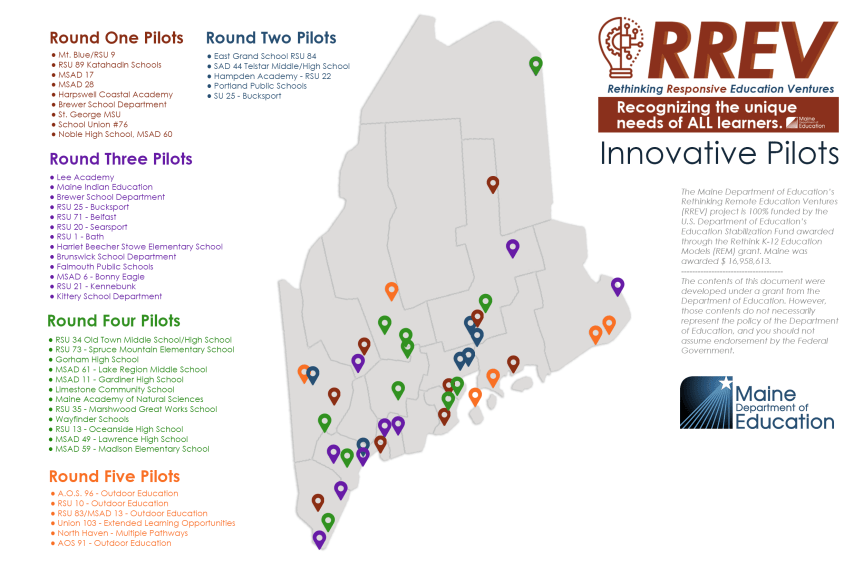
The Maine Department of Education (DOE) today awarded an additional $900,000 in Rethinking Responsive Education Ventures (RREV) funding to support education innovation at Rose M Gaffney Elementary School in Machias, Upper Kennebec Valley Jr/Sr High School, North Haven Community School, RSU 10 schools, Union 103 schools, and Trenton Elementary School. These federal funds will be used to invest in strategies to engage students through outdoor learning, extended learning opportunities, and creating multiple education pathways.

RREV investments now total $8.5 million to 45 awardees. The Maine DOE was awarded $16.9 million from the U.S. Department of Education’s Rethink K-12 Education Models Funding. As one of 11 States to receive funding, Maine created RREV to support the work of visionary educators to develop innovative pilot programs around remote and outside of the classroom learning, including professional development and pilot design classes. Courses in innovative design process are available through several of Maine’s public and private universities at no cost to Maine educators who wish to participate. In addition to the innovative pilot development classes, the Department is also offering asynchronous, innovative principles webinars which are available to all educators in self-paced, independent modules.

“We are going to be creating kits that teachers can grab and go and take to their outdoor learning space. The kits provide engaging activities to supplement classroom learning. Our goal is to increase the amount of outdoor learning happening at school so that we will see happier kids, kids who are more focused and engaged, and kids who appreciate and respect the environment around us. We’re eager to build a large collection of kits that will be fun and engaging,” said Rose M Gaffney Elementary School 5th Grade Teacher Kelly Woodward.

“Caring for honeybees has the potential to deepen our students’ connection with nature and drive their passion for making positive changes for their future and the future of our planet. It also has the potential to build a unique partnership with the community that will help build engagement. We believe that this pilot program, using an apiary and partnering with the Western Maine Beekeepers Association, will have a positive impact on attendance, engagement, and wellbeing for our 4th and 5th graders,” said RSU 10 teacher Maggie Corlett.

“We are using our RREV pilot to step up our programming on outdoor education, wildlife studies, and agricultural studies. We will use these funds to heat our greenhouse so that our egg studies can continue in the greenhouse year-round, we’re establishing a property use agreement with a local nonprofit ski mountain so that our outdoor studies class will have access to a satellite campus and 50 acres of wilderness to explore, and we will purchase boats and equipment for our wildlife studies program,” said Upper Kennebec Valley Jr/Sr High School Principal James Tyler.

“Our purpose was to spark innovation with our students and provide engaging and inspirational opportunities where they can take ownership of their learning. We built off a lot of programs we already have going and wanted to make them even more engaging and available to all of our students. Students will get to see a new greenhouse where they can watch their projects literally grow from seed to product and be able to work them into recipes in a kitchen and sell to their own community members. We will also have a trail built around the school where students can create products and have opportunities for community members to come and participate as part of the school,” said Jonesport-Beals High School Co-Teacher Leader & English Teacher Becky Coffin.

“We have a makerspace building on our school’s campus and we want to transform that into a lifelong learning hub for our k-12 students to use during the day and bring in adults from our community for classes at night. We have an hour and fifteen-minute ferry ride to get here so we have to do a lot for ourselves. We have to train and uplift from within at the grassroots level. Our RREV grant is going to support this lifelong learning hub to work with our town administration to diversify our workforce and help prepare young people and adults for the different kinds of work and professions that we need,” said North Haven Community School Principal Shaun Johnson.

“We named our initiative TREE—Trenton Rethinking Experiential Education—and it’s a k-8 initiative to get our kids outside learning in the community, not just on our school property. We want to think about how all of our students get their needs met want to increase independence, peer relationships, self-awareness, and kids overall mental health,” said Trenton Elementary School teacher Snow Ross.

Schools will use this funding in a variety of innovative ways, including:

  • Rose M Gaffney Elementary School in Machias will create and implement pre-k through 8th grade outdoor education lessons. These lessons will provide learners with the opportunity to use the trail system behind the school and materials to continue their classroom learning in an outdoor setting. The school’s team observed that academic work in an outdoor setting helped learners to be more engaged, happy and focused. By increasing the amount of outdoor learning, students will be supported in their social and emotional growth. RREV funding will be used to create kits with engaging activities for educators to use in an outdoor learning environment and the school will work alongside community partners such as Downeast Coastal Conservancy to implement the lessons.
  • Upper Kennebec Valley Jr/Sr High School will grow their innovative outdoor-based education program to increase student engagement and better prepare students for their lives after high school. By participating in the program, students will develop and exercise a host of skills including problem solving, critical thinking, creativity, communication, collaboration, marketing, salesmanship, and financial management. Valley Outdoors will partner with Baker Mountain, a community non-profit, to ensure all students in grades 5-12 have access to nature-based learning opportunities. Under the guidance of teaching staff, students will be able to use the base lodge and over 50 acres of trails and wooded land at Baker Mountain to engage in project-based learning activities. In addition, the school will scale up current greenhouse operations, expand hands-on project offerings, and develop water exploration and research activities for our wildlife studies program. The SAU anticipates 100% of the student body will be able to engage in at least one integrated unit of study.
  • North Haven Community School will partner with their town administration to support their efforts of economic diversification and workforce development, chiefly in response to the impending impacts of climate change and sea level rise on the long-term viability of the fishing and lobstering industry. In coordination with the community, North Haven Community School will develop programming to support lifelong learning outcomes for both K-12 and adult learners, housed in their auxiliary classroom space dubbed the “Projects Building.”
  • RSU 10 will pilot a program to support students struggling with adverse childhood experiences. The work will provide strategies to enhance engagement, improve attendance, foster resilience skills, and promote positive behaviors. Meroby Elementary and Mountain Valley Middle School will team up to develop and expand The MV Bee Academy in the RSU#10 School District. A bee apiary and storage facility will be built to provide the infrastructure needed for beekeeping experiences. 4th and 5th-grade students will work closely with a local bee club. As their knowledge base grows, these children will mentor other grade levels and share their knowledge with community members. To maintain the sustainability of this program, students will develop a small business. In it, they will sell queen bees, honey, wax products, and other bee-related items.
  • Union 103 schools will support creative opportunities and innovative practices for students and teachers at all of their schools. All students and staff will have access to a new greenhouse which will foster creativity and learning through aquaponics and aquaculture. With an outdoor lab, students will also take part in a space dedicated to learning in ways not yet offered inside the four walls of a classroom, such as a native pollinator garden, raised beds, and fruit trees. A new learning lab with access to a multipurpose classroom will provide a much-needed creative and innovative space for students. This space will provide students and teachers with flexibility to help spark creativity and experiential learning as they continue to foster initiatives throughout the year with involvement in marine science activities with Downeast Institute and author visits each year. All students will also have the opportunity to explore a new walking path and outdoor learning trail around Beals Elementary School.
  • Trenton Elementary School’s TREE-Trenton’s Rethinking Experiential Education is a K-8 initiative that embeds outdoor learning into a child’s school experience that increases independence, peer relationships, self-awareness, and overall mental health. The school will integrate therapeutic services, STEM based learning, and outdoor collaborative experiential learning into the student experiences. They will use field work and place-based learning in the living world in each child’s school day. Students will participate in engaging, outdoor experiences that will help them to build social connections and increase their self-esteem while reconnecting with our natural world. The aim is to increase student attendance, engagement, and self-regulatory skills.

The RREV initiative was also granted a no-cost-extension year, meaning that all 45 pilots will have an extra year to utilize their available funding for their innovative pilots.

For more information on RREV and the pilots, visit https://www.maine.gov/doe/rrev. 

Interviews are available with RREV grant recipients upon request as well as the recording of the announcement featuring RREV grant recipients discussing their projects. 

Governor Mills Announces $15 Million in Maine Jobs & Recovery Grant Funding to Expand Career and Technical Education in Maine

Governor Janet Mills today announced that four Career and Technical Education (CTEs) schools in Maine will receive $15 million in grant funding through her Maine Jobs & Recovery plan for program, equipment, and facility upgrades.

The grant funding will allow the CTEs to build new facilities or add to existing facilities to expand hands on, real-world programs for Maine students in plumbing, electrical, building construction, culinary and hospitality, EMT, welding, and more.

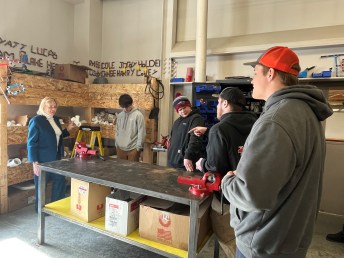
The Governor announced the funding alongside educators and students at Oxford Hills Technical School in Norway, which will receive more than $2 million for a new free-standing building to expand their plumbing, electrician, and building construction tech programs.

Under Governor Mills, CTE enrollment has grown by nearly 11 percent, with an almost 300 percent increase in exploratory program enrollment that allows freshman and sophomores to sample multiple programs to follow their interests.

“I have always been a strong believer in the power of CTEs because they equip students with the skills and hands-on experience needed to take good-paying jobs and have rewarding, lifelong careers in the trades,” said Governor Janet Mills. “That is why I am also so proud of this announcement. We all know that Maine desperately needs more electricians, plumbers, welders, and other skilled workers, and investments like this one through my Jobs Plan will help deliver them. I look forward to watching these CTEs grow and having more students benefit from them.”

“At Maine’s CTEs, students use their hands and their minds to immerse themselves in programs ranging from plumbing and building construction to culinary arts and healthcare,” said Education Commissioner Pender Makin. “CTE students learn real-world skills, gain industry accreditation, take college courses, and build connections with local employers. These grants will allow several of our CTEs to expand to serve growing student interest in the engaging, hands-on programs that Maine’s CTEs offer.”

“This will be a gamechanger for our students. The grant funds will be used to construct a 6000 square foot, free-standing building on campus that will have three classrooms and shop space for our plumbing program and the new electrical technology program. Our building construction program will also use the new building for some aspects of their classes, making this new building a hub for the building trades here at Oxford Hills Technical School,” said Oxford Hills Technical School Director Randy Crockett.

In addition to Oxford Hills Technical School, the following CTEs also received grant awards:

  • Biddeford Regional Center of Technology in Biddeford: More than $7 million to build a two-story addition to the existing high school to create a culinary arts and hospitality program as well as an athletic training program and to expand existing plumbing and emergency medical technician programs.
  • Northern Penobscot Tech Region III in Lincoln: Nearly $570,000 to expand the welding program by building an addition to the existing school that will add five welding booth ventilators, ten welding booths, and ten welders.
  • Region 9 School of Applied Technology in Mexico: Nearly $5.5 million to expand and enhance CTE facilities for four programs, including establishing a four-season outdoor education center, creating new classroom and lab space for the welding program, and expanding the culinary arts program to include an outdoor education space with a greenhouse, store, outdoor kitchen, and classroom.

“In Biddeford, we will finally be able to offer three new programs: culinary arts, travel, tourism and hospitality program, and athletic training/sports medicine. Additionally, we are adding expanded space for our plumbing, heating, and EMT program. Through these grants, we’re able to offer more workforce training programs and give students more choice and opportunity,” said Biddeford Center of Technology Director Paulette Bonneau.

“Region 9 is a small rural CTE school located in the foothills of Western Maine. Our grant-funded projects will expand and enhance instructional opportunities for our students leading to further skill development and chances to earn industry credentials. These skills and credentials will support our students in being successful in obtaining good-paying jobs or participating in post-secondary training and educational opportunities. Our voters, in all sixteen communities, overwhelmingly supported our school receiving these funds during a recent referendum vote. We are excited to move forward in this process and can’t wait to see the amazing impact this opportunity will have on our school and the surrounding area,” said Region 9 School of Applied Technology Director Brenda Gammon.

“The grant will provide a much-needed expansion to Northern Penobscot Tech Region III’s welding shop. Our welding program provides our students opportunities to receive several certifications, up to and including pipe welding. Many graduates of the Region III welding program leave high school and go right to work building the critical infrastructure Maine needs for now and into our future. This is money well spent,” said Northern Penobscot Tech Region III Director Curt Ring.

This $15 million grant funding is part of a larger $20 million investment from the Governor’s Jobs Plan to expand CTEs in Maine, including following $4.5 million in awards to 23 CTE programs to purchase and upgrade equipment to enhance student learning experiences and career preparation for high-skilled, in-demand industries.

In addition to the Jobs Plan funding, the Governor and the Legislature have increased funding for CTEs by nearly $10 million over the past four years, including a $1.6 million to assist in the increased costs of supplies and $100,000 to expand CTE early childhood education programs. The Governor’s biennial budget also proposes $500,000 to expand middle school CTE programs.

Gov Mills and CTE studentsAs then-Attorney General, Governor Mills also used funds she obtained through a settlement with Bath Fitter to create plumbing programs at four CTEs in Maine, including Oxford Hills Technical School in Norway, Foster Career and Technical Education Center in Farmington, Lewiston Regional Technical Center in Lewiston, and Biddeford Regional Center of Technology in Biddeford.
Maine’s 27 Career and Technical Education regions and centers enroll more than 9,800 students in 85 programs. Students learn skills and gain real-world experiences in programs ranging from plumbing and welding to culinary arts and early childhood education while completing high school. Many students are able to receive industry accreditation, earn college credits through dual-enrollment opportunities, and they graduate with the skills and knowledge they need to succeed in the job market and higher education.

The Maine Jobs & Recovery Plan is the Governor’s plan, approved by the Legislature, to invest nearly $1 billion in Federal American Rescue Plan funds to improve the lives of Maine people and families, help businesses, create good-paying jobs, and build an economy poised for future prosperity.

Since the Jobs Plan took effect in October 2021, the Mills Administration has delivered direct economic relief to nearly 1,000 Maine small businesses, supported more than 100 infrastructure projects around the state to create jobs and revitalize communities, and invested in workforce programs estimated to offer apprenticeship, career and education advancement, and job training opportunities to 22,000 Maine people.

For more about Maine Jobs & Recovery Plan, visit maine.gov/jobsplan.

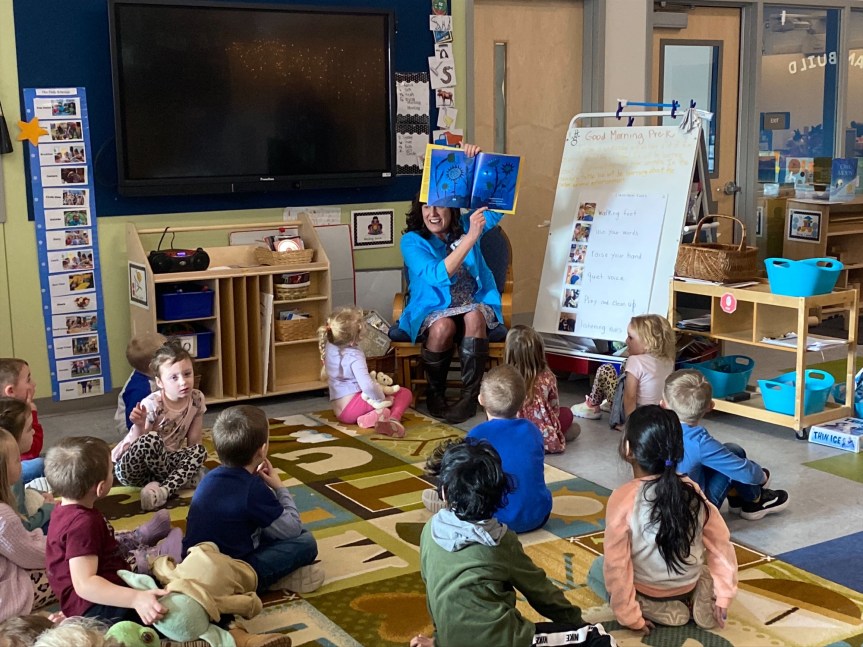
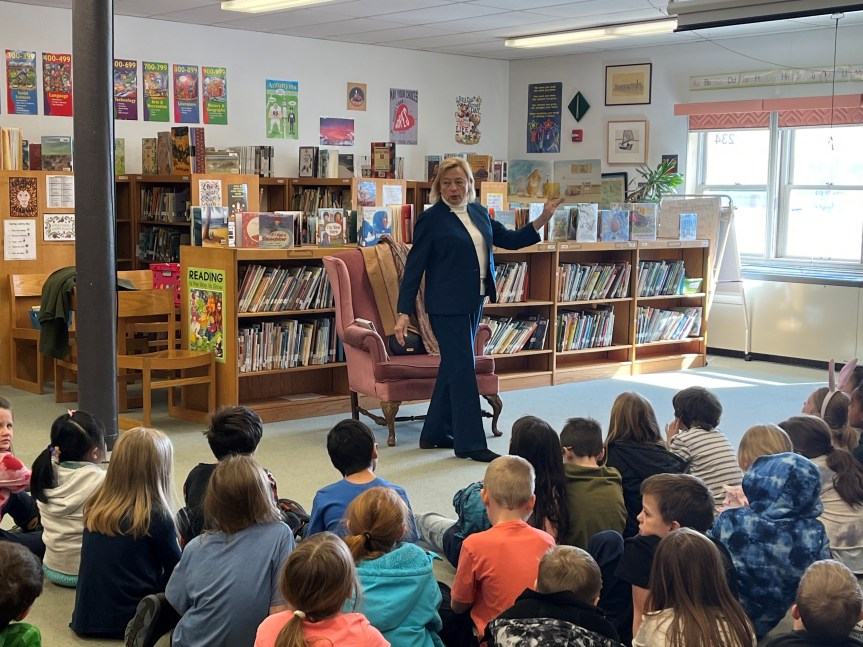
Earlier in the day, Governor Mills also read to second grade students at Guy E. Rowe Elementary School in Norway as part of the Maine Department of Education’s Read to ME Challenge. The annual challenge promotes literacy by encouraging adults to read aloud to children for at least 15 minutes.

Gov Mills reads to students

Media Release: Maine Teachers and School Staff Share Why They #LoveTeaching as Part of a National Campaign to Promote Educator Voices 

The Maine Department of Education (DOE) has partnered with News Center Maine for the third year in a row to highlight the voices of teachers and school staff sharing why they #LoveTeaching during a weeklong national campaign.

#LoveTeaching week is a national campaign started by educators in 2015 and takes place every year around Valentine’s Day. All week, News Center Maine will feature videos from Maine’s 2022 County Teachers of the Year and other members of Maine’s education workforce.

“Love Teaching week gives Maine’s teachers and school staff a megaphone to share what they love about teaching and working in our schools. We want to thank News Center Maine for providing teachers and school staff an opportunity to share the extraordinary things happening with their students,” said Maine Education Commissioner Pender Makin.

Here’s what teachers have shared about why they #LoveTeaching:

“I love teaching because it’s a great privilege to get to work with Maine students as they’re learning about the world around them and all of the different ways that they can make it better. I’ve never had the same day twice and I love my job,” said Emily Albee, a social studies teacher at Hampden Academy and the 2022 Penobscot County Teacher of the Year.

“I love teaching art because it gives kids an opportunity to express themselves and use their voice in unexpected ways,” said Kelsey Boucher, an art teacher at Robert Connors Elementary School in Lewiston and the 2022 Androscoggin County Teacher of the Year.

“This is my 17th year teaching and I love this job because I get to work with curious, kind, and hard-working students,” said Ashley Bryant, a 4th grade teacher at Sacopee Valley Middle School and the 2022 Oxford County Teacher of the Year.

The video messages will air on News Center Maine’s morning and evening news shows from February 13th – 17th. Educators and school staff can also participate in the campaign by posting their videos to social media and using the hashtags #LoveTeaching and #LoveSchoolStaff. Tune in to News Center Maine, WCSH 6/WLBZ 2 to see the faces and messages of the amazing people working to educate, inspire, and support young people in our state.

MEDIA RELEASE: Application Process Open for Student Position on Maine State Board of Education

The Maine State Board of Education is currently seeking applications for the newest student member to join the Board. Applications are being accepted February 1, 2023 – March 1, 2023.

“Student voice is critically important to the State Board of Education’s decision-making process,” said Fern Desjardins, State Board of Education Chair. “We are pleased to open applications to public high school sophomores in Maine’s First Congressional District and look forward to hearing from the incredible student leaders in Maine schools.”

The Maine State Board of Education has two nonvoting student members who join the Board as high school juniors and serve for two years, one enrolled in a school in Maine’s First Congressional District; the other enrolled in a school in the Second Congressional District. At all times, the State Board has one high school junior and one senior as members, with staggered appointment.

Applications are currently being accepted from students who attend public school in the First Congressional District (Cumberland, Knox, Lincoln, Sagadahoc, York, and part of Kennebec County) and are currently a high school sophomore.  Application materials are available on the State Board of Education web page. The Board has also mailed application materials to all First Congressional District high school principals and school counselors. Completed applications, both hard copy and digital copy,  should be sent to:

Sandra Bourget
Office Specialist
Maine State Board of Education
23 State House Station
Augusta, Maine 04333-0023
Phone: (207) 624-6616
Sandra.A.Bourget@maine.gov

After applications close on March 1, 2023, they will be reviewed according to the process described in Maine Education and School Statutes, Title 20-A, Chapter 5, State Board of Education. Semifinalists will be interviewed in March 2023,  after which three finalists will be chosen. The names and application materials of the finalists will be sent to the Governor’s office for final selection. The Joint Standing Committee on Education and Cultural Affairs of the Maine State Legislature interviews the nominee in a public hearing and makes a recommendation about the nominee to the Maine Senate.  The Maine Senate is charged with confirming the appointment.

This is an extraordinary opportunity for Maine students to practice civic engagement while serving as both a representative of Maine students and an active education leader in our state.

For further information please visit the Maine State Board of Education web page or contact Sandra Bourget, Office Specialist, at 207-624-6616 or via email at Sandra.A.Bourget@maine.gov.

Get to Know the Maine DOE Team: Meet Alissa Mank

Maine DOE Team Member Alissa Mank is being highlighted this week as part of the Get to Know the Maine DOE Team Campaign. Learn a little more about Alissa in the question and answer below.

What are your roles with DOE?

I am a Nutrition Consultant for the Child and Adult Care Food Program (CACFP). CACFP is a USDA food program that provides reimbursement for healthy meals and snacks served to children and adults in qualifying programs. CACFP serves At-Risk Afterschool Programs, Adult Care Centers, Child Care Centers, Family Daycare Homes, and Emergency Shelters. My role is to support institutions as they operate CACFP in their programs.

What do you like best about your job?

I love going out into the field and seeing the food program in action! Some of the best experiences are seeing little kids try new foods that they might not have the opportunity to try at home, and learning to serve themselves through family style dining. I also love visiting the Adult Care facilities and seeing the passion the staff have for serving their participants comforting and healthy meals. The genuine passion and care that goes into the food programs are phenomenal. Maine has the best Child/Adult Care Providers!!

How or why did you decide on this career?

I graduated college and could not find a position within my degree field. I took a position working in the Child Nutrition Team as an Office Associate and knew immediately I was where I was meant to be. With the encouragement of my supervisor and family I went back to school and got a Bachelors Degree in Nutrition Science! The Nutrition field is fun and always evolving, there is always something new to learn!

What do you like to do outside of work for fun?

My husband and I stay busy with our girls (ages 7 and 10) and all their fun extracurricular activities. We have a garden house and love to process our own vegetables and salsa in the summer months, and I love to snowshoe in the winter with my golden doodle Maggie.

Organizations Needed to Provide Complimentary Meals to Children This Summer   

With the assistance of the U.S. Department of Agriculture, Maine public schools have long offered a nutritious breakfast and lunch meal program to thousands of income eligible children in Maine during the school year. To extend this program, Maine Department of Education Child Nutrition (Maine DOE) is seeking organizations that would like to participate in the federally funded Summer Food Service Program (SFSP), which provides children healthy, free meals when school is not in session.

“By participating in this program, community groups and organizations can have a tremendous impact on the health and wellbeing of children in their communities,” said Maine Education Commissioner Pender Makin. “The Maine Department of Education is thankful to those organizations that join this program to ensure our children get the meals they depend on this summer”

In summer 2022, 119 sponsors were approved to operate 452 Summer meal sites across Maine. Although there are sponsors operating in every county in Maine, there is still a long way to go towards feeding all eligible children during the summer. Community partners are working to maximize the number of sponsors utilizing the availability of funds under the SFSP.

SFSP may be offered statewide in areas or at sites where more than 50 percent of the children are eligible for free or reduced meal benefits under the National School Lunch Program or census track data supports the need. Organizations that provide services in rural communities or near migrant farm workers and tribal populations are urged to participate. Eligible sponsoring organizations include schools, nonprofit residential summer camps, government agencies, and tax-exempt organizations including faith-based organizations.

Maine DOE encourages any eligible organization to consider providing this much-needed service to Maine children. The agency will begin accepting applications to participate in February. Approved sponsors will be reimbursed for eligible meals served to children during the long summer break.

Interested organizations should begin planning now for a successful summer. Potential sponsors are required to receive training from Maine DOE. Training will occur virtually, and DOE staff will assist in the onboarding process. Maine DOE is available to consult by phone and email to answer questions regarding summer meals.

For more information about the Maine DOE’s Summer Food Service Program, contact adriane.ackroyd@maine.gov, call 592-1722 or visit https://www.maine.gov/doe/schools/nutrition/programs/sfsp.

###

Federal
In accordance with Federal civil rights law and U.S. Department of Agriculture (USDA) civil rights regulations and policies, the USDA, its Agencies, offices, and employees, and institutions participating in or administering USDA programs are prohibited from discriminating based on race, color, national origin, sex, disability, age, or reprisal or retaliation for prior civil rights activity in any program or activity conducted or funded by USDA.

Persons with disabilities who require alternative means of communication for program information (e.g. Braille, large print, audiotape, American Sign Language, etc.), should contact the Agency (State or local) where they applied for benefits.  Individuals who are deaf, hard of hearing or have speech disabilities may contact USDA through the Federal Relay Service at (800) 877-8339.  Additionally, program information may be made available in languages other than English.

To file a program complaint of discrimination, complete the USDA Program Discrimination Complaint Form, (AD-3027) found online at: https://www.usda.gov/oascr/how-to-file-a-program-discrimination-complaint, and at any USDA office, or write a letter addressed to USDA and provide in the letter all of the information requested in the form. To request a copy of the complaint form, call (866) 632-9992. Submit your completed form or letter to USDA by:
(1)     mail: U.S. Department of Agriculture
Office of the Assistant Secretary for Civil Rights
1400 Independence Avenue, SW
Washington, D.C. 20250-9410;

(2)      fax: (202) 690-7442; or
(3)      email: program.intake@usda.gov.
This institution is an equal opportunity provider.

State
The Maine Human Rights Act prohibits discrimination because of race, color, sex, sexual orientation, age, physical or mental disability, genetic information, religion, ancestry or national origin.

Complaints of discrimination must be filed at the office of the Maine Human Rights Commission, 51 State House Station, Augusta, Maine 04333-0051. If you wish to file a discrimination complaint electronically, visit the Human Rights Commission website at https://www.maine.gov/mhrc/file/instructions and complete an intake questionnaire. Maine is an equal opportunity provider and employer.

Education Commissioner Pender Makin Kicks Off Annual Read to ME Challenge by Reading to Sanford Pre-K Students 

Maine Education Commissioner Pender Makin kicked off the state’s Read to ME Challenge at Sanford Regional Technical Center by reading If Only… to a group of spirited pre-k students. This is the eighth year that the Maine Department of Education is collaborating with schools, parents and communities on this month-long public awareness campaign to promote the importance of literacy for all of Maine’s students, regardless of age. You can watch video of Makin kicking off the challenge here.

The Read to ME Challenge encourages adults to read to children for 15 minutes, capture that moment via a photo or a video, and then post it to social media and challenge others to do the same using the hashtag #ReadtoME.

Makin also spent time talking with students who are part of Sanford Regional Technical Center’s early childhood education program. Students in the program split their time between their own classroom and interacting with children in the pre-k classroom. Sanford was also able to expand to full day pre-k this year after receiving a grant through the Maine Jobs and Recovery Plan.

“The Read to ME Challenge is about creating a love of reading with children and promoting literacy across our state—and it’s fun,” said Maine Education Commissioner Pender Makin. “Not only did I get to read to an amazing group of pre-k students today, but I had the wonderful opportunity to talk with high school students who are working hard to become future educators through this amazing early childhood education program at Sanford Regional Technical Center.”

The simple act of reading aloud to a child 15 minutes a day for five years results in 27,375 minutes of language exposure, which can put children on the path to high literacy achievement and helps them build knowledge and vocabulary. Research demonstrates a number of benefits to reading to children, from birth through their childhoods and even teenage years, including modeling reading as an enjoyable lifelong activity, stimulating brain development, reducing stress and anxiety, building knowledge of the world, and helping develop the skills necessary to succeed in their lives.

Schools and community organizations can find a toolkit and resources on the Department of Education website and the Department will be sharing videos, photos, and updates from the challenge all month long on social media.

Participants in the challenge are reminded to use the hashtag #ReadtoME and to tag the Maine DOE at @mdoenews on Twitter, @MaineDepartmentofEducation1 on Facebook, and @mainedepted on Instagram.

See who Commissioner Makin Challenged!

MEDIA RELEASE: Help Honor Maine Teachers – Nominations Open for Maine Teacher of the Year Program

The Teacher of the Year Journey starts with your nomination. Nominate someone from your town, county, or region today at mainetoy.org/nominate.

MAINE – Nominations are now open for the 2023 County Teachers of the Year and 2024 State Teacher of the Year. Members of the public are encouraged to nominate educators who demonstrate a commitment to excellence and who inspire the achievement of all students.

“Maine’s Teacher of the Year Program is unique,” said Maine Education Commissioner Pender Makin. “In addition to much-deserved recognition of the incredible educators in Maine classrooms, it is also a year-long journey that gives educators from each county in Maine a platform to share their passions and knowledge. This program is a growing network of dedicated and caring education colleagues from across our State and nation, so please take a few minutes and nominate someone today.”

Nominations can be made through a nomination form on the Maine Teacher of the Year Website now through 5:00 pm on Feb. 5, 2023. Nominations will be accepted from students, parents, caregivers, community members, school administrators, colleagues, college faculty members, and associations/organizations (self-nominations, and nominations from family members are not accepted).

To be considered for the County and Maine Teacher of the Year award, a person must:

  • Hold the appropriate professional certification for their teaching position;
  • Be a full-time, certified, in good standing, PK-12 teacher in a state-accredited public school, including a career and technical education and adult education center, a public charter school, or a publicly supported secondary school (a private school that enrolls 60 percent or more publicly funded students, sometimes referred to as “town academies”);
  • Be actively teaching students at least fifty percent of the workday at the time of nomination and during their year of recognition.
  • Maintain their teaching position and remain in the County for which they are selected throughout the year of recognition.
  • Have a minimum of five years of teaching – three of which are in Maine.

Maine’s County and State Teachers of the Year serve as advocates for teachers, students, and public education in Maine. They serve as advisors to the Department of Education and state-level education stakeholders across Maine.  Additionally, County and State Teachers of the Year join a cohort of teacher leaders that actively work together for the betterment of education in Maine. They also receive on-going professional learning and participate in many state and county leadership opportunities.

The 2023 County Teachers of the Year will be announced in May. The 2024 Maine Teacher of the Year will be selected from the 16 county honorees. Through a selection process designed for educators by educators, the field will be narrowed to semi-finalists and then state finalists before the Maine Teacher of the Year is announced by Maine’s Education Commissioner at a school assembly in the fall. Each year, State and County Teachers of the Year are honored at the annual Teacher of the Year Gala also held in the fall.

On behalf of, and in partnership with Maine Department of Education, the Maine Teacher of the Year program is administered by Educate Maine, a business-led organization whose mission is to champion college, career readiness, and increased education attainment. Funding is provided by Bangor Savings Bank, Dead River Co., Geiger, Hannaford, the Maine Lottery, the Silvernail Family, and Unum, with support from the State Board of Education and the Maine State and County Teacher of the Year Association.

“We are proud to administer the Maine Teacher of the Year program in collaboration with the Maine Department of Education,” said Dr. Jason Judd, Educate Maine Executive Director.  “Now more than ever, we need to recognize the excellence within our educator workforce, amplify the voices of classroom teachers, and elevate the teaching profession in Maine. The 2023 County Teachers of the Year will be the tenth cohort to engage in this reflective and rigorous process and join the growing network of teacher leaders teaching, learning, and leading in Maine.”

The Maine Teacher of the Year program is committed to a nomination and selection process that ensures people of all backgrounds are represented.  Educate Maine and the Maine Department of Education champion that commitment by encouraging the nomination of educators from all culturally diverse experiences and backgrounds.

Through the generous support of Maine businesses, there is no cost to the local district when the Teacher of the Year is out of the classroom on their official duties, which includes representing educators state-wide and nationally through safely distanced in-person and virtual events that highlight the important work of Maine schools, communities, and educators.

For more information about the Maine Teacher of the Year program, visit the Maine Teacher of the Year website. Help us promote the Teacher of the Year Program by using the promotional materials on our website!  Our goal is to expand and diversify our nomination pool!

Media Contact: Dolly Sullivan, Educate Maine at dolly@educatemaine.org

Media Release: Maine Education Commissioner Pender Makin Visits Nokomis Regional Middle and High Schools to Highlight Maine’s Leadership During Computer Science Education Week

In celebration of Computer Science Education Week, Maine Education Commissioner Pender Makin visited Nokomis Regional Middle School and High Schools to showcase how Maine is leading the nation in offering universal computer science education to all students at all grade levels in the state. Through the Governor’s Emergency Education Relief Fund, the Maine Department of Education provided every Maine public school with a free mobile computer science lab to ensure that every student, pre-K through grade 12, has access to interdisciplinary, project-based computer science education with real-world applications.

“We are the first state in the nation to provide universal access to computer science education for all pre-K through grade 12 students,” said Maine Education Commissioner Pender Makin. “Computer science encourages students to think outside of the box and to solve problems creatively. This is authentic, engaged learning with students using the skills and strategies of computer science to solve real world problems and share their knowledge. Seeing this teaching and learning has been inspirational beyond words. These students are engaged, working collaboratively, and have immense pride in the projects they are working on. When you have educators who are so openhearted, openminded, and eager to share, they are inspiring their students and peers across the state.”

At Nokomis Regional Middle School, Makin met with sixth grade students and their educators who provided live demonstrations of the robotics projects they completed from equipment available to all Maine schools. Students designed, coded, and built their robotics projects while also strengthening their teamwork, collaboration, and communication skills. Students worked asynchronously with a teammate and had to provide notes, video updates, and other status updates. All students attend computer science education at Nokomis, with each grade level building on the skills and knowledge they learned in the previous grade. Fifth graders engage in projects focused on building teamwork and compete using cars and boats they build, sixth graders expand on those skills as showcased for the Commissioner, seventh graders add in production skills by building skateboards, and eighth graders build 3D design skills. The projects can also be integrated across all content areas.

Students at Nokomis Regional High School continue to build on the real-world skills and knowledge they learned in middle school while also sharing that knowledge with others. Makin joined a group of Student Leadership Ambassadors of Maine (SLAM) as they broadcast a live show to 37 other schools across the state to share their skills and knowledge with their peers.

“This is not a separate class—it’s an extension of every class,” said Keith Kelley, Innovative Technology Teacher at Nokomis Regional Middle School. “Students are building the robots, they learn coding, they compete, they are doing technical reading, they are having to learn how to virtually interact with a classmate and document their work to share with that teammate. It’s real-world engagement and our classes all build on each other. These projects can also be integrated into every content area so it’s fabulous the state is offering this to all schools. Kids live in a virtual world—and they are learning to use technology ethically, efficiently, and safely through hands-on engagement and working with others.”

“You don’t have to be a technology teacher to engage in computer science education. I was a language arts teacher and a librarian—any teacher can do this,” said Kelley.

Through the mobile computer science lab program, schools were able to order one of three mobile lab options: Robotics and Programming, Augmented and Virtual Reality, and Coding and Hardware. Each lab contains computer science equipment valued at $5,000 and is designed to be integrated into any content area and skill level. Additionally, the DOE is providing free professional learning opportunities for educators.

The DOE has a comprehensive computer science education plan guided by seven key principles: authentic and project-based instruction, computer science as a prek-12 learning continuum, equitable and inclusive access, educator-produced professional learning and statewide sharing, integrated applied learning, educator-informed policy and state planning, and computational thinking as a foundation. You can read more about Maine’s computer science education framework here.

Media Release: Lewiston Students Create Ornaments for Maine’s Tree as Part of the National Christmas Tree Display in Washington, D.C.

(Photo from National Park Service)

Students at Robert V. Connors Elementary School in Lewiston created one-of-a-kind ornaments now adorning Maine’s tree as part of the 2022 National Christmas Tree display on the Ellipse in President’s Park outside of the White House.

Students and educators from Connors Elementary School’s Civil Rights Team led the effort and designed ornaments featuring familiar Maine scenes including the outline of the state, moose, lobsters, and pine trees filled with messages celebrating the themes of belonging, inclusivity, and feeling welcome. They wanted to ensure that those who don’t celebrate the holiday were also represented and highlight how Maine welcomes all.

“The students were really excited to be part of this, and we are really honored to have this opportunity,” said Kelsey Boucher, an art teacher at Connors Elementary and the 2022 Androscoggin County teacher of the year. “Students were already working on a Day of Welcome project and wanted to make ornaments about what makes them feel welcome at school. They got creative by filling in outlines of iconic Maine shapes with diverse images and messages around belonging, inclusivity, and welcoming all.”

Boucher joined her Civil Rights Team Co-Advisor Nesrene Griffin and Assistant Principal Travis Jalbert in Washington, D.C. today to represent Maine for the National Christmas Tree lighting this evening. The school will host a watch party for students, educators, and family members when the ceremony is aired on December 11.


The America Celebrates ornament program is an annual collaboration of the National Park Service, the U.S. Department of Education and the National Park Foundation (NPF). These ornaments adorn 58 smaller trees that surround the National Christmas Tree. The trees represent states, territories, and schools managed by the Bureau of Indian Education and the Department of Defense Education Activity. This year, more than 2,600 students participated in the America Celebrates ornament program. Click here for more information.