Grant Will Help Increase the Number of Rural School Psychologists in Maine

The Maine Department of Education (DOE) has partnered with the Department of Educational and School Psychology at the University of Southern Maine as they implement a new a 5-year, $1.6 million grant sponsored by the U.S. Department of Education’s Office of Elementary and Secondary Education to help increase the number of school psychologists in rural areas of the state.

The project, Maine School Psychology: Collaborative Affiliations in Rural Education (Maine School Psychology CAREs), also aims to increase the number of credentialed school psychologists who reflect the diverse backgrounds of students within those communities.

“We are excited about the opportunity to collaborate with rural schools across the state in this endeavor, and we look forward to delivering a low residency specialist-level school psychology training program that is accessible to educators across the state,” said Jamie Pratt, chair of the Department of Educational and School Psychology at the University of Southern Maine.

School psychologists help design, implement, and monitor mental and behavioral health services within schools. However, the ratio of students-to-school psychologists in Maine far exceeds national recommendations: Maine averaged one school psychologist per 1,501 students last year compared to the recommended ratio of 1-to-500. The shortage is particularly acute in Maine’s rural, high-need schools.

“The Maine Department of Education Office of Special Services and Inclusive Education is working diligently to increase the number of school psychologists in Maine,” said Erin Frazier, Director of Special Services Birth to 22 at the Maine Department of Education. “This work is crucial, especially to support our rural areas. Given the lack of school psychologists in remote areas of Maine, many of our students and families must travel great distances and wait for long periods of time to access these services. The CAREs project will begin to remediate this issue and support expansion of access to school psychologists in Maine.”

The Maine School Psychology CAREs project will offer tuition reimbursement and stipends to support 22 graduate students for state credentialing as school psychologists. In partnership with the Maine Department of Education and the Maine Association of School Psychologists, the Department of Educational and School Psychology at the University of Southern Maine will:

  • Develop and implement a low residency, specialist-level school psychology training program designed for current educators in rural Maine;
  • Enhance school psychology students’ training in comprehensive, culturally responsive school-based mental and behavioral health services;
  • Coordinate opportunities for school psychology graduate students to complete field-based training and deliver comprehensive mental and behavioral health services in rural, high-need schools across the state; and
  • Facilitate professional support systems and trainings to promote effective school psychology practice in rural schools.

“The Maine Association of School Psychologists (MASP) recognizes the critical shortage of school psychologists in Maine and nationally. The high ratio of students to school psychologists directly affects the well-being of PK-12th grade students and schools. Addressing this shortage and fostering mental and behavioral health have and continues to be two of our association’s strategic goals,” said Lisa Backman, President of the Maine Association of School Psychologists. “MASP supported USM in their pursuit of the Maine School Psychology CAREs grant that will assist graduate students and practitioners committed to advancing the mental health of the school-aged population in rural, high-need Maine schools. We look forward to future collaboration and supporting the growth of Maine’s school psychology profession.”

This grant will allow USM to continue its many efforts to help Maine schools and students by providing school workforce development, comprehensive and supportive educator training, and professional preparation focused on student needs.

Anyone interested in learning more about the Maine School Psychology CAREs project is encouraged to contact Pratt at jamie.pratt1@maine.edu.
MLTI Launches Teaching and Learning Technology Grant – #TeachWithTech 

The Maine Learning through Technology Initiative (MLTI) is pleased to announce the launch of the #TeachWithTech grant. The grant is available to all MLTI school districts to provide supplemental technology to support teaching and learning with technology. This program aims to provide funding opportunities to MLTI educators who want to bring technology into their MLTI schools in a way that is innovative, impactful, and intriguing.  

A few examples include: 

  • 3D Printing  
  • Lasercutters  
  • Video production equipment  
  • Audio / Podcasting equipment  
  • Robotics & Coding Kits  
  • Drones  
  • Digital microscopes & doc cameras  
  • Specialized cameras (GoPro, 360, etc.) 

These are just a few of the many options that districts could choose to support technology-integrated teaching and learning. Eligible districts will submit an application for technology supplies and associated professional learning; this will include a plan and narrative that describes and clearly outlines the relationship between the technology and the teaching and learning that it’s being integrated into. 

This grant is designed to offer supplemental technology that is not already provided through the MLTI program; device applications will not be considered. Instead, districts are encouraged to think about innovative learning through technology and to submit an application to invest in technology that will create transformative learning experiences for students and supplement the devices already provided. 

Priority will be given to applicants who:

  • Focus on greatest student impact,
  • Serve socioeconomically disadvantaged school districts,
  • Prioritize student populations traditionally underrepresented in technology,
  • Demonstrate a commitment to pursuing high-quality teaching and learning through technology. 

Applications will be reviewed on a rolling basis and in the order in which they are received. Interested, but not sure where to start? Register for a Q&A session and connect with the MLTI team to learn more. Click on the links below to register.  

Important Dates 

  • Friday, March 24th; Application window opens
  • Tuesday, April 4th; 4pm Q&A Session #1 
  • Thursday, April 6th; 4pm Q&A Session #2 
  • Tuesday April 11th; 4pm Q&A Session #3 
  • Friday, June 2nd; Application window closes

Click here to access the application. 

For more information about this and other MLTI initiatives, go to https://maine.gov/doe/learning/ltt/mlti/twt 

Have questions? Want more information? Contact Emma-Marie Banks (Acting) Learning Through Technology Coordinator. emma-marie.banks@maine.gov 

Report Open: April 1 Enrollment

April 1 Enrollment reporting is open as of April 1, 2023, and is due on April 15, 2023.

This report is used to collect April student enrollment in order to calculate tuition rates pursuant to Title 20-A, §5805, Subsection 1.B.

Required to Report: All school administrative units (SAUs) and private schools with publicly funded students should ensure that their enrollment data is current – this includes Charter Schools and Education in Unorganized Territories.

Reporting Resources:

For questions about April 1 Enrollment reporting please contact MEDMS.Helpdesk@maine.gov or call 207-624-6896

Reminder: Nominations Open for 2022/2023 Maine School Nurse of the Year

The Maine Association of School Nurses announced a call for nominations for the Maine School Nurse of the Year (SNOY) 2022-23. This award recognizes an outstanding school nurse for his/her contributions to the school and community they serve. The award provides recognition to an individual who demonstrates leadership in 6 areas of practice: care provision, program management, health education, professional development, community involvement, and research.

The individual selected will receive a $500 cash award and be recognized at the October 2023 Maine School Nurse Fall Institute.

We are accepting applications now. Attached you will find the nomination form and the information necessary to begin this process. The application deadline is April 25, 2023. For more information, please click here.

If you know a school nurse who inspires you with his/her dedication to their school community, please consider nominating him/her for this prestigious award!

All information is also located on the MASN website.

Directions:

1.) Completed nomination packet must include:

  • Nomination Form
  • Reference letters (3-5) with at least one from administration
  • Curriculum Vitae
  • Written report addressing the six content areas

2.) Submit original and 3 copies by April 25, 2023 to SNOY Coordinator, Erin Taylor. Email etaylor@capeelizabethschools.org for mailing address.

Questions? Please contact: Erin Taylor, School Nurse at Pond Cove Elementary School by calling 207-799-7339 x3113 or emailing etaylor@capeelizabethschools.org.

Retired Teachers Share Their Wisdom with 8th Graders at Caribou Community School

“You can learn to make our world a better place. We’re all different and no one has to fit into the same role.  I look forward to what you’ll bring to our future.”  That’s just one of the many pieces of advice Ms. Diane Fitzpatrick and other retired educators shared with grade 8 students at Caribou Community School during the retired teacher panel on March 27th.  

8th grade teachers Heather Anderson, Kim Barnes, Troy Barnes, Holly Rhinebolt, and Twyla Learnard take advantage of RSU 39’s Professional Collaboration Days to creatively plan events like this to connect students to each other and to the community.  Their innovative practices effectively engage students in the learning process. “Collaboration is at the heart of all we do and what makes teaching together so much fun. We laugh together daily, even when the days are hard.”  

Through one of these collaborations, an idea was born to bring together students and retired educators. Students would gain an up close and personal look at what schools were like in the past and retired teachers would have the opportunity to share their vast knowledge and wisdom as well as important life lessons. Learnard shared, “Though there were generations between the retired teacher panel and the student body audience, the connection was palpable. Curriculum advances,  technology evolves, and assessment practices trend, but the relationship between teachers and pupils is ageless. You can’t define it. It’s a respect, a trust that simply is.” 

The grade 8 team had previously met with Christina Kane-Gibson of the Caribou Historical Society to discuss creating podcasts to accompany the many artifacts on display at their museum. Adding student-created podcasts that share stories of retired Caribou teachers was one more way that students could immerse themselves in their town’s history and the rich stories that Caribou has to share.  Kane-Gibson and 8th grade teachers hope to have the artifacts and podcasts available for public enjoyment this summer.  

Panelists were asked questions generated by students on topics such as what inspired them to teach, changes in technology, and how gender roles have changed.  “When I was in high school, there wasn’t much of a choice for young women at that time.  You were either a nurse, a secretary, you got married or you were a teacher,” shared Margaret Cyr when asked why she chose to be a teacher.  Mrs. Cyr went on to talk about how, because she had played piano since the age of 5, it made sense that she become a music teacher.  

Kim Barnes orchestrated a photo opportunity that demonstrated the 4 generations of teachers present.  Barnes stated, “Mr Hunter was Mr. Willey’s teacher, Mr. Willey was my teacher and Lyndsey is my student who wants to be a teacher one day. So the idea that we can pass the torch is important because teaching is a wonderful profession. Teachers are amazing people and schools do so much more than educate in the classroom.” 

Lyndsey Ouellette shared what this experience has demonstrated for her, “Definitely to stick to it.  To always be prepared.  Know your kids and don’t just teach them, be a good influence for them.” Baylee Wright, another 8th-grade student, saw the importance of building relationships with students in what panelists shared, “Getting to know who you teach is just as important as what you teach.” 

Students will begin compiling their notes from the panelist discussions and will begin writing scripts during the week of April 3rd.  They hope to have podcasts recorded before April break and are very excited to practice their own storytelling by sharing these stories with the community.

Curriculum Leader of the Year and Instructional Coach of the Year Nominations Open

The Maine Curriculum Leaders Association (MCLA) is now accepting nominations for the Curriculum Leader of the Year and the Instructional Coach of the Year. Nominations close on April 28, 2023 and you can find more details on the nominating process below.

The Curriculum Leader of the Year:

  1. Has successfully served as a curriculum leader (designated curriculum director, assistant superintendent, or teacher leader) in public education for at least five years.
  2. Is an MCLA member at the time of nomination.
  3. Is a proven champion of curriculum, instruction, and assessment policies and practices that enhance learning both within and outside the district, who also promotes and provides opportunities to learn and to share learning and develops partnerships and networks with other districts and organizations to support learning.

Nomination Process:

Send a nomination letter describing how the nominee is a champion of learning (criteria 3 above) both in and outside the district to the CLOY selection committee. Provide details about how the nominee’s curriculum, instruction, and assessment leadership impacts teachers and students in the district and the nominee’s leadership activities outside the district.

Please include email and phone contact information for you and your nominee. Send recommendation letters to: MCLA CLOY Selection Committee and email as a pdf or Google document to director@mainecla.org.

The Instructional Coach of the Year:

  1. Has successfully served as an instructional coach (working at least .5 time as a designated coach) in public education for at least two years.
  2. Is an MCLA Coaching Co-Op member at the time of nomination.
  3. Is a leader who promotes instructional quality through learner-centered coaching practices: modeling effective instructional practices, working with teachers to make evidence-based decisions, actively working to promote coaching, encouraging, and promoting reflection for teachers, focusing on collaboration and student growth.

Nomination Process:

Send a nomination letter describing how the nominee is a highly effective, student-centered instructional coach to the ICOY Selection Committee. Provide details about the structure and organization of the nominee’s coaching program/practices and how it impacts student learning and the school /district culture and community.  Send nomination letters to: MCLA ICOY Selection Committee and email as a pdf or Google document to director@mainecla.org

Withdrawal of Amendment Version of Chapter 101: Maine Unified Special Education Regulation

The Department of Education has decided to withdraw the version of the emergency amendment to rule Chapter 101: Maine Unified Special Education Regulation that was posted on March 24, 2023. The Department is no longer receiving comments on this proposed amendment.

The proposed amendment to Chapter 101 can be found here: https://www.maine.gov/doe/about/laws/rulechanges


Students Confront Climate Change with Possible Solutions in 2023 Maine State KidWind Challenge

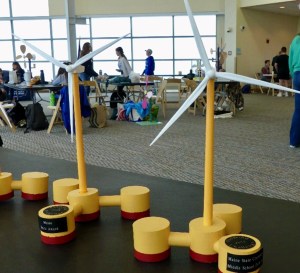
Twenty-one teams filled the Ocean Gateway in Portland as the Maine State KidWind Challenge returned following a three-year hiatus. “KidWind is a hands-on design celebration that engages students through the lens of wind and solar energy. Student teams design, construct and test small scale wind turbines and solar structures at events all over the world.” The national competition, which ballooned in size in 2009, has engaged over 40,000 students across 33 states. For this event, teams from five different Maine public schools brought turbines and presentations that they have been working on for weeks. They presented their materials to a panel of judges, and  their turbines were put to the test in a wind tunnel to see how much power they generate. The results are projected up for competitors to watch as an energy sensor measures the voltage and current output of the turbines.

Retired Portland teacher Gus Goodwin successfully rallied many of the teachers who had participated in the past. The event is one that Goodwin has been championing for years, feeling that it helps students confront climate change with possible solutions. “We’re talking about climate change, but it left the students with a sense of agency… a sense that they can do something,” he told Newscenter Maine. As with many in-person events around the state, the Maine State KidWind Challenge was not quite back to its 2019 participation levels. Winslow Junior High School teacher Ginny Brackett recounted March of 2020 to her current group of four teams when she left her classroom with partially completed turbines. Her students, who were then elementary students, were grateful for the opportunity.

The day opened with a Q&A with Taylor Ward from UMaine’s Advanced Structures & Composite Center and Steve Nolet, Senior Director of Innovation & Technology for TPI Composites, who manufacture wind blades. The students were also presented a keynote from Tagwongo Obomsawin, who shared her own journey from rural life in Western Maine to her current position as the Clean Energy Partnership Program Manager in the Governor’s Energy Office.

The top-ranking teams, “W Group” from Mt. Ararat Middle School and “West End Whales” from Portland and Casco Bay High School, will be invited to compete at the national KidWind event in May at the University of Colorado. The “NCL Wind Turbines” from Massabesic Middle School were the runners-up and “MTA 1” from Mt. Ararat won the Spirit Award.
Prior to the event, Mt. Ararat Middle School STEM teacher Sandy Bickford appeared on MLTI’s Teaching with Tech podcast episode and she highlighted the KidWind Challenge as her favorite project to work on with students. “It’s a lot of work, it’s a lot of steps, it’s a lot of teaching, but… it’s relevant.”

The KidWind Challenge highlights many of the best qualities of STEAM learning. The teams of students who gathered at the Ocean Gateway exemplified the type of engagement in a project and resilience in problem-solving that many educators strive to introduce into their classrooms.


Public Pre-K Expansion Distinguished Educator Opportunity

As part of Maine’s Jobs and Recovery Plan (MJRP), the Maine Department of Education (DOE) was awarded $10 million in American Rescue Plan funding to support the expansion of public pre-k opportunities in Maine.  To assist with the provision of technical assistance and professional learning for the new and expanding pre-k programs being funding through this opportunity, the Maine DOE is seeking a Distinguished Educator to be part of its Early Learning Team.  Under the Distinguished Educator program, the Maine DOE contracts with a public school system or community agency to borrow an educator for a designated period, in this case the 2023-24 school year.  Following service in the program, the Distinguished Educator returns to their sending school system/community agency.

Maine educators who meet the qualifications described below are strongly encouraged to consider applying for this opportunity. Distinguished educators share their expertise with the Maine DOE and other Maine educators while also growing as professionals through a range of new and exciting experiences. The application period for this position will remain open until April 25, 2023.  Interested applicants should submit a letter of interest and resume to Lee Anne Larsen, Director of Early Learning (leeann.larsen@maine.gov).  Candidates selected for interviews will be notified by May 5, 2023.

Questions may be directed to Leeann.Larsen@maine.gov.

Maine Department of Education Distinguished Educator Public Pre-K Expansion Technical Assistance Provider

POSITION DESCRIPTION

The Public Pre-K Technical Assistance Provider engages in professional work related to planning and providing technical assistance and professional learning for public preschool programs, including programs in partnership with Head Start and private providers.  The position conducts technical assistance visits, including observations of classrooms, and reviews data to help support program improvement.  The position is part of the Early Learning Team within the Maine Department of Education’s Office of Innovation.  The position coordinates regularly with the DOE’s Early Childhood Specialist and Public Pre-K Consultant.  Statewide travel is required.

REPRESENTATIVE TASKS of this position include but are not limited to:

  • Delivering appropriate technical assistance and professional learning to enhance program implementation — may specifically address evidence-based early childhood curriculum, learner-centered instruction, differential learning, assessment, developmental education and/or experiential learning, developing and implementing MOUs with community providers, etc.
  • Providing interpretation and explanations of statutory provisions to local school authorities, CDS contracted providers, and the public.
  • Supporting SAU compliance with the Chapter 124 Public Preschool Program Standards and providing technical assistance related to program improvement.
  • Analyzing data contained in SAU annual reports of pre-k programming.
  • Other duties applicable to support of public pre-k expansion efforts, as assigned.

KNOWLEDGE, SKILLS, AND ABILITIES REQUIRED to successfully perform the work assigned:

  • Experience with the early childhood general education and special education communities in Maine and with public school education in Maine.
  • Knowledge of current learning research and exemplary early childhood educational instructional strategies in all early learning domains.
  • Knowledge of current and emerging state and federal legislation, rules and regulations impacting early childhood education, including Department of Health and Human Services (DHHS) childcare licensing and Child Development Services (CDS).
  • Knowledge of exemplary evidence-based early childhood curriculum, learner-centered instruction, differential learning, assessment, developmental education, and experiential learning, and understanding of the relationships among these areas.
  • Knowledge of and experience with Maine’s College and career Ready Learning Results and Maine’s Early Learning and Development Standards.
  • Knowledge and experience with developing and implementing public pre-k programs in partnership with community providers (e.g. Head Start, Child Care, etc.).
  • Knowledge of community involvement issues in education policy decisions and operations.
  • Ability to interpret and explain statutory provisions to local school authorities, community providers, and the public.
  • Ability to effectively provide information, technical assistance, professional development and program development support and expertise.
  • Ability to use technology-based communications (i.e., Internet, Web) and e-mail systems and both laptop and desktop computer systems, word processing and data applications.
  • Ability to communicate effectively orally and in writing.
  • Ability to effectively facilitate meetings, organize and manage multiple projects.
  • Ability to apply and facilitate group dynamics and to use exemplary interpersonal skills in order to work collaboratively, develop positive working relationships, and involve stakeholders at the local and state level.

MINIMUM QUALIFICATIONS:  A Bachelor’s Degree in Early Childhood Education or a related field and two (2) years of professional level experience in public pre-k programming is required.  A Master’s Degree in Early Childhood Education and five years of early childhood teaching and/or administrative experience is preferred. CLASS Observer certification at the pre-k level is also preferred.

MaineCare Seed Adjustments to be Made; Review Q2’23 Reports by April 20, 2023

The recovery of Q2’23 MaineCare Seed will occur in the April 2023 subsidy payment. The Maine DOE is asking Districts to review their reports by April 20, 2023, to ensure accurate adjustments to subsidy. SAU staff must review, and submit disputes, student by student claims on both the public and private MaineCare reports for Q2’23 by April 20, 2023.

To access the MaineCare Seed reports, please follow the instructions below.

  1. Log into NEO: https://neo.maine.gov/DOE/neo/Dashboard
  2. Click on the Student Data tab
  3. Click on the Student Report tab
  4. Select MaineCare in the Reporting Area drop-down
  5. save iconChoose the quarterly Seed report and the report type (private/public)
  6. Click view report button
  7. Once the report appears on the screen, choose the export button.

You may export the reports to Excel but, please be aware that there may be multiple worksheet tabs within the workbook. Save the file to your computer.

To dispute a claim:

If you disagree that a particular student or time period should not be on the report, please send an email with the following information for each State Student ID to Denise.towers@maine.gov.

  • State Student ID
  • The reason that you disagree
  • Identify the type of report: public or private
  • Quarter in which the claims are located
  • Service provided dates (From and To)
  • Total amount of Seed being disputed

Summer services:

Students must be enrolled for the time period they are receiving educational services. This means that students that are receiving extended school year services in district or extended school year services in an out of district placement must have a primary enrollment for that time period in order for the MDOE to have the most accurate enrollment data to determine SAU responsibility for MaineCare Seed.

If you have difficulty logging into NEO:

Anyone who currently has Special Education Director permissions to the Special Education module, will automatically have permissions to access MaineCare reports.

As in the past, if a new staff member needs permission to access this module, a request from the Superintendent to the Maine DOE helpdesk will be necessary. The helpdesk contact information is medms.helpdesk@maine.gov or 207-624-6896.

Please contact Denise.towers@maine.gov

for more information or technical assistance related to MaineCare Seed.