Annual Audit Requirements Reminder

Annual Audit Reports Due December 30th

Annual audit reports are due within six months after the end of the audit period (e.g., reports for the fiscal year ending June 30th are due on or before December 30th). In accordance with Title 20-A, §6051:

  • Per statute, the auditor is required to review the audit with the school board.
  • Per statute, it is the school board’s responsibility to submit the annual audit document unless it is stated in the engagement letter that the audit firm will submit the audit to the Department on behalf of the school board.
  • Municipal school units are required to submit either a combined annual audit or a school department audit and a municipal audit to the Department. The municipal annual report (a.k.a. town report) cannot be accepted in lieu of the complete municipal annual audit.
  • Per statute, Maine DOE must receive a Schedule of Expenditure of Federal Awards(SEFA), which includes federal award expenditures for all reporting entities, even if a Single Audit (formerly A-133 audit) is not required to be conducted. The SEFA provides information needed by Maine DOE to conduct sub-recipient monitoring as required by the US Department of Education and is due at the time of the annual audit.

In municipal school units where a combined audit is not conducted, Maine DOE should receive two audits: an audit with a SEFA for the school department, and an audit for the city/town including a SEFA.

  • If a management letter is prepared by the auditor, a copy must be submitted to Maine DOE with the annual audit, as this letter provides us with the information needed to conduct sub-recipient monitoring, as required by US DOE.

Extensions and Subsidy Payments

If an extension or exception is needed for the deadline to submit either the municipal or school department audit, the superintendent must contact us to request the extension.

The forms are available on the Fiscal Review and Compliance webpage, under forms on the menu bar.

  • Initial extension requests will be for a period of 2 months, and 30 days thereafter.
  • Extension requests will be considered until June 30th (six months after the due date); extensions will not be valid after June 30th and all municipalities and school administrative units with overdue audits which have not submitted an extension request before May 31st may have a delay in subsidy release. Those who have not submitted an extension request will have subsidy withheld until addressed.

Please submit all annual audit documents, reports, information requests, questions, and other audit correspondence via email to DOE.Audit@Maine.gov

Free Virtual On-Demand Financial Education Training for Maine Educators

The Finance Authority of Maine (FAME) and the Center for Financial Literacy at Champlain College, in partnership with the Maine Jump$tart Coalition for Personal Financial Literacy and its sponsors, the Office of the Maine State Treasurer, and Next Gen Personal Finance (NGPF), is offering free online and on-demand training for Maine teachers.

The Financial Educator Virtual Academy will train Maine educators on how to successfully teach personal finance in their classrooms and communities. Educators will receive contact hours for each course module attended, and the first 100 Maine classroom teachers to complete all seven hours of training will receive a $50 Amazon gift card.

The online course offering is available starting October 12, 2022 and will close on December 16, 2022. The goal of this training is to support educators as they work to ensure that all Maine students have access to high-quality personal financial education. Maine educators can earn up to seven hours of professional development training and receive suggestions for grade-appropriate personal finance classroom resources over the duration of the virtual academy.

During the virtual academy, which features nationally known experts, participants will learn how to implement the JumpStart National Standards in K-12 Financial Personal Finance Education. These standards allow for the teaching of personal finance in an interdisciplinary or stand-alone manner.

Interested educators may register for the program with this link.

Download a flyer for distribution 

For further questions contact Maine Jumpstart Coalition for Personal Financial Literacy at info@mejumpstart.org


Things Are Falling Into Place In Public Pre-K Expansion Classrooms

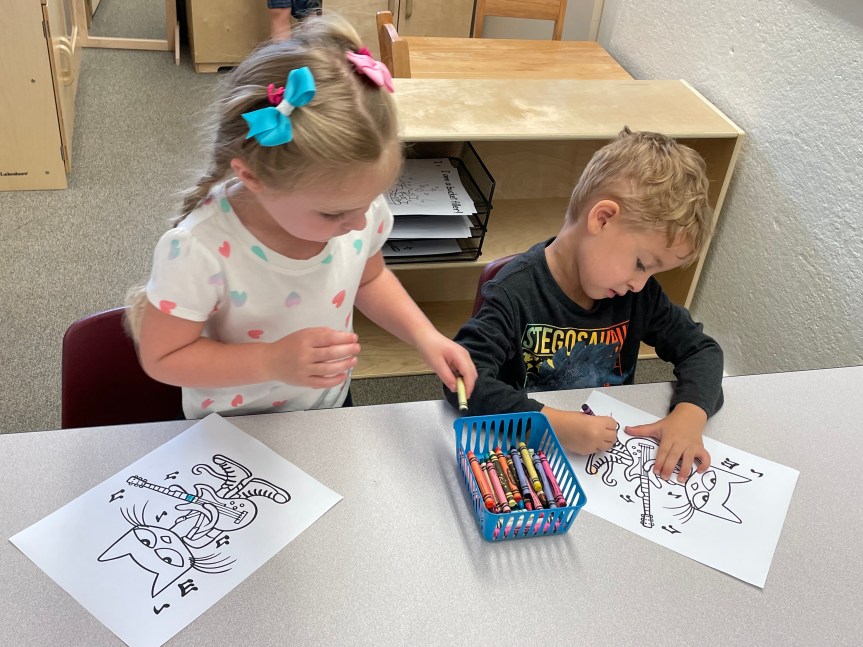
Autumn has arrived bringing crisp air and beautiful foliage.  As the colorful leaves drift down, things are falling into place in Pre-K expansion classrooms across ten Maine school districts.  This fall 17 new classrooms opened and five others moved from part day to full day programming through a grant offered by the Maine Department of Education.   Funded through the Maine Jobs and Recovery Plan, the grant expands access to high-quality Pre-K programming and provides relief to families struggling to find childcare.

Grant funds have supported districts with renovating spaces, purchasing furniture and materials to create engaging learning spaces, meeting transportation needs, and ensuring a skilled workforce to serve Pre-K students.  Over the past few months, teachers and administrators have been busy attending training, setting up classrooms, meeting families and working with partner agencies to ensure a smooth start to the school year.  The little faces below show that their hard work has more than paid off.

Students at Newburgh Center in RSU 22 enjoy playful learning during Centers time.  RSU 22 has relocated their Newburg and Winterport classrooms to the Newburg Center, expanded to full day, full week programming and added a third classroom to expand access in their community.

Abraham Lincoln School in Bangor has expanded their pre-k from part day to full day in a beautiful space set up to spark the imaginations of young learners.

Downeast School in Bangor

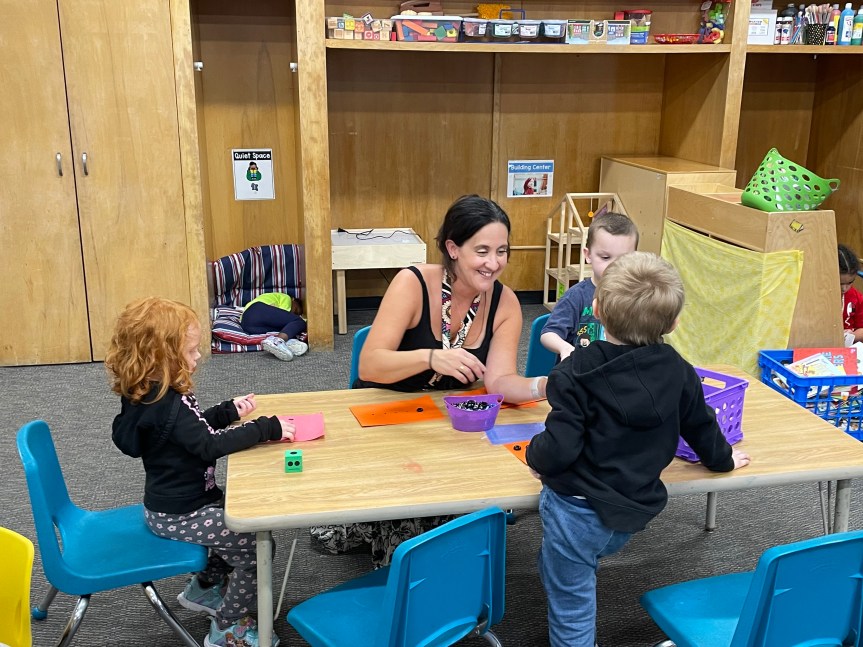
Downeast School in Bangor has expanded to a full day program and has added a new classroom as well.  Here the teachers join students to support learning through play.

Students build their language skills through story time and conversations around the table during meals in Limestone’s new pre-k classroom.   Limestone collaborates with Aroostook County Community Action Head Start to provide rich learning opportunities and comprehensive services to students and families in their program.

The Maine DOE is pleased to announce a second round of public pre-k expansion grant funding available for the 2023-24 school year.  The submission deadline is rapidly approaching (October 14, 2022). To learn more please visit the Pre-K Expansion Grants page of the Maine DOE website.

For more information, contact Sue Gallant, Pre-K Expansion Consultant (Sue.Gallant@maine.gov) or Nicole Madore, Early Childhood Specialist (Nicole.Madore@maine.gov).

WORKSHOP: Creating a Restorative Code of Conduct

As schools continue to adjust to a post-pandemic educational reality, teachers, administrators and students struggle to rebuild a sense of community and safety while undesirable behavior continues to escalate. The Maine School Safety Center, a division of the Maine DOE, believes that the development of an intentional community based on Restorative Practices is the best way to build a sense of safety, equity and belonging, while also responding to behavior in a victim centered, nonpunitive manner that encourages accountability, and restoration to individuals and community.

Restorative Practices in schools work best when initiated using a top-down approach, starting with consensus from all stake holders, followed by a review of district or school-based codes of conduct to ensure that both restorative language and restorative response to undesirable behavior is the standard. Analysis of current policies also allows for modifications that ensure equity for all students, regardless of race, ethnicity, academic ability or socio-economic status.

With this in mind, the Maine School Safety Center will begin our Restorative Practices training with a free of charge workshop, led by Stacey Barlow, Restorative Practices Coordinator of the MSSC and John Hudson, nationally recognized Restorative Code of Conduct expert, designed to help schools evaluate their current code of conduct through an equity lens and then integrate restorative policy and language, the foundation of building a restorative school culture. A Restorative Code of Conduct will put your school or district in alignment with Maine law, as described below:

15-A. School disciplinary policies. When revising the prescribed consequences for violation of the student code of conduct pursuant to subsection 15, paragraph C, a school board shall consider districtwide disciplinary policies that:

B. Focus on positive and restorative interventions that are consistent with evidence-based practices rather than set punishments for specific behavior and avoid so-called zero-tolerance practices unless specifically required by federal or state laws, rules or regulations. For the purpose of this paragraph, “restorative interventions” means school practices that are designed to strengthen relationships, improve the connection to school and promote a strong sense of accountability and that help students learn from their mistakes, understand the impact of their actions on others and find opportunities to repair the harm they have caused through their misbehavior; [PL 2011, c. 614, §7 (NEW).]

Workshop dates/times (same workshop offered in three locations):

  • Monday, November 7, 2022 – USM Portland 9AM – 4PM
  • Wednesday, November 9, 2022 – Augusta Civic Center 9AM – 4PM
  • Thursday, November 10, 2022 – University of Maine, Bangor 9AM – 4 PM

All workshops are free for Maine Educators – Register for Workshops Here

For questions, please contact Stacey Barlow at Stacey.Barlow@Maine.gov (207)446-8313

DUE DATE CHANGE: Attendance and Truancy

The Attendance and Truancy reports are now due on October 30, 2022. For reporting guides for these reports please see the  Fall Reporting instructions and for more information please see the Webinars and Presentations on the Helpdesk website.

For issues or questions regarding reports, please contact MEDMS.Helpdesk@maine.gov or call 624-6896

For NEO and Synergy training, please contact Alexandra.Cookson@maine.gov or call 207-446-3897

Maine PBIS Brief Published in the National Center on Positive Behavioral Interventions and Supports

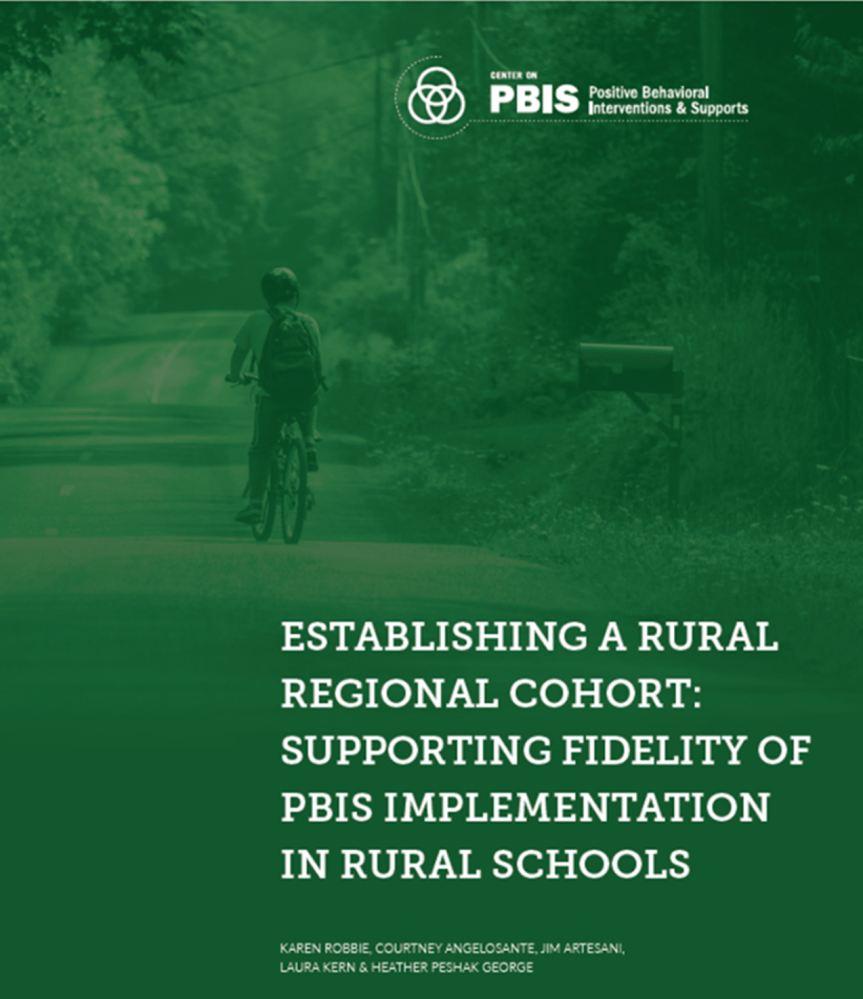
Maine PBIS (Positive Behavioral Interventions and Supports) state leaders recently published this brief in the national Center on PBIS with a focus on developing systems of support in rural school settings.

If you are interested in learning more about PBIS work across the state of Maine or joining a PBIS cohort, contact Anne-Marie Adamson at anne-marie.adamson@maine.gov.

“ESTABLISHING A RURAL REGIONAL COHORT: SUPPORTING FIDELITY OF PBIS IMPLEMENTATION IN RURAL SCHOOLS”

Robbie, K., Angelosante, C., Artesani, J., Kern, L., & George, H. P. (September, 2022). Establishing a Rural Regional Cohort: Supporting Fidelity of PBIS Implementation in Rural Schools. Center on PBIS, University of Oregon. www.pbis.org

Toileting Support Resources for Schools

Frequent inquiries from the field about how to support children who need toileting support has prompted the creation of this resource document for schools. Ultimately, a public school district cannot refuse to enroll or serve a child who has toileting needs, nor should there be any punishment associated with soiling, wetting, or not using the toilet. Each School Administrative Unit (SAU) is encouraged to adopt sanitation and hygiene procedures for assisting with toileting and/or diapering that adequately protect the health and safety of all children and staff. The determination of which school personnel within a school setting can be asked to assist with toilet training/toileting support is a local employment and collective bargaining matter.  

Transitioning into public school can be a time of trepidation and anxiety for many children and their families. Providing support, understanding, toileting routine, and consistent communication with the family will aid in a child becoming more independent. 

Foundational Support  

Consider using direct instruction on healthy toileting expectations for school in early elementary grades. Teach the behaviors that are expected; practice and reinforce the behaviors with all students. Establish a classroom routine and practice the routine with all students. Resources for providing direct instruction are included at this end of this document.  

Keep in mind that there are cultural differences in how children are toilet trained. Building knowledge and understanding of these cultural differences is important as the expectations of school personnel may not be the same as a child’s family. 

Provide visual directions in all bathrooms and stalls. 

Targeted Support 

Some students may need more targeted intervention in addition to the foundational support provided to all students. 

If possible, work with the family to create a home and school plan that acknowledges the goals and desires of both parties regarding the child’s individual development towards independent toileting. A home-school liaison, teacher, school nurse, or representative(s) from an outside agency that is supporting the child may work directly with the parent to develop a plan for toilet training at home and school. If the child attends another out-of-home care setting, in addition to public school, be sure to include all teachers and family providers in the conversation. Build communication between parties as well as regular review to revise a plan that may not be effective. 

Depending on the needs of the student, consider the following in building independence: 

  • Adaptive equipment (PT or OT) 
  • Visuals or social stories to teach steps in the routine 
  • Reinforcers (star/sticker chart, screen time, adult 1:1 attention, peer activities, etc.) can help students with the motivation to persist in learning bathroom skills 

Communicate with the family to establish whether there are any medical needs or physical limitations involved. If there are medical needs, work with the family using an individual health plan of care to support the child and possibly a 504 plan if indicated. 

The parent/legal guardian will need to supply clean clothes, underwear, pull-ups, and diapers (as appropriate). 

Sanitation and Safety 

Child size toilets or modified toilet seats with step stools are recommended. Potty chairs are not recommended for use in schools. 

Children in soiled or wet clothing and/or diapers that require full assistance due to medical condition or disability shall be changed on a washable vinyl table or mat that is cleaned and sanitized after each use or has a disposable single-use cover. 

All staff members must wash hands with soap and running water after assisting with toileting and/or diapering.  

Any materials used for cleaning/changing (including any diapers and diapering materials) must be discarded in a covered, lined, foot-pedal-operated step can separate from other trash or must be tied up in a separate bag and removed to a covered garbage location.  

Toileting and diapering areas shall be separated from areas used for cooking, eating or children’s activities. 

Guiding Principles 

  • Bathroom independence is a fundamental skill for independent living and dignity. We want each student to be as independent as possible in the bathroom. 
  • Assume that students are capable of learning new skills and routines. 
  • Adults should model boundaries by telling students when and why they are touching the student’s private areas. 
  • Assume the student is listening to everything you say. 
  • Students who are not yet independent in the bathroom may be vulnerable.  
  • For the protection of both students and staff, it is highly recommended that two adults be present in the bathroom assisting the student with clothing removal, changing, or wiping.  
  • Consider using a bathroom that is in sight and/or audio vicinity of other adults 
  • In many early childhood classrooms, the bathroom might have a cloth curtain as a door, or a half-door as opposed to a full closing door. 
  • Other students should never be involved in the changing routine. 
  • Staff should protect themselves by using appropriate Personal Protective Equipment. 


Toileting in Schools Resources 

Autism Adventures: Toilet Training in the Classroom  
J of Autism and Developmental Disorders Classroom Based Intensive Toilet Training for Children with Autism Spectrum Disorder 
4.21 NY Guidance for Supporting Toilet Learning for Prekindergarten & Kindergarten Students
Bathroom Routine Visual – Indiana University Resource Center for Autism (docx)
Going to the Bathroom Visual – Indiana University Resource Center for Autism (docx)
Going to the Bathroom Step by Step – Indiana University Resource Center for Autism (docx)
Soiling (Encopresis) from Kids Health
U Can Poop Too 

Virtual Lab School Trainings 

The Watson Institute, Toilet Training: Developing a Toileting Routine 

Sample Procedure 

Consider the environment and what is the least restrictive setting. A student bathroom is more typical/less restrictive than staff bathroom. 

If physical transfer of student is necessary, ensure that staff doing transfer have been trained by the Physical Therapist on appropriate transferring procedure. 

Have clean clothes available and a bag for wet/soiled clothes. 

Waste disposal: 

  • Disposal should be in a covered can and appropriate bagging that minimizes odor. 
  • Work with your building custodial engineer to ensure that appropriate trashcan and bags are accessible and being removed from the building on a daily basis. 

Personal Care Routine to be developed by a team, which may include OT or PT 

Training on Personal Care Routine provided and documented 

Basic procedure for full change (Remember, the goal is for the student to take over performing tasks as they are able): 

  1. Inspect the designated changing area and make sure that all of the necessary equipment and supplies are available in the area (i.e., gloves, wipes, etc.) 
  2. Bring student to changing area 
  3. Prepare table/surface where student will be changed by wiping with a sanitized cloth and/or by placing protective paper on the table surface 
  4. Wear appropriate Personal Protective Equipment — gloves (sleeves and apron if necessary) 
  5. Talk to student about what you are doing and why (i.e., “I’m going to use the wipes to clean your buttocks now.”) 
  6. Transfer student to changing table (per PT training) or standing position if able 
  7. Remove soiled diaper and place in a covered waste receptacle 
  8. Clean student using wipes 
  9. Dispose of soiled gloves and put on clean pair of gloves 
  10. Place clean diaper on student 
  11. Transfer student from changing area 
  12. Remove paper and clean surface with wipe 
  13. Wash hands with soap and running water 

Procedure developed from NYC United Federation of Teachers Safety and Health Department http://www.uft.org/files/attachments/uft-diapering-toileting-procedure.pdf 

References

Maine Department of Education, Public Preschool Toileting Policy. Available from: https://www.maine.gov/doe/learning/earlychildhood/publicpreschool/health  

National Resource Center for Health and Safety in Child Care and Early Education,
Caring for Our Children, Chapter 3.2 Hygiene. Available from: https://nrckids.org/CFOC/Database/3  

New York City, United Federation of Teachers Safety and Health Department, Para Protocols, Diapering and Toileting. Available from: http://www.uft.org/files/attachments/uft-diapering-toileting-procedure.pdf  

Virtual Lab School, Staying Healthy: Diapering and Toileting. Available from: https://www.virtuallabschool.org/infant-toddler/healthy-environments/lesson-3  

Virtual Lab School, Changing Soiled Clothing. Available from: https://www.virtuallabschool.org/infant-toddler/healthy-environments/lesson-3/act/14126 

Important Notice: Fall Data Collection has OPENED

October 1st Student Enrollment: Report opened on October 1, 2022 for review and will be open for certification by districts starting on October 15, 2022 with a due-date of October 30, 2022.

Data from these reports is used in many areas of State and Federal reporting and is also the basis for the Essential Programs and Services (EPS) funding formula. Due to the time-sensitive nature of EPS funding, it is essential this data be submitted, reviewed, and certified in a timely manner.

Superintendent and Special Education Director certification are both required for this report.


Other Upcoming Fall Reports

  • Quarterly Reporting (Attendance, Behavior, Bullying, and Truancy) are due October 15, 2022
  • Dropout Reporting opened on October 2, 2022 and will be open until October 30, 2022
  • Staff Certification is open until November 15, 2022

Resources


All due dates for reports are listed on the MDOE reporting calendar:

https://neo.maine.gov/DOE/neo/DCAR/Calendar

For issues or questions regarding reports, please contact MEDMS.Helpdesk@maine.gov or call 624-6896

For NEO and Synergy training, please contact Alexandra.Cookson@maine.gov or call 207-446-3897

Sparking Creativity: International Dot Day and Augmented Reality

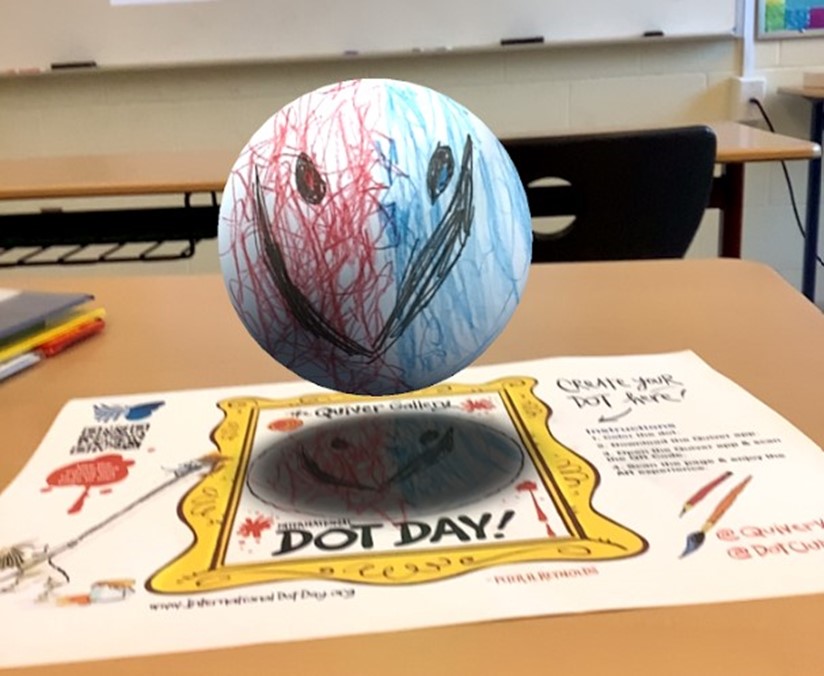
When Terri Dawson, Technology Integrator at Gorham Middle School, heard Peter H. Reynolds read from his children’s book, The Dot, at an International Society for Technology in Education conference, she knew she had to bring the book back to her school. Reynolds’ book tells the story of a young student, Vashti, who feels like she can’t draw. Her teacher encourages her to simply “make a mark and see where it goes,” and by doing so, sparks Vashti’s creativity, inspiring the little girl and her classmates to have creative confidence.

So, when Dawson discovered a collaboration between QuiverVision, an augmented reality (AR) coloring app for iPads, and International Dot Day, she knew she had found an innovative way to connect sixth, seventh, and eighth-grade students to this beloved children’s book via technology. The students began by listening to Peter H. Reynolds read from his book on YouTube. That’s when they began their own creative process.

Dawson provided students with a paper template from QuiverVision that included space for the students to design their own dots and a QR code, that, when scanned by their iPads, displayed their dots in augmented reality. This allowed them to experience their drawings in a totally different way. Dawson noted that “when the students saw their dots come to life, their engagement and motivation to do another dot was amazing…it gave them another level of learning. They started to think about what else they could create.”

Dawson’s students were so engaged and inspired, they asked for the opportunity to take their iPads home and continue with their own designs using AR.

“Augmented reality and virtual reality seem to be a natural progression in education,” said Dawson, “there are so many different things that allow students to view their world differently. That’s what I want to expose them to. I want them to have these skills so that when they go out into the workforce they say, ‘I remember using AR! Did you know you could do this with a QR code?’”

CISA Active Shooter Preparedness Webinar

The Cybersecurity and Infrastructure Security Agency within the U.S. Department of Homeland Security is hosting a 2-hour Security Webinar to enhance awareness of, and response to, an active shooter incident.

Objectives

  • Discuss the elements of active shooter incident response planning with guidance from expert instructors.
  • Describe common behaviors, conditions, and situations associated with active shooter events.
  • Discuss how to recognize potential workplace violence indicators.
  • Provide information about best practices, communications protocols, and resources that will assist stakeholders to develop or enhance their emergency planning, preparedness, and response to active shooter incidents.

Building Emergency Planning Capabilities

The event will also describe how to incorporate key elements of successful incident management into planning efforts including:

  • Communication and Incident Planning for employees
  • Emergency Action Plan Development
  • Recognizing Behavioral Indicators
  • Coordinating with First Responders

Who should Participate?

  • Corporate and facility security professionals from the private and public sectors
  • Supervisory first responders
  • Human Resource managers
  • Community Response and Liaison officers
  • Health organizations
  • Faith-based leaders
  • School administrators and security officers
  • Homeland security representatives

Registration is free and participation is based on a first come, first served basis with a limit of 1,000 participants. Registration will close as soon as the event reaches capacity or no later than October 18, 2022 at noon (12:00 p.m.) EDT.

Register here. (Eventbrite will email you a link to access the AS Webinar the evening prior to the event.)

For more information email CISA-Active Shooter Preparedness at ASworkshop@CISA.DHS.GOV or visit cisa.gov/active-shooter-preparedness.