Webinar Announcement: Bullying Prevention Awareness Month: Resources for K-12 Schools (Oct. 13)

Please join the Federal School Safety Clearinghouse on October 13 at 2:00 PM EDT for an informational webinar on bullying awareness and prevention resources along with guidance to help create safer school environments. This session will provide information and resources designed for the kindergarten through grade 12 (K-12) school community.

The session will feature guest speakers from the Centers for Disease Control and Prevention’s Division of Violence Prevention and Health and Human Services’ Substance Abuse and Mental Health Services Administration. The event will provide an overview of what bullying is and how to identify it, key strategies and actions schools and school personnel can implement to prevent and address it, and the tools and resources available from the government to support schools in these efforts, including StopBullying.gov.

The discussion will also feature additional school safety-related resources on topics like school climate and mental health access and support and a Q&A session for participants.

  • When: October 13, 2022, 2:00 PM to 3:00 PM EDT
  • Where: Webex (access link to be provided one day in advance of the event)
  • For: K-12 School Superintendents and Principals; Counselors and Mental Health Practitioners; School and District Administrators; Teachers and School Staff; School Resource Officers; Parents and Guardians; Students
  • Registration: https://2022schoolsafetybullyingpreventionwebinar.eventbrite.com

We hope you can join us for this special event during National Bullying Prevention Awareness Month. If you have any questions, please contact the School Safety team at SchoolSafety@hq.dhs.gov.

October is Cybersecurity Awareness Month!

Cyber Awareness Month is a global effort to help everyone stay safe and protected when using technology whenever and however they connect.


The theme for the month is, “It’s easy to stay safe online.”

The Maine DOE has teamed with MaineIT, the Cybersecurity and Infrastructure Security Agency (CISA), and the National Cybersecurity Alliance (NCSA).

We are proud to support this online safety and education initiative this October.  


This month is all about taking action! We are promoting key behaviors to encourage everyone in education to take control of their online lives.


There are all kinds of ways to stay safe and secure online and even just practicing and understanding these cybersecurity basics can make a huge difference.

Each week, we will be sending out some important information to help keep your data and teams safe: 


1.      Week 1: Anatomy of a Data Breach 

2.      Week 2: Multi-Factor Authentication and Password Managers 

3.      Week 3: Updating Your Software 

4.      Week 4: Recognizing and Reporting Phishing 


The DOE will release information regarding the above items throughout the month.  Please consider taking an active part in your local school system.


·         NCSA’s Cybersecurity Awareness Month Website: https://staysafeonline.org/cybersecurity-awareness-month/ 

·         CISA’s Cybersecurity Awareness Month Website: https://www.cisa.gov/cybersecurity-awareness-month 

Maine Education Commissioner Pender Makin Visits Schoodic Institute’s Maine Outdoor Learning Initiative Program

Maine Education Commissioner Pender Makin headed to the Schoodic Peninsula last week to take part in a Maine Outdoor Learning Initiative program run by the Schoodic Institute. More than 50 sixth through eighth graders from Hancock Grammar School, and their teachers, took part in a two-night, three-day outdoor coastal learning experience.

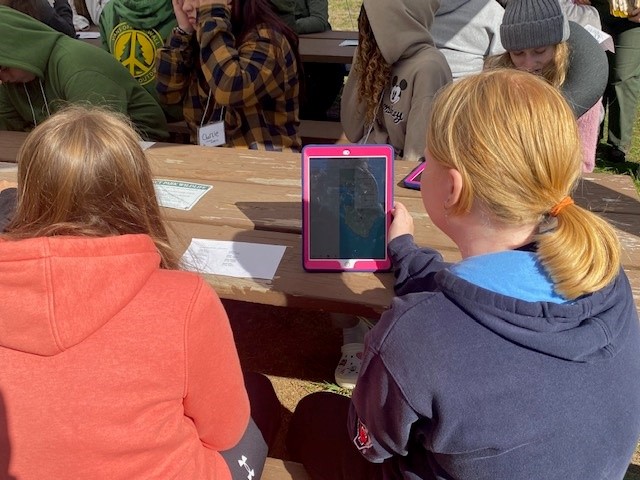
Students engaged in real-life, hands-on learning through exploring tide pools, photojournalism projects, marine chemistry, mapping, night hikes, art projects, forestry, and other activities that combine different subject areas to learn about science and coastal ecology. The programs were selected by teachers to connect to what students are learning back in their classrooms and are aligned with the Maine Learning Results.

“These students are collaborating, they are outdoors, and they are experiencing deep and meaningful learning through applied, project-based experiences that combine content areas,” said Maine Education Commissioner Pender Makin. “And there is a team of dedicated staff here at Schoodic working with these students in partnership with their classroom teachers. These kinds of experiences are extraordinarily important and meaningful, and students will always remember their time here.”
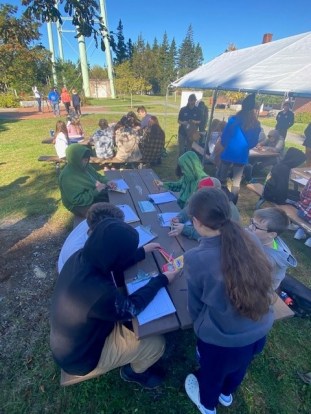
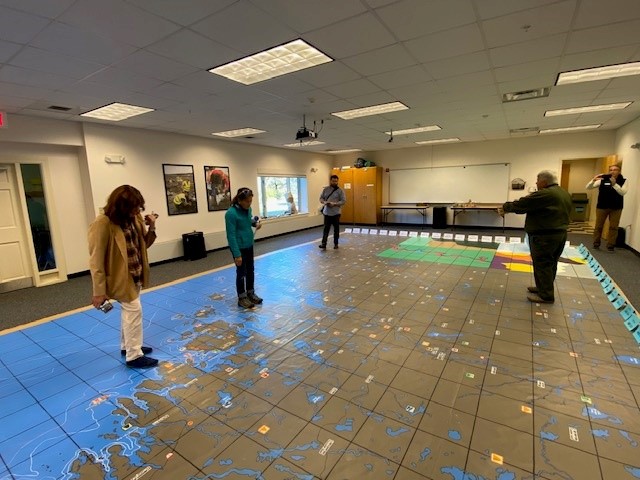
Makin got to tour the outdoor and classroom learning facilities, bunkhouse, and take part in the morning wrap up activities with students where they mapped all of their locations during their time in the program and created graphics highlighting problems and solutions to climate change issues.

Schoodic’s Maine Outdoor Learning Initiative program engaged 2,000 Maine students in summer day programs and hundreds of Maine students in their multi-day immersive outdoor Schoodic Education Adventure (SEA) program. Schoodic Institute’s outdoor, hands-on coastal education programs encourage students to learn, discover, understand, and solve problems by experimenting and evaluating possible solutions. Curriculum-based outdoor education on the rugged coast of Maine offers an unparalleled experience for students and an exciting way to build science literacy and enthusiasm. For many students, this is their first experience spending the night away from home or their first time getting a coastal experience.
The Initiative also funding several teaching assistant positions, providing living-wage internship opportunities for young people that will provide a springboard for full careers in outdoor education in Maine.

“Schoodic Institute is thrilled to work with the Maine Outdoor Learning Initiative to create hands-on coastal education opportunities here in Downeast Maine for under-resourced schools and low-income families. Furthermore, the early-career internship positions created through this initiative will be springboards for bright careers in outdoor education in Maine,” said Schoodic Institute President and CEO Nicholas Fisichelli.
Schoodic Institute was one of several organizations that received funding through Governor Mills’ Maine Outdoor Learning Initiative. The Initiative, developed by the Maine Department of Education using Federal funding, gives middle and high school students the opportunity to participate in marine and coastal ecology learning programs, including marine research and exploration, boat building, sailing, career exploration with marine businesses, island immersion programs, and more. There was also a specific focus on engaging students who do not typically have access to such experiences due to distance, cost, or other barriers.

Spending time outdoors has been shown to help reduce stress and anxiety and to equip students with skills and knowledge that can help them succeed inside the classroom. Being able to interact with nature while building connections with peers is also beneficial students’ recovery following the disruptions and difficulties caused by the pandemic.

Read more about Maine Outdoor Learning Initiative experiences here.

FY 2023 Leased Space Approvals

The Maine Department of Education (DOE) has completed its review of FY 2023 leased space applications.  Approvals can be viewed here: https://www.maine.gov/doe/index.php/schools/facilities/lsp.

Maine DOE’s Leased Space Program addresses the need for additional classroom space due to overcrowding, enrollment fluctuations and new programs in order to improve the quality and condition of learning environments for Maine students.

For additional information about the Leased Space Program contact Ann Pinnette at 207-215-3809 or ann.pinnette@maine.gov.


Professional Learning Opportunity: Teacher Leaders – Planning with the WIDA English Language Development Standards

English for Speakers of Other Languages (ESOL) teachers, coordinators/directors, Ed Techs, tutors, and instructional coaches are invited to join the Maine Department of Education and WIDA for a hybrid workshop on planning with the WIDA English Language Development (ELD) Standards!

This hybrid workshop is designed to support ESOL educators in providing local professional development and support for using the WIDA ELD Standards Framework (2020 edition) to plan instruction at the unit level. This workshop is for you if you can answer “yes” to any of these questions:

  • Have you been asked to provide professional development about the WIDA ELD Standards Framework (2020 edition) to educators in your school or district?
  • Do you engage in co-planning with content/classroom educators on a regular basis?
  • Do you have experience evaluating and/or designing content lessons and units?
  • Do you have a strong background in the WIDA Standards system and in working with multilingual learners?

Participants who complete the workshop will receive an invitation to join a consortium-wide pilot community of practice with quarterly activities and collaborative online discussions.

There will be a live virtual session on 11/30/22 from 3-4pm, followed by an in-person workshop on 12/6/22 from 9am-3pm in Augusta. Register here.

If you have any questions about this professional learning opportunity, contact April Perkins, ESOL & Bilingual Programs Specialist, at april.perkins@maine.gov or (207)441-9043.

Reminder: National Board Certified Teacher Salary Supplement and Scholarship Requests Due October 15, 2022 

National Board Salary Supplement  

Do you have National Board Certified Teachers on your staff? Awesome! We are sending along a reminder to those fortunate superintendents, or directors of a publicly-supported secondary school, Education Service Center (ESC) as authorized under Chapter 123, or Career and Technical Education (CTE) region, with eligible staff who have attained National Board for Professional Teaching Standards Certification prior to July 1, 2022. Please let us know so we can provide you with their legislatively allocated salary supplement! 

In order to qualify for the salary supplement, eligible staff must be currently employed by a Maine public school, ESC, or by a publicly-supported secondary school or CTE region in Maine. Eligible position titles include classroom teacher, special education teacher, literacy specialist, math specialist, long-term substitute teacher, library media specialist, school counselor, and teaching principals who have attained certification with the National Board for Professional Teaching Standards, or its successor organization. 

The amount of the salary supplement for fiscal year 2022-23 is $5000 for teachers employed in a school in which 50% + students qualify for a free or reduced-price lunch, and $3000 for teachers employed in a school in which fewer than 50% of students qualify for a free or reduced-price lunch, unless proration is necessary. 

The submission form and further information is available on our National Board Certification Salary Supplement page. 

Scholarship Applications 

National Board Scholarship Applications Due October 15, 2022 

Are you a Maine public school, or a publicly-supported secondary school, or CTE school teacher who is interested in becoming National Board Certified? Are you a district who is eager to offer this exceptional professional learning opportunity to your teachers?  State law, 20-A MRSA Section 13013-A subsection 5 & 6; as amended by PL 2012 c. 702, established the National Board Certification Scholarship Fund to encourage teachers to apply to, and enroll in, the certification program offered by the National Board for Professional Teaching Standards, or its successor organization. 

A school administrative unit, or a publicly supported secondary school or CTE region, may request scholarship funds on behalf of its teachers who meet the requirements. 

This fiscal year, the Maine DOE will allocate $75,000 to the scholarship fund, and shall award an amount equal to the cost of the certification program, less any other funds received by the applicant to not more than 30 teachers accepted into the program annually. Priority will be given to teachers who have already begun the process and teachers employed in high needs schools. 

For more information and eligibility requirements, please visit our National Board Certification Scholarship page.  

If you have questions about the National Board Salary Supplement Program or the National Board Scholarship Program, please contact Emily Doughty at emily.doughty@maine.gov. 

Seeking Applicants for Contracted 21st CCLC Program Specialist (30 Hours/Week)

The Maine Department of Education (DOE) is seeking applicants for a Contracted 21st CCLC Program Specialist (30 Hours/Week). The purpose of this position is to provide the Maine DOE with 21st CCLC program management support in the areas of data collection, program monitoring, and professional development.  This position will also provide implementation support to local 21st CCLC program providers through ongoing professional learning communities (PLCs), trainings, and targeted technical assistance.  The work of this position will be largely independent.  However, the position will be part of a team that oversees the successful implementation of 21st CCLC program across the State of Maine.

The 21st Century Community Learning Center (21st CCLC) program provides competitive grant funding to support before, after, and summer school programming for underserved students and communities.

To learn more about position including responsibilities, knowledge and abilities, minimum qualifications, and salary –  click here for the full position description.

The application window is September 30, 2022 through October 14, 2022. To be considered for this contracted position, please submit a cover letter resume to Travis Doughty at travis.w.doughty@maine.gov by October 14, 2022.

Get to Know the Maine DOE Team: Meet Sarah DeCato

Maine DOE Team member Sarah DeCato is being highlighted this week as part of the Get to Know the Maine DOE Team Campaign. Learn a little more about Sarah in the question and answer below.

What are your roles with DOE?

The role of School Nurse Specialist, works directly with the Statewide School Nurse Consultant, to provide school nursing leadership, consultation, and direction across the State of Maine. The School Nurse Specialist works as a team within Coordinated School Health to assist in synthesizing and disseminating information as it relates to trends in health care, school nursing practice, and health related policy changes. The School Nurse Specialist plans and provides educational offerings as they relate to special projects.

Sample focus areas include:

1) Establishing regional Communities of Practice (CoP) for school nurses statewide
2) Establishing communication interdepartmentally and externally with partners around the creation of a Child Care Health Consulting (CCHC) network as it relates to the role of the school nurse

What do you like best about your job?

I love working with the people I work with and having the opportunity to impact student health statewide working alongside school nurses. I enjoy collaborating with other departments within state government to best meet the needs of the populations we serve. Having a job where my expertise can be put to good use, where there is also the opportunity work/life balance is important and I am fortunate to find that here at the DOE.

How or why did you decide on this career?

The bulk of my professional nursing career has been working with or for children. Having worked in the non-profit world a number of years both running one of our former Healthy Maine Partnerships and while managing a 21st Century Afterschool Program grant, I realized I needed to become a nurse to make a larger impact on public health. I received my undergrad in nursing from the University of Southern Maine, and my graduate degree, with a focus in community/population health nursing, from New Mexico State University. I’ve worked with children as both a Public Health Nurse for the MeCDC and as a former Director of Health/School Nurse for a private high school. In my free time, I have served as adjunct faculty in the population health nursing program at the University of New England, helping shape the next generation of nurses.

What do you like to do outside of work for fun?

I enjoy being a chicken farmer, gardening, kayaking, hiking, biking, skiing, and going on camping adventures with my family. I also enjoy listening to live music and reading (but not at the same time).

Book Study – Finding Your Blind Spots: 8 Guiding Principles for Overcoming Implicit Bias in Teaching

Join the Maine Department of Education’s (DOE) Office of School and Student Supports (O3S) as they read and reflect on Finding Your Blind Spots: 8 Guiding Principles for Overcoming Implicit Bias in Teaching, by Hedreich Nichols. Members of the Maine DOE not only introduced this book study to participants at the Educator’s Summit in early August, but they also introduced participants to the author! Hedreich Nichols is an educator, writer, and passionate advocate who is sharing her lived experiences with readers and participants of this book study so that we can be reflective practitioners and can truly understand bias. You can also find her work at #Smallbites.  The O3S first heard Nichols’ work on Jennifer Gonzalez’s podcast: Uncovering Your Implicit Biases: An Exercise for Teachers | Cult of Pedagogy.

This opportunity is open to all Maine educational personnel.  Sessions are being held on Thursdays – either at 3:30 in the afternoon or 7:00 in the evening.  Participants are welcome to join for both!  October 6th is our first offering, and we will be reflecting on chapters 1-3.

Check out the authors website to learn more about the book. For any questions about this opportunity, please direct those to O3S Director Julie Smyth at julie.a.smyth@maine.gov.

Department of Education Family and Community Needs Analysis Survey

The Maine Department of Education (DOE) is inviting all families to participate in our “Family and Community Needs Analysis Survey” by October 14th, 2022.

The survey responses are confidential, and names of respondents will be anonymous. Participation in the survey is completely voluntary. This survey will ask family members questions about how COVID-19 has impacted the learning and development of their children and youth. The survey is designed to be completed within 15 minutes.

The survey responses will be used to identify additional projects and initiatives that the federal Elementary and Secondary School Emergency Relief (ESSER) funds may be used to support. The ESSER funding can support activities and interventions that respond to students’ academic, emotional, aspirational, and social needs while addressing the impact of COVID-19.

Please take some time to complete the anonymous survey here

If you have questions about the survey, please contact Shelly Chasse-Johndro at (207) 458-3180 or by email at shelly.chassejohndro@maine.gov. Thank you very much for your time and support.