Our Journey to Success: The Westbrook 21st CCLC Intercultural Community Center 

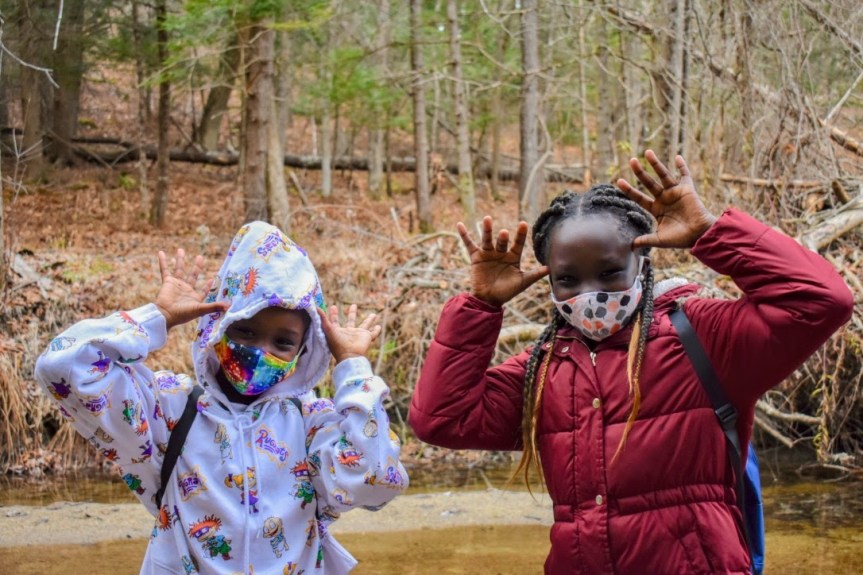
Since 2014, Westbrook Intercultural Community Center (ICC) has offered Power School afterschool and summer learning programs to hundreds of children in Southern Maine. After taking advantage of the 21st Century Community Learning Centers (CCLC) program through the U.S. Department of Education they were able to stabilize funding and improve efforts in a way they never thought possible. 

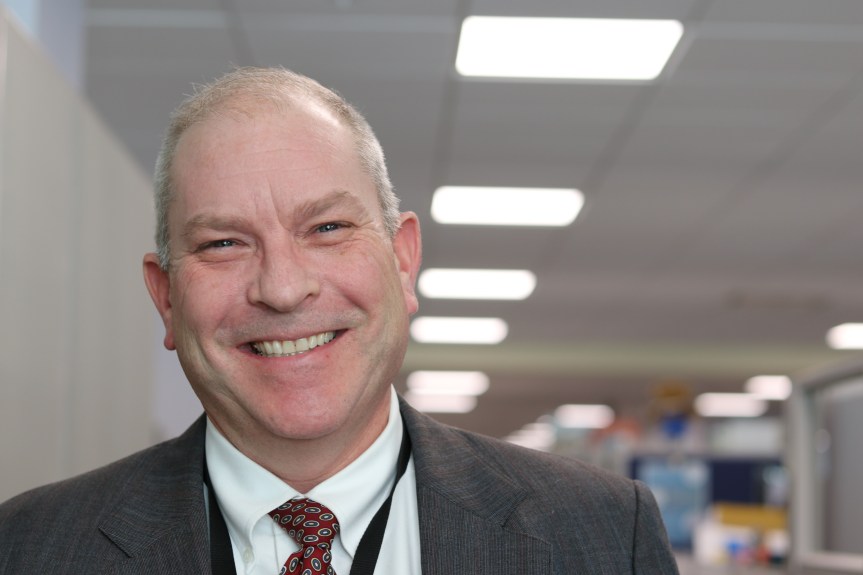
“The 21st Century grant has been huge for us,” said Chris Feely, 21st CCLC Program Director at ICC. “We had previously been living grant to grant, so to speak.” The consistent funding and professional support enabled the Westbrook Intercultural Community Center to expand their staff with qualified individuals, coordinate programming efforts with the local middle school, and cement themselves as a stable resource in the community. From there, Chris says building those important community connections has been the critical component to allowing them to spread awareness and appreciation for the work they are doing in the Southern Maine area. 

“We have had over 50 students join the afterschool program this fall,” said Chris. “Our outreach has been so successful that, for the first time ever, we have had to create a waiting list for registered students to enter the program.”  

Students learn about their program through word of mouth, which is often within local immigrant communities in the area. The Center also engages in purposeful and coordinated outreach with the Westbrook School Department.  

“Specifically, we work with the middle school to identify low-performing students, and then make phone calls directly to parents and guardians promoting our program,” explained Chris.  

Regular communication and twice-a-month meetings with school and district administrators Principal Laurie Wood and Superintendent Peter Lancia ensure that updates and needs that support both the program as a whole and for individual students are discussed on a regular basis.  

“Central to our collaboration is promoting equity among students, as most of our students are immigrant or first-generation Americans and low-income,” added Chris. “We work with Amanda Atkinson-Lewis, the Equity Resources Coordinator, on identifying ways to support students and have developed a strong relationship with the School Nutrition Director, Mary Emerson, to secure healthy and diverse snacks for our students every day after school.” 

Operating During the Pandemic: 

Chris recounts that their year-long remote program which took place at the height of the COVID-19 Pandemic from April 2020- to June 2021 had some wonderful highlights and enabled them to accessibly reach many new students.  

“Kids could log on every day after school, participate in a brief lesson, and take their time getting homework help in virtual breakout rooms,” said Chris. “The need for academic as well as emotional support became clear, as many students opened up to teachers or would stay to chat after they had completed their homework. We felt closer to our students than ever before.” 

While this was a silver lining to the new way the Center had to operate, like many schools and afterschool programs, they came to understand that remote learning did not fit everyone’s strengths or needs and morphed their program to a hybrid model.  

“Our hybrid summer program experienced much larger attendance on in-person days, and I think that speaks to the innate need for kids to run around, socialize, and interact,” added Chris. 

Although keeping the Center successful has been a lot of hard work, especially with all of the changes that have come as a result of the pandemic, the Intercultural Community Center team strives to make a difference in the lives of students in their community. When asked what the best thing is about working with the students he serves, here is what Chris had to say:  

“Far and away, it’s the moments when you see that you’ve made a positive impact on a child. It makes all the planning and day-to-day tumult worth it– when a single mother tells us we’ve saved her daughter’s academic performance after they could no longer afford to pay her tutor; or when a 10-year-old girl who, a month ago, escaped threats on her life in Kabul, is seen laughing with friends and tells us that she loves Power School.” 
Maine Kids COVID-19 Vaccination Video Contest

With authorization of the Pfizer COVID-19 vaccine for children ages 5 to 11, the Maine Department of Health and Human Services (DHHS), in partnership with the Maine Department of Education (DOE), is sponsoring a competition for videos made by and featuring Maine children encouraging other children to get vaccinated.

Videos can include:

  • Messages children or youth ages 5 to 17 believe will be effective in encouraging other children or youth along with their parents to get a COVID-19 vaccine.
  • Original music or humor
  • Information on the vaccine’s safety and efficacy
  • Discussions of the impact of not getting vaccinated

Information that participants can use in developing these videos can be found at on the US CDC website.

Children can make these videos on their own or as part of a school activity. They can choose whether or not to include their school name.

To enter, contestants must complete the online entry form. Once the form is submitted, contestants will receive an email with instructions for submitting their video.

To be considered videos must be:

  • 30 seconds in length
  • Shot in portrait mode on a smart phone
  • Video file must not exceed 32MB

The deadline for submission is 6pm on November 22. 

The winners will be announced on December 1, 2021. The selection committee includes the Commissioners of Maine DHHS and DOE, and their communications teams.

The selection criteria will include:

  • originality and clarity of the message
  • consistency with public health information on youth vaccination
  • potential to reach groups that may be hesitant to be vaccinated

Three winners will be selected. The prize will be the use of the videos by Maine Center for Disease Control and Prevention (CDC) on television via press conferences and/or PSAs and social media in promoting vaccination.

Additionally, the school that the winners attend will receive a cash prize to be used for:

  • supplementing school meals with healthy treats;
  • purchasing playground, classroom, gym, sports or music equipment; enhancing a school fun day; or
  • supporting a school field trip for all students.

Other ideas from the winners will be considered as well. If the winners attend different schools, then the prize will be pro-rated for those schools.

If the participants are home schooled, they may designate a public facing non-profit serving all children in the area receive the prize.

Prize amounts will be:

  • $50,000 for the first-place winner
  • $25,000 for the second-place winner
  • $10,000 for the third-place winner

Winners will need to have a consent form signed by parents that allows:

  1. use of the child’s intellectual property
  2. permission to use an image of the child

Good Luck!

Work Group to Meet on CTE Opportunities Tuesday, Nov. 2

On Tuesday November 2, 2021 from 8:00-10:00 am the Work Force Group for LD 313 will hold its first meeting hosted by the Department of Education.

LD 313 was passed in the 130th legislature and is focused on several topics regarding Career and Technical Education. If you’d wish to join as an attendee and listen to the discussion, you can use the following link. Link to join Webinar: https://mainestate.zoom.us/j/87137119084

If you have any comments on the discussion, you can send email them to; cte.doe@maine.gov

U.S. DOE School Ambassador Fellowship Application Open

The application window for the 2022-2023 cohort of U.S. Department of Education’s School Ambassador Fellowship opens Friday, October 15, 2021. The application portal will be open for application submissions through Friday, January 14, 2022.

Founded on the principles of partnership, collaboration and cooperation between the Federal Government and school-based educators, the U.S. Department of Education designed the School Ambassador Fellowship program to enable outstanding teachers, administrators, and other school leaders, such as school counselors, psychologists, social workers, and librarians to bring their school and classroom expertise to the U.S. Department of Education and to expand their knowledge of the national dialogue about education.

The School Ambassador Fellowship offers two separate 9-month tracks: full-time and part-time. The full-time appointment is based at the Department of Education Headquarters in Washington, DC and requires Fellows to relocate to the Washington, DC area for their Fellowship experience. The part-time fellowship does not require relocation allows educators to maintain their regular school responsibilities in their home communities, while also participating in the School Ambassador Fellowship experience.

To be eligible for the School Ambassador Fellowship, participants must:

  • Be a U.S. Citizen or permanent resident.
  • Currently be a teacher, administrator, counselor, social worker, or other school staff member (and anticipate being employed in this role during the 2022 – 2023 school year).
  • Be employed by a traditional public, charter, private, virtual, military (DoDEA), or tribal (BIE) school that serves any grade, preschool through twelfth.
  • Have at least five years of experience in his/her role, up to and including the current school year.
  • Have daily interaction with students and/or educators in his/her school/district role.

The School Ambassador Fellowship is a professional learning community designed to improve educational outcomes for students by leveraging the expertise of school-based practitioners in the creation, evaluation, and dissemination of information around national education initiatives.

Ideal candidates for this program are educators from public, charter, independent, magnet, parochial schools, etc. who have made significant contributions to student learning and culture, can effectively communicate to a variety of internal and external education stakeholders, and can promote excellence in education through their collaboration and leadership capabilities.

Applications for the 2022-2023 cohort of the School Ambassador Fellowship applications are open through 11:59pm EST on January 14, 2022. Please visit the Applicant Information page and sign-up for updates to stay in contact with the program.

For more information on how the Fellowship works, please see the Program Overview.

Resources for National American Indian Heritage Month

November is National American Indian Heritage Month, which celebrates and recognizes the accomplishments of the peoples who were the original inhabitants, explorers, and settlers of the United States.

“National American Indian Heritage Month” had its origins in 1986 when Congress passed Pub. L. 99-471 which authorized and requested the President to proclaim the week of November 23-30, 1986 as “American Indian Week.” As directed by Congress, President Reagan issued Presidential Proclamation 5577 in November 1986 proclaiming the first American Indian Week.

Both law and proclamation recognized the American Indians as the first inhabitants of the lands that now constitute the United States as well as making mention of their contributions to American society. Many of the foods we eat and the medicines and remedies we use were introduced by Indians and more than one highway follows an Indian trail. Indians make contributions in every area of endeavor and American life, and our literature and all our arts draw upon Indian themes and wisdom. Countless American Indians have served in our Armed Forces and have fought valiantly for our country.

Check out the following resources for teaching Native American Indian Heritage Month.

Get to Know the Maine DOE Team: Meet Jonathan Shapiro

Maine DOE team member Jonathan Shapiro is being highlighted this week as part of the Get to Know the Maine DOE Team Campaign. Learn a little more about Jonathan in the question and answer below.

What are your roles with DOE?

I am the Director of the Maine School Safety Center (MSSC).

What do you like best about your job?

I enjoy working with a dedicated, motivated, capable, team of experts in all things concerning school safety.  I also enjoy being in a position that has such a meaningful mission – helping schools to keep their students, staff, and visitors safe!!

How or why did you decide on this career?

I have dedicated my life’s work to serving others and to ensuring their safety to the best of my ability.  This current role is an extension of that work and I can think nothing more important than keeping our schools and students safe – after all, the MSSC moto is Supporting Schools – Protecting our Future!

What do you like to do outside of work for fun?

I enjoy working with my hands – fixing or creating something that can bring joy or be put to good use is rewarding to me and to the recipient 😉

The 11th Annual Maine PBIS Conference 2021

Engage with educators throughout the state to promote positive, predictable, equitable, and effective learning environments for all!

November 5th, 2021
VIRTUAL and FREE!
9am – 3pm
Please register for this event (Connection information will be sent to your email after you register)

AGENDA:

  • 9:00 AM Welcome
  • 9:30 AM Keynote Address “Sustaining PBIS by Putting Equity at the Center of Our Work” – Kent McIntosh,  PhD – Philip H. Knight Chair of Special Education at the University of Oregon, Director of Educational and Community Supports, Co-Director of the Center on Positive Behavioral Interventions and Supports, Lead of the Center’s Equity Workgroup, Founding member of the PBIS-SCP Canada Network, Member of the Board of Directors of the Association for Positive Behavior Support
  • 10:45 Break
  • 11:00 AM Keynote Follow-up through Facilitated and Interactive Discussion Groups
  • 11:30 Lunch
  • 1:00 PM Keynote Address: “Integration is Key to Doing Less, Better: Engaging a Whole Child Approach in Schools” – Sandra M. Chafouleas, PhD, NCSP – Distinguished Professor in the Neag School of Education at the University of Connecticut, Directs the UConn Collaboratory on School and Child Health (CSCH), Authors a Psychology Today blog on promoting student well-being

Please contact Courtney Angelosante (courtney.pacholski@maine.edu) with any questions!

Training of the Trainer (TOT) in Suicide Prevention for Schools

NAMI Maine, a training contractor for the Maine Suicide Prevention Program, is offering a Training of the Trainer (TOT) in-person, half-day training on November 16 in Westbrook.

This training prepares participants to deliver a facilitated 60-90 minute suicide prevention awareness session for co-workers and/or community members. The awareness session is required by state law for all school personnel. By attending the Training of the Trainer (TOT) your school administrative unit will be equipped to provide these trainings as needed when new staff are brought in and when previously trained staff is in need of a refresher. Ready-to-use packaged materials will be provided.

Prerequisite: Completed Suicide Prevention Gatekeeper Training.

For more information and registration click here.

Partnerships and Free Professional Development to Promote Study of French Language and Culture

The Maine Department of Education has partnered with the Cultural Services of the French Consulate in Boston through a Memorandum of Understanding with the Académie de Nantes to promote French language and cultural programs in the Maine schools, including collaborative projects between schools in France and in Maine. See more information here and contact April Perkins, World Languages & ESOL/Bilingual Programs Specialist, at april.perkins@maine.gov with any questions.

We are also excited to share a few exciting professional learning opportunities provided by the Cultural Services of the French Consulate in Boston and the Maine chapter of the American Association of Teachers of French (AATF) throughout November.

11.4.21 at 3pm: Virtual Workshop – Incorporating Un village français into the French curriculum

Presenter: Andréa Javel, Distinguished Senior Lecturer of French, Boston College

Description: We will explore the Second World War in occupied France through the ground-breaking series, Un village français. Participants gain insight into key events during that war, from a French perspective. The series provides an unvarnished view of daily life during the war, the early days of the Resistance, and the Shoah. The workshop will include course materials and suggestions for integrating this series into a high school or college foreign language course, as well as for promoting critical thinking about world events. We will discuss underlying research that makes a series an excellent way to build intermediate-level proficiency.

Register here.

11.18.21 at 3pm: Virtual Workshop – Bringing about an Awareness of Social Justice in the Foreign Language Classroom

Presenter: Andréa Javel, Distinguished Senior Lecturer of French, Boston College

Description: Social and ecological justice are a source of interest for many students of French. Promoting a just society by challenging injustice and valuing diversity is one of the key tenets of teaching for social justice. We will explore specific ways to develop equity, compassion, and empathy in the foreign language classroom, though anecdotes and authentic testimonies of French-speakers from throughout the francophone world. We will touch upon the notions of stereotypes and racism through first-person narratives and cinematic examples. We will discuss ways of encouraging critical thinking about one’s own culture and francophone cultures worldwide.

Register here.

11.30.21 from 9am-4pm: In-Person Workshop – Développer les compétences orales en classe de FLE

Location: University of Southern Maine, Portland. Lunch will be provided.

Presenter: Pierre Yves-Roux, Formateur indépendant. Anciennement responsable de l’unité expertise et projets au Centre International d’Etudes Pédagogique.

Objectif général : doter les participants de la réflexion et d’outils devant leur permettre de repenser et de diversifier les périodes notamment consacrées à l’oral, de la compréhension de documents sonores à la production d’énoncés.

Justificatif de la thématique : les activités orales sont essentielles dans le cadre actuel de l’enseignement-apprentissage d’une langue étrangère, mais les enseignants sont parfois confrontés à des difficultés aussi multiples que divers dans la préparation et/ou l’exécution de ces activités. L’intervention se propose de partir des problèmes rencontrés dans les classes pour tenter d’y apporter des réponses concrètes et réalistes sous la forme de principes illustrés par des activités variées, motivantes, parfois innovantes, qui s’inscrivent dans les programmes et qui ont pu se montrer efficaces. Même si elles ne sont pas toute commentées, plus d’une centaine d’activités seront mises à disposition des participants.

Une partie de l’intervention sera consacrée à des ateliers durant lesquels les participants pourront échanger et mutualiser leurs expériences mais aussi élaborer du matériel pédagogique contextualisé.

Contact Noah Ouellette (noah.ouellette@diplomatie.gouv.fr) or Nathalie Gorey (goreyn@link75.org) to register.

To stay up-to-date on professional learning offerings for World Languages teachers, subscribe to the weekly newsletter Language Educators News or contact April Perkins. In November, there will be a virtual office hour for World Languages teachers on 11.10.21 at 3pm, as well as a training on the Seal of Biliteracy on 11.16.21 at 3pm.


What I Did with My Summer: Falmouth Social Studies Teacher Gains Perspective on School Desegregation

“I always think that the interactions with other teachers from different parts of the country are fascinating,” said Maine educator Keith Magnuson after virtually attending a National Endowment for the Humanities (NEH) workshop this past summer. “We are all experiencing some of the same basic trends in teaching, but they play out in such different ways depending on your exact location.”

Magnuson teaches social studies at Falmouth High School and this past summer he decided to take a week-long virtual workshop entitled, “The Long Road From Brown: School Desegregation in Virginia”. Hosted by professors of history and education from Old Dominion University through NEH, there were about 30 teachers from around the country that participated in the workshop along with Magnuson.

He became aware of the workshop through Maine Department of Education (DOE) Social Studies Specialist Joe Schmidt’s popular Social Studies Listserv. “Each year I try to get information out through my listserv about relevant programming, and the NEH runs these institutes each year,” said Schmidt. “Each summer there is a different slate of topics/locations.”

This particular workshop unveiled the unknown stories of school desegregation in the State of Virginia and throughout the nation after the US Supreme Court decision Brown v. Board of Education. It highlighted the role African Americans played in bringing about Brown, the state’s determined resistance, the processes that led to initial and then token school desegregation, the eventual integration of public education, and the slow decline of school integration in recent decades.

“We talked a lot about covering difficult or controversial topics in high schools,” explained Magnuson. He also recounted that there were a lot of interesting details that came from former VA high school students, in schools during that era, who spoke, and that workshop participants also got to see many primary source photographs and documents which also provided a lot of interesting information.

“I love participating in workshops like this,” he said. “Especially when they pull in such a diverse group of teachers with a variety of teaching positions and from schools scattered around the country,” adding that this workshop was on an interesting topic relevant to our times.

“I am going to be much more capable of talking in detail about the Brown decision and the implementation of it in class,” said Magnuson, adding that, “every teacher should take advantage of some of the many opportunities we have to broaden our knowledge and perspective.”

To learn more about NEH Workshops visit https://www.neh.gov/divisions/education/summer-programs or https://nehforall.org/programs/summer-programs-for-school-teachers.

To join Joe’s Social Studies Listserv click here. For more information and questions about social studies resources for Maine educators, contact Joe at joe.schmidt@maine.gov.