Nominations Open for Maine School Nurse of the Year

The Maine Association of School Nurses (MASN) has announced that nominations are open for the 2025-2026 Maine School Nurse of the Year award. The application deadline is May 16, 2025.

This award recognizes an outstanding school nurse for their contributions to the school and community they serve. Nominees must demonstrate leadership in six areas of practice: care provision, program management, health education, professional development, community involvement, and research.

The individual selected will receive a $500 cash award and will be recognized at the next professional conference for school nurses in Maine.

To nominate someone for Maine School Nurse of the Year, please put together a nomination packet, including:

  • The completed nomination form (found on the MASN website, linked below).
  • Three to five reference letters—with at least one from an administrator.
  • Curriculum vitae/resume of the nominee.
  • A written report addressing the six content areas.

You may submit the original and three copies of the nomination packet by May 16, 2025, to Erin Taylor, the Maine School Nurse of the Year Coordinator, at etaylor@capeelizabethschools.org. (You may also email Erin to ask for a physical mailing address. For more information about the criteria and how to start the nomination process, check out the MASN website.

If you know a school nurse who inspires you with their dedication to the school community, please consider nominating them for this prestigious award!

For further information, please contact Erin Taylor at etaylor@capeelizabethschools.org

Maine Middle Schools Invited to Join Teens to Trails 2025 Life Happens Outside® Challenge, May 9-16

The Teens to Trails Life Happens Outside® Challenge is back for 2025! This week-long challenge encourages Maine middle school communities to spend as much time as possible outdoors between Friday, May 9, at noon and the following Friday, May 16, at noon. The timing for this challenge couldn’t be better, as Maine physical education teachers gear up for National Physical Fitness and Sports Month in May.

Winners of the challenge will be calculated based on total minutes spent outdoors (accumulated by the entire middle school community), divided by the number of students at the school. The goal is to equalize both large and small schools’ chances of winning. Participating schools must select a “Challenge Champion”, who will coordinate the challenge, collect submissions, and report results to Teens to Trails by May 20, 2025, at 5 p.m. Winners will be announced on Friday, May 23. The top three schools will each be awarded $1,000.

Students and staff at Maine middle schools (grades 5-8) may contribute outdoor minutes to this challenge. Schools of all grades are encouraged and welcome to participate; however, only minutes contributed by grade 5-8 students and staff will count toward the actual challenge.

Additional guidelines are as follows:

  • Activities may include recess, picnics, outdoor lunches, sports practices, camping out, and much more!
  • Outdoor time can take place before, during, and after school—or at home with friends and family.
  • During the challenge week, students and staff will track and submit their activity.
  • Reporting of outdoor hours is done using the honor system.

To participate in the challenge, please register using the Life Happens Outside® Challenge registration form. Once registered, schools will receive additional information and promotional materials for the challenge.

For further questions, please contact Teens to Trails at info@teenstotrails.org, or call 207-725-0800.

Teens to Trails is a 501(c)(3) charitable nonprofit dedicated to connecting teenage students to life-changing outdoor experiences with a vision that all teens have the opportunity to enjoy the outdoors together.

Maine Association of School Libraries Announces Annual Awards

The Maine Association of School Libraries (MASL) is celebrating two educators: Maranacook Community High School Principal Michele Laforge, who has been awarded the 2025 MASL Administrator of the Year Award, and Dirigo Elementary School Librarian Cindy Petherbridge, who has been awarded the 2025 MASL Walter J. Taranko School Librarian of the Year Award.

The MASL School Administrator Award honors administrators who, through individual leadership and sustained effort, have made worthy contributions to the operations of effective school library media services within the educational program. The Walter J. Taranko School Librarian Award, named for the former Maine State consultant for school libraries, honors certified school librarians who have made a significant contribution to the profession.

At school-wide assemblies on Thursday, March 27, and Friday, March 28, the awardees were each surprised by an awards presentation. Both awards include a personalized plaque and $500 for their school libraries.

Michele Laforge
Maranacook Community High School Principal
2025 MASL Administrator of the Year Award

Michele Laforge was nominated for this award by Maranacook’s Librarian, Liz Guillemette, and Literacy Interventionist, Juliet Tinckham. Guillemette and Tinckham noted in their nomination that Laforge is an avid reader who talks about books to staff and students all the time, supports the Writing Center program in the library, and works tirelessly to nurture a culture of literacy in the school. They also described her as “a champion of libraries and librarians” who “creates opportunities for the library to be utilized and recognized as a hub for reading, information, and community.”

Pictured from left to right: Juliet Tinckham, Michele Laforge, and Liz Guillemette at an all-school assembly on March 27, 2025, where MASL past-President Heather Perkinson surprised Laforge with the award.

Cindy Petherbridge
Dirigo Elementary School Librarian
2025 MASL Walter J. Taranko School Librarian of the Year Award

The impressive nomination of Cindy Petherbridge submitted to MASL by Dirigo Principal Dr. Charlie Swan included testimonials from colleagues, parents, and students. Teachers describe Petherbridge as a “ray of sunshine,” whose “unwavering dedication to her students and school” is unmatched. A parent noted that “she knows all the kids by name, is always helpful and kind, and makes every child feel welcome” and “has created a safe, nurturing environment where children can thrive.” Swan described the many programs that the “immensely passionate, creative, and caring” librarian oversees, including book fairs, field trips to the town library, technology instruction, mentoring colleagues, and aligning books with the new reading program. He said she is a “true inspiration for the love of reading” and makes a “difference in the academic and social development of our students.” Swan explained that during the Covid pandemic, Petherbridge even volunteered to teach 4th grade remotely, because she is “always all in on doing what is best for kids in our school.”

The entire student body at the pre-K to grade 5 school, along with parents and staff in attendance, were so thrilled for their librarian that they gave her a standing ovation when MASL past-President Heather Perkinson surprised Petherbridge with the award at the assembly on March 28, 2025.

Pictured from left to right: RSU 56 Superintendent Pamela Doyen, Dirigo Elementary School Librarian Cindy Petherbridge, and Principal Charlie Swan gather for a group picture after the award presentation.

MASL’s mission is to provide connections for creating and advancing effective school library programs through professional development, advocacy, and community-building. For more information about MASL’s awards and how to nominate educators for them, please visit the MASL website and choose the Awards and Scholarships tab.

Maine DOE Hosts Inaugural School Safety & Transportation Conference

From March 10-12, 2025, the Maine Department of Education (DOE) Maine School Safety Center (MSSC) hosted the first annual Maine School Safety & Transportation Conference at the Samoset Resort in Rockport. This three-day event brought together transportation administrators, district and building administrators, law enforcement, school health teams, and safety experts to explore effective strategies for maintaining safe and supportive learning environments.

The conference began with an evening networking event, fostering connections among participants from across the state. The following morning, a general session led by the MSSC team set the stage for an in-depth exploration of school safety and transportation topics.

MSSC Assistant Director Jeffery Upton welcomed attendees, emphasizing the significance of hosting a conference tailored to Maine’s unique demographics and geography. Upton highlighted the need for comprehensive, localized strategies that address the state’s distinct challenges.

Following Upton, Bridgette Gilbert, the Maine DOE School Emergency Management Coordinator, stressed the value of tabletop exercises—discussion-based activities that simulate emergency scenarios in a low-stress environment. She provided participants with materials and scenarios to bring back to their schools, helping to refine emergency response plans and identify areas for improvement.

Michelle Legare, Maine DOE School Safety and Security Coordinator, highlighted the importance of law enforcement involvement and discussed considerations before, during, and after an incident.

Maine DOE Transportation Training Coordinator Cheryl Brackett then addressed the critical role of transportation safety, noting the impact of natural and human-made disasters on school transportation systems. She underscored the importance of equipping all school staff with emergency preparedness training.

Maine DOE Restorative Practices Coordinator Stacey Barlow also provided a brief presentation to discuss the importance of using restorative practices following emergencies, focusing on building and maintaining relationships among students and staff.

Audience members contributed valuable insights during the general session, such as the benefit of conducting unscheduled fire or lockdown drills to ensure genuine preparedness. Additionally, the complexities of student cell phone use during emergencies and the need for accurate, timely communication with parents were discussed.

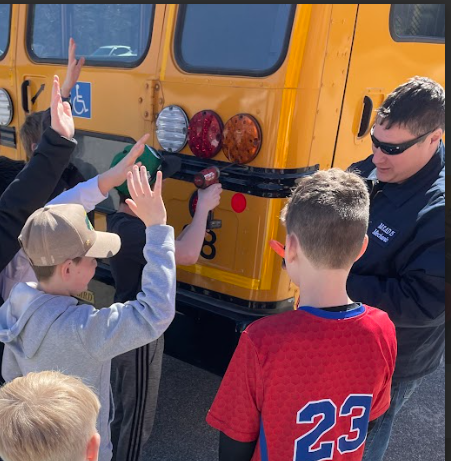
Throughout the remainder of the conference, participants engaged in breakout sessions hosted by partners across Maine and the nation on topics like Behavioral Threat Assessment Management (BTAM), exploitation prevention for students, restorative practices, bomb threat assessment, drug identification and trends, FERPA compliance, bus evacuation procedures, dangerous student behavior prevention and intervention law, Security At First Entry (SAFE) Assessment, emotional intelligence, specialized sessions for school nurses, Transportation Director 101, CDL information session, vaping awareness, and wheelchair securement.

Participants also had the opportunity to attend a Drug and Alcohol Supervisor Certification course held by the Maine Motor Transport Association, enabling them to leave the conference certified to identify the physical, behavioral, speech, and performance indicators of probable alcohol misuse and use of controlled substances.

One standout session highlighted a year-long initiative by the transportation team at MSAD 6, Bonny Eagle. That team has partnered with Maine DOE Social Emotional Intelligence Consultant Kellie D. Bailey to train staff and bus drivers in emotional intelligence, mindfulness practices, and understanding brain science to better address challenging youth behavior.

The initiative aims to cultivate self-awareness and self-regulation and to develop an understanding of these concepts to help with student relationships and student behavior.

“Safety on the bus begins with the person behind the wheel. Having drivers who are best equipped to manage their own responses to the multiple environmental, behavioral, and emotional factors that they encounter daily is essential, as we strive to continue to elevate our [team] and our industry as a whole,” said MSAD 6 Assistant Director Mitzii Smith. “We are excited to be blazing a new trail with this work, as we are the only Transportation Department in the State of Maine to have initiated this collaboration.” 

Right to left: Sherri Zulick, MSAD 6 Transportation Trainer; Kellie D. Bailey Maine DOE Consultant; Mitzii Smith, MSAD 6 Transportation Assistant Director; Sarah Marean, MSAD 6 Transportation Director

Check out a video clip of MSAD 6 bus drivers talking about the project.

Attendees left the conference equipped with new tools, strategies, and connections to strengthen school safety and transportation practices statewide. The Maine School Safety & Transportation Conference reaffirmed the collective commitment to creating secure and supportive environments for Maine’s students.

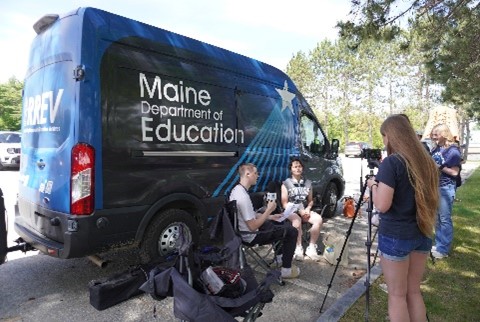
Here is a video of transportation directors and bus drivers being interviewed by Nokomis High School students during the conference, using the Maine DOE Mobile Learning Van.

MSSC plans to host a School Safety & Transportation Conference annually in the late winter/spring.

Anyone working with school safety is encouraged to check out MSSC’s eight-week School Safety Specialist Program. Provided at no cost to Maine schools, the courses are available asynchronously through Eastern Maine Community College and the Federal Emergency Management Agency.

To learn more about the MSSC and its services, please visit the MSSC website or reach out directly.  

The Maine School Safety Center would like to thank its many partners who had a hand in helping to host the Maine Safety & Transportation Conference:

  • Maine Emergency Management Agency
  • U.S. Secret Service National Threat Assessment Center
  • Cybersecurity and Infrastructure Security Agency
  • Maine State Police
  • Department of Homeland Security – Homeland Security Investigations
  • FBI Joint Terrorism Task Forces
  • Husson University
  • Norway Police Department
  • Maine Center for Disease Control and Prevention
  • MaineGeneral Health
  • Maine Education Association
  • Maine School Superintendents Association
  • Maine Information and Analysis Center
  • Maine Bureau of Motor Vehicles
  • Maine Motor Transport Association
  • Drummond Woodsum
  • OUT Maine
  • Strategies for Youth
  • Maine DOE Office of Special Services and Inclusive Education
  • Maine DOE Office of School and Student Supports
  • Maine DOE Coordinated School Health

Register Now for Positive Behavioral Interventions and Supports (PBIS) Tier 1 Training

Maine Positive Behavioral Interventions and Supports (PBIS) is a partnership between the Maine Department of Education (DOE) and the University of Maine System. Maine PBIS offers a three-year intensive training and coaching model to support districts and schools in implementing Tier 1 PBIS with fidelity. Maine PBIS is accepting applications for a new PBIS Cohort Training. Applications are due by Tuesday, April 1, 2025.

PBIS is “an evidence-based, tiered framework for supporting students’ behavioral, academic, social, emotional, and mental health that creates safe, positive, equitable schools, where every student can feel valued, connected to the school community, and supported by caring adults.” (Center on PBIS, 2025).

What is PBIS Cohort Training?

  • Cohort Training: Involves a group of schools or districts working together through a structured training and coaching process. 
  • Focus: To implement PBIS effectively and sustainably, highlighting:
    • Data-driven decision-making, using data to monitor implementation and guide interventions. 
    • Systems and practices, establishing clear expectations, consistent procedures, and effective interventions. 
    • Training and coaching, providing ongoing support and professional development to school staff. 
    • Fidelity, ensuring that PBIS is implemented as intended. 
  • Benefits:

Key Features of PBIS Cohort Training

  • Multi-year approach: Often spans several years to allow for sustained implementation and support. 
  • Team-based: School teams participate in the training and coaching process. 
  • Tiered approach: PBIS is a tiered framework, with Tier 1 being universal supports for all students; Tier 2 being for students at risk; and Tier 3 being for students with intensive needs. 
  • Data-driven: PBIS relies on data to monitor implementation and make decisions. 
  • Focus on prevention: PBIS emphasizes preventing problems before they occur. 
  • Emphasis on positive behaviors: PBIS focuses on teaching and reinforcing positive behaviors. 
  • Collaboration: PBIS training often involves collaboration among schools, districts, and regional or state-level organizations. 

You can learn more about Maine PBIS and the training model by exploring the following resources:

For further questions and information, please contact Karen Robbie at karen.robbie@maine.edu (Maine PBIS Lead Trainer); Courtney Angelosante at courtney.angelosante@maine.edu (Maine PBIS Lead Trainer); or Tracy Whitlock at Tracy.W.Whitlock@maine.gov (Maine DOE Special Projects Coordinator).

Report on Maine Career Exploration Program Features Extended Learning Opportunities Student Stories

Since its launch in the fall of 2022, the Maine Career Exploration Program (MCEP) has connected more than 6,000 participants with paid work experiences. With funding from the Maine Jobs and Recovery Plan, this program offers opportunities for Maine’s youth, ages 16-24.

To learn more about the MCEP and Extended Learning Opportunities (ELO) in Maine, check out the Maine Career Exploration Program Final Evaluation Report.

These are a couple of student highlights from the report.

Ryan | From feeling uncertain and worried to confident and clear

Oceanside High School, Knox County – Work Experience Placement: Blake Vets

When the principal offered Ryan, then a rising senior at Oceanside High School, the choice of a fourth-period study hall or an internship class, Ryan picked the class.

“I asked him about it,” Ryan recalled, “And he told me a little bit about it, and I was like, ‘I want to do this. This sounds really cool.’ I was worried, because it was my senior year, and I had no idea what I was going to do.”

Now, he knows.

The class led Ryan to Blake Vets in Northport, where he found that his natural affinity for animals was a key asset.

“I have a big connection to animals,” he explained. “I always have. I love all types of animals. I just feel like a strength that I brought is my compassion and care when it comes to pets and people, as well. People are very happy seeing their pets warm up to me.”

Ryan’s love of pets also created challenges. It made him care — a lot — about doing things right during his internship at the practice. That created pressure when things went wrong.

“A skill that I learned was how to manage high-stress scenarios,” Ryan said when explaining why one picture he took showed a dog upside down on a table. The dog in the photo had woken up before surgery began and had to be anesthetized again. “There are so many things that can go wrong during the preparation for surgery.”

Ryan recalled when he witnessed a pet reacting with fear during a necessary procedure.

“I had to remind myself that this is helping the animal, even if they’re scared and they’re angry. Reminding myself, and the people that were around me, helped me get through this.”

The professionals at the practice encouraged him, as he learned about the realities of healing pets.

“Having a doctor who has been a veterinarian for years and years tell you that she sees that you can also become one — it meant a lot to me,” he said.

Ryan has been accepted into the University of Maine at Augusta veterinary technician program. The vets he interned with assured him that, if he applies for a job after he graduates, they’ll give him preferential consideration. He has also lined up work for the summer at an animal shelter.

“With the internship and with Molly [my ELO Coordinator] and with all the connections that I’ve made, it has just further cemented the fact that I want to be this, even after seeing the good and the bad,” Ryan said.

His confidence blossomed, too. When asked to identify the most important lesson he took from his ELO placement, Ryan replied, “How to speak for myself.”

He explained that before this experience, “I was just kind of like, ‘I’m fine. I’m doing good. I’m okay with everything,’ even if I wasn’t entirely sure I was. I’m a lot more independent, and I say what I want and how I feel a lot more now.”

Ryan added: “There are so many things that I also want to talk about on top of this – like how I’ve truly opened up and become a more social person during this period of this year. At the beginning of the year, I was very reserved. I didn’t say much about me; I didn’t talk that much. I’ve really started to open up and show who I am as a person, and those are a couple things that I’ve just learned throughout the year.”

The internship and the class, he said, helped him find his way.

“When it comes to normal classes, it’s like, you learn something, you remember it, you do a test on it. It’s just a linear path,” Ryan said. “When it comes to ELO, it’s like, some days … if you’re not feeling it, you don’t have to do something, and if you want and you’re willing to, you can grow so much in the span of just a little bit.”

Ryan also explained: “You have to put in energy to get as much out of this as you want to. This ELO and everything, it’s a lot more oriented toward you, and the path of growth is dependent on what you decide it to be.”

“Something that I connected with and that helped me, like a resource, was just seeing the help that … these people have done to animals like this. This is a rescue cat that was found on the side of the road with a broken leg. They give her all the support and love that she needed, and she’s very happy right now. This is her reaching — I was rubbing her as much as I could through the bars. This is me starting to walk away and she tries to get more. Just seeing how lives are impacted, not just animals but people’s lives … with this really helped.” – Ryan

“This is Dr. McGill, one of the doctors who was at Blake Vets for the four or five times that I visited. She and I really connected. She told me that I have the skill that I was born with, like, to connect with animals. … She supported me as soon as she met me. She was excited to hear all about me, what I planned to do, what I wanted to do there. She listened to that, and she gave me help in doing what I wanted to do.” – Ryan


Natalie | A river of connection, communication, and growth

Yarmouth High School, Cumberland County – Work Experience Placements: Wabanaki First Nations, Royal River Conservation Trust

“The reason you start your ELO does not define your ELO,” noted Natalie. “I started this for fun to learn a language because I was bored with the Romance languages in school. Then it turned into something so much more.”

Natalie’s first ELO placement led to a river of experiences that connected the Yarmouth High School student with her heritage, transformed her into a passionate communicator, and introduced her to a bevy of community organizations that welcomed her into their work.

“I’m more naturally quiet, so it’s kind of weird to be, like, this leader, this big public figure that apparently people like to consider me now,” she said.

Recently selected by the Portland Press Herald as one of the top ten graduates to watch in the state of Maine, Natalie has been accepted at Dartmouth College.

“I know, realistically, I probably wouldn’t have gotten in without all of the stuff I’ve done, but also … It shifted my life goals,” she said of the ELO program.

“I’m a Maliseet Native American from Tobique First Nation, but I’ve lived here my whole life,” Natalie explained. “I started my ELO as a thing investigating my language and my culture with Imelda Perley, who is my mentor. … She’s an amazing person. She basically started the whole language conservation program at the University of New Brunswick [and is] just a really inspiring person.”

Perley, a Maliseet elder, met with Natalie every week.

“Having that personal connection to so many people on the reservation up in New Brunswick and having the opportunity to meet with Perley every single week is something I wouldn’t have gotten to do if I was a different person,” Natalie said. “My grandmother grew up on the reservation, but none of the rest of my family really did. Since she went to residential school, she didn’t want her oldest children to have to go to it as well, so she moved to New York. So, it’s not something that my part of the family has been really connected to in a while.”

Impressed with Natalie’s work, her ELO Coordinator talked about her during a meeting of an equity task force that included some members from YCARE, the Yarmouth Community Alliance for Racial Equity. Some of its members attended Natalie’s ELO presentation and invited her and her parents to join them. The meetings were held at the headquarters of the Royal River Conservation Trust, which eventually offered Natalie a paid internship, her second ELO.

While her first ELO connected Natalie with her Native American heritage and extended members of her own family, her second taught her how to share that indigenous knowledge and history back out, leading hikes along the Royal River with new mentors the trust introduced her to — experts in ethnobotany — and working with kids and nature.

“Luckily, it’s a situation where everyone is interested in learning,” Natalie said of the hikes she and her mentors led. “It’s not like they’re forced to be there. So, it was a very welcoming community, but it was still talking in front of people that I didn’t know, or at least, didn’t know very well. [It was] pretty much unlike anything I’ve ever done before. It was definitely a learning curve.”

Natalie already was working on one Royal River project through YCARE. That group’s effort to formally give a Penobscot name to what is locally called First Falls brought Natalie’s linguistic knowledge into play and taught her some hard lessons about bureaucracy. Although the waterfall didn’t have a legal name, applying one required buy-in from the U.S. Geological Survey, the Penobscot Nation, and the town, and the project raised historical language issues that led Natalie to seek guidance from Perley.

“The fact that simple things can be such a pain anyway — even if they don’t necessarily need to be, they find a way to be,” Natalie said with a smile. “I guess messing with bureaucracy is something I’ve had to do. That’s more of a challenge than a skill at this point. [I’m] still working on that.”

Through her work with the Royal River Conservation Trust, Natalie learned of the Royal River Alliance and got involved with its dam removal effort. She spoke about their progress at the alliance’s World Fish Migration Day at Royal River Park in May. Other activities have included being on a panel for Youth and Climate Action and participating in monthly Wabanaki youth group meetings in Freeport.

Natalie said that her Native American heritage was the most important thing she brought to the ELO program. It provided unique opportunities for growth and connection that, in turn, fostered a desire to share what she was learning.

“Having that inspiration and that history I guess makes me much more passionate about the project and the kind of stuff that I’m doing. … I think it gives me more interest in doing it than a lot of other people — more reason to, more motivation.”

Her heritage also influenced how she learned.

“I’d say I used a couple of random Google searches and a couple of books that were my grandmother’s or that people have recommended to me, but for the most part it has just been talking with people,” Natalie explained. “We have a very strong oral tradition in general, so those are kind of the biggest ways in which I’ve actually learned anything.”

When asked whether her ELO experiences have affected her future path, Natalie said, “I think this is probably the most influential thing I’ve ever done. … I would say it’s hard for me to picture what my life would be like right now if I hadn’t done it because it has been so integral to what I’ve been doing. It has changed both what I’ve been able to do in the future and what I want to do in the future because linguistics and Native American stuff is so much more important than I expected it to be. … It’s something that I really want to make a part of my future no matter what I end up doing.”

To learn more about the Maine Career Exploration Program, please reach out to Karen Morin at karen.morin@maine.gov. For more information about Extended Learning Opportunities, please reach out to Lana Sawyer at lana.sawyer@maine.gov.

Registration Open for New England Youth Identity Summit to Help Develop Student Civic Engagement

Registration is now open for the ninth annual New England Youth Identity Summit, which will be held on Saturday, April 5, 2025, on the campus of Waynflete School in Portland. This event is free to attend, with lunch included for high school students from Maine and across New England who register in advance. This full-day program will feature inspiring speakers, student-led workshops, and performances designed to foster relationships within and across communities.

With support from Educate Maine, the Summit will include an educator track with morning and afternoon workshops for educators who come with their students. Led by teachers for teachers, these workshops will explore how to develop and support cultures of civil dialogue and civic engagement in schools and communities.

Transportation for Students

Thanks to program support from M&T Bank, a limited number of transportation grants will be provided to schools in need. You may use this link to apply.

Registration Information

To register for the New England Youth Identity Summit, please visit the Summit website. For further questions, please reach out to summit@waynflete.org.

Maine DOE Launches Innovative Mobile Learning Van, Bringing Peer-to-Peer Learning Opportunities Statewide

With the help of federal grant funds and some crafty educators and students in RSU 19, the Maine Department of Education (DOE) is proud to present the Maine DOE Mobile Learning Van, designed to bring new and innovative peer-to-peer learning opportunities to schools and their communities across the state.  

The vision for this van came out of the Rethinking Responsive Education Ventures (RREV) initiative, funded by the Education Stabilization Fund through the U.S. Department of Education’s Rethink K-12 Education Models grant. The grant’s purpose was to bolster Maine educators’ innovative efforts to support their students with agile, effective, and resilient learning experiences that improve learning outcomes for all students.

With large-scale, ongoing professional learning an important component of the RREV grant, the Maine DOE introduced the idea of using a mobile unit, rather than hosting conferences and events. This unit would travel throughout the state, supporting schools and educators—especially those that experience travel and financial barriers, which can prevent access to high-quality professional learning. Additionally, this field-based, peer-to-peer learning would create opportunities for educators statewide to connect with one another.

Initially, that mobile unit—a van—arrived as an empty Ford Transit van that didn’t look much like a mobile learning office. In the true spirit of innovation—and a strong belief in public education—the Maine DOE partnered with RSU 19 to tackle the challenge of turning this vision into a reality.

RSU 19’s Director of Technology Integration Kern Kelley headed that project alongside the Maine DOE’s Office of Innovation. Kelley is an award-winning educator, passionate about authentic learning and student-led projects. He has a reputation for preparing his students for a strong post-graduation future by providing them with opportunities in school to learn about 3-D design, computer programming, robotics, and other advanced technological skills.

Kelley got to work on this van with his Nokomis High School students, who were divided into two teams. One group of student builders worked on the van’s interior build-out, installing equipment like laptops, iPads, and Chromebooks (in line with the Maine Learning Technology Initiative), as well as cameras, microphones, an audio/video mixing device, a drone, a satellite link, two monitors for presentation in or behind the van, an internal interviewing station, a ramp for accessibility, and a tent and bag chairs for small outdoor presentation possibilities.

A second group of students—a documentary team—captured the van’s transformation through a website, YouTube videos, and interviews.

Using their creativity, inventive thinking, and construction skills, these students created the final product—the Maine DOE Mobile Learning Van, affectionately known as the “Marty Mobile”, named after the original RREV Director who died suddenly in April of 2022.

Once the van was nearly complete in the spring of 2024, the Maine DOE’s RREV team traveled to 25 of the participating RREV schools to celebrate the learning that had been made possible because of RREV award funding and the educators committed to making those innovative opportunities a reality. Video footage and audio interviews from those trips are posted on the RREV webpage.

After the spring RREV tours, the RREV team returned the van to RSU 19 for a final transformation over the summer. By the start of the 2024-2025 school year, most of the finishing touches—including equipment and technology—were in place.

Since then, the Maine DOE has conducted some test outings with the van during a few RREV Learning Tours (in MSAD 28, St. George Municipal School Unit, Wayfinder Schools, MSAD 59, and the Maine Academy of Natural Sciences), as well as a SLAM (Student Leadership Ambassadors of Maine) showcase in MSAD 60.

On March 12, 2025, the van visited the Maine School Safety and Transportation Conference at the Samoset Resort in Rockport. At the event, Kelley and his students accompanied members of the Maine DOE’s Office of Innovation to showcase how the van could be used to conduct interviews and capture footage from the field.

You can see the video they created here.

Keep an eye out for upcoming Maine DOE Mobile Learning Van stops, scheduled at locations across the state! Up next: In Aroostook County, the van will stop at Limestone Community School for a Learning Tour. Then, it will be at Fort Kent Middle School for the SLAM Showcase.

You can stay up to date on future professional learning and collaboration opportunities by checking out the Maine DOE Newsroom and Event Calendar.

Nominations Open for Curriculum Leader of the Year and Instructional Coach of the Year

The Maine Curriculum Leaders Association (MCLA) has announced that nominations are now open for the Curriculum Leader of the Year (CLOY) and the Instructional Coach of the Year (ICOY). Nominations close on Monday, April 28, 2025. 

To nominate for Curriculum Leader of the Year, please send a nomination letter describing how the nominee is a champion of learning both in and outside of their school administrative unit (SAU). (Please see criteria number three on the MCLA website linked below.) You may email your nomination letter to the Curriculum Leader of the Year selection committee at director@mainecla.org. Please provide details about how the nominee’s curriculum, instruction, and assessment leadership impacts teachers and students in their SAU, as well as the nominee’s leadership activities outside of their SAU. 

To nominate for Instructional Coach of the Year, please send a nomination letter describing how the nominee is a highly-effective, student-centered instructional coach to the Instructional Coach of the Year selection committee at director@mainecla.org. Please provide details about the structure and organization of the nominee’s coaching program/practice and how it impacts student learning and the school/SAU culture and community. 

Nomination letters for both awards should be sent as a PDF or Google document; please include your email and phone number, as well as your nominee’s email and phone number.

You may visit the MCLA website for more detailed information about the criteria, nomination process, and timeline. For further information and questions, please contact MCLA at director@mainecla.org.

Resources for Celebrating the Week of the Young Child, April 5-11

The Week of the Young Child is almost here! Mark your calendars for April 5-11, 2025.

The Week of the Young Child is a national movement sponsored by the National Association for the Education of Young Children (NAEYC), promoting the importance of high-quality early learning.  This year, the week takes place from April 5 through the 11. The Maine Department of Education (DOE) Office of Teaching and Learning and the Maine Department of Health and Human Services (DHHS) Office of Child and Family Services have teamed up to recognize outstanding early childhood professionals nominated by their peers across the state.

Maine schools can also join the celebration and promote the vital work of early childhood professionals who are working in childcare programs and pre-K-grade 3 elementary classrooms by participating in Week of the Young Child daily themes.

Each day of the week will focus on a theme related to whole child development and playful learning:

  • Music Monday
  • Tasty Tuesday
  • Work Together Wednesday
  • Artsy Thursday
  • Family Friday

As Fred Rogers wisely said, “Play is often talked about as if it were a relief from serious learning. But, for children, play is serious learning. Play is really the work of childhood.”

When focusing on the whole student, ensuring the early childhood years are filled with opportunities for play fosters growth across all domains of development, including creative arts. The Week of the Young Child themes lend themselves well to encouraging playful learning to support all domains of children’s development.

For more information about how to bring the 2025 Week of the Young Child to your early childhood setting, please visit the NAEYC website.

Please be on the lookout for 2025 Outstanding Early Childhood Professional Spotlights the week of April 7 in the Maine DOE Newsroom, in the Maine DOE Update (subscribe here), and on Maine DOE social media sites (Facebook, Instagram, and LinkedIn).

For more information, please contact Maine DOE Pre-K Partnership Specialist Michelle Belanger at michelle.belanger@maine.gov.