Lincoln Elementary Special Education Classroom Leads the Way in 3D Printing

This winter, the Augusta School Department introduced 3D printing at the elementary level, thanks to a Teach with Tech grant through the Maine Department of Education (DOE).

The grant enabled the district to purchase four Bambu Lab A1 3D printers, each housed on a portable cart, designed to be moved seamlessly between classrooms. This mobility ensures that any teacher can integrate 3D printing into their curriculum, adapting it to their students’ needs and passions.

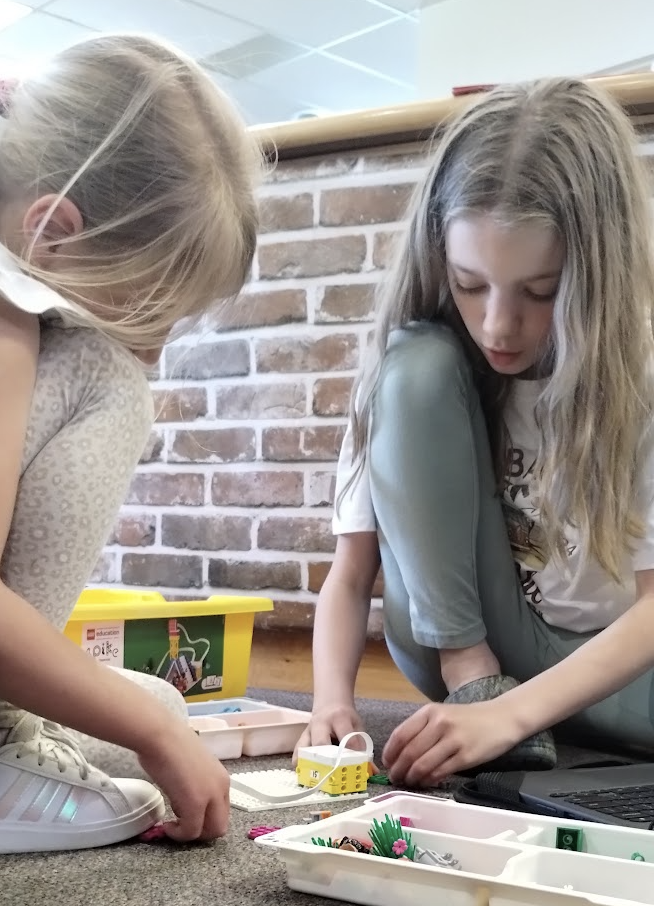
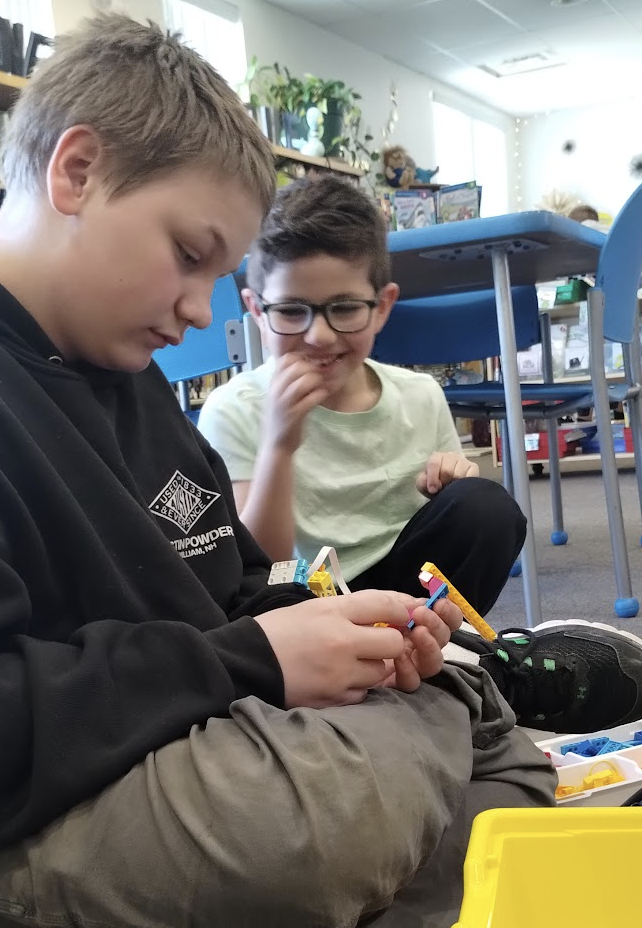
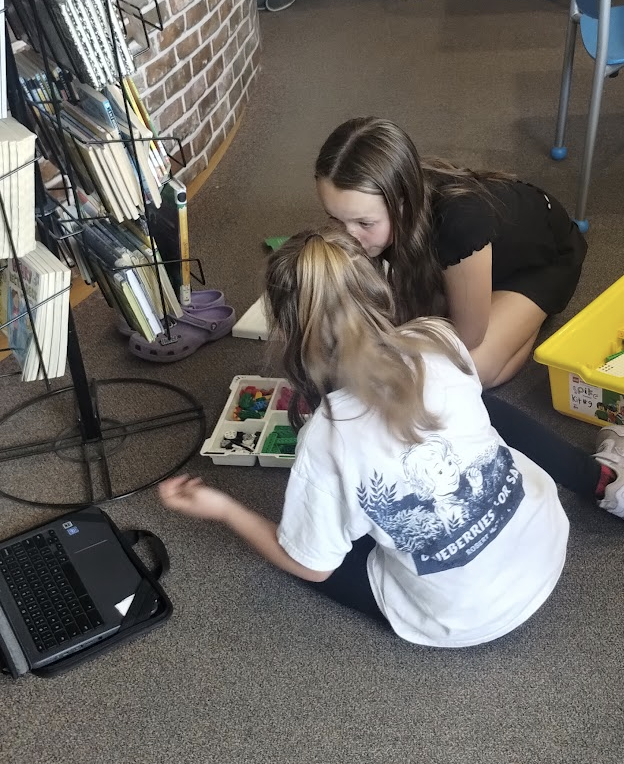
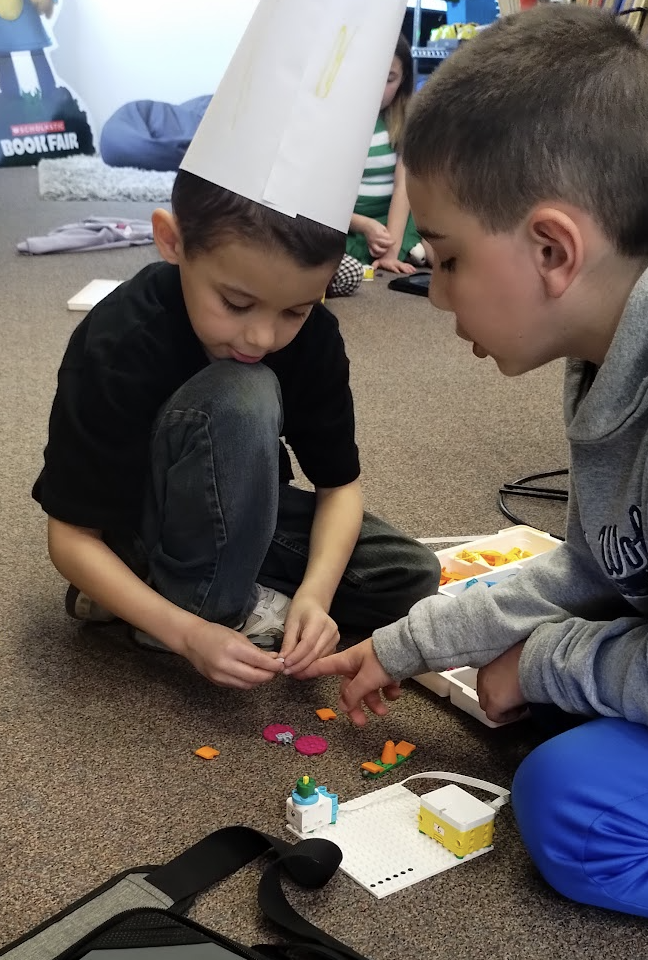
At Lincoln Elementary School in Augusta, special education teacher Mark Dennett has been pioneering the use of 3D printing in his classroom, working with a select group of sixth graders to design and create practical tools that enhance learning.

After completing some basic tutorials in Tinkercad, the students quickly advanced to personal projects aimed at addressing specific academic challenges. One of their first projects was designing and producing line readers (simple but effective tools that assist with reading by helping students focus on one line of text at a time). Through multiple iterations, the students fine-tuned the spacing of the line readers to ensure maximum effectiveness.

Building on that, the students then turned their attention to finger spacers, which support handwriting development. Finger spacers help students to maintain consistent spacing between words and letters. Like the line readers, the spacers underwent several design modifications before reaching their final version.

“Staff are super receptive to the line readers and finger spacers,” Dennett said. “The students took the initiative to write a letter and create order forms, so teachers could request the tools for their classrooms. They have organized and implemented the entire process from importing designs, arranging the models, slicing files, changing filament, and printing – all independently.”

Dennett’s classroom serves as an example of how 3D printing can be used not only as a STEM tool but also as a means of fostering problem-solving skills, creativity, and independence across all grade levels. By designing and producing functional learning aids, students are not just engaging with cutting-edge technology; they are actively improving their school community.

The success of this project highlights the potential for 3D printing to be used as a transformative tool in special education classrooms and beyond.

This story was provided by the Augusta School Department. To submit good news to the Maine DOE, fill out the “good news” submission form.

Applications Open for Scholarship America Veteran Scholarship for Educators

Applications are open for the Scholarship America Veteran Scholarship for Educators. The program offers financial assistance to veterans pursuing degrees in education, school-based counseling, school-based social work, or school psychology, supporting their journey toward meaningful careers within the K-12 school system. The deadline to apply is March 27, 2025.

Scholarship awards include a $5,000 award for vocational-technical or two-year institutions and a $10,000 award for four-year colleges or universities.

Sponsors determine eligibility for individual programs at their sole discretion, and eligible applications are reviewed by Scholarship America’s evaluation team.

Please visit the Scholarship America website to learn more about the eligibility requirements, award packages, and how to apply.

For further information or questions, please reach out to veteranscholarship@scholarshipamerica.org.

Maine Educators Gather in Portland for Solutionary Literacy Workshop

On March 4, 2025, educators from across Maine gathered in Portland for the Solutionary Literacy Workshop, a full-day professional learning experience co-facilitated by authors Cris Tovani and Julie Meltzer. The workshop focused on equipping teachers with effective strategies to support student engagement, critical thinking, and literacy development through inquiry-based learning.

The day began with an overview of the workshop’s objectives, emphasizing the importance of fostering curiosity and engagement by encouraging students to explore meaningful issues. Educators examined how to build background knowledge using diverse texts and model strategies that support students in researching, reading, writing, discussing, and presenting their ideas.

In the first session, participants explored ways to spark curiosity and establish a “need to know” mindset in students. Educators learned high-impact practices to help students recognize the relevance of the topics they explore, ensuring deeper engagement with their learning.

The second session focused on modeling proficient reading strategies aligned with high-impact Science of Reading (SOR) practices. Teachers explored techniques to support students in reading and interpreting various types of texts – factual, argumentative, or narrative – enhancing their ability to engage with complex materials.

“This literacy learning workshop provided an opportunity to network with others and discuss engaging literacy practices to help close the reading achievement gap,” Nicole Smith, a fifth-grade educator from Madison, shared about the event.

After lunch, the workshop shifted to strategies for facilitating meaningful, text-based discussions. Educators learned how to guide students using texts as evidence to support their thinking and engage in structured, purposeful conversations.

The use of innovative literacy-based knowledge placements allows students to engage in productive conversation at their readiness level,” Renee Lloyd, a sixth-grade English Language Arts teacher, reflected. “I appreciate that this workshop provided me with useful literacy strategies I can use the next day.”

In the afternoon, educators explored vocabulary strategies designed to support students in making sense of discipline-specific texts. The session highlighted the role of vocabulary in comprehension, particularly when engaging with subject-specific material that may be unfamiliar to students.

The final session of the day encouraged educators to reflect on their students’ literacy needs and develop plans for integrating the strategies learned throughout the day. Participants assessed their available resources and discussed how to apply these new approaches to better support their students.

The workshop concluded with reflection on key takeaways and next steps for continued professional growth. Educators left with practical strategies for creating more engaging, inquiry-driven literacy experiences in their classrooms.

If you are interested in participating in similar professional learning opportunities, spaces are available in the Maine Solutionaries Project numeracy cohort, starting March 27. To learn more or to join, visit this link or contact Kathy Bertini, Maine Department of Education (DOE) Interdisciplinary Instruction Coordinator, at Kathy.Bertini@maine.gov.

Summer Training Pre-Registration Open for the For ME Instructional Programming

Pre-registration is open for the For ME Instructional Programming summer trainings.

Schools interested in registering educators should have a principal or instructional leader complete the form to indicate interest in summer trainings by May 16, 2025. In mid-May, schools that have expressed interest will be contacted to confirm participation and provide attendee details. Additional information on training locations and preparation requirements will be shared then.

Since 2018, the Maine Department of Education (DOE) has adapted and piloted open-source For ME Instructional Programming for early elementary grades, based on Boston Public Schools’ evidence-based Focus Curricula. These programs are developmentally appropriate, interdisciplinary focused, and aligned with Maine’s learning standards.

  • Pre-K for ME was launched in 2019.
  • K for ME was launched in 2021.
  • 1st Grade for ME was launched in 2023.
  • 2nd Grade for ME is being piloted in Maine classrooms currently and will be available for the 2025-2026 school year.

While Maine schools are responsible for purchasing instructional materials, lesson plans and supporting documents are freely available on the Maine DOE’s website. Additionally, the Maine DOE provides initial training to support successful implementation.

Informational Overview

An informational overview of the programs was held via Zoom on January 23, 2025. The session covered program structures and materials needed for implementation. Educators unfamiliar with these programs are strongly encouraged to view the recording here.

Summer Training

Educators, schools, and programs implementing For ME programs in the 2025-2026 school year (pre-K to grade 2) are invited to in-person trainings to build program understanding and implementation success.

  • Who Should Attend:
    • School administrators (strongly encouraged)
    • Teachers of pre-K, kindergarten, 1st grade, and 2nd grade
    • Special educators, education technicians, and instructional coaches/curriculum leaders working with pre-K to grade 2 teachers
  • Training Details:
    • Time: Approximately 8:30 a.m. to 3:30 p.m. each day
    • Cost: Free
    • Schedule:
      • Pre-K for ME Initial Training: July 28 and 29 at Hampden Academy; July 30 and 31 in Falmouth on Mackworth Island
      • K for ME Initial Training: July 28 and 29 in the Augusta/Waterville area (exact location TBD)
      • 1st Grade for ME Initial Training: July 30 and 31 in the Augusta/Waterville area (exact location TBD)
      • 2nd Grade for ME Initial Training: July 30 and 31 in the Augusta/Waterville area (exact location TBD)
      • Refresher Training for Pre-K Teachers:
        One-day refresher trainings will be offered in mid-August (between August 11 and 22) for teachers who have previously completed the initial Pre-K for ME training.

Don’t forget to complete the summer trainings interest form by May 16, 2025!

For additional information about Pre-K for ME, please contact Marcy.R.Whitcomb@maine.gov.

For additional information about K for ME, 1st Grade for ME, and 2nd Grade for ME, please contact Nicole.Madore@maine.gov.

Augusta and Caribou Principals Recognized with Top Maine Principals’ Association Awards in 2025

The Maine Principals’ Association (MPA) has named Sylvio J. Gilbert Elementary School Principal Christina Boursaw as Maine’s 2025 NAESP National Distinguished Principal and Caribou High School Principal Jamie Selfridge as Maine’s 2025 NASSP Principal of the Year.

The National Association of Elementary School Principals (NAESP) National Distinguished Principal® (NDP) program honors outstanding elementary and middle-level principals. The National Association of Secondary School Principals (NASSP) National Principal of the Year program annually recognizes outstanding middle-level and high school principals who have successfully provided high-quality learning opportunities for students.

Boursaw and Selfridge were each announced recently during all-school assemblies at their respective schools. The MPA will also honor both awardees at its annual Night of Excellence on May 22, 2025, at the Cross Insurance Center in Bangor.

Christina Boursaw
Christina Boursaw

The recognition of Ms. Boursaw as the 2025 Maine NAESP National Distinguished Principal is a testament to her dedication and leadership in fostering a thriving school community. As the heart of Sylvio J. Gilbert Elementary School, she is deeply invested in shaping a dynamic school-wide culture and championing strong academic practices. Under her leadership, student achievement has seen remarkable growth, and a profound sense of community has flourished.

“Christina Boursaw fosters a positive and inspiring school climate through innovative and meaningful initiatives,” Executive Director of the MPA Professional Division Holly Blair said. “Whether it’s creating uplifting visual displays that celebrate her staff, conducting instructional rounds to highlight best practices, or personally visiting every sixth grader’s home on a bus alongside staff to welcome them back as leaders of the school—her commitment to students and staff is unmatched.”

Boursaw earned a Bachelor of Science in Psychology from California Baptist University in 2005, followed by a master’s degree in Cross-Cultural Education from National University in San Diego. She later attained a Doctorate in Educational Leadership from the University of Redlands.

Her administrative career began in 2014 as principal of Brookside Elementary School in Beaumont, California. She then served as Director of Human Resources for the Beaumont Unified School District before returning to school leadership as principal of Arroyo Verde Elementary School in Highland, California in 2018. In 2021, she transitioned to Maine, leading Edgecomb Eddy School before assuming her current role as principal of Sylvio J. Gilbert Elementary School in Augusta in 2022.

Jamie Selfridge
Jamie Selfridge

Mrs. Selfridge has earned the title of 2025 Maine NASSP Principal of the Year in recognition of her unwavering dedication to Caribou High School and its students. Committed to fostering meaningful educational opportunities, she collaborates with both the school and the broader community to ensure student success. Her approach acknowledges the unique needs of each student, striving to make learning both relevant and engaging. A strong advocate for shared leadership, Selfridge’s impact extends across the entire school. Caribou High School and the greater Caribou community are fortunate to have such a devoted and visionary leader.

“Jamie Selfridge embodies the essence of an exceptional principal,” Blair said. “She consistently goes above and beyond to advance learning—not just within her school, but also at the state and national levels. She is a tireless advocate for principalship and education, and above all, she is a champion for every student.”

Mrs. Selfridge holds a Bachelor of Arts degree from Acadia University in Wolfville, Nova Scotia, as well as a Bachelor of Science in Elementary Education from the University of Maine at Presque Isle. She later earned her Master of Science in Education with a concentration in Educational Administration from St. Joseph’s College in Standish, Maine in 2013.

Her career in education began in 2007 as a teacher at Fort Fairfield Middle High School, where she later became principal in 2017. Since 2022, she has served as principal of Caribou High School. Beyond her role as an administrator, Mrs. Selfridge has contributed to the Maine Math Collaborative and has served as a facilitator for the NASSP Rural School Leadership Network.

To learn more about the Maine Principals’ Association, click here or reach out to mpa@mpa.cc.

Free Emergent Literacy Facilitator Training for Early Childhood Educators – Application Deadline Extended

The Maine Department of Education (DOE) is offering a free professional learning opportunity for educators interested in becoming trained facilitators of professional learning communities (PLC), focused on emergent literacy for children ages 3-6.

The Professional Learning Community (PLC): Emergent Literacy modules support preschool and kindergarten teachers in implementing evidence-based language and literacy strategies. Designed to foster collaboration, these modules guide early childhood educators through discussion, hands-on activities, and reflective practice with peer and facilitator support.

The PLC includes four modules: Print Knowledge, Phonological Awareness, Vocabulary, and Oral Language. Each module consists of three sessions (12 total sessions), with flexible scheduling options. Facilitators will receive comprehensive materials, including a participant guide, a facilitator guide, a PowerPoint presentation, and videos. While groups of six to 12 teachers are recommended, larger groups may be accommodated, if engagement is maintained.

The ideal facilitator will be an educator with a strong understanding of emergent literacy, effective communication skills, and the ability to relate well to adult learners. Experience with group facilitation will be useful for the success of the facilitator.

Facilitators will participate in a day-long training session on May 14 in Augusta (travel costs covered) and a virtual training in early June. Between May and November of 2025, they will be expected to facilitate at least two PLC modules with at least six Maine educators in their regional area. They will be compensated $500 for each module that they facilitate between May and November of 2025. If facilitators want to seek compensation for facilitating more than two modules, they will need to seek prior approval.

This professional learning opportunity is sponsored by Maine’s Preschool Development Grant (PDG), B-5, a collaboration between the Maine Departments of Education and Health and Human Services.

To apply, please complete this application. The deadline to apply has been extended to April 7, 2025.

For additional information, please contact Renee Reilly, Maine DOE PDG Manager, at Renee.A.Reilly@maine.gov.

The Success of Together for ME at the Brunswick School Department

In the fall of 2019, the Brunswick School Department enthusiastically launched its initial public pre-K classroom. The first matter of business after hiring an amazing early intervention teacher was the decision about curriculum. Founding pre-K teacher Brigitta Valente recalled, “We feel strongly about how play offers authentic opportunities for learning for all children but especially young children. There are so many layers to the skills that are developed in play. From curiosity to social and emotional development, problem-solving to critical thinking, play builds and extends countless foundational aspects of learning. This is why pre-K for ME appealed to us so much. Play is central and prioritized.”

That first year of pre-K for ME set the stage in Brunswick for years to come. As the pre-K program expanded from that one classroom, tucked into a cute mobile unit in the school’s front yard, to four pre-K classrooms and then two more community partner classrooms, the school department continued to use the pre-K for ME program. Community partners Family Focus and Midcoast Maine Community Action Head Start were already using pre-K for ME at their agencies, so it was a smooth transition for Brunswick to do so. Soon, the success of Brunswick’s pre-K program started getting the attention of other staff in the school.

Kindergarten teacher Erin Lemont shared, “We quickly learned that K for ME is designed to offer young learners a flexible, interactive, and engaging way to explore foundational concepts. K for ME allows children to experience learning through exploration, hands-on activities, and social interaction, which helps them make deeper connections to what they’re discovering.”

Another Kindergarten teacher Charity Kaiser explained, “When I heard about K for ME, it was the first program I had encountered that truly embraced the importance of play, student choice, and the development of interpersonal skills. Having a comprehensive academic curriculum built around these foundational elements aligned perfectly with what I had come to value as essential for meaningful learning.”

So began the growth of K for ME in at the Brunswick School Department.

The first year of the pandemic was especially strange for Brunswick. Amidst social distancing and contact tracing, staff and students moved into the brand-new Kate Furbish Elementary School building, absorbed an additional grade level, and grew student population by more than 200. Principal Annie Young said she and her staff quickly realized that they needed a new approach with a school of more than 600 four- to eight-year-olds – especially after so many disruptions to students’ early years because of Covid-19.

“We noticed so many changes in our students as they came to our school – their deficits in social, emotional, communication, fine, and gross motor skills were drastic,” Young explained.

Fortunately, there were a number of highly-qualified early childhood educators working at the large pre-K through grade 2 school.

“Our staff is well-experienced in the pedagogy of working with young students. Not only are they highly-skilled; they are also passionate about the diverse needs of this age group,” Young shared.

Together, the staff of Kate Furbish began to build a “portrait of a graduate.” Qualities like intentional social-skill instruction and practice, emotional regulation work, play-based instruction, and communication rose to the top of their priority list. Finding a way to embed this work into the daily life of the school was already happening in their pre-K and K for ME classrooms. This thriving success inspired Principal Young to make the big leap of adopting both 1st and 2nd for ME programs. Coining it “Together for ME” this school year, Kate Furbish became the first school in the state to adopt pre-K, K, 1st, and 2nd for ME across the entire school – all 34 general education and six special education classrooms.

“I felt confident about this bold move,”  Young said. “Our pre-K and kindergarten classrooms and staff were already seeing the positive impact of this program, so it was a clear path to adopt it school-wide.”

Besides being student-centered, this program is engaging and includes lots of intentional play and social-emotional skill building. Through Together for ME, staff and students see the powerful connections between classrooms, across grade levels, and throughout the school. There’s increased accessibility and reinforcement of Brunswick’s focus on belonging in this school-wide program. Students, including those in special education and English Speakers of Other Languages (ESOL) programs, are finding more ways to access their general education settings than before. Together, Kate Furbish staff members are committed to continuing to grow in their understanding and use of this work.

The Brunswick School Department provided this article. To submit good news to the Maine DOE, fill out the Good News Submission form.

Please visit the Maine DOE website to learn more about the state’s instructional programs, such as pre-K for ME, K for ME, 1st for ME, and 2nd for ME.

Registration Open for 2025 Maine Council for English Language Arts Conference

The Maine Council for English Language Arts (MCELA) is hosting its annual MCELA Conference on Friday, March 21, 2025, at the Holiday Inn by the Bay in Portland from 8 a.m. to 4 pm. Registration is open now, and spots are filling fast!

This year’s conference, themed Cultivating Possibilities in Ecosystems of Learning, features an inspiring keynote by Kate Roberts, more than 40 engaging workshop sessions, and a vibrant exhibit hall with 15 vendors offering valuable resources for educators.

Connect with fellow teachers, gain fresh ideas, and leave energized with new strategies to bring back to your students! Find more information and registration here. 

If you have questions, please contact MCELA at information@mainecla.org.

FedPoint Accepting Applications from High School Seniors for Nursing Scholarships

FedPoint, a federal benefits administrator and marketplace operator, is accepting applications for its annual nursing scholarships program. Four $5,000 scholarships will be announced in May during National Nurses Week, which occurs from May 6-12. Applications must be submitted by Sunday, March 16, 2025.

To be eligible for the merit-based scholarships, candidates must be graduating high school seniors who reside in New Hampshire, Maine, or Massachusetts and who will be attending an accredited nursing program in the fall of 2025. Additional details about the scholarship, eligibility requirements, decision criteria, and important dates are available here.

FedPoint employs several dozen registered nurses who work with thousands of claimants insured through the Federal Long Term Care Insurance Program (FLTCIP) and their family members to provide care coordination and planning services. The company introduced the nursing scholarship in 2023 to promote nursing as a highly rewarding career and to help bolster the future nursing workforce in northern New England and beyond.

Again, the application submission deadline for the 2025 FedPoint Nursing Scholarship is Sunday, March 16, 2025. The scholarship review panel will include members of FedPoint’s care coordination team and nurses from the Cornerstone Visiting Nurse Association.

Maine Department of Education Expands Kindergarten Entry Inventory Project

During the 2024-2025 school year, more than 30 Maine kindergarten teachers participated in the first phase of the Kindergarten Entry Inventory (KEI) project, funded through Maine’s Preschool Development Grant and designed to help teachers gather valuable insights into children’s development across multiple domains. Since then, these teachers have tested various KEI instruments in their classrooms, using information collected to better support individual learning needs.

Now, the Maine Department of Education (DOE) is preparing for the launch of the next phase of KEI during the 2025-2026 school year. The expansion of this project will pilot KEI instruments in approximately 100 kindergarten classrooms throughout the state. Ultimately, aggregated KEI data will help to strengthen Maine’s early care and education system by identifying trends in growth and areas of continuous improvement.

The Maine DOE is inviting kindergarten teachers to participate in this exciting initiative by applying for a Kindergarten Entry Implementation Specialist position! Kindergarten Entry Implementation Specialists will pilot a KEI tool in their kindergarten classroom during the fall of 2025. Selected participants will receive a stipend for their work. Responsibilities include, but are not limited to, participating in training in the KEI tool administration protocol, piloting KEI with students, offering timely feedback, and attending periodic in-person and virtual meetings.

Your expertise and perspective are needed. All interested kindergarten teachers are welcome to complete this application. Applications are being accepted through May 9.

An informational meeting will be held on Tuesday, April 1, from 3:45-4:45 p.m. Please use this link to join.

If you have questions or need additional information about the KEI project, please contact Karen Mathieu, Maine DOE Kindergarten Entry Inventory Specialist, at karen.mathieu@maine.gov.