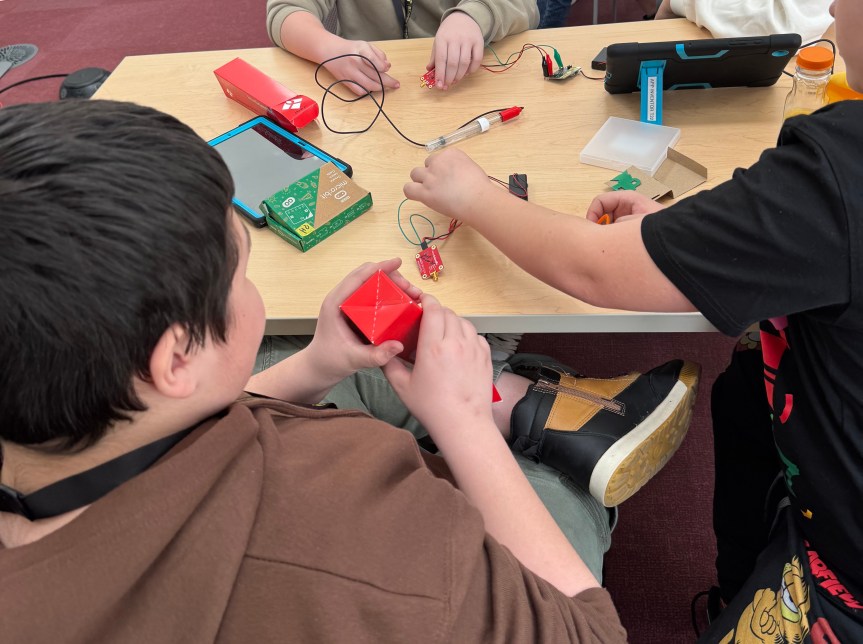
During the week of March 24, 2025, 32 middle school students and 12 staff members from Maine Indian Education’s three schools—Indian Island School, Indian Township School, and Sipayik Elementary School—traveled to the Massachusetts Institute of Technology (MIT) as part of the Beaver Works Summer Institute, a STEM program at MIT. This trip represented part of an ongoing effort to engage Indigenous youth in STEM programming to increase their exposure to and interest in potential STEM career opportunities.
These students and educators participated in two and a half days of programming that included workshops, demonstrations, an opportunity expo, and more. Workshops included focuses on wearable technology, self-driving cars, and climate change and water quality. Students also participated in tours and demonstrations at unique MIT spaces like the Hobby Shop, the Edgerton Center’s Milk Drop Shop, D-Lab, Breakerspace, and the Center for Bits and Atoms.
The students’ days at MIT were full and engaging. They walked for miles, traversing MIT’s campus, and ate supper in one of the student cafeterias. They were also treated to an evening improvisation session with Nova Comedy Collective. The students and staff members have said they are incredibly grateful for their experience at MIT and will treasure their memories for years to come.
Joel Grimm, manager of Beaver Worksat MIT Lincoln Laboratory, and Nancy Dalrymple, Native American Student Association advisor, began engaging with Maine Indian Education last November to discuss the possibilities of a student trip from the Penobscot Nation’s Indian Island and the Passamaquoddy Tribe’s two reservations in Downeast Maine. Soon after those conversations began, scientists, engineers, and other academics from across New England signed on to support this first-time program, sponsored by MIT Beaver Works.
Beaver Works received generous grant support from Jameel World Education Lab (J-WEL) to engage Indigenous youth in STEM programming. The National Science Foundation reported in 2019 that 0.6% of Indigenous peoples received a bachelor’s degree in STEM disciplines.
Maine Indian Education’s leadership expressed an overwhelming sense of gratitude for Beaver Works with the following statement:
“Joel and Nancy have advocated for and supported programming for our students for a number of years, with much of it occurring locally until this year. These opportunities for engagement are an invaluable gift that has planted more seeds for future experiences than we can imagine.”
This story was submitted by Maine Indian Education. To submit a good news story to the Maine DOE, please fill out the good news submission form.
The Finance Authority of Maine (FAME) is thrilled to introduce a forgivable loan program to support future educators, childcare providers, and speech pathologists in Maine. High school seniors and college students must apply by Thursday, May 1, 2025, to take advantage of this opportunity!
Undergraduate students can receive loans of $5,000, while graduate students can obtain $4,000. The loan is renewable for up to eight semesters for undergraduates and four semesters for graduate students.
One year of loan forgiveness is available for each year of service as a full-time teacher, speech pathologist, or childcare provider in an eligible Maine school or facility. Teachers in underserved subject areas can have two years’ worth of loans forgiven for each year of service. Partial loan forgiveness is also available under certain conditions.
Borrowers must be Maine residents and either graduating high school seniors, undergraduates, or graduate students accepted into postsecondary degree programs. They must be pursuing initial certification or qualifications in education, speech pathology, or childcare. They must secure a position after graduation that matches their certification or qualification.
Those who do not work in eligible Maine schools or facilities must repay the loan with interest, beginning six months after graduation at a fixed rate of 5.0%.
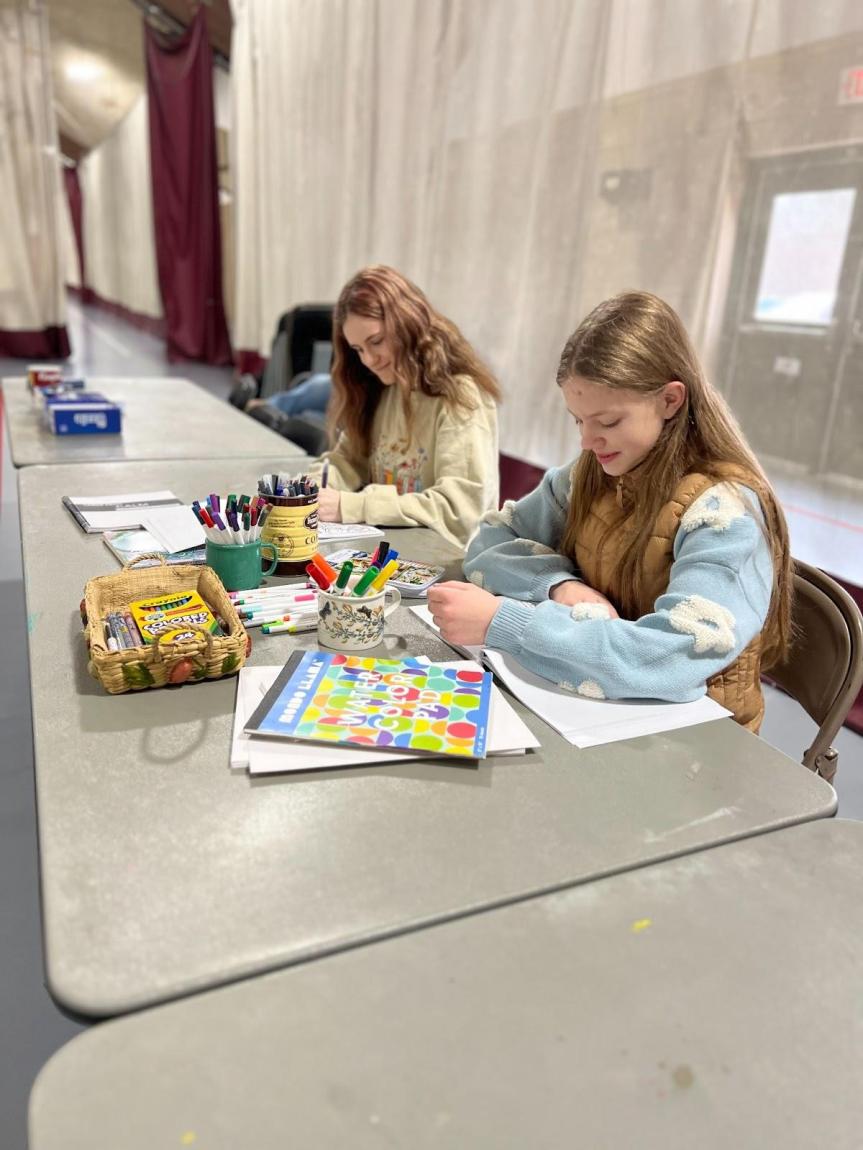
(Pictured: Maine Connections Academy students at the University of Maine at Farmington drawing)
On January 17, 2025, Maine Connections Academy, a tuition-free, grades 7-12 online public charter school, brought students together for an in-person Academic Summit at several locations across the state. This summit provided students with valuable opportunities to engage in hands-on learning, interact with teachers, and connect with peers beyond the virtual classroom.
The Academic Summit featured a variety of immersive experiences at institutions across Maine, including the University of Maine at Farmington, the University of Maine at Orono, the Maine Maritime Museum, and the Portland Museum of Art.
Event highlights included:
University of Maine at Farmington – Students visited the Field House, where they participated in basketball, swimming, or teacher-led activities, such as board games and crafts. Maine Connections Academy students also had a campus tour that introduced them to university life.
University of Maine at Orono – Students experienced Cosmic Mashups, a planetarium show exploring black holes and star collisions, followed by a guided campus tour.
Maine Maritime Museum – A hands-on program, How to Build a Wooden Vessel, immersed students in Maine’s rich shipbuilding history through interactive exhibits and demonstrations.
Portland Museum of Art – Students engaged in Learning to Look with Visual Thinking Strategies, which was a guided tour designed to encourage deeper analysis and appreciation of visual art.
Maine Connections Academy’s Academic Summit underscores the importance of face-to-face interactions in an online learning environment, helping students to form lasting connections with their peers and educators and explore future academic and career pathways.
For more information about this event or Maine Connections Academy, click here.
This story was submitted by Maine Connections Academy. To submit a good news story to the Maine DOE, please fill out the good news submission form.
The Maine Department of Education (DOE) Office of Teaching and Learning is proud to announce a new three-part professional learning series designed for educators working with multilingual learners (MLs) who are enrolling in a Maine high school for the first time.
This interactive series will support high school-based teams in building inclusive, responsive systems that address the unique needs of multilingual students. Focus areas include English language development (ELD) instruction, content-area learning with integrated language supports, opportunities to showcase multilingual abilities, and advisory structures that emphasize high support and meaningful family engagement.
What to Expect: Throughout the series, participants will engage in collaborative discussions, explore real-life scenarios, and analyze models that support successful transitions for multilingual students entering high school. Guest speakers will offer expert insights and lived experiences to deepen collective understanding.
Session Overview
Session 1 (May 1, 2025): Introduction and overview of state and federal guidelines related to high school enrollment for multilingual learners
Session 2 (June 3, 2025): Goal setting for students who are new to English, including opportunities to pursue the Seal of Biliteracy
Session 3 (June 17, 2025): Strengthening student and family engagement with a focus on college and career readiness pathways
Who Should Attend: This series is ideal for high school-level educators and staff, including:
English for Speakers of Other Languages (ESOL) teachers
School counselors
Social workers
Content-area teachers
Administrators and school leaders
Program Details
Format: Virtual and interactive; each session will run from 3–4:30 p.m.
Opportunities for pre- and post-webinar learning
Nine contact hours for entire series participation
Registration Information: Participants are encouraged to register as a team, ideally including an ESOL teacher, school counselor, and administrator. Register here to participate in all three sessions.
Meet the Facilitator: This series will be facilitated by Jen Lunt, a 2024–2025 Teacher Leader Fellow with the Maine DOE. Lunt is a seasoned educator and passionate advocate for MLs, with a focus on supporting smooth transitions and fostering inclusive, student-centered environments. Lunt has also developed an asynchronous resource, Orientation Checklist for New Multilingual Students. Check out the video and one-pager.
If you’re unable to attend this live professional learning series but would like to continue building your skills, Maine educators have access to asynchronous learning through the WIDA Consortium, of which Maine is a member. All Maine pre-service and in-service educators can access these resources by creating a WIDA Secure Portal account. To get started, visit Maine’s WIDA state page. To obtain a new login, contact help@wida.us or call (866) 276-7735. Once you have a WIDA Secure Portal account, you will be able to access a variety of self-paced professional learning modules.
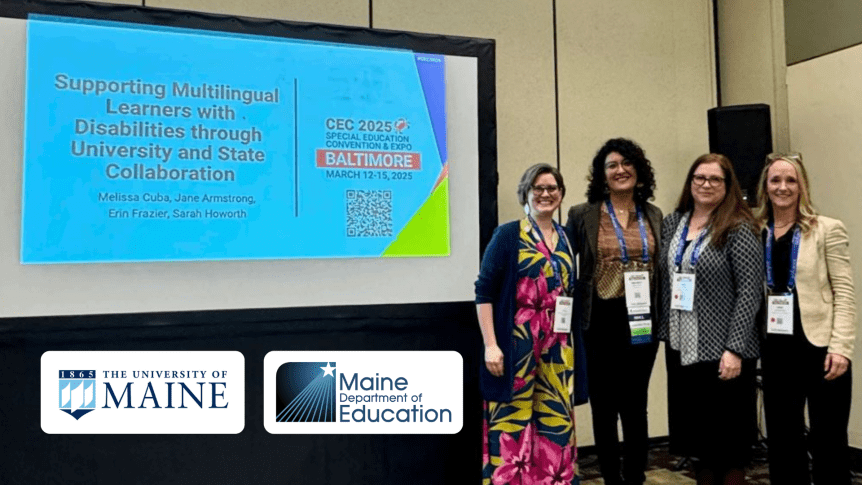
Pictured: From left to right: Associate Professor of Special Education Dr. Sarah Howorth, Assistant Professor of Special EducationDr. Melissa Cuba, Director of Maine DOE Office of Special Services and Inclusive Education Erin Frazier, and Maine DOE State ESOL SpecialistJane Armstrong presenting at the National Council for Exceptional Children (CEC) Conference in Baltimore, Maryland.
In a powerful display of statewide collaboration, representatives from the University of Maine (UMaine) and the Maine Department of Education (DOE) joined forces in March to present at the 2025 National Council for Exceptional Children (CEC) Conference. The session, Supporting Multilingual Learners with Disabilities through University and State Collaboration,spotlighted Maine’s groundbreaking efforts to support multilingual learners (MLs) with disabilities, showcasing the newly-updated Identifying and Serving Students Who Are Multilingual Learners with Disabilities: Policy and Resource Guide, alongside innovative university programming that prepares educators to support MLs with disabilities.
The presentation was led by Dr. Melissa Cuba, UMaine Assistant Professor of Special Education, and supported by Dr. Sarah Howorth, UMaine Associate Professor of Special Education, in partnership with Maine DOE Director of the Office of Special Services and Inclusive Education Erin Frazier and the English for Speakers of Other Languages State Specialist, Jane Armstrong.
Together, the group highlighted the unique context of the state, tracing the evolution of collaborative efforts, and showcased key contributions to address the dual needs of language acquisition and disability support, including UMaine’s Graduate Certificate in Multilingual Special Education, Maine Access to Inclusive Education Resources (MAIER), and the comprehensive policy and resource guide for educators on identifying and serving MLs with disabilities.
UMaine’s Multilingual Special Education program is uniquely designed to prepare educators to effectively support MLs with disabilities through a blend of linguistic, cultural, and special education expertise. What sets this 15-credit online graduate program apart is its interdisciplinary curriculum, which includes courses that target language development, such as:
ERL 531: Linguistic Diversity, Multilingualism, and the Classroom
ELL 570: Methods of TESOL (Teaching English to Speakers of Other Languages)
ELL: 572: Second Language Acquisition
It also offers specialized training through:
SED 502: Strategies for Culturally and Linguistically Diverse Students with Disabilities
SED 545: Intervention for Reading Difficulties
If working with children birth to five, SED 545 is combined with SED 529: Developmentally Appropriate Reading Instruction for Diverse Young Learners. Together, these courses provide a rich foundation in language development, culturally-responsive pedagogy, and targeted academic interventions, empowering educators to create inclusive and effective learning environments for diverse student populations.
The collaboration with the presentation and the co-construction of this iterative guidebook reflects Maine’s growing commitment to inclusive and equitable education, with a focus on multilingualism, disability inclusion, and culturally-responsive practices. The collaboration also underscores the valuable role of higher education institutions like UMaine in supporting these efforts, through research, educator preparation, and training informed by real classroom experiences.
The Maine guidebook serves as a vital resource for school administrative units (SAUs), offering practical tools, guidance, and examples to ensure that linguistic diversity and disability are not barriers to learning but rather opportunities to build inclusive, responsive educational environments.
“This work is a reflection of Maine’s commitment to inclusive education that sees and supports the whole child,” Frazier said. “By bridging the expertise of higher education and state systems, we are empowering educators to confidently identify, support, and celebrate multilingual students with disabilities.”
This work aligns with and strengthens Multi-Tiered Systems of Support by ensuring that academic, behavioral, and social-emotional supports are responsive to the diverse identities and experiences of all students.
As part of the Maine DOE’s commitment to inclusive and equitable education, Teacher Leader Fellow Melissa Frans, has played a vital role in co-facilitating a dynamic six-part professional learning series, designed to support educators working with MLs with disabilities. Through her leadership, Frans has further illuminated the critical intersection between language acquisition and disability services, emphasizing the importance of collaborative practices with linguistically-responsive IEP development. You can see the recordings of this webinar series on the Maine DOE Multilingual Learners with Disabilities webpage.
As Maine experiences growing linguistic and cultural diversity in its schools, this guidebook, along with the collaboration behind it, provides a model of proactive, inclusive, and research-informed practices that other states may consider replicating. Additionally, the Maine DOE Event Calendar has an array of opportunities available to support educators in fostering inclusive and effective learning environments.
For further information or questions about multilingual programming, please contact Maine DOE State ESOL Specialist Jane Armstrong at Jane.Armstrong@maine.gov. For further information or questions about the guidebook, please contact the Maine DOE Office of Special Services and Inclusive Education Director Erin Frazier at Erin.Frazier@maine.gov.
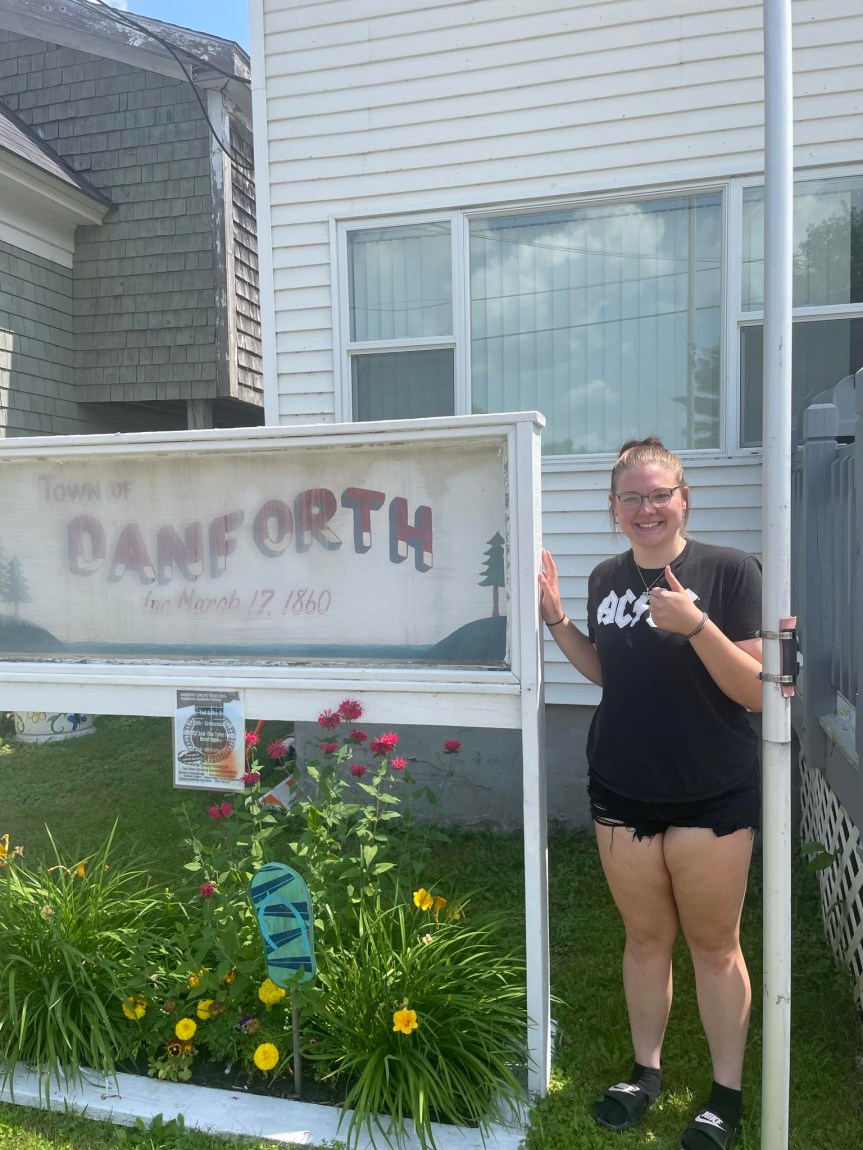
(Pictured: East Grand School Student Emily Pride at the Danforth Town Hall, where she interned and completed an eight-hour new clerk training, certifying her to handle registrations and essential paperwork for the town)
The East Grand School’s Extended Learning Opportunities (ELO) program is cultivating diverse business partnerships, enhancing students’ career development, and community engagement in the Danforth area.
“It’s hard to put into words the growth that is observed in students throughout the ELO process. The confidence gained as these students navigate the working world is huge!” Angela Cowger, East Grand School ELO Coordinator, said.
Many of the East Grand School students participating in the ELO program have displayed growth in several different areas. Cowger said she has observed improvement in their personal responsibility and work skills, such as students showing up for work on time, taking ownership of their schedules, and communicating with their ELO employer/mentor. She said she also sees growth in students’ social skills, including improvement in interpersonal skills and increased confidence. Additionally, students have gained hands-on, real-world knowledge about their chosen, specific career pathway, as well as an increased understanding of how businesses operate in general.
Collaborations have included local organizations in and around Danforth, and as far as Houlton and Calais, such as East Grand School’s maintenance and after-school programs, Maple Lane Family Child Care, Knight’s Yankee Grocer, CCA Auto, Canoe the Wild, the Snow Farm, and Modern Beauty. Students have also been placed in ELOs with Stair Welding RL Inc. in Hodgdon, the Aroostook County Action Program, Houlton Regional Hospital, and Serendipity Embroidery & Design. East Grand collaborates with Washington County Community College, too, to expand internship and apprenticeship opportunities.
ELO and career prep students have broadened their professional perspectives through field trips, including to Washington County Community College, Louisiana-Pacific Building Solutions, and a job fair at Northern Maine Community College, which featured more than 70 employers in Presque Isle. The program has hosted several guest speakers and local business leaders from institutions and sectors, such as the Maine Guide Service, health care, and outdoor recreation.
While the Danforth program has successfully established these partnerships, geographic challenges remain. The nearest automotive service center is 34 miles away in Houlton, posing a transportation barrier for students without a driver’s license. East Grand Schools, however, has used some of the funding received through a Maine Department of Education (DOE) ELO Expansion grant to address these transportation barriers. Through that effort, five students have since completed driver’s education and obtained their permits and are now working toward their licenses.
Cowger has also been instrumental in removing barriers for her students. The East Grand School ELO program has a van, which allows her to transport students. Additionally, the Region Two School of Applied Technology program has generously provided a few East Grand-region students the opportunity to be dropped off at work sites near their bus routes, which has allowed for a few of these ELO students to be placed in Houlton. The geographic remoteness will continue to be a challenge, as jobs and resources are limited in the East Grand area, but the school continues to adapt and think outside of the box.
One notable success story is that of Emily Pride, who moved to East Grand School during the final months of her sophomore year. She was unsure of what she wanted to do after high school, so she enrolled in a Career Exploration ELO. She completed coursework and job shadows in real estate, the Maine Department of Health and Human Services (DHHS), and a local daycare. Her exploration led to an internship at the Danforth Livable Community Center, where she assisted with organization, scheduling, meal preparation, and administrative duties at the town office. Pride also completed an eight-hour new clerk training, certifying her to handle registrations and essential paperwork for the town.
Pride’s dedication led to a summer job offer from the town office, an opportunity she said she viewed as a valuable learning experience that gave her insight into local governance and inspired her to consider pursuing a career in this field.
“With the knowledge I have gained from all these opportunities, I am able to apply them to my future!” Pride said.
This spring marks an exciting advancement for the East Grand School ELO program with the completion of a new business innovation center at the school. Funded by a Maine DOE Rethinking Responsive Education Ventures (RREV) grant, the center features a business learning lab designed for ELO and career preparation classes. This initiative supports the school’s decade-long effort to promote a small business pathway. Students have utilized the space for career preparation classes and ELO projects. The goal is for students to develop and execute business plans and use the lab as a launchpad for entrepreneurial endeavors.
Recently, an ELO student, with the help of a mentor graphic design artist, used the lab to create an art studio.
The business innovation center is now a hub for East Grand School’s small business pathway, which includes four dual-credit college courses and 8th- and 10th-grade career preparation classes. These classes include components such as personal finance, cooking and other life skills, entrepreneurial guest speakers, career exploration, and other curricula. These developments represent significant strides in preparing East Grand students for their future careers and fostering individual growth and community engagement.
Eighth-grade students participate in a career preparation class.
East Grand School was a 2022 awardee of the Maine Jobs and Recovery Plan (MJRP) ELO grants, which supported 26 programs across Maine, covering 13 counties. This year, East Grand received a Maine DOE grant to further ELO expansion by establishing a “Missing Jobs Pathway.” This new pathway helps students to identify in-demand jobs/businesses that are missing in their community and supports them in developing the skills to meet the demand and remain in their home community.
The Maine Schools Application in NEO will open on May 1. Maine Schools is the process by which the Maine Department of Education (DOE) collects information about Maine school administrative units (SAUs) for the upcoming school year. Maine School Approval provides the Maine DOE with the attestation from SAUs and schools in Maine that all state statutory requirements are met. This report also offers an opportunity for SAUs to update their contact information to ensure that the Maine DOE has the most current information. The due date for completing the report is June 15.
As a reminder, student enrollments cannot be uploaded/entered into Connect until the Maine Schools process is complete.
If any changes to the organization of your SAU are being made (such as new schools, grade level relocation, integration with another SAU, etc.), please be sure to contact the Maine DOE Data Team with this information. Timely notification of these changes will ensure that required adjustments to organizations and organization IDs are accurately reflected in the reporting systems for the next school year.
If your SAU is re-organizing grade levels within schools, closing a school, opening a school, or integrating with another SAU, notification should be submitted via email to Kimberly.A.Hall@maine.gov or to MEDMS.Support@maine.gov.
The Maine Department of Education (DOE) Data Team is hosting the following webinars:
Maine Schools Report Webinar – Tuesday, April 29, 2025, at noon
Maine Schools is the process by which the Maine DOE collects the organization information about Maine school administrative units (SAUs) and schools for the upcoming school year. Maine School Approval provides Maine DOE the attestation from SAUs that all Maine statutory requirements are being met. This report offers an opportunity to update the SAU and school contact information to ensure that Maine DOE has the most current information. Student enrollments cannot be uploaded/entered into reporting systems until Maine Schools is complete. This webinar will review the requirements for the Maine Schools process. Register here.
ESEA Demographics Report Webinar – Thursday, May 8, 2025, at noon
The ESEA Demographics Report is an aggregation of students enrolled on the federal accountability date for participation in state assessments during the current assessment administration. This report includes student demographic categories for assessment and accountability purposes. This webinar will review reporting requirements and navigation of the ESEA Demographics Report in NEO. – Register here.
End of Year Daily Attendance & Truancy Reporting Webinar – Tuesday, May 13, 2025, at noon
Daily Attendance and Truancy reports are due for final certification at the end of the school year. These data are aggregated for public reporting after certification and reported in multiple locations including the Maine Department of Education Data Warehouse, ESSA Dashboard, and federal reporting. This webinar will review requirements for both the Daily Attendance Certification and Truancy Certification reports as well as navigation of the reports in NEO. – Register here.
End of Year Behavior and Bullying Data Certification Reports Webinar – Thursday, May 15, 2025, at noon
Behavior and Bullying reports are due for final certification at the end of the school year. These data are aggregated for public reporting after certification and reported in multiple locations, including the Maine DOE Data Warehouse, ESSA Dashboard, and federal reporting. This webinar will review requirements for both the Behavior and Bullying reports, as well as navigation of the reports in NEO. – Register here.
End of Year Synergy Enrollment Exits and Perkins 3S1 CTE-Poste Secondary Reporting Webinar – Tuesday, May 27, 2025, at noon
All students, even those intending to return next year, must be exited from Synergy at the conclusion of the school year. Accurate student exits at the end of the school year can decrease data fixes at the beginning of the next school year. This webinar will review recommendations for properly exiting students at the conclusion of the school year and the process for exiting students from State Synergy. This webinar will also include directions for Career and Technical Education – Perkins 3S1 Post Secondary reporting in NEO. – Register here.
Special Education Exit Report Webinar – Thursday, May 29, 2025, at noon
Students who have exited special education services during the reporting period (July 1 through June 30) must have special education exit information (a special education exit date and exit reason) added to their enrollments in Synergy State Edition. Student information must be entered or uploaded into the Synergy State Edition by the school where the student is attending. SAUs are required to certify the exit data using the Special Education Exit Report found in NEO. This webinar will review the requirements and process for Special Education Exit Reporting. – Register here.
Nominations are now open for the 2025 Maine Association for Health, Physical Education, Recreation, and Dance (MAHPERD) Teacher of the Year awards. Nominations are due April 30, 2025.
MAHPERD Teacher of the Year awards are presented to health education, physical education, and adapted physical education teachers who have demonstrated outstanding dedication to their students and profession. The following categories are eligible for consideration:
Elementary Physical Education teacher
Middle school Physical Education teacher
Secondary Physical Education teacher
Adapted Physical Education teacher
High school Health Education teacher
Many teachers throughout the State of Maine are deserving of this award, and MAHPERD would like to be able to recognize more of those individuals. The criteria to nominate can be found on the nomination form: MAHPERD Teacher of the Year Nomination Form.
The Maine Association for Health, Physical Education, Recreation and Dance (MAHPERD) is a nonprofit organization for professionals and students in related fields of health, physical education, recreation and dance. MAHPERD is dedicated to improving the quality of life for all Mainers by supporting and promoting effective educational practices, quality curriculum, instruction, and assessment in the areas of Health, Physical Education, Recreation, Dance, and related fields.
The Week of the Young Child® highlights the importance of early childhood education and the foundational role it plays in a child’s success. This week also serves as an opportunity to celebrate the early care and education professionals who nurture and support children and families during this critical stage of growth and development.
This year, the Maine Department of Education (DOE) is teaming up with the Maine Department of Health and Human Services Office of Child and Family Services – Early Care and Education Division to honor dedicated professionals who make a meaningful impact on young children and families.
Each day of the week during the Week of the Young Child, the Maine DOE will highlight early childhood professionals who have been nominated by their colleagues and the communities they serve.
Here are the Friday Early Childhood Professional Spotlights:
Rebekah Baumgartner, The Little Schoolhouse on Maine
“Being a director in an early childhood facility is incredibly rewarding and fulfilling,” Baumgartner said.
Robin Linscott, You N Me Nursery School at the Westbrook Regional Vocational Center
“It is exciting to encourage and mentor new teachers in the early childhood field,” Linscott said.
Rosemary Jordan, Little Log Cabin Montessori School
“It is humbling to know that the influence I have had on children and their families may last for years to come,” Jordan said.
Sage Coldwell, Winslow Elementary School
“What I love the most is the moment when my class of individuals, with all their differences and challenges, becomes a family,” Coldwell said
Sam Miller, Children’s House Montessori School
“I love working with young learners in the toddler program, as they are great teachers themselves,” Miller said.
Sandra Marshall, Love & Learn Child Care
“I love what I do because children are so full of adventure, love, and joy,” Marshall said.
Sara Carr, The Little Schoolhouse on Maine
“The first five years of a child’s life are filled with so many milestones, memories, laughter, and excitement, and I am honored to be a part of that,” Carr said.
Sara Moore, Roselyn North Academy
“To be a part of such a crucial time in a child’s life is so special,” Moore said.
Sarah Jamo, Minot Consolidated School
“Witnessing the pure joy, growth, and curiosity of our youngest children leaves me with a smile and inspires me to be a better educator,” Jamo said.
Sare Greenlaw, Educare Central Maine
“Being in a position to foster the social, emotional, physical, and academic growth of the youth in our communities is an absolute joy and privilege,” Greenlaw said.
Stacy Higgins, Educare Central Maine
“Early childhood education is so important to set our young people on a path to success,” Higgins said.
Star Lopresti, MSAD 6
“I love being a kindergarten teacher because I get to help students grow emotionally, socially, and academically,” Lopresti said.
Steva Feir-Scarpelli, Child Development Services
“I love the collaboration with classroom teachers and therapists on how to best support the children I work with,” Feir-Scarpelli said.
Sue Littlefield, Buchard A. Dunn School
“Being given the opportunity to have a shared learning experience with four-year-olds keeps me young at heart,” Littlefield said.
Suzen Hoffses, Milbridge Elementary School
“Seeing the looks of joy and hearing the sounds of excitement coming from my students when we engage in activities both inside and outside the classroom is why I love teaching pre-K,” Hoffses said.
Tammey White, Easton Elementary School
“It’s such a rewarding experience to be part of a child’s early growth and development,” White said.
Thania Centeno Wily Carrera, Mis Primeros Pasos My First Steps
“I love being able to make an impact in their lives and helping them grow and learn about the world around them,” Centeno Wily Carrera said.
Wanda Gamage-Wyman
“I have devoted my entire career of 38 years working with children and families because I thoroughly enjoy helping others,” Gamage-Wyman said.
Yaicha Provencher, Andwell Therapy & Early Learning Services
“I love being able to be an advocate, a support system, and a team member with families in order to give their children the best skills and education possible,” Provencher said.
Yesenia Lipski
“Yesenia devotes countless hours to creating magical spaces for learning in our pre-K program,” Lipski’s nominator said.
Renee Lancaster, Moose Alley Daycare – “I love working in early childhood because I get to make meaningful, memorable experiences for the families we serve,” Lancaster said.
Resa Jones, The Children’s Nursery School – “Resa’s calm presence and creative approach is evident as soon as you walk in the classroom,” Jones’ nominator said.
Sadie Burleigh, Millinocket KidsPeace – “Sadie is naturally calm and patient with our high-needs students,” Burleigh’s nominator said.
Sarah Croce, East End Community School – “I love being a part of the amazing growth and development that happens within a school year,” Croce said.
Sarah Martin, Sarah’s Busy Bees – “Watching the kids start as tiny kindergartners until they leave as middle schoolers has been a gift,” Martin said.
Shari Edgecomb – “She knows how to meet students where they are developmentally, celebrating students’ achievements and fostering a safe space where they feel compelled to learn,” Edgecomb’s nominator said.
Shelby Palmer – “Shelby goes above and beyond in every aspect of her day,” Palmer’s nominator said.
Shelby Riley, The Little Schoolhouse on Maine – “I have been in this field for 11 years and there isn’t a day that goes by that I question if I love my job,” Riley said.
Stacie Gray – “She’s been dedicated to her career for over 20 years and her level of nurturing, enthusiasm, and professionalism is unmatched in my opinion,” Gray’s nominator said.
Stella Duhaime – “I am nominating Stella Duhaime for her unwavering dedication and commitment to children and families,” Dauhaime’s nominator said.
Sue Blankenship – “She works closely with students and their teachers, building trusting relationships that allow for growth and continued development,” Blankenship’s nominator said.
Summer Lamprey, Windham Raymond School Aged Childcare – “I love getting to know each one of my kids on a personal level, and they do the same with me,” Lamprey said.
Susan Bell – “She has a heart of gold, welcoming everyone with open arms. She truly makes every child feel loved like they are her own, ” Bell’s nominator said.
Susan Hougaz McCormic, Children’s Odyssey – “Having the opportunity to provide meaningful learning experiences for my young students to help them develop the skills they will need to be successful in their education is what nourishes my love of teaching,” Hougaz McCormic said.
Tammy Osborne – “Her interactions with children, staff, and families all speak to her commitment to best practice, to the importance of relationships, and of the true joy she finds in teaching young children,” Osborne’s nominator said.
Terri Gerrish – “Her extensive experience at Head Start and now in the public pre-K classroom truly enriches this community’s educational environment,” Gerrish’s nominator said.
Tess Glanville, Ledgemere Preschool – “The environment that Tess has curated at Ledgemere Preschool is fantastic – Spanish, music, yoga, cooking, and visits from Audubon are all a part of their usual curriculum,” Glanville’s nominator said.
Theresa Fisk, Maine Roads to Quality Professional Development Network – “I have the privilege of witnessing the extraordinary work of our early care and education professionals throughout Maine,” Fisk said.
Tiffany Shaw, Buxton Center Elementary School – “There’s magic in watching young minds discover the world,” Shaw said.
Tyisha Longus – “Ms. Ty is a hardworking mother and has made all the difference in my experience with my daughter in a childcare setting,” Longus’ nominator said.
Wendy Cooper – “She sees what a child is interested in and grows that with the toys she puts out and the opportunities she creates and conversations she has with a child,” Cooper’s nominator said.







 Maine DOE Newsroom