The Power of Two Hours Spent in the Woods: How One Maine School Counselor Is Offering an Alternative to Detention

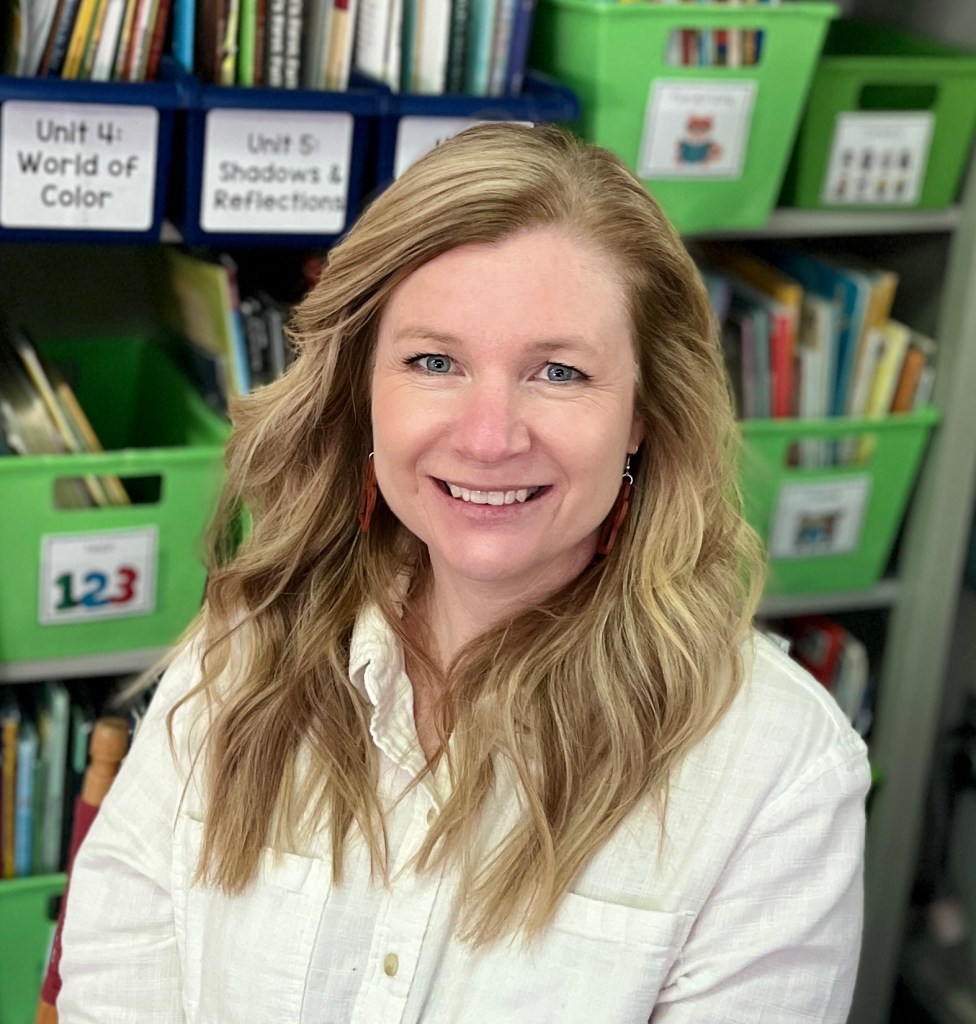
Leslie Trundy is in her twentieth year working as a school counselor. She says she absolutely loves her job at Morse High School in RSU 1.

“I am so grateful to be a consistent adult in the lives of young people and to support them and their families through goal attainment and the challenges they face growing up,” Trundy said. “One of the things I like the most about my job is the ability to connect the right student with an enrichment activity that fosters their growth and passion.”

An avid hiker, Trundy personally finds much happiness in outdoor recreation. For her, the outdoors has been a constant source of enjoyment and a place to find solace.

“In the summer of 1996, I spent six and a half months hiking from Georgia to Maine and knew in my bones that walking could be an incredible form of meditation and clearing the carburetor of our minds. It was on the Appalachian Trail that I decided I would earn the credential to become a school counselor,” Trundy explained.

Last fall, Trundy attended the Teens to Trails Fall Leadership Conference, where she participated in a workshop titled “Mindfulness Outdoors: Whole Body Health Benefits,” presented by Megan-Mack Nicholson from the Lennox Outdoor Leadership Center.

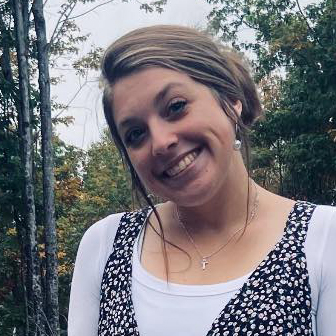
Photo taken on a sunrise hike with Teens to Trails.

In the workshop, Trundy and other participants learned about leading youth outdoors, meditation, and how to support youth who may find meditation to be challenging. The presenter also shared stories from her readings about the value of time spent in the woods and how healing it can be for mental health.

“This resonated with me,” Trundy noted. “I thru-hiked the Appalachian Trail in my mid-twenties and grew up involved with Girl Scouts and skiing in Northern Michigan. I’ve also seen this work as a mom and Scout leader. No matter the weather, time outside transforms.”

With the Morse Outing Club in its fourth year, Trundy began to brainstorm ways to bring the power of hiking in the woods to even more students. At Morse High School, students who have been given detention may sometimes replace that time with community service. Trundy thought that the administrators at her school might let her try offering a hike in the woods as an alternative, too, capturing a population of students who may be less likely to join an outdoor club out of interest.

“Students don’t benefit from more time indoors, and I wanted to offer them a mindset shift through walking outside,” Trundy said. “I wanted to give them my attention and ear if they want it and be a trusted adult they know they can speak to when they’re ready.”

With quick approval from her administration, Trundy’s first hike of this nature was on October 3, shortly after she came up with and proposed the idea. She has been taking students on hikes ever since then. While most students still choose to serve their detention, there are also students who opt into the hike on almost all of the walks.

“Sometimes they want to walk with a friend, and sometimes they desire to come along for the time outside,” Trundy said. “In total, I’ve walked 34 miles with students. My smallest group was three students, and the largest was 13.”

Trundy says that every hike has had memorable moments, but her top three favorites include:

  • A time three boys sang an a-cappella version of “I Want It That Way” by the Backstreet Boys as the group crossed the bridge back onto campus in November.
  • The first snowfall on December 5 when Trundy outfitted everyone in ponchos and confidently declared, “Yes, we are going to go on the hike!” The whole group had been before, and Trundy expressed it was magical to see the same trail transformed by the snow coating the bare tree limbs and falling gently into the open body of water. She said there was a little bit of slipping and a lot of laughter.
  • The moment a boy noticed how Trundy waited until the group stopped for a snack, before telling them her “why.” He remarked that it was clever because everyone was quiet and eating and, therefore, could receive her message and hear a poem by Wendall Berry or Mary Oliver.

“I’m planting acorns, and the soil, sun, and water need to be just right!” Trundy explained metaphorically of how she approaches these hikes with students.

Trundy said she hopes to keep these walks going no matter what the weather is. This year, the Morse Outing Club has a membership with Maine GearShare, and Trundy plans to borrow crampons and other warming gear when the trail becomes icy. She has also considered borrowing the school van to drive students to a different section of the trail at some point.

“I hope to see if the walks make a difference. It often takes time to know this,” Trundy said.

She noted some students who are going out on hikes are in grade 9, and she is curious to see their reflections when they are seniors.

“I know this time matters to me, and I’m grateful to share it with them,” Trundy said. “Last week, an older boy thanked me and declared, ‘That was awesome.’”

You’re Invited! Join the Conversation About Multi-Tiered Systems of Support Practices in Maine

Educators across Maine are invited to participate in facilitated discussions this spring regarding Multi-Tiered Systems of Support (MTSS). These discussions will provide an opportunity for educators to share their experiences, explore best practices, and address challenges in implementing MTSS across academics, behavior, social-emotional learning, and attendance supports.

These virtual meetings offer a space for collaboration, reflection, and contribution to the ongoing development of MTSS in Maine.

There are six virtual sessions available throughout March of 2025, tailored to different grade levels:

  • Elementary (pre-K through grades 5 and 6): March 4, 6, and 12 (3-4:30 p.m.)
  • Middle school (grades 5 and 6 through 8): March 18 and 20 (2:30-4 p.m.)
  • High school (grades 9 through 12): March 26 (2:30-4 p.m.)

Middle school educators (grades 5 and 6 through 8) may choose to attend either the middle or high school sessions, depending on what best aligns with their student population. Educators may register for multiple sessions but must sign up individually for each.

Why attend?

Your voice matters! Join fellow educators to collaborate, share experiences, and drive meaningful improvements in MTSS practices statewide. These discussions will inform future professional development opportunities and school support initiatives, ensuring educators have the tools and resources they need to effectively support every student.

Registration:

The Maine Department of Education (DOE) is looking forward to your participation and valuable insights, as we strengthen MTSS across Maine! For more information, please contact Andrea Logan, Maine DOE MTSS Specialist, at andrea.logan@maine.gov or 207-592-2011.

Webinar: Innovative Journalism – Educational Resources with Retro Report

Join Maine Department of Education (DOE) Civics Teacher Leader Fellow Breanna Bellefontaine-Krupski as she hosts David Olson, Director of Education at Retro Report, for an informative session exploring the organization’s rich educational resources.

Retro Report is an educational journalism organization that connects historical events with current issues through compelling storytelling and investigative reporting.

Attendees will gain insights into:

  • How Retro Report supports social studies educators.
  • Engaging, ready-to-use content and lesson plans for civics instruction.
  • Professional development opportunities for teachers.

Join this webinar via Zoom on Thursday, February 13, at 3:30 p.m. EST. Registration is not required. You may access the webinar here.

The Teacher Leader Fellow program is part of the Maine DOE Office of Teaching and Learning. For questions, contact Breanna Bellefontaine-Krupski at Breanna.Krupski@maine.gov.


Invitation to Apply to Be a Maine Inclusive Education Model Pilot School – Making Learning Accessible for All

The Maine Department of Education (DOE) and the University of Maine at Farmington (UMF) are partnering to support a cohort of Maine public schools in becoming Inclusive Education Model sites for the state. This project is intended to provide participating Maine schools with five years of support to develop and implement sustainable, inclusive, and integrated multi-tiered systems of support for all students.

Maine Inclusive Education Model Schools will:

  • Build leadership and staff capacity through ongoing coaching and professional learning.
  • Implement data-driven decision-making to increase equity, access, and achievement outcomes for the most-marginalized students.
  • Prioritize collaborative and inclusive service delivery.
  • Commit to increasing the amount of time all students with disabilities spend in general education settings.
  • Ground standards-based curriculum and instruction in universal design for learning (UDL) principles.

Who can apply for Cohort 1 (2025-2030)

The Maine DOE and UMF are currently seeking applications from public elementary school leaders serving students in pre-K through grade 5 who are deeply committed to inclusion and are ready to reimagine and realign their schools to better meet the diverse needs of all learners. Secondary schools will be able to apply for subsequent cohorts.

What participating Cohort 1 schools will receive

Pilot schools participating in Cohort 1 will receive five years of support from inclusive education experts to implement pilot project goals. Supports will include:

  • A summer orientation in year one.
  • Access to annual summer inclusion institutes in years two through five.
  • Leadership support and staff professional development from inclusive education experts in years one through five.
  • A network of pilot school cohort leaders and staff.

Commitments for pilot schools include:

  • Leadership development and coaching.
  • Participation in professional development and coaching.
  • Realignment of school schedules and service delivery models to more effectively and inclusively meet the needs of all learners.
  • Hiring or reassigning of a current educator to serve as the school inclusion facilitator to support sustainability.
  • Serving as a model inclusion school (e.g., being available for on-site visits from educators and families, participating in video recordings of classroom practice, doing interviews, etc.)
  • Participating in a research study conducted by Drs. Kate MacLeod and Jessica Apgar of UMF.

Please join the Maine DOE and UMF for a virtual information session on February 26, 2025, from 2-3 p.m. via Zoom to learn more before submitting your materials. You may register here in advance for the meeting. After registering, you will receive a confirmation email containing information about joining the meeting.

Applications are welcome from all interested public elementary school leaders in Maine who have started the work of improving inclusive education in their schools.

If you would like to receive an application, please complete this form. Once you’ve completed the form, you will receive the application from Dr. Kate MacLeod (kate.macleod@maine.edu). The application deadline is March 14, 2025.

School finalists will be selected for site visits and interviews, and three elementary schools representing diverse demographic and geographical regions will be accepted into Cohort 1.

For further questions, please reach out to Tracy Whitlock, Maine DOE Special Projects Coordinator for the Office of Special Services and Inclusive Education, at tracy.w.whitlock@maine.gov.

Commissioner Makin Kicks Off the 10th Annual Read to ME Challenge at Skillin Elementary School 

The 10th annual Read to ME Challenge through the Maine Department of Education (DOE) is now underway for the month of February! On Monday, Maine DOE Commissioner Pender Makin kicked off the Challenge at Skillin Elementary School in South Portland by reading I Can Be All Three by Salima Alikhan and Noor Sofi and Happy Pig Day! by Mo Willems to first-grade students. 

“When you read to children, you get so much back,” Commissioner Makin said following the read-aloud. “It’s important to remind kids how much of their imagination and their thinking can be expanded with a book.” 

The Read to ME Challenge is a month-long public awareness campaign, designed to promote reading and literacy development among Maine children. Adults are encouraged to read to or with a child or children for at least 15 minutes during the month of February. They are then asked to share that experience to amplify the Challenge’s reach across Maine – and to encourage others to participate. 

Participants may capture their moments reading with photos or videos posted on social media using #ReadtoME or #ReadaloudME or by tagging @MaineDepartmentofEducation1! on Facebook and @mainedepted on Instagram. The Read to ME Challenge represents a wonderful opportunity for schools, childcare programs, libraries, and other community organizations to get kids engaged with reading. 

To celebrate a decade of success, the Maine DOE is offering participating schools and organizations an exciting new opportunity this year to win a visit from a Maine author! Schools and organizations that take part in the Read to ME Challenge may fill out this form for a chance to be entered into a random drawing at the end of the Challenge, which concludes after Read Across America Day (recognized by schools this year on March 3). About a dozen winners will be selected from this drawing for a visit from a Maine author before the end of the school year in June. These authors have expressed that they’re excited to share their works with readers across the state. 

You may learn more about the Read to ME Challenge on the Maine DOE website. If you are submitting to win an author visit, please complete your entry by Friday, March 7, 2025 

Schools and organizations that wish to share photos of their Read to ME Challenge participation should please contact Maine DOE Communications Outreach Manager Rachel Paling at Rachel.Paling@maine.gov. With further questions about the Challenge, please contact Maine DOE Director of Early Learning Lee Anne Larsen at Leeann.Larsen@maine.gov. 

To enjoy Read to ME Challenge posts shared by the Maine DOE during the month of February, consider following us on Facebook and Instagram! 

Portland High School Hosts After-School CNA Class for Students, Thanks to Community Partnerships

(Pictured: Scarborough High School students participated in the Portland High School Extended Learning Opportunities CNA program.)

A new after-school program has given Portland-area students the opportunity to become Certified Nursing Assistants (CNAs), thanks to a partnership between Portland High School Extended Learning Opportunities, Fallbrook Commons (formerly Saint Joseph’s Rehabilitation and Residence), and the Boys and Girls Club of Southern Maine.

At age 16, Portland High School students can earn their CNA certificate through Portland Arts and Technology High School (PATHS), the local Career and Technical Education (CTE) center. For years, however, these students have expressed interest in having that same opportunity through a class that takes place after school. This is the first program to meet that request.

Many high school students already work part-time, after-school jobs – often not in fields related to the career they hope to pursue. This program changes that trajectory, helping to strengthen the current healthcare workforce and allowing high school students to jump-start their healthcare careers and gain valuable experience.

Between the 2024 spring and summer sessions, this program graduated 25 fully-licensed CNAs, directly addressing the healthcare workforce shortage in Maine. Saytun Abdullahi, a junior who took the classes, says she has been interested in becoming a CNA since her freshman year.

“I liked how informative our teacher is,” Abdullahi said of the program. “She would go over something in class several times just to prepare us for the test.”

Abdullahi currently works as a CNA at Maine Medical Center.

“The class gave me a lot of understanding on how the healthcare field works, what CNAs do, and how they are helpful to the healthcare field,” Abdullahi expressed.

The after-school program also welcomes students from the surrounding area. Joel Rogers, a Portland High School alum and administrator at Fallbrook Commons, designed the class based on previous success he had working with adult multilingual learners in CNA programs. In addition to funding the teachers and materials, Fallbrook Commons paid the students to participate in this class and is committed to making the program as accessible as possible. The Boys and Girls Club of Southern Maine hosted the class.

“This program could be a model for other similar programs throughout the state and has the potential to make a great impact,” Andrea Levinsky, Extended Learning Opportunities Coordinator at Portland High School, said.

This program took students 170 hours to complete, and Levinsky and her colleagues are currently in the process of planning the next class.

To learn more about this program, or if you are a provider interested in supporting the next session, please reach out to Andrea Levinsky at levina@portlandschools.org. For more information about Extended Learning Opportunities, please reach out to Lana Sawyer at lana.sawyer@maine.gov.

Scarborough High School students participated in the Portland High School Extended Learning Opportunities CNA program.

Solutionary Learning Transforms Classrooms at Oxford Hills Middle School

The Maine Department of Education (DOE) Office of Teaching and Learning is proud to highlight a transformative shift taking place at Oxford Hills Middle School. Through inquiry- and project-based learning, the school is fundamentally changing how students engage with their education.

Oxford Hills Middle School teachers Liz Coen and Courtney McLellan recently participated in the Maine Solutionaries Project, an inquiry-to-action instructional design framework developed by the Institute for Humane Education in collaboration with the Maine DOE. Motivated by a desire to increase student engagement, these educators focused on how to encourage students to ask their own questions, seek answers, and solve real-world problems.

“We wanted them to feel empowered and motivated to make change,” Coen and McLellan explained.

This innovative model has redefined the role of teachers. Rather than simply delivering content, Coen and McLellan now act as facilitators, dedicating significant time to preparation before each project they conduct.

“Beyond typical planning, we spend time connecting with community partners to understand the topic better and explore what’s possible for students,” the duo shared.

Building a network of experts willing to collaborate with students has become a crucial component of their planning process. Once projects begin, Coen and McLellan lead their students by asking guiding questions, providing constructive feedback, and supporting collaboration and group dynamics.

The current project these students are working on, centered around the theme of waste, allows them to select a topic within the broader subject. Many of them have chosen to conduct surveys or interview community partners, creating meaningful connections between their work and the world beyond the classroom. This element of choice and real-world interaction has provided more meaning and authenticity to their learning.

“Having that contact with people outside of school makes their learning more impactful,” Coen and McLellan added.

The shift to Solutionary learning has led to a noticeable improvement in student engagement at Oxford Hills Middle School. Students are now posing thoughtful questions and taking ownership of their learning. For example, during a visit with a guest speaker from EcoMaine, students actively participated, asking insightful questions that demonstrated their curiosity and comprehension.

One particularly-memorable example involved a student who became deeply invested in finding alternatives to Styrofoam after learning about its inability to decompose. One weekend, he tested an alternative material and returned to school eager to share his findings, including his setbacks and plans for improvement. His enthusiasm even inspired a previously-disengaged classmate to join the effort.

“Now, he’s revisiting the process to better understand the problem, creating surveys, interviewing community partners, and diving deeper into research,” Coen and McLellan shared.

This experience highlights a core strength of the Solutionary approach: encouraging students to revisit problems and identify root causes, rather than jumping to solutions prematurely. This iterative process fosters critical thinking, resilience, and a deeper understanding of the issues being explored.

The transformation at Oxford Hills Middle School demonstrates the power of Solutionary learning. By empowering students to lead their education, educators like Coen and McLellan are cultivating a generation of engaged, motivated, and solution-oriented learners.

To learn more about the Maine Solutionary Project’s upcoming cohorts, including a literacy-focused cohort and a numeracy-focused cohort, please visit the Maine Solutionaries Project webpage or contact Kathy Bertini, Maine DOE Interdisciplinary Instruction Coordinator, at kathy.bertini@maine.gov or Erik Wade, Maine DOE Interdisciplinary Instruction Specialist, at erik.wade@maine.gov.

The Maine Solutionaries Project funds received from the US Department of Education(USDOE) support the implementation of this project. The project has an award totaling 1,344.000.00 of which 100% is federally funded and directly attributed to project implementation. The contents are those of the Maine Solutionaries Project and do not necessarily represent the official views of, nor an endorsement, by the USDOE or the U.S. Government.

Continuing Webinar Series on Expanding Multilingual and Multicultural Opportunities in School

The Maine Department of Education (DOE) is excited to continue the Multilingual/Multicultural Connections Webinar Series with its second session, Incorporating Indigenous and Critical Needs Languages into the Curriculum, on Monday, February 3, 2025, from 3:30-4:30 p.m. via Zoom.

This professional learning opportunity highlights the transformative potential of multilingual and multicultural education in Maine schools. General education teachers, administrators, and district leaders are strongly encouraged to attend and explore strategies to leverage the international partnerships established through the Maine DOE’s Memoranda of Understanding (MOUs).

Why Attend?
Participants will:

  • Learn actionable strategies for integrating Indigenous languages, like Wabanaki, and critical-need global languages, such as Mandarin and Portuguese, into classrooms.
  • Explore partnership-driven resources, such as teacher exchange programs and virtual collaborations that enrich language learning.
  • Discover how to align language instruction with workforce development goals, preparing students for global careers.

Special Highlights
This session will feature insights from:

  • Bri Lolar, Maine DOE State Wabanaki Studies Specialist
  • Cynthia Huang, Taipei Economic and Cultural Office

Both experts will share real-world examples and practical applications for embedding critical languages into diverse classrooms.

Please use this link to register.

This series aims to demonstrate how Maine schools can utilize the unique opportunities afforded by the Maine DOE’s Memorandum of Understanding (MOU) partnership agreements with countries like Spain, China, Taiwan, Portugal, Germany, and France. Don’t miss this chance to explore the benefits of global engagement for your students and educators! Let’s work together to empower Maine students with the skills and opportunities they need to thrive in an interconnected world.

For more information, please contact Ayesha Hall, Maine DOE Director of Strategic Partnerships, at ayesha.hall@maine.gov.

Maine DOE Launches New Pre-K Professional Learning Series for Dual Language Learners

The Maine Department of Education (DOE) Office of Teaching and Learning is proud to introduce an exciting new professional learning series, designed to support educators working with Dual Language Learners (DLLs) in pre-K settings. This five-part interactive series will provide educators with tools and strategies to create inclusive, language-rich classrooms that celebrate student voice, engage families meaningfully, and embrace culturally-responsive practices.

Series Overview

Participants will engage in collaborative activities, watch expert-led presentations, and gain actionable resources, including Individualized Language Acquisition Plans (ILAPs) and Student Profiles designed specifically for pre-K learners.

This series is ideal for pre-K and Early Childhood educators, English for Speakers of Other Languages (ESOL) teachers, and administrators supporting pre-K and early learning programs. It will empower educators to:

  • Develop child-centered, language-focused programming using asset-based student portraits.
  • Foster meaningful communication and authentic partnerships with families.
  • Build language-rich environments that integrate language development into daily routines.
  • Co-create culturally-responsive programming that reflects and celebrates student diversity.
  • Use data and assessments effectively to support growth and smooth transitions for DLLs.

Participants will receive Unlocking Multilingual Learner Potential, Second Edition by Diane Staehr Fenner and Sydney Snyder, provided free of charge. Enrollment is capped at 30 participants to ensure a collaborative and impactful experience. Educators and administrators are encouraged to commit to all sessions and will receive 30 contact hours.

Series Details

Dates:

  • Session 1: February 27, 2025
  • Session 2: March 27, 2025
  • Session 3: April 17, 2025
  • Session 4: May 29, 2025
  • Session 5: June 26, 2025

Time: 3:30 – 5:00 p.m.

Format: virtual and interactive

The application deadline is Friday, February 7, 2025. Please use this link to apply. Participants will be notified of acceptance by February 13.

About the Facilitator

Rebecca Carey, a 2024-2025 Teacher Leader Fellow with the Maine DOE, will lead this professional learning series. Carey is a dedicated educator passionate about supporting multilingual learners and fostering joyful, play-based learning environments.

Carey has developed an asynchronous resource, Dual Language Learners, Pre-K and Early Learning, which includes a short video addressing frequently-asked questions about identifying and supporting multilingual learners in pre-K programs. Accompanying slides and a one-pager offer additional resources to build culturally-responsive, child-centered classrooms.

For questions, contact Melanie Junkins, Maine DOE Multilingual and Bilingual Education Specialist, at melanie.junkins@maine.gov.

The Maine DOE Office of Teaching and Learning is committed to unlocking the potential of every learner by creating classrooms where every child thrives. Don’t miss this opportunity to enhance your impact and make a lasting difference!

Maine DOE Announces Exciting Opportunity for Participants of 10th Annual Read to ME Challenge

In February, the Maine Department of Education (DOE) will launch its 10th annual Read to ME Challenge, a month-long public awareness campaign to support children’s literacy growth. To celebrate a decade of success, the Maine DOE is offering an exciting new opportunity this year for participating schools and organizations to enter into a drawing to win a visit from a Maine author.

Since 2015, the Read to ME Challenge has encouraged adults to read to and/or with children for at least 15 minutes during the month of February. Those who participate traditionally capture the moment via a photo or video and post it to a social media platform like Facebook or Instagram, using the hashtag #ReadtoME. While anyone may participate in the Read to ME Challenge, this initiative offers a wonderful opportunity for schools, childcare programs, libraries, and other community organizations to get kids engaged with reading.

This year, participating schools and organizations may choose to fill out this form for a chance to be entered into a random drawing at the end of the Read to ME Challenge, which concludes after Read Across America Day on March 2, 2025 (recognized by schools on March 3). About a dozen winners will be selected from this drawing for a visit from a Maine author before the end of the school year in June! These authors have expressed that they are excited to share their works with readers from across the state.

You may learn more about the Read to ME Challenge on the Maine DOE website. Details regarding the kick-off session on Monday, February 3, 2025 will be made available soon. If you are submitting to win an author visit, please complete your entry by Friday, March 7, 2025.

For questions about the Read to ME Challenge, please contact Maine DOE Director of Early Learning Lee Anne Larsen at Leeann.Larsen@maine.gov.

To share photos of your Read to ME Challenge participation, please contact Maine DOE Communications Outreach Manager Rachel Paling at Rachel.Paling@maine.gov. On social media, you may also use the tags @MaineDepartmentofEducation1! on Facebook and @mainedepted on Instagram.