‘For ME’ Instructional Program Overview and Summer Training Opportunities

Since 2018, the Maine Department of Education (DOE) has adapted and piloted open-source instructional programs for early elementary grades based on the Boston Public School’s evidence-based Focus Curricula. These programs were designed to be developmentally-appropriate, interdisciplinary, and aligned with Maine’s learning standards.

  • Pre-K for ME was launched in 2019.
  • K for ME was launched in 2021.
  • 1st Grade for ME was launched in 2023.
  • 2nd Grade for ME is being piloted in Maine classrooms currently and will be available for the 2025-2026 school year.

While Maine schools are responsible for the purchase of materials that support the use of these programs, lesson plans and other supporting documents are available at no cost via the Maine DOE’s website, and the Maine DOE provides initial training to support program implementation.

Informational Overview

An informational overview of the programs will be held on January 23, 2025, from 3:00-4:30 p.m. via Zoom. The session will share the basic program structures and review materials needed for implementation. The overview will be recorded and posted for those unable to attend live. Educators unfamiliar with the programs are strongly encouraged to attend or view the recording.

Overview Session on January 23, 3:00-4:30 p.m.Register here.

Summer Training

Educators, schools, and programs planning to implement the For ME programs in the 2025-2026 school year (pre-K to grade 2) are invited to participate in initial implementation trainings scheduled for summer 2025. These in-person trainings are designed to build understanding of program design and support successful implementation.

  • Who Should Attend:
    • School administrators (strongly encouraged)
    • Pre-K, Kindergarten, 1st grade, and 2nd grade teachers
    • Special educators, education technicians, and instructional coaches/curriculum leaders working with pre-K to grade 2 teachers
  • Training Details:
    • Time: Approximately 8:30 a.m. to 3:30 p.m. each day
    • Cost: Free
    • Schedule:
      • Pre-K for ME Initial Training: Week of July 28-August 1 (exact dates and location TBD)
      • K for ME Initial Training: July 28 and 29 in the Augusta/Waterville area (exact location TBD)
      • 1st Grade for ME Initial Training: July 30 and 31 in the Augusta/Waterville area (exact location TBD)
      • 2nd Grade for ME Initial Training: July 30 and 31 in the Augusta/Waterville area (exact location TBD)
      • Additional Training Day for K, 1st, and 2nd Grades: June 25, 8:30 a.m. – 3:30 p.m. in the Augusta/Waterville area (exact location TBD)
      • Refresher Training for Pre-K Teachers:
        1-day refresher trainings will be offered in mid-August (between August 11-22) for teachers who have previously completed the initial Pre-K for ME training.

Registration for Summer Training

Schools interested in sending educators to these trainings should have a principal or instructional leader complete the Summer Training Interest Link by May 16, 2025.

In mid-May, schools that have expressed interest will be contacted to confirm participation and gather the names and email addresses of all attendees. Additional details about the training locations and preparation will be shared at that time.

For additional information about Pre-K for ME, please contact Marcy.R.Whitcomb@maine.gov. For K for ME, 1st Grade for ME, and 2nd Grade for ME, please contact Leeann.Larsen@maine.gov or Nicole.Madore@maine.gov.

Additional Climate Education Professional Development Grants Available for 2025-2026 School Year

The Maine Department of Education (DOE) is excited to release the third round of Climate Education Professional Development grant funds for climate-related professional learning for Maine educators and local education providers. The grant application is due March 21, 2025. Awarded programs will take place between July 1, 2025, and June 30, 2026.

The Maine DOE Climate Education Professional Development Grant Program was designed as a result of LD 1902, which the Maine Legislature passed in the spring of 2022. The program continues to expand its reach and impact statewide by encouraging the partnership of schools and community-based organizations for climate-related, interdisciplinary professional learning.

In this third round of grants, the program has been refined to include two different types of professional learning models. This is based on learnings from Phase 1 and Phase 2 grant applicants and awardees in 2023 and 2024.

  • Program type 1 focuses on an individual local education provider, allowing only the local education provider’s educators and staff to work with a partner organization with a budget between $5,000 and $30,000.
  • Program type 2 is designed to be a professional learning summit where the local education provider and partner host an event or events that are open to educators and staff in a broader region – e.g., multiple school administrative units (SAUs), county(s), statewide, or other. Awarded type 2 programs may have a budget between $5,000 and $100,00

A total of $650,000 has been allocated for this third round of grant programs. Applications are available starting January 14, 2025, and are due March 21, 2025. Programming may run from July 1, 2025, through June 30, 2026.

To view the Climate Education Professional Development Grant RFA, please visit the State of Maine Division of Procurement Services webpage and search for RFA #202412219. More information can be found on the Maine DOE website.

As the Climate Education Professional Development Grant Program continues, the program’s impact throughout the state is becoming more evident. Seven programs from Phase 1 in the spring and summer of 2024 worked with 126 teachers and 17 partners and reached more than 4,000 students in Maine. More information about the overall impact of those programs and their individual narratives can be found here. Ten phase 2 programs are currently underway throughout the state. Learn more about those here.

Questions about the RFA should be emailed to Teddy Lyman, Maine DOE Climate Education Specialist, at Theodore.Lyman@maine.gov by 11:59 p.m. on February 7, 2025. Questions and answers will be posted publicly on the Maine DOE Climate Education webpage.

The Climate Education webpage also contains additional information and resources. Interested partners may also consider joining the upcoming Maine Climate Education Quarterly Winter Meeting.


Maine Schools Implement First 10 Community Schools Model Using Maine Preschool Development Grant

The Maine Department of Education (DOE) Early Learning Team is supporting a First 10 Community Schools pilot through Maine’s Preschool Development Grant. It is designed to bring together school administrative units (SAUs), families, early childhood programs, and community organizations to create a system that helps young children to learn and thrive during the first 10 years of their lives.

The First 10 Community Schools model is a specialized community school approach that involves children and their families even before they reach public school age. Providing resources during this critical period of development for kids has proven to support learning and wellbeing into adulthood. First 10 was developed by the Education Development Center (EDC) under the leadership of Dr. David Jacobson. Participating teams in Maine benefit from EDC coaching, which helps communities to tailor strategies to meet their own unique and individual needs.

Over the past two years, seven SAUs in Maine have been awarded grants to establish teams, hire outreach coordinators, and implement strategies to increase access to quality programming, comprehensive supports, parent education, and coordinated transitions for children and families into public school. The initial cohort of grantees began its work in the summer of 2023 and is now in the second year of implementation.

In July of 2024, a second cohort of schools and communities in Maine was also awarded funding to implement the First 10 Community Schools model. These participants, which include Cape Cod Hill School (RSU 9), Wiscasset Elementary School, North and Bloomfield Elementary Schools (MSAD 54), and Deer Isle-Stonington and Sedgwick Elementary Schools (RSU 76), are currently mapping assets, identifying needs, and building relationships with community partners.

The Maine DOE is excited to share some highlights from the first cohort’s progress:

Sanford Pride Elementary School – Sanford Pride Elementary School (pre-K-grade 4) has implemented multiple strategies to support school transitions for children and families and build family partnerships. One key initiative involves the public school’s collaboration with community-based early childhood educators.

In October, educators from local child care centers, Head Start, and home-based programs joined Sanford School Department educators for a day of joint professional learning. During the event, First 10 Community Schools Outreach Coordinator Shana Palmer provided an overview of Sanford’s efforts to implement the First 10 Community Schools model, and Louisa Anastasopoulos from EDC led a session on the social-emotional and literacy learning domains in the Maine DOE’s Early Learning and Development Standards.

Educators are now participating in cross-site visits to continue fostering collaboration and enhance cohesiveness across the early childhood landscape.

East Belfast and Kermit Nickerson Elementary Schools (RSU 71) – RSU 71 works closely with Waldo Community Action Partnership (CAP) around preschool programming, and that partnership has expanded to include the First 10 pilot at East Belfast Elementary School.

Last year, they launched the First 10 Community School initiative with a Wicked Winter Family Fair, featuring a lasagna dinner, an introduction to The Basics parenting framework, and fun crafts and games for families. This partnership has continued through “play-and-learn” events for children from birth to age three and their families.

This year, RSU 71 and Waldo CAP have strengthened their collaboration by securing funding for a First 10 Community Schools Outreach Coordinator position. The RSU 71 Leadership Team is excited to welcome Kristie Hamlin from Waldo CAP as the new coordinator.

Limestone Community School and Dawn F. Barnes Elementary School (Caswell, ME) – These rural pre-K through grade 8 schools share a superintendent and regularly collaborate to maximize resources for student learning and enrichment. Their role as community hubs was celebrated in August during a Community Fair and Open House on the Limestone campus. The event, featuring a barbecue, touch-a-truck activities, and a fair, drew in more than 350 attendees. It also served as a warm welcome for Cody Closson, the new First 10 Community Schools Outreach Coordinator for the region.

Closson has since built relationships with students, families, and staff members, while creating a Family Resource Space on the Limestone campus. This space includes resources for students and families, as well as the First 10 team’s top ten books for pre-K and Kindergarten.

The Early Learning Team at the Maine DOE is a part of the Office of Teaching and Learning. For more information about the First 10 Schools and Communities pilot, please contact Sue Gallant, Maine DOE First 10 Community Schools Specialist, at Sue.Gallant@maine.gov.

Registration Open for Maine Curriculum Leaders Association Conference

The Maine Curriculum Leaders Association (MCLA) is hosting a conference on Monday, April 7, 2025, from 9:00 a.m. to 3:00 p.m. at the Hilton Garden Inn in Freeport. Registration is now open!

This conference, which has the theme of Multi-Tiered Systems of Support (MTSS) for Leaders, is designed to provide curriculum leaders with meaningful opportunities for reflection and practical strategies for strategic planning. Participants will explore ways to strengthen systems and improve outcomes through a combination of engaging discussions, collaborative activities, and hands-on tools.

The conference keynote speaker is Katie Novak, Ed.D. Her biography is as follows:

“Katie Novak, Ed.D is an internationally renowned education consultant, author, graduate instructor at the University of Pennsylvania, and a former Assistant Superintendent of Schools in Massachusetts. With 20 years of experience in teaching and administration, an earned doctorate in curriculum and teaching, and fifteen published books, with over 280K books sold worldwide, Katie designs and presents workshops both nationally and internationally focusing on the implementation of inclusive practices, Universal Design for Learning (UDL), multi-tiered systems of support (MTSS), and universally designed leadership. Novak’s work has impacted educators worldwide as her contributions and collaborations have built upon the foundation for an educational framework that is critical for student success.” (Novak Education, 2020)

For more information, please contact the Maine Curriculum Leaders Association at director@mainecla.org.


Mountain Valley High School Health Teacher Kristen Allen Named 2025 SHAPE America Eastern District Health Teacher of the Year

On December 16, 2024, the Society of Health and Physical Educators (SHAPE America) announced that Mountain Valley High School Health Education Teacher Kristen Allen was selected as the Eastern District Health Teacher of the Year. Kristen has taught health education at Mountain Valley High School in Rumford for more than 18 years.

Allen’s Eastern District Health Teacher of the Year journey began when she was named the 2022 High School Health Education Teacher of the Year by the Maine Association for Health, Physical Education, Recreation, and Dance (AHPERD).

All of the Maine AHPERD Teacher of the Year awardees are eligible to submit application materials for Eastern District Teacher of the Year. The Eastern District, one of SHAPE America’s five districts, includes all New England states, plus Delaware, the District of Columbia, Maryland, New Jersey, New York, Pennsylvania, Puerto Rico, and the Virgin Islands.

“I want my students to be able to navigate life in a way that enhances their health and the health of those around them,” Allen said. “I want my students to remember that the skills they learned and practiced in my classroom, like decision-making, communication, and self-management, can be applied in the real world to improve relationships, manage emotions, and know where and when to go for help.”

Allen earned her Bachelor of Arts degree in Community Health Education from the University of Maine at Farmington and her master’s degree in public health from the University of New England in Biddeford. In addition to teaching and coordinating extracurricular groups at Mountain Valley High School, Allen also teaches School Health Education courses at the University of Maine at Farmington.

“The choices students make each day eventually turn into habits and their lifestyle. Establishing healthy habits at a young age will not only lead to a longer life but a better quality of life,” Allen said.

“When one of our teachers is recognized on a national level, there is a strong sense of Falcon pride,” Thomas Danylik, the principal at Mountain Valley High School, said.

Danylik noted that Kristen builds strong relationships in her classroom, and students are drawn to her, with a desire to continue that mentorship outside of the classroom through extracurricular activities.

“This speaks volumes about the kind of teacher Allen is and how much respect our students have for her,” Danylik said.

Allen is now an official candidate for National High School Health Teacher of the Year. These awards will be announced at the SHAPE America Convention, scheduled for April 1-5, 2025, in Baltimore, Maryland.

For more information about SHAPE America, you may click here.

Maine DOE Seeks New Members for State Literacy Team

Since 2010, the Maine Department of Education (DOE) has convened a State Literacy Team with members representing the full birth-to-adult continuum, as well as geographic diversity across Maine. Current team members include staff from the Maine DOE and the Maine Office of Child and Family Services, public school educators and administrators, community-based providers and organizations (e.g., early care and education, libraries, and literacy-focused programming), and higher education institutions.

The State Literacy Team supports the Maine DOE by guiding the development and dissemination of the State Literacy Plan, Literacy for ME. Originally released in 2012 and updated in 2022, the plan provides a framework for literacy education efforts statewide. The team meets quarterly to advise on literacy initiatives connected to Literacy for ME and to promote literacy awareness throughout Maine.

The Maine DOE is seeking eight to 10 new members to join the team in March of 2025. State Literacy Team members serve voluntarily for two-year terms and participate in 90-minute virtual meetings held in March, June, September, and December. Meetings are interactive and may involve pre-reading or resource review. Team members are also encouraged to contribute to sub-teams working on resource development aligned with the strategic priorities of Literacy for ME.

In addition to attending meetings, members are expected to dedicate three to six hours between meetings to projects and awareness-building activities.

If you are interested in joining the State Literacy Team, please complete this brief application by Friday, January 24, 2025. After applications close, the Maine DOE will review submissions and extend invitations to selected applicants. The selection process will aim to ensure a team that reflects the birth-to-adult literacy continuum and geographic diversity across Maine.

If you have any questions, please contact Lee Anne Larsen, Maine DOE Director of Early Learning, at leeann.larsen@maine.gov.

Students at Indian Island and Sipayik Elementary Schools Learn About Coding Through ‘Scratch Day’ Activities

Students at Indian Island School (home of the Penobscot Nation) and Sipayik Elementary School (located at one of the sister reservations of the Passamaquoddy Tribe) now know a bit more about coding, thanks to their recent participation in the nationwide “Scratch Day” initiative.

Scratch Day revolves around Scratch, a free, creative coding platform that serves as an online community for kids, cultivating creativity, systematic reasoning, and collaboration. The Scratch Foundation, a nonprofit 501(c)(3), houses Scratch and funds projects and resources across the country to ensure they are available to all children.

Recently, the Scratch Foundation selected Maine Indian Education’s two schools as one of six partner organizations, providing them with a generous donation to support their Scratch Day events. The schools also received significant support from Scratch Foundation team members Dr. Jarvis Bailey and Jacy Edelman, with monthly check-ins related to Scratch Day planning.

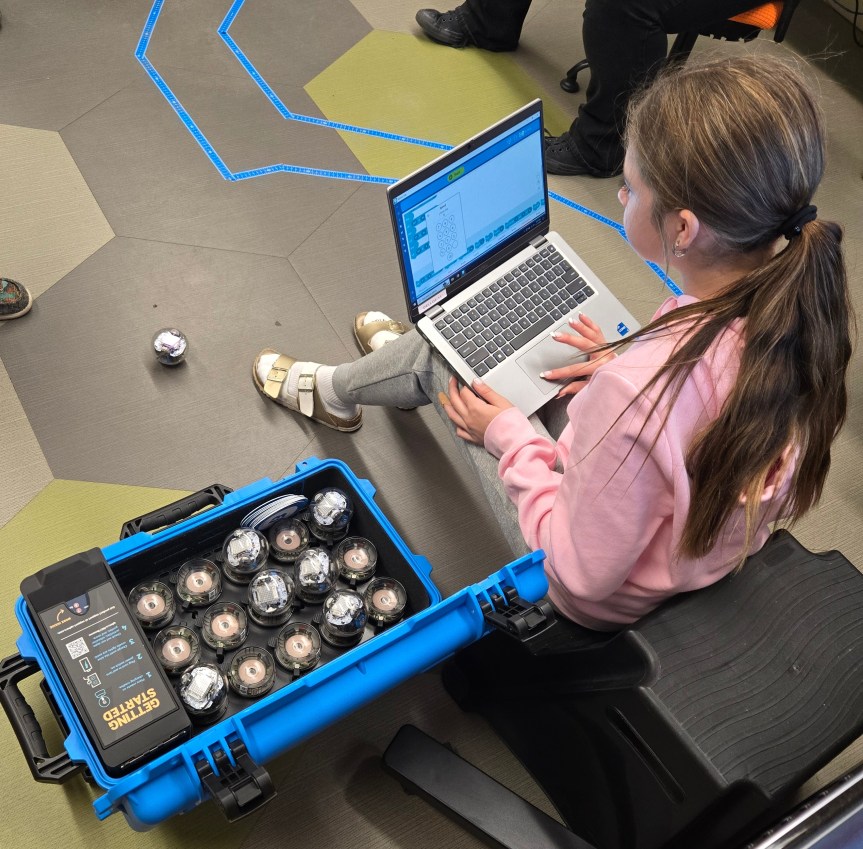
Ultimately, the Tech Team at Indian Island School and Ellen Nicholas at Sipayik Elementary School planned amazing Scratch Day learning opportunities for their students. Dedicated colleagues worked to facilitate and support Scratch Day stations, where students engaged in activities like creating and playing games using Scratch. Mark Goff, Community Moderator for the Scratch Foundation, also attended the Scratch Day programming.

Overall, staff members at each school noted that students seemed very captivated by Scratch Day, and all who participated had a good time.

“The students were incredibly engaged with Scratch and Scratch Jr. and created their own projects that immersed them in the foundations of coding,” Beth Clifford, Maine Indian Education Curriculum Coordinator said. “We see these experiences as wonderful opportunities to share digital tools that expand students’ repertoires for expressing creativity, for enjoyment, and for opening doors to possible career aspirations.”

Information for this story was provided by Maine Indian Education. To submit good news from your school, fill out the Maine DOE good news submission form.

Organizations Needed to Provide Complimentary Meals to Children this Summer

With assistance from the U.S. Department of Agriculture (USDA), Maine public schools have long offered a nutritious breakfast and lunch meal program to thousands of income-eligible children in Maine during the school year. To extend this program into the summer months, the Maine Department of Education (DOE) Child Nutrition team is seeking organizations that would like to participate in the federally-funded SUN Meals program – formally known as the Summer Food Service Program (SFSP) – which provides children healthy, free meals when school is not in session.

In the summer of 2024, 101 SUN Meals sponsors were approved to operate 413 summer meal sites across all of Maine’s 16 counties. There is, however, still a long way to go toward feeding all of Maine’s eligible children in the summer, and community partners are working to maximize the number of sponsors utilizing the available SUN Meals program funds.

“Having access to nutritious food is an essential component of a happy and healthy childhood, providing kids with the fuel they need to thrive both inside and outside of the classroom,” Pender Makin, Commissioner of the Maine DOE, said. “The Maine Department of Education is grateful to organizations that participate in the SUN Meals program, with the understanding that the guarantee of the basic right to food for children should not be restricted to the school calendar year. We encourage other organizations to also consider participating in 2025 to help meet this need for kids statewide.”

The SUN Meals program may be offered statewide in areas or at sites where more than 50 percent of children are eligible for free or reduced meal benefits under the National School Lunch Program or where census data supports the need. Organizations that provide services in rural communities or near migrant farm workers and tribal populations are urged to participate. SUN Meals sponsors are also needed to provide grab-and-go or home-delivered meals (termed “SUN Meals To-Go”) in approved rural locations.

The Maine DOE encourages any eligible organization to consider providing this much-needed service to Maine children. Eligible sponsoring organizations include schools, nonprofit residential summer camps, government agencies, tax-exempt organizations, and faith-based organizations. Approved sponsors will be reimbursed for eligible meals for children during the long summer break.

Interested organizations should begin planning now for a successful summer, as applications for participation open in March. Potential sponsors are required to receive training from the Maine DOE, and that will occur in person in Augusta at a date to be announced.

Maine DOE staff members are available via phone and email to answer any questions pertaining to summer meals and will also assist during the onboarding process for sponsors. For more information about the Maine DOE’s SUN Meals program, please contact Nicholas LaBreck, Maine DOE Child Nutrition Supervisor, at nicholas.j.labreck@maine.gov, or call 207-557-3283. You may also visit the Maine DOE website.

Federal Non-Discrimination Statement
In accordance with federal civil rights law and the U.S. Department of Agriculture (USDA) civil rights regulations and policies, this institution is prohibited from discriminating on the basis of race, color, national origin, sex (including gender identity and sexual orientation), disability, age, or reprisal or retaliation for prior civil rights activity.

Program information may be made available in languages ​​other than English. Persons with disabilities who require alternative means of communication to obtain program information (e.g., Braille, large print, audiotape, American Sign Language), should contact the responsible State or local Agency that administers the program or USDA’s TARGET Center at (202) 720-2600 (voice and TTY), or contact USDA through the Federal Relay Service at (800) 877-8339.

To file a program discrimination complaint, a Complainant should complete a Form AD-3027, USDA Program Discrimination Complaint Form which can be obtained online at https://www.usda.gov/sites/default/files/documents/USDA-OASCR %20P-Complaint-Form-0508-0002-508-11-28-17Fax2Mail.pdf, from any USDA office, by calling (866) 632-9992, or by writing a letter addressed to USDA. The letter must contain the complainant’s name, address, telephone number, and a written description of the alleged discriminatory action in sufficient detail to inform the Assistant Secretary for Civil Rights (ASCR) about the nature and date of an alleged civil rights violation. The completed AD-3027 form or letter must be submitted to USDA by:

(1) mail:
U.S. Department of Agriculture
Office of the Assistant Secretary for Civil Rights
1400 Independence Avenue, SW
Washington, DC 20250-9410; or

(2) fax:
(833) 256-1665 or (202) 690-7442; or

(3) email:
program.intake@usda.gov

This institution is an equal opportunity provider.

State Non-Discrimination Statement

The Maine Human Rights Act prohibits discrimination because of race, color, sex, sexual orientation, age, physical or mental disability, genetic information, religion, ancestry or national origin.

Complaints of discrimination must be filed at the office of the Maine Human Rights Commission, 51 State House Station, Augusta, Maine 04333-0051. If you wish to file a discrimination complaint electronically, visit the Human Rights Commission website at https://www.maine.gov/mhrc/file/instructions and complete an intake questionnaire. Maine is an equal opportunity provider and employer.

Upcoming Information Session on Implementing Positive Behavior Interventions and Supports (PBIS)

Is your school administrative unit (SAU) and/or school interested in implementing Positive Behavior Interventions and Supports (PBIS)? If so, consider joining a Tier 1 PBIS Listen and Learn information session on Tuesday, January 28 at 1 p.m. via Zoom.

PBIS is “an evidence-based, tiered framework for supporting students’ behavioral, academic, social, emotional, and mental health that creates safe, positive, equitable schools, where every student can feel valued, connected to the school community, and supported by caring adults.” (Center on PBIS, 2022).

Maine PBIS offers a three-year intensive training and coaching model to support SAUs and schools in implementing Tier 1 PBIS with fidelity. Currently, more than 70 schools are in Maine PBIS cohorts.

You may register for the January 28 information session here. You may also explore the following links to learn more about PBIS:

For more information, please contact Anne-Marie Adamson at Anne-Marie.Adamson@maine.gov.

FREE Professional Learning Series: Building Linguistically-Responsive Individual Education Plans (IEPs) for Multilingual Learners

To support educators across Maine who work with multilingual learners with disabilities, the Maine Department of Education’s (DOE) Office of Special Services and Inclusive Education (OSSIE) and Office of Teaching and Learning (OTL) are collaborating to facilitate a six-session professional learning series entitled, “The Intersection of English Language Acquisition and Individualized Education Programs”.

Designed for Special Education teachers, Case Managers, and English for Speakers of Other Languages (ESOL) teachers, this professional learning community will foster collaboration and collective efficacy to address students’ linguistic, cultural, and academic strengths through the intersection of language acquisition and disability.

Participants will work toward developing linguistically-responsive Individualized Education Plans (IEPs) through the integration of Individual Language Acquisition Plans (ILAPs) for multilingual students.

Session topics include:

  • Foundational Knowledge: Legal Regulations, Civil Rights, and Data Overview
  • Collaboration and Integration of IEPs and Individual Language Acquisition Plans (ILAPs)
  • IEPs for Multilingual Learners: Section 3 Special Factors
  • Linguistically-Appropriate Goals, Services, and Accommodations
  • Test Participation Guidance and Accommodations

Each session will be artfully facilitated by Leora Byras, Education Specialist, Maine DOE OSSIE, and Melissa Frans, Teacher Leader Fellow for Multilingual Learners with Disabilities, Maine DOE OTL.

Two contact hours per session will be awarded to account for essential pre-work. Participants, including school and district teams, are encouraged to attend all six sessions and, upon completion, will receive a free anchor text: IEPs for ELs and Other Diverse Learners.

With practical guidance and checklists, this book provides educators with research-based strategies and examples that empower them to write effective IEPs for K-12 EL learners.” (Corwin Publishers, 2017.)

Sessions will be held virtually from 3:30-4:30 p.m. on:

  • Tuesday, January 21, 2025
  • Thursday, February 27, 2025
  • Tuesday, March 18, 2025
  • Tuesday, April 29, 2025
  • Thursday, May 22, 2025
  • Tuesday, June 10, 2025

To register for this event, please use this registration link.

If you have any questions, please contact Leora Byras (Leora.Byras@maine.gov) or Jane Armstrong, Maine DOE ESOL State Specialist (Jane.Armstrong@maine.gov).