Selection of Fall & Winter Professional Learning Opportunities for Early Learning & Childcare Educators

The Maine Department of Education Office of Teaching and Learning, Early Learning Team, along with our partners at Maine’s Office of Child and Family Services and Maine Resilience Building Network (MRBN), are hosting several professional learning opportunities for childcare and public-school educators working with children this fall and winter. These opportunities are funded through Maine’s Preschool Development Renewal Grant.

  1. Supporting Children, Families, and Communities to Thrive: Promoting Positive Childhood Experiences and Resilience – a series of free virtual (via ZOOM) professional development sessions for PK-3 public-school educators to learn about how childhood experiences impact children’s development, including strategies for supporting positive experiences, in addition to tools for educators in addressing self-resilience.
  2. Empowering Early Childhood Educators to Foster Resilience and Positive Childhood Experiences: A Train the Trainer Opportunity—this program is designed to equip early childhood educators with the tools, knowledge, and confidence to promote Positive Childhood Experiences (PCEs) and resilience in your early care and education environment by facilitating workshops on these topics.

Find more information on each opportunity below.

Supporting Children, Families, and Communities to Thrive: Promoting Positive Childhood Experiences and Resilience

The Maine Resilience Building Network will be hosting a series of free virtual (via ZOOM) professional development sessions in partnership with Maine DOE and Maine’s Office of Child and Family Services throughout the fall and winter. These sessions will focus on:

  • how adverse and positive childhood experiences impact children’s development,
  • ideas for how to support a stronger focus on positive experiences and for building resilience for young children, and
  • strategies for how educators can address compassion fatigue and build their own resilience.

Descriptions of all 3 available offerings can be found here. Two contact hours are available for each session. Registration is required and links to each session are provided within the table below. There is no cost to attend sessions.

Date/Time Program and Registration Link
Monday, September 9, 9-11 am The Impact of Experience: How Adverse Childhood Experiences and Positive Childhood Experiences Impact Healthy Child Development (Part I) https://maineresilience.org/event-5813524
Monday, September 16, 9-11 am A Framework for Implementing Positive Childhood Experiences to Support Healthy Child Development (Part II)  https://maineresilience.org/event-5813527
Monday, September 23, 9-11 am Addressing Compassion Fatigue and Resilience Strategies in Educators and Caregivers  https://maineresilience.org/event-5813530
Tuesday, October 15, 6-8 pm The Impact of Experience: How Adverse Childhood Experiences and Positive Childhood Experiences Impact Healthy Child Development (Part I)  https://maineresilience.org/event-5813531
Tuesday, October 22, 6-8 pm A Framework for Implementing Positive Childhood Experiences to Support Healthy Child Development (Part II)   https://maineresilience.org/event-5813534
Tuesday, October 29, 6-8 pm Addressing Compassion Fatigue and Resilience Strategies in Educators and Caregivers https://maineresilience.org/event-5813538
Wednesday, November 6, 3-5 pm


The Impact of Experience: How Adverse Childhood Experiences and Positive Childhood Experiences Impact Healthy Child Development (Part I)  https://maineresilience.org/event-5813542
Wednesday, November 13, 3-5 pm A Framework for Implementing Positive Childhood Experiences to Support Healthy Child Development (Part II)  https://maineresilience.org/event-5813544
Wednesday, November 20, 3-5 pm Addressing Compassion Fatigue and Resilience Strategies in Educators and Caregivers  https://maineresilience.org/event-5813556
Thursday, January 9, 3-5 pm The Impact of Experience: How Adverse Childhood Experiences and Positive Childhood Experiences Impact Healthy Child Development (Part I) https://maineresilience.org/event-5813557
Thursday, January 16, 3-5 pm A Framework for Implementing Positive Childhood Experiences to Support Healthy Child Development (Part II) https://maineresilience.org/event-5813559
Thursday, January 23, 3-5 pm Addressing Compassion Fatigue and Resilience Strategies in Educators and Caregivers https://maineresilience.org/event-5813561

Additional questions can be directed to the Maine Department of Education’s Early Childhood Specialist, nicole.madore@maine.gov.

Empowering Early Childhood Educators to Foster Resilience and Positive Childhood Experiences:  A Train the Trainer Opportunity

The train-the-trainer program is designed to equip early childhood educators with the tools, knowledge, and confidence to promote Positive Childhood Experiences (PCEs) and resilience in your early care and education environment. This comprehensive program will empower you to lead training sessions within your own community, ensuring that more children and families across Maine benefit from these vital strategies.

Target Audience

This program is ideal for:

  • Early childhood educators
  • Pre-K providers
  • Public school professionals (serving children ages Pre-K to Grade 3)
  • Any stakeholders involved in supporting children ages 0-8 across Maine

Prerequisite

Participants should have experience in facilitating professional development sessions and a strong commitment to promoting PCEs and resilience.

Program Objectives

  • Understand the impact of Adverse Childhood Experiences (ACEs) and PCEs on healthy child development.
  • Learn evidence-based strategies to foster resilience in children, families, and communities.
  • Master the art of delivering effective training sessions to diverse audiences, including educators, caregivers, and community stakeholders.
  • Facilitate engaging discussions and activities that promote PCEs.
  • Provide ongoing support and resources to educators and caregivers in your community.

Program Content

Participants will:

  1. Build an understanding of the impact of experience by:
    • Exploring the effects of ACEs on early brain development and lifelong well-being.
    • Discovering the latest research on PCEs and their role in fostering positive mental health in adulthood.
  2. Strengthen the ability to foster Positive Childhood Experiences by:
    • Learning practical strategies to promote PCEs through the Positive Resilience Development framework.
    • Engaging in cognitive reframing techniques focused on protective factors and strengths.
    • Applying the Positive Resilience Development framework to real-life scenarios through group activities and case studies.
  3. Achieve certification as a PCE and resilience trainer:
    • This certification will document your expertise and readiness to deliver impactful training sessions.

Program Duration

  • 4 weeks with one virtual session per week (each session is approximately 2 hours).

Timeline and Session Topics

  • 10/23 Week 1: Introduction and Overview
  • 10/30 Week 2: Understanding the Impact of Experience (Part I)
  • 11/6 Week 3: Implementing Positive Childhood Experiences (Part II)
  • 11/13 Week 4: Application and Practice Session / Wrap-up and Certification

Total Contact Hours – 12 (8 hours for TTT Program + 4 hours prerequisite training)

Register today to transform your training approach and help children, families, and communities thrive across Maine.

For questions, please email MRBN’s Executive Director, Delvina Miremadi-Baldino at delvina@maineresilience.org
Cultivating Collaborative Relationships: Technical Assistance and Mini-Grant Opportunity for Early Care and Education Communities – Info Session 9/19

With the ever-growing understanding of and commitment to serving the whole child and family, the need for relationship building among early care and education providers within communities is even more important.  When early care and education providers, such as child care, Head Start, schools, YMCAs, and libraries, get to know the work each does to support children and families during the early years, partnerships can emerge to achieve shared, positive outcomes.

These partnerships can vary in their design and in their intended purposes, depending on the context and needs of the community. Examples of early care and education community partnerships include providing public pre-k, supporting the transition of special education responsibilities for 3–5-year-olds to the public schools, strengthening kindergarten transitions and registration, and offering shared professional development among educators.  But how do you start building relationships among community partners?  Who do you contact?  What are possible partnership opportunities in your community? The Maine Department of Education’s Pathways to Partnership series is designed to help communities answer these questions and build relationships among early care and education providers to benefit young children and their families.

Recognizing that every community’s needs are different, and each early care and education provider brings a variety of important perspectives to the work, the Early learning team is seeking communities open to exploring the benefits of relationship building and community partnerships.  Community teams will need to have at least one leadership representative from a school administrative unit (SAU) or school (e.g., principal, assistant principal, superintendent, curriculum coordinator, etc.) as well as at least one licensed community-based provider (e.g., family childcare, center-based care, Head Start, YMCA, etc.) willing to attend a 4-part series to learn about the various partnerships that occur in Maine. Although only these two members are required, teams are strongly encouraged to have broader representation from their early care and education community.

The series will include facilitated and focused planning time for team members. Upon completion of the series, a mini-grant opportunity will be available for communities to secure additional facilitated support to continue the work started during the series.  Each 90-minute session in the series will be held over zoom on the following dates. The exact time will be determined after registration information has been reviewed.:

  • Thursday, October 17th
  • Thursday, November 7th
  • Thursday, December 5th
  • Thursday, January 16th

To register for the series, follow this link to the application.

For further questions, please reach out to Michelle Belanger, Pre-K partnership Specialist at Michelle.belanger@maine.gov


Seeking Educators to Pilot MOOSE Modules and Educator Guides; Info Session 9/18/24

Do you want to explore and implement innovative instructional materials this fall? Are you interested in expanding your impact outside your classroom/school? Would you like support in incorporating Wabanaki Studies into your curriculum? The Maine Department of Education (DOE) is currently seeking educators to pilot MOOSE Modules and Educator Resources and would love to have your class participate!

Maine’s Online Open-Source Education (MOOSE) platform provides free, interdisciplinary, project-based learning materials created by Maine teachers for Maine PreK-12 students. Feedback on the modules themselves and their usability is vitally important as we constantly improve existing modules and apply the feedback to new creations. In addition to the modules themselves, extensive Wabanaki Studies Educator Resources have been developed and are ready to be piloted for feedback. Educators may apply to pilot any combination of modules and/or educator guides in their classroom.

We are looking for Maine educators interested in using these materials in their classroom with five (5) or more students and providing feedback about the experience. You get to decide the module(s)/guide(s) you want to pilot based on what works best for you and your students. You can choose from over 350 modules, including modules in dedicated learning progressions, such as Wabanaki Studies, and 18 Wabanaki Studies educator guides. Stipends will be provided for up to two modules and/or guides ($500 each) that you have piloted and provided feedback on. All required elements must be completed by January 19, 2025.

If you are interested in applying but still have questions, representatives from Maine DOE will be holding a Q&A session via Zoom on Wednesday, September 18th from 3:30 – 4:30 pm. Registration for the Q&A session can be found here. The session will be recorded and sent to anyone who registers, even if they aren’t able to make it in person. Questions can be submitted ahead of time to be answered in the session. For more information or to submit questions, please contact MOOSE Project Manager Jennifer Page (jennifer.page@maine.gov) and/or Wabanaki Studies Specialist, Brianne Lolar (brianne.lolar@maine.gov).

If you are ready to apply applications can be found here. Applications for the fall session are due by Sunday, September 22nd, 2024.

Maine FFA Advocates in Washington, DC  

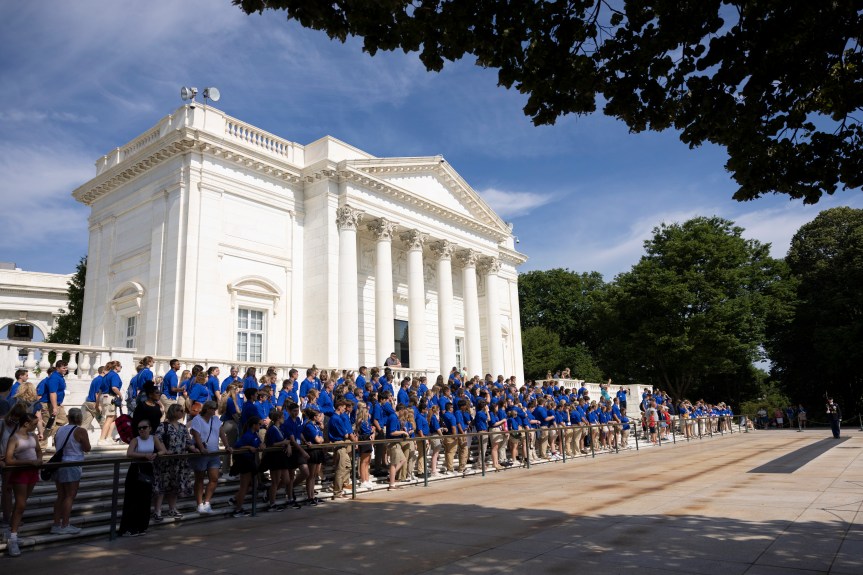
The Maine FFA state officer team traveled to Washington, DC, for the 2024 State Officer Summit this summer. The Summit is a five-day training event during which hundreds of students representing all 50 states, the US Virgin Islands, and Puerto Rico engage in conversations about leadership, agriculture, and advocacy. This experience prepares the state officer team and the Maine FFA Association for a successful year.

While in Washington, D.C., students strengthened their understanding of federal policies related to agriculture, connected with agricultural leaders, and served as delegates for upcoming FFA Committee work. After building their knowledge, the officers met with Senator King and staff from Congresswoman Pingree and Representative Golden’s offices.

Outside of training, students learned more about American history and took advantage of all that the nation’s capital has to offer.  Julia Pierce, a 2024-2025 State Officer, shared, “State Officer Summit was a great experience.  It provided many opportunities for the officers to work on advocacy in the FFA.  Some of the activities we got to take part in included a night tour of all of the Monuments, visiting the Holocaust Museum, and one of our favorites- touring Arlington National Cemetery.”

As the team reflected on their experience, many reiterated the importance of connection to their peers. Julia added, “We had the privilege to talk to officers from all over the US and see how different FFA can be in other places.  We were able to make lots of new friendships and learn new skills that we hope to use in the future.”

During the State Summit, two of Maine’s officers were assigned Committee roles as part of the delegate body at this year’s National Convention.  One of Maine’s delegates, Lane Carmichael described his experience: “State Summit was an opportunity to expand our horizons as state officers.  We were able to step up and realize that although Maine may be smaller than others in membership, we can still have the same impact on National FFA.”

The Maine FFA was able to send all six current state officers to Washington, DC, this year thanks to the generous support of local sponsors, Maine Agriculture In the Classroom, and the National FFA Organization.

The Maine FFA is a student-led organization focused on premier leadership, personal growth, and career success.  State Officers represent the Maine FFA throughout the 2024-2025 school year and work closely with local FFA chapters.   For more information about the Maine FFA Association, please visit https://www.maine.gov/doe/learning/ffa or contact Emily Doughty, State FFA Liaison, at emily.doughty@maine.gov.

New MTSS Cohort Opportunity to Equip Principals in Leading Equity-based MTSS for Student Supports

The Maine Department of Education (DOE) is thrilled to announce an innovative training program that will empower school principals to champion equity-based Multi-Tiered Systems of Support (MTSS) for comprehensive student success.

Implementation of a Multi-Tiered System of Support is a requirement in Maine schools.  The purpose of this learning cohort is to provide training and support to Maine school principals and related personnel with the design and implementation of MTSS frameworks that provide them with the knowledge and tools necessary for addressing the diverse needs of students and to promote school and student success effectively.  By adopting a schoolwide MTSS, schools can foster a culture of academic, behavior, social/mental health, and attendance support, early intervention, and data-driven decision-making, ultimately leading to improved growth and achievement rates and better outcomes for all students.

Participants in this cohort will:

  • Build capacity to design and effectively lead schoolwide MTSS across grades PK-12
  • Develop knowledge and skills to make MTSS a part of the school culture to ensure valuable work in high-leverage student supports that can be blended and braided into a cohesive system that leads to longterm positive impact,
  • Convene relevant stakeholders into MTSS leadership teams that are prepared to utilize research-based strategies for identifying areas of concern/need, assessing identified problems, selecting solutions, creating targeted plans, and monitoring outcomes that cross all school domains (reading, mathematics, behavior, social and emotional/mental health, and attendance)
  • Explore and learn how to use a variety of MTSS implementation tools and resources that are used to assess and build readiness for MTSS implementation, assist principals in aligning initiatives and layering support for maximum impact and long-term sustainability, and facilitate the identification of existing or future barriers that may have a negative impact on the implementation of MTSS and provide action steps for removing barriers to aid in successful MTSS implementation.

The MTSS cohort will take place through a hybrid of synchronous and asynchronous learning sessions from October 2024 through December 2024, utilizing both live in-person and virtual sessions, including onsite school visits, small group in-person team-based workshop events at a centralized location, and a 2-day whole group in-person convening at a location to be determined.

Please attend the online information session for more detailed information regarding the timeline, commitment requirements, and in-person meeting location(s).

The program is open to PK-12 principals and any of their designated MTSS Team members.  Applications for participation will open after September 9th and will be reviewed on a rolling basis through September 26th until all slots are filled.  All schools will be notified of their application status no later than September 27th, with virtual learning sessions to begin the week of October 7th.

For further questions, you can reach out to Andrea Logan, MTSS Specialist, via email (andrea.logan@maine.gov) or by phone (207-592-2011) Monday through Friday from 8:00 AM through 4:30 PM.

Office Hours: Multi-Tiered System of Support Framework

The Maine Department of Education (DOE) Office of Teaching and Learning, Multi-tiered Systems of Support (MTSS) team is pleased to offer office hours focused on Maine’s MTSS Framework beginning Friday, October 4th at 10am, and occurring every first Friday of the month thereafter.

The first half of each session will provide a comprehensive overview of Maine’s MTSS framework.  The second half of the session will be open to questions/problems of practice brought up by attending participants. Sessions are meant to be a time for educators and administrators across the learning continuum to come together to learn about the framework, ask questions, celebrate successes, and/or work through problems of practice in MTSS implementation. These sessions are MTSS Framework-specific and are offered as a space for educators to bring their voices to the table.

Register for MTSS Framework Office Hours here.  You only need to register once and you may attend as many weeks as you like! Office hours are offered as part of the Maine DOE’s MTSS Technical Assistance program and are meant for your use and discussion. You are welcome to stay for the full hour or to join for just a portion of the sessions.

For more information, contact Andrea Logan, MTSS Specialist, at andrea.logan@maine.gov or by calling (207) 592-2011.

USDA Awards 7.4 million in School Food System Innovation Grants in Maine

The U.S. Department of Agriculture (USDA) recently awarded a total of $7.4 million in School Food System Innovation Grants to seven organizations in Maine through its partner Full Plates Full Potential. The grant funding is part of USDA’s $100 million Healthy Meals Incentives Initiative, which empowers schools to continue serving delicious, healthy meals through regional school food systems.

Congratulations to all the award winners! Their projects will help schools overcome barriers to purchasing Maine-based foods for their school meal programs and establish long-term solutions and best practices that can be replicated in other regions.

Maine Grant Awardees:

  • Auburn Public Schools, Maine – School-Based Food Hub
  • Five Pillars Butchery, Maine – Halal Meal Production Lab
  • Maine Coast Fishermen’s Association, Maine – Fisherman Feeding K-12 Mainers
  • Maine Food Strategy/Maine Food Convergence, Maine – Local Food Switchboard
  • Peak Season, Maine – Streamlining Access to Maine Grown K-12 Products
  • RSU 54/MSAD 54, Maine – Somerset County Farm to School Initiative
  • The Good Crust, Maine – Good Grains on the Go

For more information, you can read the USDA News Release. Full Plates Full Potential is a non-profit dedicated to ending childhood food insecurity in Maine. To learn more about them, visit their website – Full Plates Full Potential Website.

Provide Input for the Maine Child Safety and Family Well-Being Plan

We can keep children safe by keeping families strong.

Please join Mariette Aborn, Special Projects Manager for the Maine Department of Health and Human Services (DHHS), as she and her colleagues from Maine Child Welfare Action Network (MCWAN) welcome you to provide input on the next version – Version 2.0 – of the Maine Child Safety and Well-Being Plan.  Join them for a virtual community engagement session on Tuesday, September 17th.

Virtual community engagement sessions are one of the ways that DHHS and MCWAN gather input to inform the ongoing development and implementation of the Child Safety and Well-Being Plan. These sessions are intended for community partners, parents, caregivers, and other partners in Maine. Over the last year and a half, DHHS and MCWAN have held 17 of these sessions.

The next session will be Tuesday, September 17 from 11:30 am – 1:00 pm on Zoom. Register at this link.

Feedback from community and state partners informed Version 1.0 of the Plan, which was released in May 2023. Version 1.0 outlined the framework and opportunities for immediate action to develop a Child and Family Well-Being System in Maine. A long-term version of the Plan is in development and will build on Version 1.0’s call for the state and communities to share responsibility for child safety and family well-being.

During this session, Aborn and colleagues will:

  • Provide an update on the implementation of Version 1.0, including the Be There for ME campaign and website to support parents and caregivers in Maine.
  • Outline the ongoing process of developing the long-term version of the Child and Family Well-Being Plan.
  • Gather insight into local and community-based efforts that support transportation and provide concrete support to families, such as diapers, clothing, household items, and food.

The Department of Health and Human Services and the Maine Child Welfare Action Network have partnered on this plan to keep children in Maine safe by keeping families strong. This newsletter shares updates on state and community efforts to strengthen families and opportunities to inform this ongoing work. Learn more and read Version 1.0 of the plan here.

Organizations and resources included are for reference and information only, they are not an endorsement from the Maine Department of Education.

REMINDER: Seeking Public Comment on Chapter 115 – the Credentialing of Education Personnel

The Maine State Board of Education is conducting conversations with the public about Rule Chapter 115: The Credentialing of Educational Personnel, from August through December. Resolve 2024, Chapter 137 directed the State Board of Education to amend Rule Chapter 115, with special attention to sections related to the State Board of Education’s report submitted to the Joint Standing Committee on Education and Cultural Affairs in 2023.  

The State Board of Education intends to take the following steps with respect to review of these rules: 

  1. Begin speaking with experts in the field 
  2. Revise necessary sections of Chapter 115 
  3. Invite public feedback on the revisions 
  4. File updated rule 
  5. Engage with Legislative oversight of the rule 

The State Board of Education will hold several regional meetings focused on ideas and goals related to certification regulations in a general sense. These meetings will also focus on specific sections of Chapter 115 and will provide invaluable feedback to the State Board. In addition, the State Board of Education’s Certification and Higher Education Committee will provide time within the established meeting schedule to receive public feedback on Rule Chapter 115.  

 Remaining dates for these meetings are as follows – for the Zoom link, please email Emily Cummins 

  • September 25, 2024: 10:30 am – 12:00 pm 
  • October 16, 2024; 10:30 am – 12:00 pm
  • November 20, 2024: 10:30 am – 12:00 pm 
  • December 18, 2024: 10:30 am – 12:00 pm 

Taking into consideration the insights gained from all of these discussions, the State Board of Education will propose updates to Rule Chapter 115 and begin the Maine Administrative Procedures Act (A.P.A.) routine technical rule process pursuant to Title 5 MRS §8052 (public notice of filing, public hearing, open public comment period). Once the proposed rule has been filed, the public will be notified of the scheduled public hearing and comment period.  This will be an opportunity to provide written and oral comments regarding the proposed rules. The State Board of Education will review all comments and respond accordingly.  Updates to the rules will then be submitted for review as to form and legality and legislative oversight before final adoption.    

For more information and updates check the State Board of Education webpage. 

For more information about the conceptual conversations for Rule Chapter 115 contact Laura Cyr at laura.cyr@maine.gov. 

Screen-Free Summer Sparks Creativity and Learning at Beech Hill School 

In a world dominated by screens, Beech Hill School took a refreshing approach this summer with their screen-free summer program, offering K-7 students a four-week immersive experience focused on hands-on learning and community building this summer. Over 30 campers attended regularly, representing 45% of the school’s student population, making it a resounding success. 

A key factor in the success of the program was the collaborative effort of Beech Hill School’s teachers and staff. From the outset, the planning and execution of the summer activities were a team effort, with educators pooling their expertise and creativity to design a program that would both engage and educate students without the use of technology. Their commitment to fostering a nurturing and dynamic learning environment was evident in all aspects of the program, from the lesson plans to the field trips. 

The program began each day with a morning meeting, a familiar tradition at Beech Hill School that has long been used to foster a sense of community and connection among students and staff. Organizers of the program were dedicated to providing engaging activities that built foundational math and reading skills, while also offering team-building, physical education, and STEAM-related enrichment, all without the use of technology. 

Each week of the program revolved around a different theme. Students explored “Space & Science,” where younger campers engaged in activities like skip-counting, scaling down the solar system, and a cosmic firework science activity. Another week, themed “Maine: Vacationland,” saw students diving into local culture and nature with trips to the Oceanarium and the Golf of Maine.  A special highlight was listening to a guest reader who shared stories about Robert McCloskey, the author of Blueberries for Sal.

Visual and performing arts also took center stage during one of the weeks. Activities included puppet theater, performance poetry, and theater/improv exercises led by guest instructors from Penobscot Theater, the University of Maine, and the Grand Theater. The students even visited a local theater to watch other campers rehearse for a performance of Disney’s Frozen Jr. 

This year marked the first time Beech Hill School expanded its summer program to include middle school students, creating a new initiative called “Summer Scholars.” Principal Nichole Pothier worked directly with students at the end of the 2023-2024 school year, gathering their input on interests, which led to a diverse range of activities. These included explorations in poetry, photography, crocheting, sewing, fishing, hiking, drawing, painting, wood-burning, and various sports. 

With the assistance of high school student mentors, teachers and staff worked closely with students, guiding them through projects that encouraged critical thinking and creativity.  Students were encouraged to take the lead in certain activities, which fostered a sense of ownership and responsibility among the campers.  This collaborative dynamic was particularly evident in the middle school “Summer Scholars” initiative, where students had a say in the projects they pursued.  The partnership between students and educators was crucial in creating a learning environment where students felt empowered to explore new ideas and develop new skills in a meaningful and personalized way.  

The program was enriched by visits from community members who shared their skills and stories. A Beech Hill School alumna and entrepreneur stopped by to give a tour of her food truck and taught students how to make homemade strawberry shortcakes. Another parent, who is also a clinical mental health counselor, introduced campers to “breath work” techniques for managing stress. Local community members also led a “Project Pajama Pants” sewing experience while Ellsworth Eagle athletes engaged students in basketball activities. 

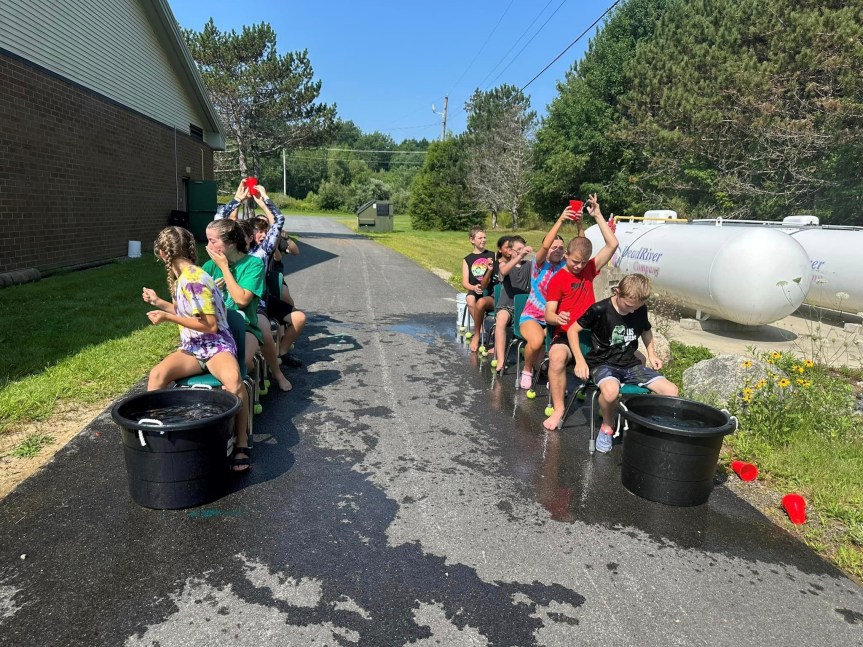
The K-7 program culminated in a “Water Olympics” event, where campers celebrated their four weeks of learning, growth, and strengthened connections with their school community. The event was a fun-filled finale that provided the perfect end to a summer filled with creativity, learning, and screen-free adventures. 

Beech Hill School’s commitment to providing a meaningful, technology-free summer experience, coupled with the collaborative efforts of teachers, staff, and students, has not only helped students develop new skills but also reinforced the power of community and face-to-face interaction in an increasingly digital world. The success of the program is a testament to what can be achieved when educators and students work together in a supportive and creative environment, and it promises to positively impact the school community as the new academic year begins. 

 This story was submitted by Beech Hill School. To submit a good news story from your school, please fill out this good news submission form.