Reports Due Soon: April 1 Enrollment & Quarter 3 Reporting

Attendance, Behavior, Bullying, and Truancy reports for Quarter 3 (January, February, and March) as well as any updates to previous quarters and the April 1 Enrollment Report opened on April 1st. These reports are due on Monday, April 15th.

These reports need to be reviewed and submitted in NEO Student Data. In preparation for this reporting, please update student data in State Synergy for enrollment, attendance, truancy, and behavior. Update bullying incidents in NEO.

Reporting Resources:

For questions and technical assistance for quarterly reporting, please Maine DOE’s Data Helpdesk at MEDMS.Helpdesk@maine.gov or call 207-624-6896


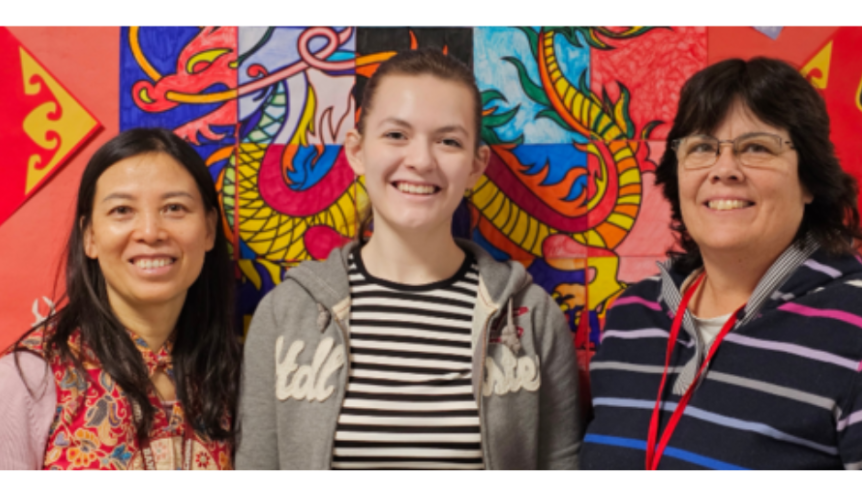
South Portland Educator Named English to Speakers of Other Languages (ESOL) Teacher of the Year

(Pictured L to R: EMME President Stephanie Carbonneau, awardee Sheanna Zimmerman and Director of Multilingual Programs in South Portland April Perkins)

Sheanna Zimmerman of South Portland Schools was awarded the English to Speakers of Other Languages (ESOL) Teacher of the Year by the Educators for Multilingual Maine (EMME) on March 8, 2024.

EMME President Stephanie Carbonneau. and 2024 ESOL Teacher of the Year Sheanna Zimmerman

“The last two years have been the most incredible and fulfilling years of my career. As many of you know, South Portland welcomed hundreds of new multilingual students and families in a short time. I had the honor of supporting our district as we developed a multilingual intake and orientation process, hired multilingual specialists, expanded our ESOL programming, and doubled the size of our ESOL team. I’m proud of these accomplishments and want to thank our South Portland administration and teachers who have continued to embrace opportunities for growth.”

From all of us at the Maine Department of Education, congratulations Sheanna!

Educators for a Multilingual Maine (EMME) is a non-profit organization whose purpose is to promote and improve the teaching and study of languages and cultures of the world. EMME also strives to further the common interests of teachers, students, and others in Maine, for whom languages play an important role. EMME was formerly known as FLAME, the Foreign Language Association of Maine.

Learn more about EMME or the ESOL Teacher of the Year award, please visit the EMME website or reach out to EMMC at communications@emmaine.org.


Experiencing the Magic at Maranacook Community Middle School

Walk into any classroom at Maranacook Community Middle School and you’d be hard-pressed to identify a 6th grader from an 8th grader in the class. And that’s part of the magic at Maranacook.  Instead of being separated by grade level, students are grouped into multiage teams. 

The school does more than blend grade levels—teacher teams work together to integrate learning across content areas around themes chosen by students each trimester. These themes can range from the end of the world to food to careers. 

Before every trimester, teams get together and teachers will bring them through a process of inquiry. Students ask questions about themselves, the world around them, their community, their interests, and the world in general. Themes start to appear through this inquiry process and the students get to choose the theme they have the most interest in. 

Principal Rick Sirois summed up a big part of the Maranacook approach. 

“Student buy-in is key, giving them voice and choice, which I think we do well, and giving them multiple pathways to demonstrate what they know,” he said. 

Maranacook is a shining example of integrating powerful interdisciplinary instruction and elevating student voice and choice. 

The result? Students are engaged and excited to learn, they have ownership over their learning and immense pride in their school, teachers build strong connections and relationships with one another and with students, and students feel part of the same team regardless of grade level. 

In one class on a team working on an Armageddon theme, students worked in groups to analyze the differences between two maps. One map featured the traditional layout of countries that we’ve all come to know. The other map country sizes were linked to population size. The students worked together to identify what was similar and different about the two maps and then answered the following questions after analyzing the maps: what things surprised you? what things concern you? What questions do you have? 

This was the third day of a unit on population. The students learned about global changes and advancements that grew the Earth’s population to 8 billion people and were now focused on the consequences of population changes and the different concentrations of those populations. Students identified consequences such as overpopulation, the overconsumption of resources in some places, deforestation, and how countries with small land masses can continue to handle large population booms. 

Other topics the students will focus on for this theme include water shortages, global warming, nuclear war, and world leaders. Soon they will learn how to build desalinators. 

“Oceanography was the theme in the first trimester and I think the kids thought we were going to do ocean waves, which we talked about, but our focus was how light waves and sound waves change when they’re in the ocean. That’s a heavy thing and they got it,” said teacher Karen Beckler. 

Asked what they enjoy about school, one student shared, “We get to pick what we’re learning.”

“They make it fun while still being able to learn,” said another student. He said his team’s theme for the trimester was games, hobbies, and sports. In one class, students played UNO and had to talk about the probability of each color. In the next class, students had to roll dice 100 times and collect data on how they landed. In another class, each student had to research and do a report on a past Olympic competition and the city where it was held. 

In another class on the same Armageddon-themed team, students were delivering group presentations answering different aspects of the question “are we alone?” The students presented their research investigating what scientists have said to answer that question, how the identification of alien life could impact religion on Earth, detecting life on other planets, and more. Students answered questions about their topic areas from the teacher and other students, and students filled out a rubric on what they learned while their peers delivered their powerpoints. 

“I was a skeptic,” said Beckler, who recently came to Maranacook with decades of experience teaching in other districts. “I thought how are we going to meet all these science standards if the kids are picking the units and it’s not linear? But it’s amazing to me spiraling back on it from other years how much they remember from a unit they had a trimester the year before. And the kids who didn’t get it the first time have another opportunity to learn the same general concept but in a different situation. There’s a big chunk of kids, they’ve got to see it applied and not just once but many times.

Beckler continued, “And their retention is so much better. I did a unit on the organization of the body last year and this year when we did the nervous system, I drew something on the board and they were like oh that’s a nerve cell that makes nerve tissue and the organ is the brain and that is the collection of nerve tissue in the body. They applied what they did earlier.”

She also discussed how team teachers approach the themes in a way that builds off each other. Last trimester, students on her team were really focused on how they can know what is true, how humans learn, why they get distracted so often. Maranacook teacher Amy Tucker focused on AI since students raised questions about AI taking over the world or humans not having to think in the future because AI would do that for them. Another teacher on the team focused on executive functioning, keeping yourself organized, how to plan, how to regulate emotions and explore mindfulness. Beckler taught about the nervous system, how humans receive information and how the brain processes it. And students were able to cross reference and apply things they were learning across the classes. 

“In our AI unit, we included a lot of ELA content, but we also looked at ethics and bias and what AI is actually doing. We focused on programming AI models, trying to add data to improve them. We also tested AI image software, searching for terms like ‘doctor’ and ‘teacher’ and ‘criminal’, and we collected data and found that the AI image generators we used were pretty biased. We then used the data to write about to what degree AI should be regulated,” said Tucker. 

“We did AI last trimester and we saw how AI gives us information and how it could be biased,” reflected a Maranacook student. “AI is a useful tool if you know how to use it.”

Educators and students also shared the value they see in their multiage approach. 

“By the end of trimester one you can’t distinguish who is a 6th grader who is a 7th grader based on their behavior because they have caught on so well and so fast,” said Beckler. 

Teachers highlighted how their multiage approach helps sixth graders quickly integrate into the school, helps teachers better differentiate learning, better behaviors, more socialization between ages, and less of a power dynamic between older students and younger students. 

“In some ways, our 6th graders are working harder so it makes the 8th graders keep their focus,” said Tucker.  

One student said he liked the opportunity to know other kids across grade levels, which wasn’t the case at previous schools. 

“Being an eighth grader, here I don’t have to be like I’m only friends with 8th graders. I’m friends with all grades,” he said. 

“We’re doing a podcast and we’re going to interview people about their experiences on multiage teams and how it impacts them in high school,” said a student who is part of a three-person podcast team who interviewed each other, several of their peers, teachers, and high school students.

Student choice and voice extend beyond choosing themes to learn about. 

During the lunch hour, students get to eat with their peers and have 30 minutes of activity time where they can choose to go outside, play Minecraft or Dungeons and Dragons together in the library, engage in robotics, socialize, catch up on school work, and more. 

Maranacook Community Middle School sits perched above Maranacook Lake in Readfield and shares a campus with the high school. The school takes a Whole Student Approach built on strong relationships, engaged learning, supporting student and staff wellbeing, and family and community engagement. Each day for the school’s nearly 300 students begins and ends with advisory time to connect with and get support from their advisory teacher. Students have access to the school-based health center in the high school making it easier for families to schedule medical care when they need it, a community food bank, a clothing boutique, toiletries, backpacks, and other supplies. They also have a partnership with Kennebec Behavioral Health providing students with access to their counselors during the school day. The school also offers a mentor program where students can get matched with a high schooler. They meet once a week to play games, help with homework, talk about life and hardships, share experiences, and students get advice from someone a few years older.

“We try to break down every barrier we can. Sometimes a family can’t get services outside of school hours so why not offer it here,” said Sirois. 

Relationships run deep at Maranacook. 

“One thing we always describe as the cornerstone of our school is the advisory program,” said Sirois. “That’s evidence that relationships are foundational at Maranacook and we start and end our day with our advisees every day. That is a huge piece and gives every student a person [they can lean on].”

Tucker agreed, saying, “Relationships are the biggest key, and every teacher will say that here. It goes a long way when you have those small groups and you can get to know them.”

“It’s not uncommon for an advisor to fill up a backpack with food and give it to a student on their way out,” added Sirois. 

None of this comes easy. While Beckler started a skeptic, she’s leaned fully into the Maranacook way. 

“This is year 30 of education for me and in some ways, I feel like a new teacher,” she said. “I feel like a new teacher in the sense that there’s a lot more planning and I put a lot more time in, but I’m also way more creative. 

“It’s not the easiest place to teach,” Sirois admits. “There’s not a curricular book you can pull off the shelf.”

But the school has built a supportive community and teachers are provided the tools and time they need. 

“The special sauce here is that the staff here work together incredibly well and share things. Every trimester is a different theme, so you are reinventing the wheel a lot. But you have so many colleagues that you can pick their brains and find cool activities that meet the learning standards while at the same time focusing on the theme that the kids chose,” said Beckler. 

Teacher teams meet daily to prepare lessons, share resources, tackle how they are teaching different aspects of the theme students decided, and support one another. 

“We spend a lot of our prep time together. Every day we have this period, and we usually are together. Even if we are working independently, we’re in the same room or checking with each other on what we’re working on and seeing where it all fits together. Sometimes it’s just sharing articles we saw or interesting things we heard about,” said Tucker.  

The school is also in its first year of piloting BARR (Building Assets Reducing Risks) with one of their teams. They took advantage of the Maine Department of Education’s offer to support BARR implementation for any Maine school through federal emergency relief funds. BARR is built on relationship building and data, and the model has been shown to increase student engagement, reduce absenteeism and failure rates, and increase student and educator wellbeing. Since relationship building is core to Maranacook, BARR fits nicely. 

“What I like about [BARR] is that it does everything that we do or that we aim to do and puts it in one neat package and gives us one system,” said Sirois. “It’s been super supportive of our MTSS efforts.”

Tucker agreed, saying, “It’s pulling together a lot of what we do and organizing it.”

The high school is also piloting BARR with its freshman class and both schools are looking at how they might build off their progress in year two of implementation. 

“We’re organized really well for BARR,” said Beckler. “Because of our multiage, we can keep track of a kid over three years, know their background, know what they did the previous year because we keep them for the three years. That’s huge for BARR, that knowledge of [the students] and having flexibility during class time to do the I-Time activities. That would be seamless here.” 

Educators and students also lean into family and community engagement. 

“Every Thursday we run something called the Community Café,” said Sirois. “We have 18 to 25 senior citizens from our community come in and we feed them muffins and coffee and they’re greeted by students from the middle school and high school.  We plan weekly events for the community. We’ve had everything from transportation opportunities for senior citizens to music performances. We’ve had kids help them open and read their mail, set up their phones and technology that they might not be used to, teams have presented what they did in class, sometimes they just play board games with them.”

Principal Sirois also mentioned a day of caring coming up, with middle and high school students going out to do a bunch of community service projects, including spring clean ups, stacking wood for those who can’t, and cleaning up gardens. 

The school is also taking advantage of next week’s eclipse and making it an engaging and exciting learning opportunity. 

“My kids are doing circles right now for math class, so when the eclipse stuff comes along we’re going to calculate the area of the moon, the area of the sun, and the area of the earth and talk about how can that tiny little moon block the sun which is so many increments greater,” said Beckler. 

The school’s Acadia Team will travel to the University of Maine Farmington for a tour and presentation on eclipses. From there, students, educators, and parents will travel to Phillips Community Center for activities and the opportunity to view the eclipse inside the line of totality. Due to bus driver shortages, the school asked parents to volunteer to drive and chaperone the trip and received a huge response. They will be traveling by car caravan for this amazing opportunity. 

Maranacook teacher Anna Satterfield shared that she and students will discuss the differences between a solar eclipse and a lunar eclipse and how something relatively small blocks light from something so large. They will be looking at scale and creating models of the sun-earth-moon system while working to align the planets and use scaled distances to create eclipses. The eclipse timing fits well with their team’s Armageddon theme. 

Maine DOE staff visited the school upon the request of Tucker, who spoke about her school with incredible passion and excitement that it wasn’t an invite to pass up. After spending the day experiencing that same passion from teachers, administrators, and students, it’s easy to see why Amy wanted to share what makes Marancook Community Middle School so special. 

Want us to visit your school? Contact us at Communications.DOE@Maine.gov.

Aroostook County Early College Summit Brings Together High Schools Across Northern Maine

On Tuesday, March 5th, Early College leaders Margaret Guimond from the University of Maine at Fort Kent (UMFK) and Teri St. Pierre from the University of Maine at Presque Isle (UMPI) hosted the first Aroostook County Early College Summit.

The event had stakeholder representation from (almost) every high school in Aroostook County, representatives from Northern Maine Community College (NMCC), UMFK faculty, and early college staff members from the University of Maine System.

Topics included an overview of the application process and online application system, student support and resources, the accreditation process through the National Alliance of Concurrent Enrollment Partnerships (NACEP), and a historical overview of the program with program success data.

All stakeholders worked together to find areas of improvement and collaborated to brainstorm ways to help facilitate a seamless transition from secondary into post-secondary institutions for Maine students. High school and career and technical education stakeholders had an opportunity to provide input and feedback, and their responses to the event were overwhelmingly positive.

“Congratulations to Teri and Margaret for their hard work on this event!” said Amy Hubbard Executive Director of Early College for the University of Maine System.

“I’m really pleased that we were able to collaborate with so many schools, and pull this off up here,” said Guimond. “We are still hearing the buzz about it!”


Math4ME Project Accepting Applications – Deadline Extended

The Math4ME Project is accepting applications for the newest cohort of schools.  Math4ME is a free, three-year project that supports and lifts mathematics education for all students and focuses on grades PK-8.

Math4ME is not a curriculum, but rather a support to lift your current mathematics curriculum and make mathematics accessible to all learners.  Math4ME supports the inclusion of all learners in the general education setting through the use of effective, engaging, high-leverage routines, supportive, positive mathematics culture and communities, and the support and use of family engagement strategies.  Math4ME is not a replacement curriculum but rather a philosophy and way of utilizing your current mathematics curriculum to lift all learners.

The Math4ME Project has a focus on the joy and shift in mathematics mindset and pedagogy.  A few quotes from our current Teachers of Influence (TOI).

“At our staff meetings I share new activities teachers can do with their students after I attend the TOI trainings.  It’s great to see these new math routines/concepts being done across the whole school. Math4ME has been a positive addition to our math program at Lyman Elementary School.  It’s great to see all students participating and enjoying math!” -Jon Marines (TOI)

“The Math4ME coaches came to model how to use the multiple cards with kindergarten and first grade. In one classroom a non-verbal first grader was able to interact with peers and a Math4ME coach to play the game. Inclusion at its best.” -TOI

For more information about the Math4ME Project, please view this informational session. For further questions, please contact Jen Robitaille, jennifer.r.robitaille@maine.gov or Sue Hogan, susan.hogan@maine.gov.

If Math4ME would be great fit for your school, please use the application here to apply.  Applications are open until April 12, 2024.

Reminder: National History Teacher of the Year Nominations Open Until April 30

Nominate an outstanding teacher in your community for the 2024 National History Teacher of the Year!  Each year, Gilder Lehrman recognizes first-rate K-12 teachers who find creative ways to bring history to life in their classrooms.  Winners are selected from each state and US territories and become finalists for the national award.  State winners will receive $1,000 each.  The national winner will receive a $10,000 prize and a ceremony in their honor in New York City.

Go to www.gilderlehrman.org/nhtoy to submit your nomination. The deadline to submit a nominations is April 30, 2024.

For more information about the History Teacher of the Year award, please contact Jaime Beal, Interdisciplinary Instruction Specialist at jaime.beal@maine.gov

Register Now for Maine DOE School Safety Specialist Program

The Maine Department of Education (DOE) Maine School Safety Center (MSSC) offers training in several service areas, all at NO COST to schools and school administrative units (SAUs). MSSC’s flagship training opportunity is the School Safety Specialist (SSS) program, provided through Eastern Maine Community College (EMCC), which helps fulfill the statute Sec. 1. 20-A MRSA §1001, sub-§16 (LD892), which states you must have a “designated employee having oversight regarding school safety.”

School Safety Specialist Program

School Safety Specialists are prepared to:

  • Supports and assists administrators in coordinating the review, editing, and updating of Emergency Operations Plans for their district and/or school building each year as established under Maine Statute 20-A, 1001, chapter 101, sub-chapter 1, section 16 https://legislature.maine.gov/legis/statutes/20-A/title20- Asec1001.html
  • Involve appropriate stakeholders in the development of district/school level Emergency Operations Plans through the formation of a safety team to include the following: police and fire departments, emergency management agency, EMS, local medical facilities, community members, administrators, parents, and students.
  • Network with appropriate stakeholders to enhance school safety at the SAU and/or school level.
  • Act as a resource for other individuals in the SAU on issues related to school safety.
  • Work with the Maine School Safety Center to provide professional development for faculty and staff on school safety-related issues that encourage a safe school environment.

The details of the program:

  • Cohorts start at the beginning of every month and have 6 weeks to complete.
  • All work is done asynchronously through EMCC and takes approximately 20-25 hours to complete.
  • Work is divided into badges. Badges are outlined above. Each badge consists of interactive modules, a quiz, and reflection questions, except ICS courses which are accessed through FEMA.

Your motivation for enrolling: 

  • Become a safety leader in your school.
  • Earn Digital Badges through EMCC and contact hours for recertification.
  • Be a school safety liaison with the Maine School Safety Center.
  • Create a network of safety specialists in the state.

School Safety Specialist Badges

Introduction to the Maine School Safety Initiative  Fundamentals Safety Through Climate & Culture Emergency Planning Incident Command System
  • Introduction to Maine School Safety Center
  • Why the SSS program is important
  • School Emergency Management
  • Behavioral Threat Assessment Management
  • Restorative Practices
  • Through Food Security
  • What Makes School Climate & Culture?
  • Emergency Operations Plans
  • Planning Process
  • Important Themes in Emergency Planning
  • ICS 100
  • ICS 200
  • ICS 700
  • ICS 800

(FEMA Training)

If you would like to take advantage of this great opportunity, fill out the School Safety Specialist interest form.

The Maine School Safety Center has a School Emergency Management Coordinator who can help with resources, training, and guidance on anything involving emergency management in schools.  The areas include, but are not limited to:

  • Emergency Operations Plans 
  • Emergency Exercises and Drills
  • Implementation of Multi-Disciplinary Teams
  • Implementation of Safety Teams

For further support or information regarding School Emergency Management, reach out to School Emergency Management Coordinator, Bridgette Gilbert Bridgette.Gilbert@maine.gov.

The Maine School Safety Center is not a regulatory agency. All of their services are 100% free to you and your school. MSSC does not enforce any rules or laws, they  provide assistance to SAU’s to help make schools a safer place for all students, staff, and visitors. For further information visit Maine School Safety Center website.


How Williams Elementary School is Teaching and Preparing Students for the Solar Eclipse

Two weeks before the solar eclipse on April 8th, Williams Elementary School in RSU 18 principal Melanie Smith visited all classrooms to read aloud the book A Few Beautiful Minutes Experiencing a Solar Eclipse, written by Kate Allen Fox. During her visits, Principal Smith also shared a video with students that explained the difference between solar eclipses and lunar eclipses.

A Few Beautiful Minutes Experiencing a Solar Eclipse, written by Kate Allen Fox

Maps of the path of totality across the United States and our state of Maine were also shown and discussed with students.

In addition to the academic presentations and discussions happening at school, the Williams Elementary School community collected cardboard tubes during the month of March in preparation for a special solar eclipse project. The week before the solar eclipse, art teacher David Clark and 3rd-grade teacher Brynn Charest helped students create their own eclipse viewers out of the collected recycled materials. The self-created handheld eclipse viewers will allow students to view the solar eclipse indirectly. All students in RSU 18 were also provided solar glasses to be distributed to students on Monday, April 8th.

Students working on their solar eclipse viewers:

In addition, Williams Elementary teachers used eclipse resources provided by the Maine Department of Education to educate students about the upcoming solar eclipse.

“We wanted to ensure that our children had background knowledge about a total solar eclipse so that they would understand what was happening on April 8th and know how to view the solar eclipse safely,” said Principal Smith.

For more information, resources, and safety advice for schools regarding the 2024 Social Eclipse, please visit the Maine DOE Eclipse Resource page.

This story was submitted to the Maine DOE by Williams Elementary School. To submit a story about your school, please fill out our Good News Submission form.

Teacher Shortage Areas for the 2024-2025 School Year 

The U.S. Department of Education annually designates teacher shortage areas for the purposes of deferment of loan repayments or reductions of teaching obligation. The Maine Department of Education (DOE) recently requested input regarding designated teacher shortage areas for federal reporting and would like to thank all those who submitted information during the comment period. The comments related to teacher shortage enabled the Maine DOE to add additional teaching endorsements to the U.S. DOE proposal.  

In Maine, the annual teacher shortage list is utilized by the Maine DOE to determine which endorsements are eligible for emergency certification and for reciprocity from other states, per 20-A MRS §13012-B.   

The following are PreK-12 teacher shortage areas for the 2024-2025 school year: 

  • General Elementary   
  • Computer Technology 
  • Early Childhood   
  • English for Speakers of Other Languages  
  • English/Language Arts (Middle and Secondary Level)   
  • Gifted/Talented 
  • Health and Physical Education (Combined Endorsement) 
  • Mathematics (Middle and Secondary Level)  
  • Music 
  • Science-Physical (Secondary Level)  
  • Science-Life (Secondary Level)  
  • Science (Middle Level) 
  • Social Studies (Middle and Secondary Level) 
  • World Languages 
  • Visual Arts  
  • Deaf-Hearing Impaired* 
  • Teacher of Students with Disabilities* 

* On October 4, 2022, the U.S. Department of Education Office of Special Education Programs (OSEP) released a memorandum to clarify the requirements of IDEA Part B, which outlines the expectations for the preparation and training of all special education teachers nationwide and  that special education certification or licensure requirements may not be waived.  This includes the prohibition on issuance of emergency certificates. 

The benefits to student financial aid recipients, such as loan cancellations, are indicated in the following regulatory provisions: 

  • 34 CFR 682.210(b)(5)(ii), (b)(7), (q), and (s) enable a borrower who had no outstanding Federal Family Education Loan (FFEL) Program loan on July 1, 1987,  but who had an outstanding FFEL Program loan on July 1, 1993, to qualify for deferment of loan repayment under the Stafford Loan Program anytime within the life of the borrower’s loan(s) for up to three years of service as a full-time teacher in a private elementary or secondary school in a teacher shortage area designated by the Department, and as certified by the chief administrative officer of the particular school in which the borrower is teaching; 
  • 34 CFR 674.53(c) enables Federal Perkins Loan borrowers who are full-time teachers of mathematics, science, foreign languages, bilingual education, or any other field of expertise where the State educational agency determined there is a shortage of qualified teachers to qualify for cancellation of up to 100 percent of the outstanding balance on the borrower’s Federal Perkins loans; and 
  • 34 CFR 686.12(d) enables grant recipients to fulfill their teaching obligation under the Teacher Education Assistance for College and Higher Education (TEACH) Grant Program (regarding the requirement to serve at least four academic years, within eight years of graduation) by teaching in a “high-need field,” which includes academic disciplines/subject areas identified as teacher shortage areas at the time the grant recipient begins teaching in that field. 

Stafford Loan and Supplemental Loans for Students (SLS) borrowers who have questions concerning their loans, including the teacher shortage area deferment, can contact the Federal Student Aid Hotline at 1-800-4FED-AID. 

Federal Perkins Loan borrowers should contact the school where they received the loan. 

Please contact Erin Reinhard at Cert.DOE@maine.gov with any questions or concerns.  

Maine DOE Seeks Public Comment for a Tydings Amendment Waiver of FY23 ESEA funds and FY24 Carryover of Excess Title I, Part A Funds

Pursuant to the authority granted under section 8401(b) of the Elementary and Secondary Education Act (ESEA), the Maine Department of Education (DOE) intends to apply for a Tydings Amendment waiver and a Title I Carryover of Excess waiver from the U.S. Department of Education (USDOE).  As required, the Maine DOE is seeking 15 days of public comment from March 22, 2024 – April 6, 2024, on the request to waive the period of availability for Elementary & Secondary Education Act funds. and Title I, Part A carryover limitations.

Requirements from which Maine will be seeking a waiver include:

  • A Tydings amendment waiver from Section 421(b) of the General Provisions Act to the U.S. Department of Education (USDOE). The Tydings amendment waiver seeks an extension to the availability of Federal Fiscal Year 2022/State Fiscal Year 2023 Elementary and Secondary Education funds. Programs affected by this waiver:
    • Title I, Part A of the ESEA (Improving Basic Programs Operated by LEAs), including the portions of the SEA’s Title I, Part A award used to carry out section 1003 school improvement, section 1003A direct student services, if applicable, and Title I, Part D, Subpart 2
    • Title I, Part B of the ESEA (State Assessment Formula Grants)
    • Title I, Part C of the ESEA (Education of Migratory Children)
    • Title I, Part D, Subpart 1 of the ESEA (Prevention and Intervention Programs for Children and Youth Who Are Neglected, Delinquent, or At Risk)
    • Title II, Part A of the ESEA (Supporting Effective Instruction)
    • Title III, Part A of the ESEA (English Language Acquisition, Language Enhancement, and Academic Achievement)
    • Title IV, Part A of the ESEA (Student Support and Academic Enrichment Grants)
    • Title IV, Part B of the ESEA (21st Century Community Learning Centers)
    • Title V, Part B, Subpart 2 of the ESEA (Rural and Low-Income School Program)
    • McKinney-Vento Education for Homeless Children and Youth Program
  • A carryover limitation waiver from Section 1127(a) of the Elementary & Secondary Education Act of 1965, as amended for Federal Fiscal Year 2023/State Fiscal Year 2024 Title I, Part A funds. The carryover limitation waiver seeks to waive the requirement that limits the Maine DOE’s ability to grant to its local educational agencies (LEAs) a waiver of the 15 percent Title I, Part A carryover limitation of more than once every three years.

The Maine DOE must solicit and respond to public comment on its waiver request as well as provide evidence of the available comment period.  As the Maine DOE moves forward to provide as much flexibility as possible and continued support for expending ESEA federal funds, comments can be submitted to:  Janette.Kirk@maine.gov