Hurricane Island Provides Hands-On Coastal Learning Experiences as Part of the Maine Outdoor Learning Initiative

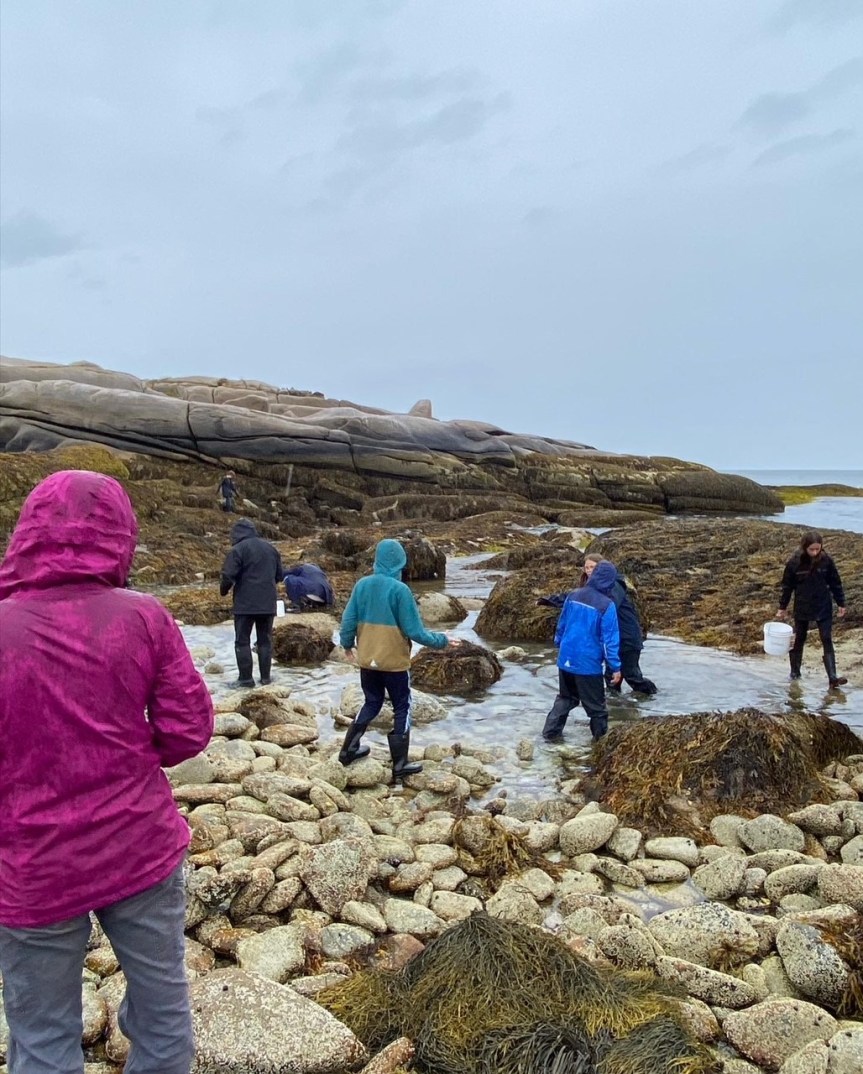
“I need a sea urchin!” exclaimed a student as she and a handful of other students excitedly explored tidal pools for marine life to collect in buckets as part of a treasure hunt on Hurricane Island. “Who has a crab?” asked another.

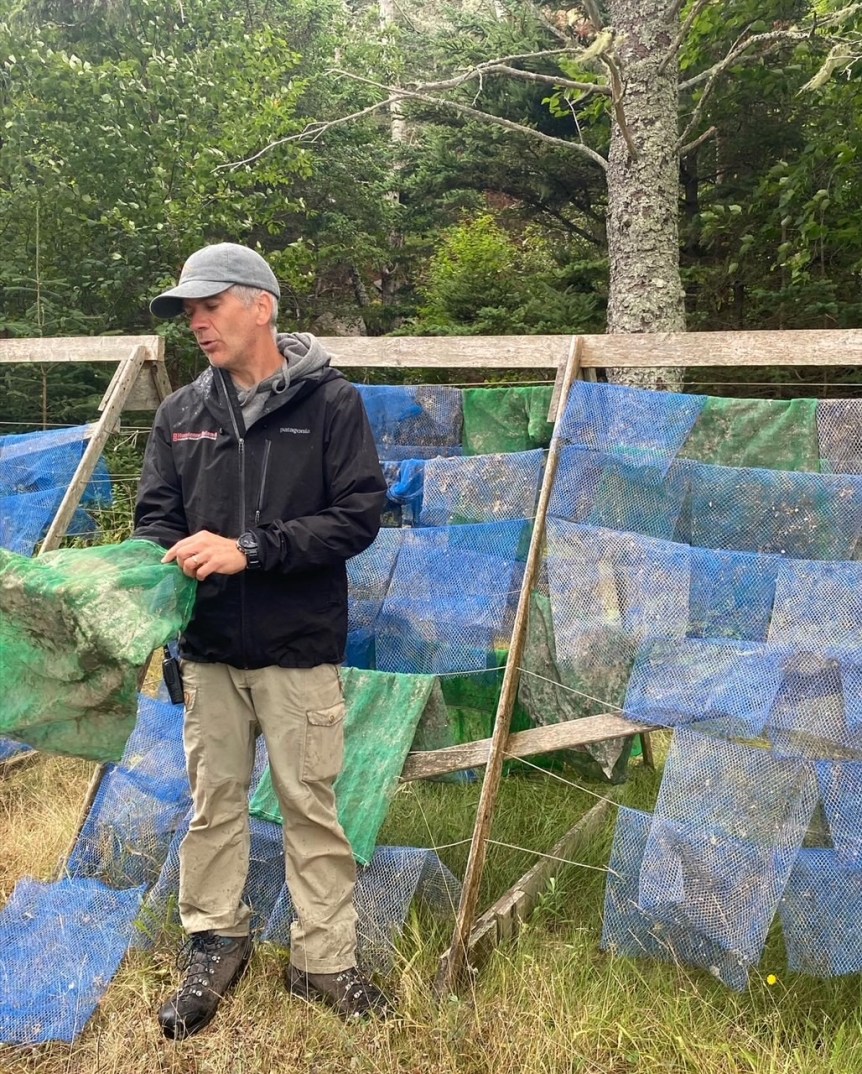
Venturing over to a classroom on the Island, another group of middle school students were learning about aquaculture and the farming of scallops by retrieving spat bags from the ocean and then investigating the contents of the bags for scallops and other items that wandered or were caught inside.

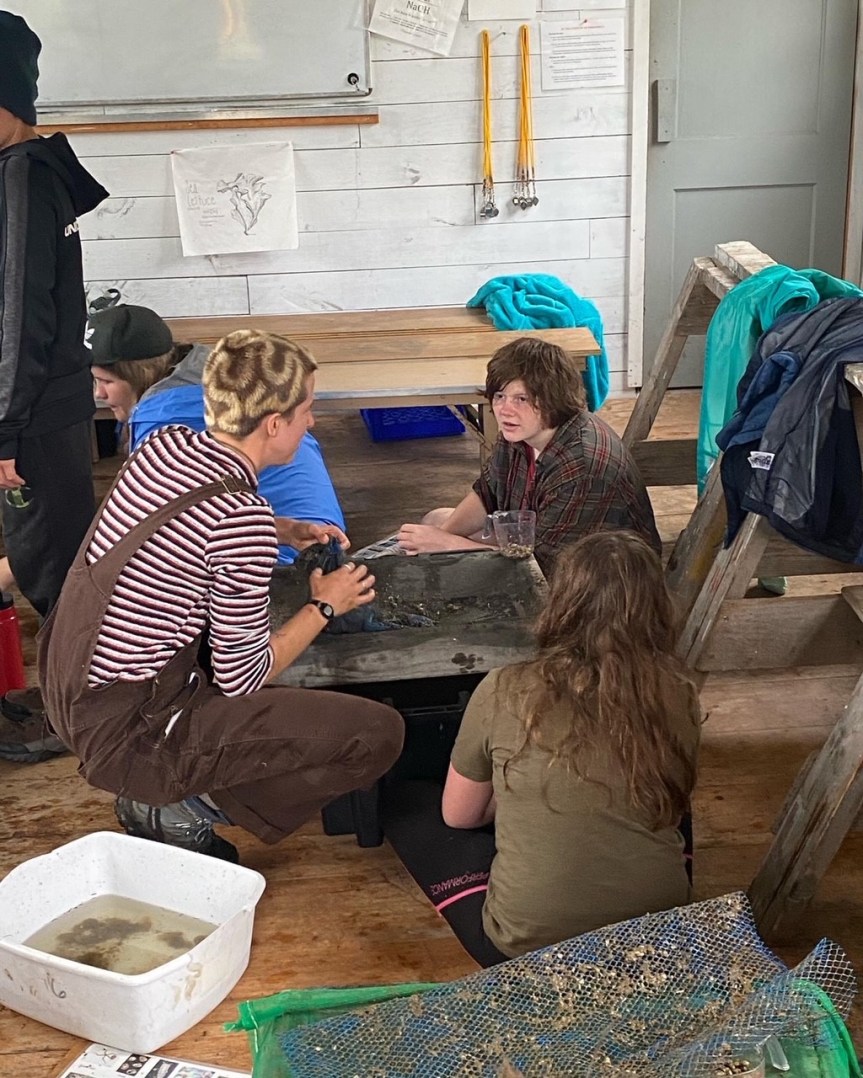
After a brief snack and a stop at their bunks, the students were back together in another classroom, and out of the rain, to learn about marine debris by matching objects like fishing line, soda cans, glass bottles, newspaper, buoys, and other common items found on shore or in the ocean with how long they take to decompose.

These were just a handful of the activities that the students got to experience during their week on Hurricane Island as part of Governor Mills’ Maine Outdoor Learning Initiative. The Initiative continues to engage 1,000 middle and high school students from across Maine in hands-on, outdoor marine and coastal ecology learning programs up and down the Maine coast.
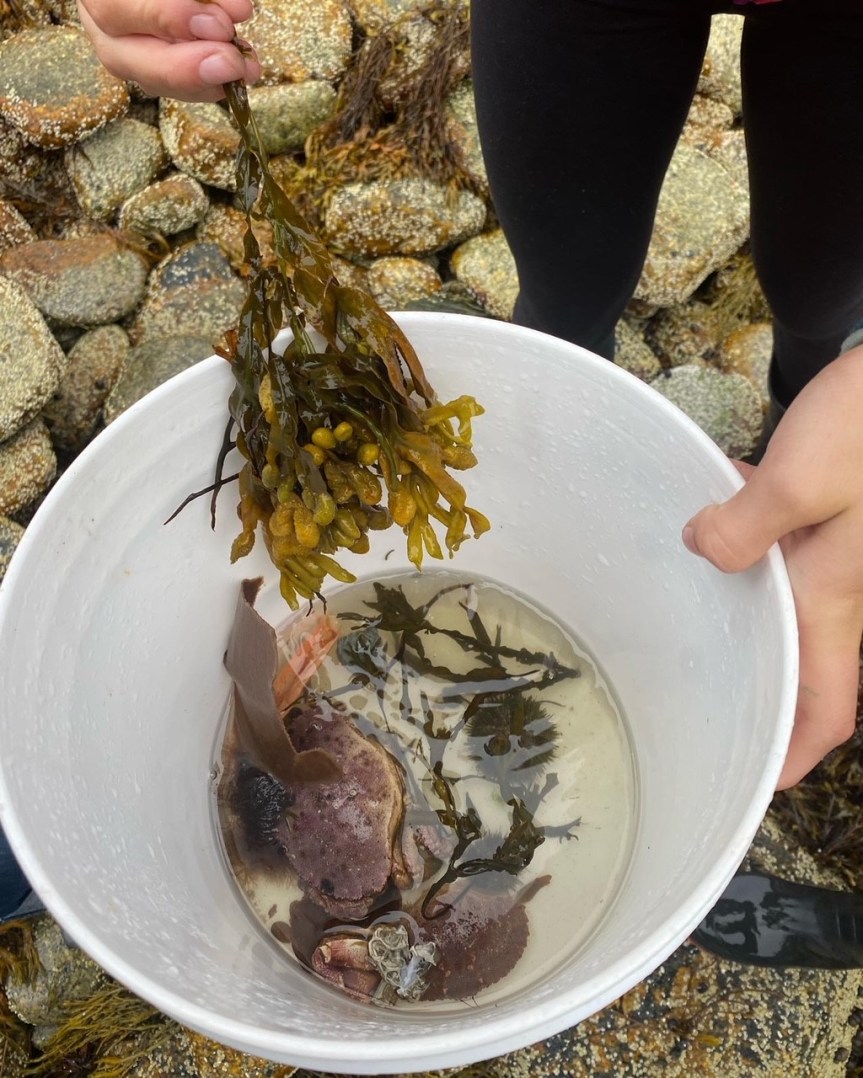
bucket of sea life

Hurricane Island held several weeklong programs as part of the Initiative, with Maine Department of Education staff getting to visit and experience the Initiative in action with a group of middle school students from Bethel who had little to no exposure to Maine’s marine environment before this program.

For the Initiative, Hurricane Island and the University of Maine 4-H Camp and Learning Center at Bryant Pond’s NorthStar program launched a new partnership to bring thirteen seventh graders to Hurricane Island this summer. The program offered students extended opportunities for quality science learning and leadership development on the shorelines and waterfronts of Hurricane Island.

“Hurricane Island Center for Science and Leadership is honored to be a partner organization with Governor Mills’ Maine Outdoor Learning Initiative. It is critically important that all Maine kids have access to innovative hands-on science learning experiences along the Maine coast, and this program has empowered many non-profits like ours to expand their impact this summer,” said Bo Hoppin, the Executive Director for the Hurricane Island Center for Science and Leadership. “The launch of this exciting initiative has helped Hurricane Island reach a greater number of rural Maine youth and engage them in experiential learning on our sustainable island campus in new and unique ways.”

The NorthStar program is a hands-on mentoring program that connects young people with caring adults through community engagement, cultural exchange, and adventure challenge and leadership. The experience on Hurricane Island increased students’ knowledge and appreciation of the marine environment through using the scientific process to come up with and answer their own research questions and allowed them to work with Hurricane Island’s professional research team to get hands-on marine research experience with aquaculture projects.

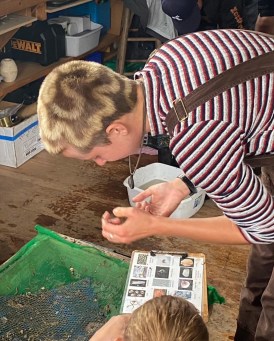
The students explored the intertidal zone using field research methods to collect data, investigated marine debris from microplastics to large scale shoreline cleanups, used sampling methods to collect oceanographic data both onshore and on the water, hauled lobster traps and learned about the biggest economic industry in Maine, and increased confidence and self-awareness while engaging the natural world and building connections with one another.
In addition, Hurricane Island and Gameloft, based in Belfast, designed a program for middle school students that created opportunities for experiential learning and leadership by bringing the Game Loft’s Student Leadership Team to the island to vision how to integrate more coastal engagement into all of the Game Loft’s programs and bringing a cohort of 6th graders from the Troy Howard middle school as part of a new initiative of the I Know ME program. These weeklong programs offered both groups of students extended opportunities for quality science learning and leadership development on the shorelines and waterfronts of Hurricane Island.

Hurricane Island sits in the Penobscot Bay and takes a little less than an hour to get to by boat from Rockland. While there are several classroom and lab structures and a mess hall, the Island itself is a classroom for the students and staff. The Island also has a 3-acre aquaculture farm to the north of the island where they currently grow scallops and kelp for research purposes. Students also learn about sustainability practices through their use on the Island.
More than a dozen organizations were part of the first year of the Maine Outdoor Learning Initiative, which was developed by the Maine Department of Education after Governor Janet Mills announced the pledge to deliver outdoor summer learning programs to Maine students during her State of the State Address.
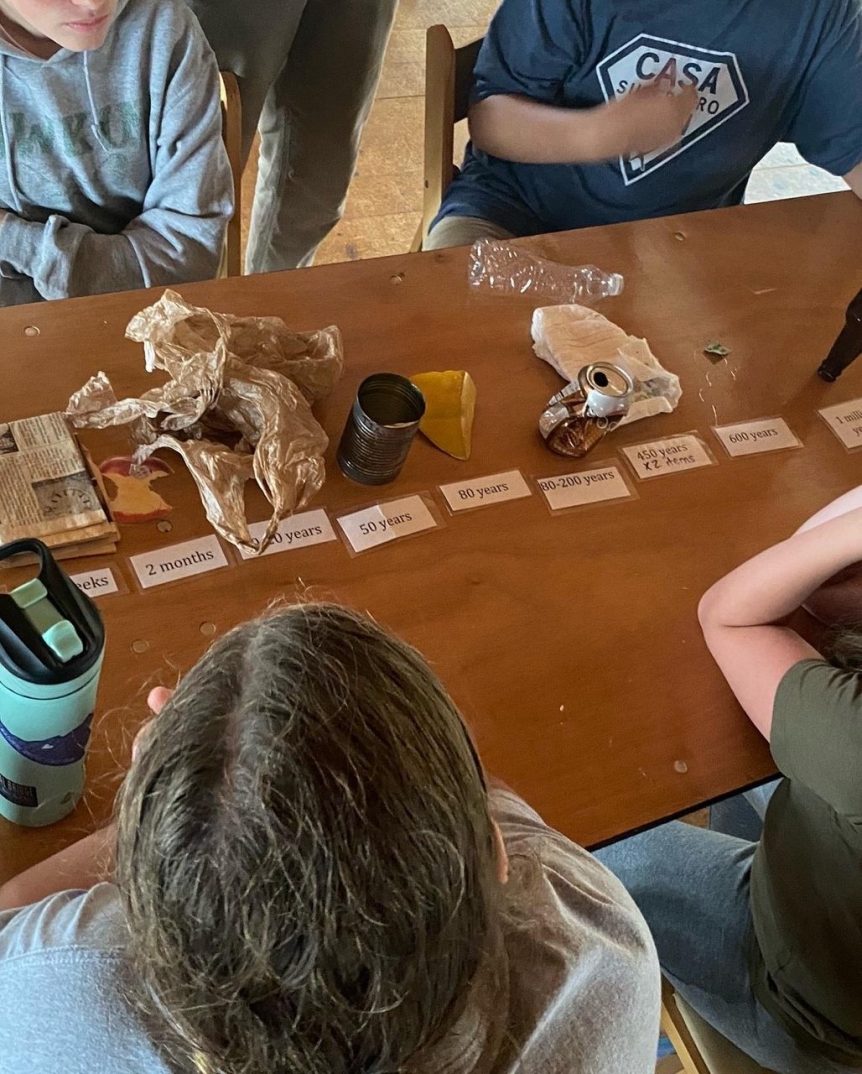
Students with marine debris

The Ecology School took students on field trips to sand beaches, tidepools, and salt marshes to learn about Maine’s coastal ecosystems. The Herring Gut Coastal Science Center exposed students to sea run fish streams, oyster farms, mudflats, hatcheries, and laboratories, while also touring marine businesses across the Midcoast to let students see firsthand potential careers in Maine’s maritime industries. Sailing Ships Maine continues to offer students the chance to sail aboard a commercial training ship as an active member of the crew.

“The Maine Outdoor Learning Initiative offers hands on, highly engaging programs that allow Maine’s young people to explore and learn from our state’s amazing bounty of natural resources,” said Maine Education Commissioner Pender Makin when the Initiative was launched. “Being outside connecting with nature and each other is so important in helping students recover from the pandemic. These outdoor learning experiences will build teamwork and leadership skills, reduce stress and anxiety, and develop new skills in our vast outdoor classroom which will translate to success inside the classroom as well. We thank all of the organizations that stepped up to be a part of this exciting initiative.”

This kind of so-called experiential learning is highly engaging and allows students to problem solve and learn new skills in real world settings, build teamwork and leadership skills, increase self-confidence, and develop an appreciation of nature.

Spending time outdoors has been shown to help reduce stress and anxiety and to equip students with skills and knowledge that can help them succeed inside the classroom. Being able to interact with nature while building connections with peers is also beneficial students’ recovery following the disruptions and difficulties caused by the pandemic.
Organizations participating in the Maine Outdoor Learning Initiative include: Herring Gut Coastal Science Center in Port Clyde, Hurricane Island + Bryant Pond in Bryant Pond, Hurricane Island + Game Loft, Maine Maritime Academy in Castine, Sailing Ships Maine in Portland, the Ecology School in Saco, Boothbay Sea and Science Center in Boothbay, Casco Bay High School and Rippleffect in Portland, Downeast Institute for Applied Marine Science and Education in Beals, Hurricane Island Foundation in Rockland, Laudholm Trust in Wells, Rippleffect in Portland, Schoodic Institute at Acadia National Park, and the University of Maine System Cooperative Extension summer camps at Blueberry Cove and Tanglewood.

The Initiative is funded by nearly $900,000 in federal funding from the Governor’s Emergency Education Relief Funds. Full program descriptions can be found here.

An Opportunity for First-year Educators: One-year Free Membership to ACTEM

The Association of Computer Technology Educators of Maine recently launched a membership opportunity  for first year educators.  ACTEM is a non-profit which supports Maine education professionals by providing professional development, bulk purchasing for software and technology, and professional learning networks/  At the recent annual summer board retreat, a new ACTEM membership level was discussed and created for first-year educators (teachers & administrators).  The new First Year Educator level will be offered at no cost and will include all of the standard individual member benefits except for the opportunity to apply for Professional Development reimbursement.

The ACTEM board hopes that by offering this one-year FREE membership for our new educators, we will encourage them to…

  • See the benefits of belonging to a professional organization
  • Take advantage of the other ACTEM individual member benefits
  • PZpAttend ACTEM conference to build a network of support (at discounted member rate)
  • Continue with this membership in future years

The First Year Educator membership includes these benefits:

  • ACTEM’s quarterly newsletter –The Connected Educator
  • Lunch at the quarterly business meeting at regional sites
  • Discounted registration fee on the ACTEM fall conference
  • Access to ACTEM’s
  • OverDrive eBook and audio book PD library
  • Discounts on software & other items available through our purchasing consortium (as permitted by the vendor).

Check out the What is ACTEM tri-fold brochure that explains more about ACTEM along with details of benefits for the different member levels.  Please forward this information along to all first-year educators in your district.


An Amazing Summer at Portland LearningWorks Afterschool, a 21st Century Community Learning Center

The Portland LearningWorks Afterschool (LWAS) team had an amazing summer session, supporting students in their growth, learning, and community building. LWAS is a 21st Century Community Learning Center grant-funded program, and works in partnership with Portland Public Schools to operate school year and summer programming at six of the district’s elementary students: Ocean Avenue Elementary School, Presumpscot Elementary School, Reiche Community School, Amanda C. Rowe Elementary, Gerald E. Talbot Community School, and East End Elementary School.

LWAS’ summer camp ran from July 6th – August 11th. Kids participated in a “Bubble Bonanza” STEM unit (developed by the Maine Math and Science Academy), where they used the engineering design process to engineer bubble wands, utilizing a range of various materials (from twine to paper cups and toilet paper rolls). Site staff were responsive to their students’ interests and curiosity, such as exploring the possibility of putting a human inside a bubble, and facilitating a “Bubble Shark Tank”, where students presented their final bubble wands to a panel of their peers, fielding questions from the panel and selling their inventions.

Students also engaged in a number of enrichment clubs, including Lego builds, animal habitats, science, art, and improv. Portland’s LWAS program partnered with a range of community organizations to offer field trips to Maine Audubon’s Gilsland Farm and Portland Museum of Art. The program also welcomed the crew at 317 Main who joined LWAS sites for a musical “petting zoo”, giving student’s hands-on mini-lessons in ukulele, drumming, fiddle and violin. Students loved playing water games during LWAS’ Waterworks Day, and reveled the opportunity to splash their favorite teachers in the dunk tank!

The summer program came to an end with a culminating celebration of learning. Families, building leaders, and LWAS staff were invited to see their children present their final art projects and bubble wands. Each site put their unique spin on the celebration, such as creating a red carpet event, where students strut down the runway modeling their bubble creations, while others sang favorite songs and created an art gallery of their artwork and bubble wands.

LWAS was thrilled to send students away for the summer with robust home kits to further help reduce summer learning losses. These kits included hands-on materials and activities that encompassed all of the 21st Century Learning Center’s goals for STEAM, multicultural education, literacy, social and emotional learning, and health and wellness.

It was a truly incredible summer, and the Portland LWAS team thanks all of the summer staff, partners, district and building leaders, students, and families for working alongside LWAS in pursuit of a common mission.

Funded through the U.S. Department of Education’s Nita M. Lowey 21st Century Community Learning Centers (CCLC) program, Maine currently has 35 CCLC grants and 61 CCLC sites across Maine that provide academic enrichment opportunities during non-school hours for children, particularly for students who face economic and/or academic challenges. With strong community partnerships at the core of every one of its programs, Maine’s 21st Century Learning Centers help students meet academic goals and offer a broad array of enrichment activities, in addition to other educational and engagement opportunities for communities and families. Learn more about Maine’s CCLC grant opportunities at https://www.maine.gov/doe/learning/esea or reach out to Travis Doughty at travis.w.doughty@maine.gov.

DEADLINE EXTENDED: Applications Open for MOOSE Instructional Designers 

Due to many requests, the MOOSE application/design timeline has been shifted by a week. Applications are now due by midnight on Sunday, September 4th. Q&A sessions are now available on the Year 3 webpage for viewing at your convenience. See the updated announcement below and reach out to Project Manager Jenn Page (jennifer.page@maine.gov) with any additional questions. 

Do you want the space to play and create innovative curriculum? Are you looking for a community of educators who are passionate about meaningful, interdisciplinary education? Do you want to expand your impact outside your classroom/school? If this sounds like you, the Maine Department of Education (DOE) is currently looking for dynamic, creative, and collaborative educators to join the MOOSE Team! 

Now in its third year, Maine’s Online Opportunities for Sustained Education (MOOSE) platform continues to grow. Last year, we added PreK-12 Learning Progressions to our already robust bank of MOOSE modules – created by Maine teachers for Maine students. These modules are student-driven and center on interdisciplinary, project-based learning experiences that are accessible, inclusive, and available for free online.  

This year, MOOSE continues with new Learning Progression topics as well as an Iteration & Improvement Team that will cycle back through existing content, augmenting existing functionality and ensuring even greater accessibility.  

Learning Progression Teams will be set up in a single creation session with two phases (Designers are committing to the year-long process due to the connected nature of the phases). 

  • Phase 1 (Sept 26 – Jan 20): Training and orientation begins the week of September 26th with full student-facing learning progressions created by January 20th. 
  • Phase 2 (Jan 23 – May 19): Creation of teacher materials begins the week of January 23rd and completes by May 19th. During this time, Designers will create teacher materials for the modules they just created AND for two additional existing modules from the MOOSE library. 

The Iteration & Improvement Team will similarly have two stipend phases but these Designers will work from an individual matrix with a set of modules they must successfully address within each phase (Sept-Jan and Jan-May). 

We are looking for Maine educators including, but not limited to, teachers, curriculum leaders, and representatives from Maine educational community organizations (e.g., museums, libraries, educational centers, etc.) interested in creating content for learning progressions in Applied Ethics, Data Science, and Cyber Security. Additional learning progressions will support topics outlined in LD 1664: African-American History & Culture and Wabanaki History & Culture. These learning progressions will be developed in conjunction with members of each of those communities and will require educators to be committed to a deeply collaborative process. The final team will be made up of individuals who are willing to work on the Iteration & Improvement of existing MOOSE modules (must have prior experience working on a MOOSE team in Year 1 or 2).  

You do not need to have expertise in the topic area you are interested in or a strong background in technology, just a commitment to learning. Our work benefits from having a diverse range of perspectives and experiences (e.g., grades, disciplines, training, etc.) represented on each team. We value your years of experience as Maine educators and your willingness to embrace creativity and innovation. Each topic will be supported by a full-time Team Leader and dedicated Module Coach to help Designers through the process. 

You can learn more about MOOSE and our plans for Year 3 on the MOOSE website. When you are ready to apply you can access the application here. Applications close September 4th. 

If you are interested in applying but still have questions, the MOOSE team held Q&A sessions via Zoom and we have posted those videos to the Year 3 webpage for you to view either of those at your convenience.   

For more information about MOOSE or if you have follow-up questions, please contact Project Manager Jenn Page, jennifer.page@maine.gov 


Orono Middle School Teachers use Federal Funding for Summer Program Focused on Social Emotional Student Needs

A new summer program was created at Orono Middle School that focuses more on the social emotional needs of our students while integrating academics into fun and engaging opportunities for learning. The program was open free of charge to any student that wished to participate. The program had a profound impact on students and teachers alike modeling, establishing, and strengthening relationships, and setting foundations for the critical learning that awaits as we start a new school year. 

The program began during the summer of 2021. Orono Middle School teachers and staff developed and coordinated a unique summer program at Orono Middle School. That year, COVID funding definitely played a key role in launching the program which included the purchase of materials for a wide variety of activities, as well as the creation of a new school-community garden. The program allowed students to select from a variety of activities offered each day in a heterogeneous group format and each day, students were given a healthy bagged lunch free of charge.

Due to the success of the program and remaining funds, we were fortunate to keep the same program this summer. Though we had minimal funding for supplies, we were able to use supplies from last summer and/or supplies from our classroom. With one year under our belts, this summer proved to be even more successful with nearly 30 participants each week! We know that funding for summer programs is typically allocated to students with identified needs in their IEP, however, this program was developed to have an impact on ALL–and that impact was significant! The program met the social, emotional, mental, and physical needs of the students as well as applying academic skills and helped to support many students to become more confident and prepared for the academic school year.

The Program was flexible allowing students to attend when it best fit their schedule. Many students attended every day; some made it for 2 weeks and, for others, just a few days. Regardless of when they attended, joining was seamless and students were able to be with different peers in activities they chose to explore. Organizers also made the program Intentional with Purposeful Learning Experiences. The activities were organized and well planned to provide a positive learning experience for each student. The daily choices (3-5 per 3 separate sessions) were organized to include a wide array of activities and skill level entry points to make the experience equitable for all students.

Activities offered during the 5-week program included:  fishing, nature walks and hikes, cooperative games, cooking, gardening, 3-D printing, tabletop games, weight lifting, design + make buttons, hike in Bangor City Forest, coding, art projects, engineering challenges, construct + paint bird houses, dissect owl pellet, theater games/activities/performances. pressed flower projects, design + make comics, reading + discussing comics, intramurals, volunteering at The Bangor Humane Society, and design + paint stepping stone for school garden.

Parents were very grateful for the program’s flexibility, structure and daily activity options. Here are some of their comments:

He seems to look forward to going to school in summer, which is not his usual attitude about it! Thank you for your planning and working with these kids, I think this enrichment is excellent.” 

Student” had a really good time.  So good, in fact, that we’re talking about shifting our plans around this summer to try to get her more time there, although we haven’t figured out how possible that is yet.  But regardless, I hope it speaks highly of what an excellent experience you all crafted there this past week!” (She was able to make it back for the last 1.5 weeks). 

The main benefit for my child was to meet some of the teachers and students in the Orono school system. She is transferring from Old Town this fall. I think she enjoyed the art and cooking activities the most. The biggest benefit was to build her confidence going into the upcoming school year.”

“As a result of strengthening her friendships with her peers at the summer program, she gained the self-confidence to walk around town by herself and with her friends.”

“She got to do lots of fun activities  while getting her reading instruction” 

“I can’t say enough good things about this experience for my daughter.  She is excited and confident about attending middle school now.  She found a new activity that she is excited about (weightlifting!) . . .This is probably the most positive and important experience that we’ve ever participated in at RSU 26.  I can’t stress enough how much we loved this program.  She actually skipped a week at a basketball camp that we had already paid for to attend this, and I decided that was okay because she was having such a great experience!”

Middle school students are striving for independence and they want to have a say in what they do. They thrive in a place where they feel they belong and have a purpose. The grade-level lines are blurred in the summer program. They are just kids who have similar interests and/or who are eager to try new things. Groups are almost always multi-grade. The sessions were designed to foster independence with students completing their own weekly schedule and becoming strong self-advocates when they needed help. Students gained confidence by taking risks and trying new activities. They broke away from their typical peers having the confidence and feeling safe to try new things on their own. Students applied problem-solving skills in each session whether it was adjusting a recipe or figuring out an engineering challenge. Students worked with each other to build structures, complete physical tasks, prepare original productions, and collaborative problem-solving. One thing’s for sure, “summer school” at Orono Middle School definitely doesn’t mean what it used to!

Special thanks to Jessica Archer (science teacher) who was the program coordinator and to the teachers leading the various activities including Deb White (social studies teacher) Julie Anthony (art) Chris Gray (science and social studies) Tracy Deschaine (math) and education technicians Rob Saintard and Teena Thibodeau. Thank you for all you do!

Media Release: 2023 Maine Teacher of the Year State Finalists Announced 

Four Maine teachers were announced today as the State Finalists for the 2023 Maine Teacher of the Year program. Eighth grade social studies and English Language Arts teacher Heather Anderson from Aroostook County, ninth grade humanities and social studies teacher Matthew Bernstein from Cumberland County, fourth grade math, writing, and science teacher Ashley Bryant from Oxford County, and high school social studies teacher Emily Albee from Penobscot County were all selected to move forward in the Teacher of the Year process and were chosen from the 2022 Maine County Teachers of the Year.

“I am in awe of the work of all of Maine’s educators and their commitment to their students and Maine schools. Maine’s teachers make possible the daily miracle that is public education,” said Maine Education Commissioner Pender Makin. “I couldn’t be prouder of these four Teacher of the Year State Finalists for representing the best qualities of Maine’s amazing educators. They exude optimism for public education, a commitment to their profession and to building relationships across their communities, and the energy and drive to make education wonderful for all their students, and for all students in Maine. Congratulations to each of you for this very well-deserved honor.”

One of the four State Finalists will be named the 2023 Maine Teacher of the Year, an honor awarded each year to one teacher in Maine. The announcement will be in October after the final stages of the selection process are complete. Maine’s Teacher of the Year serves as an advocate for the teaching profession, Maine schools and students, and represents Maine in the National Teacher of the Year program.

Each educator was nominated by a member of their community for their exemplary service in education and dedication to their students. They were selected by a distinguished panel of teachers, principals, and business community members from a pool of hundreds of other nominated teachers in their communities. The Maine Department of Education, Educate Maine, the Maine State Board of Education, and the Maine County and State Teacher of the Year Association made the announcement about the finalists.

“Maine is fortunate to have so many outstanding educators working to ensure the social, emotional and academic well-being of our students,” said Dr. Jason Judd, Executive Director, Educate Maine. “These State Finalists are exemplary models of the vibrant teaching that goes on in Maine classrooms. Congratulations to them and to their districts.  We look forward to working with them as they continue their journey as teacher leaders and ambassadors for the profession.”

“The quality of Maine schools is propelled by the strength of our teaching workforce and these state finalists embody all that we look for in the profession – talent, hard work, dedication, and strong beliefs that all Maine students deserve a high quality and supportive education,” said Maine State Board of Education Chair Desjardins. “Congratulations to all!”

“Maine educators exemplify professionalism, compassion, and commitment to their students, families, and communities,” said Heather Whitaker, 2020 Maine Teacher of the Year and Co-President, Maine County and State Teacher of the Year Association (MCSTOYA). “Our finalists, who represent teachers from across the state, are leaders in the field.  We are eager to learn from their expertise as we work together in our shared commitment to Maine public education.”

More information on the State Finalists and the Maine Teacher of the Year program:

Heather Anderson
Caribou Community School, Caribou
2022 Aroostook County Teacher of the Year

“I feel so fortunate to have had this opportunity to collaborate with other amazing educators, to reflect on my own teaching practices, and to shine a light on the incredible educators in Aroostook County and in the great state of Maine.” 

Heather Anderson teaches 8th grade social studies and English Language Arts at Caribou Community School, part of RSU 39, where she believes that strong relationships are the building blocks of positive school experiences and success for students. By fostering mutual respect, actively listening, sharing interests, and providing guided choices, Anderson works hard to celebrate her students’ strengths and pinpoint students’ needs both individually and collectively. Recently, in response to mental health needs she witnessed during the 2021-2022 school year, Anderson worked collaboratively with her co-teacher and strived to build engaging units that focused on overcoming difficulties through resiliency. She is currently working with her humanities team to bring awareness to social issues through a middle-school-read project and the implementation of a new Civil Rights Team in her district. Anderson partnered with her community to bring in programs from her local mental health agency to supplement her curriculum and provide students with educational opportunities and coping strategies. Anderson earned her Bachelor’s degree in Elementary Education with a concentration in psychology, from the University of Maine and also holds a Master’s Degree in Education from the University of New England as well as two endorsements, for Teaching Principal and Early Elementary. She is the 2022 Aroostook County Teacher of the Year and, as a lifelong learner, is always looking for new opportunities to grow as an educator.

Matthew Bernstein
Casco Bay High School, Portland
2022 Cumberland County Teacher of the Year  

“I’m extremely humbled and grateful for this recognition and, even more so, for the opportunity to work with inspiring colleagues, families, and students and for the guidance I’ve received throughout my career from so many in my community. The recognition I am receiving currently is only possible because of how much others have done, and continue to do, to support me and because I have the gift of working with incredible students.” 

Matt Bernstein is a 9th grade humanities social studies teacher at Casco Bay High School in Portland, Maine. Bernstein has a Bachelor of Arts in History with a European History concentration from Bowdoin College where he was also a Bowdoin Teacher Scholar. He is the 2022 Cumberland County Teacher of the Year. Bernstein’s pedagogy is centered around student voices and student activism. He believes that the purpose of education is to help students find their way of contributing to a more equitable world. Bernstein is also passionate about creating opportunities for students to experience joy and belonging at school on a daily basis and, to that end, he believes in cultivating meaningful relationships with students, often through his work as a 9th grade crew advisor, that are grounded in deep listening and holistic support. Bernstein has served as a team leader, crew team leader, and is currently a professional learning community coach where he facilitates ongoing professional learning with his colleagues. He is also a member of the Portland Public Schools Social Studies Vertical Content Team, collaborating with teachers across the district and local experts to develop Wabanaki Studies curriculum. Bernstein also embraces opportunities to deepen his knowledge and practice. He was recently named a 2022 National Endowment for the Humanities Summer Scholar, participating in a seminar entitled “Teaching the Holocaust through Visual Culture.” While not teaching, Bernstein is playing or coaching soccer and basketball, reading a book, or trying to determine where to find Portland’s best slice of pizza.

Ashley Bryant
Sacopee Valley Middle School, Hiram
2022 Oxford County Teacher of the Year  

“Being recognized as a finalist for Maine Teacher of the Year is an honor. As a member of the Sacopee Valley School district, of which I was a student myself and am now lucky enough to teach in as a professional, I am endlessly proud and thankful for the supportive and collaborative nature of this community.” 

Ashley Bryant teaches fourth grade math, writing, and science at Sacopee Valley Middle School, part of Maine School Administrative District #55 located in Hiram, Maine. Bryant, a Maine native, graduated from the University of Maine at Farmington with a Bachelor of Science degree in Elementary Education with a concentration in English and from the University of Southern Maine with a Masters of Science Degree in Education. Bryant spends each summer teaching -pre-kindergarten, preparing and engaging with the youngest of public school learners. She is the 2022 Oxford County Teacher of the Year. As a lifelong learner, Bryant continuously seizes professional development opportunities to best serve her students and community. In 2013, she became a National Board Certified Teacher in the area of Early Adolescence English Language Arts; she cites the experience as one of the most beneficial opportunities of her career to build on her strengths and identify and improve on areas for growth. Bryant believes all students should feel welcomed, safe, and represented at school which is why she co-advises the school’s Civil Rights Team and supports the inclusion of Social Emotional Learning. Personally connecting with and caring about each individual student has a significant impact on readiness to learn so she makes building positive relationships a top priority. Professional development about Multi-Tiered Systems of Support and fair and equitable grading also influence Bryant’s craft. If she’s not at school or collaborating with other educators, she’s reading, exercising, or at a beach with her husband and their daughter.

Emily Albee
Hampden Academy, Hampden
2022 Penobscot County Teacher of the Year  

“I continue to be honored and grateful to serve as the 2022 Penobscot County Teacher of the Year, working with a tremendous and talented cohort of 15 other county teachers. To be included as 1 of the 4 finalists for Maine Teacher of the Year energizes me to continue to advocate for students, teachers, and education in Maine.” 

Emily Albee is a social studies teacher working with grades 9-12 at Hampden Academy, part of Regional School Unit 22, in Hampden, Maine. Albee earned a Bachelor of Science in Elementary Education with a second Major in History, a Master’s Degree in Education focusing on Middle Level Social Studies, a Certificate of Advanced Study in Technology and Social Studies, and a Graduate Certificate in Innovation Engineering all from the University of Maine. Albee considers it the honor of her lifetime to work with young people. She enjoys helping students discover their curiosity for learning and ways to meaningfully engage with the world around them. She works hard to present diverse social studies content through an equity lens while helping students build an understanding of the impact of the past on the present. Albee enjoys learning from her students and has never experienced the same day twice in her classroom. She continues to commit to her lifelong learning journey by engaging with various leadership experiences in her district. Her experiences range from coaching middle school track, to securing funding to purchase bees for the HA Beekeeping Club, promoting restorative practices, and participating in a ride along with the Penobscot County Sheriff Department as research for her Law & Ethics students. Albee is an active union member and serves as the Co-Chair for the Human, Civil Rights, and Social Justice Committee of the Maine Education Association. Albee enjoys spending time with her family and traveling the world.

The Maine Department of Education’s Teacher of the Year program is administered through a unique partnership with Educate Maine, the Maine County and State Teacher of the Year Association (MCSTOYA) and the Maine State Board of Education. Funding for the program is generously provided by Bangor Savings Bank, Dead River, Geiger, Hannaford, Maine Lottery, the Silvernail Family, and Unum.

For more information about the Maine County Teacher of the Year Program and to see a list of County Teachers of the Year, and Maine Teachers of the Year, visit http://www.mainetoy.org.

###

SpiritSeries Maine ARP Grant Opportunity to Support Academic and Social Emotional Learning Loss

We are excited to kick off the Maine Department of Education – SPIRIT SERIES partnership with SpiritCorps, their three week, project-based, writing and self-discovery program designed for students from 7th to 10th grade.

“I’ve been having wonderful conversations with teachers and administrators around the state about SpiritCorps and its power to support, engage and inspire students while bringing joy back to teaching. It is a great vehicle to help address both academic and social-emotional learning loss and build 21st century skills, such as critical thinking, creativity and collaboration.” – Christina O’Neal, Director of Program Partnerships for SPIRIT SERIES

The personal stories of Courage, Conscience and Compassion that students craft, record on video and share with their classmates can be a profound experience, building confidence, strengthening connection and fostering community. Our 2022-23 calendar is filling up fast, but plenty of slots remain available. Participating schools are given a 100% scholarship in the first year, thanks to DOE partnership and a federally funded DOE grant. SPIRIT SERIES has successfully delivered programming in Maine since 2014, serving over 6,000 students in more than 20 partner schools. We now look forward to bringing our interdisciplinary storytelling program to schools across the state. “I would absolutely recommend Spiritcorps to any educator. It was easy to use. It was fun for the students. It was great! I think that the process is so well organized…It was so easy from an educator’s perspective to integrate this curriculum into my classroom and have it feel organic.” – Scott Arritt, Gr. 7/8, Durham Community School

To learn more about the program, take a look at this short video Introduction to SpiritCorps. For further information and/or to schedule an engagement at your school, make an appointment with us on our calendar (scroll below video) or email Christina directly at coneal@spiritseries.org.

WEBINAR: The Role of Public Health Officials in Supporting School Safety Efforts

The U.S. Department of Education, Office of Elementary and Secondary Education, Office of Safe and Supportive Schools and its Readiness and Emergency Management for Schools (REMS) Technical Assistance (TA) Center will host a Webinar on Tuesday, September 6, 2022, from 12:00 p.m. to 1:00 p.m. ET. This Webinar will highlight the role of public health officials in supporting school safety efforts at the local level.

The objectives of this 60-minute Webinar are to

  • Demonstrate the importance of developing a collaborative planning team to support emergency operations plan (EOP) development, as outlined in Step 1 of the six-step planning process detailed in the Guide for Developing High-Quality School Emergency Operations Plans.
  • Discuss the role that public health officials in the local community play in implementing the National Preparedness System mission areas — prevention, protection, mitigation, response, and recovery — at K-12 schools as well as their role in the before, during, and after phases of a potential emergency at a school or an emergency that involves a school.
  • Share resources to support education agencies in preparing for all hazards and all threats during National Preparedness Month and beyond.

Register on the REMS TA Center Website to participate in the Webinar!

Presenters:

Centers for Disease Control and Prevention: Lisa Barrios, Senior Advisor for School Preparedness

REMS TA Center: Janelle Hughes, Project Director

Web Chat:  You are invited to participate in a Web chat, immediately following the Webinar, on the REMS TA Center’s Community of Practice (CoP) where presenters will continue to answer your questions. Create a CoP account now, and tune in at 1:00 p.m. ET on September 6.

Questions About the Event? Contact the REMS TA Center Help Desk at 1-855-781-REMS [7367] or info@remstacenter.org from 9:00 a.m. to 5:00 p.m. ET, Monday through Friday.

Can’t make the live event? This Webinar will be archived on the REMS TA Center Website within 7 business days.

WEBINAR: Preparing for a Safe School Year – Back-to-School Safety for K-12 Schools

Please join the Federal School Safety Clearinghouse on August 30 at 2:00 PM EDT for an informational webinar on back-to-school safety featuring guidance, best practices, and resources for kindergarten through grade 12 (K-12) schools.

The session will be held in coordination with the U.S. Department of Education and the Center to Improve Social and Emotional Learning and School Safety.

The webinar will provide an overview of various topics that school personnel should consider when welcoming students back to school while looking to support the safety, security, and wellbeing of all students.

The discussion will feature additional school safety-related resources available through SchoolSafety.gov, as well as a Q&A session.

  • When: August 30, 2022, 2:00 PM to 3:00 PM EDT
  • Where: Webex (access link to be provided one day in advance of the event)
  • For: K-12 School Superintendents and Principals; School and District Administrators; Teachers and School Staff; School Counselors and School Psychologists; Emergency Managers; Parents
  • Registration: https://FSSCbacktoschoolwebinar.eventbrite.com

If you have any questions, please contact the School Safety team at SchoolSafety@hq.dhs.gov.

U.S. DOE Opens Applications for $6 Million Project Prevent Grant Program Grant to Support School Safety

The U.S. Department of Education (U.S. DOE or Department) has posted a Notice Inviting Applications for the Project Prevent Grant Program, which will award more than $6 million to local educational agencies (LEAs) – this includes Maine school administrative units (SAUs) – impacted by community violence. As part of the Biden-Harris administration’s broader commitment to school safety and addressing youth mental health the Department will provide schools the necessary resources to combat community violence and ensure a safe learning environment for students, families, and educators. Following the signing of the Bipartisan Safer Communities Act, the Department will be announcing additional resources for schools in the weeks ahead.

Project Prevent grants will expand the capacity of LEAs to implement community- and school-based strategies to help prevent community violence and mitigate the impacts of exposure to community violence. With these funds, LEAs can increase their capacity to identify, assess, and serve students exposed to community violence, helping LEAs to (1) increase student access to mental health services; (2) support conflict management programs; and (3) implement other community- and school-based strategies to help prevent community violence and to mitigate the impacts of exposure to community violence. As the Department works to address opportunity and achievement gaps, Project Prevent will deliver more resources for communities in need.

“When our students are exposed to community violence and experience trauma, their learning, their mental health, and their overall wellbeing are affected. We must do everything in our power to prevent and address community violence and wrap our children in the supports and services that can help them overcome any barriers to their success,” said U.S. Secretary of Education Miguel Cardona. “The availability of these new federal dollars will be transformative for our children and our communities. Together, we can give every student—especially students who need the greatest supports—what they need to learn, grow, heal, and thrive.”

Research has demonstrated that community violence is a risk factor for facing an adverse childhood experience (ACE), such as abuse, neglect, witnessing violence, or having a family member who is incarcerated, and has an impact on future violence and victimization in a community. ACEs can increase risk among children and youth to experience depression, anxiety, and post-traumatic disorders; have difficulty in, or disconnect from, school and the workforce; and engage in delinquency or violent acts, potentially perpetuating the conditions that contribute to a cycle of community violence.

Community violence is a significant public health, public safety, and community infrastructure concern nationwide and is a leading cause of death, injury, and intergenerational trauma for people in the United States. Community violence imposes enormous human, social, and economic costs, including disruption to employment and hindering a community’s social and economic development.

The FY22 Project Prevent Grant Program has a focus on partnerships with community-based organizations to mitigate the impact of community violence on students and families implementing community and school-based strategies. Local educational agencies, or consortia of local educational agencies are eligible to apply for these grants. The Department is especially interested in programs that support children and youth from low-income backgrounds. With the right investments and supports, the impact of these experiences can be mitigated in ways that help our children and youth thrive.

The Notice Inviting Applications is available here. For further information/questions contact .