PRIORITY NOTICE: There is Still Time to Nominate Maine Schools to Win a New Fitness Center

Maine has been selected to participate in the 2021 DON’T QUIT! Campaign, a national effort to encourage physical fitness in youth. As part of the campaign, the National Foundation for Governors’ Fitness Councils (NFGFC) will gift Fitness Centers to three Maine schools that use new and unique methods to promote student physical activity and wellness to help them construct fitness centers. Read the 2/8 DON’T QUIT! Campaign announcement here.

All public and public charter elementary and middle schools in Maine who have a majority of students between the ages of 8 to 14 years old and an available room ready for equipment installation by June 2021 within their existing infrastructure are eligible to apply. Three schools in each state, prioritized based on need, will be chosen from applicants by NFGFC to receive a brand new, state-of-the-art DON’T QUIT! Fitness Center.

Download Application to Nominate a Maine School

Learn more information about the program.

Each fitness center is financed through public/private partnerships with companies like The Coca-Cola Company, Anthem Blue Cross and Blue Shield Foundation, Wheels Up and Nike, and does not rely on taxpayer dollars or state funding. Fitness in Motion provides all the fitness equipment, which is manufactured in the United States.

Physical activity and exercise are shown to help prevent and treat more than 40 chronic diseases, enhance individual health and quality of life, and reduce health care costs.  In schools, studies show that physical activity improves academic achievement, increases confidence and self-esteem, reduces discipline problems, cuts absenteeism, and fosters better interpersonal relationships.

School nominations will be accepted starting today, Monday, February 8, 2021 until Friday, March 19, 2021. Maine people interested in nominating their school can visit  https://natgovfit.org/nominate-your-school/ and click on the Maine state seal to download and submit the short application.
More information about the program can be found here.

Service Project Funding Opportunity

In partnership with the Maine Masonic Charitable Foundation, Volunteer Maine is excited to offer service support grants to groups working with middle and high school students to learn about and tackle issues around hunger and food insecurity in their communities.

The Service Instigator Grant ($750 – $1,000) will be used to assist youth in exploring the root causes of hunger and food insecurity, and design and conduct a service project related to what they discover.

Applications are due by March 5th, and projects are to be completed by May 2nd. To learn more, CLICK HERE.

Check VolunteerMaine.gov for future updates.

Tips and Information for Districts Offering Complimentary Meals 

During the COVID-19 pandemic, the way schools and districts have been offering meals to children across the state has changed dramatically. Food service staff have worked tirelessly to adapt and come up with many creative methods for meal service by schools.

The complimentary meals, free of charge to all families, are being offered as part of the United States Department of Agriculture (USDA) emergency meal program – a response to the pandemic.  The emergency meal program ensures compliance with the required law of offering meals on educational days. It is not part of the federal School Lunch Program, but a special program which offers meals to all children during this time of challenge.

Given the underutilization of this program by students and families across Maine, the Department is offering some tips that school/district nutrition teams can use to help increase participation by maximizing nutrition and appeal to students, adding flexibly for families, and by increasing promotion and communication:

  • Children’s preferences and favorites should be considered when planning menus.
  • Meals offered should be nutritious and appealing.
  • Flexible delivery methods are needed to accommodate working parents.
  • Volunteers from the community can be sourced to supplement food service staff.
  • Advertise as “complementary meals” or “emergency meals” (not as “School Lunch”).
  • Maximize communication by using your district’s social media and online platforms. Include photos of menus and featured ingredients.
  • Include delivery site information and picture of location (or a picture of the delivery vehicle).
  • Always reiterate that the meals are free for everyone!

If you need more information, support, and/or training, contact Maine DOE Child Nutrition Office at 207-624-6842.

Digital Learning Day (2/25) Live Broadcast: Overcoming Adversity with Resilience & Hope for the Future 

The below opportunity is being hosted by Alliance for Excellent Education.

Celebrate Digital Learning Day (DLDay) on  February 25, 2021 with stories of educators who have overcome adversity and are embracing innovation. These stories are guaranteed to inspire and invigorate your vision for the future.

The event will reflect on changes from the past twelve months, celebrate ten years of DLDay, and help participants be inspired to be part of the new age of learning.

Visit classrooms, schools, and districts around the country (virtually of course) and witness the power that comes when educators combine a growth mindset with perseverance, innovation, and collaborative leadership.

Together we are better. Together we are Future Ready.

Register here: dldday.org/webinar  

State of Maine Collaborative Child Abuse Prevention Training

Stop Trafficking US, Cumberland County Children’s Advocacy Center, Maine School Safety Center, and the Maine Department of Education would like to invite you to attend a day of training entitled, State of Maine Collaborative Child Abuse Prevention Training.

The Zero Abuse Project presentation is a three-day training for social workers, educators, law enforcement and prosecutors. You may attend one day or all three days.

These trainings are designed to provide cross-disciplinary education, advocacy for systemic legal change, guidance for survivor support, and leadership on emerging technologies. Education and training around how to recognize and address the intersecting forms of child maltreatment in connection with child sexual abuse is the focus of all three days.

The goals of the Zero Abuse Project Training are:

  • To equip current and future multi-disciplinary teams and other professionals with the skills to identify abuse, intervene for children’s safety, secure justice, and build resiliency.
  • Create technologies that strengthen investigations, expose abusers, and provide survivors with pathways to recovery.
  • Promote evidence-based research that advances child protection.
  • Advocate policies that create and sustain a culture of prevention, disclosure, accountability, and healing.

This training is made possible through the generous donations from the Stop Trafficking US funders who believe “Education Matters” in preventing child abuse.

Training dates and times: 

  • Mar 17, 2021 08:30 AM – 4:00 PM Eastern Time (US and Canada) Social Workers and Law Enforcement Specific
  • Mar 18, 2021 08:30 AM – 4:00 PM Eastern Time (US and Canada) Prosecutors and Law Enforcement Specific
  • Mar 19, 2021 08:30 AM – 4:00 PM Eastern Time (US and Canada) Educator Specific

Agendas (PDF)

Speaker Bios (PDF)

Register in advance for this webinar: https://mainestate.zoom.us/webinar/register/WN _tFdy-XmcRXaGudIeN2W_4A

After registering, you will receive a confirmation email containing information about joining the webinar.

Get to know the Maine DOE Team: Meet Staci Warren

Maine DOE team member Staci Warren is being highlighted this week as part of the Get to know the Maine DOE Team Campaign. Learn a little more about Staci in the question and answer below.

What are your roles with DOE? 

I’m the secretary specialist supervisor for the Office of School and Student Supports and Maine School Safety Center.

What do you like best about your job?

I never knew there were so many different aspects of the DOE. I work with some amazing people who do amazing things, and that makes me proud to be part of the team. There is never a dull moment. From webpage design, administrative work, contracts, invoices, and special projects, I get to use many of my skills and that keeps the work interesting.

How or why did you decide on this career?

Before I earned my degree and the entire time I was in college, my life was in the administrative field. I have a long record of project management and managing people, and this seemed like a good fit.

What do you like to do outside of work for fun?

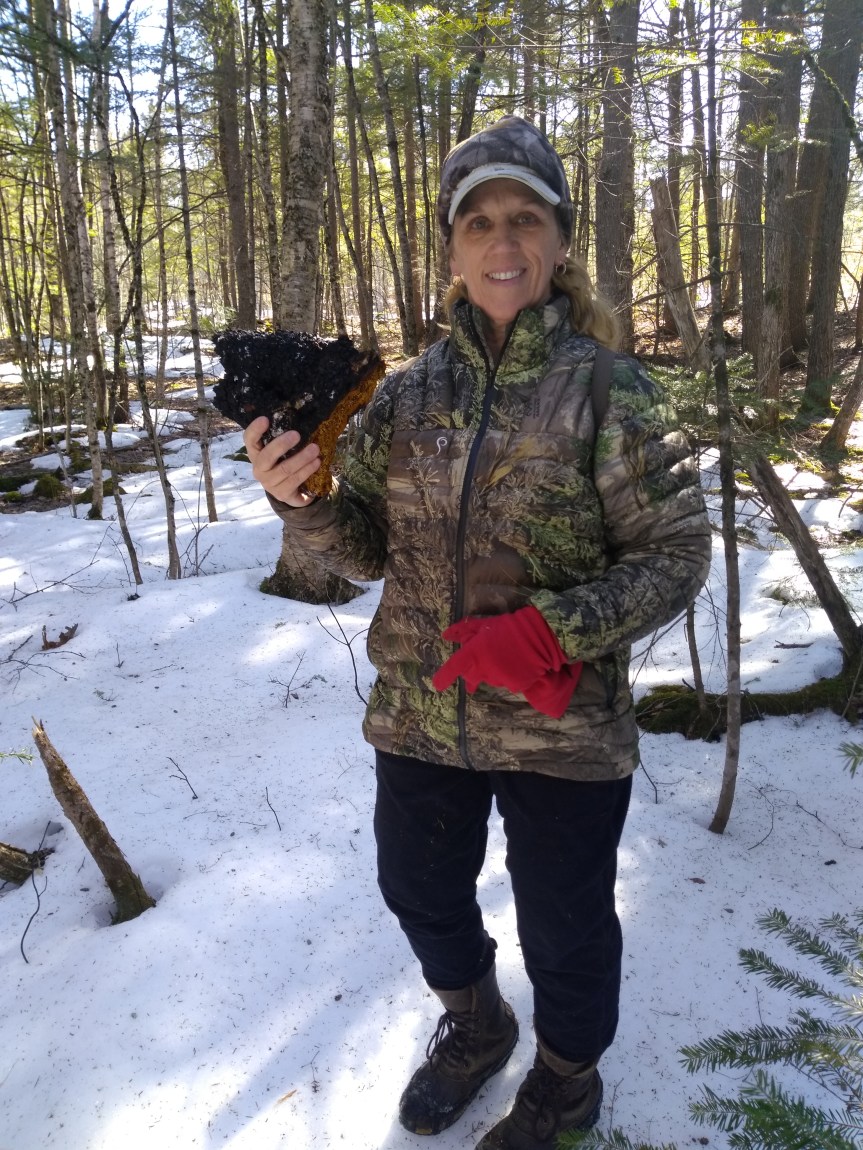
I love the outdoors; it’s my true happy place. When I’m not working I’m camping, fishing, hunting, foraging for wild mushrooms. I’m a member of the New England Outdoor Writers Association and in my otherwise free time, I am a free-lance outdoor writer and blogger. I am co-founder of the non-profit Women of the Maine Outdoors, an organization that expands opportunities for women and girls in the Maine outdoors. Just before the pandemic started, I became a volunteer instructor for Maine IFW and I’m anxiously awaiting the chance to share my knowledge of the outdoors once classes begin again.

Portland High Partners for Career Exploration Near and Far

Students often do informational interviews, but not often with the CEO of their favorite company. Two Portland High Students interested in creating their own streetwear brand had the opportunity to connect virtually with and ask questions to Keith Jones, the CEO of Tulones, a streetwear company out of Atlanta, GA. He talked to the students about how he started his business, tips for creating a brand, and how to make sure your designs are protected.

Two Portland High School students are able to do a virtual internship with Greiby Janaky Medina, an author out of New York City who is a Portland High School alum. The students are able to understand the writing and publishing industry directly from someone participating in this work in a big city!

While virtual meetings were always possible, the prevalence of them in the era of COVID-19 has opened up a seemingly new world of possibilities.

At a careers in engineering panel, students were able to hear from engineers from Portland, Chicago, Ghana, and New York City all on one call. This structure helps students broaden their horizons of where they might see themselves in the future.

Two film makers from the Boston area, Cody Signore and André Phillips helped students understand the film industry in New England and beyond.

Students continue to maintain the ability to maintain local connections as well. A panel of Portland Public Schools alumni spoke on careers in social justice, with presenters from Chance to Advance, The Maine Development Foundation, Disability Rights Maine, and the Restorative Justice Institute of Maine.

A panel on careers related to law you don’t need a law degree for featured a paralegal from the law firm Norman, Hansen, and DeTroy, the Program Director of Democracy Maine, an advocate from the Sexual Assault Response Services of Southern Maine, the Project Coordinator from the Volunteer Lawyer’s Project, and a Mediator from Federal Mediation and Cociliation Services.

If you are interested in connecting with students, contact Andrea Levinsky, Extended Learning Opportunities Coordinator at levina@portlandschools.org.

This article was provided by Portland Public Schools as part of the Maine Schools Sharing Success Campaign. To submit a story or an idea for the Campaign, email Rachel at rachel.paling@maine.gov.

Priority Notice: Mills Administration Updates COVID-19 School Health Advisory System  

All counties now green with Androscoggin, Franklin, Oxford, and York counties joining  designation.

AUGUSTA — The Mills Administration today released an update to its color-coded Health Advisory System that classifies counties’ relative risk of COVID-19 transmission to assist schools as they continue with their plans to deliver instruction and support to students safely.

The Maine Department of Health and Human Services (DHHS) and Maine Center for Disease Control and Prevention (Maine CDC) continue to review evidence that indicates lower transmission of COVID-19 in schools compared to the general population. Over the last 30 days, the rate of new cases is 36 per 10,000 staff and students, compared to 81 per 10,000 people statewide. Evidence continues to demonstrate that in-person learning in schools that follow public health precautions can be conducted safely without increased transmission of COVID-19.

DHHS and Maine CDC assessed COVID-19 data and trends for all counties and released the following designations:

  • NOW GREEN: Androscoggin, Franklin, Oxford and York counties have seen dramatic drops in their new case rates and positivity rates for the past two weeks, and are now aligned with other counties.

All other counties continue to remain in the green designation. All counties were last in the green designation during the week of October 16, 2020.

These designations are provided for the consideration of school administrative units in their decisions to deliver instruction.

It is essential that school districts across the State of Maine continue to implement plans that adhere to the six requirements for returning to in-person instruction, regardless of their county’s designation.

The Health Advisory System categorizations are defined as follows:

  • RED: Categorization as “red” suggests that the county has a high risk of COVID-19 spread and that in-person instruction is not advisable.
  • YELLOW: Categorization as “yellow” suggests that that the county has an elevated risk of COVID-19 spread and that schools may consider additional precautions and/or hybrid instructional models to reduce the number of people in schools and classrooms at any one time.
  • GREEN: Categorization as “green” suggests that the county has a relatively low risk of COVID-19 spread and that schools may consider in-person instruction, as long as they are able to implement the required health and safety measures.  Schools in a “green” county may need to use hybrid instruction models if there is insufficient capacity or other factors (facilities, staffing, geography/transportation, etc.) that may prevent full implementation of the health and safety requirements.

The county-level assessments are based on both quantitative and qualitative data, including but not limited to recent case rates, positivity rates, and syndromic data (e.g., symptoms of influenza or COVID-19). Those data are publicly posted every week on the Maine CDC website. DHHS and Maine CDC also consider qualitative factors, such as the presence of outbreaks that may potentially affect school-age children.

The Health Advisory System reflects ongoing analysis of evolving data, and serves as one piece of information that school and district leaders can use to make decisions about how to deliver education during the school year. The qualitative and quantitative considerations and data used by the CDC in determining community transmission risk levels for schools can be located here: How County Risk Levels for Maine Schools are Determined

The Health Advisory System can be found on the Maine DOE website in Part I of the Framework for Reopening Schools and Returning to In-Person Classroom Instructionhttps://www.maine.gov/doe/framework/part-I.

The next update will be provided on February 26, 2021. Updating this advisory on a two-week basis aligns with the incubation period for COVID-19 and allows for greater stability in the trend data for small counties.

###

Update on Elective or Extracurricular Choral Ensemble/Group Singing Instruction

The Department of Education is pleased to share the most recent guidance from the medical and community health experts who have aided our schools in remaining safe and open. Based on additional studies and information as it relates to COVID-19, updates have been made for choral and singing instruction in Maine schools.  

Universal Considerations for Choral Ensemble/Group Singing Instruction 

Required:

  • Masks should be worn at all times for all who are in the rehearsal room. Because singing is a higher risk activity, well-fitting, three-layer, surgical-style masks are recommended.

Considerations: 

  • Maintain minimum indoor physical distance of 6x6 between each singer, instructors, and any other people such as conductors, other musicians, audiences or accompanists. All performers should be facing in the same direction to the extent possible. Avoid singing in a circle or semicircular formation. 
  • Indoor rehearsals should be limited to 30 minutes followed by a break before the room is used again to allow the central HVAC system to exchange the air in the space. A minimum of one air exchange (which 20 minutes will generally achieve) prior to the next use of the room is required, with three air exchanges preferable. 
  • Ensembles meet in either the music classrooms, theater, or larger area depending on their class size. Schools should consult DHHS Guidance to ensure that practice and performance spaces have ventilation systems that are well maintained and operate as designed. 
  • Larger groups that preclude appropriate distancing should meet in a larger area (e.g., theater, cafeteria, gym, etc.) or use any outdoor space that meets mandated student distancing requirements. 
  • Indoor choral performance should only occur in spaces where proper ventilation systems are compliant with DHHS guidance. 
  • One-way traffic patterns should be established for entering and exiting the room, pick-up, and storage of materials. 
  • Transition to small group experience whenever possible, especially when facilities and space considerations are limited. 
  • Focus on solo and small ensemble playing/singing when the ability to maximize physical distancing is limited. 
  • Pivot instructional strategies to reduce the number of students musicians performing at any given time (e.g., small ensembles perform while others listen and assess.) 
  • Utilize alternate performance venues including outdoor spaces, large activity centers, etc., to the extent possible. 
  • Produce performances of individual ensembles rather than full program concerts, to the extent possible. 
  • Use live streaming in combination with, or in place of, in-person audiences, to the extent possible. 
  • Maintain observance of all standing Executive Orders from the Governor’s office related to indoor and outdoor public gatherings. 
  • Consider having students sing softly/at a lower volume than usual. 
  • Consider having teachers use portable amplifiers so they can keep their voices at a low, conversational volume. 
  • Students should not share classroom materials such as pencils, sheet music, music stands, etc. 
  • Doors should be opened at the beginning and end of class to ensure students are not touching door handles. 
  • Use physical barriers (e.g., face shields, free-standing acoustic shields) between rows and/or between individual musicians, if available; clean and disinfect each barrier using approved products after each use. 

NOTE:  These guidelines are largely consistent with those outlined in documentation from the National Association for Music Education/National Federation of State High School Associations. 

Previous and current versions of the guidance and considerations document are available on DOE’s  PK-12 and Adult Education Public Health Guidance webpage.  

Opportunity for Partnerships with French Schools – Deadline 3/31/21

The Maine Department of Education is excited to announce an opportunity for middle and high school teachers to participate in cross-cultural partnerships with schools in France. This opportunity has been made possible through a Memorandum of Understanding (MOU) with the Académie de Nantes, the governmental body overseeing education in the Pays de la Loire region of France.

The MOU aims to strengthen connections between Maine and France and improve the teaching of English and French, allowing educators and students to benefit from increased understanding and cooperation between the two cultures. Teachers from all content areas, not only French teachers, are welcome to apply. Schools will be partnered based on shared objectives and interests.

Schools that engage in partnerships will participate in joint learning projects with their French-school colleagues. A group of students within one class, a whole class, or multiple classes of students may be involved. Projects can focus on virtually any topic related to the curricula of the two schools (for example: school life and daily routines, natural environment, celebrations, cooking and culinary traditions, sustainable development policies, etc.). Students will demonstrate their learning through artifacts such as letters, emails, drawing, blog posts, video/audio recordings, essays, articles, or other creative means.

Applications are due by 3/31/21. Click here to apply. Partnerships will be confirmed by 5/31/21 so that initial contact can be made and schools may begin planning their projects for the fall. Note that participating in a partnership is a commitment, and our partner schools in France are eager to be matched with Maine schools that are willing and able to actively engage in collaborative teaching and learning. Partnerships may last indefinitely, with the willingness of both schools.

If you have any questions, please contact April Perkins, World Languages & ESOL/Bilingual Programs Specialist, at april.perkins@maine.gov.