School Food Service Webinar for Superintendents 9/2 at 1pm

Maine DOE Director of Child Nutrition Walter Beesley will be hosting a webinar for Maine Superintendents on the topic of School Food Service for the 2020/2021 school year. Please register ahead of time for this webinar. 

WHEN: Wednesday, September 2nd at 1:00 pm
REGISTER: Register here for this Webinar »

This session will be recorded and available on Maine DOE’s Child Nutrition YouTube Playlist.

For more information or help with registration, contact Paula Nadeau at Paula.Nadeau@maine.gov

St. George School 2nd Grade Teacher Shares, “Student Voices: An Alphabet Book of Remote Learning”

A driving force behind all learning opportunities in Alison Babb-Brott’s second grade classroom is the power and importance of student voice. When students feel confident and empowered, their initiative, engagement, and quality of work all begin to increase. And as these habits of scholarship all start to increase, so do Ms. Babb expectations. It is this symbiotic relationship that underlies all of the work they do in second grade.

With so much lost to remote learning, Ms. Babb wanted to create an authentic, motivating project for her students that would lend itself not only to their voices, but also to their desire and ability to create.

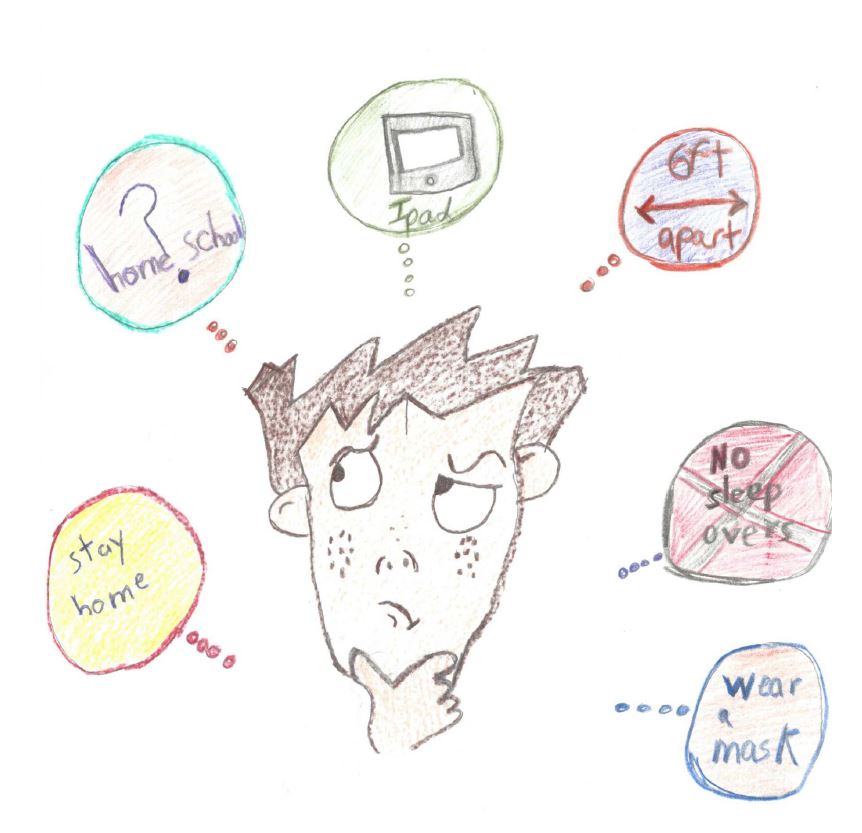
She designed this project to give her students a space to reflect on the transition to remote learning and an opportunity to channel feelings of grief and powerlessness into a collaborative art project.

The students spent the final weeks of remote learning thinking, writing, sharing, revising, and drafting, and drawing to create letter pages that commemorate their remote schooling experiences.

The effort they put forth to create such a high quality product, especially given the many challenges to remote creation, is a credit to who they are as scholars.

Student Voices: An Alphabet Book of Remote Learning

“I hope my students will share this book with friends and family near and far, and that copies will eventually make their way onto bookshelves and coffee tables at home; reminding them of what they are capable of, no matter the circumstances,” said Babb-Brott.

This story was submitted by Alison Babb-Brott, a Second Grade Teacher at St. George School in St. George as part of the Maine Schools Sharing Success Campaign. In addition to being a second grade teacher, Babb-Brott is also the 2020 Knox County Teacher of the Year and was recently named a 2021 Teacher of the Year State finalist.

To submit a good news story or idea to the DOE, email Rachel Paling at rachel.paling@maine.gov.

Maine DOE Releases Sneak Peek of MOOSE Learning Module Library

The Maine Department of Education (DOE) has released a sneak peek of MOOSE, a new online Learning Module Library (Maine Online Opportunity for Sustained Education) that will launch on Tuesday, September 8th, 2020. The website provides free access to a-synchronous, interdisciplinary, project-based learning modules aligned to the Maine Learning Results for all grades, PK-12.

Preview more of the module topics visit the Maine DOE website.

Maine educators, curriculum leaders, and educational community organizations throughout Maine have worked all summer to produce the engaging and innovative learning opportunities in MOOSE.  Educators have also have been invited to take part in a second phase of the website’s development that will begin on September 8th when the site launches.

The For more information about MOOSE please contact Beth Lambert,  beth.lambert@maine.gov or Page Nichols, page.nichols@maine.gov.

Seeking Members for DOE Truancy, Drop Out and Alternative Education Advisory Committee

The Department of Education is seeking individuals who are invested in identifying and reducing barriers to school attendance for Maine students. The Truancy, Drop Out and Alternative Education Advisory Committee has been appointed to advise the Commissioner of Education on the development and implementation of state and local policies and programs that are needed to deal effectively with the incidence of truancy and dropouts in Maine schools. In accordance with PL 2007, c. 667, §10 (AMD), the committee will consider its mandate in a broad context to assess the causes of truancy and dropouts, the effectiveness of alternative education and prevention programs, and the social and educational programs or changes needed to encourage students to remain in school, including reintegration planning and aftercare services provided for juvenile offenders who have been released from juvenile facilities in the State and have enrolled in schools in the State.

The 15 member committee will meet throughout the year with the support of DOE staff to review and discuss current information related to student attendance, as well as examine policy and guidance practices for the State. Committee members will join for a two year period with the option to be reappointed. We are bringing together a team with diverse backgrounds including: school principals, school counselors, adult education teachers, superintendents, administrators of private schools, Department of Health and Human Services, Department of Corrections, Department of Labor, staff or community members of dropout and alternative education programs, business community representatives, as well as other individuals who will contribute to the development of effective guidance and programs and who are passionate about the success of students.

We hope you are interested in joining this important work, and are looking forward to having you as part of this team.

If you have questions, or are interested in serving on the committee, please contact Maine DOE School Counseling and Mental Health Specialist Bear Shea at w.bear.shea@maine.gov or Office of School and Student Supports Director Rich Meserve at richard.meserve@maine.gov.

Get to Know the Maine DOE Team: Meet Jonathan Graham

Maine DOE Team member Jonathan Graham is being highlighted this week as part of the Get to Know the Maine DOE Team Campaign. Learn a little more about Jonathan in the question and answer below.

What are your roles with DOE?

I am the Elementary Digital Learning Specialist on the MLTI Team within the Office of Innovation.  I work with educators around the best ways to implement technology into their schools and classrooms.  I also work to provide guidance around digital learning through different DOE initiatives and through organizations like ACTEM and MASL.  Building a connection with MASL and School Librarians over the past year has been a rewarding addition to my job.

What do you like best about your job?

I really enjoy visiting schools, where I can learn from staff and students.  Seeing and celebrating their successes is invigorating.  Most recently working on MLTI 2.0 has been a highlight since MLTI completely changed my career trajectory during my student teaching.

How or why did you decide on this career?

My mother was middle school teacher and gave me the advice of becoming an ed tech as a college student to gain perspective on career in education.  I have been fortunate to work in a wide variety of roles within several school systems.  I fell in love with technology integration during my student teaching and never looked back.  A position at the Maine DOE allows me to continue growing as an educator while giving back to my profession.

What do you like to do outside of work for fun?

I am married (to a teacher) and have two middle schoolers and we enjoy day trips that involve cultural and outdoor activities and usually some tasty food.  I also love to cook and particularly enjoy learning about new cuisines and dishes.  I also enjoy podcasts – it’s a great way to learn while doing housework or driving.

MEDIA RELEASE: Maine DOE Releases COVID-19 “Back to School” Tool-kit for Maine Schools 

As Maine schools prepare to welcome back employees and students for the 2020/2021 school year, the Maine Department of Education has put together a one-stop-shop of resources to help school staff start off the school year with resources to help during the COVID-19 pandemic.

The resources available in the tool-kit include videos, posters and other resources about COVID-19 such as symptoms to look for, age and developmentally appropriate resources for youth, how to stop the spread of COVID-19, and a multitude of resources that will help students with hand hygiene, wearing face coverings at school, and social/physical distancing. In addition, the tool-kit also offers links to the latest health related guidance schools will need to know, such as tracking attendance, what to do if a student appears unwell, and caring for students with special needs.

Knowing that many districts and schools around the state are working quickly and tirelessly to prepare in-person, hybrid, and remote learning plans for their students, the tool-kit also offers links to virtual and recorded learning opportunities as well as regular office hours to connect with other professionals on education related, content specific topics, and to help school employees and students cope with stress as we all embark on the coming school year.

View the Back to School Tool-kit here.

Questions or suggestions about the tool-kit can be submitted to communications.doe@maine.gov.

Maine DOE Specialists Offering Virtual Content Specific Office Hours

As educators and schools are preparing for the 2020/2021 school year, Maine Department of Education specialists have begun once again offering regular and on-going virtual office hours in a number of content areas. During these meetings, Department specialists will be available to provide support and guidance regarding distance, hybrid and in-person learning and school supports, as well as to facilitate networking and resource sharing between educators and school staff.

Be sure to check out the Department’s Professional Development Calendar on a regular basis to see what is being offered and when. As the school year goes into full swing there will be many more learning and networking opportunities posted there on a regular basis.

As a reminder, the Department also offers an ever-growing library of recorded webinars and sessions to support educators, school staff, and administrators. The library is organized by topic area and it can be found here.

MEDIA RELEASE: Maine Teachers of the Year Association and Maine DOE Create Special “Teacher to Teacher” Back to School Message

The Maine Teachers of the Year Association, in partnership with the Maine Department of Education, has created a special “teacher to teacher” back to school message to help kick off the 2020/2021 school year.

The video message features Maine’s current and legacy Teachers of the Year and County Teachers of the Year. Their message is one of compassion, inspiration, hope, self-care, and unity for teachers across Maine as schools, and educators prepare to welcome back their students in a year like no other.

MEDIA RELEASE: Mills Administration Announces $25 million in Coronavirus Relief Funds To Support Maine’s Working Parents and School-Aged Children

AUGUSTA — Governor Mills announced today that her Administration will provide $25 million in federal CARES Act Coronavirus Relief Funds (CRF) to support Maine schools in developing and offering day programming for students to supplement in-person instruction. The funding comes as many school districts across Maine are implementing hybrid learning models that incorporate both in-person and remote learning days this fall to protect the health of students and school staff. The funds will support Maine’s working parents find alternative child care on days students learn remotely while ensuring that all Maine children receive nutrition, supervision, and learning support both in and outside of the classroom.

“As the parent of five now grown daughters I can only imagine how difficult the pandemic has been for working parents trying to balance the demands of their job with their children learning from home or finding child care for when they otherwise would have been at school,” said Governor Mills. “The success of our families and the strength of our economy depends on parents being able to safely return to work. Funding these programs is critical to ensure working parents, especially those on the frontlines of our state’s pandemic response, stay in the workforce while being confident their children are cared for.”

The Department of Education will distribute these funds through December 2020. The program is modeled on the 21st Century Community Learning Centers, which provide support to students across the state. Through a simplified application process, school units may apply for funds towards the initial costs of materials and supplies, facilities expansions, and staffing as they work with community partners to establish day programming. The Department will accept applications through September 4, 2020 and may prioritize available funds based on the district’s number of economically disadvantaged students. The funding comports with a recommendation of the Governor’s Economic Recovery Committee, which highlighted child care as a key stabilization measure for Maine’s economy.

“Now more than ever, Maine schools are critical to the infrastructure of our communities,” said Commissioner of Education Pender Makin. “These funds will assist with the additional structures and supports that students and their families need.”

The funds are the latest effort by the Mills Administration to support Maine families and child care providers during the COVID-19 pandemic. Earlier today, the Maine Department of Health and Human Services (DHHS) announced that it will invest $1 million in existing funding to support well child visits, vaccinations, and dental care for children covered by MaineCare. In July, DHHS announced it would provide $8.4 million from the CRF to more than 1,700 Maine child care providers for the extra costs and challenges of operating during the pandemic. Additionally, DHHS is preparing to issue this month the remaining awards to child care providers as part of $11 million in separate CARES Act funds Maine received through the U.S. Department of Health and Human Services Administration for Children and Families’ Child Care and Development Block Grant (CCDBG) program.

The DHHS Office of Child and Family Services, which licenses child care providers, will provide technical assistance for school units interested in establishing partnerships with afterschool and child care programs in their communities, with applications for emergency licenses when necessary, and assistance with implementing COVID-19 health and safety protocols and best practices.

DOE and DHHS coordinated on this initiative as part of the Administration’s broader collaboration across Departments through Governor Mills’ Children’s Cabinet. The Cabinet continues its work to ensure that Maine children enter Kindergarten prepared to succeed and that Maine youth enter adulthood healthy, connected to the workforce and/or education.

###

MEDIA RELEASE: Music Education Provides a Note of Hope for Many Amid COVID 19

As schools head back into session in the midst of a global pandemic, we face a never-ending torrent of restrictions and requirements to keep all people safe while still providing and getting quality education. A well-rounded and comprehensive education consists of many necessary components to keep students engaged and learning. This includes a robust music education programming, a fact that educators alike are well aware.

“The skills we learn in music lead to experiences that are creative, aesthetic, and uplifting,” said Sandy Barry, Maine Music Educators Association (MMEA) President and Middle School Band Director at Mahoney Middle School in South Portland. “A music classroom embodies the best of 21st century skills, including problem solving, critical thinking, collaboration and interdependent learning.”

Yet on the minds of musicians (and music educators) around the world is the heartbreaking truth that singing and playing wind instruments while near other people is now considered a risk in transmitting COVID-19.  While we mourn the absence of live concerts and impromptu choir practice in the halls, or even just singing at the top of our lungs in the car with our friends, music educators are busy trying to orchestrate a very different but essential music education program this school year.

“Preserving access to music education for all of our students during this difficult time is crucial.  As we reimagine music education along with our students, it is important to focus on all that we can do in the music classroom, even though group singing and wind playing looks different right now,” said Ben Potvin, MMEA Past President and Grades 3-5 Classroom Music, Band, and Chorus at Mast Landing School in Freeport (RSU5). “Maine’s music educators are up to the challenge of fostering connections with our students and maintaining safe, high-quality music instruction.”

With hard work and a deep commitment to ensuring quality music instruction continued, Maine’s music teachers took on the challenges posed by COVID-19. “I am in awe of the creative and innovative ways in which our music, and all our visual and performing arts, educators have re-imagined their craft,” said Commissioner of Education, Pender Makin.  “Music is one of the core expectations for our schools exactly because it nurtures this kind of flexible problem solving and creativity, skills that are vital for our classrooms and for the 21st century.”

Even when schools had no choice but to deliver remote education in the spring, music educators still found a way to encourage and engage students from home and students blossomed with the opportunity to get more of want they wanted.

“Because I had more time and flexibility in my schedule when we were distance learning, I was able to focus on my own musical goals and develop a more consistent practice routine,” said Delia Harms, a Junior from Massabesic HS in Waterboro who plays the bassoon in the school band, the Portland Youth Wind Ensemble, and the Symphony Orchestra. “I had time to really dig into more challenging music, but also to focus on returning to the basics and developing fundamental skills. Though it was different, every moment that I was able to connect with others about music, through recordings or on zoom, it brought back some of that excitement and connection that music has always created. It has been inspiring to see the resilience and commitment of my musical community that has allowed them to persevere through these difficult circumstances to continue making music.”

For many, the chance to continue having a creative space to practice and learn music through education programming provides solace during an uncertain time.

“Access to music education is incredibly important for a number of reasons, especially now, but the first one that comes to mind is to create a support system for kids” said Colette (Coco) Carrillo, a Junior from Waterville High School who is an active member of the school choral program.” So many people I know see their school’s music programs as a creative outlet and a safe place that they don’t have anywhere else in the school. It offers them an activity that can not only relieve their stress but can also build so many skills for their futures. Whether it’s in person or online, kids in music programs do those activities for a reason. They want to share their passion with friends, learn new material, and improve their skills. Getting rid of those programs or lowering the standard will harm their academic minds as well as their artistic minds.”

Finding a new way to learn during the pandemic has been a challenge for everyone, and the reinvention of how we educate students and how we prioritize what we need to do has provided a valuable lesson in and of itself.

“When schools began to shut down, the music department was arguably hit the hardest, as playing/ singing together does not lend itself to virtual mediums very well due to the fact that digital latency prevents synchronization,” said Tyler Lucca, a Junior from Yarmouth High School who plays the trombone in the school’s honors level Wind Ensemble and Jazz Band, and sings in the honors level Chamber Choir. “This made making music with my peers nearly impossible, at least in the traditional way, and it showed me how important these classes that we took for granted truly are.”

Music education is essential to a robust educational experience and while it may look very different this year, and possibly for years to come, it is more than just another education standard to meet or a lesson plan to fit into the schedule. It’s an emotional state, it’s a way to cope, and for many it’s a vital part of what makes them who they are.

###