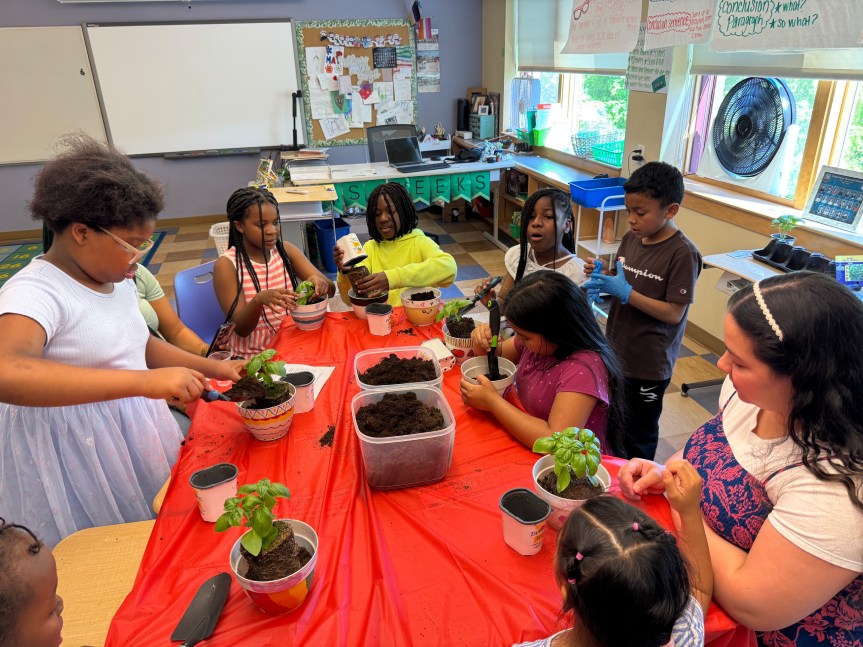
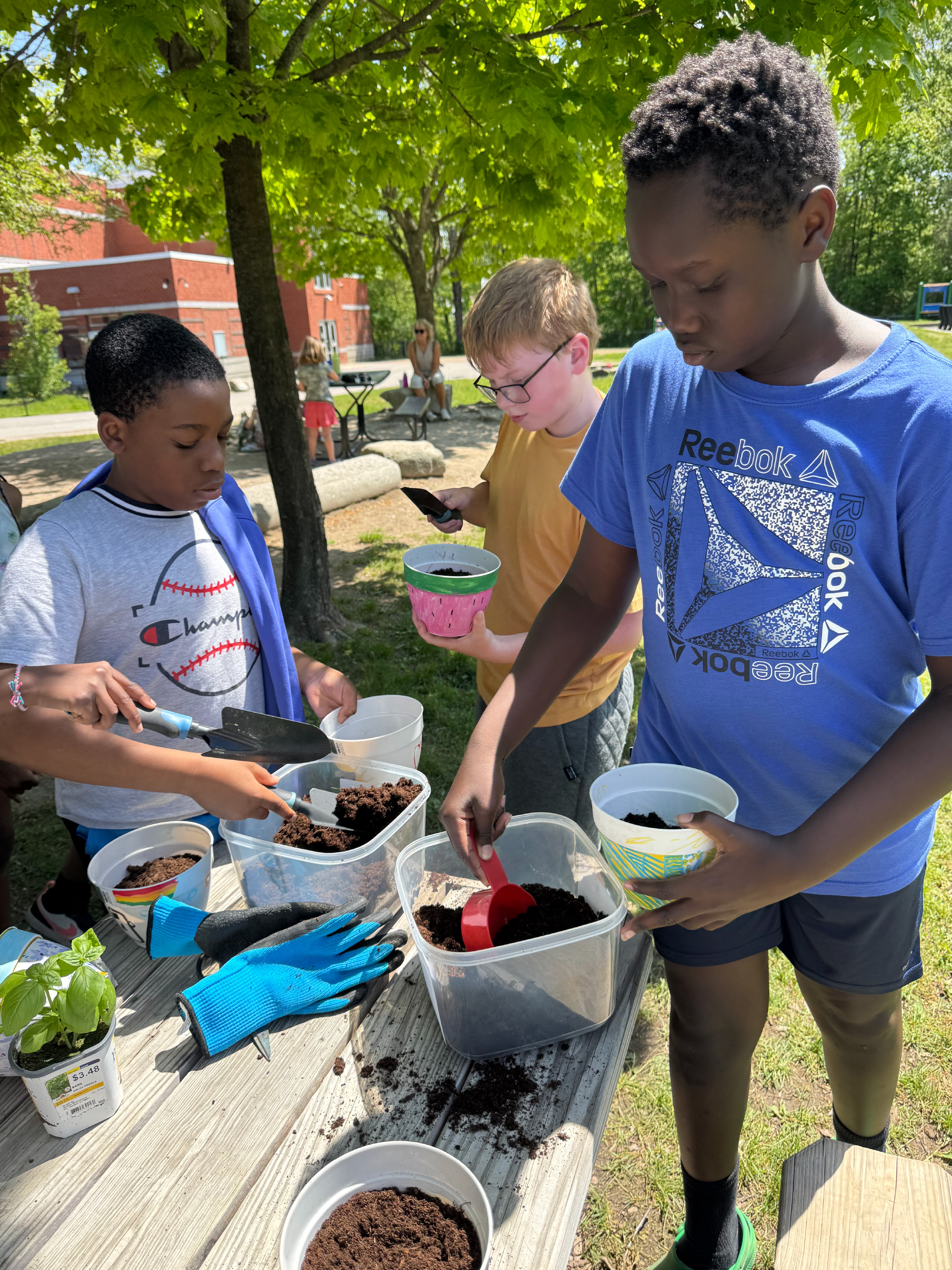
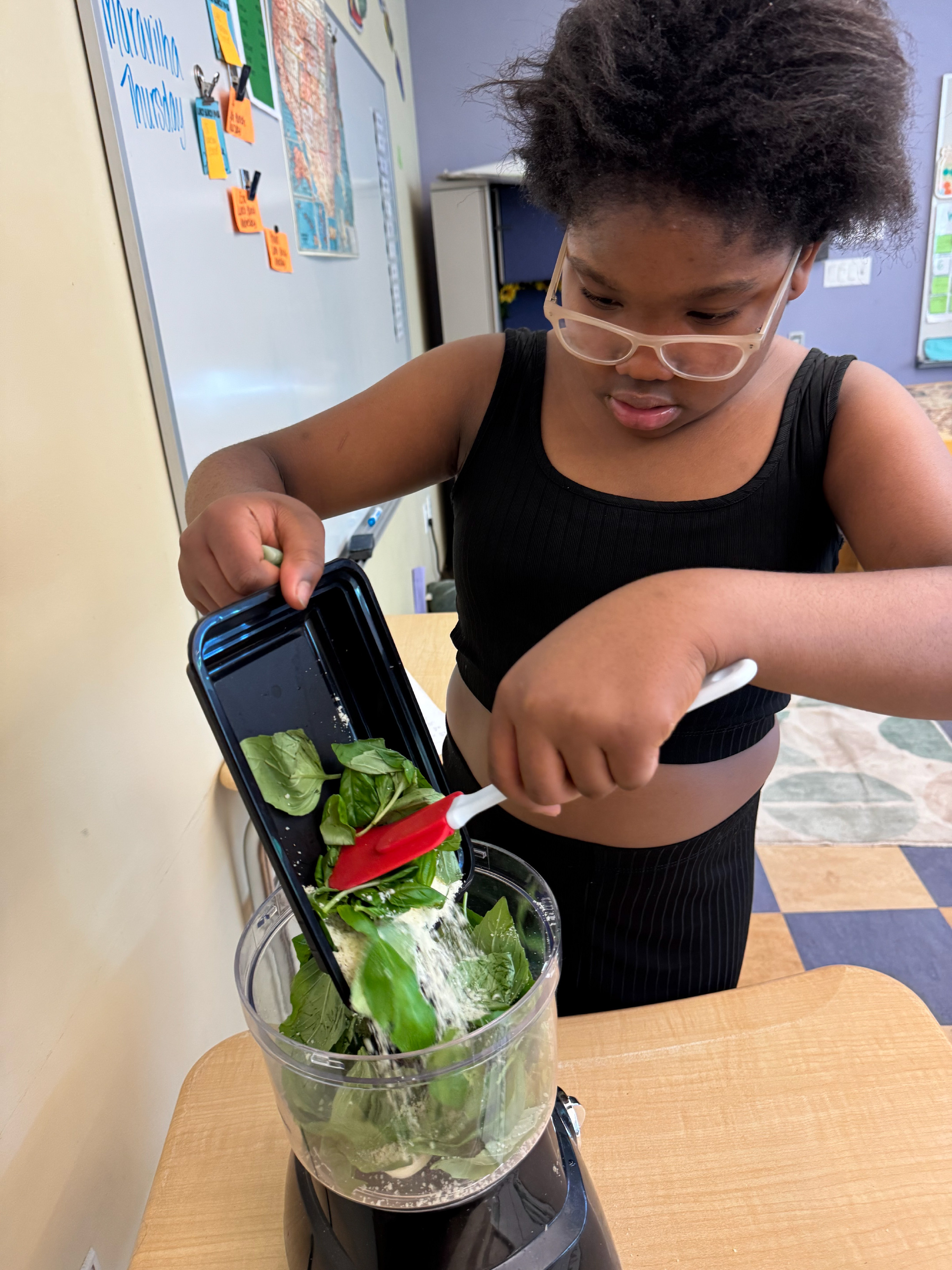
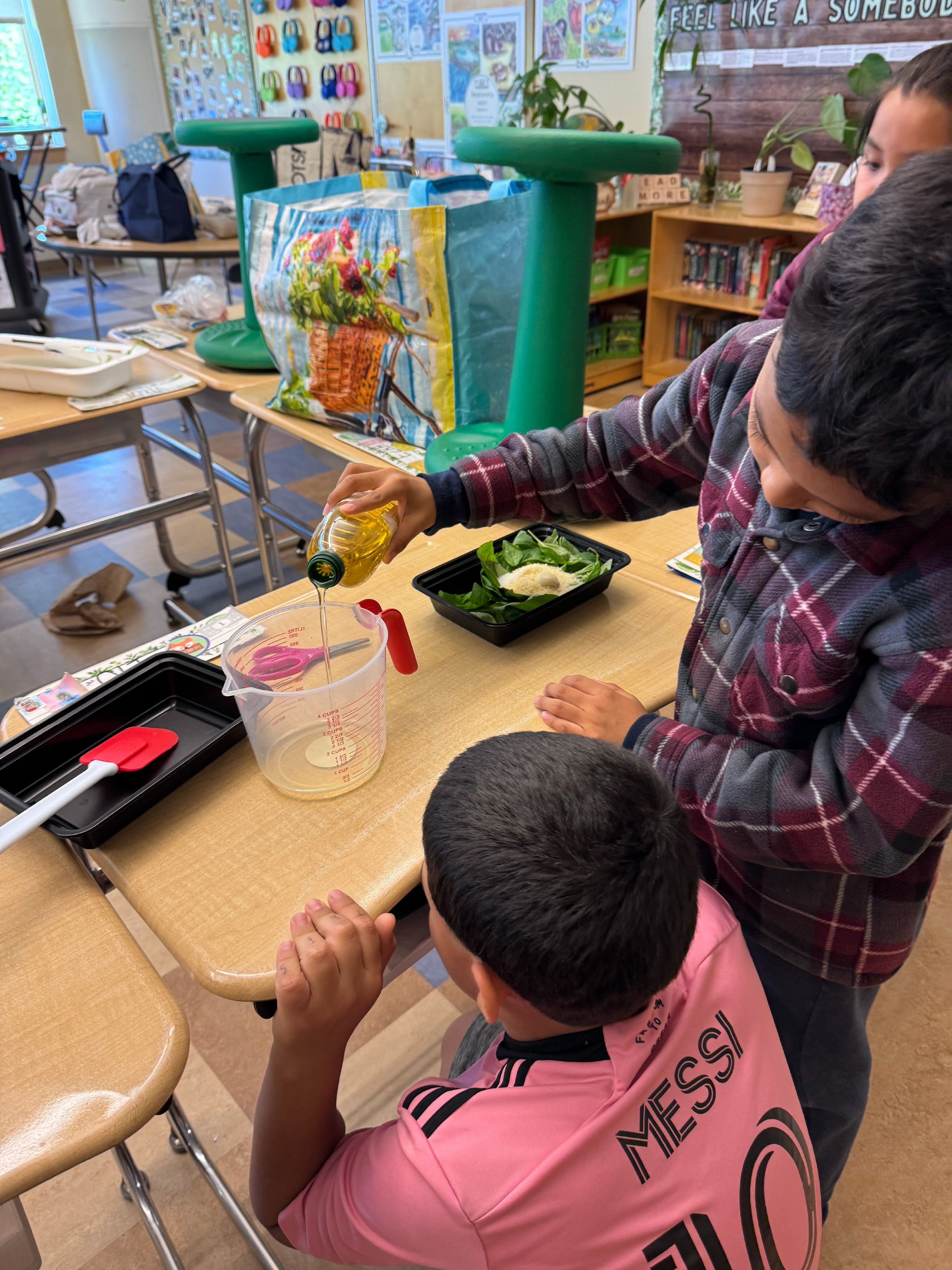
Forest Friday Engages Phippsburg Elementary School Students in Place-Based Outdoor Learning 

(Pictured: First and fourth grade students during Forest Friday)

After a long week of learning inside of the traditional brick-and-mortar classroom, students at Phippsburg Elementary School head outdoors to immerse themselves in nature for what’s known as “Forest Friday.”

Forest Friday is an academic block of time when students experience place-based outdoor learning. Through professional development and shared teaching and learning experiences, teachers have embraced this as a time to focus on hands-on learning, grounded in science and social studies standards. 

In elementary school, much of a student’s day is focused on reading, writing, arithmetic, and—especially at the K-2 level—on how to be a learner and a student. That is one reason why the opportunity to have time for outdoor learning has become quite popular among Phippsburg School students and staff. Students look forward to this time to learn outside with one another in a way that allows them to be a bit more inquisitive. Movement is also always a part of Forest Friday, as it is proven to have a direct impact on improving students’ cognitive functioning.  

Outdoor education is not new to Phippsburg School, as the town has an active conservation committee and garden club run by volunteers. In fact, from 2019 to 2024, Phippsburg had a dedicated outdoor educator one day a week, who was also the physical education teacher. With the loss of COVID funding and restructuring of school personnel, Phippsburg School’s leadership team was left with the question of what to do next and how to keep outdoor education as part of students’ educational experience. 

When the school year started, many teachers and staff had experience with outdoor learning. Some did not, but everyone at Phippsburg School jumped in with ideas about how to keep outdoor education alive. Each week on Friday afternoon—rain, shine, or snow—the school principal takes two classes (an upper grade and a lower grade) and plans an outdoor learning experience. This is how Forest Friday began. This time not only engages students in nature; it also assists in helping to build strong working relationships among students—an integral part of the school culture at Phippsburg School.

On the weeks when grade levels don’t collaborate, classroom teachers plan outdoor learning experiences for their own classes: From historical hikes to visiting graveyards with local historians to snowshoeing to tree identification, staff at Phippsburg School are embracing stepping out of their comfort zone and keeping this meaningful learning alive. 

“Sometimes, we do a very focused lesson that ties into our classroom learning. Sometimes, we do hands-on science experiments, like building snow volcanoes and animal habitats.  Sometimes, we use Forest Friday as an opportunity for play and social emotional learning. The goal is to have fun and expose students to learning that they may not experience on a daily basis,” Principal Nina Willette said.  

5th and 2nd grade students learning about the life cycle of a pumpkin

The town of Phippsburg has many natural spaces that provide outdoor, nature-based experiences, from hiking trails to beaches, rivers, and ponds; however, many students may not have access to all that Phippsburg has to offer. One of the school’s goals is to bring equitable accessibility to outdoor learning experiences in the community.

Phippsburg School students begin the school year with an annual trip to two local beaches. Students in grades 3-5 hike Morse Mountain to Seawall Beach, and K-2 students visit Totman’s Cove (a local beach) to help pick up trash during Coastal Clean-Up Week. These place-based visits set the stage for community-based outdoor learning.

3-5 students at Seawall Beach in Phippsburg

This spring, students in Phippsburg will have opportunities for place-based learning that connects to Phippsburg’s Climate Change Resilience Committee’s work. In pre-K to grade 5 classrooms, students will study the plants and animals that live in their community and learn how they can protect them to promote the sustainability of marine industries. Students in fifth grade will go on a kayak trip to Malaga Island. Students in fourth grade will reseed a local clam flat, led by diggers from Phippsburg’s shellfish committee, and release wild salmon they are currently raising in a classroom aquarium. Students in third grade will visit the Coast Guard Wharf at Fort Popham to board a local lobster boat, and students in second grade will visit the West Point oyster farm. All of these experiences will be part of a culminating celebration of learning where students showcase their research.

“The thing that I love most about experiential learning is that it provides opportunities for students to connect to their community through service-learning projects, scientific discovery, and local history. Students are often the drivers of these educational experiences, which makes learning meaningful and relevant. It can be simple or complex by design. The most magical part is seeing students in action as they discover the world around them,” Principal Nina Willette said.

Phippsburg School looks forward to continuing to bridge connections between traditional education, community, and nature-based outdoor education, which is an integral part of the school’s community. 

This story was submitted by Phippsburg School. To submit a good news story to the Maine DOE, please fill out the good news submission form.

Yarmouth and Brunswick High School Interns Join Maine DOE, Launch Extended Learning Opportunities “Storybook Project”

For the first time, the Maine Department of Education Extended Learning Opportunities team is hosting two students to participate in its own extended learning opportunity (ELO). These interns are funded through the Maine Career Exploration Program, and both are earning credit at their respective schools. They will be helping the Maine DOE to spread the good news of exciting developments in ELOs throughout the state, honing their communication and writing skills, and learning about their local state government.

Vagni Das is a junior at Yarmouth High School. She was born in India and has lived in Maine for seven years and in America for 15. In school, Vagni especially likes learning about history and science. Apart from her regular courses, she enjoys doing theater, Model UN, and debate. In her free time, she loves watching movies and singing. Vagni is so excited to be working at the Maine DOE as an intern/ELO student!

Olivia Haralson, a senior at Brunswick High School, will be attending New York University in the fall to major in Film and Television. She is excited to write articles through the Maine DOE about ELO programs at high schools statewide. In her free time, Olivia enjoys filmmaking, thrifting, and writing.


As part of their internship, Vagni and Olivia are starting a collaborative project: producing an ELO “storybook” that will feature student profiles and serve as a resource for those interested in seeing the diverse ELO opportunities that students have completed throughout the state. Vagni and Olivia are inviting any school, ELO Coordinator, and other ELO students to share their ELO experience via this short survey.

Vagni and Olivia are also working on independent projects.  For example, Vagni and Olivia—both from Midcoast Maine—wrote articles about ELO programs in Washington County, shining a light on the powerful ELO work happening in rural regions. In late May, Olivia will practice her filming and interviewing skills at Vagni’s high school ELO showcase, featuring the work of Yarmouth High School’s ELO students. Last month, Vagni participated in the Maine DOE’s Inclusive Education Conference at the Augusta Civic Center

Vagni Das visits the Hall of Flags at the Statehouse

To learn more about ELOs, or for questions regarding the ELO storybook, please contact Lana Sawyer at lana.sawyer@maine.gov. To learn more about implementing a paid, meaningful work opportunity through the Maine Career Exploration Program, please contact Karen Morin at karen.morin@maine.gov.

Youth Mental Health Event in June: “Rooted in Strength”

The Maine Center for Disease Control and Prevention (CDC) is partnering with NAMI Maine to promote youth mental health through programs like Sources of Strength, an evidence-based suicide prevention program being implemented in schools across Maine.

This year, the work of the Sources of Strength peer leaders will be celebrated at the “Rooted in Strength” event hosted by NAMI Maine. This event will recognize the accomplishments of the Sources of Strength peer leaders who have worked hard to promote mental health awareness and create safe, supportive spaces for students. Though centered around Sources of Strength peer leaders, this event is open to any students who are passionate about mental health and creating change in their communities.

Date: Saturday, June 28, 2025
Time: 10:30 a.m. – 2 p.m.
Location: Wolfe’s Neck Center in Freeport

Please help spread the word about this free event! Families are welcome to join in on the fun. While teenagers engage in activities, families—including younger and older siblings—can participate or explore the beautiful grounds of Wolfe’s Neck Center.

There will be games, lunch (that the NAMI Maine team is grilling!), and even some friendly sheep to meet!

To learn more, view the agenda, and to register, please visit NAMI Maine’s event page or check out the event flyer and details here.

Maine Curriculum Leaders Association Names Julie Riordan as 2025 Instructional Coach of the Year

The Maine Curriculum Leaders Association (MCLA) has announced that Julie Riordan is the 2025 Instructional Coach of the Year. Instructional coaches are instrumental in elevating teaching and learning across our state, and Riordan exemplifies the very best of this vital role.

As the Middle School Instructional Coach for the Westbrook School Department, Julie has made a profound and lasting impact on student learning and educator development.

Through her leadership, Julie has designed and implemented research-based reading and math intervention programs that are rooted in data-driven decision-making. Her work has resulted in measurable improvements in student outcomes and reflects her unwavering commitment to instructional excellence.

Julie is widely respected for her ability to build strong, trusting relationships with educators. She leads professional learning communities where teachers feel supported, inspired, and empowered to grow in their practice. Her collaborative work with administrators, curriculum teams, and school committee members has helped to create a cohesive and forward-thinking vision for the district.

In all that she does, Julie is a passionate advocate for equity, cultural responsiveness, and restorative practices, ensuring that every student has access to inclusive and effective learning environments. MCLA is thrilled to recognize Julie Riordan for her outstanding contributions and leadership.

MCLA is a statewide collaborative that focuses on high-quality learning and teaching for all Maine students. MCLA promotes equity and meaningful learning through research, information dissemination, advocacy, networking, and professional learning. To learn more about MCLA and its awards, visit the MCLA website or reach out to information@mainecla.org.

Maine Curriculum Leaders Association Names Shanna Crofton 2025 Curriculum Leader of The Year

The Maine Curriculum Leaders Association (MCLA) is proud to announce that Shanna Crofton, Director of Teaching and Learning for the Yarmouth School Department, has been named the 2025 Curriculum Leader of the Year.

Shanna is a visionary, student-centered leader whose commitment to educational excellence has had a lasting impact on students, educators, and the wider community. Her leadership has been instrumental in the creation and expansion of Yarmouth’s public pre-K programs, including the recent launch of a full-day offering—helping to ensure that the district’s youngest learners have access to high-quality early education. Under her guidance, the Yarmouth School Department has implemented a rigorous pre-K–12 curriculum review process that is both transparent and inclusive. By actively engaging teachers, administrators, and community members, Shanna has helped to build a shared vision for student learning that is rooted in collaboration and continuous improvement.

Beyond her district, Shanna is a regional leader and active voice in education. She contributes to broader educational efforts through her work with the Southern Maine Regional Service Center and serves on the Advisory Board for the University of Southern Maine’s Educational Leadership Program, helping to shape the next generation of school leaders.

MCLA is honored to recognize Shanna for her outstanding contributions to curriculum leadership, her unwavering dedication to students, and her commitment to fostering collaborative, high-quality educational practices. Congratulations, Shanna, on being named the 2025 MCLA Curriculum Leader of the Year!

MCLA is a statewide collaborative that focuses on high-quality learning and teaching for all Maine students. MCLA promotes equity and meaningful learning through research, information dissemination, advocacy, networking, and professional learning. To learn more about MCLA and its awards, visit: the MCLA website or reach out to information@mainecla.org.

#TeachWithTech Grant in Action: LEGO Robotics Peer Mentoring at Windsor Elementary School

Thanks to funding from the Maine Department of Education (DOE) Maine Learning Technology (MLTI) #TeachWithTech Grant, Windsor Elementary School (WES) has been able to bring LEGO robotics kits into the hands of eager learners. The results have been both innovative and inspiring.

Fifth-grade students in Mrs. St. Onge’s class and Mrs. Brockway’s class at WES quickly became enthusiastic engineers, exploring coding, problem-solving, and teamwork through LEGO robotics. Recognizing both the excitement and the learning potential, Mrs. Kristal Anuszewski, Library, Learning Commons, and Technology Teacher at Windsor Elementary School—and the 2024 Kennebec County Teacher of the Year—wanted to extend this same opportunity—to build and code LEGOs in a meaningful way—to two first-grade classes, a group with less coding and robotics experience.

To bridge the gap in access and ensure developmental appropriateness, Mrs. Anuszewski designed a cross-grade mentorship experience: Fifth graders took on the role of robotics mentors to first graders. Each mentoring session allowed students to work side by side in mixed-grade pairs, as older students guided younger ones through building and basic programming challenges. These collaborative activities helped first graders to experience early STEM learning, while reinforcing leadership, communication, and collaboration skills in fifth-graders.

This initiative:

  • Provided equitable access to hands-on technology for early elementary students.
  • Created transformative, student-led learning experiences.
  • Encouraged peer teaching and inter-grade community building.
  • Showcased how supplemental technology can foster innovation and learning partnerships in our classrooms.

The success of this project highlights how thoughtfully-integrated technology, supported by MLTI funding, can empower all learners and build a culture of mentorship and curiosity.

This story was submitted by Windsor Elementary School. For further information about lesson planning, please reach out to kanuszewski@svrsu.org.  To submit a good news story to the Maine DOE, please fill out the good news submission form.

Students Take Action: Salt Marsh Restoration Project on Mount Desert Island Connects Science, Community, and Climate Solutions

In the fall of 2024, students at Tremont Consolidated School (TCS) embarked on an exciting, real-world science project just steps from their classroom—a Salt Marsh Restoration Project, focused on restoring and protecting the fragile coastal ecosystem that borders their school on Mount Desert Island, Maine.

This year, seventh and eighth grade students are exploring how sea level rise is affecting coastal communities, tying this real-world challenge into their Maine Forest Collaborative project. They are investigating how salt marsh restoration efforts can help to mitigate the effects of rising seas, reduce damage to coastal infrastructure, and how to take meaningful, local action to support climate resilience.

As part of this initiative, TCS educator Mrs. Prentice has been having her middle school science students unbox 1,000 native salt marsh grass plugs this spring. While most will be replanted in a degraded section of the marsh, a portion is being used in student-designed experiments to determine optimal growing conditions.

The students are diving into authentic scientific research—collecting and analyzing water quality data, mapping plant biodiversity, and tracking seasonal changes to better understand the ecological impact of their efforts over time.

This project, which launched in September 2024, will continue throughout the school year, integrating seasonal monitoring, scientific reflection, and presentation of findings. It ties directly into the students’ classroom studies in Life and Earth Systems, as they learn about topics such as ecology, biodiversity, climate change, and the human impact on ecosystems.

The salt marsh—just across the street from TCS and bordering Bass Harbor near Acadia National Park—serves as a natural outdoor classroom and living laboratory.

This inspiring initiative is made possible thanks to powerful community collaboration. TCS students and teachers are working alongside the Maine Forest Collaborative, through the Rural Aspirations Project; Maine Coast Heritage Trust; Acadia National Park; the Gulf of Maine Research Institute; and A Climate to Thrive.

These partners have provided resources, expertise, and support to ensure students are not just studying science but living it. Salt marshes are vital ecosystems that offer flood protection, water filtration, wildlife habitat, and carbon sequestration. With the impacts of climate change and rising seas, these areas are increasingly at risk. By restoring a section of the local marsh, students are actively contributing to solutions and becoming solutionary thinkers—young leaders who understand complex problems and take informed, compassionate action in response.

This project is about more than science—it’s about empowering students to realize they can make a real difference in their community.

“Our students aren’t just learning from books,” Prentice said. “They’re working alongside experts, getting their hands dirty, and developing the skills and confidence to be future leaders in sustainability. They’re learning that their voices and actions matter when it comes to protecting the places they love.”

This story was submitted by Tremont Consolidated School. To submit a good news story to the Maine DOE, please fill out the good news submission form.

Applications Open for Leading Early Learning Fellowship: A Professional Learning Series for Elementary School Administrators

The Maine Department of Education (DOE) is pleased to announce that applications are now open for the fifth cohort of the Leading Early Learning Fellowship, which will launch during the 2025-2026 school year. Applications will be accepted through July 14, 2025.

As more Maine elementary schools expand their preschool offerings and implement whole student approaches across the pre-K through grade 3 span, elementary administrators have expressed a need for professional learning tailored to early learning leadership. In response, the Maine DOE, in collaboration with two statewide early childhood organizations—the Maine Roads to Quality Professional Development Network and the Maine Association for the Education of Young Children—created the Leading Early Learning Fellowship, a dynamic professional learning series designed to meet these needs and support leadership development. Since its launch in 2021, the Fellowship has served four cohorts of elementary school leaders.

“Participating in the series has helped me to look at the decisions we make about our instructional programming and school community through the lens of early learning and what is developmentally appropriate for our youngest learners,” a participant from Cohort One said.

The Fellowship offers rich opportunities for participants to deepen their understanding of early learning pedagogy and best practices for supporting students and educators across pre-K through grade 3. The experience includes a blend of asynchronous learning modules, facilitated online professional learning communities, and in-person gatherings.

“I really enjoyed the variety of materials and activities in which we were engaged—videos, utilizing the observation and reflection tools, and the readings. Also, it was a great group of people to interact with, both online and in-person,” a participant from Cohort Three said.

To learn more, please review the informational guide, which includes full program details and the application link.  The 2025-2026 cohort will include up to 30 participants. Applications will be accepted through July 14, 2025. Once capacity is reached, a waiting list will be created.  

For additional information, please contact Maine DOE Director of Early Learning Lee Anne Larsen at leeann.larsen@maine.gov.

Language, Culture, and Connection: Maine Expands Global Reach with Portugal Agreement

Pictured left to right: Fred Ravan, President of Educators for a Multilingual Maine (EMME); Melissa O’Neal-Low, Maine DOE Director of Special Projects; Page Nichols, Maine DOE Chief Innovation Officer, Dan Chuhta, Maine DOE Deputy Commissioner; Pender Makin, Maine Education Commissioner; Tiago Araújo, Consulate of Portugal in Boston; João Caixinha, U.S. Coordinator for the Portuguese Language Programs and Education; and Ayesha Hall, Maine DOE Director of Strategic Partnerships.

On May 6, 2025, the Maine Department of Education (DOE) formalized a new partnership with the Portuguese Ministry of Education by signing a Memorandum of Understanding (MOU), establishing deeper collaboration around language education, educator exchange, and international engagement.

Held at the Burton M. Cross Building in Augusta, the signing ceremony was both symbolic and strategic. It reflects the continued commitment of the Maine DOE to expanding access to meaningful global learning opportunities, especially those that promote multilingualism and cross-cultural understanding in Maine schools.

“This agreement is about more than language,” Ayesha Hall, Director of Strategic Partnerships, said. “It’s about connection—building a bridge between Maine educators and the Portuguese-speaking world and opening doors for students to see themselves as global citizens.”

The agreement outlines several key areas of collaboration:

  • Support for Portuguese language instruction in Maine schools
  • Opportunities for teacher and student exchange
  • Professional learning and resource-sharing between Portuguese and Maine educators

The MOU also enhances the portfolio of existing partnerships that the Maine DOE maintains with countries including Spain, France, Germany, Taiwan, and China. Each agreement contributes to the department’s broader vision for culturally-responsive and globally-informed education.

Following the signing, representatives from both governments gathered with invited guests for conversation and light refreshments—a moment to celebrate the relationship and set the tone for the work to come.

More information about the Portugal MOU and other international MOUs can be found on the recently updated Global Partners Network webpage, which serves as a central hub for international programs and educator resources and partnership opportunities.

Maine DOE Affirms Commitment to Language and Culture: Promoting Multilingual and Multicultural Learning Across Schools

(Pictured: Ayesha Hall, Maine DOE Director of Strategic Partnerships, with Fred Ravan, President of Educators for a Multilingual Maine [EMME].)

The Maine Department of Education (DOE) is proud to have successfully concluded its Multilingual/Multicultural Connections Webinar Series, a five-part virtual professional learning experience designed to expand access to language learning, cultural inclusion, and international collaboration in Maine schools.

This work reflects an ongoing commitment by the Maine DOE to promote multilingual and multicultural learning as critical components of student success. Through this series, the Maine DOE provided a platform for educators, school leaders, and international partners to come together, share strategies, and build community around a shared vision for more inclusive, globally-connected classrooms.

Each session explored timely and essential topics—including how to integrate Indigenous and critical languages, how to make the most of international Memoranda of Understanding (MOUs), and how to use tools like the Seal of Biliteracy and the Multilingual Learner Dashboard to expand language learning pathways.

“This wasn’t just a webinar series—it was an invitation to join an important conversation about inclusion in Maine schools,” Ayesha Hall, Maine DOE Director of Strategic Partnerships, said. “Educators are already doing the work. Our job is to make sure they’re supported with access to partnerships, resources, and opportunities that reflect the needs of learners in our state today.”

As the series wrapped up on May 5, 2025, educators heard directly from district teams that have already begun integrating global partnerships and multilingual learning into their school communities—affirming all that is possible when language and culture are viewed as assets.

To continue supporting this work, the Maine DOE has updated its Global Partners Network webpage, where educators, district leaders, and partners can:

  • Revisit the webinar series and explore featured programs.
  • Connect with Maine DOE-supported international partnerships.

You may explore the Global Partners Network here. For more information or for inquiries regarding partnerships with the Maine DOE, please contact
Ayesha Hall, Maine DOE Director of Strategic Partnerships, at Ayesha.Hall@maine.gov.