Kennebec Valley Superintendents’ Association Hosts Successful Biannual Student Showcase Event

On March 27, 2025, more than a dozen school administrative units (SAUs) gathered at Cony High School in Augusta for the biannual Kennebec Valley Superintendents’ Association (KVSA) Showcase. This interactive event, which takes place every two years, serves as a platform for students and teachers from central Maine to share more about the great work happening in their schools with a wider audience.

Each SAU that participated in the event had an opportunity to showcase one or two of their projects or initiatives. Participating school units included:

  • Augusta Public Schools
  • MSAD 11
  • MSAD 13
  • MSAD 49
  • MSAD 53
  • MSAD 54
  • MSAD 59
  • MSAD 74
  • Richmond Public Schools
  • RSU 2
  • RSU 18
  • Waterville Public Schools
  • Winslow Public Schools
  • Winthrop Public Schools

Nearly 200 people in total attended the Showcase, including more than 100 students. Also invited to the event were local representatives from the Maine Legislature and the Education and Cultural Affairs Committee, Maine State Board of Education members, school board members, representatives of higher education, and members of the public.

“We are very proud of all of our students, staff, and administrators who created an arena where students so proudly displayed and talked about their creativity. All students were proud to share the incredible work and ingenuity that happens in all of our public school districts in central Maine,” Keith Morin, Assistant Superintendent of RSU 18, said. “We were pleased with those who were able to attend the event, which included area superintendents and assistant superintendents, teachers, members of the Maine School Management Association, and members of the Maine State Board of Education from member school districts.”

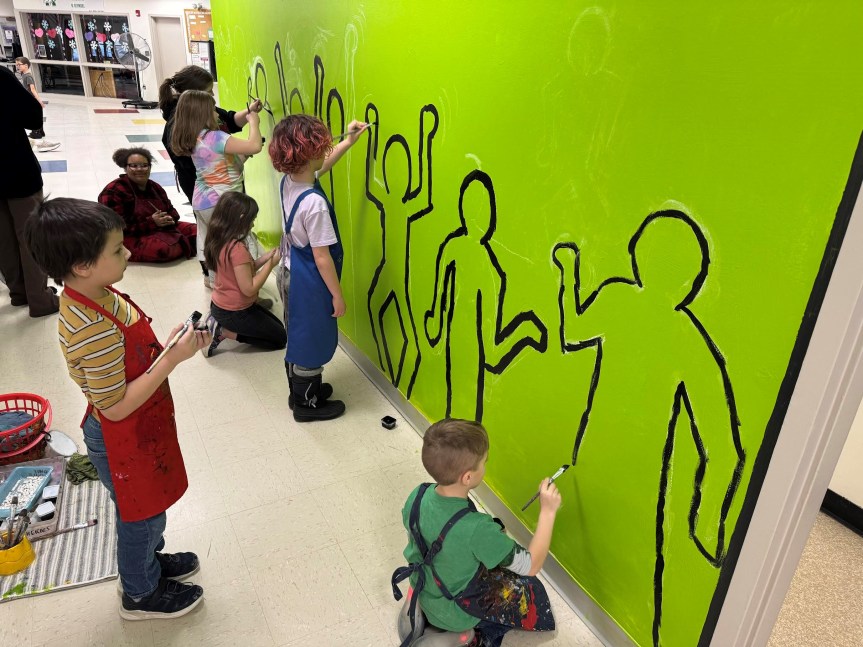
Projects and initiatives that participating school units chose to showcase ranged from the Monster Project, a collaborative art project with first-graders and high school students in MSAD 13; to outdoor classroom efforts at MSAD 59 for grades 6-8; to the use of VR goggles at Augusta Public Schools for middle and high schoolers; to the Monmouth VEX Robotics team; to media arts learning at RSU 18, where students create a daily news broadcast that airs every school day at 9 a.m.

“The event featured impressive projects, performances, and presentations that highlighted the creativity, talent, and innovation thriving in our public schools,” Sandra MacArthur, KVSA President, said. “This showcase serves as a powerful reminder of the value of public education and the dedication of students and educators alike. KVSA is proud to support and spotlight the incredible learning happening every day in our schools.”

To submit a good news story to the Maine DOE, please fill out the good news submission form.

Carl J. Lamb Elementary Students Get a Sweet Lesson in Science, Math, and New England Tradition

Students at Carl J. Lamb Elementary School in Springvale have had a sweet lesson in science, math, and New England tradition, thanks to a school-wide maple sugaring project.

This initiative transformed playground maple trees into educational tools, as children collected sap, tracked data, and ultimately created their own maple syrup in a unique cross-curricular learning experience.

“We have to check the buckets to make sure the sap is going up every time,” second-grader Morrigan Duggan explained. “The temperature needs to be above freezing for the sap to come out.”

This project, years in the making, is the brainchild of teachers Kim Minchin and Robert Rothwell (also known as “Mr. Bob”), who have transformed a New England tradition into a comprehensive learning opportunity for the entire school.

“We’ve been talking about doing this for probably four or five years,” Minchin shared. “This was the year we decided to go whole-school because a lot of our students don’t get to experience maple syrup weekend, where you go to farms and see the process.”

What makes this project particularly valuable is how it integrates multiple subjects. Students learn across disciplines – geography, math, science, and literacy – all through the authentic context of maple syrup production.

In math classes, students track the gallons of sap collected daily. Fourth-graders work on converting measurements (gallons to cups, pints, and quarts), while second-graders calculate temperature differences to understand how weather affects sap flow.

“I have a little more flexibility in math,” Minchin said. “We can still work on what they’re learning in the classroom but use the context of maple syrup and sap collection to make it meaningful.”

The maple sugaring process begins with identifying and tapping maple trees on school grounds. Though the playground features red maples rather than sugar maples, they still produce sap. Mr. Bob has also tapped about 14 sugar maple trees at the Spring Road library to ensure enough sap for production.

Students are involved in every step – from drilling holes and inserting taps to collecting sap daily and measuring volumes. They learn that it takes approximately 40 gallons of sap to produce just one gallon of maple syrup—a ratio that amazes even adults.

“It looked like water,” second-grader Thomas Lapointe recalled of the first sap collection, “but, when we tried to taste it, it was a little bit sugary.”

Beyond academics, this initiative builds community and life skills. Students work together, communicating and problem-solving as they carefully collect and measure the sap.

“There’s a lot of teamwork,” Mr. Bob said. “They have to communicate and plan together.”

For many students, especially those who struggle in traditional classroom settings, the hands-on nature of this project provides a confidence boost.

“Our students don’t always feel like they have that success,” Minchin noted. “So, to be able to have the floor and teach others about something they’ve experienced firsthand – it’s pretty uplifting for their confidence.”

This story was submitted by Carl J. Lamb Elementary School. To submit a good news story to the Maine DOE, please fill out the good news submission form.

MEDIA RELEASE: Maine DOE, Educate Maine Announce 2025 County Teachers of the Year

On May 14 at the Hall of Flags, teachers representing all of the state’s 16 counties were announced as the 2025 Maine County Teachers of the Year.

AUGUSTA, Maine—The State of Maine is celebrating its newest cohort of County Teachers of the Year. On Wednesday, May 14, at the Hall of Flags in the State Capitol, the Maine Department of Education (DOE), in partnership with Educate Maine, announced the 16 teachers, representing every county in the state, who were selected for this honor in 2025.

More than 550 teachers across Maine were nominated this year for the Maine Teacher of the Year Program by a member(s) of their school community. A local panel of teachers, principals, and business community members then chose 16 outstanding educators from that pool. These teachers span elementary to high school, range from having taught for seven to 37 years, and specialize in subjects including Choral Music, Robotics, Special Education, German, English, Latin, Global Studies, and Unified Literacy.

Throughout their year of service, the Maine County Teachers of the Year act as ambassadors for teachers, students, and schools. For example, Maine’s 2024 County Teachers of the Year cohort established a survey to assess the mentorship needs of teachers across the state. The 2023 cohort created the “Love Maine Schools” campaign. 

Governor Janet Mills joined Maine DOE Commissioner Pender Makin, Educate Maine Executive Director Jason Judd, Chair Fern Desjardins of the Maine State Board of Education, and 2025 Maine State Teacher of the Year Becky Hallowell on Wednesday to announce and honor the 2025 Maine County Teachers of the Year.

“As the daughter of a long-time public-school teacher, and as someone who raised five children who attended public schools in Maine, I am deeply grateful to the educators throughout our state who make learning a meaningful, engaging experience,” Governor Janet Mills said. “These 16 teachers represent every county from Aroostook to York and are paving the way for a well-educated, healthy and productive citizenry in the state of Maine.”

“Far too often, the hard work of educators in classrooms across our state goes unrecognized and is underappreciated,” Commissioner Pender Makin said. “The Maine Teacher of the Year Program provides an excellent opportunity to elevate the voices of 16 of these dedicated teachers, who will spend their year championing their students, their colleagues, and the education profession as a whole.”

“It is with great pride that we announce the 2025 Maine County Teachers of the Year,” Educate Maine Executive Director Jason Judd said. “During their year of recognition, they will serve as advocates for learners and educators across the state, and we look forward to supporting and collaborating with them.”

Throughout the summer, the 2025 Maine County Teachers of the Year will continue to participate in the intensive Maine State Teacher of the Year selection process. The 2026 Maine Teacher of the Year will be announced in the fall.

2025 Maine County Teachers of the Year:

Androscoggin:
Julia Edwards
Choral Music Teacher
Poland Regional High School, RSU 16

Aroostook:
Laurie Spooner
Robotics/Math/Biology/Human Anatomy/Chemistry Teacher
Van Buren District School, MSAD 24/RSU 88

Cumberland:
Monica Malcomson
Second Grade Teacher
Frank I. Brown Elementary School, South Portland School Department

Franklin:
Kylee Alton
Special Education Teacher
Phillips Elementary School, MSAD 58

Hancock:
Annie Goodwin
Kindergarten Teacher
Dedham Elementary School, AOS 47

Kennebec:
Deborah Backman
German Teacher
Cony Middle/High School, Augusta School Department

Knox:
Melissa Goeke
Fifth Grade Teacher
Hope Elementary School, School Union 69

Lincoln:
Bridget Wright
English Teacher
Lincoln Academy

Oxford:
Sarah Marshall
First Grade Teacher
Rumford Elementary School, RSU 10

Penobscot:
Benjamin Johnson
Latin Teacher
Hampden Academy, RSU 22

Piscataquis:
Brett Almasi
Global Studies, American Studies, IB Psychology Teacher
Foxcroft Academy, RSU 68

Sagadahoc:
Dawn Lee
School Library/Media, Unified Literacy Teacher
Morse High School, RSU 1

Somerset:
Karyn Bigelow
Second Grade Teacher
Bloomfield Elementary School, RSU/MSAD 54

Waldo:
Margaret Campbell
Fifth Grade Teacher
Ames Elementary School, RSU 71

Washington:
Janis Poulin Whitney
Second Grade Teacher
Rose M. Gaffney Elementary School, AOS 96

York:
Amanda Blunda
Fourth/Fifth Grade Experiential Classroom Teacher
Buxton Center Elementary School, MSAD 6

The Maine DOE’s Teacher of the Year Program is administered through a collaborative partnership with Educate Maine. To learn more about the Maine Teacher of the Year Program, click here

Reminder: School Registration Open for Second Annual ‘I Belong’ Youth Summit

Are you ready to open doors to boundless possibilities for your students? Consider registering for the Maine Department of Education (DOE) Office of Special Services and Inclusive Education’s (OSSIE) second annual ‘I Belong’ Youth Summit, scheduled for Thursday, May 29, 2025, from 8 a.m. to 2 p.m.  at Central Maine Community College.

This Summit invites schools across Maine to join a transformative initiative, designed specifically for students with disabilities who are at the age of transitioning from school to their future. This dynamic gathering goes beyond traditional career fairs to offer meaningful exploration, skill-building, and work-based learning opportunities, tailored to each student’s interests and abilities.

Making a Difference Together

By participating in this summit, you become part of a statewide movement to reshape post-secondary pathways for ALL Maine students with disabilities. Your involvement creates ripple effects of opportunity:

  • Students discover career paths they may never have considered, building confidence and practical skills for their future.
  • Educators gain valuable resources, evidence-based practices, and direct connections with industry partners.
  • Businesses develop tomorrow’s workforce, while fulfilling community engagement goals.

Join the Movement

Help your students find where they belong in Maine’s future workforce. The ‘I Belong’ Youth Summit provides a student-centered environment for youth to explore career pathways at their own pace, connect with potential employers, and envision new possibilities for their lives after school.

Don’t miss this opportunity to be a part of something extraordinary! Together, we can create a more inclusive, opportunity-rich future for Maine’s students with disabilities.

Maine middle and high schools may register their students here if they plan to bring them to the second annual ‘I Belong’ Youth Summit.

For more information, please contact Maine DOE Transition Specialist Titus O’Rourke at titus.orourke@maine.gov.

MEDIA RELEASE: Hundreds of Students, Guests Attend 95th Annual Maine FFA State Convention

The two-day event, themed, “Plowing New Paths, Harvesting Dreams,” celebrated youth leadership in agriculture and natural resources.

The Maine FFA Association proudly concluded its 95th annual State Convention on May 9, 2025, following two vibrant days of student-led events, competitions, and career development activities held in the Greater Bangor/Orono region. Hosted primarily at the University of Maine campus in Orono, the convention welcomed more than 300 FFA members, advisors, guests, and supporters from across the state.

This year’s convention theme, “Plowing New Paths, Harvesting Dreams,” guided a full schedule of programming that highlighted youth leadership, innovation in agriculture, and meaningful community engagement. The event featured career and leadership development opportunities in 19 unique areas, including, but not limited to, environmental science, veterinary science, public speaking, floriculture, and tractor driving. Students also participated in community service projects with Maine Harvest for Hunger, the Bangor Humane Society, and Good Shepherd Food Bank.

“This year’s convention theme couldn’t be more fitting, as these words capture both the hard work that defines agricultural life but also the hopeful vision that drives us forward,” Megan Welter, Maine DOE Associate Commissioner of Public Education, said to students during the convention’s opening ceremony. “Since last May, Maine proudly welcomed three new FFA chapters: Poland, Dexter, and Sanford. That expansion brings the State of Maine to 14 chapters, which is a 15% growth in one year. That’s not just a number; that is a testament to the enduring relevance and growing importance of agriculture education in our state.”

Also in attendance during the convention’s opening and closing ceremonies were Deputy Commissioner Nancy McBrady of the Maine Department of Agriculture, Conservation, and Forestry; Dean Diane Rowland of the University of Maine College of Earth, Life, and Health Sciences; and National FFA Secretary Luke Jennings, along with State Officers from FFA chapters across Maine. The convention celebrated the achievements of these FFA chapters and installed the 2025-2026 State Officer Team.

“FFA has been the best thing that has happened to me individually, but I also get to watch a lot of other students grow, as well,” Maine FFA State Vice President Haley Mayne said. “I am so proud of everyone, and I think that being in FFA will not only prepare you for things in agriculture but also for real-world experience. It’s such an awesome organization to be a part of.”

Additional highlights from the two-day event included livestock evaluation, an ag mechanics competition, the National FFA Officer workshop, and hands-on activities in aquaculture, horse evaluation, and floriculture.

For more information about FFA, visit the Maine DOE Website.

Maine DOE Update – May 9, 2025

From the Maine Department of Education


News & Updates

SUN Bucks EBT Benefit Available to Maine Families Again This Summer

Most eligible children will receive these benefits automatically, but some families will need to apply. In the summer, many children lose the free and reduced-price meals that they get at school. SUN Bucks provides families with a $120 EBT benefit for each eligible school-aged child to buy groceries when school is out of session. |  More

Maine Schools Sharing Success Stories

Washington County Expands Its Extended Learning Opportunities for Youth

Thanks to an Extended Learning Opportunities (ELO) Expansion grant from the Maine Department of Education (DOE), Healthy Acadia is working to provide more ELO opportunities to young people in Washington County in a variety of ways. |  More

Designing the Future: Developing Climate Awareness and Resilience on Deer Isle

Since the summer of 2024, Healthy Acadia, JustME for JustUS, and Deer Isle – Stonington High School have partnered to develop and implement a year-long project called “Designing the Future.” The school-wide program has engaged the entire high school community in a series of events, activities, and guest speakers and has also brought together teams of students to develop proposals for specific challenges facing the island community. |  More

Westbrook Middle School STEAM Students Take Flight with WozED Drone Curriculum

Students in grades 5-8 at Westbrook Middle School are—literally—reaching new heights, thanks to an innovative STEAM (Science, Technology, Engineering, Arts, and Mathematics) program integrating drone technology. |  More

Submit good news to the Maine Department of Education here.


Professional Learning/Training Opportunities

View the Maine Department of Education’s Events Calendar here.


Latest DOE Career/Project Opportunities:

Find education-related jobs in Maine.

MEDIA RELEASE: Maine DOE Climate Education Program in Full Swing Across the State

The new Maine Climate Literacy Plan provides additional guidance and support for school districts participating in the Maine DOE Climate Education Program.
 

AUGUSTA, Maine—The Maine Department of Education (DOE) continues to promote climate education opportunities for school districts statewide with the recent publication of the Maine Climate Literacy Plan

In the spring of 2024, the Maine DOE convened a taskforce to develop this statewide climate education plan, designed to support the Maine DOE Climate Education Program, which launched in 2023. This program takes a place-based, interdisciplinary approach to helping students learn more about our planet’s climate system and how it works.

So far in its three-year pilot, the Maine DOE Climate Education Program has supported nearly 30 locally-designed climate education professional learning opportunities throughout the state—including 10 underway this school year. Some examples include:

MSAD 17
Elementary, middle, and high school students in MSAD 17 are engaging in a wide range of experiential, environmental education programs through a partnership with Roberts Farms Preserve and the Center for an Ecology-Based Economy. Advisory groups made of teachers throughout the district help to guide and lead curriculum efforts. MSAD 17 recently expanded its capacity for this climate education work by unveiling a new experiential learning building at Roberts Farm Preserve.

For more information, contact Jill Bartash, MSAD 17 Curriculum Director, at j.bartash@msad17.org

MSAD 17 students enjoy time at Roberts Farm Preserve as part of the Maine DOE Climate Education Program.
 

Westbrook Middle School
Westbrook Middle School has a robust farming and environmental education program right in its own backyard. This year as part of the Maine DOE Climate Education Program, the middle school has hosted an educator from the Wild Seed Project three days a week to help teachers explore and learn more about the natural environment. Teachers work with the Wild Seed Project educator to integrate interdisciplinary lessons for students throughout the school day. This programming is set to continue throughout the spring.

For more information, contact Austin Mehlhorn, Regular Education Social Worker, at mehlhorna@westbrookschools.org.

RSU 34
RSU 34 in Old Town is wrapping up a busy year of programming through the Maine DOE Climate Education Program in partnership with the RiSE Center at the University of Maine. This initiative has focused on braiding together Indigenous knowledge and Western science to develop climate education curricula and support teacher professional learning. Celebratory events for this program will be hosted on Thursday, May 29, and Friday, May 30, at the UMaine Orono campus.

For more information, contact Jon Doty, RSU 34 Assistant Superintendent, at jon.doty@rsu34.org.


RSU 34 teachers participate in professional learning at the Hirundo Wildlife Preserve as part of the Maine DOE Climate Education Program.

Westbrook Middle School STEAM Students Take Flight with WozED Drone Curriculum

Students in grades 5-8 at Westbrook Middle School are—literally—reaching new heights, thanks to an innovative STEAM (Science, Technology, Engineering, Arts, and Mathematics) program integrating drone technology.

Under the guidance of STEAM teachers Stephen Moulen and Frank Lynham, students are participating in the WozED Drone Curriculum, a hands-on learning experience that combines aeronautics, problem-solving, and teamwork. It engages students in piloting small, unmanned aerial vehicles (UAVs), while developing critical skills in engineering, physics, and digital literacy. Through a series of structured modules, students learn the fundamentals of drone operation, including pre-flight checklists, basic and advanced maneuvers, and real-world applications of UAV technology.

“The students are not just learning how to fly drones; they’re applying scientific concepts, honing their communications skills, and working collaboratively to complete flight challenges,” Moulen said. “It’s exciting to see their enthusiasm and problem-solving abilities take off—literally and figuratively!”

The drones used in this program were funded by the Maine Department of Education (DOE) Teach with Tech grant, which supports innovative technology integration in classrooms across the state. This funding has enabled students to gain hands-on experience with cutting-edge tools that enhance their learning and prepare them for future careers in STEM fields.

As part of the program, students take on various roles, such as pilot-in-command and visual observer, to ensure safe and effective drone operation. They engage in mission-based activities, including navigating obstacle courses, performing precision landings, and even designing delivery systems to transport objects via drone.

Beyond technical skills, the WozED Drone Curriculum also emphasizes responsible drone usage, including discussions on safety regulations, ethical considerations, and the broader impact of UAVs in industries like agriculture, search and rescue, and environmental monitoring.

The hands-on learning approach has proven to be a hit with students.

“I love flying drones because it feels like I’m learning and having fun at the same time,” one 7th-grade participant said. “It’s really cool to see how drones are used in real life and to actually control one myself.”

Westbrook Middle School’s implementation of the WozED Drone Curriculum reflects a growing commitment to providing students with future-ready skills. By integrating drone technology into the STEAM program, the school is preparing students for careers in STEM fields, while fostering creativity, innovation, and critical thinking.

For more information about the WozED Drone Curriculum and its impact on student learning, click here.

This article was submitted by Westbrook Middle School. To submit a good news story to the Maine DOE, please fill out the good news submission form.

Washington County Expands Its Extended Learning Opportunities for Youth

(Pictured: Youth at the DownEast Teen Leadership Camp.)

Thanks to an Extended Learning Opportunities (ELO) Expansion grant from the Maine Department of Education (DOE), Healthy Acadia is working to provide more ELO opportunities to young people in Washington County in a variety of ways.

Last July, forty-three teenagers from Downeast Maine enjoyed Healthy Acadia’s 2024 DownEast Teen Leadership Camp (DETLC), a weeklong overnight summer camp experience at the Cobscook Institute in Trescott. DETLC is primarily a camp for youth, led by youth. The program challenges and empowers youth by providing them with the skills necessary to be leaders and workers in their communities.

The program begins months before the actual summer camp experience in January, when a youth advisory team takes the lead in planning the camp’s activities, ensuring that campers have a say in shaping their own experiences. This unique approach allows for the camp to feel personalized, as activities and discussions are specifically designed to reflect the interests of the participants.

Throughout the week, campers engage in various activities to promote leadership, community bonding, and holding space for healthy discussions. Students participate in workshops sponsored by regional and statewide businesses and organizations, as well as other physical team-building exercises that further build self-confidence and community. These immersive activities help campers to explore new interests, push their comfort zones, and form lasting connections.

“One of my favorite parts of camp as a youth staff member is the family groups,” Naomi Eyerman, DETLC 2024 Student Staff Media and Arts Coordinator, shared. “It’s great to get to know campers on a more personal level. Family groups really foster connections and are safe spaces where campers can have fun, as well as open up and get deep. DETLC overall has so many unique experiences that make camp truly memorable.”

Family group time plays an important role in the overall philosophy and structure of DETLC.  Through Community Sessions and Mini-Workshops, students begin to develop an awareness of relationships, coping skills and issues with substances and other sensitive topics.  Family Group is a place to question, discuss, and put into practice what campers learn in the community sessions and mini-workshops. This can be done by questioning and discussing workshop content, relating issues to their personal lives, sharing thoughts and feelings, practicing life skills, and building on their self-esteem.

ELO coordinator Corrie Hunkler, who works for Healthy Acadia, spearheaded DETLC. In her recent endeavors, Hunkler has also worked with the Coastal Washington County Institute of Technology (CWCIT) and Maine Youth Action Network (MYAN) to further her work with ELOs in Washington County and the surrounding areas.

Hunkler is helping to create tangible pathways for students to explore their interests and career aspirations. This hands-on support is reflected in the 53 students she has helped to engage in meaningful work opportunities, such as coordinating the Washington County Leadership Challenge, which allows students, teachers, and civic leaders to collaborate to formulate plans and create goals to address relevant local civic issues; and group trips like the Maine Youth Leadership Conference, which brings eight students to Augusta, providing workshops and guest speakers to help participants learn valuable leadership skills.

Through programs like these, ELOs continue to open doors for young people in the region. The Early Childhood Education program at CWCIT has embedded ELOs into its Wednesday class time, for example, ensuring that even more students are introduced to these vital opportunities—and that those opportunities remain accessible to all students in the region.

Students at the Coastal Washington County Institute of Technology. 

“We don’t have classes on gender studies; we don’t have classes on environmental science; and so it’s [ELOs] allowing kids who maybe have an interest or passion to be able to do what they’re interested in, and I think that’s so important,” Hunkler said. “This work is just so key in places that don’t have as much access to things.”

Corrie Hunkler presents on ELOs at the Youth Development Summit held at Washington County Community College on April 29, 2025.

These efforts are integral to broadening the horizons of students in Maine who may otherwise lack the resources and opportunities to explore their passions. Providing these pathways for personal and academic growth is vital for creating a more inclusive and empowered future generation, especially in rural communities like those in Washington County.

Students at Maine Youth Action Network.

To view a short clip of ELOs in Washington County and to learn more about Healthy Acadia and its ELO community support, contact Corrie Hunkler at corrie.hunkler@healthyacadia.org.

For more information about Extended Learning Opportunities, contact Lana Sawyer at lana.sawyer@maine.gov. Healthy Acadia was an awardee of Maine Jobs and Recovery Plan grants, starting in 2022, that supported 26 programs across Maine, covering 13 counties.

Designing the Future: Developing Climate Awareness and Resilience on Deer Isle

Since the summer of 2024, Healthy Acadia, JustME for JustUS, and Deer Isle – Stonington High School have partnered to develop and implement a year-long project called “Designing the Future.” The school-wide program has engaged the entire high school community in a series of events, activities, and guest speakers and has also brought together teams of students to develop proposals for specific challenges facing the island community.

The devastating storms in January of 2024 heightened the awareness of the island community of the dangers represented by climate change. Students, families, and school staff alike experienced the impact of the storms, whether due to personal loss, the impact felt by neighbors, or just by witnessing the causeways under four feet of water. The storms highlighted the vulnerability of the island community, while presenting an opportunity for students to think about how they could have a positive impact on climate resilience.

Designing the Future kicked off with a full day of activities on November 14 and culminated in March with STEM Week, when students collaborated to create a vision for one place on Deer Isle that represents the future that they want to live in. This project is inspired by Arts Week, in which each student group collaborates with a visiting professional to imagine, draft, and present a project that responds to a local need and answers the question: “What could we build here?” The faculty, staff, and student body are divided into five groups based on interest, each working collaboratively on a different project across the island.

The kick-off event in November included a visit to each site and feedback from a community member living or working at the site. The five areas explored were: Sunshine Causeway, Lily Pond, Stonington Main Street, Greenhead Lobster, and Billings Diesel and Marine.

In November, students heard from Gayle Bowness of the Gulf of Maine Research Institute, James Rutter of the Haystack Fab Lab, and Genevieve McDonald, a Stonington resident and the local school board chair.

In December, students heard from Will Steinharter of Osprey’s Echo about the effects of storms on the island ecosystem and ecotourism economy.

In February, students heard from Linda Nelson, the town of Stonington’s Director of Economic and Community Development, about the impact of climate change on Stonington. Also in February, the entire school visited the University of Maine Process Development Center and the Advanced Structures and Composites Center to learn more about emerging technologies and their role in climate resilience.

In addition, the five faculty, staff, and student body groups have met several times throughout the year to collect information, consider their sites, and, most importantly, think creatively and critically about possible solutions to the challenges they face.

The final project in March included a tabling event and presentation to the school and community members, as students shared their vision for the future of their chosen site on the island.

Deer Isle – Stonington High School, Healthy Acadia, and JustME for JustUS are grateful to the following partners for their support throughout this project with expertise, facilities, and funding: Healthy Acadia; Andrew Simon, JustME for JustUS; Isidora Muñoz Segovia, Gulf of Maine Research Institute (GMRI); Meggie Harvey, Haystack School of Crafts; James Rutter, Island Heritage Trust; Martha Bell and Alex Drenga, University of Maine; Renee Kelly, Maine App Challenge; Matt Jones, Maine Math and Science Alliance; Alexandria Brasili, Kleinschmidt Associates; Nicholas Ciomei (Deer Isle-Stonington High School ‘05); Katy Rinehart and Herb Carter, Opera House Arts; Allison Melvin, Greenhead Lobster; Genevieve McDonald, Billings Diesel and Marine.

This story was submitted by Deer Isle – Stonington High School, Healthy Acadia, and JustME for JustUS. To submit a good news story to the Maine DOE, please fill out the good news submission form.