SUN Bucks EBT Benefit Available to Maine Families Again This Summer

Most eligible children will receive these benefits automatically, but some families will need to apply.

In the summer, many children lose the free and reduced-price meals that they get at school. SUN Bucks provides families with a $120 EBT benefit for each eligible school-aged child to buy groceries when school is out of session.

SUN Bucks is designed to supplement families’ grocery budgets over the summer. Most eligible children will receive these benefits automatically, but some families will need to apply. This program occurs in addition to free meals that children of all ages may access at summer meal sites in their communities.

How SUN Bucks Works

Families will receive a one-time EBT benefit of $120 per eligible child for the summer. The benefits may be used at authorized retailers, such as grocery stores and farmers markets, to purchase healthy foods, such as fruits, vegetables, meats and other protein sources, whole grains, and dairy.

  • For children already eligible for SNAP, SUN Bucks will be loaded onto the household’s existing EBT card (also called the Pine Tree Card).
  • For children who don’t receive SNAP but did previously receive P-EBT or SUN Bucks, the benefit will be loaded onto the previously-issued card.
  • For children who don’t receive SNAP and didn’t receive SUN Bucks or P-EBT previously, a new Pine Tree Card will be issued.

If a family had an EBT card previously and lost it, a replacement card must be ordered by calling 800-477-7428.

Automatic Enrollment for Most Families

Most children will be automatically enrolled for SUN Bucks and do not need to apply if:

  • They completed an application for school meal benefit and were found eligible.
  • They are aged 6-16 and part of a household that already participates in SNAP, FDPIR, TANF, MaineCare at 185% FPL, or are identified as foster, homeless, or migrant by the Office for Family Independence (OFI) or Office of Child and Family Services (OCFS).

Automatically-enrolled households will receive a letter in late spring, and benefits will start in June.

Manual Application for Some Families

Families who haven’t received a letter in the mail by mid-June notifying them of automatic enrollment should consider applying manually for SUN Bucks if:

  • Their child attends a school that offers the National School Lunch or School Breakfast Program.
  • The household meets the requirements for free or reduced-price school meal benefit.

To learn more about eligibility and how to apply, visit the Department of Health and Human Services (DHHS) SUN Bucks webpage.

Guidance for Special Provision Schools

  • Community Eligibility Provision: If students are not part of a household that already participates in SNAP, FDPIR, TANF, MaineCare at 185% FPL, or identified as foster, homeless, or migrant by OFI or OCFS, but they do meet the requirements for free or reduced-price meal benefit, they will need to apply for SUN Bucks.
  • Provision 2: If students are not part of a household that already participates in SNAP, FDPIR, TANF, MaineCare at 185% FPL, or identified as foster, homeless, or migrant by OFI or OCFS, but they do meet the requirements for free or reduced-price meal benefit, most will need to apply for SUN Bucks. 

How to Help to Spread the Word

Schools may help to spread the word by sharing information with families about theSUN Bucks program and how they may receive benefits for their children. Suggestions include:

  • Encourage families with children who will automatically be enrolled to make sure their mailing address is up to date by calling OFI at 855-797-4357.
  • Tell families to keep an eye out for a letter notifying them of automatic enrollment, a new card in the mail, or a balance increase on their existing card in early June.
  • Encourage families who haven’t received notice of automatic enrollment by mid-June, but who may have eligible children, to apply.

Please use the below flyers to help spread the word about this important program and direct families to OFI’s SUN Bucks webpage for more information about the program and how to apply. Families may also call OFI at 855-797-4357 and select option 5 to speak with an Eligibility Specialist about SUN Bucks.

SUN Bucks Info Sheet (English) (PDF)

العربية | Français | Español | Português | Lingala | Soomaali | Русский | 简体中文 | Tiếng Việt | Kiswahili | ខ្មែរ | Kinyarwanda  

Thank you for helping to raise awareness about this program and ensure that Maine children get the nutrition they need to thrive this summer.

Maine DOE Update – May 2, 2025

From the Maine Department of Education


Data & Reporting

ESEA Demographics Report Opening Soon

The Elementary and Secondary Education Act (ESEA) Demographics Report will open for review in the Maine Department of Education (DOE) NEO Student Module on Thursday, May 15, 2025. |  More


News & Updates

State of Maine Publishes First Maine Climate Literacy Plan

The Maine Department of Education (DOE), in partnership with the Maine Environmental Education Association, has published the state’s first Maine Climate Literacy Plan (MCLP) with support from the Governor’s Office of Policy Innovation and the Future. |  More

Maine DOE Hosts Inaugural Inclusive Education Conference

The Maine Department of Education (DOE) Office of Special Services and Inclusive Education successfully hosted the state’s first-ever Inclusive Education Conference on Thursday, April 10, 2025, at the Augusta Civic Center. The groundbreaking event, themed “Reimagining Education: Empowering All Learners, Embracing All Abilities,” brought together voices from across Maine to celebrate and advance inclusive practices in education. |  More

Resources to Support Mental Health Awareness Month in May

May is Mental Health Awareness Month, and the Maine Department of Education (DOE) and Maine Center for Disease Control and Prevention (CDC) are providing resources to recognize, address, and support youth mental health. |  More

Applications Open for 2025 Maine DOE Teacher Leader Fellowship Program

The Maine Department of Education (DOE) is excited to announce that applications are now open for the 2025 cohort of the Teacher Leader Fellowship program. This program provides an opportunity for practicing educators to lead, innovate, and create resources that will strengthen teaching and learning across Maine. Applications are due by May 27, 2025. |  More

Maine DOE Child Nutrition Team Crowns 2025 Farm to School Cook-Off Champion

The Maine Department of Education (DOE) Child Nutrition team is celebrating its 2025 Farm to School Cook-Off champion after a final round of competition on Thursday, April 17. For 10 years, this initiative has promoted the use of local foods in school meals, as school nutrition teams from across the state use locally-sourced ingredients to prepare a breakfast and a lunch, which a panel of judges then scores. |  More

Maine State Museum Seeks Grade 1-12 Teachers to Apply to Participate in New Program

The Maine State Museum is now accepting applications from Maine teachers for a new program that will showcase students’ place-based work. Teachers from five Maine schools will be selected to test the “My Maine Museum” program with their students during the 2025-2026 school year. |  More

Maine Schools Sharing Success Stories

How Kennebec Valley Multiple Pathways Academy is Transforming Education Through Career Exploration and Real-World Learning

At Kennebec Valley Multiple Pathways Academy (KVMPA), education looks a little different, and that’s exactly the point. Located at Maine Street Middle School, and serving students in grades 7 through 12 within MSAD 59, KVMPA offers an innovative alternative to traditional schooling. |  More

Submit good news to the Maine Department of Education here.


Professional Learning/Training Opportunities

Applications Open for 2025 Maine DOE Literacy and Numeracy Summer Institutes

The Maine Department of Education (DOE) Office of Teaching and Learning invites educators across Maine to apply for the 2025 Literacy and Numeracy Summer Institutes. These three-day, in-person professional learning experiences will occur from July 14–16, 2025, at the College of the Atlantic (COA) in Bar Harbor. Applications will close on May 27. |  More

View the Maine Department of Education’s Events Calendar here.


Latest DOE Career/Project Opportunities:

Find education-related jobs in Maine.

Applications Open for 2025 Maine DOE Literacy and Numeracy Summer Institutes

The Maine Department of Education (DOE) Office of Teaching and Learning invites educators across Maine to apply for the 2025 Literacy and Numeracy Summer Institutes. These three-day, in-person professional learning experiences will occur from July 14–16, 2025, at the College of the Atlantic (COA) in Bar Harbor. Applications will close on May 27.

Designed for public school teachers, instructional coaches, administrators, and specialists across all grade levels and content areas, these immersive and hands-on institutes will bring together educators committed to strengthening interdisciplinary approaches to literacy or numeracy. Each participant will engage in deep content learning, hands-on collaboration, and the design of practical, real-world instructional experiences.

Participants will engage with local learning environments, including community gardens, the iconic Beatrix Farrand Gardens, the Dorr Museum of Natural History, Allied Whale, COA’s greenhouses and learning labs, the intertidal zone, and the vibrant community of Bar Harbor. They will explore high-impact instructional practices, investigate ways to connect content to students’ lives and communities, and help advance a statewide effort to promote meaningful, integrated learning across Maine classrooms.

Expectations of Participants
Educators selected to participate in the institute will:

  • Attend the full three-day in-person experience.
  • Collaborate with fellow educators to deepen their understanding of evidence-informed interdisciplinary literacy or numeracy practices.
  • Create a high-quality learning task that reflects real-world application of literacy or numeracy concepts and meets the criteria to be made available on MOOSE (Maine Online Opportunities for Sustained Education).
  • Have the opportunity to pilot the task during the 2025–2026 school year, providing feedback and contributing to shared statewide resources.

Participants will receive a stipend of $400 for successfully completing and posting the learning task, with an additional stipend available for those who choose to pilot the task and submit classroom feedback and instructional resources.

Logistics and Support
The Maine DOE will provide lodging and meals for all participants, and mileage reimbursement is available for attendees traveling more than 50 miles one way.

Apply Now
Applications are open now and will close on Monday, May 27, at 5 p.m. All applicants will be notified by Monday, June 2. Space is limited, and the Maine DOE will work to ensure that selected participants represent a diverse range of grade levels, geographic regions, and content areas from across the state.

Please use this link to apply.

The 2025 Literacy and Numeracy Summer Institutes are funded through Title II/Title IV state reservation funds. For more information or with questions, please contact Maine DOE Chief of Teaching and Learning Officer Beth Lambert at beth.lambert@maine.gov.

Applications Open for 2025 Maine DOE Teacher Leader Fellowship Program

The Maine Department of Education (DOE) is excited to announce that applications are now open for the 2025 cohort of the Teacher Leader Fellowship program. This program provides an opportunity for practicing educators to lead, innovate, and create resources that will strengthen teaching and learning across Maine. Applications are due by May 27, 2025.

The Teacher Leader Fellowship is designed for current Maine public school teachers who are passionate about shaping the future of education beyond their own classrooms. Selected Fellows will receive a stipend of up to $2,000 per month for up to 20 hours of work per month during the fellowship year (from August 2025 through June 2026).

For 2025-2026, Fellows will focus on one of the following high-priority topic areas:

  • Financial Literacy
  • Career Connections and Real-World Learning (new for 2025!)

Each Fellow will lead a signature project—such as convening a teacher cohort, hosting a statewide book study, or organizing a professional learning community—and will create a resource for Maine educators. Resources developed by Fellows could include toolkits, model lessons, curated materials, or instructional guides that will be shared publicly by the Maine DOE.

The fellowship year will culminate with a Year-End Showcase of Learning and Impact, where Fellows will present their work, reflect on their experiences, and officially launch the resources they have created for the field.

“This is a unique opportunity for teachers to amplify their leadership, connect with peers across the state, and leave a lasting legacy for Maine’s educators and students,” Beth Lambert, Maine DOE Chief Teaching and Learning Officer, said. “We are thrilled to add a focus on Career Connections and Real-World Learning this year, responding to the growing need to help students see the connection of their education to their futures.”

Applications are now open, and interested educators are encouraged to apply. Find more information and access the application here. Again, all applications must be submitted by May 27.

The Maine DOE looks forward to supporting the next generation of teacher leaders who will help drive innovation, collaboration, and student-centered learning across our state.

For further information and with questions, please contact Maine DOE Chief Teaching and Learning Officer Beth Lambert at Beth.Lambert@maine.gov.

How Kennebec Valley Multiple Pathways Academy is Transforming Education Through Career Exploration and Real-World Learning

At Kennebec Valley Multiple Pathways Academy (KVMPA), education looks a little different, and that’s exactly the point. Located at Maine Street Middle School, and serving students in grades 7 through 12 within MSAD 59, KVMPA offers an innovative alternative to traditional schooling. It’s a place where students learn not just by reading about the world but by rolling up their sleeves and engaging with it directly.

This program is built on a business model that immerses students in hands-on, real-world experiences. They don’t just study entrepreneurship; they live it. Working in teams, students are treated like young professionals, solving problems, taking on responsibilities, and discovering where their skills can lead them. This kind of experiential learning helps them make meaningful connections between their education and future careers, improving not only engagement but also confidence and academic success.

“When you are here, you are working,” Julie Wallace, the program’s lead educator, said. “They are always problem-solving.”

Wallace, a passionate educator with a background in science, has built a program with her colleagues, Mike Packard and Kelly Gehrke, that prioritizes critical thinking, collaboration, and personal growth. KVMPA’s low student-to-teacher ratio — Wallace aims for four to one — allows for personalized coaching rather than traditional instruction. Teachers act as guides and mentors, helping students to build resilience and recognize their growth.

“Julie, Mike, and Kelly are dedicated to the program and are the key to its success,” MSAD 59 Superintendent Bonnie Levesque said. “They believe in the kids and work hard to build that element of trust that is so important to draw out that intrinsic motivation needed for the students to thrive.”  

One of KVMPA’s signature learning tools is its aquaponics systems. These student-built ecosystems involve tilapia pools that feed into irrigation structures for growing plants like lettuce and tomatoes. Students handle every aspect of the system: constructing, maintaining, caring for the fish, harvesting vegetables, and selling the produce locally. This hands-on work is paired with academic research. Recently, high school students have been studying the mating preferences of tilapia, while middle schoolers calculate profit margins for sustainable systems.

Wallace and her team work hard to meet students where they are, which can sometimes mean one-on-one tutoring in subjects like reading and math or independent study when a student has a special interest that really motivates them.

Through these projects, students meet — and often exceed — state academic standards. They participate in standardized assessments and work on integrated curriculum projects that allow them to apply learning from multiple subject areas in a practical context. As Wallace puts it, “We’ve created an environment where they don’t know they are learning.”

KVMPA’s facilities are in the same building as Maine Street Middle School. (Students are encouraged to take courses at the high school, if they want to do so. A few students are traveling to the high school to take art classes this year.) They have their own kitchen space for culinary lessons, a shop space for building projects, and even a greenhouse on school grounds.

After seven years of building this program, Wallace has been able to expand the facilities, spaces, and resources used through the support of her administration and extensive grant writing. Wallace shared that she has written a grant almost every year while working at KVMPA.

“Julie is a go-getter who understands budget limitations but doesn’t let that stop her,” Superintendent Levesque added. “Her grant writing is amazing, and if she needs something more for the program, she finds a way!”

The program’s partnerships also elevate the experience for students. The school collaborates with the Aquaculture Research Institute, allowing students to contribute to real-world scientific research. A new initiative with Stanford University will bring virtual field trips to the classroom, allowing students from across Maine and beyond to visit the KVMPA learning environment virtually and see the incredible work taking place.

Learning at KVMPA doesn’t stop with science and business. Students also give back to their community, whether doing service learning at local farms, distributing backpacks filled with non-perishable foods to families in need, or selling their produce to support local initiatives. These projects teach empathy, leadership, and civic responsibility.

KVMPA is an invitation-only program, designed for students who haven’t found success in traditional settings. For those who are a part of it, the transformation is profound. By blending academic rigor with practical experience, KVMPA equips students with not just knowledge but purpose and direction.

“I want people to see how much these kids are learning, and they are doing it so organically,” said Wallace.

KVMPA proves that when students are engaged in meaningful, real-world work, they don’t just learn — they thrive.

To learn more about KVMPA, visit this link, or contact Julie Wallace at julie.wallace@msad59.org.

This story was written in collaboration with MSAD 59 and KVMPA. To submit a good news story to the Maine DOE, please fill out the good news submission form.

ESEA Demographics Report Opening Soon

The Elementary and Secondary Education Act (ESEA) Demographics Report will open for review in the Maine Department of Education (DOE) NEO Student Module on Thursday, May 15, 2025.

The ESEA Demographics Report aggregates students enrolled on the federal accountability date (May 30) for participation in state assessments during the current assessment administration.

This report includes student demographic categories for assessment and accountability purposes.

Additional Information

  • Webinar: ESEA Demographics Report Webinar on Thursday, May 8 at noon. Register here.
  • Open Date: Thursday, May 15
  • Due: Sunday, June 15 (Due to the weekend due date, certification will be available until Monday, June 16.)
  • Resources: ESEA Demographics Report instructions

Questions about the ESEA Demographics reporting can be directed to MEDMS.Support@maine.gov or 207-624-6896.

Resources to Support Mental Health Awareness Month in May

May is Mental Health Awareness Month, and the Maine Department of Education (DOE) and Maine Center for Disease Control and Prevention (CDC) are providing resources to recognize, address, and support youth mental health.

Data from the 2023 Maine Integrated Youth Health Survey (MIYHS) indicates that, among other outcomes, more than one in three Maine high school students felt sad or hopeless for two or more weeks in the past year. Similar data is available for middle school students and reveals significant youth mental health needs across the board.

Though this issue is complex, various resources are available to support schools as they support students during Mental Health Awareness Month.

Below is a listing of graphics, resources, and materials that can be used to spread messages of hope, help, and strength this May. Please share these materials and resources widely within your networks.

Campaigns and Shareable Graphics

  • The Maine CDC relaunched the Filter Out the Noise youth suicide prevention campaign in mid-April. This campaign is designed to help young people recognize and remove negative influences or “noise” from their lives. It offers self-care tips, guidance on recognizing suicide warning signs, and encouragement for help-seeking behaviors. Visit the campaign website for more information or reach out to TSUP.DHHS@maine.gov for posters or other social media shareable videos, graphics, and content from the campaign.
  • The Substance Abuse and Mental Health Services Administration (SAMHSA) has released a Mental Health Awareness Month Toolkit with downloadable graphics, messaging, and promotional materials designed for a variety of audiences, including youth.
  • The National Institute of Mental Health (NIMH) has its own digital Mental Health Awareness Month toolkit with a range of helpful content related to youth and mental health.
  • The American Foundation for Suicide Prevention (AFSP) offers a set of general social media shareables.

Order Free Resources and Materials

The Maine Prevention Store is a year-round, one-stop shop for FREE prevention-related resources. Bookmarks, self-care cards, and other resources specific to suicide prevention and support after a suicide loss are available. A few example images of these resources are included below. Visit the Maine Prevention Store to place an order.

Maine State Museum Seeks Grade 1-12 Teachers to Apply to Participate in New Program

The Maine State Museum is now accepting applications from Maine teachers for a new program that will showcase students’ place-based work. Teachers from five Maine schools will be selected to test the “My Maine Museum” program with their students during the 2025-2026 school year.  Student submissions will be seen by hundreds of school children who visit the museum throughout the year.

The deadline to apply for this opportunity is May 16, 2025.

Submission Details:

  • Open to kids from grades 1-12
  • Students from selected schools will choose a person, place, or thing from their own lives (such as a family member, beloved location, or a personal item) that could be shared and celebrated in a museum in a digital format. 
  • Students will research their item and write a label that tells its story and why it matters to them. Of note: Maine State Museum curators and educators have the understanding that writing levels and research abilities will vary widely! Capturing students’ thoughts and perspectives in their own voices is of the utmost importance. The museum values students’ current abilities and will not be editing students’ words for content or grammatical accuracy.
  • Student digital image and digital text will be displayed on a monitor in the museum for at least a year and will be available online for an extended period. Of note: The Maine State Museum is not collecting physical objects – just images.
  • Click here to see examples.

This program is designed to bring young voices and perspectives into the museum, while delivering a memorable educational experience to Maine students. Those who participate will practice doing the work of historians and curators by applying a historical lens to their own lives and families, considering how the present moment will become history. Help the Maine State Museum show children that this is their museum – and their lives are a part of Maine’s past and present!

Learn more about what participating schools will receive, the dedicated timeframe and commitment, and the application process here. For further information and questions, please reach out to Maine State Museum Education Program Specialist Kate Webber at kate.webber@maine.gov.

Maine DOE Hosts Inaugural Inclusive Education Conference

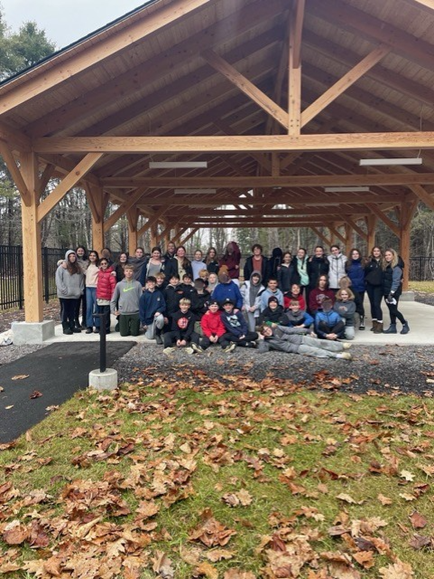
(Pictured: Students from Morse High School’s Unified Literacy Program.)

The Maine Department of Education (DOE) Office of Special Services and Inclusive Education successfully hosted the state’s first-ever Inclusive Education Conference on Thursday, April 10, 2025, at the Augusta Civic Center. The groundbreaking event, themed “Reimagining Education: Empowering All Learners, Embracing All Abilities,” brought together voices from across Maine to celebrate and advance inclusive practices in education.

Hundreds of participants—including students, families, educators, administrators, university faculty, and Maine DOE staff—came together for a day of learning, collaboration, and inspiration. Through powerful presentations, engaging panels, and personal storytelling, attendees shared their experiences and insights about inclusion in Maine schools and communities.

The conference focused on providing school communities with practical tools to support and empower every learner, with a special emphasis on students with disabilities. Attendees explored strategies to embrace diverse abilities, promote equity, and ensure that all students are equipped to thrive in inclusive and meaningful educational environments.

Concurrent sessions covered topics such as unified literacy, mental health, trauma, multitiered systems of support (MTSS), support for multilingual learners with disabilities, inclusive post-secondary education, inclusive early childhood education, and the importance of inclusion in state assessment, as well as engaging and supporting families through positive math experiences. Many sessions were led by representatives from the Maine DOE along with state partners from Disability Rights Maine, Special Olympics Maine, the Maine Department of Health and Human Services (DHHS), Best Buddies, Maine Parent Federation, University of Maine System, school administrative units (SAUs) with inclusive models, and students with lived experience.

The conference also featured several student and educator panels, including one about extended learning opportunities with representatives from the Association of People Supporting Employment First (APSE), the Noble High School ELO program, Mid-Coast School of Technology (MCST), and Portland Arts and Technology High School (PATHS). There was also an SAU) panel, featuring leaders from MSAD 11, RSU 52, and RSU 71. Morse High School students and their teachers lead a panel about unified literacy; Ames Elementary and Kingfield Elementary Schools hosted panels about their schools’ journeys to inclusion; and students from the Maine DOE Executive Student Transition Committee—a part of the department’s Transition Maine initiative—hosted a panel discussion about student advocacy.

A highlight of the event was a keynote address from Dr. Katie Novak, an internationally-renowned education consultant and advocate for Universal Design for Learning (UDL), who inspired the audience with her message on transforming systems to meet the needs of all learners.

Maine Education Commissioner Pender Makin also stopped by the event to provide a special lunchtime keynote address. She thanked educators for attending the conference and for their expertise and collaboration. She also addressed the importance of inclusion for all students by taking a moment to acknowledge the meaning of DEI—diversity, equity, and inclusion.

“Maine’s inaugural Inclusive Education Conference comes at an opportune moment to remind us all of the importance of diversity, equity, and inclusion in public education,” Commissioner Makin said. “Diversity makes all of us stronger by ensuring representation of background and perspective; equity allows everyone the opportunity to be the best that they can possibly be, no matter their circumstance; inclusion means that all voices deserve to have a seat at the table, and that no one is left behind or forgotten.”

The Maine DOE plans to host an Inclusive Education Conference annually, building on the success of this year’s conference. For more information and resources on inclusive education in Maine, please visit the Maine DOE website, or contact Maine DOE Special Projects and Educator Supports Coordinator Tracy Whitlock at Tracy.W.Whitlock@maine.gov.

State of Maine Publishes First Maine Climate Literacy Plan

Pictured: Fifth-grade students from MSAD 17 observed ash trees as part of their STEM lessons at Roberts Farm Experiential Learning.

The Maine Department of Education (DOE), in partnership with the Maine Environmental Education Association, has published the state’s first Maine Climate Literacy Plan (MCLP) with support from the Governor’s Office of Policy Innovation and the Future.

This plan will serve as an addendum to the Maine Environmental Literacy Plan (MELP), which was first created in 2010 and revised in 2022. The MCLP provides seven recommendations for parties throughout the state, including the Maine DOE, community partner organizations, school administrative units (SAUs), and other leaders, to help support climate literacy in Maine schools and among Maine youth.

View the Maine Environmental & Climate Literacy Plan (MCLP) here.

The Maine DOE established a taskforce to develop the MCLP in the Spring of 2024. This taskforce consisted of 30 key partners from a wide range of roles and locations throughout the state, including interdisciplinary educators, school administrators, community organization leaders, and youth. The taskforce held six meetings total to construct the recommendations provided in the MCLP.

The MCLP is one of the first of its kind in the nation. It is designed to chart a supportive plan for climate literacy throughout Maine schools. As the State of Maine continues to see climate change that affects the state’s workforce, infrastructure, natural environment, and future generations, it is imperative that schools feel they have the tools to support students’ understanding of these challenges, develop an appreciation for the environment, and provide the skills necessary to meet the future head-on.

The MCLP is the result of the 2020 Maine Won’t Wait recommendation by the Maine Climate Council. As an addendum to the MELP, the MCLP builds on the long-term vision, and success thus far, of prioritizing environmental education throughout the state, while setting more specific and shorter-term goals for climate education as a subset of environmental education.

The MCLP is structured into two strategic goals; 1. Increase Capacity Building for Advancing Climate Literacy in Maine Schools, 2. Develop a Holistic Maine Green Schools Program. Each strategy has a subset of recommendations and corresponding action steps needed to accomplish them listed. These recommendations are non-binding suggestions for carrying out this work throughout the state. The MCLP serves as a four-year framework that will be revised and updated, as needed, and then fully updated with a taskforce after four years. The Maine DOE plans to issue semiannual updates on the progress of recommendations.

Updates on Climate Education throughout Maine

For the 2024-2025 school year, 10 climate education programs are underway in dozens of schools throughout the state. The Maine Climate Literacy Plan aims to support programs such as these in years to come. Here is a highlight from two of them.

MSAD 17 (Oxford Hills)

In the Fall of 2024, eleven fifth-grade classes from MSAD 17 learned about the ecology and cultural significance of ash trees during their STEM lessons at Roberts Farm Experiential Learning.

Students contributed 22 observations to Gulf of Maine Research Institute’s community science project, Protecting Ash for the Future. The ash trees that students observed at Roberts Farm showed a few signs of stress, but students did not find any clear evidence of the emerald ash borer.

MSAD 17 plans to continue to monitor these trees with fifth-grade classes in the future!

RSU 34 (Old Town)

The Maine Center for Research in STEM Education (RiSE Center) at the University of Maine, along with RSU 34, is working with more than 85 teachers from around the state to develop lessons on climate science through a grant from the Maine DOE. This unique approach asks teachers to use Western science findings to inform their lesson plans and incorporate Indigenous philosophies and knowledge.

These teachers are learning from university faculty about the different ways in which climate is impacting our state, while also working with Wabanaki Youth in Science (WaYS), Wabanaki REACH, and/or completing the University of Maine Dawnland micro-credential to gain valuable insight into the culture of the Wabanaki and the knowledge that they have held for more than 10,000 years.

This multi-faceted approach brings teachers together to participate in professional learning online, curriculum development, in-person events, field trips, and book studies featuring books by Indigenous authors. Participants will come together this spring to present their work and share what they have learned and how they use it in their classrooms.

Eighty-five teachers from across the state are taking part in a program to develop climate science lessons using Western science findings and Indigenous knowledge.

For questions about the Maine Climate Literacy Plan or climate education in Maine, please reach out to Teddy Lyman, Maine DOE Climate Education Specialist, at Theodore.Lyman@maine.gov.

For more information about Maine DOE climate education work, and for additional resources, please use this link.