Hartford-Sumner Elementary School Implements Jolly Phonics Program

Submitted by Ryan Wilkins, Principal of Hartford-Sumner Elementary School in RSU 10.
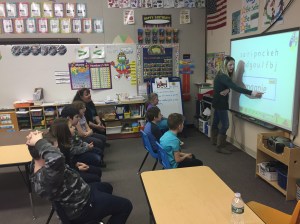
Jolly Phonics is a phonics program that teaches children the alphabetic code of English. It is a full year program for those in Kindergarten, and is being implemented at Hartford-Sumner Elementary School. In the first nine weeks or so of school, the students are taught the forty-two letter sounds and motions and how to blend the sounds in order to read words. Students also learn the forty-two Jolly Jingles songs and learn about Tricky Words. Then the students are taught the letter names. Lastly, the students are taught how to read books by themselves. Jolly Phonics is mainly for 3-8 year olds, but may be used to effectively teach reading to any age person.

There are five main skills taught in Jolly Phonics. They are:

  1. Learning the Letter Sounds
  2. Learning Letter Formation
  3. Blending and Segmenting
  4. Identifying Sounds in Words
  5. Tricky Words

The main forty-two sounds of English are taught in an unusual pace and order. One sound is taught each day, with a short story, a song, and a hand motion. Letter names are not emphasized, but rather the sound the letter makes becomes the focus.

As the sounds are introduced, the children are shown exactly how to form each letter correctly. By practicing in the air, tracing and feeling the letters in the Finger Phonics Board Books and by writing it, most children begin forming their letters correctly after the first twelve weeks or so. The correct tripod pencil grip is also taught, and practice is given tracing over dotted letters.

Blending is seeing a word and simply putting the sounds together, one by one, in order to read a word as you would do for c-a-t. Segmenting is hearing a word and learning how to remember how to spell each sound so you can write the word, sound by sound.

It is essential that children can hear the individual sounds in words, especially for writing. Initially, the children are asked to listen carefully and say if they can hear a given sound in words. Then they are trained to hear if the sound comes in the beginning, middle or end of the word. As soon as the children can hear the sounds in three letter words, they can start their dictation work found in The Phonics Handbook.

After their first month at school, when the majority of the children know about eighteen letter sounds and have been blending and segmenting regular words as a group activity, they can begin to learn the Tricky Words. Tricky Words are words that cannot always be worked out by blending – sight words they have to memorize, such as: said, who, was, my.

By the end of the kindergarten year in the Jolly Phonics program, each child should be able to read and write the 42 letter sounds, form the letters correctly holding their pencil in the tripod grip, blend decodable words fluently, like “flag” or “mushroom”, segment and write regular words like “bed” or “campground”, and read and write independently and with confidence.
 

Garret Schenck School has Success with Positive Action Program

Submitted by Lisa Savage, Reading Interventionist for Garret Schenck Elementary School.

Garret Schenck School serves healthy choices to preK-5 students in Anson every day. At every grade level our Positive Action program helps students learn that making positive choices feels better, and that positive choices include caring for our bodies through nutrition and hygiene.

Supporting nutrition learning, our 5-2-1-0 participation brings raw fruits and vegetables right into the classroom. Older grades receive a visit from a nutrition educator who conducts food prep classes where everyone gets to eat what they just learned how to make. Younger grades learn about a food before daring to try a bite of something new. The motto, “Don’t yuck my yum!” helps create a positive atmosphere for guided nutritional risk taking.

Our school’s community garden brings together students, teachers, school board members and neighbors to grow produce and nurture a love of gardening. Some of the goodies make their way to classrooms at snack time while others are used for our annual harvest dinner, which is held on open house night. Students at each grade level help prepare a harvest meal that is shared by their families.

Cooking club for grades 2-5 also benefits from the bounty of the harvest. In this after school activity teams work to prepare popular dishes like lasagne, shepherd’s pie and tossed salad using tomatoes and basil from the garden in season. Students learn teamwork, measurement, and math through cooking, eating and cleaning up.

We are proud of the healthy positive choices we are making at Garret Schenck!

Madison Junior High School Teacher Recognized with 2019 NELMS Master in Middle Award

The New England League of Middle Schools (NELMS) announced at its 38th Annual Conference (held March 21-22, 2019) that Kathy Bertini, a teacher at Madison Junior High School in Madison, Maine was awarded a NELMS 2019 Master in Middle Award. Jeff Rodman, Executive Director of NELMS, state “Paying attention to the learning needs of young adolescents and recognizing their unique developmental stage can make a significant difference in the lives of 10-14-year olds.” He added “recognizing those experienced in middle level educators is a major part of the work of the Recognition’s Committee who often have a very difficult task choosing winners.”
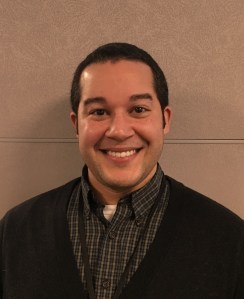
Kathy Bertini is the project director for the cooperative FEDES grant awarded by the Maine Department of Education in 2017, for a project called Kennebec Valley STEAM Outreach. Among the FEDES STEAM Outreach Project goals is the development of an upper elementary/middle level STEAM curriculum including a curriculum pilot in the three project partner districts, RSU 74, RSU 59, and RSU 83/MSAD 13. The STEAM curriculum is based on the engineering design process and incorporates trends in the work force and builds skills in areas of the State’s workforce where shortages are projected. The STEAM project also employs University of Maine engineering undergraduates to aid classroom teachers with curriculum implementation. The UMO undergrads also consult with the curriculum writer, Kathy Bertini, providing specific guidance on the engineering elements of each build, they act as mentors, and help with staff professional development. The KVSOP curriculum includes lessons/builds for grades 3-8 including a scope and sequence, alignment to NGSS content, Maine Learning Results and Engineering Design standards. Embedded in each build/lesson is a digital reference that reinforces the science content appropriate for the grade level.  Each build is connected to a real-life science career to support the connection with real world science application and a referenced to a habit of work element to encourage design change and performance expectations.

MaineCare Seed Adjustments to be Made, Review Q219 Reports by April 12, 2019

The recovery of Q219 MaineCare Seed will occur in the April 2019 subsidy payment and the Maine DOE is asking districts to please review their reports by April 12, 2019 to ensure accurate adjustments to subsidy. SAU staff must review student by student claims on both the public and private MaineCare reports for Q219 by April 12, 2019.

To access the MaineCare Seed reports, please follow the instructions below.

  1. Log into NEO using the link below
    https://neo.maine.gov/DOE/neo/Dashboard

    • Anyone who currently has Special Education Director permissions to the Special Education module will automatically have permissions to access MaineCare reports.
    • As in the past, if a new staff member needs permission to access this module, a request from the Superintendent to the Maine DOE helpdesk will be necessary. The helpdesk contact information is medms.helpdesk@maine.gov or 207-624-6896.
  2. Click on the Student Data tab
  3. Click on the Student Report tab
  4. Select MaineCare in the Reporting Area drop-down
  5. Choose the quarterly Seed report and the report type (private/public)
  6. Click view report button
  7. Once the report appears on the screen, choose the export button. MaineCare File
    You may export the reports to Excel but, please be aware that there may be multiple worksheet tabs within the workbook. Save the file to your computer.

You may export the reports to Excel, but please be aware that there may be multiple worksheet tabs within the workbook. Save the file to your computer.

If you disagree that a particular student or time period should be on the report, please provide the reason that you disagree along with the following to Denise.towers@maine.gov.

  • Identify the type of report (public or private) and the quarter in which the claims are located.
  • State Student ID
  • Service provided dates (From and To)
  • Total amount of Seed being disputed

Summer services: Students must be enrolled for the time period they are receiving educational services. This means that students that are receiving extended school year services in district or extended school year services in an out of district placement must have a primary enrollment for that time period in order for the MDOE to have the most accurate enrollment data to determine SAU responsibility for MaineCare Seed.

For more information or technical assistance related to MaineCare Seed, please contact Denise.towers@maine.gov.

Maine DOE Data Team Announces Annual Data Entry Training

August 6th thru August 15th, the Maine Department of Education Data Team will be hosting regional data entry trainings. This annual training is geared toward district and school level staff who are tasked with reporting student/staff data to the Maine DOE. Administrators are also strongly encouraged to attend. Our session this year will be focused on sharing resources that will assist districts with their required state data reporting tasks. Please help us create content that will be most valuable to you, by providing us with your suggestions via the link below.

Please click here submit your suggestions

Training Dates & Locations

All sessions will begin will registration at 8:30, presentations beginning at 9. We will serve a light lunch and will finish no later than 4:00. Coffee and water will also be provided throughout the day.

  • August 6th – Caribou High School
  • August 7th – Brewer High School
  • August 8th – Ellsworth Elementary-Middle School
  • August 12th – Cony School (Augusta)
  • August 13th – Mt. Blue High School (Farmington)
  • August 14th – Mt. Ararat Middle School (Topsham)
  • August 15th – Buxton Community Elementary School

For further questions, please contact the Maine DOE Helpdesk at 207-624-6896 or MEDMS.Helpdesk@maine.gov.


New Visual Tool Available to Help Communicate Purpose of the MEAs

With the upcoming MEA testing window opening soon, the Maine Department of Education has created a visual tool to help schools and districts when communicating with families and communities about the Maine Educational Assessments (MEAs). The tool outlines why Maine administers a state assessment to students, what scores are used for, and why participation in the MEAs is important.

The tool is available as a graphic visual and as a text-only accessible version:

Why Participation Matters (Graphic Visual – PDF)

Why Participation Matters (Text Version – PDF)

For further questions, please visit Maine DOE Maine Comprehensive Assessment System Website.


Employee of the Week: Nate Menifield

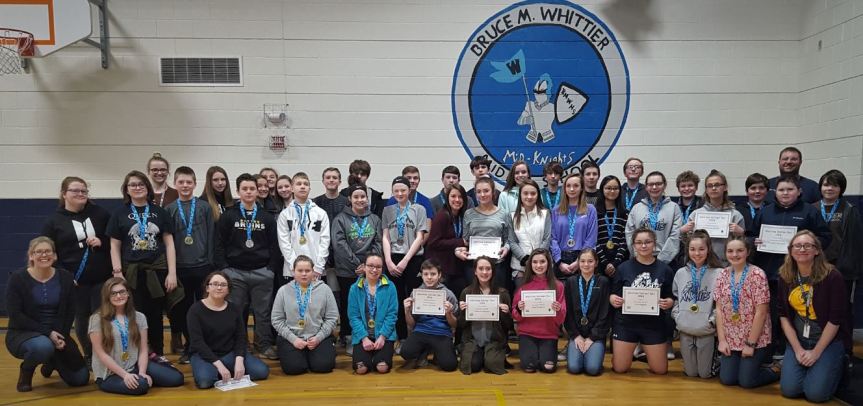
Visual and Performing Arts Specialist, Nate Menifield is the Maine Department of Education’s Employee of the Week. Get to know a little more about Nate through this brief question and answer:
What are your roles with DOE?

As the Visual and Performing Arts Specialist, I primarily support teachers of music, visual art, theatre, and dance in Maine’s Pre-K-12 public schools in a variety of ways ranging from designing professional learning opportunities to managing arts-related initiatives. Additionally, I serve as the Regional Education Representative for Cumberland County; a valuable chance to meet with that region’s superintendents and curriculum coordinators once each month.

 What do you like best about your job?

Anyone who knows me well knows that I find the most joy  – at work and elsewhere – in my relationships with the people around me. Since joining the DOE last July, I’ve quickly grown to appreciate and admire the dedication and expertise of my incredible colleagues, each of whom contributes something uniquely valuable to the collective work that we do. Beyond the office, I’ve discovered that I feel most energized by my direct interactions with our state’s educators and young artists. There are amazing levels of support, creativity, and passion being fostered in arts classrooms all over Maine. If you want to be inspired, go observe a rehearsal or attend an art exhibit – you won’t regret it!

 How or Why did you decide on this career?

I’ve long maintained the belief that, for me, educating others is more a personality trait than a career choice. Throw in the fact that I’ve always been “artsy,” and my tenure in arts education only makes sense! From my days as a young musician in Aroostook County to the nine years I spent teaching music to high school students in Southern Maine, I’ve had a rare and extended opportunity to witness the unique joys and the challenges facing arts education throughout our state. Over the years, though, one thing that’s remained clearly evident and remarkably consistent is that Maine arts educators are among the most dedicated, talented individuals you could ever hope to meet. So, when the opportunity to support them from the state level presented itself, I was both honored and humbled by the chance to give something meaningful back to the many educators who have given so much to me and many other generations of students.

What do you like to do outside of work for fun?

I’m a classically trained singer, so a lot of my time outside of cubicle #56 is spent rehearsing, performing, and occasionally guest conducting choirs. Other things to know? I also love traveling, am a big foodie, have enjoyed baking since I was a kid, and am dad to a rambunctious but adorable black lab mix named Toby. Stop by and share your interests any time!


MEDIA ADVISORY: Maine DOE to Host 2019 Farm to School Cook-Off

What: The Farm to School Cook-off showcases the culinary skills of school food service staff and students, while promoting locally grown products in school meals. Each volunteer team, consisting of one school food service staff and one student, will prepare a breakfast and lunch meal within a specific time frame using at least two ingredients that are grown, raised, caught, or manufactured in the State of Maine and meet National School Breakfast and Lunch Program requirements as well as one USDA food. Local apples and dried black beans will be used as “challenge” ingredients in the competition.

Who: School food service staff and students, representatives from Maine DOE’s Child Nutrition Program.

Where/When:

Thursday, March 21
Lake Region Vocational Center, Naples, ME
10:00am start time (cooking begins promptly at 10:30am)
Teams are representing Auburn, South Portland, Falmouth

Friday, March 22
Bath Regional Career and Technical Center, Bath, ME
10:00am start time (cooking begins promptly at 10:30am)
Teams are representing RSU 38, Yarmouth and RSU 12

Tuesday, March 26
Eastern Maine Community College, Bangor, ME
1:00pm start time (cooking begins promptly at 1:30pm)
Teams are representing RSU 54, RSU 22 and Cherryfield

A final cook-off will be held at Kennebec Valley Community College- Alfond Campus on April 23.

Members of the media are welcome to attend the competition. For further questions, please contact Maine Department of Education by contacting Rachel Paling at rachel.paling@maine.gov or call 624-6747.

Bruce M. Whittier Middle School in Poland Celebrates Whittier History Day

Submitted by Logan Landry, Social Studies teacher at Bruce M. Whittier Middle School in RSU 16.

Each year Bruce M. Whittier Middle School in Poland, Maine participates in the National History Day program that is  sponsored by the History Channel. This year Whittier celebrated their 7th annual Whittier History Day on Tuesday,  February 12, 2019. Whittier Middle School is unique, as every student does a project. Students first pick a topic that fits in with the year’s theme. This year’s theme was Triumph and Tragedy. The students conduct research and create a project which is then presented on Whittier History Day.

The National History Day program is focused on historical research, interpretation and creative expression for middle and high school students. By participating in NHD, students become writers, filmmakers, web designers, playwrights and artists as they create unique contemporary expressions of history.

On February 12th, we had 75 members of the community, and even teachers from other school’s around the state, volunteer their time to judge the student’s projects. Students with the top projects have been invited to participate in Maine History Day at the University of Maine at Orono in April. For the past 6 years we have also had students from Whittier make it to the national competition in Maryland/Washington D.C. that is held each June.

This year’s winners and the Social Studies teachers

While this is mainly a social studies project, every content area pitches in to help students succeed in their work. All staff members value the skills that the students learn from doing this project, and have supported the social studies department in leading this project for our students.

Whittier History Day is an incredible experience for the students. They not only learn research skills and history, but they also learn a lot of interpersonal skills including interview skills. These skills will help them for the rest of their life.

If you have questions about Whittier Middle School’s History Day, or you would be interested in judging next year, please feel free to contact Social Studies teacher, Logan Landry at llandry@rsu16.org.

Flexible Grouping a Success at Ridge View Community School

Submitted by Jerry Kiesman, Principal of Ridge View Community School  in AOS 94

How successful has flexible grouping been at Ridge View Community School?

Preliminary results reported last spring from NWEA testing in the fall of 2017 and the winter of 2018 indicated that many students were doing better. Now, the results of  last year’s testing are in for 2017-18 first graders, and Principal Jerry Kiesman says the data is “amazing.” Not only are students generally doing significantly better flexible grouping, the gains have been across the board—for all students and all needs.

In a cohort of 17 first graders who were tested using the Fountas and Pinnell reading level chart, 15 students ended the year at or above grade level, and 13 of those 15 students received additional support, either through title or special ed supplemental instruction or co-taught environments.

“To have that many students performing at grade level is very unusual and shows how successful flexible grouping has been,” said Mr. Kiesman.

The performance of last year’s first graders on the NWEA tests was even more impressive. On the Literacy NWEAs, 25 of 49 first graders exceeded their expected yearly growth rate of 8 to l2 points, 19 met the expected yearly growth rate, and only 5 did not meet the target growth rate because of flexible grouping. “That’s unheard of,” Mr. Kiesman said.

On the Math NWEA’s, the performance was even better, with 47 of 51 first graders exceeding their yearly growth target of 8 to 12 points, and 4 students meeting the target. No students—zero—failed to meet the yearly growth target.

In the Literacy NWEAs, the average growth for first graders during the 2017-18 school year was 17 points, compared to the expected growth of 8 to 12 points. The average number of growth points on the Math NWEAS was 27.4 points—almost three times the expected growth.

Flexible grouping has replaced the traditional classroom arrangement in grades K-4 at Ridge View, starting last year.

Instead of requiring students to spend the entire day with the same teacher in the same classroom, a variety of “learning environments” are set up for literacy and math to meet students’ individual needs.

“We have multiple teachers in the same room, and multiple places, approaches, and events to educate all the students,” Mr. Kiesman said. “We try to meet individual students where they are, and if a student isn’t progressing in a particular environment, we’ll try another environment depending on the student’s needs.”

When students are assigned to the literacy and math environments, they may move down or up a grade, depending on the standards they’re working on. Or they may move to an environment where they can receive the emotional or social support they need.

Mr. Kiesman says the best thing about flexible grouping is that it seems to be having a positive impact on the entire student population.

“It’s been affecting the kids at both the and bottom of the scale, as well as those in the middle,” he said. “That’s pretty neat.”

When flexible grouping started last year, Mr. Kiesman had to secure permission from the parents of special education students, because of IEP requirements.

“I asked them to try flexible grouping for four weeks,” Mr. Kiesman said. “One parent demurred, saying the student didn’t like noise or big crowds. I said. ‘Let me try.’ After four weeks, I called and asked if the parent wanted the child to be taken out of flexible grouping. The parent replied, ‘No, I want to keep him there—he’s having fun.’”

Next year, Mr. Kiesman says he doesn’t expect the same level of growth that the first graders saw last year, but he thinks that test results will show that everybody is still growing.