Solutionary Learning Transforms Classrooms at Oxford Hills Middle School

The Maine Department of Education (DOE) Office of Teaching and Learning is proud to highlight a transformative shift taking place at Oxford Hills Middle School. Through inquiry- and project-based learning, the school is fundamentally changing how students engage with their education.

Oxford Hills Middle School teachers Liz Coen and Courtney McLellan recently participated in the Maine Solutionaries Project, an inquiry-to-action instructional design framework developed by the Institute for Humane Education in collaboration with the Maine DOE. Motivated by a desire to increase student engagement, these educators focused on how to encourage students to ask their own questions, seek answers, and solve real-world problems.

“We wanted them to feel empowered and motivated to make change,” Coen and McLellan explained.

This innovative model has redefined the role of teachers. Rather than simply delivering content, Coen and McLellan now act as facilitators, dedicating significant time to preparation before each project they conduct.

“Beyond typical planning, we spend time connecting with community partners to understand the topic better and explore what’s possible for students,” the duo shared.

Building a network of experts willing to collaborate with students has become a crucial component of their planning process. Once projects begin, Coen and McLellan lead their students by asking guiding questions, providing constructive feedback, and supporting collaboration and group dynamics.

The current project these students are working on, centered around the theme of waste, allows them to select a topic within the broader subject. Many of them have chosen to conduct surveys or interview community partners, creating meaningful connections between their work and the world beyond the classroom. This element of choice and real-world interaction has provided more meaning and authenticity to their learning.

“Having that contact with people outside of school makes their learning more impactful,” Coen and McLellan added.

The shift to Solutionary learning has led to a noticeable improvement in student engagement at Oxford Hills Middle School. Students are now posing thoughtful questions and taking ownership of their learning. For example, during a visit with a guest speaker from EcoMaine, students actively participated, asking insightful questions that demonstrated their curiosity and comprehension.

One particularly-memorable example involved a student who became deeply invested in finding alternatives to Styrofoam after learning about its inability to decompose. One weekend, he tested an alternative material and returned to school eager to share his findings, including his setbacks and plans for improvement. His enthusiasm even inspired a previously-disengaged classmate to join the effort.

“Now, he’s revisiting the process to better understand the problem, creating surveys, interviewing community partners, and diving deeper into research,” Coen and McLellan shared.

This experience highlights a core strength of the Solutionary approach: encouraging students to revisit problems and identify root causes, rather than jumping to solutions prematurely. This iterative process fosters critical thinking, resilience, and a deeper understanding of the issues being explored.

The transformation at Oxford Hills Middle School demonstrates the power of Solutionary learning. By empowering students to lead their education, educators like Coen and McLellan are cultivating a generation of engaged, motivated, and solution-oriented learners.

To learn more about the Maine Solutionary Project’s upcoming cohorts, including a literacy-focused cohort and a numeracy-focused cohort, please visit the Maine Solutionaries Project webpage or contact Kathy Bertini, Maine DOE Interdisciplinary Instruction Coordinator, at kathy.bertini@maine.gov or Erik Wade, Maine DOE Interdisciplinary Instruction Specialist, at erik.wade@maine.gov.

The Maine Solutionaries Project funds received from the US Department of Education(USDOE) support the implementation of this project. The project has an award totaling 1,344.000.00 of which 100% is federally funded and directly attributed to project implementation. The contents are those of the Maine Solutionaries Project and do not necessarily represent the official views of, nor an endorsement, by the USDOE or the U.S. Government.

Continuing Webinar Series on Expanding Multilingual and Multicultural Opportunities in School

The Maine Department of Education (DOE) is excited to continue the Multilingual/Multicultural Connections Webinar Series with its second session, Incorporating Indigenous and Critical Needs Languages into the Curriculum, on Monday, February 3, 2025, from 3:30-4:30 p.m. via Zoom.

This professional learning opportunity highlights the transformative potential of multilingual and multicultural education in Maine schools. General education teachers, administrators, and district leaders are strongly encouraged to attend and explore strategies to leverage the international partnerships established through the Maine DOE’s Memoranda of Understanding (MOUs).

Why Attend?
Participants will:

  • Learn actionable strategies for integrating Indigenous languages, like Wabanaki, and critical-need global languages, such as Mandarin and Portuguese, into classrooms.
  • Explore partnership-driven resources, such as teacher exchange programs and virtual collaborations that enrich language learning.
  • Discover how to align language instruction with workforce development goals, preparing students for global careers.

Special Highlights
This session will feature insights from:

  • Bri Lolar, Maine DOE State Wabanaki Studies Specialist
  • Cynthia Huang, Taipei Economic and Cultural Office

Both experts will share real-world examples and practical applications for embedding critical languages into diverse classrooms.

Please use this link to register.

This series aims to demonstrate how Maine schools can utilize the unique opportunities afforded by the Maine DOE’s Memorandum of Understanding (MOU) partnership agreements with countries like Spain, China, Taiwan, Portugal, Germany, and France. Don’t miss this chance to explore the benefits of global engagement for your students and educators! Let’s work together to empower Maine students with the skills and opportunities they need to thrive in an interconnected world.

For more information, please contact Ayesha Hall, Maine DOE Director of Strategic Partnerships, at ayesha.hall@maine.gov.

Maine DOE Launches New Pre-K Professional Learning Series for Dual Language Learners

The Maine Department of Education (DOE) Office of Teaching and Learning is proud to introduce an exciting new professional learning series, designed to support educators working with Dual Language Learners (DLLs) in pre-K settings. This five-part interactive series will provide educators with tools and strategies to create inclusive, language-rich classrooms that celebrate student voice, engage families meaningfully, and embrace culturally-responsive practices.

Series Overview

Participants will engage in collaborative activities, watch expert-led presentations, and gain actionable resources, including Individualized Language Acquisition Plans (ILAPs) and Student Profiles designed specifically for pre-K learners.

This series is ideal for pre-K and Early Childhood educators, English for Speakers of Other Languages (ESOL) teachers, and administrators supporting pre-K and early learning programs. It will empower educators to:

  • Develop child-centered, language-focused programming using asset-based student portraits.
  • Foster meaningful communication and authentic partnerships with families.
  • Build language-rich environments that integrate language development into daily routines.
  • Co-create culturally-responsive programming that reflects and celebrates student diversity.
  • Use data and assessments effectively to support growth and smooth transitions for DLLs.

Participants will receive Unlocking Multilingual Learner Potential, Second Edition by Diane Staehr Fenner and Sydney Snyder, provided free of charge. Enrollment is capped at 30 participants to ensure a collaborative and impactful experience. Educators and administrators are encouraged to commit to all sessions and will receive 30 contact hours.

Series Details

Dates:

  • Session 1: February 27, 2025
  • Session 2: March 27, 2025
  • Session 3: April 17, 2025
  • Session 4: May 29, 2025
  • Session 5: June 26, 2025

Time: 3:30 – 5:00 p.m.

Format: virtual and interactive

The application deadline is Friday, February 7, 2025. Please use this link to apply. Participants will be notified of acceptance by February 13.

About the Facilitator

Rebecca Carey, a 2024-2025 Teacher Leader Fellow with the Maine DOE, will lead this professional learning series. Carey is a dedicated educator passionate about supporting multilingual learners and fostering joyful, play-based learning environments.

Carey has developed an asynchronous resource, Dual Language Learners, Pre-K and Early Learning, which includes a short video addressing frequently-asked questions about identifying and supporting multilingual learners in pre-K programs. Accompanying slides and a one-pager offer additional resources to build culturally-responsive, child-centered classrooms.

For questions, contact Melanie Junkins, Maine DOE Multilingual and Bilingual Education Specialist, at melanie.junkins@maine.gov.

The Maine DOE Office of Teaching and Learning is committed to unlocking the potential of every learner by creating classrooms where every child thrives. Don’t miss this opportunity to enhance your impact and make a lasting difference!

Maine DOE Announces Exciting Opportunity for Participants of 10th Annual Read to ME Challenge

In February, the Maine Department of Education (DOE) will launch its 10th annual Read to ME Challenge, a month-long public awareness campaign to support children’s literacy growth. To celebrate a decade of success, the Maine DOE is offering an exciting new opportunity this year for participating schools and organizations to enter into a drawing to win a visit from a Maine author.

Since 2015, the Read to ME Challenge has encouraged adults to read to and/or with children for at least 15 minutes during the month of February. Those who participate traditionally capture the moment via a photo or video and post it to a social media platform like Facebook or Instagram, using the hashtag #ReadtoME. While anyone may participate in the Read to ME Challenge, this initiative offers a wonderful opportunity for schools, childcare programs, libraries, and other community organizations to get kids engaged with reading.

This year, participating schools and organizations may choose to fill out this form for a chance to be entered into a random drawing at the end of the Read to ME Challenge, which concludes after Read Across America Day on March 2, 2025 (recognized by schools on March 3). About a dozen winners will be selected from this drawing for a visit from a Maine author before the end of the school year in June! These authors have expressed that they are excited to share their works with readers from across the state.

You may learn more about the Read to ME Challenge on the Maine DOE website. Details regarding the kick-off session on Monday, February 3, 2025 will be made available soon. If you are submitting to win an author visit, please complete your entry by Friday, March 7, 2025.

For questions about the Read to ME Challenge, please contact Maine DOE Director of Early Learning Lee Anne Larsen at Leeann.Larsen@maine.gov.

To share photos of your Read to ME Challenge participation, please contact Maine DOE Communications Outreach Manager Rachel Paling at Rachel.Paling@maine.gov. On social media, you may also use the tags @MaineDepartmentofEducation1! on Facebook and @mainedepted on Instagram.

Reminder: Registration Open for Inclusive Education Conference on April 10

Join the Maine Department of Education (DOE) for the state’s first Inclusive Education Conference on Thursday, April 10, 2025, at the Augusta Civic Center. The conference theme is “Reimagining Education: Empowering All Learners, Embracing All Abilities.” It will provide school communities (educators, administrators, families, and students) with the tools necessary to empower every student, particularly those with disabilities, by embracing diverse abilities and ensuring that all students have the support they need to build inclusive, meaningful futures.

The Maine DOE Office of Special Services and Inclusive Education and the University of Maine at Farmington are hosting this conference. The keynote speaker will be Katie Novak, an internationally renowned education consultant, author, graduate instructor at the University of Pennsylvania, and a former Assistant Superintendent of Schools in Massachusetts. Dr. Novak’s keynote address will focus on an introduction to inclusive education practices and structures in schools. She will also hold three sessions on Universal Design for Learning (UDL).

The conference will feature students, families, educators, administrators, university faculty, and Maine DOE staff from across the state, as well, who will share their expertise and experiences with inclusion in schools and communities.

Please gather a team of your school colleagues and meet us in Augusta this spring! The cost of the daylong conference (8:30 a.m.-4 p.m.) is $175 and includes lunch, as well as a wealth of information and resources.

Register here. (Please note that technical issues with the event registration website have been resolved.)

For more information, please reach out to Maine DOE Special Projects for Inclusion Coordinator Tracy Whitlock at tracy.w.whitlock@maine.gov. Click here to learn more about the conference and other inclusive programming.

Five Maine Teachers Honored with Presidential Awards for Excellence in Mathematics and Science Teaching

On January 13, 2025, President Biden announced 336 teachers and mentors from across the nation as recipients of the Presidential Awards for Excellence in Mathematics and Science Teaching (PAEMST) and the Presidential Awards for Excellence in Science, Mathematics, and Engineering Mentoring (PAESMEM). These awards honor the vital role that America’s teachers and mentors play in shaping the next generation of technical leaders, including scientists, engineers, explorers, and innovators.

The recently-announced honorees were recognized from 2021 through 2023 and included five Maine educators.

Maine’s 2021-2023 PAEMST Awardees:

Nominees complete a rigorous application process to demonstrate deep content knowledge and an ability to adapt to a broad range of learners and teaching environments. A panel of distinguished mathematicians, scientists, and educators at the state and national levels assesses nominations before recommending awardees to the White House Office of Science and Technology Policy (OSTP). Teachers are selected based on their distinction in the classroom and dedication to improving STEM education.

A national selection committee assesses the nominations before recommending awardees to the National Science Foundation and OSTP. The National Science Foundation, which manages PAEMST and PAESMEM on behalf of OSTP, provides each recipient $10,000.

Established in 1983, the PAEMST is the highest award K-12 math and science teachers can receive from the U.S. government. Award recipients represent schools and organizations from all 50 states, Washington D.C., Puerto Rico, Department of Defense Education Activity (DODEA) schools, and the U.S. territories (American Samoa, Guam, Commonwealth of the Northern Mariana Islands, and U.S. Virgin Islands).

Nominations are currently open for the 2024-2025 Presidential Awards for Excellence in Mathematics and Science (PAEMST). Please consider nominating an excellent grade 7-12 educator or applying on the PAEMST website. The deadline to nominate/apply is Thursday, February 6, 2025.

For more information, please visit PAEMST (www.paemst.org) and PAESMEM (www.paesmem.net) online.


WEBINAR: Lights, Stage, Learn – The Transformative Power of Theater in Education

Join Maine Department of Education (DOE) Arts Integration Teacher Leader Fellow Joshua Chard and special guests Reba Askari, Emily Dixon, and Allison McCall from the Children’s Museum & Theatre of Maine for an engaging and interactive webinar that explores how theater can enrich classroom learning and foster creativity, empathy, and critical thinking in students.

Educators will gain practical strategies for integrating theatrical techniques into lessons to make subjects more dynamic and relatable. Additionally, the session will highlight the lasting impact of exposing students to live theater performances, from sparking curiosity to deepening cultural awareness.

The Children’s Theatre of Maine was established in 1924 and continues to offer professional theater for young audiences at Maddy’s Theater, located at the Children’s Museum & Theatre of Maine at Thompson’s Point in Portland. Join us to inspire your students through the magic of storytelling and performance!

The webinar will take place on Wednesday, February 5, from 3:15- 4:15 p.m. via Zoom.

Join the webinar here. (There is no need to register in advance).

The Maine DOE Teacher Leader Fellow program is part of the Maine DOE Office of Teaching and Learning. For additional information, please contact Joshua Chard at joshua.chard@maine.gov.

Maine Surplus Property – January Update for Educational Institutions

If you missed the Maine Department of Education (DOE) Newsroom article with details about the Maine Surplus Property Donee Program, you can read it here.

Does your school need desks, filing cabinets, or other furniture? Could your custodial crew use additional cleaning/maintenance supplies or equipment? Is your career and technical education program looking for used computers, vehicles, or machinery as a refurbishing project?

Maine Surplus Property has these and other items available! Open this PDF to view some of the current inventory.

Approved donees may stop by Maine Surplus Property at 85 Leighton Road in Augusta on Mondays through Fridays between 8 a.m. and 3:30 p.m. to purchase items from the warehouse.

Not an approved donee yet? Members of the general public may purchase items during the Maine Surplus Property public sale on the second Friday of each month.

For more information, please visit Maine Surplus Property. You can also sign up here to receive automatic updates!

Registration Open for 2025 Extended Learning Opportunity (ELO) Winter Workshop

Maine educators are invited to register for the 2025 Extended Learning Opportunity (ELO) Winter Workshop, hosted by Jobs for Maine Graduates (JMG). This event will take place on February 25 at the Hilton Garden Inn in Bangor and is appropriate for a range of backgrounds – from experienced ELO facilitators who are seeking to refine their approach to educators new to this innovative curriculum delivery method who are interested in learning more.

ELOs are recognized in Maine statute as an educational pathway offering students personalized and hands-on learning experiences that connect academic standards with real-world opportunities. The Winter Workshop is designed to equip participants with the knowledge and tools needed to create or enhance ELOs to better support student success.

Highlights of this workshop include:

  • Interactive Sessions: Dive into microlearning, application activities, and guided work sessions tailored to specific needs.
  • Peer Collaboration: Connect with fellow educators and ELO experts to share best practices and strategies.
  • Practical Takeaways: Learn how to align ELOs with state learning standards, integrate group-based approaches, and leverage the ELO Learning Management System on Canvas.
  • Student Voices: Hear firsthand from Maine students about the transformative impact of ELOs on their learning journeys.

Thanks to funding provided by the Maine Department of Economic and Community Development’s Maine Career Exploration Program, registration and food costs for participants are fully covered by JMG. Attendees will also receive a certificate for five contact hours, applicable toward educator recertification.

With spaces filling quickly, now is the time for educators to secure a spot. Please register here.

For more information, check out the official event flyer. Please contact JMG’s ELO Coach Shayna Webber at swebber@jmg.org with any questions.

Maine DOE and DHHS to Host Annual Foster Care Points of Contact Training on January 30

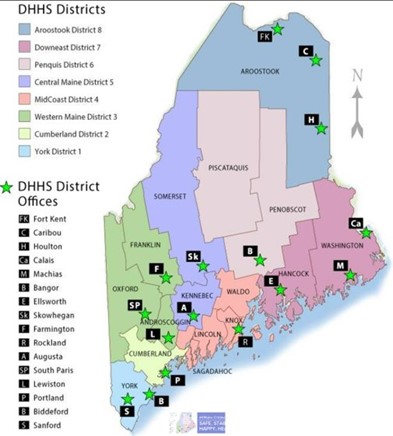
The Annual Foster Care Points of Contact (POC) training for school administrative units (SAUs) is scheduled for Thursday, January 30, at 3:30 p.m. via Zoom. Hosted by the Maine Department of Education (DOE) and the Maine Department of Health and Human Services (DHHS) Office of Child and Family Services (OCFS), this event will bring together the foster care POCs from individual SAUs, as well as regional foster care POCs from the OCFS.

The purpose of this yearly training is to review foster care provisions, to review the State of Maine Transportation Memorandum of Understanding (MOU) between the Maine DOE and DHHS, and to provide those working most closely with youth in foster care an opportunity to network with counterparts across the state who support students in foster care.

The training will include a formal presentation, followed by an opportunity for SAU foster care POCs to connect with OCFS foster care POCs (listed below) in small breakout groups where participants will engage in regional-level conversations to share updates, successes, and concerns.

DHHS POC Regions in Maine

OCFS Foster Care Points of Contact for Education

More Information About Educational Protections for Children in Foster Care  

The federal Every Student Succeeds Act (ESSA) was signed on December 10, 2015, and amended the Elementary and Secondary Education Act of 1965 (ESEA). ESSA contains provisions related to protections for children in foster care and requires the Maine DOE and SAUs to collaborate with the OCFS to ensure educational stability for children in foster care. The goal of ESSA’s provisions is for children in foster care to experience minimal disruption in their education as a result of being placed in foster care and to receive the same opportunities to develop the necessary skills to be successful as children who are not in foster care.

Under ESSA, the Maine DOE and OCFS must work together to ensure that:

  • A child in foster care will enroll or remain enrolled in the child’s school of origin, unless a determination is made that it is not in the child’s best interest to attend that school.
  • If a determination is made that is not in the child’s best interest to remain in the school of origin, the child will immediately be enrolled in a new school, even if the child and/or his or her guardians are unable to produce records normally required for enrollment.
  • The child’s new school must immediately contact the school of origin to obtain relevant records.

Please consider joining the Director of the Maine DOE Office of School and Student Supports, Julie Smyth, and DHHS Manager of Field Operations, Jill Hunter, for the ’24-’25 Foster Care Points of Contact Meeting on Thursday, January 30. You may register in advance for this meeting here. Upon registering, you will receive a confirmation email containing information about joining the meeting.

For questions, please contact Julie Smyth at julie.a.smyth@maine.gov or 207-592-0949.