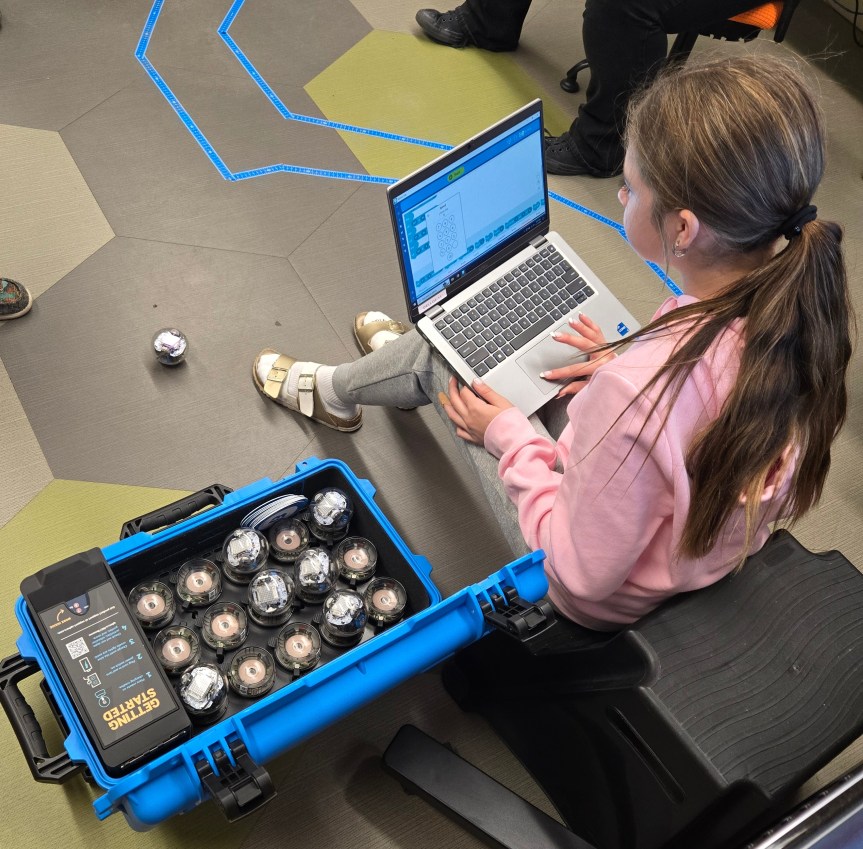
2025 MLTI Student Conference: Call for Session Proposals

The Maine Department of Education’s (DOE) Office of Teaching and Learning (OTL) is issuing a call for session proposals for the 2025 MLTI Student Conference. This annual event is organized by the OTL’s Learning Through Technology team and is a part of the Maine Learning Technology Initiative (MLTI). This year’s conference will be held in-person on Thursday, May 22, 2025, at the University of Maine campus in Orono. It is open to grades 5 through 10 in all MLTI school administrative units (SAUs).

The 2025 MLTI Student Conference theme is travel, and the event will use the hashtag #LetsDiriGo. Ideally, sessions will be tailored to that theme, but it’s not a requirement. There are endless possibilities for session topics; however, the focus should be technology-centered and may include traditional technology use, computer science, or even unplugged activities.

Session Proposal Requirements

  • Platform Agnostic: Sessions should not be device-specific.
  • Free Tools and Apps: Sessions should use only free apps and tools that are accessible to all participants.
  • Age Appropriate: Sessions must be suitable for 5th- through 10th-grade MLTI students.
  • Interactive: Sessions should actively engage students in exploration, creation, and collaboration.

Sessions may be led entirely by educators, or students can co-lead with educators. The Maine DOE will also consider session proposals from educational organizations, higher education institutes, and other interested parties directly related to education. For inspiration, session descriptions for the 2024 MLTI Student Conference can be found here.

This year, sessions will be 60 minutes long and should actively engage students in exploration, creation, and collaboration through technology and/or computer science. Presenters should plan to deliver their session twice, unless their schedule prohibits them from doing so.

To submit a session proposal, please complete the 2025 MLTI Student Conference Presentation Proposal Form.

Updated Schedule for the 2025 MLTI Student Conference

8:15 – 9:00 a.m.: Check-in (45 minutes)

9:00 – 9:30 a.m.: Welcome and Opening (30 minutes)

9:45 – 10:45 a.m.: Session 1 for everyone (60 minutes)

11:00 a.m. – noon: Lunch OR Session 2A (60 minutes)

  • Half of students go to lunch at Hilltop or York.
  • Half of students go to Session 2A.
  • Session 2B presenters go to lunch at Bear’s Den.
  • Includes 15 minutes of passing time

12:15 – 1:15 p.m.: Lunch OR Session 2B (60 minutes)

  • Students who attended Session 2A go to lunch at Hilltop or York.
  • Students who attended lunch go to Session 2B.
  • Session 2A presenters go to lunch at Bear’s Den.
  • Includes 15 minutes of passing time

1:30 – 2:30 p.m.: Uber Session and Closing (60 minutes)

Important Dates:

  • Presenters must register to present at the 2025 MLTI Student Conference before March 21.
  • Student registration opens February 3. Upon receipt of all registration materials, a session sign-up link will be provided.
  • The window for student session registration is April 14 through May 2.

If you have questions, please contact the Maine DOE Learning Through Technology team at doe-ltt@maine.gov.

Submit a T-Shirt Design to Represent the 2025 MLTI Student Conference (#LetsDiriGo!)

The Maine Department of Education’s (DOE) Maine Learning Technology Initiative (MLTI) is excited to announce a T-shirt design competition for the 22nd annual MLTI Student Conference on May 22, 2025. All students in MLTI schools are invited to unleash their creativity and design the official T-shirt for this in-person event, which will be held at the University of Maine. The theme for this conference is #LetsDiriGo!

Every year, this competition gives student designers a unique opportunity to see their work come to life beyond a computer screen. Last year’s winning designs came from Maranacook Community Middle School in Readfield (for the MLTI Student Conference) and the Samuel L. Wagner Middle School in Winterport (for the MLTI Maine Winter Classic). Other recent winners have included students from Gray-New Gloucester High SchoolWaterville Junior High School, and Southern Aroostook Community School.

The Maine DOE is, once again, looking forward to selecting a student design for these T-shirts, which will also be available in youth sizes this year. Please review eligibility and submission guidelines for the 2025 MLTI Student Conference T-shirt design competition here. You may submit your entry using this submission form.

Upcoming Competition Dates:

  • March 16, 2025: T-shirt designs due (no late entries accepted)
  • April 4, 2025: finalists selected/winner notified

If you have questions about this contest or need assistance, please contact MLTI Project Manager Bethany Billinger at bethany.billinger@maine.gov.

The Maine Learning Through Technology Initiative (MLTI) is part of the Maine DOE Office of Teaching and Learning. For more information about the MLTI Student Conference, please email doe-ltt@maine.gov.

Maine DOE Tackles Chronic Absenteeism Through State Collaboration; Launches Attendance Toolkit for Maine Schools

The Maine Department of Education (DOE) is forging a path to address chronic absenteeism through a transformative collaboration called the Maine Engagement and Attendance Center (MEAC). The group consists of representatives from across Maine DOE offices and teams, as well as members from Count ME In and the Maine Positive Behavioral Interventions and Supports (PBIS) collaboration. MEAC has been convening since January of 2024 as a progression of its related work with the U.S. Department of Education’s Student Engagement and Attendance Center (SEAC). This initiative represents a pivotal step in aligning data, policy, and engagement efforts to improve student attendance and outcomes across Maine.

A Unified Approach to Addressing Chronic Absence

The Maine Department of Education (DOE) is committed to addressing chronic absenteeism through a systemic approach that leverages collaboration, data-driven strategies, and the expertise of both Maine’s education workforce and national thought leaders. At the core of this work is the understanding that improving attendance requires cohesive efforts across schools, communities, and state agencies.

Guided by input from educators and constituents, the Maine Engagement and Attendance Center (MEAC) is addressing critical questions to advance its efforts, such as:

  • How can data be used to inform policy and support schools more effectively?
  • What tools and guidance can help educators to understand and combat chronic absenteeism?
  • How can messaging be streamlined to create awareness and foster community partnerships?

MEAC’s efforts include creating resources like attendance literacy guides, exploring root causes of chronic absenteeism through data analysis, and fostering statewide engagement to share best practices.

Why Does Attendance Matter?

Like other schools across the nation, Maine schools have experienced increasing percentages of students being chronically absent between 2018 and 2022 (Attendance Works/John Hopkins University, 2025). Students who miss more than 10% of their school days – whether absences are excused, unexcused, or disciplinary – are experiencing chronic absenteeism. These students are at a higher risk of reduced academic achievement, dropping out of school, and delayed graduation.

Improving attendance requires a comprehensive approach that considers various factors, such as physical health, mental wellbeing, school climate, and family circumstances. The integration of support services and collaboration among educational organizations and programs are essential components of efforts to improve student attendance and, consequently, their overall educational outcomes.

Attendance Toolkit for Maine Schools

In August of 2024, the Maine Engagement and Attendance Center (MEAC) launched the Maine Department of Education (DOE) Attendance Toolkit for Maine schools. It provides subject area content, resources, and strategies to help school staff understand how attendance can impact a variety of health factors for students as it relates to health services, school climate, family engagement, and community involvement.

Toolkit Deep Dive: A 4-Part Series

To further empower schools and educators, the Maine Department of Education (DOE) is launching a 4-part series to deeply explore the Maine DOE Attendance Toolkit. Each month, participants will delve into specific sections of the toolkit, examining resources and strategies designed to increase student attendance. The sessions will also feature specialists, offering a unique opportunity for schools to ask questions and develop actionable plans for implementation.

Session details:

  • January 27, 2025: Introduction to the Toolkit and Exploring the Basics
  • February 24, 2025: Examine School Climate and Student Supports
  • March 24, 2025: Investigate Comprehensive Health Education and Employee Wellness
  • April 28, 2025: Explore Health Services and Begin Developing Your Action Plan

This series is designed to provide targeted guidance for schools, ensuring the tools and strategies are integrated effectively into their systems to address attendance challenges. Please use this link to register.

Impact Beyond the Maine DOE

The work within the Maine Engagement and Attendance Center (MEAC) has the potential to resonate far beyond internal meetings. By strengthening its systems, the Maine Department of Education (DOE) is setting the stage to empower schools, engage families, and ensure that every student has the support they need to thrive. As MEAC continues to build on its strategies, this work will inspire solutions for educators and policymakers across the state and beyond.

With plans to expand its reach and share its progress, the Maine DOE invites the education community to join its work in addressing chronic absenteeism. Together, these efforts reaffirm the department’s commitment to fostering equity and excellence for all Maine learners.

For more information, please contact Sarah Nelson, Maine DOE Student Engagement Specialist, at sarah.nelson@maine.gov.

Maine DOE Seeking Educators to Develop the Next Round of MOOSE Modules

The Maine Department of Education (DOE) is seeking educators to develop interdisciplinary MOOSE modules that align with, and provide real-world context for, Maine Learning Results standards and existing Maine DOE resources.

The Maine Online Open-Source Education (MOOSE) platform, which is managed by the Maine DOE Office of Teaching and Learning, provides free, interdisciplinary, project-based learning materials created by Maine teachers for Maine pre-K through grade 12 students. The MOOSE Team is constantly expanding its content to meet educator needs and provide resources that highlight ongoing and emerging initiatives of the Maine DOE.

The Maine DOE is currently looking for Maine educators to bring a variety of perspectives and skills to the development of MOOSE modules. Modules in this round will emphasize the real-world application of math concepts within a highly-interdisciplinary context. Educators from all disciplines are encouraged to apply, as a mix of expertise is critical to creating rich, meaningful learning experiences that integrate multiple subject areas.

Applicants must be available for weekly meetings on Monday and Wednesday evenings from 4-5 p.m. beginning in March and must be able to dedicate three to six hours outside of that time per week to creating materials. Interdisciplinary cohorts will be formed for educators who want to work in an elementary, middle, or high school context. Within cohorts, teams of three to four people will create individual modules over the course of 16 weeks (with an end date of June 15) under the guidance of the Maine DOE MOOSE specialists.

The MOOSE Team will hold a recorded information session on Monday, February 3 at 4 p.m. That recording will be directly mailed to all registrants and will be posted on the Maine DOE website. Registration for the Zoom meeting can be found here.

Please apply for this opportunity here. Applications are due by Sunday, February 16. Applicants will be notified of their acceptance to the program by Friday, February 21, and will attend their first meeting on Monday, March 3. Compensation for a fully-developed, approved, and published module by June 15 is $3,000, with no partial or late payments available.

For further questions, please reach out to Maine DOE MOOSE Project Manager Jennifer Page at jennifer.page@maine.gov.

‘For ME’ Instructional Program Overview and Summer Training Opportunities

Since 2018, the Maine Department of Education (DOE) has adapted and piloted open-source instructional programs for early elementary grades based on the Boston Public School’s evidence-based Focus Curricula. These programs were designed to be developmentally-appropriate, interdisciplinary, and aligned with Maine’s learning standards.

  • Pre-K for ME was launched in 2019.
  • K for ME was launched in 2021.
  • 1st Grade for ME was launched in 2023.
  • 2nd Grade for ME is being piloted in Maine classrooms currently and will be available for the 2025-2026 school year.

While Maine schools are responsible for the purchase of materials that support the use of these programs, lesson plans and other supporting documents are available at no cost via the Maine DOE’s website, and the Maine DOE provides initial training to support program implementation.

Informational Overview

An informational overview of the programs will be held on January 23, 2025, from 3:00-4:30 p.m. via Zoom. The session will share the basic program structures and review materials needed for implementation. The overview will be recorded and posted for those unable to attend live. Educators unfamiliar with the programs are strongly encouraged to attend or view the recording.

Overview Session on January 23, 3:00-4:30 p.m.Register here.

Summer Training

Educators, schools, and programs planning to implement the For ME programs in the 2025-2026 school year (pre-K to grade 2) are invited to participate in initial implementation trainings scheduled for summer 2025. These in-person trainings are designed to build understanding of program design and support successful implementation.

  • Who Should Attend:
    • School administrators (strongly encouraged)
    • Pre-K, Kindergarten, 1st grade, and 2nd grade teachers
    • Special educators, education technicians, and instructional coaches/curriculum leaders working with pre-K to grade 2 teachers
  • Training Details:
    • Time: Approximately 8:30 a.m. to 3:30 p.m. each day
    • Cost: Free
    • Schedule:
      • Pre-K for ME Initial Training: Week of July 28-August 1 (exact dates and location TBD)
      • K for ME Initial Training: July 28 and 29 in the Augusta/Waterville area (exact location TBD)
      • 1st Grade for ME Initial Training: July 30 and 31 in the Augusta/Waterville area (exact location TBD)
      • 2nd Grade for ME Initial Training: July 30 and 31 in the Augusta/Waterville area (exact location TBD)
      • Additional Training Day for K, 1st, and 2nd Grades: June 25, 8:30 a.m. – 3:30 p.m. in the Augusta/Waterville area (exact location TBD)
      • Refresher Training for Pre-K Teachers:
        1-day refresher trainings will be offered in mid-August (between August 11-22) for teachers who have previously completed the initial Pre-K for ME training.

Registration for Summer Training

Schools interested in sending educators to these trainings should have a principal or instructional leader complete the Summer Training Interest Link by May 16, 2025.

In mid-May, schools that have expressed interest will be contacted to confirm participation and gather the names and email addresses of all attendees. Additional details about the training locations and preparation will be shared at that time.

For additional information about Pre-K for ME, please contact Marcy.R.Whitcomb@maine.gov. For K for ME, 1st Grade for ME, and 2nd Grade for ME, please contact Leeann.Larsen@maine.gov or Nicole.Madore@maine.gov.

Additional Climate Education Professional Development Grants Available for 2025-2026 School Year

The Maine Department of Education (DOE) is excited to release the third round of Climate Education Professional Development grant funds for climate-related professional learning for Maine educators and local education providers. The grant application is due March 21, 2025. Awarded programs will take place between July 1, 2025, and June 30, 2026.

The Maine DOE Climate Education Professional Development Grant Program was designed as a result of LD 1902, which the Maine Legislature passed in the spring of 2022. The program continues to expand its reach and impact statewide by encouraging the partnership of schools and community-based organizations for climate-related, interdisciplinary professional learning.

In this third round of grants, the program has been refined to include two different types of professional learning models. This is based on learnings from Phase 1 and Phase 2 grant applicants and awardees in 2023 and 2024.

  • Program type 1 focuses on an individual local education provider, allowing only the local education provider’s educators and staff to work with a partner organization with a budget between $5,000 and $30,000.
  • Program type 2 is designed to be a professional learning summit where the local education provider and partner host an event or events that are open to educators and staff in a broader region – e.g., multiple school administrative units (SAUs), county(s), statewide, or other. Awarded type 2 programs may have a budget between $5,000 and $100,00

A total of $650,000 has been allocated for this third round of grant programs. Applications are available starting January 14, 2025, and are due March 21, 2025. Programming may run from July 1, 2025, through June 30, 2026.

To view the Climate Education Professional Development Grant RFA, please visit the State of Maine Division of Procurement Services webpage and search for RFA #202412219. More information can be found on the Maine DOE website.

As the Climate Education Professional Development Grant Program continues, the program’s impact throughout the state is becoming more evident. Seven programs from Phase 1 in the spring and summer of 2024 worked with 126 teachers and 17 partners and reached more than 4,000 students in Maine. More information about the overall impact of those programs and their individual narratives can be found here. Ten phase 2 programs are currently underway throughout the state. Learn more about those here.

Questions about the RFA should be emailed to Teddy Lyman, Maine DOE Climate Education Specialist, at Theodore.Lyman@maine.gov by 11:59 p.m. on February 7, 2025. Questions and answers will be posted publicly on the Maine DOE Climate Education webpage.

The Climate Education webpage also contains additional information and resources. Interested partners may also consider joining the upcoming Maine Climate Education Quarterly Winter Meeting.


Maine Schools Implement First 10 Community Schools Model Using Maine Preschool Development Grant

The Maine Department of Education (DOE) Early Learning Team is supporting a First 10 Community Schools pilot through Maine’s Preschool Development Grant. It is designed to bring together school administrative units (SAUs), families, early childhood programs, and community organizations to create a system that helps young children to learn and thrive during the first 10 years of their lives.

The First 10 Community Schools model is a specialized community school approach that involves children and their families even before they reach public school age. Providing resources during this critical period of development for kids has proven to support learning and wellbeing into adulthood. First 10 was developed by the Education Development Center (EDC) under the leadership of Dr. David Jacobson. Participating teams in Maine benefit from EDC coaching, which helps communities to tailor strategies to meet their own unique and individual needs.

Over the past two years, seven SAUs in Maine have been awarded grants to establish teams, hire outreach coordinators, and implement strategies to increase access to quality programming, comprehensive supports, parent education, and coordinated transitions for children and families into public school. The initial cohort of grantees began its work in the summer of 2023 and is now in the second year of implementation.

In July of 2024, a second cohort of schools and communities in Maine was also awarded funding to implement the First 10 Community Schools model. These participants, which include Cape Cod Hill School (RSU 9), Wiscasset Elementary School, North and Bloomfield Elementary Schools (MSAD 54), and Deer Isle-Stonington and Sedgwick Elementary Schools (RSU 76), are currently mapping assets, identifying needs, and building relationships with community partners.

The Maine DOE is excited to share some highlights from the first cohort’s progress:

Sanford Pride Elementary School – Sanford Pride Elementary School (pre-K-grade 4) has implemented multiple strategies to support school transitions for children and families and build family partnerships. One key initiative involves the public school’s collaboration with community-based early childhood educators.

In October, educators from local child care centers, Head Start, and home-based programs joined Sanford School Department educators for a day of joint professional learning. During the event, First 10 Community Schools Outreach Coordinator Shana Palmer provided an overview of Sanford’s efforts to implement the First 10 Community Schools model, and Louisa Anastasopoulos from EDC led a session on the social-emotional and literacy learning domains in the Maine DOE’s Early Learning and Development Standards.

Educators are now participating in cross-site visits to continue fostering collaboration and enhance cohesiveness across the early childhood landscape.

East Belfast and Kermit Nickerson Elementary Schools (RSU 71) – RSU 71 works closely with Waldo Community Action Partnership (CAP) around preschool programming, and that partnership has expanded to include the First 10 pilot at East Belfast Elementary School.

Last year, they launched the First 10 Community School initiative with a Wicked Winter Family Fair, featuring a lasagna dinner, an introduction to The Basics parenting framework, and fun crafts and games for families. This partnership has continued through “play-and-learn” events for children from birth to age three and their families.

This year, RSU 71 and Waldo CAP have strengthened their collaboration by securing funding for a First 10 Community Schools Outreach Coordinator position. The RSU 71 Leadership Team is excited to welcome Kristie Hamlin from Waldo CAP as the new coordinator.

Limestone Community School and Dawn F. Barnes Elementary School (Caswell, ME) – These rural pre-K through grade 8 schools share a superintendent and regularly collaborate to maximize resources for student learning and enrichment. Their role as community hubs was celebrated in August during a Community Fair and Open House on the Limestone campus. The event, featuring a barbecue, touch-a-truck activities, and a fair, drew in more than 350 attendees. It also served as a warm welcome for Cody Closson, the new First 10 Community Schools Outreach Coordinator for the region.

Closson has since built relationships with students, families, and staff members, while creating a Family Resource Space on the Limestone campus. This space includes resources for students and families, as well as the First 10 team’s top ten books for pre-K and Kindergarten.

The Early Learning Team at the Maine DOE is a part of the Office of Teaching and Learning. For more information about the First 10 Schools and Communities pilot, please contact Sue Gallant, Maine DOE First 10 Community Schools Specialist, at Sue.Gallant@maine.gov.

Registration Open for Maine Curriculum Leaders Association Conference

The Maine Curriculum Leaders Association (MCLA) is hosting a conference on Monday, April 7, 2025, from 9:00 a.m. to 3:00 p.m. at the Hilton Garden Inn in Freeport. Registration is now open!

This conference, which has the theme of Multi-Tiered Systems of Support (MTSS) for Leaders, is designed to provide curriculum leaders with meaningful opportunities for reflection and practical strategies for strategic planning. Participants will explore ways to strengthen systems and improve outcomes through a combination of engaging discussions, collaborative activities, and hands-on tools.

The conference keynote speaker is Katie Novak, Ed.D. Her biography is as follows:

“Katie Novak, Ed.D is an internationally renowned education consultant, author, graduate instructor at the University of Pennsylvania, and a former Assistant Superintendent of Schools in Massachusetts. With 20 years of experience in teaching and administration, an earned doctorate in curriculum and teaching, and fifteen published books, with over 280K books sold worldwide, Katie designs and presents workshops both nationally and internationally focusing on the implementation of inclusive practices, Universal Design for Learning (UDL), multi-tiered systems of support (MTSS), and universally designed leadership. Novak’s work has impacted educators worldwide as her contributions and collaborations have built upon the foundation for an educational framework that is critical for student success.” (Novak Education, 2020)

For more information, please contact the Maine Curriculum Leaders Association at director@mainecla.org.


Mountain Valley High School Health Teacher Kristen Allen Named 2025 SHAPE America Eastern District Health Teacher of the Year

On December 16, 2024, the Society of Health and Physical Educators (SHAPE America) announced that Mountain Valley High School Health Education Teacher Kristen Allen was selected as the Eastern District Health Teacher of the Year. Kristen has taught health education at Mountain Valley High School in Rumford for more than 18 years.

Allen’s Eastern District Health Teacher of the Year journey began when she was named the 2022 High School Health Education Teacher of the Year by the Maine Association for Health, Physical Education, Recreation, and Dance (AHPERD).

All of the Maine AHPERD Teacher of the Year awardees are eligible to submit application materials for Eastern District Teacher of the Year. The Eastern District, one of SHAPE America’s five districts, includes all New England states, plus Delaware, the District of Columbia, Maryland, New Jersey, New York, Pennsylvania, Puerto Rico, and the Virgin Islands.

“I want my students to be able to navigate life in a way that enhances their health and the health of those around them,” Allen said. “I want my students to remember that the skills they learned and practiced in my classroom, like decision-making, communication, and self-management, can be applied in the real world to improve relationships, manage emotions, and know where and when to go for help.”

Allen earned her Bachelor of Arts degree in Community Health Education from the University of Maine at Farmington and her master’s degree in public health from the University of New England in Biddeford. In addition to teaching and coordinating extracurricular groups at Mountain Valley High School, Allen also teaches School Health Education courses at the University of Maine at Farmington.

“The choices students make each day eventually turn into habits and their lifestyle. Establishing healthy habits at a young age will not only lead to a longer life but a better quality of life,” Allen said.

“When one of our teachers is recognized on a national level, there is a strong sense of Falcon pride,” Thomas Danylik, the principal at Mountain Valley High School, said.

Danylik noted that Kristen builds strong relationships in her classroom, and students are drawn to her, with a desire to continue that mentorship outside of the classroom through extracurricular activities.

“This speaks volumes about the kind of teacher Allen is and how much respect our students have for her,” Danylik said.

Allen is now an official candidate for National High School Health Teacher of the Year. These awards will be announced at the SHAPE America Convention, scheduled for April 1-5, 2025, in Baltimore, Maryland.

For more information about SHAPE America, you may click here.

Maine DOE Seeks New Members for State Literacy Team

Since 2010, the Maine Department of Education (DOE) has convened a State Literacy Team with members representing the full birth-to-adult continuum, as well as geographic diversity across Maine. Current team members include staff from the Maine DOE and the Maine Office of Child and Family Services, public school educators and administrators, community-based providers and organizations (e.g., early care and education, libraries, and literacy-focused programming), and higher education institutions.

The State Literacy Team supports the Maine DOE by guiding the development and dissemination of the State Literacy Plan, Literacy for ME. Originally released in 2012 and updated in 2022, the plan provides a framework for literacy education efforts statewide. The team meets quarterly to advise on literacy initiatives connected to Literacy for ME and to promote literacy awareness throughout Maine.

The Maine DOE is seeking eight to 10 new members to join the team in March of 2025. State Literacy Team members serve voluntarily for two-year terms and participate in 90-minute virtual meetings held in March, June, September, and December. Meetings are interactive and may involve pre-reading or resource review. Team members are also encouraged to contribute to sub-teams working on resource development aligned with the strategic priorities of Literacy for ME.

In addition to attending meetings, members are expected to dedicate three to six hours between meetings to projects and awareness-building activities.

If you are interested in joining the State Literacy Team, please complete this brief application by Friday, January 24, 2025. After applications close, the Maine DOE will review submissions and extend invitations to selected applicants. The selection process will aim to ensure a team that reflects the birth-to-adult literacy continuum and geographic diversity across Maine.

If you have any questions, please contact Lee Anne Larsen, Maine DOE Director of Early Learning, at leeann.larsen@maine.gov.