Save the Dates for 2025 The Regulated Classroom Train-the-Trainer Sessions

The Maine Department of Education (DOE) is continuing its collaboration with Emily Read Daniels, M.Ed., MBA, NCC, SEP™, owner and founder of The Regulated Classroom™ (TRC™), to provide a third phase of train-the-trainer professional learning experiences at no cost to Maine educators.

In the fall of 2023, the Maine DOE launched the first phase of these trainings to respond to requests from educators for classroom resources to support building positive classroom culture and addressing dysregulated student behavior. All 600 spaces for the first phase of TRC trainings were booked within weeks. In the spring of 2024, a second phase of TRC trainings for 600 more educators from across the state was announced, and, like the first round, those sessions also filled up quickly. With a considerable number of emails coming from educators seeking opportunities for professional development—and a waitlist of more than 100 participants—this project has been expanded to create more training opportunities for another 600 educators, starting in March of 2025.

Through a somatosensory and Polyvagal-informed approach to cultivating conditions for “felt safety” in the classroom, TRC equips educators with a framework that consists of four core practices, two essential educator capacities, and sensory tools, establishing a safe and connected classroom environment. TRC offers highly-effective tools and practices to incorporate into routines, along with self-awareness and self-care resources that enable educators to recognize and bring regulation to the classroom, supporting engagement, connection, and learning.

To develop leadership capacity and promote project sustainability, the Maine DOE Office of School and Student Supports secured funding from Title II and hired Lead Co-Regulators from each of Maine’s nine Superintendent Regions. These Lead Co-Regulators are facilitating a series of three events this school year, specifically designed to support the implementation and sustainability efforts of educators trained in the framework of TRC. These in-person opportunities will allow participants to share successes and brainstorm strategies to meet any challenges, developing a vibrant community with a strong sense of mattering and belonging for educators. Click here to be included.

Here is what some participants have said about The Regulated Classroom:

  • “[We’re] feeling much more connected as a school community. Students feel safe within their settings when TRC is implemented.”
  • “[The implementation of TRC] is creating more interactive experiences between teachers and students.”
  • “[TRC is] 100% positive [and brings about a] culture of positive change, [plus] lower discipline referrals.”
  • “[TRC is] supportive of our shift toward embracing an integrated trauma-responsive approach. Kids and staff enjoy the practices.”

With more than 94% of Maine educators rating their experience with TRC as “Very Good” or “Excellent”—and many remarking that this is the best training they have ever attended—the Maine DOE is delighted to announce this new series of additional trainings, with an intent to open registrations in early January and then again in mid-July. Proposed dates and times are as follows:

The Regulated Classroom registrations (open week of January 6, 2025):

Locale Previous Trainings Info Dates Max. # of Trainees
1.       Kittery

(York County)

Participants thus far from York County: 126 3/11, 3/12 50
2.       South Paris

(Oxford County)

Participants thus far from Oxford County: 64 3/27, 3/28 50
3.       Scarborough

(Cumberland County)

Participants thus far from Cumberland County: 141 4/10, 4/11 50
4.       Auburn

(Androscoggin County)

Participants thus far from Androscoggin County: 64 5/8, 5/9 50
5.       Damariscotta/ Jefferson

(Lincoln County)

Participants thus far from Lincoln County: 25 5/21, 5/22 50
6.       Skowhegan

(Somerset County)

Participants thus far from Somerset County: 51 6/3, 6/4 50


The Regulated Classroom registrations (open week of July 7, 2025):

7.       South Portland

(Cumberland County)

Participants thus far from Cumberland County: 141 9/9, 9/10 60
8.       Northern Maine locale

(Aroostook County)

Participants thus far from Aroostook County: 30 9/25, 9/26 40
9.       Belfast

(Waldo County)

Participants thus far from Waldo County: 41 10/1, 10/2 50
10.   Ellsworth/Bar Harbor

(Hancock County)

Participants thus far from Hancock County: 36 10/23, 10/24 50
11.   Orono

(Penobscot County)

Participants thus far from Penobscot County: 58 11/4, 11/5 50
12.   Portland

(Cumberland County)

Participants thus far from Cumberland County: 141


11/18, 11/19 50


To learn more about TRC, click here. If you have additional questions regarding the third phase of TRC trainings, please contact the Maine DOE. Administrators are encouraged to reach out to Kellie Bailey, Maine DOE Social Emotional Learning Specialist, at kellie.bailey@maine.gov. School personnel are encouraged to reach out to Sarah Nelson, Maine DOE Student Engagement Specialist, at sarah.nelson@maine.gov.

This opportunity for Maine educators is made possible through Elementary and Secondary School Emergency Relief funding.
Katahdin Elementary School Honored for Healthy Afterschool Programming

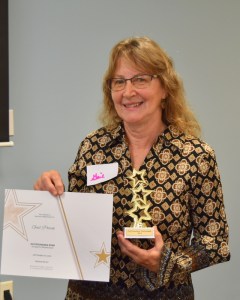
Recently, the Maine Family Resource Center’s After School Program at Katahdin Elementary School received an Outstanding Star award from Bangor Public Health and Community Services. This award recognizes the school for its dedication to increasing students’ physical activity by establishing a Mileage Club in the After School Program.

Gail Pocock
Gail Pocock, Katahdin Elementary After School Program Coordinator

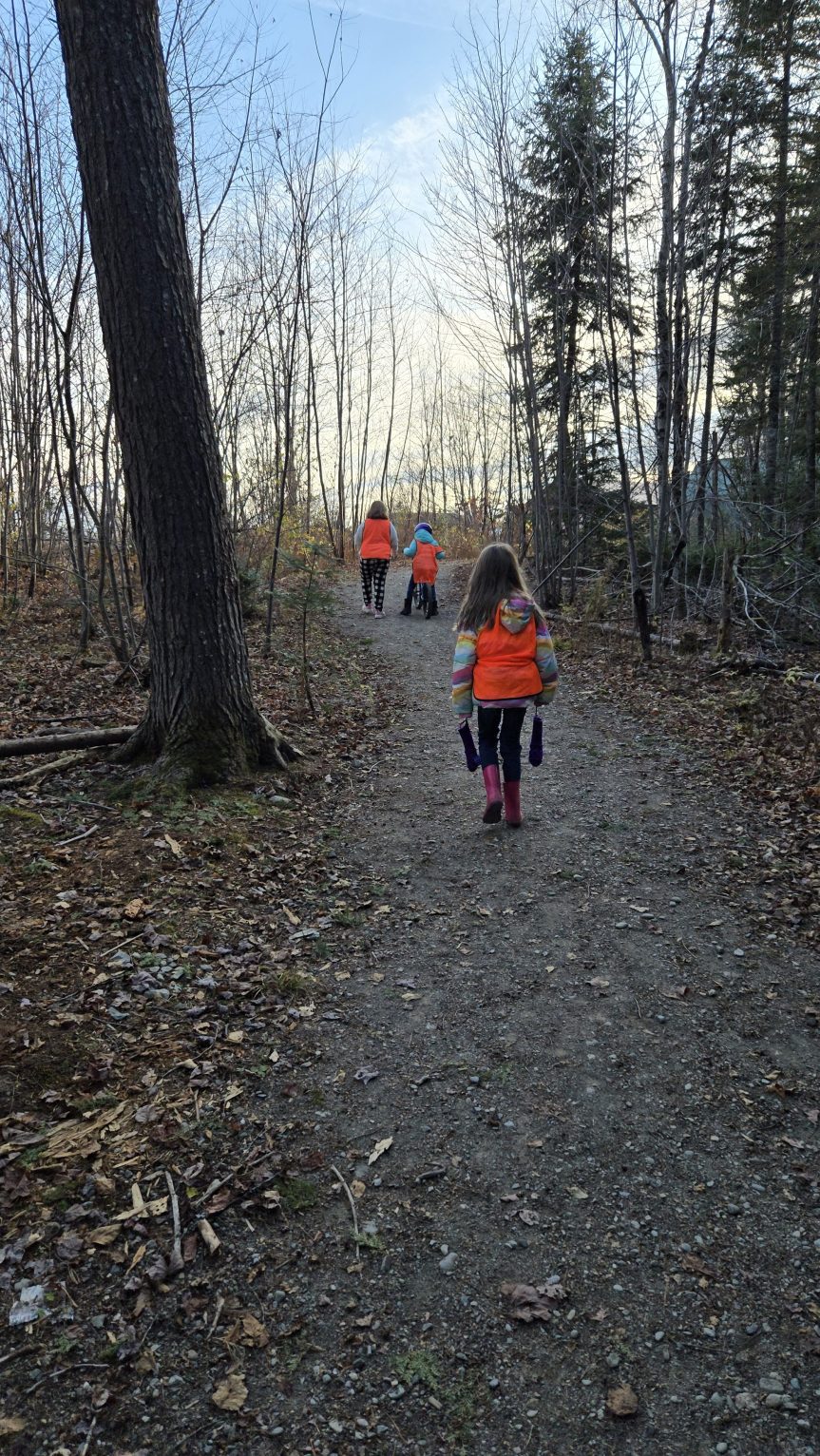
Mileage Club is a physical activity challenge that engages students in a team atmosphere. Students can walk, run, or ride bicycles around Katahdin Elementary School’s half-mile outdoor trail, counting their distance traveled toward a larger group goal. Along the way, students get rewards, like differently-colored foot charms to go on necklaces they wear. These motivational activities keep kids moving and having fun.

“I decided to organize the Mileage Club as an avenue for students to participate in physical exercise,” Gail Pocock, Katahdin Elementary After School Program Coordinator, said. “My goal is to provide opportunities for children to experience and develop healthy lifestyle choices and spend less time on screens.”

This is the first year of Bangor Public Health and Community Services’ Outstanding Star recognition program. Staff from the Health Promotion Team at Bangor Public Health and Community Services nominated organizations and individuals based on the experiences they’ve had working with them.

The Healthy Eating Active Living Team (HEAL) for the city of Bangor nominated Pocock for the award. They have collaborated with Pocock since 2017 to ensure students in the often-underserved, rural community of Katahdin have access to as many programs and resources as possible to support their health. In addition to the Mileage Club, which began in 2023 at Katahdin Elementary School, Pocock has also included SNAP-Ed and Let’s Go! in the After School Program, both of which have been very successful.

“Students have voice and choice at our After School Program,” said Pocock.

“This is the best day ever,” one of the After School Program students said of the Mileage Club. “I get to ride a bike!”

Katahdin Elementary School and RSU 89 have invested in outdoor education through the Maine Department of Education’s (DOE) Rethinking Responsive Education Ventures (RREV) grant. It was with this funding that these outdoor trails were created at Katahdin Elementary School. The grant has also funded outdoor classrooms, gear, and clothing to encourage more outdoor learning.

Nine organizations and individuals were recognized this year as Outstanding Stars by Bangor Public Health and Community Services. For more information about this award, click here.

Information for this story was provided by Bangor Public Health and Community Services and Katahdin Elementary School. To share good news from your school, fill out the Maine DOE good news submission form.

State Surplus Property Items Available for Maine Schools to Purchase

Under the State of Maine’s Surplus Property Donee Program, educational institutions in Maine are eligible to purchase surplus property items (new and used) that are no longer needed by state departments at a significantly reduced cost. Approved donees can also purchase federal surplus property items from the U.S. General Services Administration (GSA).

Surplus property of potential value for educational institutions includes:

  • Computers, monitors, printers
  • Tables, desks, chairs, filing cabinets
  • Office supplies (including whiteboards)
  • Books, children’s toys
  • Vocational training equipment
  • Vehicles and heavy equipment

Check out pictures on the PDF document linked below for examples of surplus items available from Maine Surplus Property, including a large inventory of winter tires!

November 2024 Surplus Property Available for Educational Institutions (PDF). (To view vehicles and larger items stored in the auction yard, please see the current inventory posted on the Maine Department of Administrative and Financial Services’ website.)

Before purchasing items, educational institutions must apply to become a “donee” of the program. Steps for purchasing are as follows:

Step 1: Become a donee.

Educational institutions must complete the donee application form to access state or federal surplus property. Once your application is approved, your institution can purchase any available surplus items up to 30 days before they are offered to the public.

Not sure if your educational institution is already an approved donee, or have any other questions? Please contact statesurplus@maine.gov or (207) 287-2923.

Step 2: Once you become a donee, you can acquire surplus property in these ways:

  • To view and purchase surplus property stored in the warehouse (85 Leighton Road in Augusta), visit in-person Monday through Friday from 8 a.m.-3:30 p.m. New items are added to the surplus warehouse every day! (NOTE: Maine Surplus Property has a public sale on the second Friday of every month. The warehouse has the most items available to donees Monday through Thursday during the week of the public sale. There will be fewer items available directly after the sale.)
  • To purchase vehicles and larger items stored in the auction yard, attend the Donee Viewing and Sale Days on the third Thursday of every month. Donees can view auction yard inventory on the Donee Guidance and Information webpage of the website or in-person beginning at 1 p.m. on Donee Viewing and Sale Days. These items go on sale for donees at 2 p.m. After that, all items are made available to the public on GovPlanet.
  • To view and request federal surplus property, please follow the guidelines posted on the Donee Guidance and Information webpage.

The Maine Department of Education (DOE) works directly with the Maine State Agency for Surplus Property to provide regular updates about newly-available surplus items through the Maine DOE Newsroom. Look for updated communications there every other month.


Call for Nominations for U.S. Presidential Scholars Program 

The Maine Department of Education (DOE) invites school administrative units (SAUs) to nominate graduating high school seniors for the U.S. Presidential Scholars Program. Please consider nominating a student who demonstrates outstanding scholarship but who might not otherwise be nominated through the current SAT/ACT, Arts, or Career and Technical Education recognition processes. All high school seniors graduating between January and August of 2025, who are U.S. citizens or legal permanent residents, and who attend public, parochial, or independent schools, are eligible.   

Please submit only ONE nomination per SAU by midnight on Thursday, November 21, 2024. You can access the application here

A selection committee from the Maine DOE will review all nominations and select 10 female and 10 male students to advance to the national competition.  

The final U.S. Presidential Scholars will be chosen by the Commission on Presidential Scholars. These students will receive an all-expenses-paid trip to Washington, D.C. in June and will be awarded the U.S. Presidential Scholars medallion at a ceremony hosted by the White House honoring their achievements. During their visit, scholars will have the opportunity to meet with influential national and international figures, including government officials, educators, authors, musicians, scientists, and other accomplished individuals. 

For more information, please contact Beth Lambert, Chief Teaching and Learning Officer, at beth.lambert@maine.gov

Celebrating Maine’s School Psychologists for National School Psychology Week

The National Association of School Psychologists (NASP) has designated November 11-15, 2024 as National School Psychology Week, with the theme “Spark Discovery”. This week marks an annual opportunity to recognize school psychologists’ work to help youth thrive. School communities throughout Maine and the U.S. will participate in activities and initiatives designed to celebrate these critical professionals.

School psychologists partner with families, teachers, school administrators, and other professionals to create safe, healthy, and supportive learning environments that strengthen the connections between home, school, and the community. They apply their expertise in mental health, learning, and behavior to help children and youth succeed socially, behaviorally, emotionally, and academically.

School administrative units (SAUs) across Maine rely on school psychologists to support students in a variety of ways during their school experience. Through a partnership with the University of Southern Maine, the Maine Department of Education (DOE) continues to support and fund work to increase the number of school psychologists in the state. One project, Maine School Psychology: Collaborative Affiliations in Rural Education (CAREs), aims to increase the number of credentialed school psychologists in rural communities.

“We are excited about the opportunity to collaborate with rural schools across the state in this endeavor, and we look forward to delivering a low-residency, specialist-level school psychology training program that is accessible to educators across the state,” Dr. Jamie Pratt, chair of the Department of Educational and School Psychology at the University of Southern Maine, said.

This year for National School Psychology Week, the “Spark Discovery” theme is meant to evoke a sense of pride in school psychologists’ scientist-practitioner training, as school psychologists support their communities in exploring connections and pursuing new ideas. As Dr. Peter Faustino, NASP President, states, “As we celebrate National School Psychology Week, I would like us to remember the profound impact that positive, supportive relationships have in fostering growth and transformation. The power of meaningful connections kindles curiosity, inspires learning, and sparks the discovery of new possibilities in our schools and communities.”

NASP has developed a variety of resources for National School Psychology Week, including five days of thematic activities to spark discovery with students, families, and communities.

For more information about the Maine School Psychology CAREs project and other program opportunities, please reach out to Dr. Jamie Pratt at the University of Southern Maine at jamie.pratt1@maine.edu. For further information about NASP, please contact Mary MacLennan, Maine NASP Delegate, at memaclennan@gmail.com or NASP Director of Communications Seth Lipkin at slipkin@naspweb.org or 301-347-1649.


The Success of the Maine Out of School Time Career Exploration Grant Program

Between June and September of 2024, 267 students in fourth through sixth grade participated in the Maine Out of School Time (MOST) Career Exploration grant program. Through this program, these students engaged in activities that allowed them to explore diverse career paths in their communities in a hands-on and intentional way. This happened through more than 60 visits to different employers and businesses, as well as visits from several guest speakers, including a clinical psychologist, a Maine guide, and a cartoonist. Students were introduced to fields ranging from health care and technology to trades and the arts, giving them a broad understanding at an early age of careers they might explore in the future.

Eight groups across Maine participated in the MOST grant program:

  • Alan Day Community Garden in Norway provided career exploration opportunities to participants through gardening, local tours, guest speakers, and community immersion.
  • The Boys & Girls Club of Bangor developed and incorporated a Virtual Reality Career Exploration component into its program in addition to community-based career exploration.
  • The Boys & Girls Club of Kennebec Valley held themed weeks, and high school mentors helped to guide youth in their career exploration.
  • The Boys & Girls Club of Southern Maine incorporated career exploration into its Bridge to Success program to help youth successfully transition to careers and college.
  • The Intercultural Community Center in Westbrook hosted a “Power Summer” with field trips, diverse guest speakers, and project-based learning.
  • MCD Global Health Baileyville Community Connections Center held community-immersed trips for participants to explore businesses in Washington County and neighboring counties.
  • North Haven Community School explored green businesses and provided opportunities for youth to learn about careers focused on environmental sustainability.
  • Tree Street Youth in Lewiston integrated career exploration into its WILLOW workforce program, providing participants with soft skills and career exploration, ranging from guest speakers to employer visits to “on the job” opportunities.

The MOST grant program was funded by the Maine Department of Education (DOE) through Elementary and Secondary School Emergency Relief (ESSER) funding, provided by the American Rescue Plan Act. The Maine After School Network supported this work. Building on the success of the career exploration experiences of high school students in Extended Learning Opportunities (ELO), this grant program provided career exploration opportunities specifically for younger students.

By exposing young learners to potential careers early on, the MOST grant program aimed to build a foundation for students to gain confidence, develop aspirations, and make informed educational and career choices. Participants reported an increased understanding of themselves and what they might like to pursue professionally. They also said they learned something new about careers and/or career pathways and that they felt better prepared for career exploration.

While visiting the Passamaquoddy Tribal Warden Services, a ten-year-old participant in the MCD Global Health program in Baileyville said, “This is so neat! I want to work here when I’m 17!”

At Tree Street Youth, one of the participating students was interested in news, reporting, and videography. They were able to help create, produce, and direct a video public service announcement encouraging people to stop vaping. This student interviewed community members, utilized large filming equipment, and practiced interviewing skills. Tree Street Youth won the Healthy Community Coalition award for this video project.

Students at the Intercultural Community Center visited WisMaine Farm in Westbrook weekly, developing a better understanding of and appreciation for local food systems around their community. They created themed career exploration topics, like “Future Foodies”.

At Alan Day Community Garden, students were prompted on the first day of the program to write down or draw a picture of what careers they wanted to pursue. At first, several students said they wanted to become YouTube content creators, but by the end of the program, these students had identified other career options, including a chef, a teacher, and a job in the military. One student said he was interested in becoming a musician and shared lyrics for a song he recently wrote. Parents frequently pulled staff aside to express their gratitude for what the MOST grant program provided, as students who were once chronically identified as disruptive in a classroom setting thrived in this community-based and hands-on environment.

When the Boys & Girls Club of Southern Maine visited the Portland Fire Department, firefighters there presented career exploration talks. One child enjoyed the experience so much that he didn’t want to take off a fire helmet and insisted he hopes to wear it again someday when he becomes a firefighter.

The success of the MOST grant program highlights the importance of not only introducing children to career possibilities but also the power of fostering curiosity and helping young people to connect to their communities. This program served students from all parts of the state with different backgrounds and experiences. Of the 267 students served, 88% were identified as economically disadvantaged, 62% were BIPOC (Black, Indigenous, People of Color), 42% were multi-lingual learners, and 17% of the students were experiencing homelessness.

The Extended Learning team at the Maine DOE worked with Black Fly Media to produce a short video, showing how the Maine Out of School Time Career Exploration grant program engaged students this summer!


Submit a T-Shirt Design to Represent the 2025 Maine Winter Classic!

The Maine Learning Technology Initiative (MLTI), through the Maine Department of Education’s (DOE) Office of Teaching and Learning, is excited to announce a T-shirt design competition for the Maine Winter Classic, MLTI’s virtual statewide student conference. This contest is open to all students in MLTI schools.

Students who would like to participate are invited to create a design for the official T-shirt that will be distributed statewide to thousands of students during the Maine Winter Classic, scheduled for the week of March 3, 2025. This conference offers an engaging, game-based learning experience for students, as they “travel” across a virtual gameboard, completing various tasks and earning tokens, while exploring topics like computer science, digital citizenship, digital design, and gamification.

The Maine DOE is looking forward to selecting a student design for these T-shirts (which will also be available in youth sizes this year). You can review eligibility and submission guidelines for the T-shirt design competition here. Please submit your entry using this 2025 MLTI Student Conference T-Shirt Design Competition Submission Form.

Competition Timeline and Important Dates:

  • Nov. 1, 2024: competition opens
  • Jan. 3, 2025: T-shirt designs due (no late entries accepted)
  • Jan. 24, 2025: finalists selected and winner notified

If you have questions about this contest or need assistance, please contact MLTI Project Manager Bethany Billinger at bethany.billinger@maine.gov.

For more information about the Maine Winter Classic and/or the in-person MLTI Student Conference later in the year, please email doe-ltt@maine.gov.


MEDIA RELEASE: The Maine Department of Education Opens New Outdoor Learning Pavilion on Mackworth Island

The Maine Outdoor Learning Pavilion is the latest effort by the Maine Department of Education to support outdoor education in Maine.

FALMOUTH, Maine — On Wednesday, Nov. 6, the Maine Department of Education (DOE) unveiled the Maine Outdoor Learning Pavilion on Mackworth Island, marking another milestone in the push to combat pandemic-related learning loss through outdoor education.

The pavilion is the latest addition to the Maine DOE’s Maine Outdoor Learning Initiative, which has connected more than 14,000 students to high-quality outdoor learning programs since 2021. This past summer, thousands of Maine students participated in more than 100 outdoor programs, from backpacking the Appalachian Trail to learning to sail to exploring nature-based careers.

“Outdoor learning is central to student engagement, health, and wellbeing” said Maine DOE Commissioner Pender Makin. “Since the summer of 2021, we’ve invested more than $11 million in the Maine Outdoor Learning Initiative to provide students with highly-engaging outdoor and environmental learning opportunities.”

“Before last year, I thought that learning was meant for classrooms,” George, an eighth-grade student from Scarborough Middle School, said. “I realized how being outside can teach us so much, from hands-on learning to real-life scenarios. The outdoors was a great environment to learn. It provided plenty of fresh air, along with a break from sitting still. When we were outside, I felt happier and had more energy. When we came back inside, I was relaxed, focused, and ready to learn.”

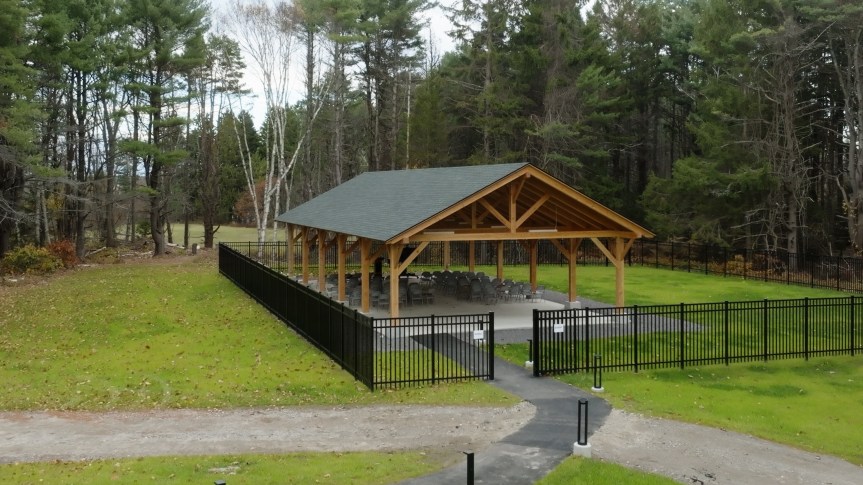
The new facility unveiled on Wednesday, nestled in the woods at the center of Mackworth Island, features a pavilion and an adjacent lawn, designed to make outdoor education more accessible for Maine schools.

“The Maine Outdoor Learning Pavilion is a place where schools can bring students to make learning come alive,” Jonathan Ross, superintendent of the Acton School Department and Maine DOE Outdoor Learning Initiative Coordinator, said. “Maine schools can bring a class here, teach a lesson under the pavilion or inside where we will have desks and bathrooms, and then take that lesson onto the trails around the island.”

At Wednesday’s event, students and educators from Scarborough, South Portland, Biddeford, Wiscasset, and Acton schools shared their experiences with the Maine Outdoor Learning Program.

Photos of students are courtesy of the South Portland School Department.

Sarah, an eighth-grade student from Wiscasset Middle School, emphasized the program’s impact on her education.

“The biggest lessons that I learned last year were that learning is all around us, and the things that you can learn outdoors are so worthwhile,” she said. “Even if you think that you don’t need a break from your school day, going outside and giving your brain breaks is always helpful.”

Tabatha Frawkins, a science teacher at Biddeford Alternative Pathways Center, shared powerful feedback from parents about the program’s effectiveness. She said one parent told her, “The wilderness program gave me back my son and all his glory and gave my son back the confidence and the desire to attend school. He went on to attend leadership classes for his senior year and is on track to graduate.”

Wednesday’s event concluded with a nature-based scavenger hunt across the island, which Ross and the Maine DOE coordinated.

The Maine Outdoor Learning Pavilion was created using federal emergency relief funding as part of Maine’s Whole Student Pandemic Response and represents the Maine DOE’s broader commitment to outdoor education. For more information, please visit the Maine DOE Newsroom.

To reserve the pavilion, schools may reach out to Jonathan Ross at jonathan.j.ross@maine.gov.

Deering High School Hosts French, Gabonese, and Central African Ambassadors in Celebration of Global Education and Cultural Exchange

On Oct. 25, 2024, Deering High School in Portland welcomed a distinguished delegation of international leaders, including Laurent Bili, French Ambassador to the United States; Noël Nelson Messone, Ambassador of the Gabonese Republic to the United States; and Martial Ndoubou, Ambassador of the Central African Republic to the United States. This event was made possible through a partnership with the French Institute for Culture and Education, whose Education and Cultural Project Manager, Marceau Crespo de Nogueira, invited schools in Maine to participate in this unique cultural exchange.

Organized in collaboration with the DeFranco Heritage Center and supported by the Maine Department of Education (DOE), this gathering brought together students, educators, and dignitaries to celebrate the rich heritage and connections within the Francophone community. This event highlighted the value of educational partnerships in fostering multicultural understanding and global citizenship.

Melanie Junkins, Multilingual and Bilingual Education Specialist at the Maine DOE, addressed the assembly, emphasizing the role of language learning in connecting cultures and communities.

“Language learning opens doors to connection and cultural exchange, and French holds a special place—both globally and here in Maine—bridging communities and fostering collaboration across continents,” Junkins said.

Junkins also highlighted Maine’s Seal of Biliteracy, which honors students who are proficient in two or more languages and represents the State’s dedication to multilingual education.

At the event, students and educators presented on French heritage initiatives and discussed the rising popularity of French language programs in Maine, which have seen substantial enrollment growth over the past decade. The ambassadors engaged with students through a Q&A session and shared insights into the roles of cultural ties in international relations.

As Maine continues to embrace multiculturalism, events like this serve as powerful reminders of the importance of language and cultural education in preparing students to be globally-engaged citizens.

For more information, please reach out to Maine DOE Multilingual and Bilingual State Specialist Melanie Junkins at Melanie.Junkins@maine.gov.


Boosting Content Knowledge with Readers’ Theater: Creating Engaging, Leveled Texts Using AI

Join Maine Department of Education (DOE) Arts Integration Teacher Leader Fellow Joshua Chard for an insightful webinar on leveraging readers’ theater to build reading fluency and increase content knowledge in the classroom. This session is perfect for educators looking to incorporate expressive reading to improve students’ oral fluency, comprehension, and confidence.

This session will also highlight how artificial intelligence (AI) can be used to create scripts tailored to various reading levels, ensuring that all students are engaged and challenged appropriately. Teachers will gain practical tips for implementing readers’ theater and utilizing AI tools to customize materials. By the end of the session, attendees will be equipped with dynamic strategies to support diverse learners through engaging, leveled texts.

This webinar is ideal for educators who are new to using AI in the classroom. Don’t miss this opportunity to enhance your teaching toolkit!

For further information or questions, please contact Maine DOE Arts Integration Teacher Leader Fellow Joshua Chard at joshua.chard@maine.gov.