Webinar: Arts Integration in Schools – Enhancing Cognitive Development and Social-Emotional Learning

Join Maine Department of Education Arts Integration Teacher Fellow Joshua Chard in the Office of Teaching and Learning for this 45-minute webinar, “Arts Integration in Schools –  Enhancing Cognitive Development and Social-Emotional Learning,” designed for all PreK-12 teachers.

The Webinar will explore how integrating the arts into core subjects supports cognitive growth and social-emotional learning (SEL). Attendees will learn about the neuroscience behind arts integration, its impact on memory, attention, and executive functioning, and how the arts foster student empathy, self-awareness, and collaboration. Case studies and practical examples from music, visual arts, and drama will demonstrate real-world applications. The webinar will conclude with best practices for implementing arts integration and strategies for addressing diverse learning needs.

Please join us Monday, October 28, from 4:15 to 5:15 p.m. The link to join the Webinar can be found here (no need to register in advance).

For further information, reach out to Joshua Chard at joshua.chard@maine.gov.

The Promoting Stronger Connections ECHO© Series Starts This Week: An Opportunity Open to All Maine Educators

The Maine Department of Education invites Maine educators to attend the Promoting Stronger Connections ECHO© series with once-monthly sessions starting on October 9. Made possible by the Bi-Partisan Safer Communities Act Stronger Connections grant and a statewide Title II funding opportunity, there is no cost to participate in this program, and it is open to all school-based personnel throughout Maine.

Through MCD Global’s partnership as a formal ECHO© hub with the University of New Mexico, participants will experience high-quality ECHO© services that strictly adhere to the evidence-based model, ensuring fidelity and excellence. The ECHO© series provides for problem-solving in real-time, thanks to Maine educators sharing case studies. After each case study, subject-matter experts and participants provide relevant recommendations and immediate answers to pressing issues. The series also features didactic learning opportunities, which are short, focused segments on the most urgent topics affecting Maine’s educators. Participants will leave the individual sessions with implementation tools and strategies to promote mental health and wellness or “Stronger Connections”.

Register here: https://app.smartsheet.com/b/form/e778af70c5234feca95df61019eb799a

Scheduled sessions take place on five selected Wednesdays, starting at 3:30 p.m.

DATE Topic Presenter
Oct. 9 Regulation and Classroom Management Emily Daniels, founder and author of The Regulated Classroom®
Nov. 13 Resilient Systems Courtney Angelosante, Maine PBIS Coach
Dec. 11 Restorative Practices Stacey Barlow, Maine DOE Restorative Practices Specialist
Jan. 8 Radical Self-Care and Wellness Kellie Bailey, Maine DOE Social Emotional Learning Specialist
Feb, 12 Establishing Bi-Directional Empathy Heather Rockwell, RSU 67 Director of Curriculum and Academic Achievement


The Promoting Stronger Connections ECHO© series creates a virtual learning environment that empowers educators in Maine by providing them with the knowledge, skills, and support necessary to foster resilient learning environments. The program focuses on enhancing educator preparedness and response by equipping them with practical strategies and best practices for managing classroom behaviors, addressing trauma, and responding to crises. The series of sessions will promote emotional and mental well-being by establishing a collaborative network of educators and mental health professionals and offering a forum for presenting de-identified cases for review and recommendations by colleagues and subject matter experts, including Greg Marley, Emily Daniels, Courtney Angelosante, several local superintendents and principals, and Maine DOE specialists.

What our Maine school-based participants are saying about ECHO:   

“I am better able to understand the trauma responses that children exhibit at school. I understand that children are often not in control of their own behavior, and they need adults to help them learn the lagging skills.”

“I gained a toolkit of strategies to use with challenging behaviors. We are implementing PBIS in our district, and I feel the ECHO sessions will help me implement that more effectively with students who present challenging behaviors.”

“It helped me remember to connect and consult with others—even across the state. There are people who will help.”

“I became more aware of resources available in the community and gained greater confidence in my abilities to navigate complex situations. Collaborating with a team of experienced colleagues boosted my confidence in my practice.”

This series is made possible thanks to the Bi-Partisan Safer Communities Act Stronger Connections grant and a statewide Title II funding opportunity. For questions related to the project, contact Julie Smyth, Director of the Office of School and Student Supports, at julie.a.smyth@maine.gov.  For questions regarding the ECHO© series, contact Lori Fecteau at lfecteau@mcd.org .


See Innovative PreK-8 Career and Technical Education (CTE) in Action!

Are you a PreK-8 educator interested in providing more hands-on, minds-on learning that is focused on offering your students a look into possible careers and connecting them to their community? If so, check out a Learning Tour at St. George Municipal School on Friday, Oct. 25 from 9 a.m. to 2 p.m.

In August of 2020, the Maine DOE was awarded $16.9 million from the U.S. Department of Education’s Rethink K-12 Education Models Funding. Maine was one of 11 states to receive funding and used it to launch the Rethinking Responsive Education Ventures (RREV) project, a multi-pronged solution with a primary goal of generating innovative remote learning models to provide equitable access to high-quality remote learning opportunities for all students. The RREV Research & Design (R&D) team is continuing the momentum of this work by offering Learning Tours and fostering peer-to-peer professional learning.

St. George Municipal School (PreK-8) was a RREV awardee. Through its innovative pilot, the school has been exploring the benefits of career and technical education for the last few years. CTE is typically only available at the high school level, so those involved have been creating their curriculum along the way! On Oct. 25 at the Learning Tour, you will get the opportunity to see their new Makerspace building, observe the learning in action, and talk to teachers and students.

This Learning Tour space is limited to 10 additional Maine educators. If you are interested in joining us on this tour, please reach out to Elaine Bartley, the RREV R&D Director, at elaine.bartley@maine.gov.

To learn more about the RREV awarded innovative pilots, please click here. There will be other Learning Tours available throughout this school year.  You can find the list of upcoming tours on our website.

Moscow Elementary Summer Outdoor Club Engages Students with Community Garden

This summer, Moscow Elementary School in MSAD 13 launched a new summer program for students in grades 2-4. The program, which took place three mornings per week for four weeks, allowed participating students to work in a community garden. Through it, they learned about garden maintenance, fresh vegetables, and more.

Moscow Elementary School educators, staff, and students started the garden this spring, getting seeds planted in preparation for the growing season. When summer rolled around, Outdoor Club students painted the raised beds, participated in some additional planting, and took on the task of weeding and watering the garden every time the Club would meet. Students participated in related activities outside of the garden, too, like cooking, field trips, and even some fishing.

“Some of my favorite memories from the summer were the cooking activities we did with the students. Their faces when they tried the food and how excited they were was priceless,” said Jacqueline Abraham, Outdoor Club and Moscow Elementary School pre-K teacher. “The students made one of my favorite childhood desserts and took it to the lake for a snack during our fishing trip. We also went on a beach trip to Reid State Park, and we made the rolls for the sandwiches. The students loved every bit of it.”

With a few of the herbs and vegetables harvested from the garden over the summer, students learned how to make various Mexican foods from scratch, including guacamole and salsa. Amy Cates, Outdoor Club, and Spanish teacher brought in Tajín, a Mexican spice mix, for the students to try on fresh cucumbers and watermelon. Cates said later that she heard from families that students would see Tajín while grocery shopping and convince their parents to buy it to try at home.

“By the end of the program, parents told me their entire family now enjoys Tajín on a variety of snacks, and their children are practicing Spanish at the dinner table, using Alexa to settle disputes on how to say certain words,” said Cates.

Cates also said the students’ enthusiasm and fearlessness in trying new things was infectious and made the program that much more fun.

The Outdoor Club hosted a family picnic on the last day of the program. Students participated in much of the planning, from organizing the menu, grocery shopping for ingredients, cooking the food, and making decorations for the event.

“At the picnic, a student ran up to me, gave me a big hug, and said, ‘Thank you for making my summer so much fun,’” said Abraham.

Cates said she experienced equally enthusiastic parents, families, and community members who expressed joy in seeing kids outside and away from technology, socializing, and using their hands. One parent even remarked, “This is the best summer program!”

Upon returning to school in the fall, students brought ripened vegetables home to share with their families. Moscow Elementary School has continued the garden into the academic year and plans to do it again next summer. Abraham, Cates, and the school’s principal, Wendy Belanger, said they are collaborating with the high school outdoor program and will expand the garden using their greenhouse.

This story was submitted by MSAD 13 and Moscow Elementary School. To submit good news from your school, fill out our good news submission form.


Western Maine Superintendents Celebrate 20 Years of Collaboration and Impact

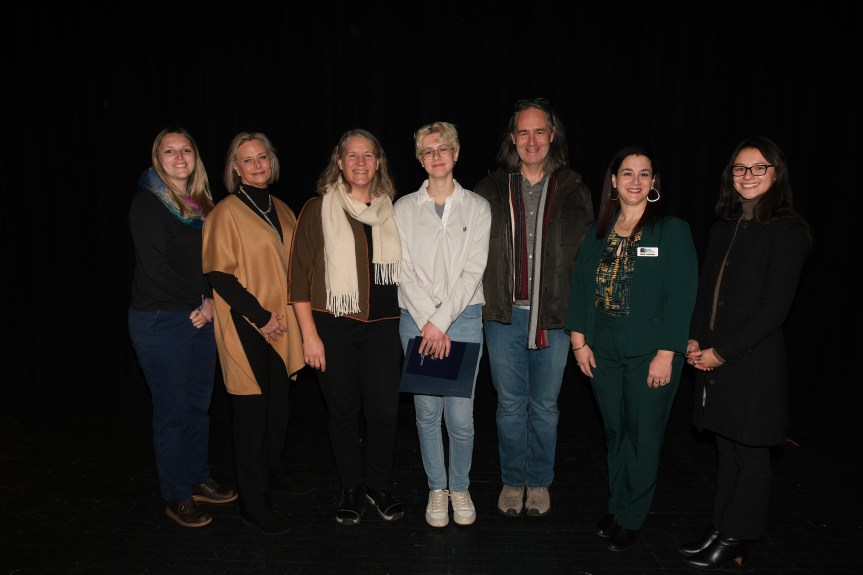
(Pictured: Some of the early founding members of WMEC, whose leadership played a key role in shaping WMEC’s mission and vision. [L-R: Mona Baker, David Murphy, Michael Cormier, & Susan Pratt])

The Western Maine Education Collaborative recently celebrated its 20th anniversary with a dinner among past and present superintendents who have participated in the collaborative.

Founded in 2005, the Western Maine Education Collaborative (WMEC) is a non-profit organization that provides a structure for cross-district collaboration and the development of shared programs, services, and resources for its members.

WMEC began as a grassroots initiative by educational leaders from 11 school systems who sought to pool resources and engage in collective problem-solving. Since then, WMEC has grown into a robust collaborative with 17-member school districts which serve over 50 schools across five counties.

“WMEC is not good because we’re old. We’re old because we are good,” said Pam Doyen, RSU 56 Superintendent and WMEC President, underscoring the collaborative spirit that has driven WMEC since its inception. “We are member-led and work to strike an important balance between having enough structure to be effective and enough flexibility to be able to tailor our work to meet the needs of our members. In our case collaboration is truly a tool, not a goal.”

The celebratory evening event featured a special video presentation. WMEC partnered with Foster Career and Technical Education Center’s Digital Media Program to develop a film to capture WMEC’s evolution from its early days to its current status as a 501(c)(3) nonprofit organization. The video also honored the leadership of Mona Baker, WMEC’s first Executive Director (2005-2016), who was instrumental in guiding the development of a sustainable regional collaborative. Her efforts, along with those of the founding members, laid the groundwork for what WMEC has become today.

The evening also provided attendees the opportunity to share their own “WMEC Moments,” reflecting on the organization’s influence and legacy. WMEC’s enduring success is attributed to the unwavering commitment of its members to continuous improvement, accountability, and collaboration.

As WMEC looks to the future, it remains dedicated to positively impacting students and educators throughout the region. To learn more about WMEC, visit their website.

This story was submitted by the Western Maine Education Collaborative. To share good news from your school, please fill out this form.


Information Session: Using MOOSE Applied Ethics Modules to Support your Classroom

Looking for ways to use Maine’s Online Open-Source Education (MOOSE) modules in your classroom? Would you like support in incorporating personal development and interpersonal skills into your learning environment? The MOOSE platform offers a PreK-12 learning progression of modules focused on Applied Ethics that might be just what you need.

Created by Maine educators for Maine students, these modules aim to help learners of all ages cultivate self-awareness, relationship-building skills, and empathy, while also becoming responsible decision-makers.

In this one-hour session, you’ll explore how the principles of Applied Ethics are integrated into the MOOSE modules and how you can foster a learning environment where rich, engaging, and respectful questioning and dialogue thrive. You’ll have the opportunity to experiment with how to use the modules with your learners and discover additional educator resources.

The session will be on Tuesday, October 15, from 3:00 PM to 4:00 PM via Zoom. You can register for this event by clicking here.  The session will be recorded and sent to anyone who registers, even if they can’t attend in person.

For more information, you can contact MOOSE Team Leader Stephanie Connors (stephanie.connors@maine.gov) or MOOSE Project Manager Jennifer Page (jennifer.page@maine.gov).

Maine DOE Awarded Funding for Interdisciplinary Civic Inquiry Projects

The Maine Department of Education (DOE) has received $99,149 from the Library of Congress’ Teaching with Primary Sources program to support the “Celebrating Rural Maine: Civic Inquiry Place-Based” project. This initiative, in partnership with the National Council for History Education (NCHE), aims to empower rural teachers to explore Maine’s history through an interdisciplinary approach.

The Celebrating Rural Maine project aims to engage rural teachers in a deep examination of Maine’s history using an interdisciplinary lens by:

  • Connecting teachers with the Library of Congress’s rural collections to place local narratives within broader historical contexts,
  • Assisting teachers in creating community-focused public projects that engage rural students and
  • Offering no-cost professional development opportunities, including online and site-based sessions.

Who can attend?

  • Eligibility: Any PreK-12 educator in Maine is welcome.
  • Content Areas: All subjects are encouraged to participate.

Program Structure

This program is modeled after NCHE’s successful Rural Experience in America project. Past projects include:

For Year 1, the theme is “The Geography of Maine.” The three-part professional development series will include:

Part A: Using Primary Sources & Questions

  • Focus on primary sources and questioning techniques.
  • Includes optional after-school virtual workshops.
  • Format: Asynchronous Virtual.
  • Contact Hours: 12.
  • Timeline: December-February

Part B: Connecting Experts & Educators

  • 3-part virtual synchronous series with experts and master teachers discussing Maine geography from various perspectives.
  • Format: Synchronous Virtual
  • Contact Hours: 15
  • Timeline: March-May

Part C: Civic Place-Based Inquiry Projects

  • A summer institute for teachers and community partners to design civic inquiry projects, with coaching for implementation in Fall 2025.
  • Stipends available for time and materials
  • Format: In-person & virtual coaching
  • Contact Hours: 17
  • Timeline: Summer & Fall 2025

Register here.

About the Teaching with Primary Sources Program

Since 2006, the Library of Congress has funded Teaching with Primary Sources (TPS) grants to enhance educational programming based on its digitized primary sources. The TPS Consortium fosters critical thinking and engagement among thousands of learners each year.

For more details about the Celebrating Rural Maine project or to register, please visit the Maine DOE website or contact Maine DOE Interdisciplinary Instruction Specialist Jaime Beal at jaime.beal@maine.gov.

Reminder: Register NOW for the 14th Annual Maine PBIS Conference!

Join the Maine Department of Education (DOE) Office of Special Services and Inclusive Education for the 14th Annual Maine PBIS Conference!

Thursday, November 7, 2024
8:30 AM – 4:00 PM
Augusta Civic Center

The conference is a chance for Maine Positive Behavior Interventions and Supports (PBIS) leaders and implementers across Maine and beyond to come together to celebrate, learn, and network.

Dr. Ruthie Payno-Simmons (1)
Dr. Ruthie Payno-Simmons

This year’s keynote speaker is Dr. Ruthie Payno-Simmons, the founder of RPS Educational Impact and serves as the Associate Director at the Midwest and Plains Equity Assistance Center (MAP Center). She leads the coordination, design, and delivery of universal, targeted, and systemic equity-focused professional learning experiences and technical assistance to state and local agencies throughout the MAP Center’s 13-state region. Her keynote address is on, “Enhancing Positive and Supportive School Climate Through Storytelling and Rightful Presence.”

Conference Fees:

  • General (individual)- $195
  • Group (groups of 3 or more attendees)- $165
  • Student (full-time undergraduate or graduate student enrolled in 6 credits per semester for at minimum two semesters per year)- $85
  • Lead Presenter (those accepted to present; only lead presenters are at no charge; co-presenters will be charged the individual rate)- $0

Visit the PBIS Conference website for more information about the conference, to submit a proposal, sign up for a school showcase, and/or register to attend.

Join the Maine DOE Learning Through Technology Team at the ACTEM Fall Conference!

The Maine Department of Education Office of Teaching and Learning’s Learning Through Technology (LTT) Team hopes to see you at the ACTEM Fall Conference.

The LTT Team will have a booth and playground on the main floor, and we hope attendees stop by to connect, join our mailing list, and check out what resources are available to support technology education in your school.

Maine DOE’s short playground sessions will focus on the Computer Science Mobile Lab technologies (Lego, Sphero, and Merge), Animation, Green Screening, VR with Meta Quest, Bloxels Game Design, and more.  Check out the listing and schedule.

The LTT team is presenting eight sessions over the two days of ACTEM, covering a variety of topics in addition to our playground offerings. You can find more information about the sessions below.

The Association of Computer Technology Educators of Maine’s (ACTEM) annual Fall Conference is held at the Augusta Civic Center on October 10-11th. ACTEM’s mission is to influence and enhance education in Maine through the use of technology. Our conference offers workshops, keynotes and exhibitors centered around this mission. The conference is a popular event for Maine educators each fall.

We hope to see you there!

LTT Team Session Descriptions

AI for Accessibility
with Jeff Ireland, Janice Medenica, and Stephanie McGruder

We will learn and practice using various AI tools to make your general curriculum more accessible for students. AI tools can increase the efficiency with which we generate, level, or translate text and make content more relevant for our students. AI can also help with scaffolding, assessment creation, high-interest content creation, and so much more. Bring some of your content with you and see how you might make your content more accessible for your students.

Bored Class? No, Board Games! Gamification With Tabletopia
with Chris Beckwith and Janice Medenica

Educators have long been in competition with digital entertainment for student attention at school. The tabletop board game simulator, Tabletopia, can be leveraged to engage students and reinforce what they are learning in the classroom. Building on the success of the last MLTI virtual student conference, the Maine Winter Classic, we will introduce this platform and share best practices for implementing the features available via the free version of Tabletopia.

Future Minds: Cultivating a Culture of AI Investigation
with Nicole Karod and Ashley Carroll

This session introduces elementary education to artificial intelligence, emphasizing its enhancement of teaching and productivity. Discover how AI can support differentiated instruction, foster creativity, and streamline administrative tasks. Gain practice strategies for integrating AI, boosting productivity, and inspiring students with future-ready skills.

Future-Proofing Technology Education in the Age of AI and Emerging Technologies
with the Maine DOE’s LTT Team

Join the Learning Through Technology (LTT) team from the Maine DOE for this engaging discussion-based panel on future-proofing education to help prepare students for emerging technologies. In this session, we’ll discuss the importance of foundational skills for success in an increasingly changing, technologically based society. Come to this session to explore these questions and learn more about how the LTT team can support your work.

Integrate Coding to Go Beyond Just the CS
with Allison Braley and AJ Rog

This session will show you how to embrace Scratch as a tool for students to show their knowledge, no matter what class they are in. Scratch can give students a creative outlet to what they are learning in your class. Go beyond Google Slides, Canva, and Google docs as a way to show understanding. Give your students the chance to show their learning by creating games, adventures, interactive stories, and much more.

It’s Elementary, My Dear Miltie: MLTI in Grades 1-5
with Jon Graham, Amy McInerney, Ashley Carroll and Donna Netzer

This year elementary schools have become part of MLTI like never before. The program has been tracking toward more focused support and inclusion of elementary educators, but we can do more. In this session, we will look at some recent elementary successes from our team. We will also look at what the program is planning, but we want to hear from you! If you are an elementary educator, please come, share and advocate how MLTI can best serve you and your students.

License to Drive: Developing Digital Wisdom & Leadership
by Jonathan R. Werner & Gwyneth Maguire

We know that the Digital Native is a myth, yet we often expect our students to navigate tech independently.  In this session, we will look at how to support students as they move toward independent navigation of the complexities of their online lives.   We’ll also explore ways to support their journey toward gaining greater digital wisdom including media balance and well-being. We will conclude by crowd sourcing strategies to create independent digital leaders.

Tech Integration VS Tech Use: Enhancing Learning
with Donna Netzer

Using technology is fun and engaging for students but it can often be seen as a toy not a tool. Technology integration isn’t just bringing in technology to the classroom, it is incorporating it in a way that enhances learning. We will explore the difference between just using tech with learning and integrating technology in a way that enhances learning in the classroom.

Reports Open in NEO: October 1 Enrollment, Dropout, Quarterly Reports, and Staff Certification

Fall reports are open. All reports require review, validation, and/or certification by superintendents.

Reports Open:

  • EPS October 1 Student Enrollment (including EF-S-05 Part1) – Currently Open for review, Certification Opens 10/16, Due 10/30
  • Dropout – Opens 10/2, Due 10/15
  • Bullying – Due 10/15
  • Behavior – Due 10/15
  • Daily Attendance – Due 10/15
  • Truancy – Due 10/15
  • Staff Certification (including EF-S-05 Part2) – Due 10/30

Reporting guidance, instructions, and recorded webinars about these reports can be found on the MEDMS Support page. For questions about these reports, please contact MEDMS.Support@maine.gov or call 207-624-6896