The Maine Department of Education (DOE) is highlighting the important work of school nurses this week in celebration of School Nurse Day on May 8.
For over 120 years, school nurses have been critical to all aspects of student health, including improving public health. Each year, school nurses statewide complete the School Health Annual Report. It is used to satisfy the requirements for health-related data collection, which includes emergency medication administration, vision and hearing screening data, and other points.
Vision and hearing screenings are required in Maine schools. In the 2022-2023 school year, school nurses coordinated 122,310 screenings. Of these, 7,082 were referred for further evaluation. Early learning and literacy skills can be delayed when students have undetected hearing or vision deficits. School nurses are responsible for directing and overseeing school health screening programs and following up with referred students for evaluation and potential treatment. Without these screenings, over 7,000 Maine students would be potentially at risk for learning difficulties.
To learn more about the school health annual report and other data related to school-aged children, please visit the School Health Services: Data webpage.
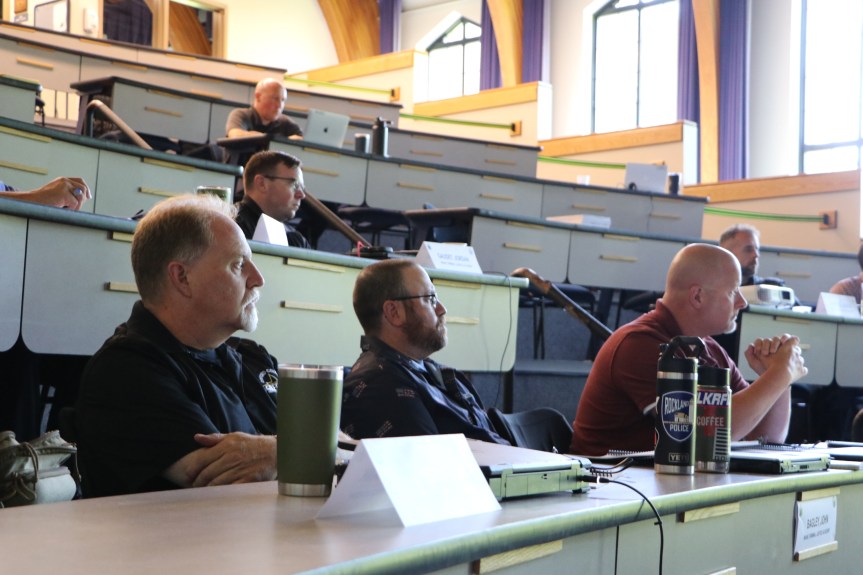
The School Nurse Summer Institute is an immersive multi-day in-person event that brings school nurses together biennially. The goal is to increase the knowledge and understanding of current research and evidence-based practices in school nursing, as well as increase awareness of resources available within the State of Maine. School nurses in attendance will leave feeling energized with the latest knowledge and renewed energy to support Maine students.
Thomas College in Waterville, Maine
July 30th and July 31st
Register here(select School Nurse Summer Institute 2024 from the dropdown)
This year’s theme is An Adventure in Learning. Day One starts with a keynote presentation by Dr. Puthiery Va, Director of the Maine CDC, followed by nursing skill-building sessions and a resource fair with over thirty exhibitors. Day Two starts with a panel presentation on Population Equity and is followed by break-out session options, including MaineCare services, human trafficking, school safety, trauma-informed care, empowering school nurses, supporting LGTBQ+ youth, communicating and supporting the substitute nurse experience, Human Papilloma Virus and vaccine hesitancy.
This event is planned by the Maine Department of Education (DOE) Coordinated School Health Team, a part of the Office of School and Student Supports in partnership with the Maine Association of School Nurses (MASN).
The Maine Department of Education (DOE) Interdisciplinary Instruction Team is partnering with the Institute for Human Education to bring the Maine Solutionaries Project to educators interested in supporting students in applying their learning.
This exciting project will provide an opportunity for educators in Maine to take a custom version of the Solutionary Micro-credential Program and participate in state-wide educator cohorts that focus on climate change, water quality, plastics pollution, human rights and equity, or another topic of interest. Not only will educators be able to participate at no cost, but they will also be eligible to receive a $1000.00 stipend upon completion of the program.
Spots are filling quickly, so to learn more about this collaboration, view an informational webinar, or register for the project, visit the Maine Solutionaries Project website.
In July of 2023, Governor Mills signed LD 1315, Public Law 2023, Chapter 460, into law, beginning the revision process for Rule Chapter 41. Updates to Chapter 41 have been completed, adding the requirement that all public schools now offer naloxone education to secondary students in addition to CPR and AED training.
The Maine Department of Education (DOE), Office of School and Student Supports is collaborating with the Maine Department of Health and Human Services (DHHS), Office of Behavioral Health, and MaineGeneral Medical Center to train school personnel in naloxone administration. This is a train-the-trainer model, meaning it will provide training on the topic as well as the instruction and materials people will need to implement naloxone administration education for students and staff.
A 90-minute training will be offered virtually from 3:30 – 5:00 p.m. on May 14th. The training is designed for school administrators, health education teachers, school nurses, and other health services personnel. Other interested school personnel are welcome to attend. Contact hours will be provided for attendees.
Resources to assist school administrative units (SAUs) in implementation may be accessed on the Maine DOE School Health Service: Acute and Emergency Care webpage and will also be reviewed during this training.
Nearly 100 Maine Schools Now Implementing BARR Through Maine DOE Grants to Increase Academic Achievement, Engagement, and Student and Educator Wellbeing
The Maine Department of Education (DOE) announced grants for 30 additional Maine schools to implement the Building Assets Reducing Risks (BARR) model to increase academic achievement, engagement, and student and staff wellbeing. These new grants build on the Maine DOE’s initial BARR investment last summer, with nearly 100 schools now implementing BARR across the state.
BARR offers schools a framework that combines relationship building and asset development with real-time data to support students based on their strengths and connections to school. Empirical studies show that BARR results in increased student engagement, reduced chronic absenteeism, a 40 percent reduction on average in failure rates after one year of implementation, increased student achievement rates, and a reduction in high-risk student behavior and substance use. Educators report increased job satisfaction, higher levels of collaboration, and higher likelihood of persisting in their jobs after implementing BARR.
These positive changes are reflected in Maine schools that are already implementing BARR. Since implementing BARR, Bucksport High School’s graduation rate increased by more than 15 percent and Mt. Blue School High School has experienced a 30 percent decrease in chronically absent students, with a daily attendance rate of 94.14 percent. Through BARR, Noble Middle School has created more than 200 mentor matches to support students with significant risk factors. Westbrook High School’s BARR team was able to identify increased anxiety as the cause of a chronically absent student’s disengagement. They collaborated as staff and worked with the student’s family to create personalized interventions to improve the student’s experience at school. Now actively engaged in school activities and supported by a comprehensive plan, this student is not only coming to school and passing classes but has found a new passion for theatre.
“We are focused on empowering educators and school leaders, providing them with the tools and resources to strengthen the incredible teaching and learning happening in Maine schools. When I speak with educators who have implemented BARR in their schools, they are so enthusiastic about the positive academic and wellbeing changes they’ve experiences with students and the deeper relationships they are building with students and colleagues,” said Maine Education Commissioner Pender Makin. “We’ve invested in BARR as a state because of the extensive research behind it and the overwhelming support it has among Maine educators. BARR offers a flexible framework that any school can adapt to meet their unique needs with results that extend years beyond the initial investment.”
“We are thrilled with the success of the schools implementing BARR in Maine. Bucksport, Maine was the first high school to take on the BARR model after I developed the model as a high school counselor in its original site in Minnesota. Jim Boothby, superintendent of Bucksport, saw BARR’s potential in 2010, and now we are the most researched model in the country,” said BARR Founder and Executive Director Angie Jerabek. “Maine schools continue to show student and educator gains under the BARR model, and we are excited to partner with the Maine Department of Education in this expansion.”
“The numbers speak for themselves,” said Mt. Blue High School social studies teacher Matt Fournier. “BARR doesn’t take time out of our schedule; it makes time. Since we are building relationships, we get greater buy-in, and students are more connected to the school.”
“I’m a true believer in the program. We originally brought it on because the main focus was grades and the transition into ninth grade. For us, it really made a difference when we could see the number of failures in our coursework had changed significantly in the first year and then changed again the next year. And then as time went on, it went into more of the behavioral and checking in with the students and making sure they had trusted adults and really working on how they created a culture within the ninth-grade cohorts,” said Superintendent Mary Anne Spearin, who first implemented BARR as principal of Calais Middle/High School. BARR expanded to Calais Elementary School this year.
“The Loranger team is very excited to be partnering with BARR and implementing their research-based program. We know that this will help us grow and better meet the needs of all of our learners. We’re grateful for the funding to bring a program that has proven results among many schools in our state. We are eager to begin working with BARR to put into practice a system that supports both staff and students,” said Loranger Memorial School Principal Matthew Foster, who first experienced BARR as a classroom teacher at Noble High School. He is enthusiastic about bringing BARR to his school as an administrator in Old Orchard Beach.
“We are excited to welcome BARR to Indian Township School,” said Indian Township School Principal Molly Newell. “BARR’s focus is on building supportive relationships, addressing social-emotional needs, and promoting academic success, which aligns with our school’s goals of culturally relevant education, community involvement, and holistic student development within the context of our Indigenous values and traditions.”
More than 60 Maine educators just attended BARR’s national conference, with Commissioner Makin speaking on a panel of other state education leaders about how they are improving outcomes in their states. Educators from Brunswick Junior High School, Calais Elementary School, Maranacook Community High School in Readfield, Mt. Blue Regional School District, and Saccarappa Elementary School in Westbrook led workshops and served on panels to share the expertise they have gained through BARR implementation.
Maine was selected by the National Governors Association as one of five states who are engaged in exemplary efforts to support the mental health and wellbeing of students and school staff. Through this initiative, the NGA is supporting implementation of the BARR model in other states through technical support at the national level.
(Pictured: Karen and Adult Education colleagues work with Sam’s Club to develop a workforce program.)
Karen Morin, a long-time resident of Kennebec County, has worked in crisis services, corrections, and risk reduction for the military. For a little over a year now, she’s been a Career Advancement and Navigation Specialist employed by the Adult Ed hub in Kennebec County. She is one of four “Career Navigators” funded by the Maine Jobs Recovery Plan (MJRP).
MJRP has committed $6 million to Adult Education in Maine to address the workforce development needs of those disproportionately impacted by COVID-19. The Maine DOE Adult Education Team has been helping eligible adults and employment sectors recover from the pandemic’s stresses through various academic and job training supports, including Career Advancement Navigator Specialists.
In Karen’s first year as a Career Navigator, she has worked with more than 220 people in Kennebec County to help them move forward in their careers, whatever that may be. Her clients are getting employed, participating in workforce training, improving their resumes and interviewing skills, acquiring English language skills, transitioning fields, and more. She’s worked with local unemployed and underemployed people, new Mainers, people coming out of the criminal justice system, and unhoused individuals, among others. She also works with employers and supports them in their hiring needs.
In this photo, Morin and colleagues prepare learners for the process of applying and working at Maine General in their Strengthening Maine Workforce program that provides English classes onsite at Maine General as a part of the employee’s work day as well as opportunities for advancement.
“Take the time to listen to someone’s story—you can learn a lot about someone from a short conversation. Often, if you can’t make a connection with someone in the first ten minutes, you’ve lost them,” said Morin.
She also shared that “talking with people and businesses together reduces the hiring process time between the application and the hiring.”
She provides a direct connection to individuals looking for work and businesses looking for employees. Karen meets people where they are in their career journey through her low barrier and personalized services, including meeting up with them at a convenient location. Though she’s based in multiple local Adult Education programs (Mid Maine Adult Education, Augusta Adult Education, and Winthrop Adult Education), she meets people virtually, at various community agencies or businesses, at the shelter, or even for support at interviews.
She posts on the website What’s Up Waterville, walks into businesses to see what their hiring needs are, and follows job postings on the chamber’s website to make qualified candidates more aware of opportunities. COVID-19 exacerbated problems in Maine that have long existed: transportation barriers, childcare availability and affordability, and housing. Having community-embedded, low-barrier services is deeply necessary. Also of great importance is the collaboration of agencies. Karen collaborates with critical partner agencies and organizations such as CareerCenter, Jewish Community Alliance, Catholic Charities, Capitol Area New Mainers Project, and the local Chambers of Commerce.
In this photo a new Mainer participates in a ride along and information interview with local law enforcement.
There are currently only three other Career Navigators in this role in Maine. Karen’s colleagues include Kate Points, who serves York County; Frank Spurr, in Androscoggin and Oxford Counties; and Cassie Robichaux, who serves multiple counties, including Sagadahoc, Lincoln, Knox, and Waldo Counties.
At a listening session for the sustainability of these positions, one community member said, “There should be a Career Navigator in each county in Maine.” Collectively they’ve connected with over 1101 people in their communities. However, funding is currently provided by the Maine Jobs Recovery Program, and the future of this program is uncertain.
As IT Director, Dr. David Fournier leads a team of seven people in Regional School Unit (RSU) 71 in Belfast. Together, they manage all aspects of technology in the district, including everything from building and maintaining networks to laptop fleets and much more!
Although Fournier loves the techie part of his job, especially watching teachers and students use technology to increase learning, he knew that involvement in school-related technology could go far beyond the classroom.
“I came into the safety role by working on security cameras, keyless door entry systems, and radios/walkie-talkies,” explained Fournier. “Our district has a safety task force that meets monthly, and I joined to better understand how my role as IT director could help address safety issues in our schools.”
Fournier took the Maine Department of Education (DOE) School Safety Specialist course in January of 2023 to help him better understand school safety and its complexities. Maine DOE’s Maine School Safety Center offers an 8-week School Safety Specialist course, provided asynchronously through Eastern Maine Community College (EMCC) and the Federal Emergency Management Agency (FEMA).
“Taking the School Safety Specialist course gave me better insights into what could and should be done to keep our staff and students safe,” said Fournier.
The course is free to Maine schools and covers everything from the fundamentals of school safety to climate and culture, including behavioral threat assessment. It also incorporates emergency operations planning, which includes networking with appropriate stakeholders and incident command systems.
Following the training, Fournier’s role as IT Director expanded to include leading the RSU71 District Safety Task Force. Since becoming a school safety specialist, one of his biggest safety enhancements was guiding the district through purchasing and implementing the Share 911 program.
“Share 911 is an emergency notification system that addresses the communication issues we have experienced during emergency events over the past few years,” explained Fournier. “I have also instituted a standard debriefing protocol that is used after any safety event to capture the mistakes made and lessons learned during an event.”
In addition to these two significant changes, RSU 71 has a Parent Safety Page highlighting the district’s safety efforts. You can see the many other safety protocols RSU 71 has in place there.
Looking to the future, Fournier is working on plans to conduct more regularly scheduled tabletop safety exercises to enable school staff to react to an emergency as effectively as possible.
Knowing that a successful and safe school community is almost impossible without great community partners, Fournier has many people to thank.
“I would like to thank Erik Endress, the owner of Share 911 (share911.com), for the top-notch support and training he has personally provided to RSU71 this year,” he said. “I also want to thank Dale Rowley, the Waldo County Emergency Management Director, for his continued training, support, and difficult tabletop exercises to work through!”
Fournier also extended a very special shoutout to the RSU71 Safety Task Force members. They helped “tackle such a difficult, but important, aspect of schooling that goes unheralded,” said Fournier. “They are doing the hard (and scary) work, and I thank them for their continued efforts.”
The School Safety Specialist course is a program of the Maine DOE’s Maine School Safety Center and is available at no cost to Maine schools. Cohorts start at the beginning of every month and complete in 8 weeks. All work is done asynchronously through Eastern Maine Community College (EMCC) and the Federal Emergency Management Agency (FEMA) and takes approximately 20-25 hours to complete.
For more information, visit theMaine DOE website, fill out aninterest form, or reach out to Maine DOE School Safety Training Coordinator Wendy Robichaud at Wendy.Robichaud@maine.gov.
(Pictured L to R: Jennifer Babcock, John Bapst Memorial High School, 2024 Claudette & John Brassil Distinguished Educator Award Winner, with Claudette Brassil, retired educator and one of the inspirations for this award.)
The Maine Council for English Language Arts (MCELA) awarded its 6th annual Claudette & John Brassil Distinguished Educator Award to Jennifer Babcock, a 25-year educator at John Bapst who currently teaches American Literature and Composition, British Literature and Composition, AP Literature and Composition, and Creative Writing.
The Claudette & John Brassil Award is administered by the Maine Council for English Language Arts (MCELA) and recognizes exceptional English language arts and literacy teachers who have demonstrated excellence in teaching, contributed to the profession and are committed to the community.
The finalists for the Claudette and John Brassil Distinguished Educator Award for 2024 included Emily Rumble from Marshwood High School, Jake Joy from Lewiston Middle School, Angela Gilbert from Bruce Whittier Middle School, and Jennifer Babcock from John Bapst Memorial High School.
From left to right: finalist Jake Joy from Lewiston Middle School, finalist Angela Gilbert from Bruce Whittier Middle School, finalist Emily Rumble from Marshwood High School, winner Jennifer Babcock, award namesake Claudette Brassil, and MCELA Secretary and award committee head Bre Allard.
Babcock is the English Department Head and mentors new teachers. In addition, she has been a supervising teacher for student teachers from Husson and the University of Maine since 2011. Babcock has been involved in the school community by leading student tours in the United States and abroad, advising the school prom, choreographing the spring musical, serving as a varsity cheerleading coach, and advising the National Honor Society. Babcock is also the State Officer Advisor for the Maine National Honor Society and has been a judge for the Maine Principal’s Association state cheerleading competition.
“Jen’s commitment to her students, her passion for her craft, and her energy are unparalleled…Every student in Jen’s class knows that she cares about them,” said David Armistead, Head of School at John Bapst and Babcokc’s nominator. “They love her and they consistently rise to the high bar she sets for them. She knows her students are capable of great work and she lovingly keeps them growing from the first day to the last, every year.”
Babcock was honored at the Maine Council for English Language Arts state conference in Portland on March 29, 2024, where 350 ELA educators convened to ignite joy in learning.
The Claudette & John Brassil was created in honor of the contributions of two long-time educators who have inspired students and mentored teachers for over eighty combined years in Maine public schools.
In the past, this distinguished educator award has been given to English Language Arts educators Anthony Scott (2023) from Maine School of Science & Mathematics, Audrey Ennamorati (2022) from Medomak Valley High School, Margaret Adams (2022) from Kingsfield Elementary School, Patti Forster (2020) from Camden Hills Regional High School, Stephanie Hendrix (2019) from Bangor High School, and Johnna Stanton (2018) from Morse High school.
The Maine Council for English Language Arts accepts nominations for this award during the fall of each school year for their March in-person conference recognition. Nominees should be full-time English language arts or literacy teachers of students in grades 6-12 and have taught for at least five years in public or independent schools in Maine. Nominees do not have to be a Maine Council for English Language Arts member. ELA educators who demonstrate the same qualities as the Brassils themselves: a commitment to student-centered learning, the inspiration of all students, leadership at school, district, state, and/or national levels, development, and sharing of effective practices, and involvement in the community and school beyond the classroom. More information on nominations is available here.
Maine’s biggest city is home to one of the largest school administrative units in the state, which offers seventeen different schools covering its large and diverse population, ten of which are elementary level. One of these elementary schools, Gerald E. Talbot Community School, sits in the northwest of the city and offers a unique model to serve its high-need population. Recognized as a school that receives Title I support due to the socio-economic status of its students and families, Talbot serves around 370 students from PreK to 5th grade. Their student body comes from culturally and linguistically diverse backgrounds.
For these reasons and many more, Gerald E. Talbot applied for state funding and planning for the community school model, which began during the 2019-2020 school year. Eventually, while enduring the height of the COVID-19 pandemic, they hired Community School Coordinator Kristin Rogers, who started implementing strategies during the 2021-2022 school year and beyond.
A community school model, as defined by the Coalition for Community Schools, is both a place and a set of partnerships between the school and other community resources. Community schools exist in all regions of the United States, and their numbers are growing fast.
“We were pretty ideally suited to be a community school because we had a lot of the infrastructure that a lot of community schools have already existing. There’s a branch of the Portland Public Library that exists in our building; we have a dental clinic here, we have a public pool and playgrounds. We are pretty centrally located to our families. So, it’s kind of a natural place to be a hub for the community,” said Gerald E. Talbot Community School Coordinator Kristin Rogers. Principal Terry Young, who works closely with Rogers, adds that their high-needs population is another major reason for the shift.
In Maine, the community school model was first recognized by Maine Legislative Action of the First Regular Session of the 127th Legislature (2015-2016) in the budget bill Public Law 2015, chapter 267. At that time, the Maine Department of Education (DOE) was authorized to fund a limited number of community schools established under 20-A MRSA Chapter 333. Currently, three schools in Maine receive funding from the Maine DOE to support their community school strategies: Old Town Elementary School in Old Town, Cape Cod Hill Community School in New Sharon, and Gerald E. Talbot School in Portland.
Now in its 3rd year of implementation, Talbot has had time to try many different things after its initial needs assessment in 2019/20. They have a robust list of over 50 community partners that assist with everything from housing to physical and mental health, food security and nutrition, general assistance, academics, and enrichment. Their community school programs start before the first bell rings for the day and last long after the traditional school day ends.
Young explains that in addition to meeting students’ basic needs, enrichment opportunities also significantly impact their high-needs families.
“In a middle-class/upper-middle-class school, you have students who get a lot of enrichment opportunities because their parents can afford it. They can drive them to soccer practice, they can take them to basketball, they can take them to the library. Where you are working with a higher-needs population, students don’t have the same access. The difference is, you are bringing access to the children, to the families, into the school,” said Young.
Many of the enrichment (and extended academic) programming can be found in their extensive afterschool opportunities. Rotating on a 6- to 8-week schedule that offers something different each day, designated students stay after school for traditional academic programming like tutoring or language skills and for various enrichment opportunities like choir, yoga, student leadership, and even Nordic skiing, to name a few. Over 100 students participate in the community school afterschool programs and targeted outreach efforts by Rogers, Principal Young, and other staff members help ensure equitable access to these programs for students and families.
Pictures taken during Talbot Community School’s afterschool program, which includes the Nordic skiing club, a partnership with Portland Nordic:
In addition to its afterschool programs, one of its current language programs is a flourishing collaboration with Portland Adult Education, which aims to boost the English-speaking skills of students and their family members. Adult caregivers take language lessons in the mornings through Portland Adult Education, and their children are involved in an after-school program that combines enrichment with language immersion. The group of students and their family members will hopefully move through their respective programming year after year as a cohort, improving their English language skills together in school, at home, and in the community.
Another of the more recent and innovative programs Talbot has created is its walking school bus program, which aims to reduce chronic absenteeism and increase family engagement.
“We have a staff member as well as some community volunteers that go door to door in the morning for students who would benefit from support for their attendance or whose families could benefit from the support in getting kids to the bus stop. They knock on the door, walk them to the bus stop to make sure they get there safely and help improve attendance,” explains Rogers. “It’s both the transportation piece, as well as the mentorship of building that relationship with trusted adults in the community who are showing up every day, they care about you, know about you, and who can chat with parents and build that family connection to school as well.”
The school also hosts several community dinners throughout the school year, inviting families into the school for an educational element and, at the same time, offering a topic-related enrichment activity for students to engage in with their families. The dinners also include food for everyone to eat together and for families to take home. This year, they have hosted community dinners on the topics of internet safety, social-emotional learning, and have upcoming events for math and literacy. They aim to host at least five community dinners per year.
Looking ahead, Talbot hopes to build capacity with the staff to support and expand their community school strategies. They also hope to conduct a new needs assessment, which is something most schools do at the beginning of implementing a community school.
“Our population changes. We have different families and students than we had five or six years ago,” said Rogers. “That is a huge part of being a community school; it’s very dynamic, it’s always changing.”
Talbot is also analyzing all of its data to determine what is working and what new strategies it can incorporate in the future. One of the data points they are most excited about is a student leadership group, which they hope can help gauge how students like the different programs Talbot offers and what ideas they have for improvements.
The duo explains that over the past four years, their successes have also surfaced in the community’s excitement for the activities and programs they have offered. Instead of solely the school reaching out to make community connections on behalf of families and students, people (students, families, and community partners) approach the school.
Rogers details that not only are students approaching her to ask for different clubs and opportunities at school, but that parents are approaching her now looking for specific resources like daycare or other support. In addition, community partners who have caught on to the concept of their community school model have asked to partner with her on program ideas they have.
“When I see Talbot compared to other schools I have worked in, I feel like families see us as a resource, and they see us as a partner,” added Young.
To learn more about Gerald E. Talbot Community School, check out this video interview with Community Schools Coordinator Kristin Rogers and Principal Terry Young.
Maine DOE has welcomed Community Schools Consultant Ann Hanna (former principal of Gerald E. Talbot Community School), who is working on advancing community school strategies in interested schools across Maine by providing technical assistance and support as needed. The Maine DOE is also currently in the process of reviewing applications for community school funding for SY 24-25, and information on that will be shared via the DOE Newsroom in the coming days.
To learn more about community schools in Maine, please contact Ann Hanna, at ann.c.hanna@maine.gov.
Since 2018, the Maine Department of Education (DOE) has adopted and piloted open-source instructional programs for early elementary grades based on the Boston Public School’s evidence-based Focus Curricula. Pre-K for ME was launched in 2019, K for ME was launched in 2021, and 1st Grade for ME was launched in 2023. 2nd Grade for ME is being piloted in Maine classrooms next year and will be available for the 2025-2026 school year. These developmentally appropriate learning programs are interdisciplinary and align with Maine’s learning standards. While Maine schools are responsible for purchasing classroom materials that support these programs, lesson plans, outlines and other supporting documents can be accessed at no cost via the Maine DOE’s website.
An informational overview of the programs was provided on March 7. The overview session was recorded and is now posted here for anyone unable to attend the live session. The overview session shared the basic program structures and reviewed the materials needed to implement the programs. Watching the recording is highly recommended if you are unfamiliar with the programs.
Educators/schools/programs interested in utilizing Pre-K for ME, K for ME, and/or 1st Grade for ME in the coming year may take advantage of initial training scheduled this summer. These trainings are provided at no cost to promote understanding of program design and to support successful program implementation. School administrators are strongly encouraged to attend the training with their Pre-K, Kindergarten, and/or first-grade teachers. Special educators, education technicians, and instructional coaches/curriculum leaders who work with pre-k, kindergarten, and first-grade teachers are also encouraged to attend. This year’s training opportunities will be held in person from approximately 8:30 a.m. to 3:30 p.m. 2-day trainings are provided for each program.
Pre-K for ME– During the week of 7/29-8/2 (exact dates and locations TBD)
K for ME– July 29th and 30th in the Augusta/ (exact location TBD)
1st Grade for ME– July 31st and August 1st in the Augusta (exact location TBD)
For teachers learning the K for ME and 1st Grade for ME programs, an additional training day will occur on Wednesday, June 26th from 8:30 to 3:30 (Augusta Civic Center).
Registration for these trainings should be completed by principals/educators with one registration on behalf of their school/program per grade. Details about how to prepare for the trainings and the training locations will be provided via email after the registration period closes. Registrations for the trainings for each instructional program should be received by May 24, 2024.
The Summer Training Registration Link is now open. Please submit a separate response for each grade level in which you are registering educators: Pre-K for ME, K for ME, and/or 1st Grade for ME.