Brownville Elementary Schools Holds Career Day for Students

Brownville Elementary held its 2023 Career Day recently. The day was a huge success with many presenters who came to work with the students all day.

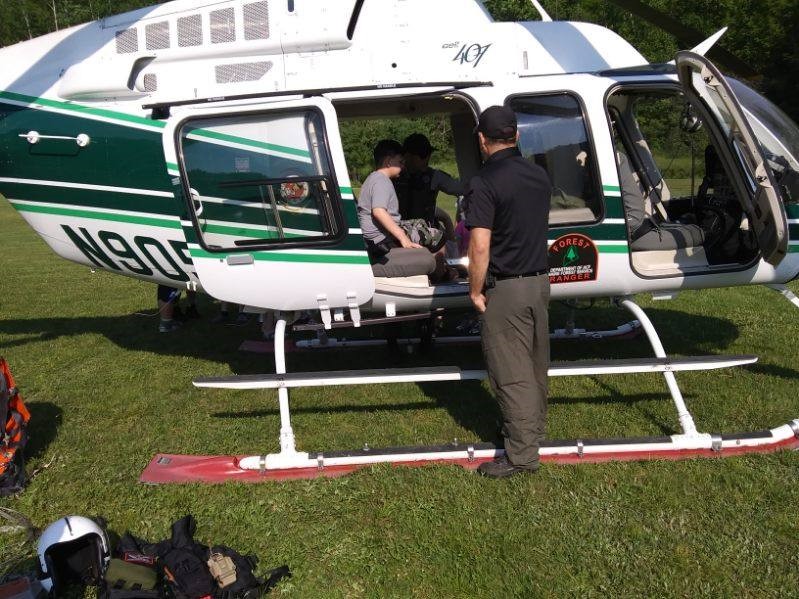
There were six rotating groups in the morning with Zachary Monroe and Lincoln Mazzei from the Maine Forest Service presenting information about the helicopter rescue. Mr. Mazzei landed his helicopter in the backfield while the whole school watched.
Students also had the opportunity to participate in a demonstration with Tina Turcotte and Melissa Brown from Maine Search and Rescue Dog (MESARD), who showed students how their dogs find lost people by using scent. A student from each group was found by the dogs.

Matt Grant and Sean Hashey from Canadian Pacific and Kansas City Southern CPKC taught the students about railroad safety and the dangers of being on railroad tracks. Martina Coburn from Best Western talked with students about hospitality and they had the opportunity to make a towel animal. In addition, Jaime McCleary taught children about cosmetology, and Debbie Hamilton from AE Robinson helped children learn about the different jobs in the store and they even got to make pizzas together.

The afternoon portion of the day included Brownville Fire Department and EMR. Alicia Harmon and Jessica Wyman demonstrated their equipment and what all the pieces mean while Chief Shawn Mitchell, Kevin Black, and Richard Wyman gave each student a chance to try out their aim with the fire hose. Then Melissa Brown and Martina Coburn demonstrated how oximeters work, giving students the chance to listen to their heart with stethoscopes and looked at other medical equipment.

The day ended in the gym with pizza that the students made earlier with Debbie from AE Robinson.

The school extends a huge thank you to third-grade teacher Miss Crystal Cail for organizing the day, to Debbie Hamilton from AE Robinson in Brownville for donating the pizzas, to all of the community members who came to share their occupations with students that day and everyone else who made such a special day possible for the students!

This story was submitted by Carol Smith from Brownville Community School as part of the Maine Schools Sharing success Campaign. To submit a story or an idea, email Rachel Paling, Maine DOE Communications and Outreach Manager at rachel.paling@maine.gov.
Sumner Students Help Count Horseshoe Crab Populations in Taunton Bay

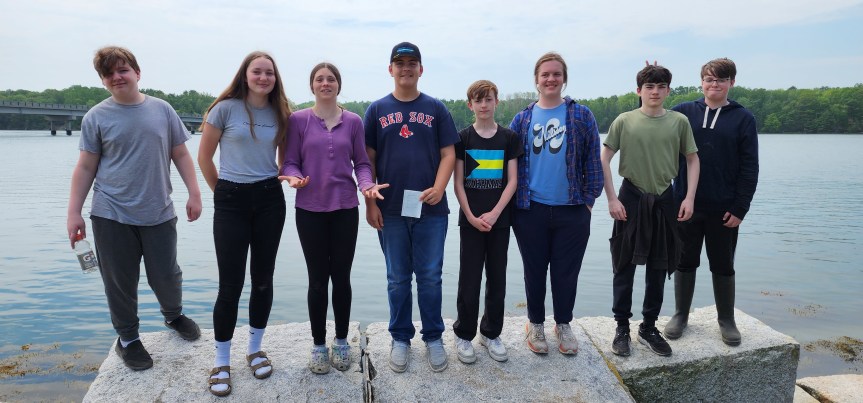
What can a species “older than dinosaurs” teach us about the importance of citizen science in the modern world? For eighth-grade students from RSU 24’s Sumner Learning Campus, all it took was a visit to the mud banks of Taunton Bay to find out.

Atlantic horseshoe crabs have been around for over 450 million years, making them one of the oldest surviving species found on Earth. Maine’s coastline represents the Northern end of the horseshoe crabs’ range, making population monitoring especially important to understanding species trends.

As part of a “Fun Friday” adventure, eighth-grade citizen scientists from Ms. Sarah Hooper’s 8th grade Middle School Life class and a high school mentor from Mrs. Ellen Hall’s High School Biology class visited the Bay recently to count horseshoe crab populations and learn more about the species. While observing the arthropods, students learned how to conduct field studies, collect data, and evaluate trends over time.

Dr. Frank Dorsey, a retired biostatistician, talked to the students over lunch about the value of collecting and monitoring population data and answered students’ questions. He stressed the value of population data to a broader understanding of the impact rising water temperatures and an increased presence of green crabs could have on the horseshoe crabs.

The elusive creatures are rarely seen outside of a short mating season in May and June. This makes the late spring an especially important time to research on the species. The warm water temperatures meant that students were able to spot the arthropods moving around and feeding. In total, students observed 15 solo horseshoe crabs and two pairs during their trip.

In addition to collecting data on the living population of Taunton Bay, students also got a close-up look at dead horseshoe crabs to learn about the species’ anatomy.

The data students collected on the trip contributed to a decades-long effort by researchers to monitor populations of horseshoe crabs in Taunton Bay. “These are the types of learning experiences that we hope to establish throughout all of our classrooms – real-world applications that get our students involved in active learning,” Principal Jackson Green said about the experience.

The Maine DOE encourages all schools and districts across the State of Maine to learn more about opportunities to expand access to outdoor learning. Department initiatives including the RREV Outdoor Learning Accelerator Program and Maine Outdoor Learning Initiative help to fund innovative projects involving students in outdoor and environmental learning.

This story was submitted by Sumner Middle & Memorial High School Principal Jackson Green in collaboration with Maine DOE Intern Ryan Hafener as part of the Maine Schools Sharing Success Campaign.

Caribou Community School 8th Graders Hold Mock Legislature Day

This article was written and submitted by Caribou Community School 8th graders, Elizabeth Robbins and Kaydence Hafford with the help of their teacher Heather Anderson.

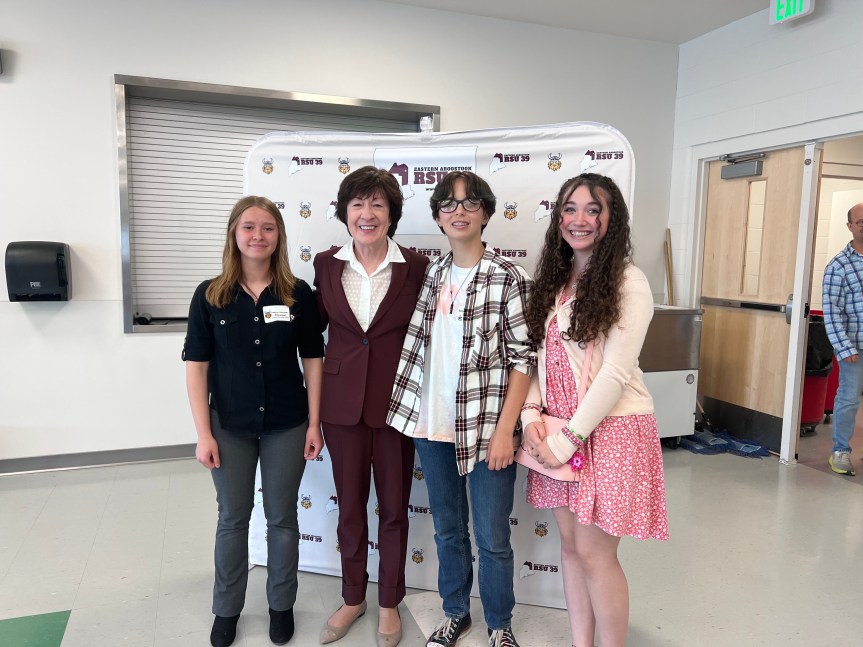
(Pictured: Students Katelynn Thibodeau, Liz Robbins, and Sadielee Violette pose with Senator Susan Collins)

What could eighth-grade students from Caribou Community School learn during a Mock Legislator Day? On Monday, May 22nd, there were many things that these students learned about the legislative process and about Susan Collins.

At around 8:30 on Monday morning, eighth-grade students started their Mock Legislature Day. They began with a public hearing over their specific bill, either LD 156 or LD 1002, in their designated classrooms where mentors with experience in Maine’s legislative process guided them through the hearing. Mentors included David McCrea, former Representative from Fort Fairfield; Cary Olson-Cartwright from UNUM, and Dr. Holly Blair from the Maine Principals Association. Students wrote testimonies for, against, or neither for nor against and then read those testimonies aloud. Afterward, the students, assigned roles as Senators and Representatives, worked in committee during a work session, where they spoke about the bill. These select students voted on the bill and all of the eighth-grade students moved on to one of the biggest parts of the day, the House session.

During the House session, students traveled into the cafeteria where they debated the two different bills that they were assigned, LD 156 and LD 1002. Bill LD 156 was an act to require outdoor recess time for students from Grade 6 to Grade 8 for at least 20 minutes for no less than 3 days a week. LD 1002 was an act to require a lunch period of at least 30 minutes for
students and reduce food waste.

“The students were so engaged and had so much to say,” Heather Anderson said about the students during the House Session. “They realized how much of a voice they can have and how they can make the world a better place.” This is one of many things that these eighth-grade students learned during their Mock Legislature Day. Students learned even more
from Susan Collins’ speech later in the day.

At 1:30 in the afternoon, Susan Collins arrived in the cafeteria to speak to the entirety of the eighth graders. Susan Collins spoke about many things. She spoke about her time in Caribou, and what she would spend her time doing. She also spoke about her career and how she was elected to the U.S. Senate. Seth Dubay, one of the eighth-grade students who saw Susan Collins, stated, “ It takes a lot of dedication to do what Senator Collins does.” Susan Collins was also asked a few questions by a select group of students, one of these questions being what advice she would give someone going into the Legislature, which she answered in great depth by stating “I’m counting on your generation to help us get back to the way politics used to be. When people worked together for a common cause.”

Students learned an exponential amount from Senator Susan Collins, and not just about the legislative process. “I learned to respect people’s opinions,” says Xander Jamieson, another student from Caribou, “even if you don’t agree with them.”

Camden Hills Students Win Sustainable Energy Technology Competition and Look to Start a Local Business

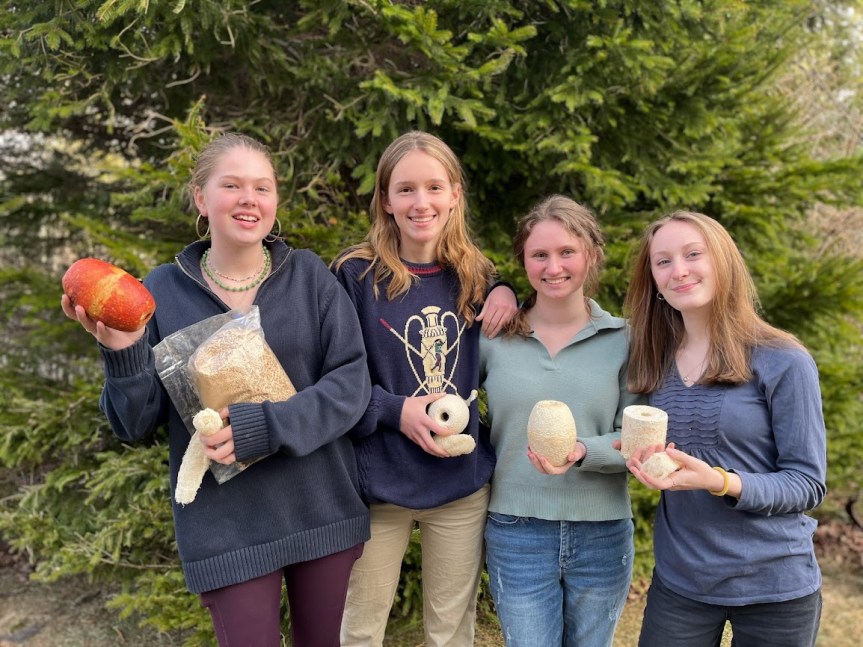
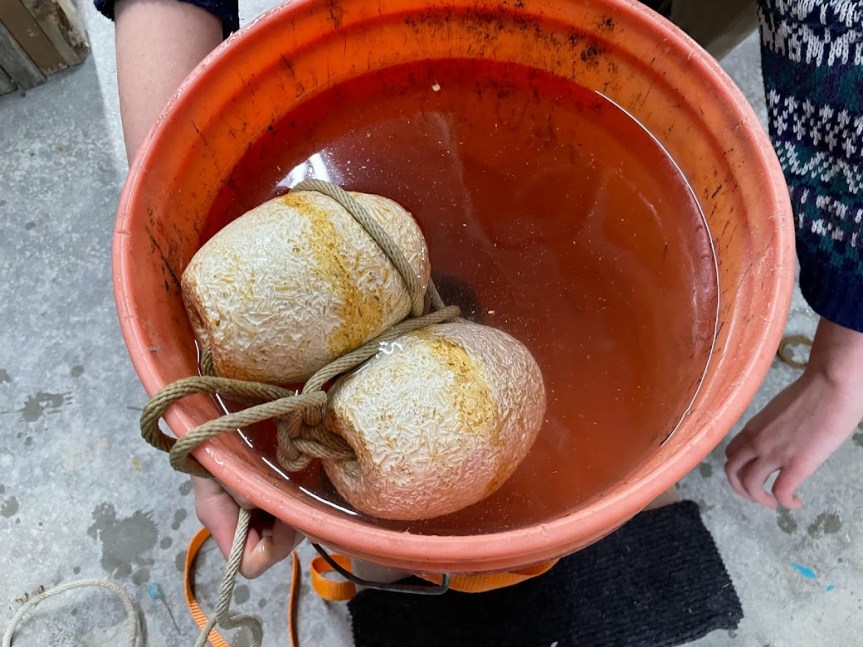
Four Camden Hills Regional High School students won a sustainable energy technology competition and received a $15,000 grant to jumpstart their plans to replace polystyrene buoys with a sustainable mushroom-based product.

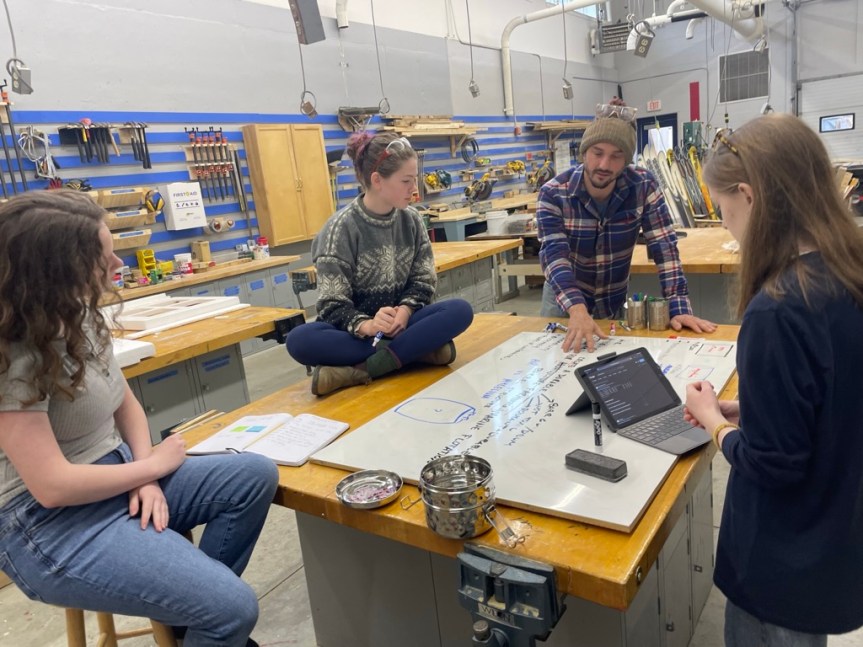
The students, Maggie Blood, Tula Bradley-Prindiville, Olivia Huard, and Laura Riordon, participated in a business internship through the Hatchery, Camden Hills’ innovation center that enables students to innovate, create, problem solve, and pursue their passions. They joined five other teams from the Energy Institute High School in Houston to participate in the Energy Project internship sponsored by the Puranik Foundation. Camden Hills instructor Danny Salomon, director of the Hatchery, served as the team’s advisor and mentor.

“Our mission is to reduce the amount of microplastics we consume and improve the health of us and our planet by reducing plastic floats with our mushroom floats,” the team said during their pitch to judges.

Throughout the internship, the students engaged in coursework on design-thinking, prototyping, marketing, and business planning, all the while perfecting their plans and pitch to a group of judges in April. The judges selected the Camden Hills group as the winners of not just a transformational grant but also a two-week trip to a sustainability school in India.

The team wanted to use the business and sustainability skills they were learning to address a local sustainability issue. According to the students, there are an estimated 6 million buoys in use off the coast of Maine, and more than 30,000 are lost every year. When these petroleum-based buoys break down, they can end up in the food chain and in our bodies.

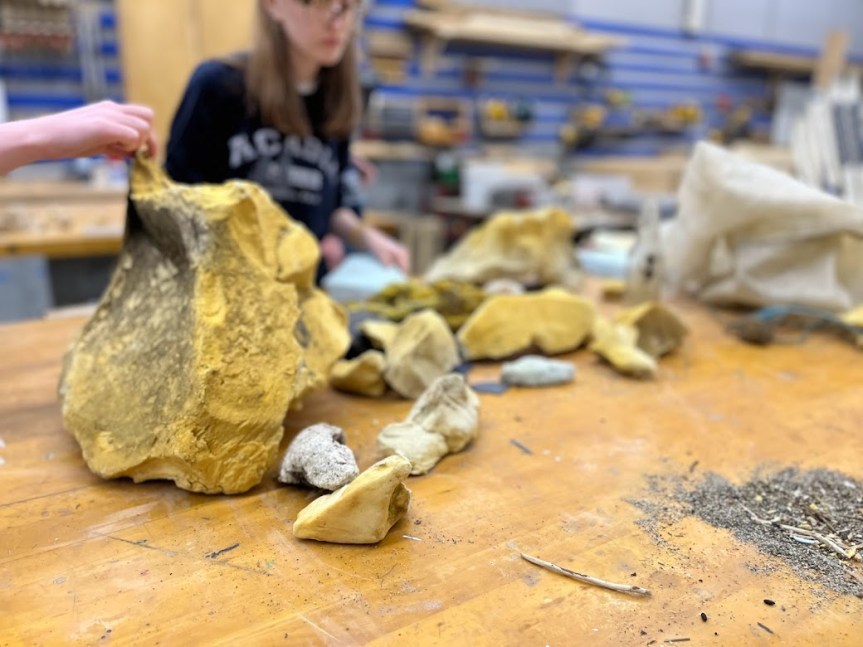
Their alternative? A new business called Refoam Maine, which will grow buoys naturally, using the root system of mushrooms, known as mycelium.

“As a team, we approached the Energy Project challenge by trying to assess what area in our community needs innovation. When we looked around at Maine – through the lens of what looks bad for the planet — we saw a lot of Styrofoam. If you go walk on beaches or islands, there is polystyrene everywhere … we identified our ‘problem space’ to be expanded polystyrene breaking off of dock flotation units,” Laura Riordon told the Camden Herald.

During their pitch to judges, Tula Bradley-Prindiville told the judges “to think of our business like a mycelium network” with their strong team at the center and a network of local businesses, experts, non-profits, advisors, and students who they are connected to.

“We have grown and developed with connections to our community, helping us conceptualize and design our product. We have also received support from our school board, and the community at large which is what has driven us to pursue this research,” said Riordon. “This project, along with other Hatchery projects, have built a space at school for students to follow things they are passionate about while learning skills for how to make a real impact. Over the next few months, our team plans to research mycelium growth in 55 gallon drums, and then expand next school year working with more students and community members.”

According to the team, their prototype “will be applicable to a variety of ocean uses: docks, mussel farming rafts, and aquaculture mooring buoys being our most promising areas. The beauty of the product is that it’s not produced in a factory, rather it is produced in the team’s local shop. Once fully grown, and cooked to stop the growth, the buoyant skeleton is ready for takeoff in the ocean.”

The students were recognized by their School Board in May for their vision, leadership, and success in the competition, and told the Board they were focused next on perfecting their prototype and getting projects into the water for testing. They are also talking to local marine companies, which they hope will one day purchase and use their products. The students told the Board that even if they hadn’t won, they were committed to finding a way to turn their business ideas into reality.

The Refoam Maine team looks forward to advancing their product research within the Hatchery, with continued support from its mycelial network, and seeks to grow the business by on boarding more students interested in participating in this exciting venture starting next school year.

You can follow their journey on Refoam Maine’s Instagram page.

Photos courtesy of Camden Hills Regional High School

New Super Story Podcast Takes Listeners Inside Schools

A new podcast launched this month to highlight the voices of those who teach in, learn in, work in, and lead public schools in one coastal Maine school community. Five Town CSD and Camden-Rockport Schools Superintendent Maria Libby created Super Story to bring the public into the inner-workings of public schools and help them gain a deeper understanding of the “challenges and triumphs” within public education today.

“My goal in starting the podcast, which has been a dream for nearly 5 years, is most broadly to help change the narrative about public schools,” said Libby. “The podcast shines a light on the human element of education because we have deep, genuine conversations about various aspects of the work. I hope the public is able to connect with and gain greater respect for educators by listening to Super Story.”

The inaugural episode of Super Story featured a conversation with Will Eggena, a Camden Hills Regional High School senior and valedictorian of his class. The two discuss Will’s educational journey, his views on the strengths of his education and where the school community can improve, the future of education, and his advice for others.

You can listen and subscribe to Super Story on Apple and Spotify.

Looking for more education podcasts? Be sure to listen and subscribe to the Maine DOE MLTI Team’s podcast Teaching with Tech which you can access here.

Want us to share your podcast? If you have a podcast at your Maine school or school administrative unit (SAU), please share it with us and we’d be happy to highlight it and increase your audience! Email communications.doe@maine.gov.

Portland Public Schools Hosts Annual Seal of Biliteracy Awards Ceremony

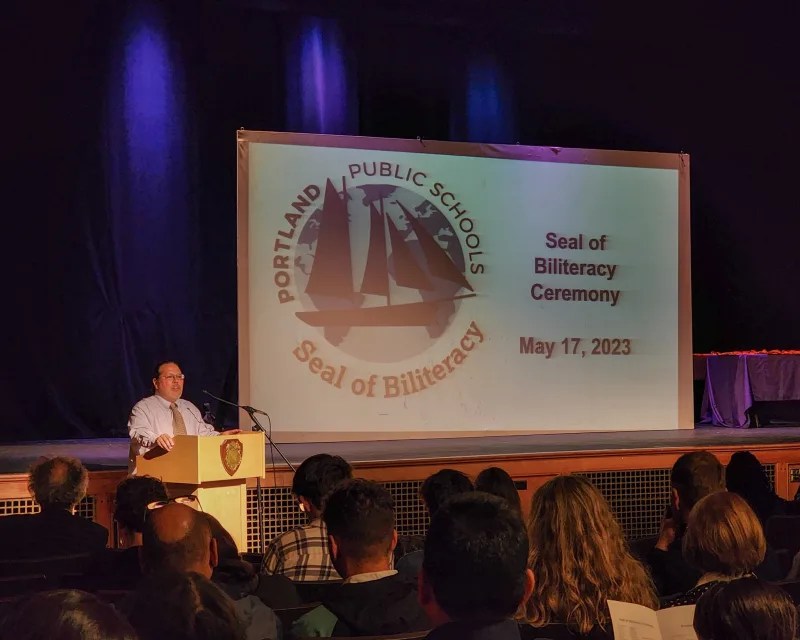
(Pictured: Carlos Gomez, Director of Language Development, Portland Public Schools)

“Many years ago my grandmother said, ‘Learning a new language is like having another little house in which you can take refuge and escape from the world to give yourself your own time. Learn today so that tomorrow you can enjoy yourself freely without any issues.’ I did not understand this wisdom at that time. I was a girl, I did not know what was coming soon. However, her wise words were never erased from my mind and heart, now more than ever I understand what she said because the process of learning a new language was difficult but after the storm, I am freely enjoying the rainbow.” These are the words of Portland High School student and Maine Seal of Biliteracy recipient, Estrella Alemán Delgado.

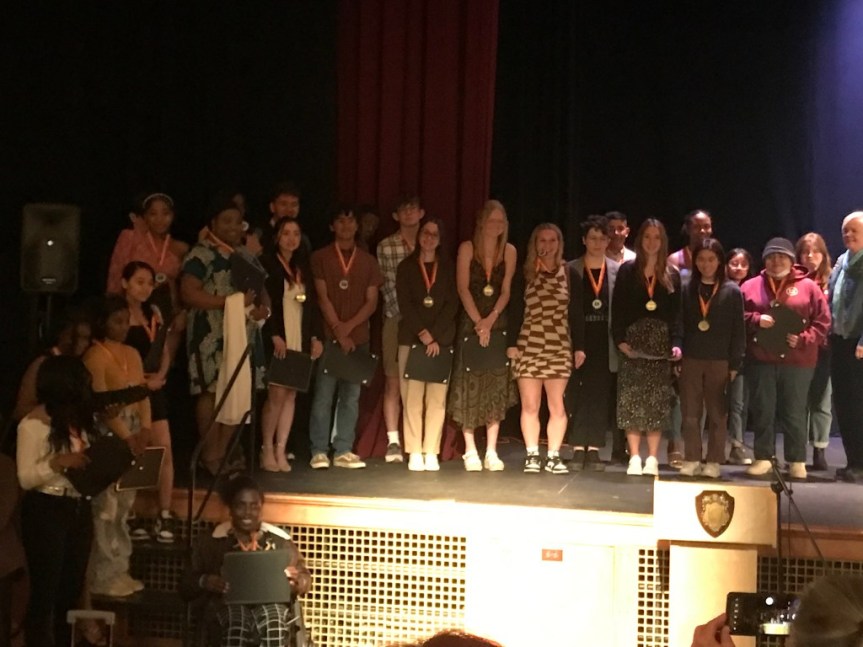
Portland Public Schools (PPS) hosted its annual Seal of Biliteracy Awards ceremony on May 17, 2023. There were 66 Seal recipients this year from Portland High School, Deering High School, and Casco Bay High School – 40 percent more than last year and the most since the award began in 2018.

The Seal of Biliteracy is an award that recognizes graduating students for having a high degree of skill in English and one or more additional languages. Nearly all states in the United States now offer this award, celebrating multilingualism and giving students an edge for their post-secondary studies and/or future careers. The Seal of Biliteracy underscores for younger students, parents, and community members who speak a language other than English at home that it’s important to maintain heritage languages. The Seal of Biliteracy also honors the dedication of world language students who pursue higher-level language courses. Highlighting the value of multilingualism, this award becomes part of a student’s transcript and gives students an edge for their post-secondary studies and/or future careers. Students who earn the Seal of Biliteracy may be eligible to earn up to 8 college credits at certain Maine Universities and Colleges based on their demonstrated proficiency levels in their target language(s).

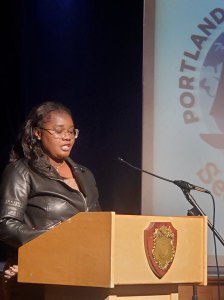
Mayinga Mukinayi, Seal of Biliteracy Recipient

Several students shared their language-learning experiences during the ceremony. Student speaker and Seal recipient, Mayinga Mukinayi spoke about the challenges and rewards she experienced as a multilingual learner. “My experience of learning English was very challenging because when I arrived in the United States, I didn’t know anything about English other than ‘Good Morning’ and counting a few numbers. It was hard, but I kept wanting to learn. I read English books and listened to English music without understanding. Sometimes I even slept with headphones on- putting words in English so that my mind could listen. Even if I was sleeping, my brain would be awake to listen. Now that I know English, although I’m still learning, I can communicate, and with my Portuguese and French I can help people who are in the same place as me when I arrived in the United States.  I help in the classrooms, as a teacher’s assistant. I even helped out in the summer as a TA in a multilingual classroom for middle school students. I still help even outside of school, translating in churches or even on the streets, when someone asks me for help.”

The following are the 16 languages in which this year’s recipients have achieved proficiency: Arabic, Bengali, Dari, French, German, Hindi, Latin, Lingala, Kinyarwanda, Pashto, Portuguese, Serbian, Somali, Spanish, Tajik and Urdu. The variety of languages represented in the ceremony gave a sense of the breadth of the language diversity at the Portland Public Schools, where one-third of students come from homes where languages other than English are spoken – a total of more than 50 languages.

Melea Nalli, PPS’s interim Co-superintendent and Assistant Superintendent of Teaching and Learning spoke extensively about the benefits of multilingualism. The ability to speak multiple languages is an undeniable asset in today’s increasingly global world. Learning another language transcends the confines of one’s own background and improves and expands one’s understanding of the world, diverse cultures, and perspectives. She noted that proficiency in two or more languages enhances students’ ability to succeed academically and in the workplace.  Language learning makes important contributions to students’ cognitive development, mental flexibility, memory, and concentration. Research shows that language learning correlates with higher academic achievement on standardized test measures. Additionally, demand for employees who are proficient in more than one language is growing in the United States and throughout the world. Multiple language proficiency opens the door to a wide variety of career opportunities.

Seal of Biliteracy Recipients from Portland Public High Schools

If you are interested in developing a Seal of Biliteracy Program in your school, please reach out to Rebecca Carey, ESOL Consultant at rebecca.carey@maine.gov or visit Maine Seal of Biliteracy.


Marshwood High School ELO Coordinator Helping Students Create Meaningful Professional Opportunities

As the school’s Extending Learning Opportunities (ELO) Coordinator, Robert Scully is working with Marshwood High School students to create meaningful and relevant educational experiences beyond the classroom. Since receiving the ELO Programming Grant last spring, Scully has been leading the development of the program and its team to make it a sustainable and impactful part of the school’s future.

During the program’s development year at Marshwood, students have been able to engage in a wide variety of opportunities. “We had numerous independent study experiences including students learning American Sign Language, world languages, and programming,” said Scully. Students have also been able to participate in programs for service learning, building trades, real estate, and health care.

Scully says the best part of his job is meeting one-on-one with students to plan experiences that will keep them interested and engaged in their educational careers. “Students taking agency in their learning – sitting and discussing, designing, developing an experience that will provide a valuable learning experience is a profound moment,” he said.

The program underwent its implementation phase this spring, with 65 students already expressing interest in creating an ELO of their own for the Fall 2023 semester. Scully is also planning on teaching a Career Exploration Course next school year to encourage authentic, hands-on learning.

By receiving this grant, Scully says that he and his team “will be able to develop and offer relevant learning experiences that – quite frankly – are limitless in their potential to prepare students for the future they hope for.”

Extended Learning Opportunities (ELOs) are hands-on, credit-bearing courses outside of the traditional classroom with an emphasis on community-based career exploration. These opportunities are personalized for students and help them explore options for their professional lives. They help students engage in learning through instruction, assignments, and experiential learning. The Maine Department of Education (DOE), along with state-wide partner Jobs for Maine Graduates (JMG), have made a concerted effort to provide working models, support, and funding opportunities for Maine schools to set up ELO programs within their school communities. To learn more about Maine’s initiatives with extended learning opportunities, visit: https://www.maine.gov/doe/index.php/learning/elo or reach out to Maine DOE ELO Coordinator Rick Wilson at rick.wilson@maine.gov.

This story was written by Maine DOE Communications Intern Natalie Grandahl in collaboration with Marshwood High School as part of the Maine Schools Sharing Success Campaign. To submit a story or an idea, email Rachel Paling, Maine DOE Communications and Outreach Manager at rachel.paling@maine.gov.

Civil War Cooking in Damariscotta

(Pictured: South Bristol students with the Farms at the Y director, Leslie Wicks)

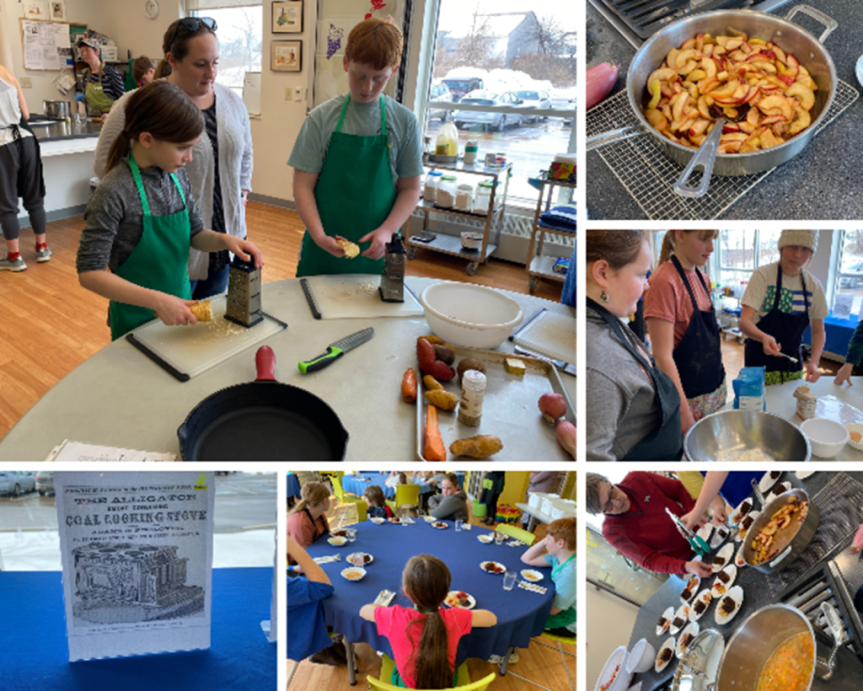
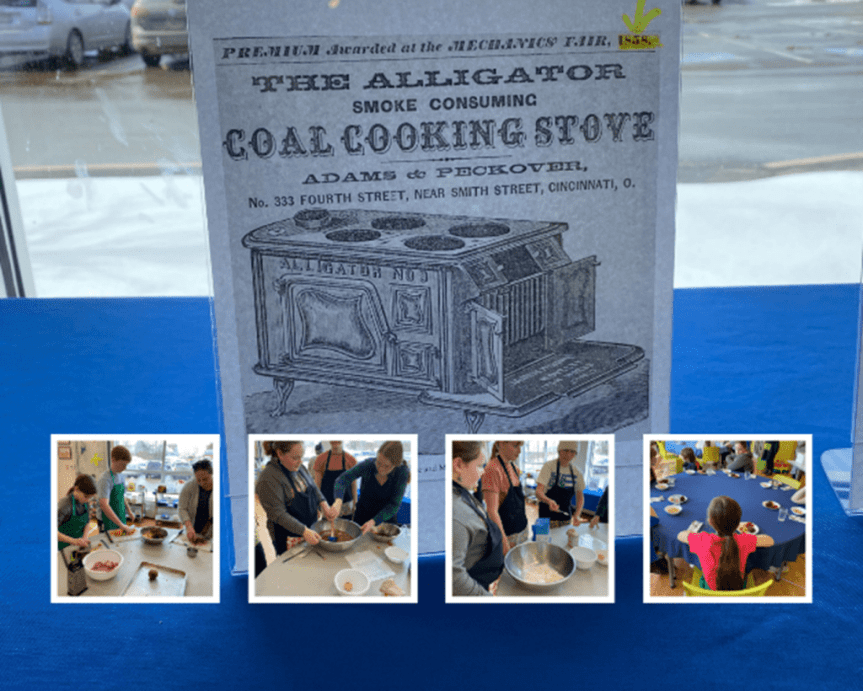
What do you get when you combine a nutrition program, a historical society, and a middle school ELA/Social Studies class? A four-course Civil War meal of course!  In March, a group of middle school students from the South Bristol School came to the Central Lincoln County YMCA to cook a Civil War meal.  Volunteers from the Lincoln County Historical Association came to help students chop and cook, as well as share interesting historical facts.  This was part of a Civil War unit that teacher Kayla Wright and her students were learning about.

On this particular afternoon, the students huddled around the kitchen island as Leslie Wicks, the FARMS at the Y director, explained the four recipes the students would be working on.  The students would be cooking navy bean soup, vegetable hash, fried apples, and gingerbread.  Before sending them off, Leslie talked about cooking safety and techniques and the differences between cooking at home and cooking in a commercial kitchen. For example, there would be a lot more hand washing involved.  Louise from the historical society explained why these recipes were appropriate for that time.  In fact, the gingerbread didn’t have any ginger in it!

In short order, the students were chopping, stirring, and whisking their way to a meal that people during the Civil War might have eaten.  Historical society volunteers were there to guide students and to talk to them about what life might have looked like in the mid-1800s.  To wrap the class up, the teams set tables and everyone sat down to enjoy their well-cooked meal.  Gauging from the empty plates, their fellow students did a great job cooking the meal.  The class was an example of the power of interdisciplinary experiences since the students learned about history, literacy, math, career readiness, and health.

The FARMS at the Y program provides nutrition education with a focus on nutrient-dense, Maine-grown vegetables with the aim to broaden program access and reach through expanded collaboration with local public schools and local farmers.  They offer hands-on experiences for people of all ages in cooking, gardening, and a passion for healthier living. The hands-on food programs developed by FARMS at the Y have reached students in every grade from childcare to K-8 public & private schools in Lincoln County. Currently, this program serves all 3rd (and some 4th) graders in the AOS93 district and is free to schools through grant funding.  In addition to working with school groups, the FARMS staff also provides professional development workshops for teachers.  For more about the FARMS at the Y program, contact Leslie Wicks at lwicks@clcymca.org

The Maine DOE encourages all schools and districts across the State of Maine to learn more about interdisciplinary instruction on our website or by contacting our Interdisciplinary Instruction Team Coordinator at Kathy.bertini@maine.gov

Nokomis High School Creates Authentic and Engaging Community Learning Experiences

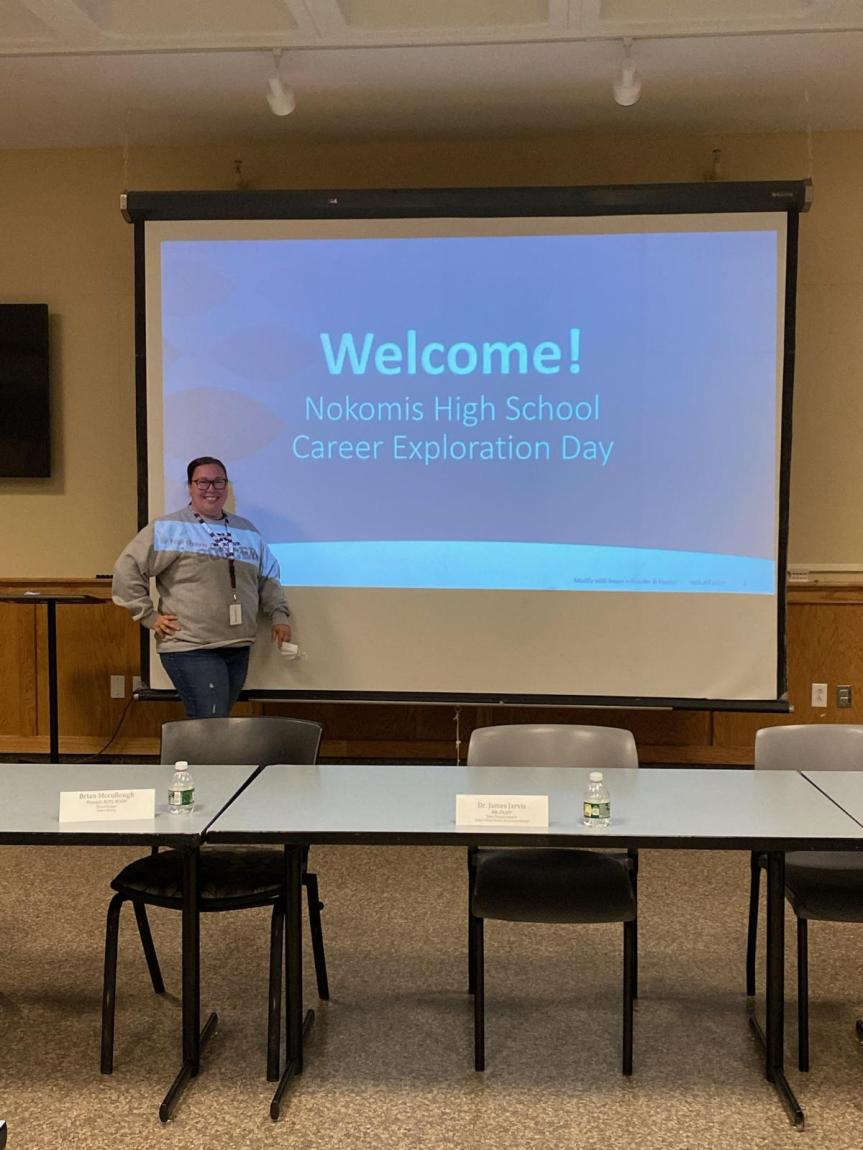
As the Extended Learning Opportunities (ELO) Coordinator at Nokomis High School, Kristine Eisenhour describes her job as organizing and cultivating learning experiences in the community for students and classes to engage in. “These opportunities could be field trips, job shadows, paid or unpaid apprenticeships, on-the-job training, and any other educational opportunities beyond the school walls,” she said. Eisenhour adds that the best part of the job is, “creating authentic, rich, learning opportunities that engage students in a whole new way.”

Nokomis High School is one of 26 schools that were awarded funding from a Maine Jobs and Recovery (MJRP) grant to help get an ELO program started at their school. “This funding provides students the opportunity to not only experience what the community has to offer but also to get involved within the community,” said Eisenhour.

Students, too, have been pleased with the new opportunities they have been afforded because of the Nokomis ELO program. “It helped me open new doors to careers that I did not know even existed previously,” said Nokomis senior Zachary Raymond.

“It allows them the ability to network and make connections that can last a lifetime,” said Eisenhour, adding, “Collectively, it shows them what the great state of Maine has to offer right in their backyard.”

More recently, Eisenhour has been spearheading a few new ventures for the Nokomis ELO program, the All Trades Pre Apprenticeship program opportunity, which allows students to explore careers in the trades providing hands-on learning experiences as well as OSHA30 training to prepare them to go into trades occupations. In addition, they are also working with the Cianbro Craft Exploration Program, which allows students to explore the many careers the construction field has to offer through hands-on learning experiences.

Eisenhour extends a heartfelt thank you to the following businesses and organizations for their time and generosity in assisting Nokomis High School students with extended learning opportunities: Augusta Electrical JATC, Cianbro, Foxcroft Veterinary Services, Northern Light, Bangor Humane Society, & Casella Waste.

Extended Learning Opportunities (ELOs) are hands-on, credit-bearing courses outside of the traditional classroom with an emphasis on community-based career exploration. These opportunities are personalized for students and help them explore options for their professional lives. They help students engage in learning through instruction, assignments, and experiential learning. The Maine Department of Education (DOE), along with state-wide partner Jobs for Maine Graduates (JMG), have made a concerted effort to provide working models, support, and funding opportunities for Maine schools to set up ELO programs within their school communities. To learn more about Maine’s initiatives with extended learning opportunities, visit: https://www.maine.gov/doe/index.php/learning/elo or reach out to Maine DOE ELO Coordinator Rick Wilson at rick.wilson@maine.gov.

New Library Pet Brings Joy and Solace to Old Town Elementary Students

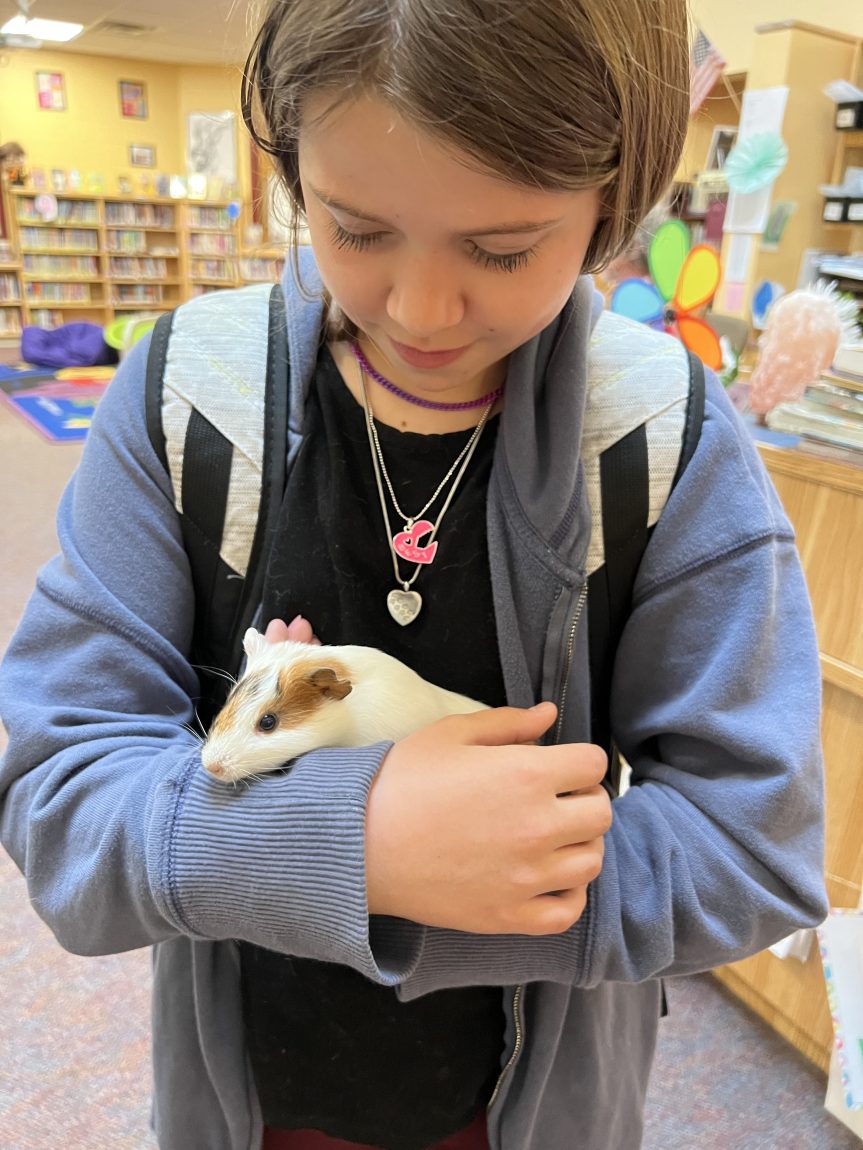
Can guinea pigs make a difference to student engagement and achievement? Well, we haven’t conducted the research yet, but if teacher observation is a strong source of information, the answer is yes.

Michelle Reesman, Old Town Elementary School Librarian, connected with a family because they desperately wanted to donate a guinea pig to the school. With hesitation, Michelle approached the administration about the idea and wondered if the students would enjoy having a school pet to care for. Up until now, the library has a 34-year-old turtle housed in the library space and the students have always enjoyed the turtle over the years. But, let’s face it, turtles are tough to snuggle with.

Adopting a guinea pig was a whole new experience for librarian Michelle Reesman, but her instincts were telling her this could be a good thing for the students and school. The guinea pig was delivered by the family before the April vacation and immediately the school was a buzz with excitement. Mrs. Reesman, the outstanding teacher that she is, found a way to involve all the students with the naming of this sweet guinea pig and hosted an assembly to vote by noise a few days before the April vacation started. The students voted and “Dumbledorable” was named, and he now sits proudly in our school library.

As adults, we tend to shy away from such an undertaking as sheltering or adopting a pet for our schools or classrooms. But, the reaction of our students and staff has been amazing. Mrs. Reesman noted a few remarkable moments since Dumbledorable has arrived at the school. First, a student that is new to the school this year and has only uttered a few words to the librarian, immediately struck up a conversation with Mrs. Reesman about caring for gerbils at her home. Mrs. Reesman was awestruck by the interaction since the child has never even said hello to her during library classes. Other students, struggling with self-regulation have dropped in at the library to watch, observe, and visit with Dumbledorable as part of their daily routine. These students are so amazed by our little friend and want nothing more than to just sit quietly with him. Students with anxiety cuddle him for a few minutes in the morning to start their day with a calm feeling.

When you think one more thing will send us over the edge, think about the power of that one thing and its impact on our students. Connecting with nature and furry friends may be the key to a student’s success—It can be as simple as saying yes to a guinea pig for the library. One lesson we have learned; “Don’t let adult hang-ups get in the way of making good experiences for your students.”

This story was submitted by Old Town Elementary School Principal Jeanna Tuell as part of the Maine Schools Sharing Success Campaign. To submit a story or an idea, email Rachel at rachel.paling@maine.gov.