Augusta Adult and Community Education Offers Free Childcare for Students

Augusta Adult and Community Education is pleased to announce their partnership with the City of Augusta Parks & Recreation to offer free child watch services for adult education students. This is a momentous moment for adult education programming as childcare is the leading barrier for many adult education students.

“All students should be able to access their education. Adult education students often face many barriers when returning to school. As the director of this program, it is my goal to eliminate barriers whenever possible. I am excited for this opportunity to partner with our neighbors at Buker Community building and offer free child watch for our adult education students,” said Kayla Sikora, Director of Augusta Adult and Community.

“This partnership with Augusta Adult Education is extremely exciting for our community and the students that August Adult Education serves. We are so fortunate to have the Augusta Adult Education Program  in the Buker Community Center and I believe that our  partnership is going to continue to grow beyond the child watch program,” said Bruce Chase, Director of Parks & Recreation

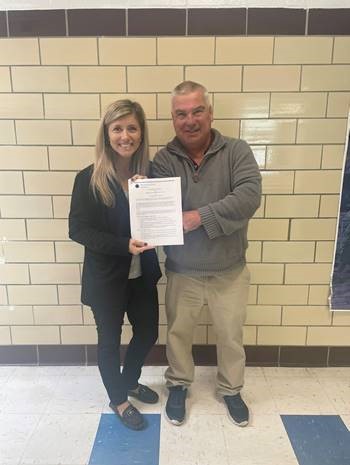
A Memorandum of Understanding was signed into effect on October 25, 2022 between Augusta Adult and Community Education and the City of Augusta Parks & Recreation to offer free child watch for adult education students. Pictured- Kayla Sikora, Director of Augusta Adult Education and Bruce Chase, Director of Parks & Recreation.

Old Town Elementary Hallway of Flags Celebrates Diverse School Community

A few years ago Old Town Elementary School (OTES) reflected on their school’s role in expanding the experiences and perspectives of the students and staff in the school. They realized they had an obligation to make the community aware of the diverse cultures and countries entering through their doors each day and to create a welcoming environment for all people at OTES. With the University of Maine as the school’s neighbor, they often receive students from the University because parents are finishing their degrees or are professors.

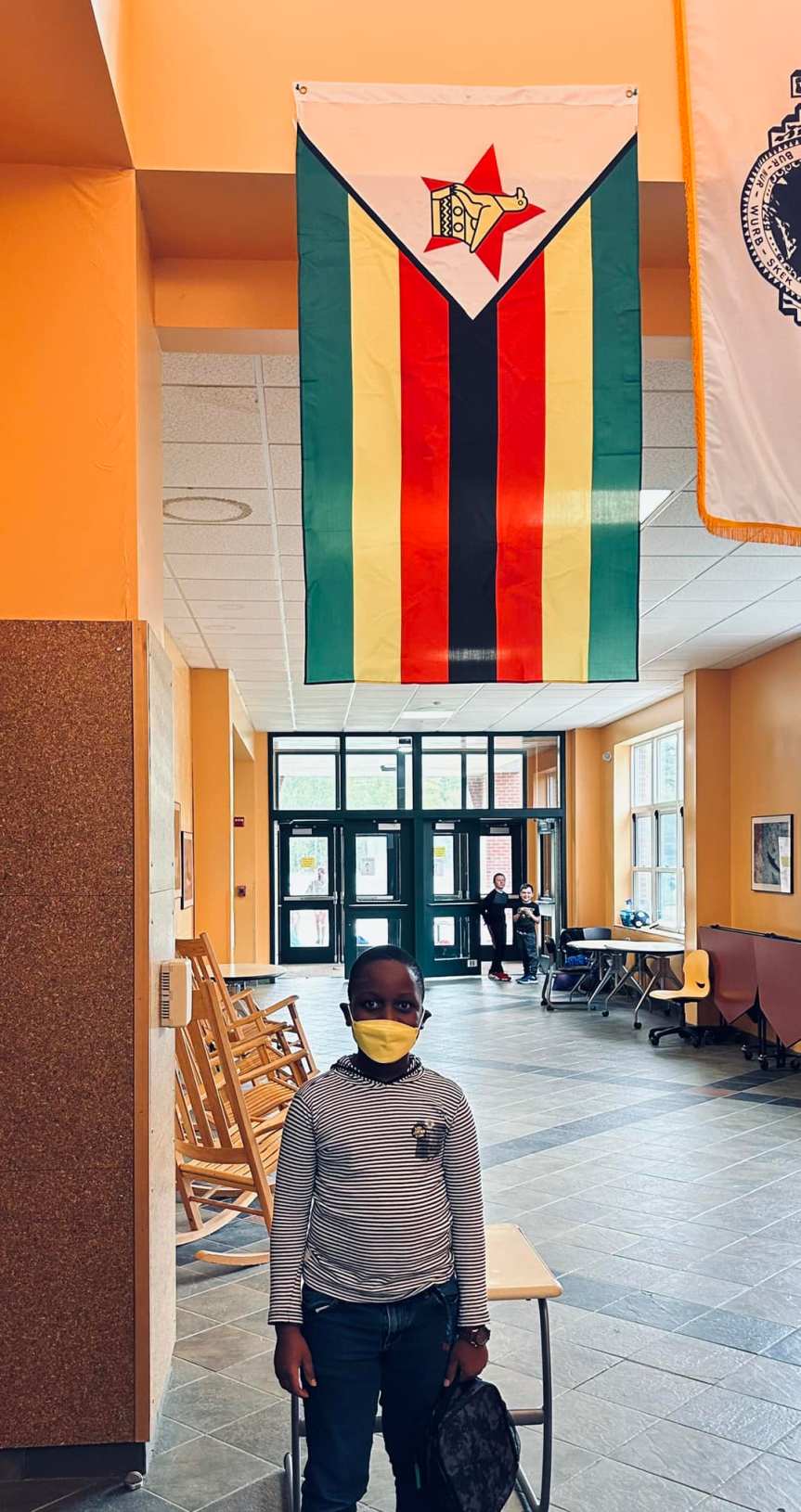
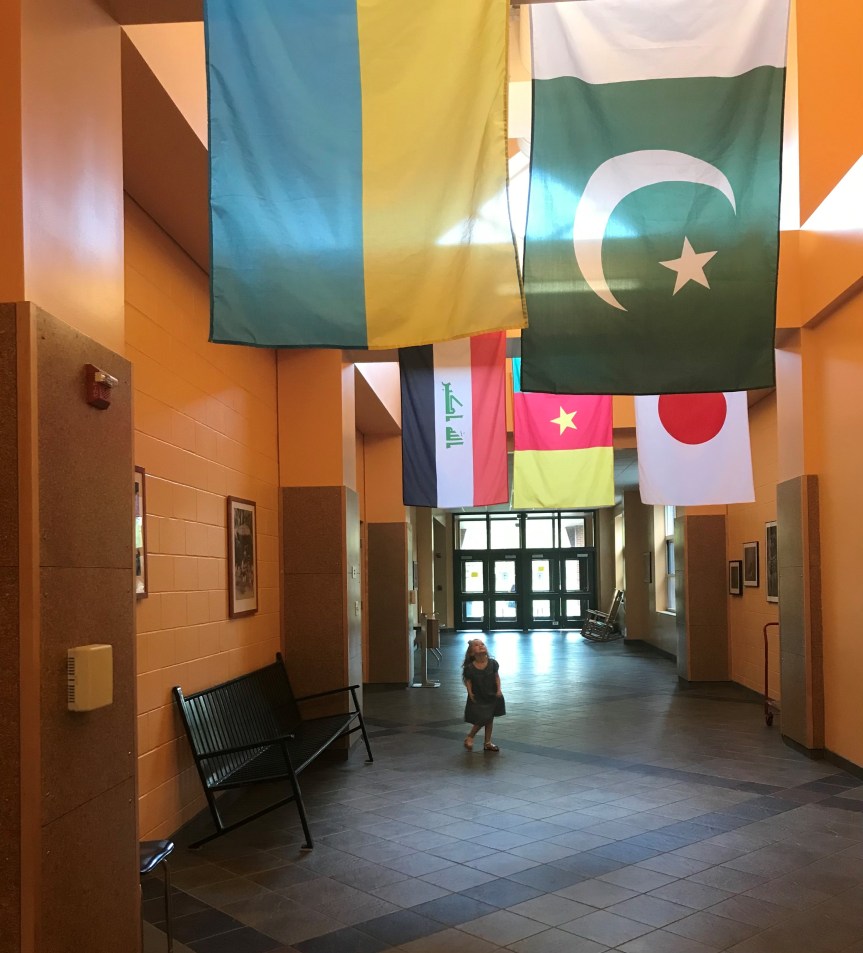
OTES decided to put a flag up for every country represented at the school to welcome families and teach their students about the various cultures represented at the school with each of these new community members. As a result, OTES families coming to the school building feel immediately welcomed by the gesture of seeing their native country flying in the hallways of the school.

“Students and staff are so excited about another country joining this hall of flags and getting to know about the country,” said OTES Principal Jeanna Tuell. “We have found more opportunities to make connections with other countries and to celebrate our diversity.”

Sparking Creativity: International Dot Day and Augmented Reality

When Terri Dawson, Technology Integrator at Gorham Middle School, heard Peter H. Reynolds read from his children’s book, The Dot, at an International Society for Technology in Education conference, she knew she had to bring the book back to her school. Reynolds’ book tells the story of a young student, Vashti, who feels like she can’t draw. Her teacher encourages her to simply “make a mark and see where it goes,” and by doing so, sparks Vashti’s creativity, inspiring the little girl and her classmates to have creative confidence.

So, when Dawson discovered a collaboration between QuiverVision, an augmented reality (AR) coloring app for iPads, and International Dot Day, she knew she had found an innovative way to connect sixth, seventh, and eighth-grade students to this beloved children’s book via technology. The students began by listening to Peter H. Reynolds read from his book on YouTube. That’s when they began their own creative process.

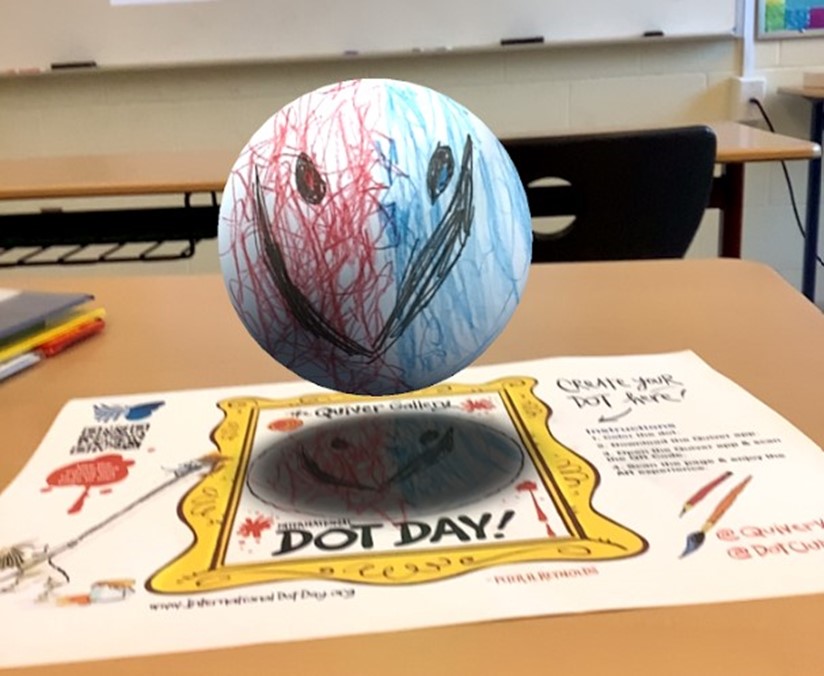
Dawson provided students with a paper template from QuiverVision that included space for the students to design their own dots and a QR code, that, when scanned by their iPads, displayed their dots in augmented reality. This allowed them to experience their drawings in a totally different way. Dawson noted that “when the students saw their dots come to life, their engagement and motivation to do another dot was amazing…it gave them another level of learning. They started to think about what else they could create.”

Dawson’s students were so engaged and inspired, they asked for the opportunity to take their iPads home and continue with their own designs using AR.

“Augmented reality and virtual reality seem to be a natural progression in education,” said Dawson, “there are so many different things that allow students to view their world differently. That’s what I want to expose them to. I want them to have these skills so that when they go out into the workforce they say, ‘I remember using AR! Did you know you could do this with a QR code?’”

600+ Devices Deployed to Mt. Ararat Middle School Students: a look at how one school implements the 1:1 device portion of MLTI 2.0

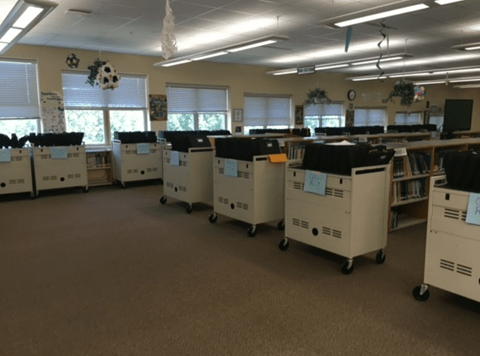
Thanks to the Maine Learning Technology Initiative (MLTI), every September, with the excitement of a new school year just beginning, the Learning Commons Team at Mt. Ararat Middle School (MAMS) prepares, organizes, and deploy 600+ laptops for student to use as critical tools for their learning throughout the school year. It is a group effort by Karen Silverman, Candy Wright, and Kat Campbell to get every kid their laptop. MAMS asks for all hands on deck, so they also are lucky to have the help of the IT team, Ryan Palmer, Corrie Calderwood, and Kate Greely.

The groundwork for laptop deployment starts in the summer. Each machine is cleaned, charged, and fitted with a student name sticker. These stickers are placed not only on the machine but also on the charger and case so that if anything is lost throughout the school year it can be returned.

There were many brand-new devices this year and Karen shared student reactions.

“Students were excited when I…showed them that all our laptops flip into tablet mode. They loved that! And then I would do my best Vanna White and tell them ‘but wait there’s more!’  MAMS students all have touchscreen laptops this year.”

MAMS was able to choose a Chromebook model from CTL for their students, one of the six choices available through the new and reimagined MLTI 2.0. Karen, who served on the 2020 MLTI Advisory Board, is now able to work with a program that is not just devices, but also offers the opportunity for teachers to develop their craft around technology. The program’s long-term goal is to provide the equitable integration of technology for engaging and effective educational experiences.

Students at MAMS are excited for the opportunities and most students have begun using their devices, and many students will be taking them home this week if their parents opted them in. Throughout the year, the Learning Commons Team will support students in troubleshooting problems, or if a student has lost their laptop, they will help locate it. This will keep the team busy until June when the same type of organization goes into collecting the devices and preparing them for the following year, until then the devices will help students at Mt. Ararat Middle School be engaged in learning.

Portland Public Schools Unveils New Mobile Makerspace to Provide All Elementary Students with STEM and Technology Learning Experiences

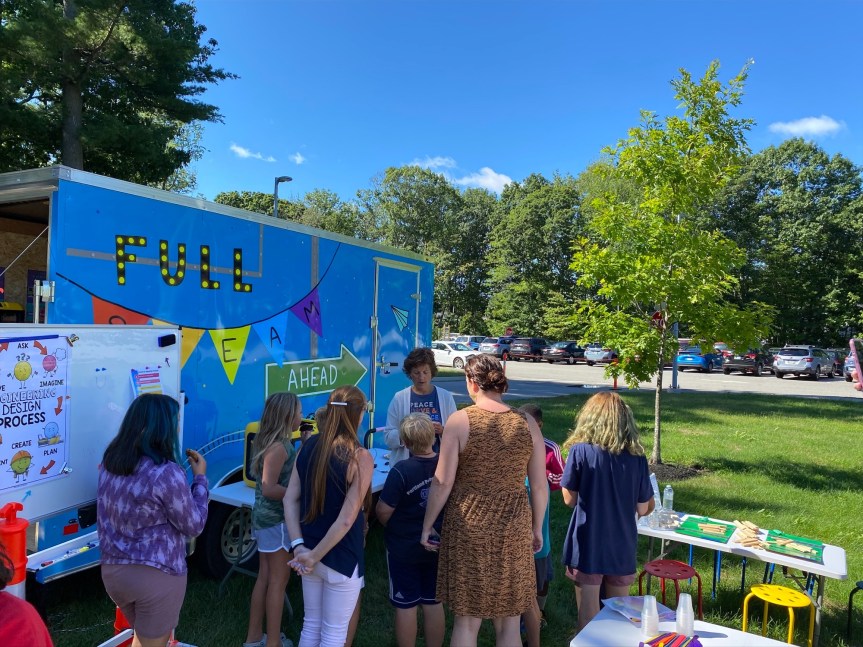
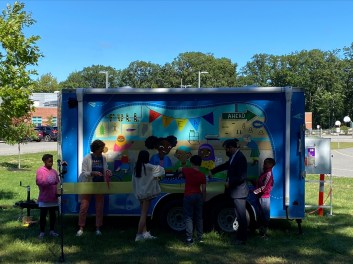
Joined by students, educators, and community members, Portland Public Schools held a ribbon cutting last week at Rowe Elementary School for their new Mobile Makerspace which will bring immersive, project-based STEM and technology learning experiences to all Portland elementary students.

The Mobile Makerspace will travel to elementary schools for two-week visits this fall and spring. Once at the schools, students along with their classroom teachers will visit the Mobile Makerspace for mini or immersive experiences depending on their grade level. It will provide every PreK-5 student in Portland Public Schools with at least one design/innovation/engineering experience each year. One project example involves sail cars. Based on grade-level standards, students will be exploring properties of materials as they try to determine the best material, the best size, and the best shape for their sail. During their experience, students will employ the Engineering Design Process to guide their work – Asking – Imagining – Planning – Creating – Experimenting – Improving.

“We want our students to be scientifically and ecologically literate as well as technologically capable problem solvers. We want our Portland Public Schools students to not just be consumers of technology but creators. Through rigorous and engaging science education, our students will learn to be caring, active participants in the world and become equipped to comprehend, analyze, and create solutions to global issues. The Mobile Makerspace is one way that we are addressing this vision,” said Portland Public Schools STEM Director Brooke Teller.

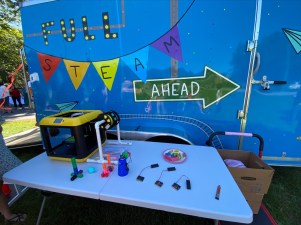
At the ribbon cutting, a group of 5th grade students got to explore some of the high- and low-tech gear and opportunities contained in the Mobile Makerspace, including the 3-d printer, technology projects, books on STEM-related topics, and creative building opportunities.

“I am so excited and honored to be the mobile makerspace coordinator for Portland Public Schools. I get to bring STEM opportunities and engineering design challenges to Portland’s elementary students. And I get to do this at a time when research is telling us that our young learners should be engaged with science and engineering practices,” said Mobile Makerspace Coordinator Karen Shibles. “In addition to a focus on NEXT GEN science and engineering standards & practices, there will be an emphasis on those key 21st Century skills, also known as the 4Cs: critical thinking, collaboration, communication, and creativity.”

Portland Public Schools, in partnership with the Foundation for Portland Public Schools, worked with the community to design, build, and outfit this mobile lab. The trailer was secured from On the Road trailers, Blue Planet Graphics installed the artwork, and Casco Bay High School alum Charlie Hindall made the artwork.

“We believe that these mobile makerspace experiences will be a spark that ignites a student’s further curiosity and engagement with all that science, technology, engineering, and math have to unlock for them. We believe that these experiences will be brought back into the school buildings, and in conjunction with a district wide science curriculum, students will receive the joyful and just science education they deserve,” said Teller.

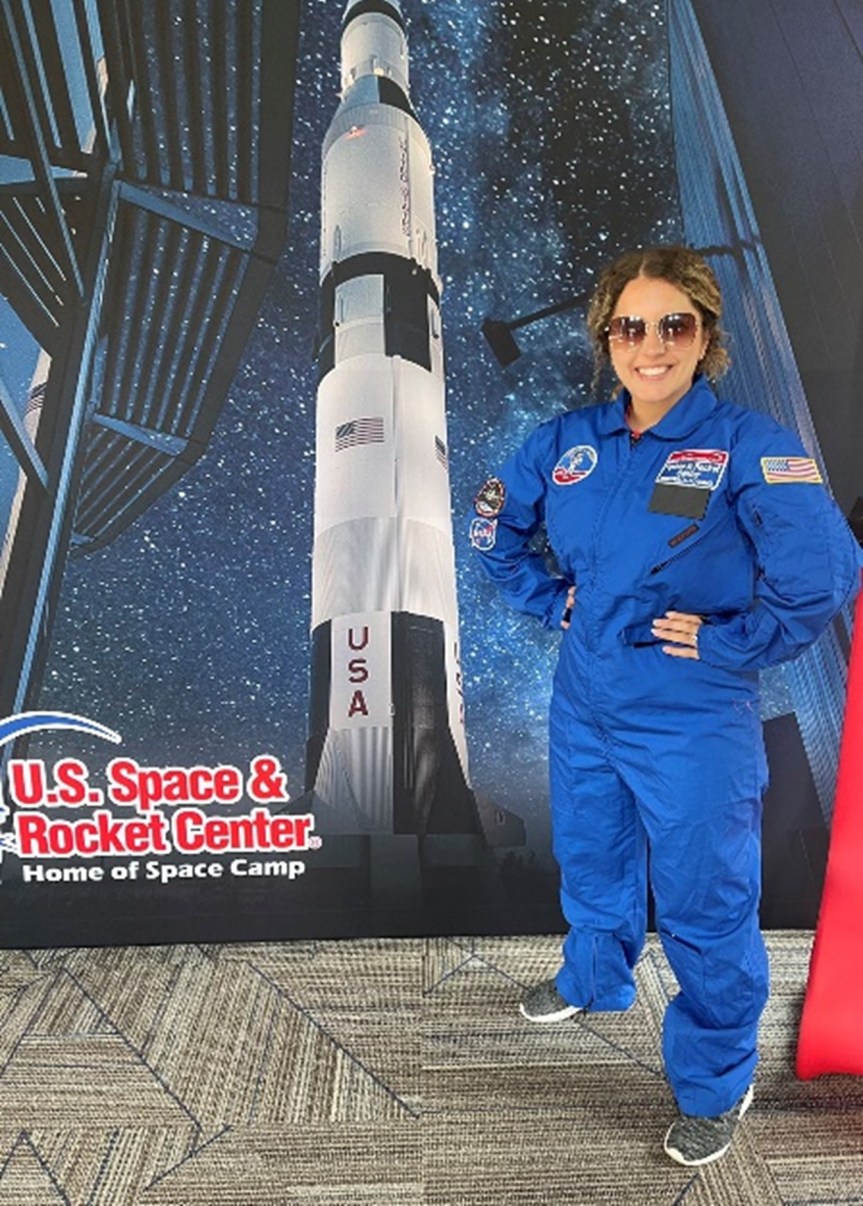
2022 Maine Teacher of the Year Kelsey Stoyanova Attends NASA Space Camp with Teachers Across the Nation

Each year teachers from across the nation are invited to participate in an opportunity of a lifetime through the National Teacher of the Year (NTOY) program. NASA’s Space Academy for Educators is a place for all of the National Teachers of the Year to come together for a professional learning experience in space exploration.

“Before going to camp, as an English teacher, I felt some apprehension that I wouldn’t excel in the same ways that my NTOY colleagues in STEM [science, technology, engineering, and math] fields might,” said 2022 Maine Teacher of the Year Kelsey Stoyanova. “I quickly came to realize that there are so many career paths that exist within the realm of space and space exploration that I never expected.”

Held at NASA’s Space Camp Headquarters in Huntsville, Alabama, the Space Academy for Educators program includes authentic astronaut training simulators and activities developed to promote learning in a classroom setting. Curriculum includes NASA-inspired lesson plans and is correlated to the National Science Education Standards.

Upon understanding more about what the experience was all about, Stoyanova explained that, “many people look at anything NASA and space related and think SCIENCE, but the truth is, space exploration programs employ technical writers, PR specialists, photographers, architects, and more.”

Some of Stoyanova’s favorite experiences include travelling to the ISS via spacecraft and having to solve anomalies with friends and fellow mission specialists from New York and Michigan, getting “dropped” from a helicopter into the water and having to swim to a rescue rendezvous point (and ultimately having to get rescued), and launching rockets from the rocket launch pad where her team sported their Live and Work in Maine t-shirts which she had brought with her give to fellow educators.

She also got to experience the simulation of the space craft tumble in the multi-axis trainer. “[It] flipped me every which way and we all couldn’t stop laughing,” as well as the simulation of the moon walk.  “I’ve never felt so weightless — and I perfected the moon RUN,” said Stoyanova.

What topped all the once in a lifetime opportunities and experiences, Stoyanova says, was the unequivocal appreciation that exuded from everyone hosting educators at Space Camp that week. “The whole week was filled with gratitude at what educators do to help grow the next generation of thinkers, creators, speakers, innovators, and explorers.”

In fact, one thing that stood out to our Maine representative was the many counselors there who are now adults but were once campers. “My team leader, Sydney, is now a middle school science teacher while another is in school to be an aeronautical engineer. As space camp alum they continue to go back year after year to inspire the future generation to be innovators of space exploration in some way,” said Stoyanova. “Every kid should have the opportunity to go to space camp,” she added.

Stoyanova also found inspiration in learning that as part of the Artemis I mission which is set to try launching again in late September, the Space Launch System (SLS) and the Orion will have Maine made pieces that will aid in going to the moon. Two companies in Maine, both in Biddeford contributed to the building of the spacecraft being launched in the Artemis I mission (learn more here). “It takes so much more than just what you see on launch day for a successful mission.” For Stoyanova this is a wonderful example of the idea that in education, every lesson matters and students find success when they are able to connect and apply their learning to the world around them.

“My experiences at space camp, as a scientist, a builder, an inventor, a mission specialist, an astronaut, a critical thinker, and team member truly demonstrated my belief that authentic learning happens through experiences where students can see themselves in roles or actually be part of the outcome,” said Stoyanova. “As a lifelong learner, Space Camp holds lessons I’ll cherish forever.”


Another Successful Year of Maine’s Agriculture in the Classroom Summer Institute

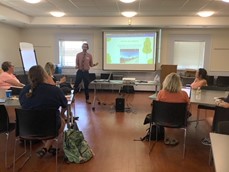
There may only be one place where a teacher can make mozzarella cheese, tend to beehives, and take a virtual farm tour on the same day, the Maine Agriculture in the Classroom Summer Institute. In August, more than 25 educators came together for a 3-day institute at the University of Maine to engage in workshops that focused on including aquaculture facilities, school gardens, the research farm, and more. Educators developed new partnerships and formed ideas for integrating agriculture into their classrooms.

Maine DOE’s MLTI Ambassador, Erik Wade, shared resources on creating virtual tours, demonstrated the usefulness of virtual tours in bringing agriculture into the classroom, and shared resources for educators and students to develop their own tours and engage students in the creation process. Wade’s session also shared resources in agriculture game-based resources that educators can use with students to “gamify” their classrooms and engage students in agricultural simulations.

If you are interested in learning more about virtual tours, game-based agricultural simulations, or integrating technology into your garden or outdoor space, contact MLTI Ambassador, Erik Wade, at erik.wade@maine.gov.

Beech Hill School Team Kicks the Year off as “Agents of Agency”

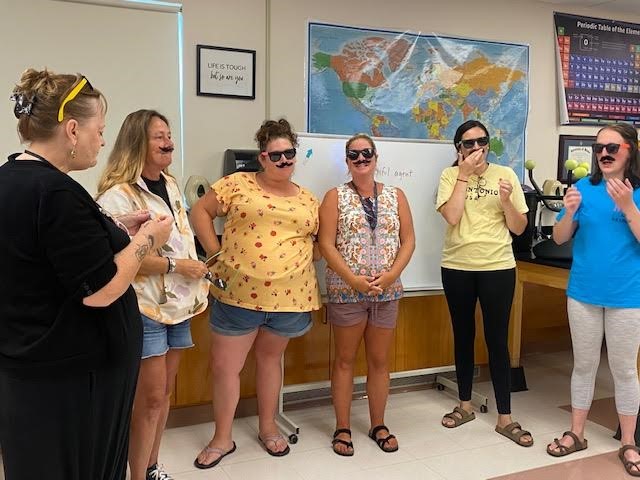
Beech Hill School teachers and staff have launched the school year as “Agents of Agency.”  Each year, Superintendent/Principal Nichole Pothier designs a theme that unifies the year-long work and efforts of their school community.  Members infuse the theme into multiple aspects of school life, including morning meetings, team challenges, special activities, and more.

This year, the Beech Hill School team spent their first few professional development days revisiting their school’s mission and how best to organize and leverage their existing systems into a Multi-layered Systems of Support (MTSS) framework.  PBIS, RtI, special services, thinking classrooms, and culture and climate were some of the breakout session topics.

Agency is the capacity of individuals to have the power and resources to fulfill their potential. Teachers with agency act purposefully and constructively to direct their professional growth and contribute to the growth of their colleagues, and on those first few days back, teachers planned and facilitated some of the professional development.

Beech Hill School teachers and staff are focused on ensuring that the academic, behavioral and social-emotional needs of each student are met in the most inclusive and equitable learning environment.  Student agency relates to the student having an active role in their learning through voice, and often choice, in the process.  Nichole Pothier explains how critical agency is since it enables people to play a part in their self-development, adaptation, and self-renewal with changing times.

Yearly school-wide themes not only create partnership at Beech Hill School, they also add excitement and fun to their days. Teachers, staff, and students are already excited about being “Agents of Agency,” because there are lots of ways to incorporate it into learning, daily happenings,  and student events.  Cues, evidence, I Spy, mystery genre, riddles, super sleuthing, scavenger hunts, geocaching, team missions, Breakout Edu challenges, problem solving, critical thinking—the possibilities are endless!

Bridging the Gap Between Rural Farms and School Nutrition: Maine Kicks Off First Farm and Sea to School Institute

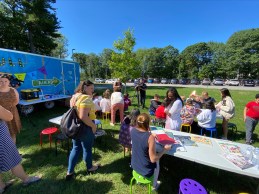
The Maine Department of Education served alongside many state-wide partners in organizing Maine’s first Farm and Sea to School Institute which launched last month bringing together teams from 3 different school districts at the Ecology School in Saco.

The event is the kick-off of a year-long opportunity in which the 3 districts will develop a values-based, school-wide farm & sea to school action plan that integrates curriculum, local food sourcing, youth voice, equity and inclusion, and family and community connections, all unique to their school community. The 3 districts participating in the first institute are MSAD 17 (Oxford Hills), RSU 22 (Hampden), and RSU 89 (Katahdin). They applied for the opportunity in January 2022.

The institute was hosted as a collaborative effort among farm to school practitioners, advocates, and supporters throughout Maine who are all part of Maine’s Farm and Sea to School Network (MFSN).

The 3 teams are comprised of school nutrition staff, educators, and students who will be working to co-develop and implement agriculture, gardening, and/or nutrition related programming at their school. The student members on each team are UMaine college mentors trained in youth leadership via 4H STEM Ambassador Program – this component of the Institute is to both incorporate student voice and provide an extended learning opportunity for Maine students.

The 3-day kick-off event was a chance for the teams to come together for the first time and start planning, have the opportunity to meet the other teams, and begin work with state-wide partners and coaches. They participated in a wide array of activities including learning about planting specific crops that are easy to grow without maintenance. Given that schools are typically out of session during prime garden-growing season, this option allows for a “set it and forget it” style of growing vegetables.

Richard Hodges from ReTreeUS, a nonprofit that plants orchards and provides education and resources to schools specifically, showcases seed packets with pumpkin, Mexican sunflower, and popping corn seeds, among others, which he explained will help school staff grow enough food to be used in school cafeterias without a lot of maintenance. Hodges also showed participants how to plant a peach tree during his workshop and tour of the gardens.

Other workshops included learning about Incorporating Local Agriculture into Classroom Curricula, Building Sustainability through the district budget, finding local foods, how to promote school efforts, food security, and an institute-wide workshop with Racial Equity & Justice Organization, among many other workshops. The three-day event also provided lodging, locally sourced meals, and plenty of team time for participants to engage in conversation and work together to begin their action plans, all while enjoying the serene Ecology School campus.

Following the kick-off event, the districts teams will continue to engage in workshops designed around school specific roles throughout the year and continue work with an experienced coach from the Maine Farm to School Network to develop their school-wide farm & sea to school action plan.

Funded by a USDA Service-Learning Grant, the MFSN group is working to secure funding for future Institutes. Read more about it here. Pending more funding, the Farm and Sea to School Institute expects to open applications for year-two of the institute in January 2023. Read more about the application and selection process here.

‘A Tapestry of Small Moments:’ A Story of Success at the Blueberry Harvest School

In the low bush wild blueberry fields of Washington County, there is important work to be done in the month of August. Families come from throughout the state, the country, and the continent to harvest the blueberries that make their way to grocery store shelves and kitchen refrigerators throughout the country. Once the harvest is done, they pack up and move once again, across school administrative unit (SAU), and sometimes country lines. The Maine Migrant Education Program (MEP) partners with the nonprofit organization Mano en Mano to provide migratory children and youth, and their families, with educational and support services. At Mano en Mano, the local MEP Regional Coordinators enroll migratory children and youth, conduct needs assessments, and create a service plan for each student, and, throughout the month of August, they operate the Blueberry Harvest School.

The Blueberry Harvest School (BHS) is a summer school for migrant children ages 3-13 designed to provide students with the opportunity to attend school while they are in Maine and may be missing school days and credits in their home states. It began operating over 30 years ago, when there was a large influx of migrant workers in Maine’s blueberry harvest in the 1970s. Migrant families travel to Maine from Mi’kmaq First Nation communities in Nova Scotia and New Brunswick; from “Eastern Stream” states such as Florida and Mississippi; and from within Maine, including Passamaquoddy communities in eastern Washington County and a Latino community in western Washington County. Some families complete the blueberry harvest in less than two weeks, while other families may stay for five weeks or longer. The goal of the BHS is to respond to the unique needs of each student through culturally responsive, project-based learning while preventing summer learning loss and compensating for school disruptions among students, helping to ensure that all students experiencing a migratory lifestyle reach challenging academic standards and graduate with a high school diploma (or complete the HiSET) that prepares them for responsible citizenship, further learning, and productive employment.

In each classroom, students make progress toward academic success. Students take field trips weekly, experiencing educational opportunities throughout Maine. The oldest age group, 11- to 13-year-olds, recently had the opportunity to visit the University of Maine Orono’s Virtual Reality Center. During their visit, they were able to create and explore their own virtual reality rooms. Meanwhile, the 7- and 8-year-olds took a trip to the College of the Atlantic Museum to see dioramas. When they returned to the BHS, they created their own dioramas about animals they researched.

Stefan Fink, a Lead Teacher at the BHS says their favorite memory comes from a time when they and another teacher found monarch caterpillars outside their cabin. They brought them to school for the students to measure, take notes, and name them, providing the students with the opportunity to watch the life cycle of the butterfly. On the last day of school, the butterflies were ready to take flight, and the students sent them off together.

While the activities students complete in their time at the BHS is important, the staff will tell you that what really makes the BHS special is the culture and philosophy behind the learning, which allow many students to feel safe and comfortable in school for the first time. “Migrant education is disruptive, so we have to disrupt the cycle of learning loss,” Fink says. The BHS does this in several ways. For example, there are two teachers assigned to each classroom. School director Laura Thomas says that by having more than one teacher, it is easier to foster relationships between student and teacher, something many rural schools lack the capacity for.

The school takes a trauma informed response to teaching, helping to increase comfort levels and show students that migrating to Maine and attending school can be a safe space to learn. Part of how they do this, and part of why the staff love to work at the BHS, is through mirroring their student body in their staff. The teachers and students come from similar backgrounds and speak the same languages, making the students feel comfortable. Some of the teachers even went through the BHS themselves as children. This allows the teachers to meet and understand student needs at a greater level.

Mirroring the students in the staff is just one way that the BHS prioritizes cultural and language inclusion. There are 10 languages spoken at the BHS, and when you walk into the building, you can tell. Signs and books in the halls and in every classroom are in multiple different languages, helping students to feel comfortable. Through language access, the BHS is working to preserve and teach languages such as Spanish, English, Mik’maq, Haitian Creole, Korean, Passamaquoddy, Portuguese, French, Yoruba, and Nahuatl. Cornelia Francis, a TA at the BHS and a previous attendee herself, has been with the program for over 30 years. She says that sometimes, there are language and communication difficulties, but it is so important to give students an opportunity and a space to speak the languages that make them feel comfortable because it doesn’t just benefit the kids, but it helps keep the culture and languages alive as well.

Another important aspect of the BHS philosophy is the student-led social emotional learning component. This year, they hired an SEL coordinator, Meg Charest, who says that at the BHS, kids are the experts on their experiences. Charest says that in her role, she provides students with choices in how they want their problems to be solved because kids learn when they’re in charge. This “sit back and listen” approach helps kids feel seen, heard, and comfortable. While Charest integrates this strategy in her SEL work, teachers throughout the BHS implement this student-first idea as well. Francis says, “you need to learn the child before you teach them,” something that most teachers at the BHS agree with and do, building relationships prior to and while educating students, in line with the BHS philosophy.

All these facets of the BHS educational philosophy build upon one another to create an environment that both staff and students can be proud of. “This is what equity work looks like,” Fink says. Students routinely have exposure to cultural experiences and communities that allow them to feel protected and safe, which is evident. Fink loves when students share their first laugh at the BHS, ask for help, or share their hard work with parents. Each moment of pride and happiness in the walls of BHS, Fink says, helps to make a “tapestry of little moments” that show how effective the BHS is.

While the building may not be large, the impact of the BHS is. The staff build trust and connections with students, letting them feel comfortable in a place where historically, underrepresented migratory students haven’t been allowed to be happy or safe. They support language access and facilitate a culture of constant learning, helping to disrupt the cycle of learning loss. The work of the BHS, while it starts in migrant labor, goes far beyond it, supporting culturally sustainable traditions, allowing students and their families to feel protected and safe.