An Amazing Summer at Portland LearningWorks Afterschool, a 21st Century Community Learning Center

The Portland LearningWorks Afterschool (LWAS) team had an amazing summer session, supporting students in their growth, learning, and community building. LWAS is a 21st Century Community Learning Center grant-funded program, and works in partnership with Portland Public Schools to operate school year and summer programming at six of the district’s elementary students: Ocean Avenue Elementary School, Presumpscot Elementary School, Reiche Community School, Amanda C. Rowe Elementary, Gerald E. Talbot Community School, and East End Elementary School.

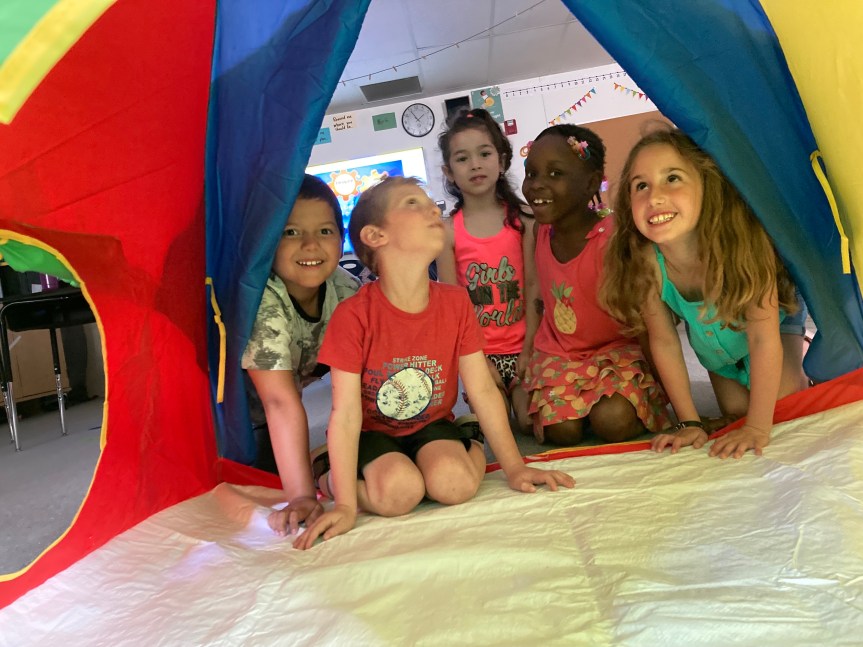
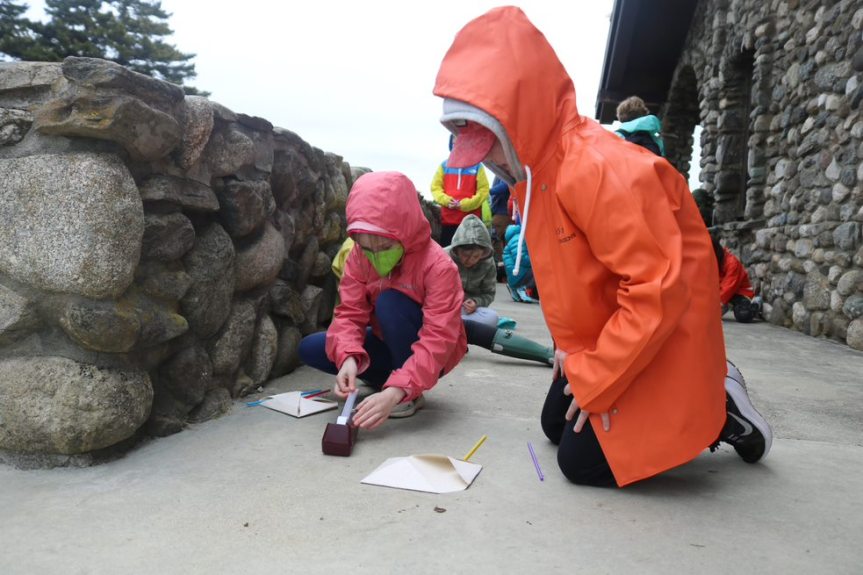
LWAS’ summer camp ran from July 6th – August 11th. Kids participated in a “Bubble Bonanza” STEM unit (developed by the Maine Math and Science Academy), where they used the engineering design process to engineer bubble wands, utilizing a range of various materials (from twine to paper cups and toilet paper rolls). Site staff were responsive to their students’ interests and curiosity, such as exploring the possibility of putting a human inside a bubble, and facilitating a “Bubble Shark Tank”, where students presented their final bubble wands to a panel of their peers, fielding questions from the panel and selling their inventions.

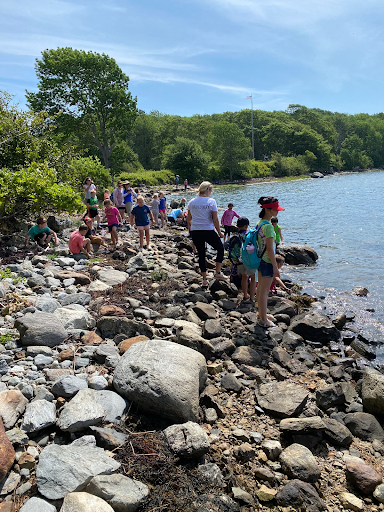
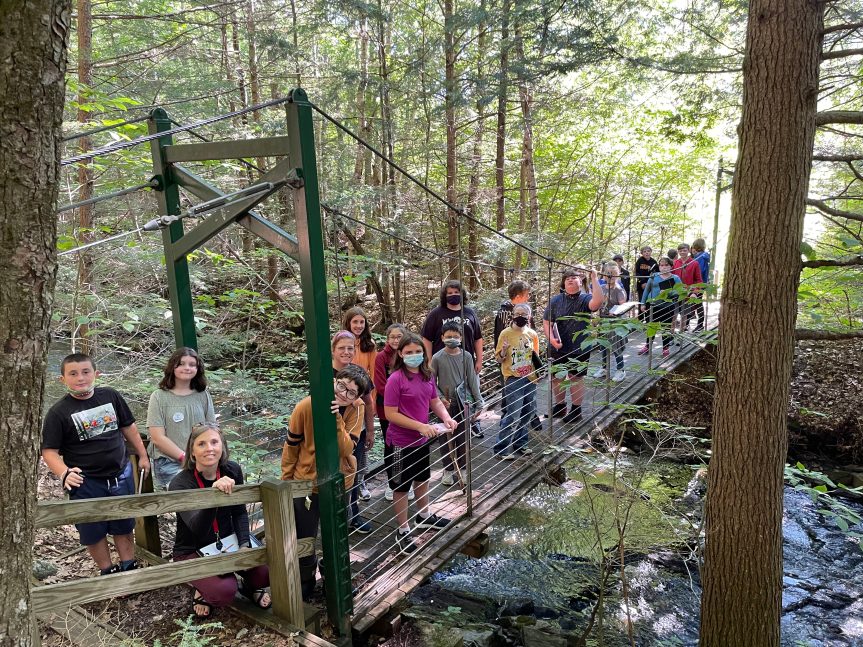
Students also engaged in a number of enrichment clubs, including Lego builds, animal habitats, science, art, and improv. Portland’s LWAS program partnered with a range of community organizations to offer field trips to Maine Audubon’s Gilsland Farm and Portland Museum of Art. The program also welcomed the crew at 317 Main who joined LWAS sites for a musical “petting zoo”, giving student’s hands-on mini-lessons in ukulele, drumming, fiddle and violin. Students loved playing water games during LWAS’ Waterworks Day, and reveled the opportunity to splash their favorite teachers in the dunk tank!

The summer program came to an end with a culminating celebration of learning. Families, building leaders, and LWAS staff were invited to see their children present their final art projects and bubble wands. Each site put their unique spin on the celebration, such as creating a red carpet event, where students strut down the runway modeling their bubble creations, while others sang favorite songs and created an art gallery of their artwork and bubble wands.

LWAS was thrilled to send students away for the summer with robust home kits to further help reduce summer learning losses. These kits included hands-on materials and activities that encompassed all of the 21st Century Learning Center’s goals for STEAM, multicultural education, literacy, social and emotional learning, and health and wellness.

It was a truly incredible summer, and the Portland LWAS team thanks all of the summer staff, partners, district and building leaders, students, and families for working alongside LWAS in pursuit of a common mission.

Funded through the U.S. Department of Education’s Nita M. Lowey 21st Century Community Learning Centers (CCLC) program, Maine currently has 35 CCLC grants and 61 CCLC sites across Maine that provide academic enrichment opportunities during non-school hours for children, particularly for students who face economic and/or academic challenges. With strong community partnerships at the core of every one of its programs, Maine’s 21st Century Learning Centers help students meet academic goals and offer a broad array of enrichment activities, in addition to other educational and engagement opportunities for communities and families. Learn more about Maine’s CCLC grant opportunities at https://www.maine.gov/doe/learning/esea or reach out to Travis Doughty at travis.w.doughty@maine.gov.

Orono Middle School Teachers use Federal Funding for Summer Program Focused on Social Emotional Student Needs

A new summer program was created at Orono Middle School that focuses more on the social emotional needs of our students while integrating academics into fun and engaging opportunities for learning. The program was open free of charge to any student that wished to participate. The program had a profound impact on students and teachers alike modeling, establishing, and strengthening relationships, and setting foundations for the critical learning that awaits as we start a new school year. 

The program began during the summer of 2021. Orono Middle School teachers and staff developed and coordinated a unique summer program at Orono Middle School. That year, COVID funding definitely played a key role in launching the program which included the purchase of materials for a wide variety of activities, as well as the creation of a new school-community garden. The program allowed students to select from a variety of activities offered each day in a heterogeneous group format and each day, students were given a healthy bagged lunch free of charge.

Due to the success of the program and remaining funds, we were fortunate to keep the same program this summer. Though we had minimal funding for supplies, we were able to use supplies from last summer and/or supplies from our classroom. With one year under our belts, this summer proved to be even more successful with nearly 30 participants each week! We know that funding for summer programs is typically allocated to students with identified needs in their IEP, however, this program was developed to have an impact on ALL–and that impact was significant! The program met the social, emotional, mental, and physical needs of the students as well as applying academic skills and helped to support many students to become more confident and prepared for the academic school year.

The Program was flexible allowing students to attend when it best fit their schedule. Many students attended every day; some made it for 2 weeks and, for others, just a few days. Regardless of when they attended, joining was seamless and students were able to be with different peers in activities they chose to explore. Organizers also made the program Intentional with Purposeful Learning Experiences. The activities were organized and well planned to provide a positive learning experience for each student. The daily choices (3-5 per 3 separate sessions) were organized to include a wide array of activities and skill level entry points to make the experience equitable for all students.

Activities offered during the 5-week program included:  fishing, nature walks and hikes, cooperative games, cooking, gardening, 3-D printing, tabletop games, weight lifting, design + make buttons, hike in Bangor City Forest, coding, art projects, engineering challenges, construct + paint bird houses, dissect owl pellet, theater games/activities/performances. pressed flower projects, design + make comics, reading + discussing comics, intramurals, volunteering at The Bangor Humane Society, and design + paint stepping stone for school garden.

Parents were very grateful for the program’s flexibility, structure and daily activity options. Here are some of their comments:

He seems to look forward to going to school in summer, which is not his usual attitude about it! Thank you for your planning and working with these kids, I think this enrichment is excellent.” 

Student” had a really good time.  So good, in fact, that we’re talking about shifting our plans around this summer to try to get her more time there, although we haven’t figured out how possible that is yet.  But regardless, I hope it speaks highly of what an excellent experience you all crafted there this past week!” (She was able to make it back for the last 1.5 weeks). 

The main benefit for my child was to meet some of the teachers and students in the Orono school system. She is transferring from Old Town this fall. I think she enjoyed the art and cooking activities the most. The biggest benefit was to build her confidence going into the upcoming school year.”

“As a result of strengthening her friendships with her peers at the summer program, she gained the self-confidence to walk around town by herself and with her friends.”

“She got to do lots of fun activities  while getting her reading instruction” 

“I can’t say enough good things about this experience for my daughter.  She is excited and confident about attending middle school now.  She found a new activity that she is excited about (weightlifting!) . . .This is probably the most positive and important experience that we’ve ever participated in at RSU 26.  I can’t stress enough how much we loved this program.  She actually skipped a week at a basketball camp that we had already paid for to attend this, and I decided that was okay because she was having such a great experience!”

Middle school students are striving for independence and they want to have a say in what they do. They thrive in a place where they feel they belong and have a purpose. The grade-level lines are blurred in the summer program. They are just kids who have similar interests and/or who are eager to try new things. Groups are almost always multi-grade. The sessions were designed to foster independence with students completing their own weekly schedule and becoming strong self-advocates when they needed help. Students gained confidence by taking risks and trying new activities. They broke away from their typical peers having the confidence and feeling safe to try new things on their own. Students applied problem-solving skills in each session whether it was adjusting a recipe or figuring out an engineering challenge. Students worked with each other to build structures, complete physical tasks, prepare original productions, and collaborative problem-solving. One thing’s for sure, “summer school” at Orono Middle School definitely doesn’t mean what it used to!

Special thanks to Jessica Archer (science teacher) who was the program coordinator and to the teachers leading the various activities including Deb White (social studies teacher) Julie Anthony (art) Chris Gray (science and social studies) Tracy Deschaine (math) and education technicians Rob Saintard and Teena Thibodeau. Thank you for all you do!

NMRC/PAE Education Academy Program Accepting Applications

A new Education Academy offered at Portland Adult Education is now accepting applications. The Education Academy prepares people who were teachers in their home country to be teachers or educational technicians here in Maine.

The Portland Public Schools launched the Education Academy as part of the Teach Portland initiative in January 2022 to build and diversify its educator workforce. This new intensive program, targeted specifically at foreign-trained teachers, will be offered by the New Mainers Resource Center (NMRC) at Portland Adult Education starting Jan. 7. It is designed to build on the skills and experience that these teachers bring with them from their home countries.

The Education Academy will combine coursework with intensive English and a student classroom experience.  It will prepare students in the program to work as educational technicians and substitute teachers. It will also provide the guidance and support they need to ultimately apply for and pursue teacher certification.  Students may be eligible for scholarships and other supportive services that will help them with the costs of any college courses they may need for teacher certification.

Education Academy which is now accepting applications for classes that start this September.

  • This program prepares people who were teachers in their home country to be Teachers or Educational Technicians here in Maine
  • It is also a good program for people with other backgrounds and degrees who are interested in entering the teaching profession
  • It provides an overview of education in the US including: classroom management, teaching methods, becoming a Maine educator, and teaching exceptional students
  • The program includes a practicum, or practical experience in a classroom, and also advice and assistance applying for teacher certification and jobs

Here is a link to more information about the program and its requirements:  Education Academy Slideshow.

Here is a link to the Education Academy Application.

For more information about the Education Academy, go to the New Mainers Resource Center website at: www.nmrcmaine.org or call Portland Adult Education at: 207-874-8155

Bangor High School Teacher Named Maine’s 2022 State History Teacher of the Year

The Gilder Lehrman Institute recently announced the 2022 State History Teachers of the Year from elementary, middle, and high schools across the nation, including Geoffrey Wingard of Bangor High School who was named Maine’s 2022 State History Teacher of the Year.

Wingard has been teaching in public schools for 21 years – all of which have been at Bangor High School where he currently serves as the History Department Head. “Finding my role as a high school teacher was a gift,” said Wingard. “I really enjoy the content that I get to teach, and I love helping my students become better citizens and scholars.”

The History Teacher of the Year Award highlights the crucial importance of history education by honoring exceptional American history teachers from elementary school through high school. The award honors one K–12 teacher from each state, the District of Columbia, Department of Defense schools, and US Territories. In fall 2022, ten finalists for the National History Teacher of the Year will be announced.

“I think the thing I most enjoy about teaching history, and really teaching in general, is the collaboration I’m able to engage in with both colleagues and students,” said Wingard. “A story I use to illustrate the power of this approach has to do with a student who was enrolled as a ninth grader in my required World Geography class. He also took other social studies classes when he was not enrolled with me. I saw him again as a tenth grader in US History and again as a Senior in my AP Human Geography course. At the end of his high school career, he shared with me that the reason he had taken so many classes from our department was that every teacher he met, whether he was enrolled in their class or not, was willing to help him learn. He had found a community that supported him. I’m grateful to have been part of that community.”

Wingard shared that while the recognition as a Gilder Lehrman HTOY is a wonderful honor, it has also made him a more self-reflective and thorough teacher. Going through the process of articulating teaching philosophy and sharing lesson and unit plans has made him a better teacher and has created a space to become more thoughtful and a more intentional teacher of history.

“We are teaching in a particularly challenging time, a time when many of our foundational beliefs about teaching as a profession and beliefs about our history are being challenged. It is a powerful gift to be able to guide young people in their development as critical thinkers at this time and I hope teachers have a sense of pride and commitment regarding their role in shaping the next generation,” added Wingard.

In order to be considered for the History Teacher of the Year award, eligible teachers must first be nominated by a colleague, parent, or student. After receiving a nomination, teachers must submit a resume, teaching materials, and a letter of recommendation to be considered for the state award. History Teacher of the Year winners are selected by a committee of educators and education professionals in their state. For more information on the award process, visit the Gilder Lehrman Institute website.


Lewiston Uses ARP ESSER III Funds to Support Students Experiencing Housing Instability

Amelia Lyons, DOE McKinney-Vento State Coordinator, had the opportunity to visit Lewiston Public Schools with their district McKinney-Vento liaison, Dan Sansoucy to support in their programming for students experiencing housing instability.

McKinney-Vento is a federal program for all students in public schools in the country, Pre-K through graduation, who might not have a stable place to live, including families who are staying with others due to a loss of housing, staying in hotels, motels, campgrounds, shelters, cars, public spaces, or substandard housing. McKinney-Vento can provide support with transportation, meals, school supplies, referrals, and other support. If you think you know a family who may qualify, connect with your school and ask for the local liaison. If you would like to learn more, call Amelia Lyons at 207-557-1787 or amelia.lyons@maine.gov

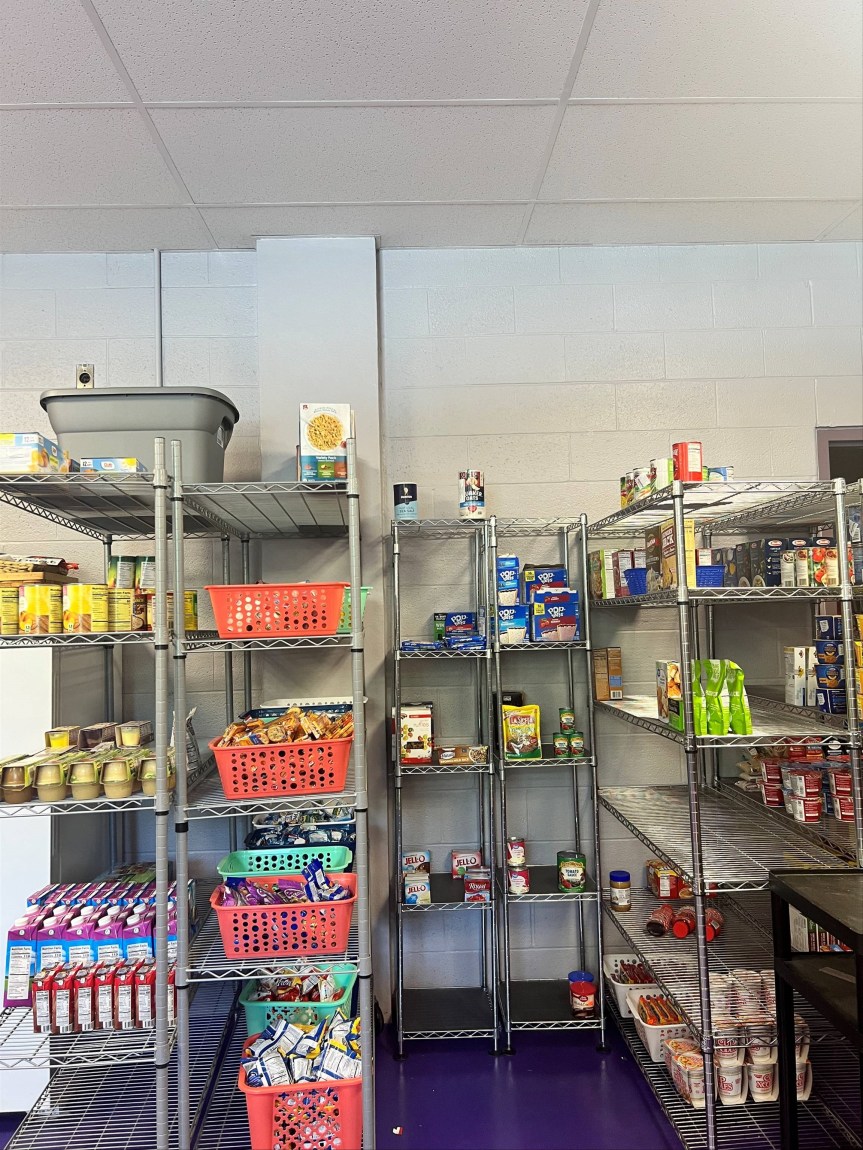
The Lewiston School Department is dedicated to providing educational equity and excellence for all students experiencing homelessness. They have a partnership with the Store Next Door, which provides supplemental services to help eliminate barriers to education for youth and families experiencing high mobility and homelessness, living within Lewiston, by addressing students’ basic needs.  The Store Next Door Project provides tangible items such as new and gently used clean clothing and footwear, winter coats and boots, backpacks and school supplies, underwear and socks, toiletries and hygiene products, household goods and cleaning supplies, laundry facilities, showers, gas cards and bus/cab vouchers, food, Lewiston High School logo items and sports team gear.  Lewiston has used ARP ESSER III funds to refurbish space at the Longley building to offer student support services- currently the home base for the Store Next Door. This space will provide a much needed opportunity for students to access resources including academic support services, counseling, food services, clothing assistance, community resource information, and more.

The Lewiston School Department also hosted outreach events to connect with families during the summer months,  using ESSER funds. Canvas and event outreach has offered opportunities for school staff to check in on and stay connected with our identified homeless youth and their families as well as promote summer student support services and academic opportunities.

ARP Funds Allow RSU 13 to Provide Summer Programming for Families

RSU 13 has been prioritizing the use of federal American Rescue Plan (ARP) funds to support summer learning for students across the district.  This FREE summer programming began districtwide for students entering first through ninth grade last year and provides 16 days of engaging learning opportunities (four weeks of four days each week) through the entire month of July.  

RSU 13 recognizes how impactful the pandemic has been not only on district staff and students, but on the families as well, and this became part of the rationale for dedicating energy and effort to running FREE summer programming that allows students additional time to learn and parents some additional time to work for the past two years.  The district hopes to continue summer programming through the life of the grant funds, which will include the next two years as well.  If the success and interest continues from there, the district hopes to develop a sustainable plan for a low cost summer programming option for families.

The overarching summer programming goal is as follows: To provide students with a safe and enriching learning environment where they can take advantage of engaging hands-on learning opportunities and real-life learning experiences in order to prevent summer slide and continue to build meaningful relationships with their peers and caring adults within their school.  Skills to be elevated include skills outlined in the guiding principles that are noted in the following “4 C’s” Communication and Collaboration; Creativity and Problem-Solving; Citizenship /Community-Building; Critical Thinking

Last year when parents were asked in a family survey at the end of programming what they would tell others about the program, they shared:

Kids are learning but this is extremely beneficial for those kids that struggle with every day text book learning. I really enjoyed the hands-on part of the program but also these kiddos got to see what we have right here in our great little community.”

“The program was wonderful and just the right amount of fun and education to avoid the summer slide.”

“My son was so enthusiastic about how wonderful his teachers were and how nice they were. It redeemed the ‘fun factor’ of school for him after a challenging year. He is excited to go to school again!” 

“It was a wonderful opportunity for children to spend time engaged in creative, non-traditional learning experiences, and adventures with fellow students. It was a great way for the kids to get to know other students in different classes, an opportunity that is rare in the day to day during regular school year.”

One staff member last year stated:

“Thank you for giving our students the Summer Program…we have built more schema than I could have imagined.  The students dug for fossils and learned about chemical reactions…They discovered that the Asian Rock Crab is along our coastline…They were actual scientists…They had the opportunity to sit in the pilot’s seat of an airplane and not only learned about how important the job of a pilot is, but the mechanics, dispatch, and the mowing crew who have to keep the grass short so that wildlife do not put the aircraft in danger….Many had NEVER been to a museum before and were vocal about that…I wanted to take the time and let you know that it was an incredible experience for all of us.”  

One major highlight of the programming are the field trips and partnerships with local businesses and organizations that students get to experience.  Summer and afterschool programming have been paving the way for increasing school and community partnerships.

South School Summer Camp is supporting 40 students from South School Elementary, entering 1st-5th grade, Mon-Thurs 9am-3pm. Each week students experience art with local teaching artists Susan Beebe, smoothie making, nature walks, Build-it challenges, gardening, wacky slime making, sports, beach time, and weekly visits to The Coastal Children’s Museum with themes of geology, topography, marine life, and environmental awareness.

Thomaston Grammar School, Cushing Community School, and Ash Point Community School are supporting a total of 101 students with 12 attending Cushing, 48 attending Thomaston, and 41 attending Ash Point Mondays through Thursday from 8:30am to 12:30pm.  Students entering K through 5th grade in the coming year spend their summer mornings surrounded by peers, having opportunities to engage in a variety of activities. The programs are staffed fully by educational staff, both teachers and ed techs, and each day of programming the schools either have fun home-based activities,  a guest organization visit, or an engaging field trip. Partnerships include Herring Gut Coastal Science Center, Owl’s Head Transportation Museum, CMCA & Farnsworth Museum, Cardinal Cove Mini Golf, Flagship Cinema, Mad Science of Maine, and Mr. Drew and his Exotic Animals.

“We are grateful to have such a vast array of local organizations with a deep commitment to student learning and growth right here in the Mid-Coast. Our partnerships help us to enrich the student experience and provide pathways to explore various interests, while also strengthening local pride and community connection. The 101 students participating in the district programming across TGS, CCS, and APCS this year were also supplied free breakfast and lunch all days of programming through RSU13. It was a collaborative effort that came together so spectacularly, a truly special experience we hope to continue in the future,” says Laura LaPointe, District Coordinator.

The Flanagan Center Summer Experience Camp is supporting 30 students from Oceanside Middle School and Oceanside High School (incoming 6th through 9th graders), Mon-Thurs 11am-4pm.  Each week students engage with their community downtown and beyond, through engaging field trips to local organizations and businesses in areas of art, science, technology, cooking, outdoor exploration, and entrepreneurship.  Weekly excursions have included visits to The Apprenticeshop, CMCA, Mid-Coast School of Technology, Friends of Maine Coastal Islands, WRFR Radio, Owls Head Transportation Museum, Sail, Power & Steam Museum, Aldermere Farms, Merryspring Nature Center, Farnsworth Art Museum, Northern Vertical Rock Climbing and The Landing Place. 

It is no easy lift to coordinate food service, transportation, and staffing for this level of programming, but the district’s dedicated staff and the local partnering businesses and organizations continue to prioritize students.  Sarah Rogers, RSU 13 21st Century Grant Program Coordinator, and Laura LaPointe, RSU 13 Afterschool and Summer Program Coordinator, oversee both summer programming and afterschool programming across the district.  All programs are currently grant funded. For even more pictures, check out the RSU #13 Afterschool Programs Facebook Page.

A Year of Success and Innovation: Rethinking Responsive Education Ventures at MSAD 60

The first round of RREV (Rethinking Responsive Education Ventures) Awardees were announced in August of 2021. RREV is an initiative of the Maine Department of Education, funded by the Education Stabilization Funds through the US Department of Education’s Rethink K-12 Education Models, that bolsters Maine educators’ innovative efforts to support their students with agile, effective, and resilient learning experiences that improve learning outcomes for all students. Now, after a year of experience and development, the Department of Education would like to thank the awardees for their dedication to innovative education and highlight their achievements that have resulted from the RREV contracts over the past year. Continue reading to learn more about the ways in which MSAD 60 has used their RREV funding this past year.

After being forced online at the start of the pandemic, MSAD 60 has chosen to embrace remote learning as a pathway for some students rather than await its end. Last year, they created Noble Virtual Middle School (NVMS) as an option for students looking to continue remote education as the district moved back to in person learning. Since receiving their RREV funding in August 2021, they have been able to transform the learning experience for students in NVMS through their pilot project “Be Well Connected,” which is helping to create mentally and physically healthier students with stronger connections and relationships with their peers. The program focuses on building social emotional learning and a whole person wellness outlook through field trips, enrichment, and teambuilding.

Over the last year, educators have seen amazing progress and growth in their students. Brigette Dumont, NVMS Director, says this year has been “phenomenal.” One student who historically has been academically capable, but quiet, has come out of his shell. In NVMS, he laughs and makes comments in class, feeling connected to his classmates, whereas before, he always kept to himself. This student is just one example, but the growth can be seen in every student. “Students came together as a community. The intentional investment of time paired with risk taking really helped break down walls and helped them all have a voice,” Dumont says.

A big part of this growth came from the enrichment activities the students had, which greatly increased student engagement and involvement. For one hour each Friday, students would meet in enrichment clusters that were geared toward their interests. The theater enrichment cluster worked on creating a play, while the computer science cluster spent time coding. One student-favorite group was a student created and led Dungeons and Dragons cluster. These students spent their time creating characters and playing through campaigns led by a student Dungeon Master using tools from the D&D Beyond website. As a final project, students created their own campaign including maps, characters, a plot, and more, which they then presented to the class and posted to D&D Beyond for others to use. They enjoyed the freedom they had to explore their creativity and were able to have fun while learning. While many people may just think they were just kids having fun playing a game, the enrichment cluster was much more than that. The communication skills these students developed, Dumont says, were beyond the skills that are typically developed in the classroom, and they gained more self-confidence because they were so engaged in their collaborative work.

In the coming year, the school plans to build on this work. They have hired a wellness counselor who will start at the beginning of the new school year in September to provide much needed mental health support to help students manage trauma and anxiety. Dumont says they are “looking forward to having someone help in acute moments with students.” The district looks forward to providing students with strategies to manage mental wellness and developing a more solid approach to bring mental health resources to their students.

students at desksThe school also hopes to offer the students of NVMS two in-person days a week. This will allow the school to increase field trips and enrichment opportunities as well as encourage growth throughout the community. By building stronger connections with community partners and local businesses, the district plans to provide students with more real-world applications for their learning and better utilize nearby resources.

Martin Mackey, the former RREV Project Director who tragically passed away in April of this year, embodied the RREV spirit: to think and act boldly to meet the needs of students. His passion was to “change lives.” As such, he challenged each and every RREV participant to do just that as they designed pilot ideas that would ultimately have a lasting systemic impact on students.  After 18 months of leading RREV, Martin’s passion had been passed on to almost 200 educators who had participated in innovation professional development. From those educators, 27 Pilot ideas were brought to fruition and have received over $5.7 million in RREV awards. Through their pilot ideas, these educators have pledged to commit themselves to innovation.

The Maine DOE encourages all schools and districts across the State of Maine to learn more about these innovative educators and their RREV pilots through the RREV website and the online RREV collaborative platform known as EnGiNE. It is through EnGiNE that we all hope to continue the Martin Momentum to change students’ lives through innovative and responsive educational programs.

Students Learn About Camping and the Outdoors at LearningWorks’ 21st Century Program in Saco

This summer, LearningWorks’ 21st Century Learning Center in Saco is hosting students entering grades K-2 for a summer program focused on camping and the outdoors.

Students practice math, literacy, and STEAM (science, technology, engineering, arts and mathematics) skills while learning practical skills for spending time outside. Students learned to pitch tents, made a solar oven for cooking without fire, and collected leaves and sticks for art projects.

Each student is keeping a nature journal to document their observations and findings. In the next few weeks, students will learn to identify leaf shapes, recognize animal tracks, and use a compass. The program is also planning on visiting a fire station to learn about outdoor fire safety and taking a nature walk to apply some of the skills they have learned in a real-world situation.

“Students have loved spending time outdoors and have been able to put into practice what they are learning when going outside with their families this summer,” said Colby Senior, Saco and Biddeford Site Director for LearningWorks Afterschool and 21st Century Community Learning Centers.

Funded through the U.S. Department of Education’s Nita M. Lowey 21st Century Community Learning Centers (CCLC) program, Maine currently has 35 CCLC grants and 61 CCLC sites across Maine that provide academic enrichment opportunities during non-school hours for children, particularly for students who face economic and/or academic challenges. With strong community partnerships at the core of every one of its programs, Maine’s 21st Century Learning Centers help students meet academic goals and offer a broad array of enrichment activities, in addition to other educational and engagement opportunities for communities and families. Learn more about Maine’s CCLC grant opportunities at https://www.maine.gov/doe/learning/esea or reach out to Travis Doughty at travis.w.doughty@maine.gov.
 

A Year of Success and Innovation: Rethinking Responsive Education Ventures at MSAD 28

The first round of RREV (Rethinking Responsive Education Ventures) Awardees were announced in August of 2021. RREV is an initiative of the Maine Department of Education, funded by the Education Stabilization Funds through the US Department of Education’s Rethink K-12 Education Models, that bolsters Maine educators’ innovative efforts to support their students with agile, effective, and resilient learning experiences that improve learning outcomes for all students. Now, after a year of experience and development, the Department of Education would like to thank the awardees for their dedication to innovative education and highlight their achievements that have resulted from the RREV contracts over the past year. Continue reading to learn more about the ways in which MSAD 28 has used their RREV funding this past year.

When MSAD 28 (Camden-Rockport Schools) first received funding in August 2021, they wanted to create outdoor learning spaces and offer programming for students and teachers that would enhance their educational experience, an idea that was informed by research regarding the positive impacts of outdoor learning. However, like most organizations (and people), MSAD 28 encountered some issues as they navigated their way through the pandemic. The implementation of their RREV project over the past year has been impacted by labor shortages and supply chain issues, and the creation of outdoor structures for classes was put on hold. However, even with delays in their plans, the district still found enormous success. Despite not having outdoor structures as soon as they planned, educators were still able to teach outside, and the district found great success in their community collaboration model.

In the fall, they introduced their first Pre-K program grounded in nature-based learning experiences for young children. While the district had been hoping to create a Pre-K program since 2017, the RREV funding provided the opportunity to implement it. Last school year, MSAD 28’s first Pre-K class started school in an entirely outdoor-based program. “They are learning the letters and they are doing it all outside, despite the weather,” Assistant Superintendent Debra McIntyre said. According to her, the impacts that the outdoor education has had on students is profound. The growth they have seen in them, she said, is “unbelievable.”

It’s not just Pre-K classes that are taking their learning outside, though. Every single teacher and student had at least one class outside at some point in the year, even without outdoor structures to teach and learn in. The effects of the outdoor learning, McIntyre says, are evident throughout the student body, as being outdoors has helped lessen many behavioral concerns.

McIntyre believes none of it would be possible without their collaborative model, though. “Collaboration is essential,” she said, “It has been the underpinning to support the work.” The district has collaborated with regional organizations including Hurricane Island, to provide ongoing professional development and coaching to prepare them to teach outside. Teachers use these community collaborators as experts, co-planning and co-facilitating student learning activities. McIntyre believes this “residency” model provides the expertise, support, and confidence the staff needs to make outdoor learning a common part of curriculum.

Moving forward, the district is excited to construct the outdoor spaces and classrooms before the June 30, 2023 funding deadline and continue providing opportunities for their students to learn through play, exploration and have opportunities to utilize a variety of tools and materials to enhance and extend their learning. They also look forward to continuing with the partnerships, collaborations, and connections they have created throughout this year to provide their students the most beneficial and experiential education possible.

Martin Mackey, the former RREV Project Director who tragically passed away in April of this year, embodied the RREV spirit: to think and act boldly to meet the needs of students. His passion was to “change lives.” As such, he challenged each and every RREV participant to do just that as they designed pilot ideas that would ultimately have a lasting systemic impact on students.  After 18 months of leading RREV, Martin’s passion had been passed on to almost 200 educators who had participated in innovation professional development. From those educators, 27 Pilot ideas were brought to fruition and have received over $5.7 million in RREV awards. Through their pilot ideas, these educators have pledged to commit themselves to innovation.

The Maine DOE encourages all schools and districts across the State of Maine to learn more about these innovative educators and their RREV pilots through the RREV website and the online RREV collaborative platform known as EnGiNE. It is through EnGiNE that we all hope to continue the Martin Momentum to change students’ lives through innovative and responsive educational programs.

New England FFA State Officers Gather in Vermont

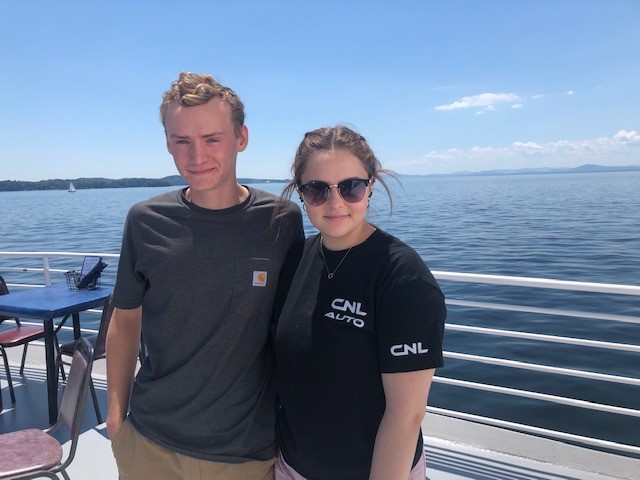
Pictured: Maine FFA State Vice President and State President enjoy Lake Champlain Boat Tour during regional FFA training in Vermont.

On June 26-30, 2022, twenty-two student State Officers of the FFA—formerly known as “Future Farmers of America”—from the states of Connecticut, Maine, New Hampshire, Rhode Island and Vermont gathered in Middlebury, Vermont to learn about workshop development and presentation techniques, as well as communication skills to implement during their upcoming year of service for their nearly 5,000 FFA members grades 7 to 12. Among these Officers were Nickie Deschaine, Maine FFA State President and Lane McCrum, Maine FFA State Vice President.

FFA members are students enrolled in classes/programs related to agriculture and natural resources at schools with registered FFA chapters. This training was supported by the sponsorship of the Northeast Agricultural Education Foundation, Farm Credit East, and the National FFA Organization. As the largest student-led organization in the country, with over 735,000 members, FFA relies on its State Officers to implement programs for local FFA members, raise FFA member awareness to opportunities in agriculture, natural resources and the FFA and represent their members at various in-state, regional and national events.

The Vermont training took place at the North Campus of the Patricia A. Hannaford Career Center in Middlebury and was facilitated by past National FFA Officers David Lopez (California) and Paxton Dahmer (Missouri), with additional motivational sessions conducted by current National FFA Southern Region Vice President Erik Robinson (Georgia).

Guest presenters Ben Leduc, Loan Officer, and Courtney Bronson, Tax Associate, spoke on the work of Farm Credit East and potential job opportunities for students. FFA Officers participated in a number of highly engaging sessions, enjoyed some outings to local restaurants and locations of interest (such as Crown Point State Historic Site in New York).

Officers commenting on the workshop noted that the main highlight was the chance to return to an in-person opportunity to get to know their peers from other New England states. They left the training indicating significant gains in both their confidence levels and technical abilities associated with developing and implementing workshops. Officers praised the training efforts of both facilitators and the National FFA Officer. Accompanying students were 9 adults from the New England FFA community, including the State Advisors from each of the five participating state programs.