Lincoln Elementary School Goes Above and Beyond to Keep Students Engaged in Reading During the Summer

This spring, Augusta School Department’s Lincoln Elementary School recorded videos of each of their teachers and staff members reading a book out loud and then posted it to their school Facebook page for students, parents, and families to enjoy. This effort was part of a read-a-thon initiative to keep kids engaged with reading and literacy activities over their week-long vacation in April.

With 25 videos posted over April break and hundreds of views by students and their families, they decided to expand the effort into the summer months and include community members as guest readers. “We have made an effort to post at least one video every day this summer,” said Lincoln Elementary School Principal Heather Gauthier. “Between June 14th and August 28th when school is back in session, we will have done over 75 videos, many of them with 200+ views on Facebook and YouTube, and positive engagement from parents and community members.”

Their guest readers include everyone from teachers, school administrators, staff, and education technicians to police officers, school board members, local authors, former students, local government officials, and even Maine DOE’s very own Lee Anne Larson, Early Learning Team Coordinator.

“We have received a lot of great feedback from community members who have been engaged and parents who have benefited from the videos,” said Heather. “One parent told us that she puts the videos on while she cooks dinner so that the kids can watch and listen to books while she is busy cooking.”

What started as an effort to keep students reading over the summer months has turned into a summer reading activity that has been successful in engaging students, parents, and community members alike.

Heather says that they plan to keep the guest reading videos going for as long as they can and hopes that people keep enjoying and watching them. Check out the Lincoln Elementary School Department’s videos on YouTube. Find Lincoln Elementary School Department on Facebook.

This article was written by Rachel Paling, Maine DOE Communications and Outreach Manager in collaboration with Lincoln Elementary School Principal, Heather Gauthier. If you have story ideas for the Maine DOE’s Maine Schools Sharing Success campaign, contact Rachel at rachel.paling@maine.gov.

Maine Reaches Federal Milestone in Special Education

Maine is proud to be one of 20 other states in the nation to meet federal requirements for serving the needs of children with disabilities. This rigorous effort was led by the Maine Department of Education (DOE) Office of Special Services.

Under the Individuals with Disabilities Education Act (IDEA), states are required to report each year to the US Department of Education regarding their progress in meeting “measurable and rigorous targets” to serve students with disabilities. This determination is based on how well schools address the needs of children with disabilities. As part of the review process, Maine and other states were evaluated based on several factors, including student performance and fulfilling IDEA’s procedural requirements.

Members of the Special Services Team at the DOE have been hard at work to partner with and support schools to ensure the quality of education for disabled students in Maine continues to improve. Their strategy has been to identify areas where the state has struggled and use targeted professional development and collaboration with district administrators and teachers to improve those areas. Child Development Services has also been utilized to enhance support for children with disabilities from birth to the age of five. As part of a broader Department-wide effort, this strategy has helped to further emphasize student support and achievement.

One, among many other, contributing factors for the 2019 review, was the increased amount of Maine students with disabilities who participated in standardized testing compared to the previous year. The state receives full points from the federal government if at least 90% of students with disabilities participate in standardized testing.

“We’ve been working really hard to make sure the Department is providing the support needed to help schools improve their practices with children with disabilities,” said Jan Breton, Acting Director of the Office of Special Services. “It takes a strong team of people, both here at the Department and in the field, to make sure that our State is meeting these requirements,” she added.

The commitment and collaboration of students, families, educators, and the Maine DOE has enabled Maine to meet requirements by several percentage points. Additionally, the support and guidance that enables students with disabilities to make smooth transitions from secondary school to post-graduation living has also improved, and the dropout rate for students with disabilities has decreased. With more Maine students receiving their diplomas, these young people can expect improved employability and a wider spread of higher education options after high school.

This milestone gives the Department the opportunity to refocus efforts on collaborative and student-focused growth, as well as areas in which Maine has not yet scored full points as part of the requirements. One example is around the team’s efforts to improve the state’s federal ratings for math scores through the Math4ME program. This program is grounded in hands-on activities and interactive professional learning experiences that allow participants to gain a deeper understanding of core concepts of mathematics and strategies. The program focuses on students with disabilities in grades 3-8.

Maine’s special education professionals are passionate and dedicated in their daily work to improve the lives and outcomes of children with disabilities. With our strong team of professionals here at the Maine DOE and our valuable partnerships with educators, administrators, families, and stakeholders statewide, we hope to continue our important work toward ongoing growth, improvement, and alignment in special education in our state.

Innovative New “Experiential” Educator Training Takes Center Stage

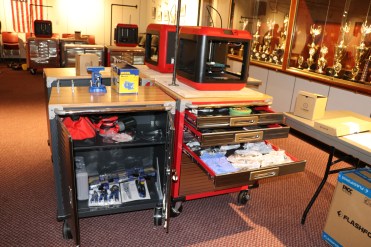
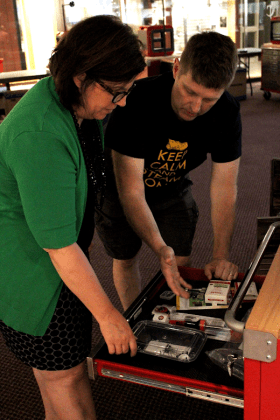
Course Instructor Keith Kelley and EMMC President Lisa Larson looking through a STEAMRoller cart included with the course.
Course Instructor Keith Kelley and EMMC President Lisa Larson looking through a STEAMRoller cart that is included with the course.

In a four-day educator training that took place last month at the United Technology Center (UTC) in Bangor, 14 educators from across Maine gathered for a unique professional development opportunity offered through a partnership between two educators from RSU 19, Eastern Maine Community College (EMCC), and UTC that aims to help educators integrate advanced technology and experiential learning into every lesson plan, and to help fill the workforce gap in Maine.

Utilizing a $50,000 grant that EMCC President Lisa Larson obtained through the Maine Community College System, the 3 credit Introduction to Experiential Teaching through Technology course was offered as an opportunity for educators to “learn practical learning experiences to integrate traditional and newly advanced technologies into project biased lesions,” similar to the teaching methods found in career and technical education (CTE) settings throughout the state. The idea is to bring the experiential teaching philosophy to classrooms long before the high school CTE experience. The earlier integration of experiential learning gives students a taste for possible career paths but just as importantly, learning experiences that allow them to utilize and understand the advanced technological tools of their future and to utilize and exercise their own problem-solving and management skills.

The course was led by RSU 19 educators, Keith Kelley and Kern Kelley who are brothers, partners, and advocates for integrated experiential student learning. It provides classroom teachers, at any grade level and of any subject matter expertise, with not only the tools but also the mindset and methods to teach project based and integrated lessons to their students. This type of learning environment provides students with real-world, problem solving experiences with technology, bringing full circle the content areas that make up the very well-known acronym STEAM (science, technology, engineering, art, and math).

The STEAMRoller Cart includes: Seville Classics UltraHD 2-Door Rolling Cabinet and a 6-drawer Rolling Storage Cabinet, Vise, Portable Vise Table, Power Strips, Cordless Orbital Hand Sander, Corded Orbital Hand Sander, Power Drill, Impact Power Drill, Rotary Dremel Tool, Irwin Clamps, Kobalt 100-Piece Household Tool Set with Hard Case, Hand Tool Bag, Hammer, Locking Pliers, Tape Measure, Speed Square, Spade Bits, Flash Forge 3D Printer, 3D Printer Tool Set, Frog Tape, Duct Tape, Rocketbook, FriXion Pens, iPod Touch & Case, Tripod, Raspberry Pi, Soldering Iron, Scrappy Circuits, Safety Goggles, Disposable Gloves, Breakout of the Box DRAWER, and a Breakout EDU Kit.

Each educator’s school paid $381 total for the four-day hybrid course that includes the four in-person sessions, bi-weekly reading and reflection assignments and online discussions and provides educators with contact hours plus 3 college credits, in addition to a “STEAMRoller” cart of hardware and equipment valued at over $2,000 each. They will also each have the opportunity to host a STEAMRoller bus for a day at their school, which includes an experiential student conference provided by course instructors and their partners. At the student conference, educators and students will be able to participate in a day filled with breakout sessions on various topics such as 3D printing, drones, and virtual reality to name a few.

Hermon High School Principal Brian Walsh is excited that one of his 9th grade science teachers is attending the course this summer so that he can share his knowledge and the tool kit with the other 9th grade science teacher so that they can integrate hands-on project-biased learning experiences, not just to 9th graders but throughout the high school as well. Walsh has felt a void where they were unable to fill an industrial arts position in prior years and hopes this will help bring new STEAM learning experiences, career pathways, and experiential opportunities to the students at Hermon High School.

educators looking at a computer screen togetherTonya Therrien, Benton Elementary 5th Grade teacher decided to take the course with the hopes of bringing back to her classroom, “a way to utilize technology more with the kiddos, beyond just using it for research.” She wants her students to know how to use technology as a tool. When asked what she thought of the training so far, she said, “this is probably the most worthwhile class I’ve ever taken, and I’ve taken a lot of classes.” She then added that she has two master’s degrees which both required a fair amount of coursework.

Aaron Pody, a high school Life Sciences teacher from RSU 18 came to the class to learn about ways to teach the content with more relevance to his students. He has been pleased to find that there are ways to bring technology into the classroom that are not cost prohibitive.

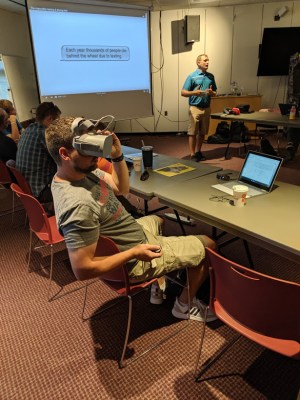
educator wearing VR gogglesRSU 26 educator Karen Frye from Orono was excited to bring back what she has learned at the course to provide her gifted and talented students with the rare opportunity to do some hands-on problem solving, which will further enrich their learning experience and give them some problem-solving skills.

The 3-credit course and the STEAMRoller bus events are intended to give participating educators and schools a taste of experiential learning methods, along with emerging technologies, tools and resources. The course is expected to be followed up by an Experiential Education certificate program that EMCC is expected to launch in January of 2020. The new program aims to provide the state with educators that can help fill the growing workforce gap in technologically skilled workers.

The launch of the experiential training was deemed a success by organizers and participants alike. The innovative approach to an obvious need has the potential to further help Maine schools lead their students toward successful career choices, experience with problem-solving, and the ability to successfully navigate the technology of our future.

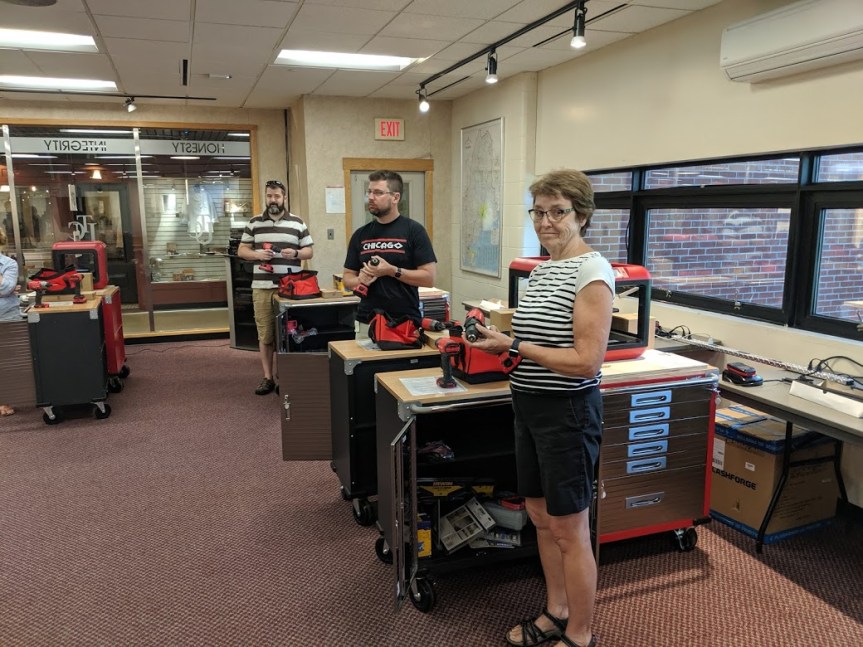
Educators standing with STEAMRoller Carts

This article was written by Rachel Paling in collaboration with course instructors Keith and Kern Kelley, and staff at both UTC and EMMC. If you have story ideas for Maine DOE’s Maine School’s Sharing Success campaign, please contact Rachel Paling at rachel.paling@maine.gov.

Students Engaged in STEM Challenges at Blue Hill Consolidated School’s Summer Program

Submitted by Dawn McLaughlin, ESEA Coordinator & Curriculum Coordinator at School Union 93.

For two weeks, twenty students of Blue Hill Consolidated School have been participating in a Title 1A Summer School, taught by Ms. Bradford and Ms. Longley. Summer School is being held at George Stevens Academy, with students ranging from grades K-8. Morning early sessions focus on Reading and ELA, and later morning is focusing on Math and STEM. Much of the student work is hands-on, and students are highly engaged.

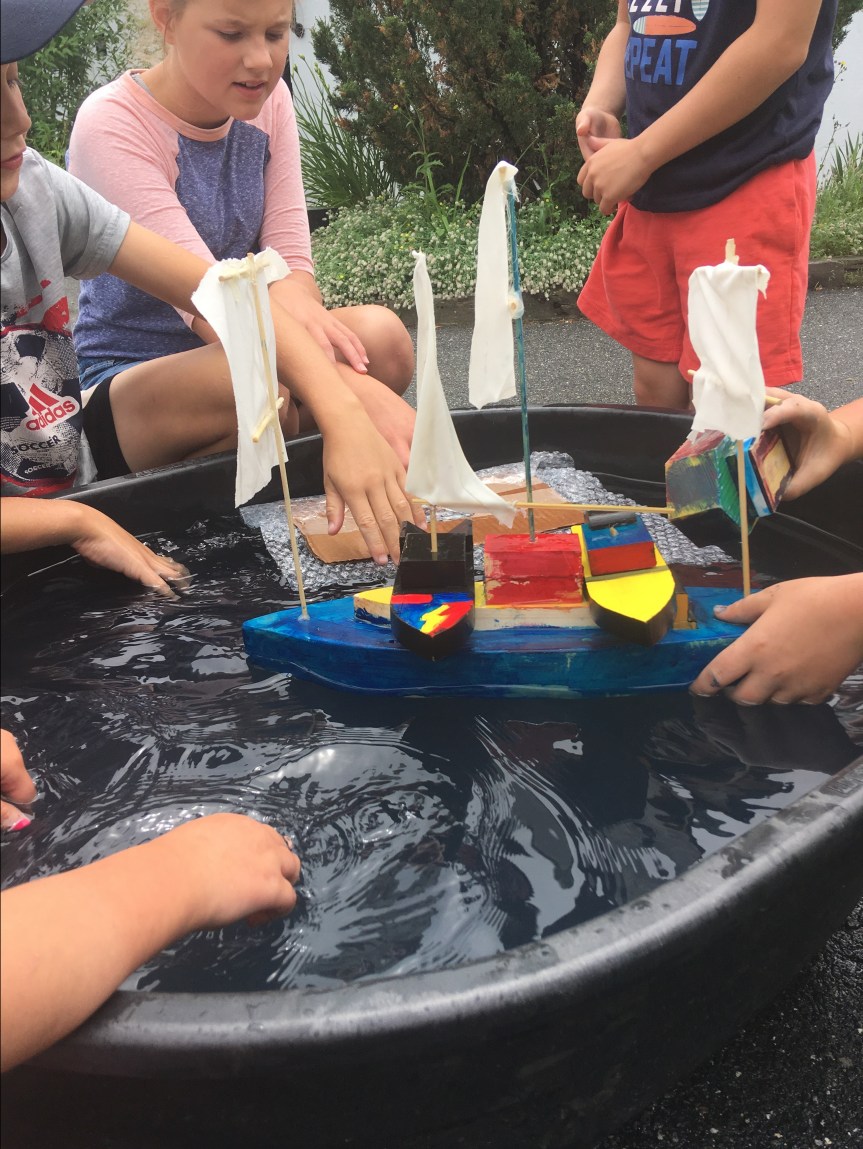
Much of the read aloud fiction is tied in with the STEM challenges. Last week’s theme was Water Week. Students read boat themed books like Who Sank the Boat? by Pamela Allen and Toy Boat by Randall de Seve. Students created their own boats out of reusable materials and pieces of wood. Younger students added plastic animals one at a time to see how many animals their boat could hold. Older students used keels and sails to balance their boats thinking about ideas like center of gravity and weight.

WCC Educator Profile: Mike and Jeanne Beal

The Washington County Consortium, Washington County Educator Profile submitted by Sarah WoogExecutive Director of the Washington County Consortium.

Meet Mike and Jeanne Beal, retired educators who, combined, have served students and communities in Washington County for almost a century (96 years and counting)

When I met Mike Beal, the first question I asked him was “Do you know you’ve inspired Ron Ramsay (Superintendent, MSAD 37)?” Mike replied, “Do you know he inspired me?” Mr. Beal was Mr. Ramsay’s teacher, Principal, and coach at S.S. Nash School in Addison back in the sixties. What Mr. Beal was expressing in his retort was a guiding principle I discovered defined his long and illustrious career in education: allow the children to inspire you.

Ron Ramsay, and Lorna Greene, Principal at D.W.Merritt School, both recommended I profile Mike. Lorna shared in an email “His wife is delightful as well, she has also been a teacher, a school volunteer and a loyal supporter of children, SAD #37 schools, and education. You may want to interview them as a couple. They certainly are cherished and admired educators in our area. I hope this helps.” It did. I was excited Jeanne joined us for our conversation at the Bluebird Ranch Restaurant in Machias, and together they painted a beautiful picture of their lives as educators and with poignant reminders of why we do what we do.

Mike and Jeanne started their careers in education in the early sixties. They met in high school and married in 1960 while they were in college. Mike went to Jonesport High School and Jeanne went to high school on Beals Island when there was still a high school on the island. There was no bridge linking Beals Island and Jonesport then. They both graduated from the University of Maine at Machias (UMM). Jeanne took longer to graduate because she took every other year off to earn money to pay for college, while Mike had a basketball scholarship (he’s in the Hall of Fame at UMM), and finished in four years.  Their early days together is a Downeast love story. They fell in love young, discovered a shared a passion (education), and worked hard to piece together a life in service to others. 

They served, and they inspired. Mike’s impact is best expressed in the email Ron Ramsay sent to me in preparation for my interview with Mr. Beal. Mr. Ramsay shared:

    Looking back on my years as a student at the S.S. Nash School I have nothing but great memories of my times with Mr. Beal. He coached and mentored us all day, every day. When we had recesses we spent our time playing basketball and baseball while learning through his example how to be a good, honest, caring human being. Mr. Beal always played, directed the game, coached, encouraged, and just simply made it fun. Everyone wanted to participate and everyone learned from their experiences. Mr. Beal was enthusiastic and it inspired all of us to do their best. Everyone had great respect for Mr. Beal at all levels of his teaching, coaching and administrative career. You as a student wanted to perform well because you didn’t want to disappoint him. He cared deeply about all of his students. Mr. Beal’s contributions to our schools are legendary. His contributions to the individual students that he has taught and coached are beyond measure. I feel blessed that he was my teacher, coach and Principal and that he coached me in Elementary school and in High School and that he coached both of my boys during their elementary years. Mr. Beal has positively impacted generations of children.

Mr. Ramsay’s description of Mr. Beal agreed with how Mr. Beal saw his years in education. Mike emphasized his constant engagement with children when he was a teacher and administrator. He saw all interactions as opportunities for impact, and as moments of inspiration. As an administrator, he met every bus at the beginning of the day. He used trauma-informed practices before we in education talked about “trauma-informed practices.” Meeting students first thing allowed him to reach out to a tired student, or see that a student was having a hard time before it translated to disruptive or disengaged behavior. He was always out during recess, and admitted to occasional snowball fights. But even in this admission, I saw what Ron had described when he said he learned from Mike how to be “a good, honest, caring human being.” During the snowball fights, projectiles weren’t thrown at short distances, and didn’t hit faces. He modeled good, honest, caring fun. 

Mike’s wife, Jeanne, has been a caring educator all of her life too. She was Ron Ramsay’s first grade teacher. He shared, “She gave me the greatest gift of all… she taught me how to read.” Jeanne taught generations of youngsters to read.  After she retired, she went back to be an Ed Tech in Special Education to teach struggling students how to read. She was proud to share that the students she worked with were always readers by the end of their time together. She continues to support reading in schools and volunteers to read to Kindergarteners weekly. Jeanne’s love of teaching is not only academic. She treasured, too, the relationships she had with children as an educator. Jeanne remarked, “Children have to have someone to look up to. Love what you’re doing and children. You (as educators) are the guardian or parent many of them do not have.”

I wanted to profile Mike and Jeanne Beal because, going into the new school year, I was eager to celebrate educators who would inspire us. They certainly have inspired me and I am confident their years of service and lessons in love can provide inspiration for us all. I am grateful for the time I spent with them. But I think the message we can glean from their lives in service, and the message they celebrate, is that we should find inspiration in the children with whom we share time. We can learn from them how to be more effective and fulfilled educators. Our own development is integrally woven into our time and engagement with our students. Actually, Mr. Beal said it best: “Every kid is different and you have to be different to get to every kid.”

Downeast School Teachers and Staff Distribute Books to Children via Bicycle Library

Submitted by Kathy Harris-Smedberg, Assistant Superintendent of Schools, Bangor School Department.
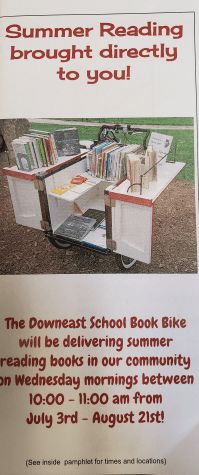
Summer Reading Brought directly to you! The Downeast School Book Bike will be delivering summer reading books in our community on Wednesday mornings between 10:00 - 11:00 am from July 3rd - August 21st.

Downeast School teachers and staff are volunteering their summer time to distribute books to the children of Downeast School via the bicycle library.

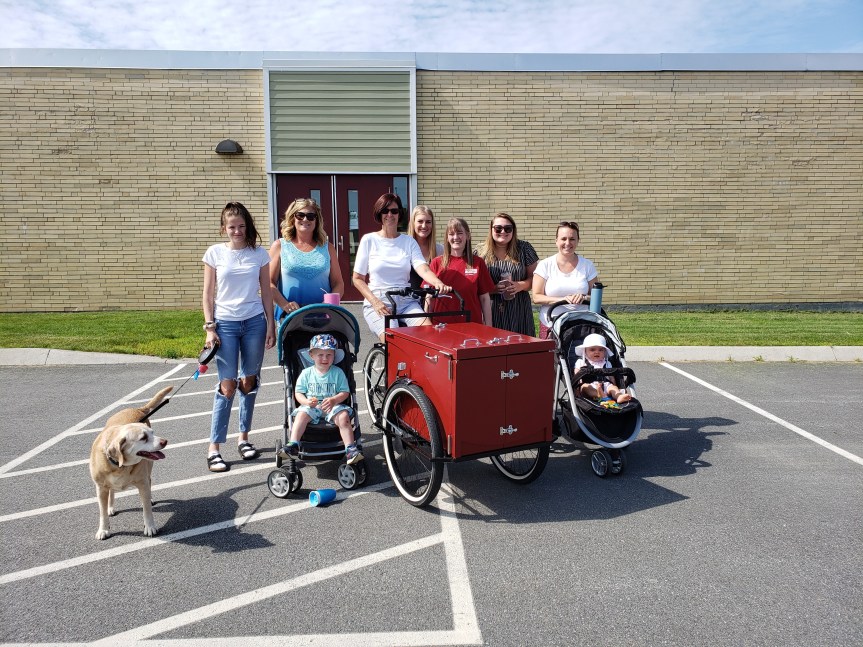
Pictured: Stephanie Seccareccia, kindergarten teacher; Kim McNutt, librarian; Tina Hinkley, secretary; Ashely Enright, grade 2 teacher; and Melissa Metivier, speech pathologist alongside community members.

These dedicated faculty and staff make four stops in the neighborhood, passing out books, helpful reading strategies parents/guardians can do at home with their children, and information about school and learning. The Bangor School Department strongly believes in the value of reading and strives to find a variety of ways to ensure that children are never without a book.

UMFK/UMPI nursing program sees busy first year, doubles slots for fall

Following a successful first year of the University of Maine at Fort Kent’s bachelor of science in nursing degree program delivered at the University of Maine at Presque Isle, and as part of continued efforts to address the statewide nursing cliff, officials are doubling the number of slots for fall 2019.

The nursing expansion in Presque Isle is part of the University of Maine System commitment to doubling nursing enrollment over the next five years to address the shortage that is expected to grow to 2,700 vacancies by 2025.

The BSN program, a unique collaboration between UMPI and UMFK, allows students to complete all four years of the UMFK degree on the UMPI campus. Program participants are UMPI students for the first two years and UMFK students for the remaining two years. Courses are delivered by UMFK nursing faculty on the Presque Isle campus, and students graduate with a UMFK degree.

Designed to meet the needs of place-bound students — those who aren’t able to travel to Fort Kent due to family and work responsibilities — as well as to address the region and state’s nursing workforce challenges, the program welcomed a cohort of 16 students in fall 2018.

“While the number of available slots has been expanded to 32, they have been filling quickly, so we definitely encourage people to apply early,” said Stacy Thibodeau, UMFK assistant professor of nursing, who delivers classes in Presque Isle. “We are very pleased with how well the first year of the program went, and we’re looking forward to training the next cohort of future healthcare professionals.”

The program features classes and labs each semester.

“We do clinicals from day one,” Thibodeau said.

Last year, students learned about personal protective equipment, universal precautions, wound care, the mobility and transfer of patients, and how to check vital signs and collect samples. They visited the Maine Veterans Home and interacted with residents as they checked blood pressures, assisted with bed baths, and practiced therapeutic communication.

“We also had a really exciting opportunity to work in conjunction with UMPI’s medical laboratory technology program on a live, hands-on case scenario where we had actual blood from a blood bank and used it to practice hanging IVs for blood transfusion,” Thibodeau said. “Simulations like this are always so impactful. Students were able to practice retrieving blood from a ‘lab,’ patient identification, checking for allergic reactions, and how to prepare and administer blood.”

Thibodeau said one of the most important things that sets this program apart is the way faculty integrate both the art and the science of nursing, the professionalism and the compassion, into students’ learning.

“It’s a very holistic approach to nursing and it prepares students to be more well-rounded professionals when they graduate,” Thibodeau said. “And with their BSN degree, they’ll be ready for leadership roles once they complete the program.”

Free One Year Medical Assisting Program at EMCC

FROM WABI-  As the healthcare industry grows, so does the demand to fill jobs in the field. Eastern Maine Community College is giving students a chance to meet that need – with the help of a free education.

As part of a grant from the Harold Alfond Foundation to the Foundation for Maine’s Community Colleges, EMCC has received funding to offer a one-year Medical Assisting program to 40 qualified individuals at no cost to the students.

The costs associated with tuition, fees, textbooks, criminal background checks, one certification exam, a stethoscope, and set of scrubs will be waived for individuals who qualify for the program.

The One-Year MA program is comprised of a fall semester which begins August 26 and ends December 13, 2019; a spring semester which begins January 13 and ends May 8, 2020; and a summer 160-hour unpaid externship that will begin as early as May 11 and end as soon as all hours are completed. The program will be offered both during the day and in the evening, with some classes available online. Students wishing to participate in this program must be willing to complete courses as scheduled within the one-year timeframe.

Admission will be on a first-come, first-served basis for qualified applicants. There is a two-part application process which includes:

1. An “Application for Admission” to the Medical Assisting (MA) program. This can be completed online at no charge by going to the EMCC website and clicking on “Apply” (the bottom option on the right hand “Get Started” menu.) Candidates will be asked to submit official high school and college transcripts, if applicable; and
2. An “Application for Funding” form that can be found at is http://www.emcc.edu/oneyearMA.

Individuals interested in exploring this opportunity are urged to email admissions at admissions@emcc.edu or call 207-974-4629 for more information.


Shana Goodall Named 2019 Maine History Teacher of the Year

Shana Goodall, a teacher at Orono High School, has been named the 2019 Maine History Teacher of the Year, an award presented annually by the Gilder Lehrman Institute of American History, the nation’s leading organization dedicated to K-12 American history education.

Inaugurated in 2004, the History Teacher of the Year Award highlights the crucial importance of history education by honoring exceptional American history teachers from elementary school through high school. The award honors one K-12 teacher from each state, the District of Columbia, Department of Defense schools and US Territories. In fall 2019, the National History Teacher of the Year will be selected from the pool of state winners.

Ms. Goodall is a lifelong learner, as evidenced by her embrace of technology in the classroom and her continuous quest to find new, engaging ways to present material.  She earned an undergraduate degree in Growth and Structure of Cities from Bryn Mawr College (Bryn Mawr, Pennsylvania) and graduate degrees in teaching and educational leadership from the University of Maine (Orono, Maine).  In her classroom, she creates a flexible environment for all learners to explore history while stimulating, directing, and pacing whole class instruction while at the same time encouraging independent inquiry.  Shana is noted for her sense of humor and laugh, and students view Shana as a mentor and valuable source of information and guidance.

In addition to a $1,000 honorarium, Shana Goodall’s school will receive a core archive of American history books and Gilder Lehrman educational materials and recognition at a ceremony at the annual fall conference of the Maine Council for the Social Studies to take place on Monday, November 5, 2019.

The National History Teacher of the Year Award will be presented by John Avlon, Senior Political Analyst and anchor at CNN, at a ceremony in New York City on October 2, 2019. Past presenters at the ceremony include the Honorable Sandra Day O’Connor, Good Morning America‘s Robin Roberts, First Lady Laura Bush, former US Secretary of Education Arne Duncan, and former New York City Mayor Michael Bloomberg.

Nominations for the 2020 History Teacher of the Year awards are now open. Students, parents, colleagues, and supervisors may nominate K-12 teachers for the award by visiting gilderlehrman.org/nhtoy. The deadline for 2019 nominations is March 31, 2020.

Maranacook Community Middle School Students Among 12 Winners in 2nd Annual Student Podcast Contest

Submitted by Kristen Levesque, Principal at Maranacook Community Middle School

Podcast audiences have grown exponentially in the past few years and so has my enthusiasm for having students extend their writing skills with this new genre.  After many trials and semi-successful experiments, the students have identified and operationalized the attributes of a captivating podcast adventure to the extent that two of them were recently announced as winners of the second annual New York Times Podcast Contest.  Designed for students age 13 to 18, Silas Bartol and Mila Barnes-Bukher, were among the youngest contestants of the 12 winning podcasts.

Class member, Maggie Morrill, deserves credit for the inspiration provided in her original story entitled:  “Alexa, and the Start of the Robot Revolution.” The story was adapted by Silas and Mila to conform to a podcast format based on several weeks of study on “What makes a great podcast.”  All three students were 7th graders at Maranacook Middle School in Ms. Godin’s GT English/Language Arts class when this assignment and contest challenge was undertaken.