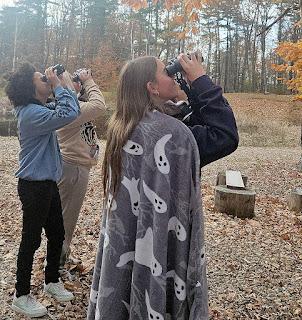
Noble High School Students Dive into Marine Science Through an Extended Learning Opportunity

Students at Noble High School with an interest in marine biology are getting their feet wet—sometimes literally—through a brand-new Marine Science Extended Learning Opportunity (ELO).

This year-long program combines field experiences, expert guidance, and reflective learning to connect students with the vibrant coastal ecosystem that shapes the economy and environment of southern Maine. Through the Marine Science ELO, students participate in off-campus field trips, hear from guest speakers, and explore a range of career and educational pathways related to marine science. The ELO provides students with authentic, hands-on exposure to the field, while helping them make real-world connections to what they study in their science classes.

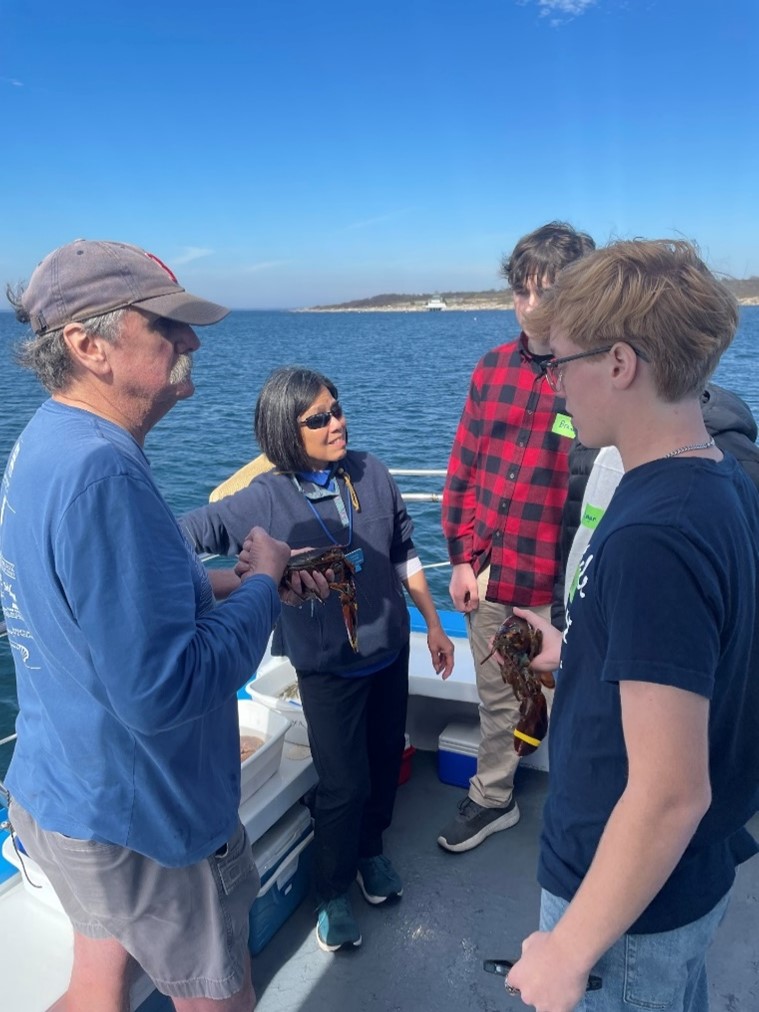
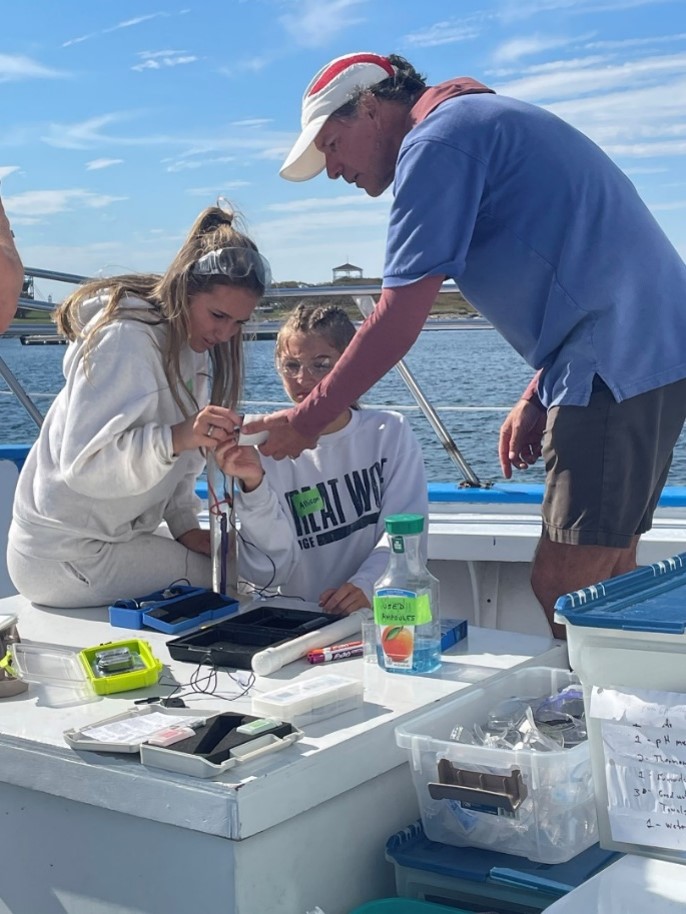
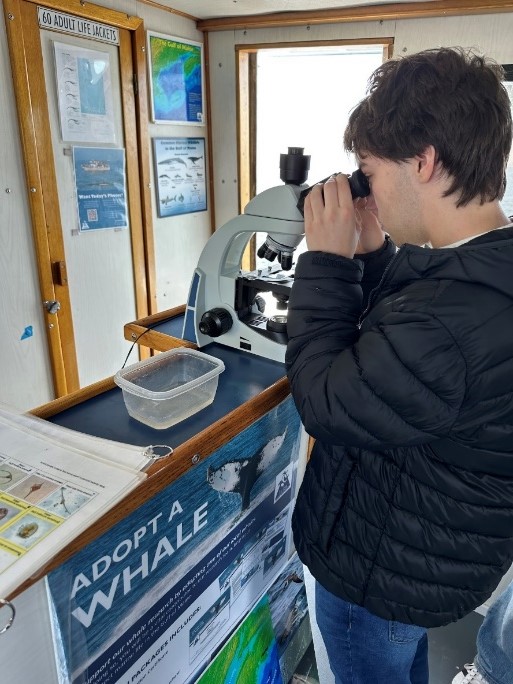
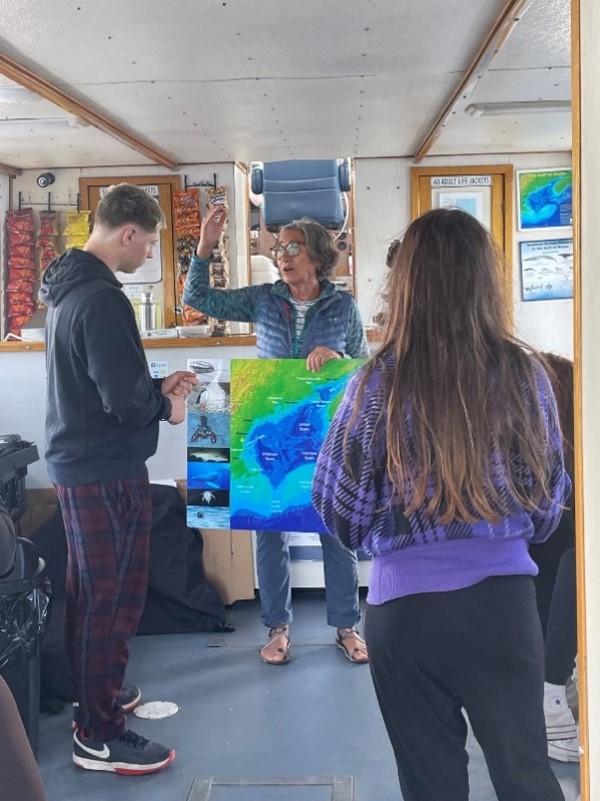
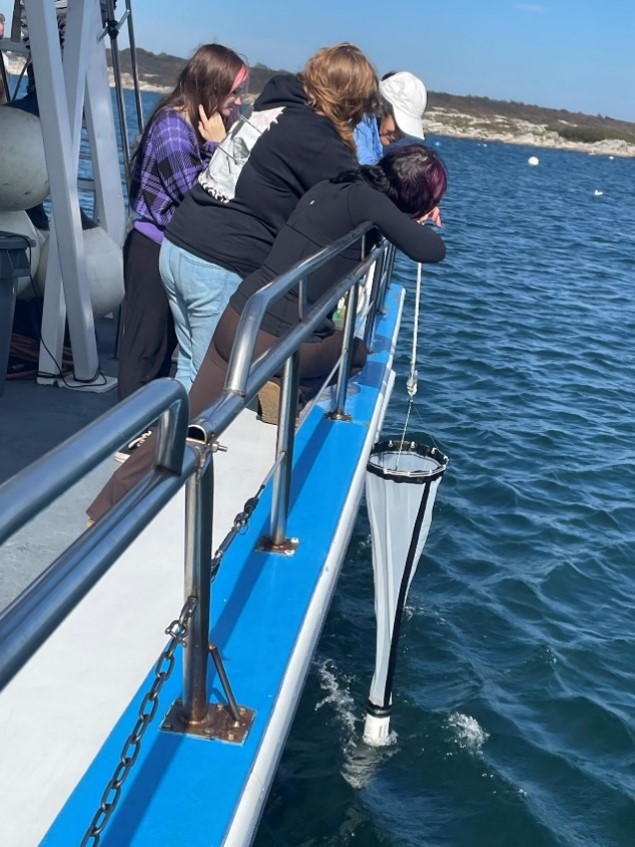
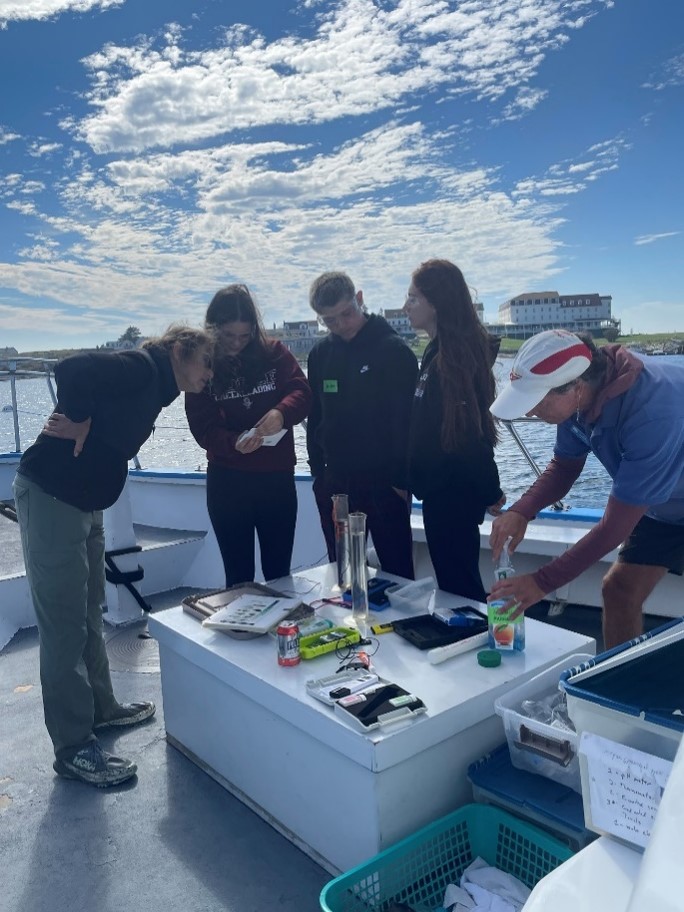
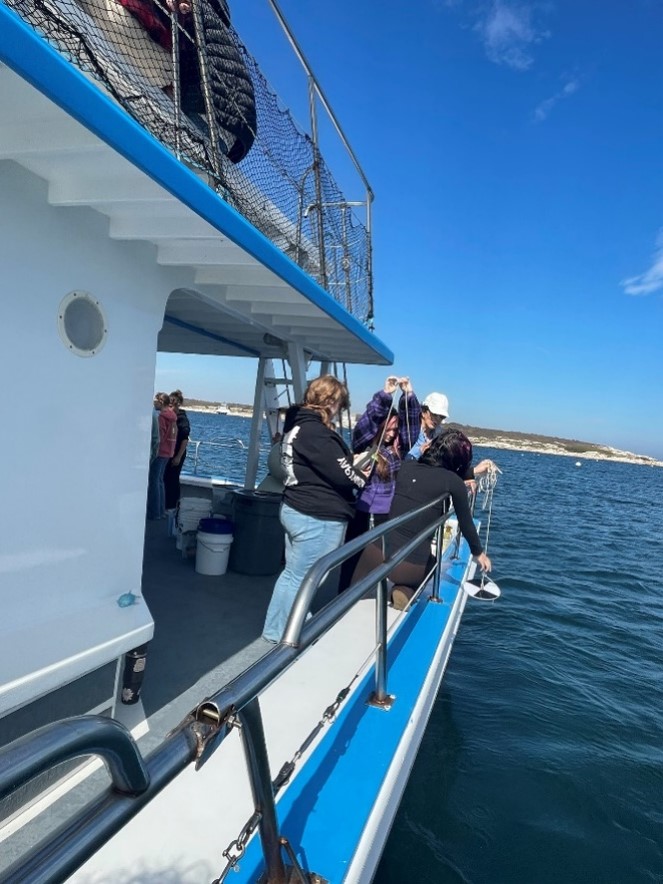
Last week, this group took their learning to the water during a visit to the University of New Hampshire’s (UNH) Coastal Floating Lab in the Gulf of Maine. Students traveled by boat to Gosport Harbor, near the Isles of Shoals, where UNH marine docents led them through a series of interactive learning stations focused on marine ecosystems and ocean science. Throughout the day, students collected and tested water samples, conducted plankton tows, examined dinoflagellates under microscopes, and learned about navigation and nautical charts. They also got up close with Gulf of Maine sea life—including lobsters, crabs, and sea stars.

One rewarding aspect of the experience was seeing students apply classroom learning to real-world science. Concepts like pH, buoyancy, and density—introduced in Noble’s core science classes—came to life as students tested water quality and discussed the physical properties of the marine environment. ELO Coordinators Liam Danaher and Maddie Smith, who co-lead this group, dependent on student interest, shared that, “[We are] truly looking forward to our next adventure and to witnessing what this group does with the knowledge and passion that they gain through this ELO program.”

Left to right: ELO Coordinators Maddie Smith, who is also a science teacher, and Liam Danaher.

“During my time on the UNH Coastal Floating Lab, I learned about the importance of the Gulf of Maine and its ecosystems,” Braiden Smith, a junior at Noble High School, said. “It was interesting to see how different organisms interact and depend on each other—and how we depend on them, as well.”

“The trip was very fun and engaging,” Conner Trieschmann, also a Noble High School junior, added. “Before we started the stations, we got to relax and explore the boat, which was great. My favorite part was definitely holding the different sea creatures—lobsters, starfish, and more. It made me appreciate how much life is out there beneath the surface.”

As the year continues, students will have additional opportunities to explore the coastal economy, marine research, and ocean stewardship through future trips and projects. The Marine Science ELO at Noble High School is not only building scientific knowledge; it’s inspiring curiosity, career exploration, and a lasting connection to Maine’s coastal environment.

Noble High School is a recipient of the Maine DOE ELO Expansion grant 2.0, which started in 2025 to expand ELOs in Maine. For more information about Extended Learning Opportunities, please visit the Maine DOE ELO webpage or contact Lana Sawyer, Maine DOE ELO Coordinator, at lana.sawyer@maine.gov.

Explore Innovation in Action: Maine DOE Fall Peer-to-Peer Learning Tour Registration Now Open

The Maine Department of Education (DOE) Office of Innovation is pleased to announce that this fall, there will be several opportunities for educators to engage in peer-to-peer learning that highlights innovative educational programming!

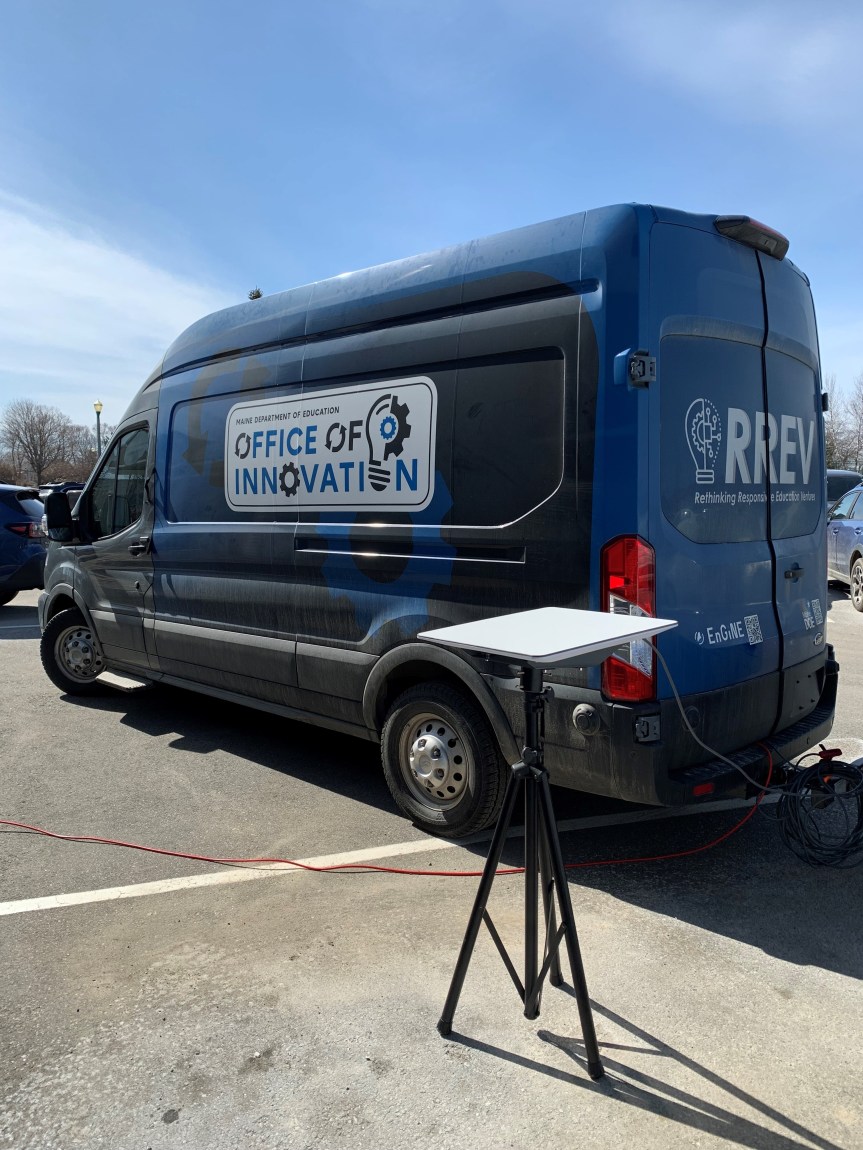
Are you an educator interested in exploring immersive learning experiences for your school and students? The Office of Innovation’s Mobile Learning Van is conducting various Learning Tours throughout the school year, and we’d love for you to join us! On each tour, we visit a school that is engaging in innovative learning programs for its students, and we invite educators across the state to see the programs in action and collaborate on all aspects of implementation.

This work stems from $16.9 million in  Rethink K-12 Education Models Funding from the U.S. Department of Education. Maine was one of 11 states to receive that funding in August of 2020 and used it to launch the Rethinking Responsive Education Ventures (RREV) project, a multi-pronged solution with a primary goal of generating innovative remote learning models to provide equitable access to high-quality remote (out-of-the-classroom) learning opportunities for all students. The Office of Innovation is continuing the momentum of this work by offering Learning Tours and fostering peer-to-peer professional learning.

The Learning Tour space is limited to 10 additional Maine educators at each location. If you are interested in joining us on any Learning Tour, please register here or contact Elaine Bartley, Maine DOE Innovative Research and Design Director, at elaine.bartley@maine.gov. You may also contact Elaine with any questions. Additionally, keep an eye on our website for future Learning Tour opportunities!

The current list of tours and events scheduled for the fall of 2025 includes:

St. George Municipal School
October 28, 2025
9 a.m.-2 p.m.

St. George Municipal School was a RREV awardee. Through its innovative pilot, it has created the first pre-K-grade 8 Career and Technical Education (CTE) curriculum in the nation. It also used part of its funding to help build the Grace Innovation Center—the first pre-K-adult CTE center! On October 28, we will get the opportunity to see its new Makerspace building, see the learning in action, and talk to teachers and students.

Kennebunk High School (Alternative Education)
December 2, 2025
9 a.m.-2 p.m.

Kennebunk High School (KHS) was a RREV awardee through its Alternative Education program. During this Learning Tour, we will discuss conducting independent projects with students; tour the Kennebunkport Conservation Trust, where KHS students have helped to create an immersive learning space; and observe an alternative education program in action.

Princeton Elementary School (Technology Education)
December 9, 2025
8:30 a.m.-1:30 p.m.

Princeton Elementary School technology educator Donna Netzer was a recent Maine DOE Maine Learning Technology Initiative (MLTI) ambassador. During this tour, we will observe and discuss technology integration in the math classroom. We will explore showcase products, experience recommended technology tools, and share numerous resources. There will also be an opportunity to stay longer and participate in an after-school tech group that will be working with the technology available in the Maine DOE Mobile Learning Van. Students will explore interviewing and broadcasting skills!

Special Outdoor Learning Day Event at MeANS
October 27, 2025

In addition to our Learning Tours, the Office of Innovation will be co-hosting the upcoming Outdoor Learning Day in collaboration with the Maine Environmental Education Association (MEEA) on October 27, 2025. This event is happening at the Maine Academy of Natural Sciences (MeANS), which was also a RREV awardee. Experienced educators will model lessons for a wide variety of grade levels and subject areas, with time for debrief and discussion after each lesson. Attendees will be able to view outdoor learning infrastructure at MeANS and participate in conversations about funding outdoor learning, safety planning, and behavior management. Use this link to register for the event. We hope to see you there!

Westbrook’s Intercultural Community Center Sparks Confidence and Joy with ‘Wonders of Water’ Summer Program

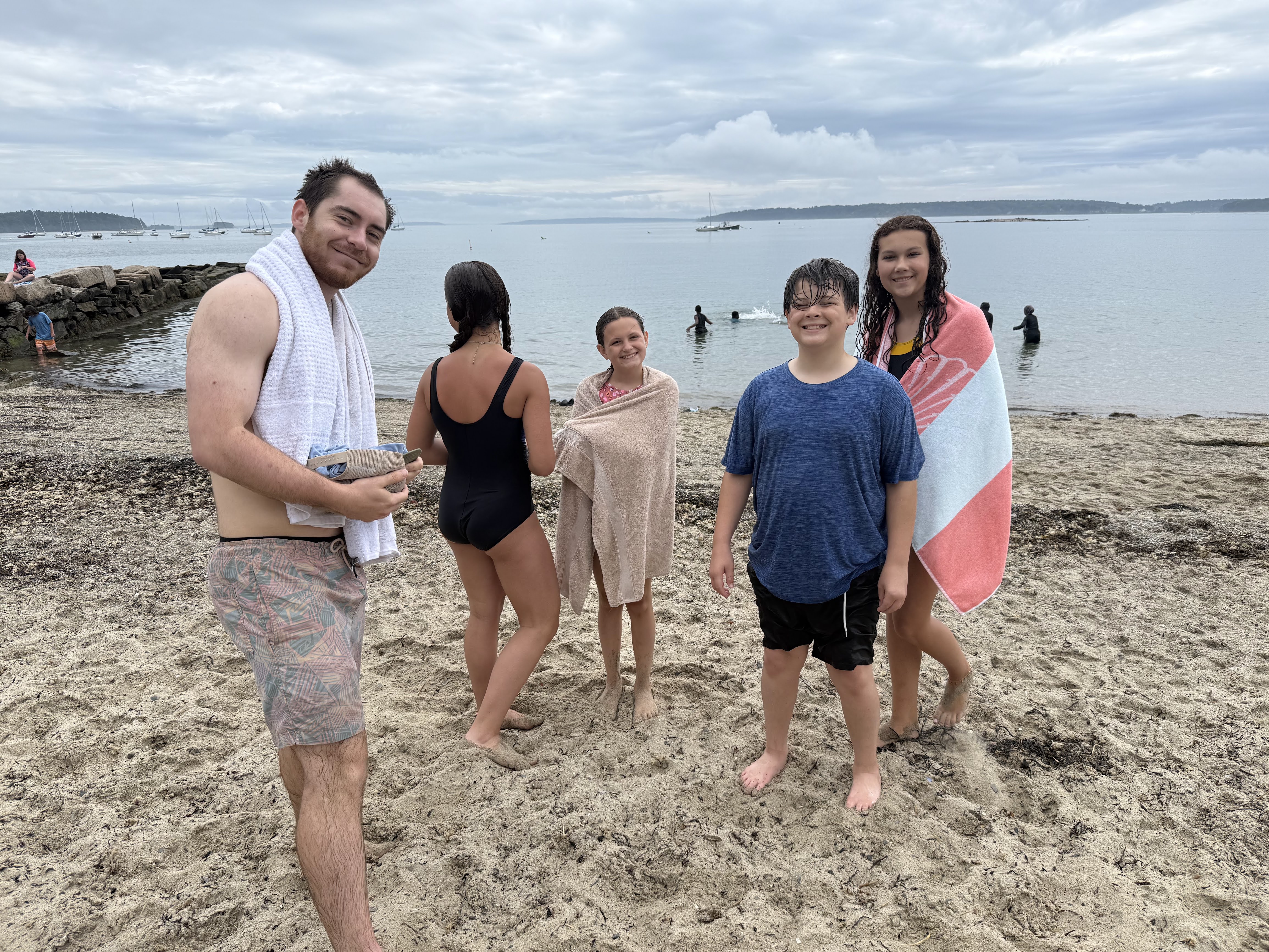
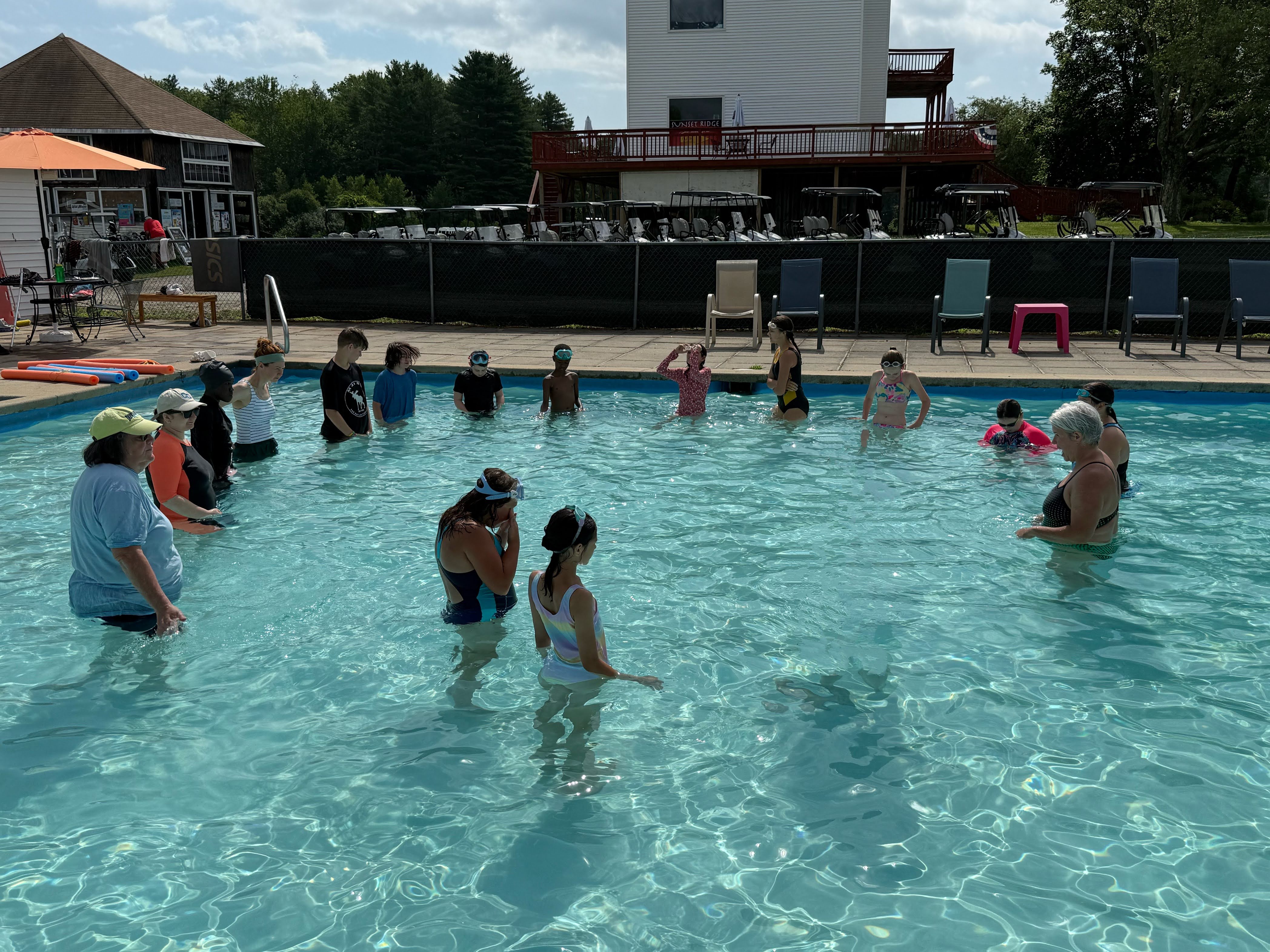
This summer, the Intercultural Community Center (ICC) of Westbrook—proud recipient of a 21st Century Community Learning Centers (21st CCLC) grant—hosted an extraordinarily impactful seven‑week “Wonders of Water” program, welcoming 60 middle schoolers from the Westbrook School Department to a free and transformative aquatic adventure.

Thanks to crucial support from the 21st CCLC grant and generous partners, including the Casco Bay Estuary Partnership, Goldfish Swim School, cPort Credit Union, and Maine Community Swimming, each of these students received brand-new bathing suits, swim caps, goggles, and water bottles, empowering them to jump into learning with confidence and flair.

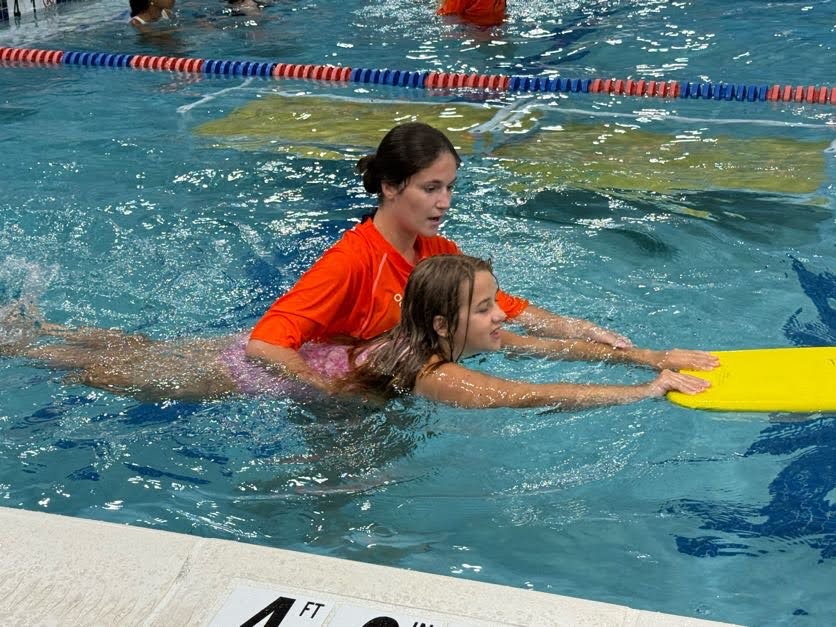
This program wasn’t just about fun; its core mission was instilling lifesaving water safety and swimming skills. Under the “Wonders of Water” theme, participants learned how to swim, to stay safe in and around the water, and to value aquatic environments. Every single student mastered swimming by the end of the program.

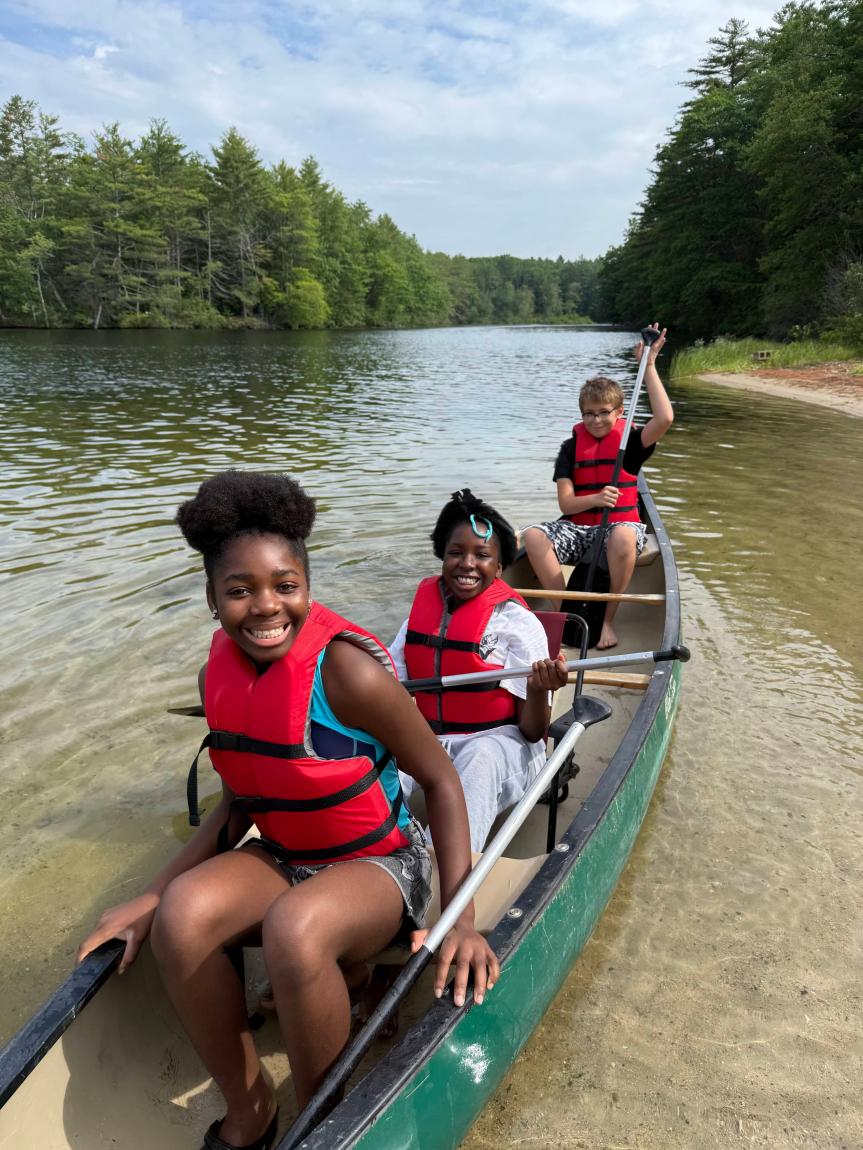
Over the course of 35 days of programming, students and staff embarked on 23 field trips, exploring 11 different bodies of water across the scenic Casco Bay watershed. From beaches and estuaries to ponds and coastal inlets, students gained both confidence in the water and a deepened appreciation for their local marine ecosystems.

ICC’s powerful summer achievement is based on the 21st CCLC grant, which ensures that academic enrichment, language support, and aquatic education remain free to learners regardless of their background.

Thanks to this funding, ICC has grown stronger through expanded staffing and enhanced coordination with the local school department. Meaningful outreach efforts have also made ICC a vital, dependable presence in the community.

This season’s aquatic triumph underscores ICC’s evolving impact: Beyond academic support, ICC is now fostering lasting lifesaving skills, environmental awareness, and inclusive summer fun. As ICC continues to weave together enrichment, safety, and community partnerships, it is clear that the ripple effects of this summer will persist far beyond the final swim cap being dried.

To the ICC team, students, families, and all community allies: Your dedication is making waves in the best possible way.

This story was written in collaboration with the Westbrook School Department’s Intercultural Community Center (ICC). To submit a good news story to the Maine DOE, please fill out the good news submission form.
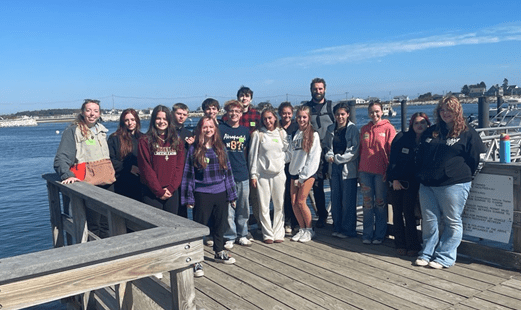
Upper Kennebec Valley Students Cultivate Life Skills in the Greenhouse

At Upper Kennebec Valley Junior/Senior High School, learning doesn’t stop at the classroom door; it grows, quite literally, from the ground up. What began as a student-built project in 2021 blossomed into a fully functioning greenhouse by the spring of 2022. Now, it serves as a living classroom rooted in responsibility, sustainability, and community engagement.

The Upper Kennebec Valley’s agriculture elective, led by nature-based educator Isaac Davis, immerses students in real-world learning experiences. Since launching his program in 2021, Davis has guided students through every stage of greenhouse and garden care—from soil testing and transplanting to pest control and harvesting. With class sizes averaging ten to twelve students, the program fosters a strong sense of teamwork and independence, all while exploring the science and systems behind sustainable agriculture.

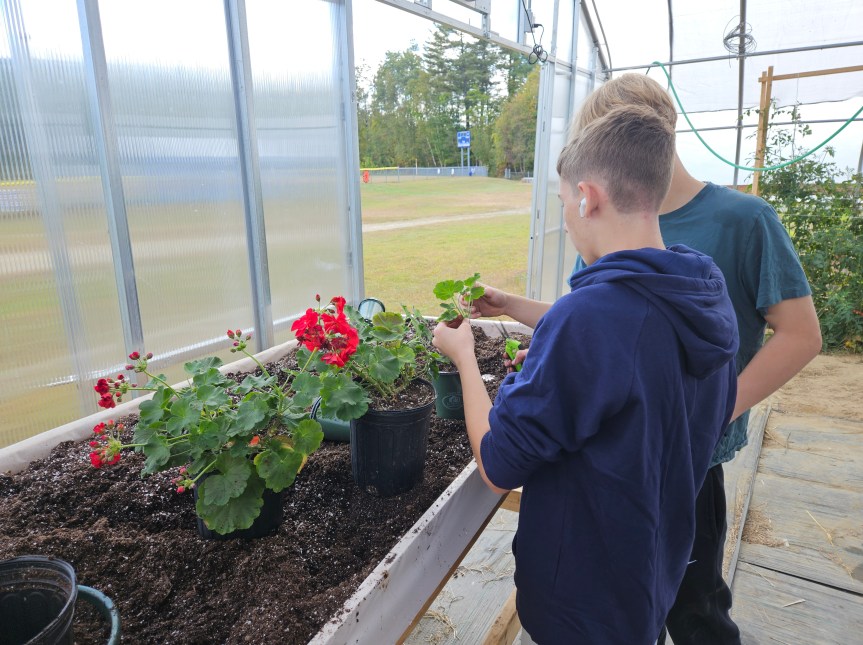
Inside the greenhouse, students grow a wide variety of plants from seeds and cuttings. Colorful flowers like geraniums, marigolds, and snapdragons fill the space, alongside hearty vegetables, including tomatoes, brassicas, tubers, and even corn. The lessons, however, go far beyond plant care. Students learn how to identify and treat nutrient deficiencies and plant diseases, manage inventory, and apply best practices for integrated pest management. It is a full-circle approach that connects students to both science and the purpose behind what they grow.

In 2025, the program reached an exciting milestone: its first soft opening to the public. Students took the reins with everything—from pricing and marketing to customer service and sales—putting their learning into action and gaining invaluable entrepreneurial experience. While formal leadership roles exist, the course places greater emphasis on developing self-reliance. Students are expected to manage time-sensitive tasks and to see them through with care, pride, and ownership—skills that often carry over into their personal lives, with some students returning each fall to share how they’ve started their garden at home.

The greenhouse now operates year-round, with sections dedicated to both potted plant sales and in-ground cultivation. Support from the local community has been strong and steady. A recently introduced honor-system donation box at the entrance gives visitors a chance to contribute on their own time. All donations go toward essential operating costs, such as heating, helping the program to become increasingly self-sustaining.

That goal—true sustainability—is central to the greenhouse’s future. Davis is currently researching funding opportunities to support the addition of solar or wind power and a rainwater collection system. These upgrades are part of a larger five-year vision to make the greenhouse energy- and water-independent. In the short term, the program aims to broaden its plant selection and form partnerships with local growers, particularly for species that are difficult to start from seed.

One of the most heartening developments has come directly from the community. After several residents began donating extra plants and greenery, Davis was inspired to create a dedicated space within the greenhouse called, “The Good Will Greenhouse.” This is a place where generosity meets growth, and students take charge of managing a diverse and ever-changing inventory.

While still early in its public operations, the greenhouse is steadily gaining momentum. Social media has been the primary tool for spreading the word, and Davis anticipates more open houses and community events in the coming years. Each new class brings fresh ideas and energy to the table.

“My goal with this course is to teach patience, determination, and faith in the eventual payoff of one’s hard work,” Davis said. “It was Audrey Hepburn who once said, ‘To be a gardener is to hope in tomorrow,’ and I want my students to walk away understanding the importance of planning and investing in the future.”

At Upper Kennebec Valley, that future is already taking root—and it’s growing stronger every season.

This story was written in collaboration with Upper Kennebec Valley Junior/Senior High School. To submit a good news story to the Maine DOE, please fill out the good news submission form.
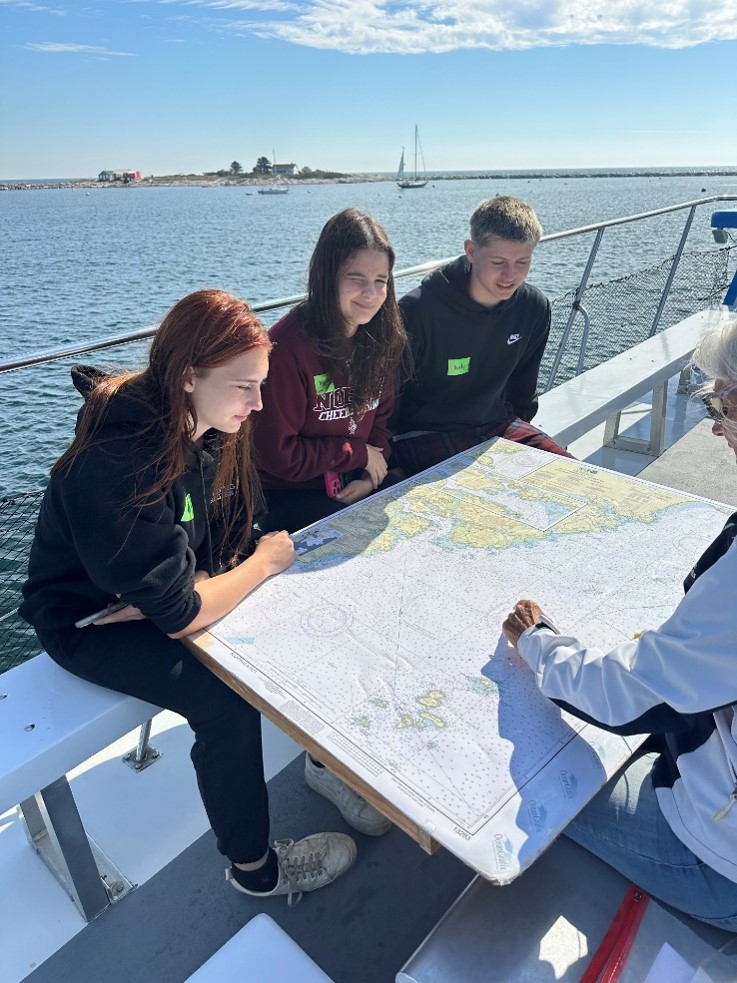
Ocean Avenue’s LearningWorks AfterSchool Students Celebrate a Year of Growth – In and Out of the Garden

At Ocean Avenue Elementary School in Portland, the final days of the 2024-2025 school year didn’t just mark the start of summer; they marked the culmination of something far more meaningful. On May 28, 2025, students, families, and staff gathered for a joyful celebration that bloomed with laughter, learning, and the unmistakable smell of fresh basil.

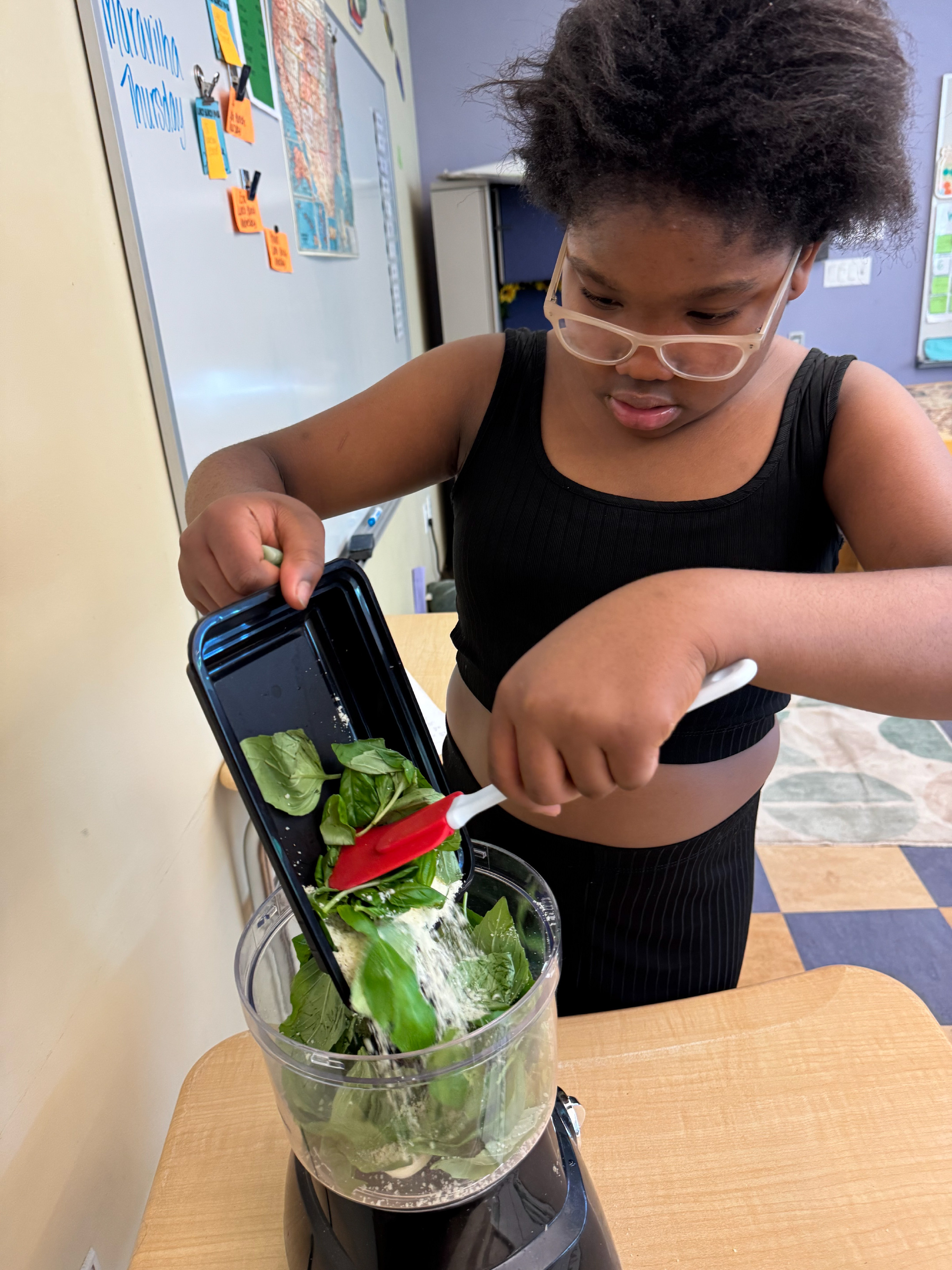
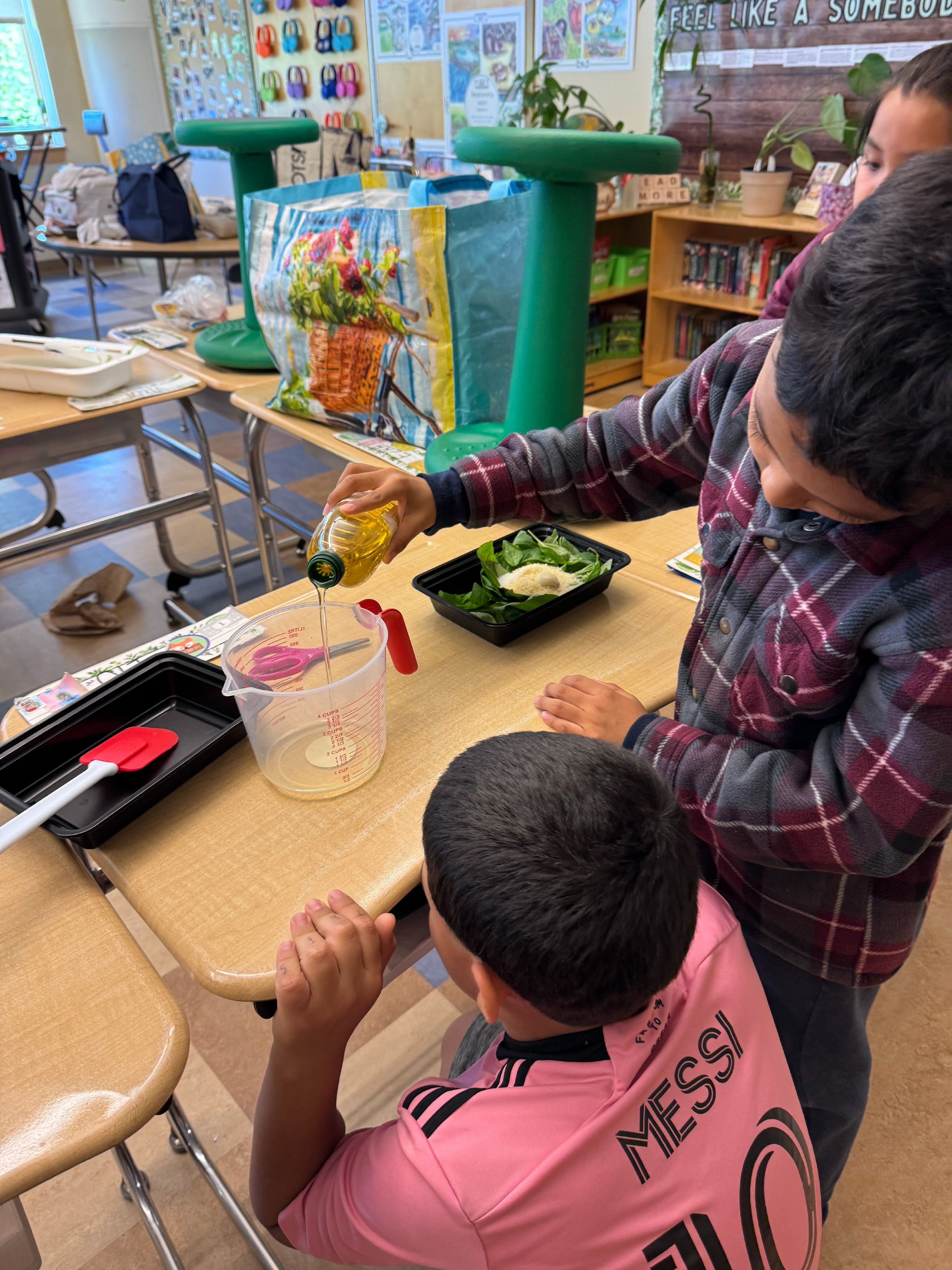
Throughout the year, the LearningWorks AfterSchool program at Ocean Avenue was a place for students to grow—in every sense of the word. One of the most popular features of the program this spring was the health and wellness cooking club, where students rolled up their sleeves and discovered just how empowering (and tasty) healthy eating can be. Whether whipping up simple seasonal dishes or learning how to navigate a kitchen with confidence, they found pride in preparing food they could enjoy and share.

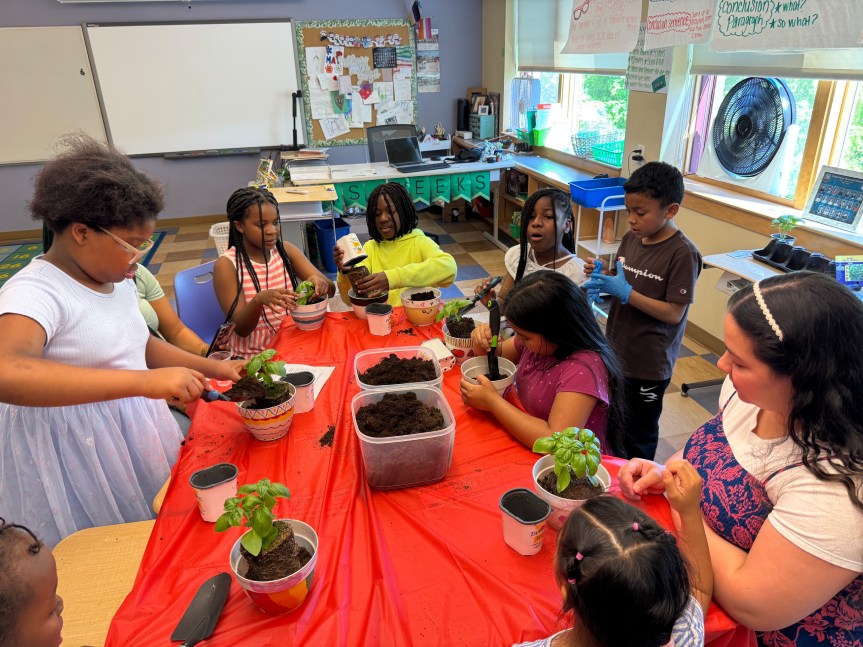
The lessons didn’t end at the table! Earlier this spring, families joined students for a creative project that planted the seeds for something special—literally. Caregivers and kids sat side by side, painting flowerpots in bright colors and bold designs, knowing that they would soon be home to basil plants that they would nurture together.

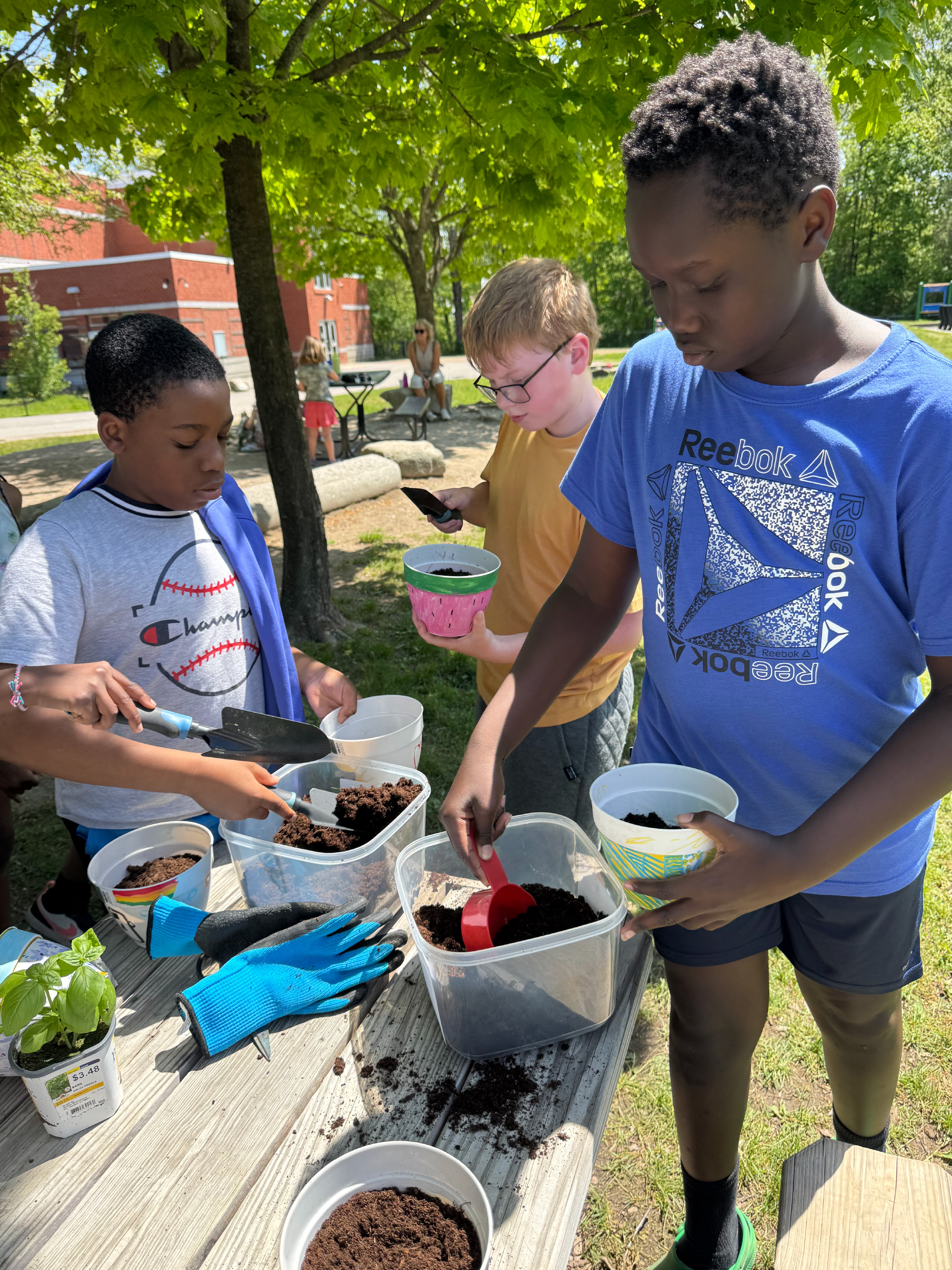
Two months later, those same pots were filled with life. At the program’s year-end gathering, students tucked basil seedlings into the soil with careful hands and eager hearts. With a quick crash course in how to tend to their new leafy friends, they headed home with plants, pride, and a few new favorite recipes.

“We’ve seen incredible growth this year,” Site Coordinator Stephanie Bethel said. “Not just in what students can do but in how they see themselves. From painting pots to planting basil, everything we’ve done has helped students—and families—to feel more connected, more confident, and more capable.”

As part of the 21st Century Community Learning Centers initiative, LearningWorks AfterSchool continues to foster safe, inspiring spaces that stretch beyond academics. At Ocean Avenue, those spaces came alive this year with the smell of pesto, the sound of laughter, and the roots of something that will keep growing long after summer begins.

This story was submitted by the LearningWorks Afterschool Program. To submit a good news story to the Maine DOE, please fill out the good news submission form.
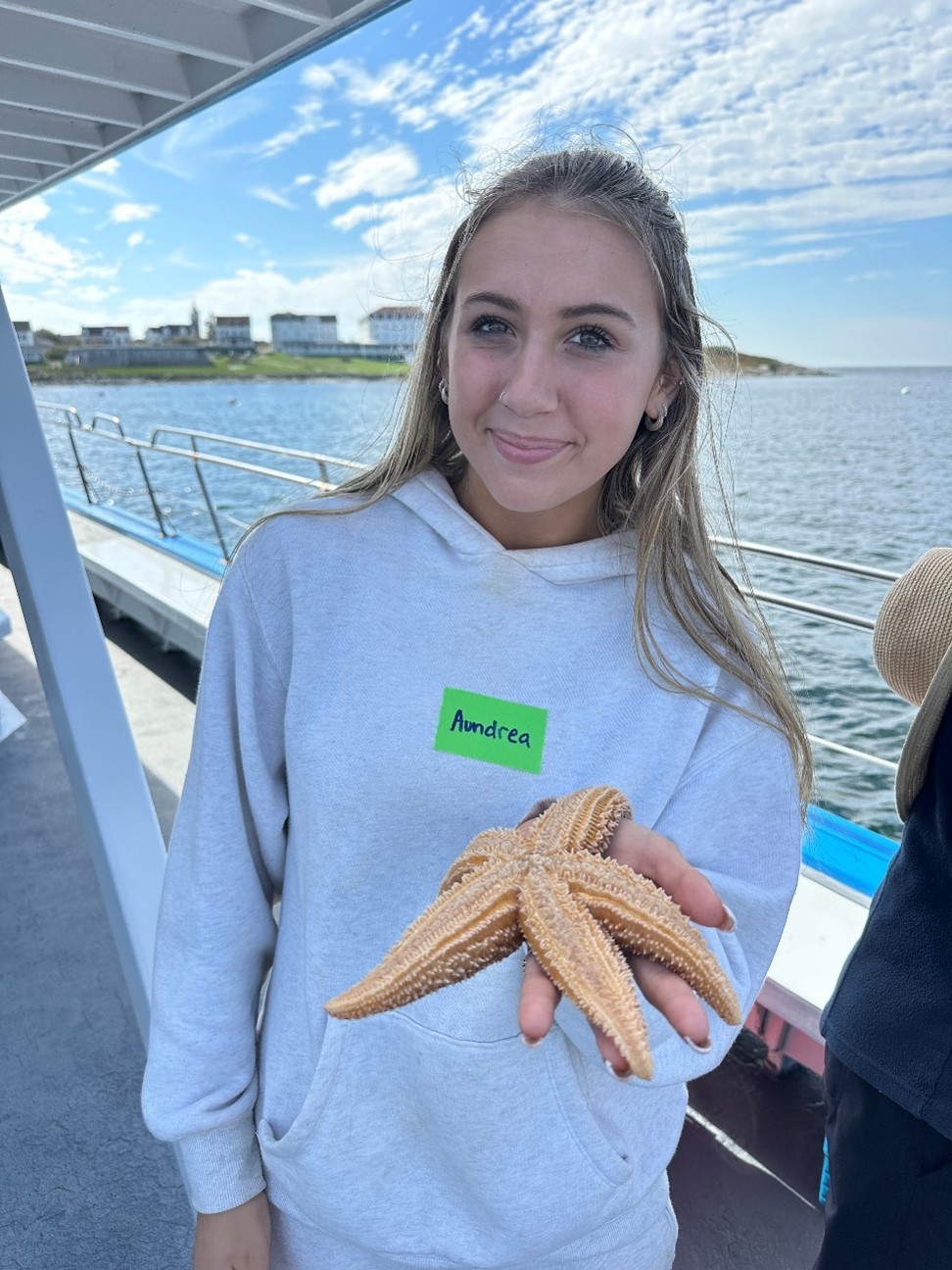
From Screens to Streams: Maine Connections Academy Unites Students for Day of Outdoor Learning

The quiet trails of Viles Arboretum in Augusta came alive with conversation and creativity on June 9, 2025, as more than 100 students and families from Maine Connections Academy gathered for the school’s annual Spring Academic Summit. Designed to blend online learning with real-world connection, the day-long event brought students out from behind their screens and into nature for a hands-on learning experience that celebrated both academics and community.

Maine Connections Academy is a tuition-free, online public school for students in grades 7-12 across Maine. It offers a personalized, flexible learning path for students of all backgrounds—whether they require an alternative to traditional school or simply thrive in a self-paced environment. The school emphasizes not only academic achievement but also the development of life skills and social-emotional growth. In-person events like the Spring Academic Summit play a critical role in helping students to stay engaged and connected.

“These in-person events are absolutely critical to our students’ success,” Lanie Roy, Maine Connections Academy health and physical education teacher, said. “While our online platform allows students to learn from anywhere in Maine, there’s something irreplaceable about students working together on projects, sharing ideas face-to-face, and building the social connections that are so important during high school years.”

Throughout the day, students rotated through ten activity stations that touched on science, art, and outdoor exploration. Some dove into DNA extraction experiments using berries, while others hit the trails for plant foraging lessons and picked up new techniques in nature photography. Artistic students enjoyed polymer clay crafting and watercolor painting, while others jammed in music workshops, challenged friends in Quiz Bowl competitions, and joined film club conversations. The day also included board games, outdoor recreation, and plenty of opportunities to socialize.

A barbecue lunch wrapped up the event, offering a relaxed setting for families, students, and staff to connect and reflect on the day’s experiences. For a school that serves students across all 16 counties in Maine, the Spring Academic Summit was a powerful reminder of the strong community that can be built, even in a virtual environment.

This story was submitted by Maine Connections Academy. To submit a good news story to the Maine DOE, please fill out the good news submission form.
RSU 14 Students Create, Explore, and Learn at Maine Outdoor Learning Pavilion

Throughout the 2024-2025 school year, students from the Katahdin Program at RSU 14 (Windham Raymond School District) accessed the Maine Department of Education’s (DOE) Outdoor Learning Pavilion on Mackworth Island numerous times. While at the pavilion, these students worked on three different projects: building planter boxes for their hoop house at the Windham Community Garden; building picnic tables for several community partners; and building a 16-foot rowing dory in partnership with Sailing Ships Maine, to be used by students in the Katahdin Program.

“This space provided by the Maine Outdoor Learning Initiative has been a great asset to students in the Katahdin Program,” Katahdin Head of School Rich Meserve said. “We used the indoor space on cold winter days and the outdoor pavilion when the spring weather arrived.”

Katahdin Program students building planter boxes

The Katahdin Program provides alternative education programming for students in
grades 9-12 who are enrolled in the RSU 14 school district. Community-based learning is a key
element of the Katahdin experience.

The Katahdin Program’s outdoor projects at the Maine Outdoor Learning Pavilion exemplify how students can practice civic engagement as part of their regular curriculum and also gain practical, real-world skills for life after high school.

“The Katahdin Program utilizes the outdoors as much as possible to tie in the
experiential and adventure-based programming that we provide to our students, while also connecting these projects to our classroom curriculum,” Katahdin special education teacher Paul Field said.

Dominic Siragusa, a junior at Windham High School who is enrolled in the Katahdin Program, noted, “The experience at the pavilion on Mackworth Island was great because doing hands-on projects really works for me.”

Katahdin Program students sanding the rowing dory

Throughout the winter, Katahdin Program students used the Maine Outdoor Learning Initiative’s indoor space on Mackworth Island several days a week to begin the construction of their 16-foot rowing dory. This spring, they completed the sanding and finishing work of the dory outside under the pavilion.

“The process of building the dory was great for our students, and the space worked perfectly. Our students are excited to row in Casco Bay in a boat they built themselves from start to finish,” Field said.

In mid-June,  staff and students from the Katahdin Program launched the dory. They will be able to use and maintain the boat for many years to come.

“It was really great for our students to be able to work on this project from the early planning stages all the way through to launching it,” Field expressed.

For more information about the RSU 14 Katahdin Program, please contact Rich Meserve at rmeserve@rsu14.org.

The Mackworth Island Outdoor Learning Pavilion is part of the Maine DOE’s Maine Outdoor Learning Initiative. The Initiative is delivered on a promise made by Governor Janet Mills during her 2022 State of the State address to provide children with more opportunities to learn about and explore Maine’s natural beauty and resources. 

For more information about the Maine Outdoor Learning Initiative, please contact Jonathan Ross at Jonathan.j.ross@maine.gov.

Scarborough Middle School Pilots Integrative Studies Program at Maine Outdoor Learning Pavilion

Forty-two students from Scarborough Middle School visited the Maine Outdoor Learning Initiative’s new pavilion on Mackworth Island during the 2024-2025 school year. These seventh graders are enrolled in a pilot program called the “Integrated Studies Pilot,” focused on creating an engaging, student-centered environment that integrates place-based learning, experiential learning, and interdisciplinary content connections. 

“Our goal is to help students develop critical thinking skills, make meaningful connections between subject or content matter, and engage with their community in a hands-on way,”  Kari Bracy, Integrated Studies Pilot teacher, said.  

This trip to Mackworth Island was part of the Integrative Studies Pilot’s fourth-quarter Coastal Ecosystems unit. It was an opportunity for students to compare a quantitative data collection they had done with Scarborough Land Trust to the collection of more qualitative data. Students hiked the trail around the island in groups, journaling about nature in two locations and exploring the history of the island and its use throughout the years.

Director of Curriculum for Scarborough Public Schools Katie Vetro helped to develop the Integrative Studies Pilot.

“One of the primary goals of the Integrated Studies Pilot is to provide a place-based context to the curriculum that students are learning,” Vetro said. “Students have an opportunity to connect their learning to their lives in Scarborough and in Maine, bringing to life the real challenges citizens face every day. Outdoor education is an essential component of this; for example, students studied Maine maple sugaring and the potential future implications of climate shifts on the industry. Our students have an opportunity to explore real problems in the place they call home.”

Amy Johnson, Integrated Studies Pilot co-teacher, embraces outdoor learning.

“We are out of the building, participating in some type of field experience at least once a month off-campus. In addition, we utilize our school’s own outdoor campus to extend our classroom. We have found that the outdoor use and connections made make the learning experience more authentic and the student engagement level so enhanced,” Johnston said.     

For more information about the Scarborough Middle School Integrated Studies Pilot, please contact Katie Vetro at kvetro@scharboroughschools.org.

The Mackworth Island Outdoor Learning Pavilion is part of the Maine Department of Education’s Maine Outdoor Learning Initiative. The Initiative is delivered on a promise made by Governor Mills during her 2022 State of the State address to provide children with more opportunities to learn about and explore Maine’s natural beauty and resources. 

For more information about the Maine Outdoor Learning Initiative, please contact Jonathan Ross at jonathan.j.ross@maine.gov.

Forest Friday Engages Phippsburg Elementary School Students in Place-Based Outdoor Learning 

(Pictured: First and fourth grade students during Forest Friday)

After a long week of learning inside of the traditional brick-and-mortar classroom, students at Phippsburg Elementary School head outdoors to immerse themselves in nature for what’s known as “Forest Friday.”

Forest Friday is an academic block of time when students experience place-based outdoor learning. Through professional development and shared teaching and learning experiences, teachers have embraced this as a time to focus on hands-on learning, grounded in science and social studies standards. 

In elementary school, much of a student’s day is focused on reading, writing, arithmetic, and—especially at the K-2 level—on how to be a learner and a student. That is one reason why the opportunity to have time for outdoor learning has become quite popular among Phippsburg School students and staff. Students look forward to this time to learn outside with one another in a way that allows them to be a bit more inquisitive. Movement is also always a part of Forest Friday, as it is proven to have a direct impact on improving students’ cognitive functioning.  

Outdoor education is not new to Phippsburg School, as the town has an active conservation committee and garden club run by volunteers. In fact, from 2019 to 2024, Phippsburg had a dedicated outdoor educator one day a week, who was also the physical education teacher. With the loss of COVID funding and restructuring of school personnel, Phippsburg School’s leadership team was left with the question of what to do next and how to keep outdoor education as part of students’ educational experience. 

When the school year started, many teachers and staff had experience with outdoor learning. Some did not, but everyone at Phippsburg School jumped in with ideas about how to keep outdoor education alive. Each week on Friday afternoon—rain, shine, or snow—the school principal takes two classes (an upper grade and a lower grade) and plans an outdoor learning experience. This is how Forest Friday began. This time not only engages students in nature; it also assists in helping to build strong working relationships among students—an integral part of the school culture at Phippsburg School.

On the weeks when grade levels don’t collaborate, classroom teachers plan outdoor learning experiences for their own classes: From historical hikes to visiting graveyards with local historians to snowshoeing to tree identification, staff at Phippsburg School are embracing stepping out of their comfort zone and keeping this meaningful learning alive. 

“Sometimes, we do a very focused lesson that ties into our classroom learning. Sometimes, we do hands-on science experiments, like building snow volcanoes and animal habitats.  Sometimes, we use Forest Friday as an opportunity for play and social emotional learning. The goal is to have fun and expose students to learning that they may not experience on a daily basis,” Principal Nina Willette said.  

5th and 2nd grade students learning about the life cycle of a pumpkin

The town of Phippsburg has many natural spaces that provide outdoor, nature-based experiences, from hiking trails to beaches, rivers, and ponds; however, many students may not have access to all that Phippsburg has to offer. One of the school’s goals is to bring equitable accessibility to outdoor learning experiences in the community.

Phippsburg School students begin the school year with an annual trip to two local beaches. Students in grades 3-5 hike Morse Mountain to Seawall Beach, and K-2 students visit Totman’s Cove (a local beach) to help pick up trash during Coastal Clean-Up Week. These place-based visits set the stage for community-based outdoor learning.

3-5 students at Seawall Beach in Phippsburg

This spring, students in Phippsburg will have opportunities for place-based learning that connects to Phippsburg’s Climate Change Resilience Committee’s work. In pre-K to grade 5 classrooms, students will study the plants and animals that live in their community and learn how they can protect them to promote the sustainability of marine industries. Students in fifth grade will go on a kayak trip to Malaga Island. Students in fourth grade will reseed a local clam flat, led by diggers from Phippsburg’s shellfish committee, and release wild salmon they are currently raising in a classroom aquarium. Students in third grade will visit the Coast Guard Wharf at Fort Popham to board a local lobster boat, and students in second grade will visit the West Point oyster farm. All of these experiences will be part of a culminating celebration of learning where students showcase their research.

“The thing that I love most about experiential learning is that it provides opportunities for students to connect to their community through service-learning projects, scientific discovery, and local history. Students are often the drivers of these educational experiences, which makes learning meaningful and relevant. It can be simple or complex by design. The most magical part is seeing students in action as they discover the world around them,” Principal Nina Willette said.

Phippsburg School looks forward to continuing to bridge connections between traditional education, community, and nature-based outdoor education, which is an integral part of the school’s community. 

This story was submitted by Phippsburg School. To submit a good news story to the Maine DOE, please fill out the good news submission form.
Maranacook Middle School Students Share Their Experiences Participating in “Ice Day”

The following article is a combination of three articles written by Maranacook Middle School Students Sabrina Foth (grade 6), Veda Tibbetts (grade 8), and Lucas Giles (grade 7) following the ice harvesting event.

On Wednesday, February 5, the awesome Acadia team from Maranacook Middle School embarked on an adventure to Maranacook Lake for a super fun day of winter activities on the ice! The air was crisp, and everything sparkled under the bright winter sun. (Sabrina Foth, grade 6)

The Acadia team consists of 70+ Maranacook Middle School students, ranging from sixth to eighth grade, guided by 3.5 teachers who deliver an integrated curriculum through student-derived and student-chosen themes. (The Acadia team is pictured above in a group picture taken at the event)

Despite the biting cold, seventh grader Lillian Moran expressed her gratitude for the warming tents available on-site, saying, “The cold was really bad, but I am grateful they had warming tents.” The middle schoolers bundled up in winter coats, hats, and gloves before trekking to Maranacook Lake. Thanks to the efforts of Maine Gear Share, Teens To Trails, and generous community members, warm winter attire was provided to ensure that all students were properly equipped to combat the chilly weather and wind. (Veda Tibbetts, grade 8)

Dan Holman, the Acadia team leader from Maranacook Community Middle School, explained the educational significance of the day: “It’s a bit of a celebration of what we’ve been learning, which is about resources and some of the science and math of pi and density. We’ve been looking at Maine industries, both present and past, which included the logging and ice industries.” The “Ice Day” event was not only a fun day outdoors but also an opportunity for students to demonstrate their knowledge; they even sculpted a pi symbol from the ice they harvested. (Veda Tibbetts, grade 8)

Along with middle school teacher Mr. Holman, fellow educators Jean Roesner, Tom Radcliff, and Dan Brannigan have been hosting an ice harvesting event for students for the past three years.

This exciting day featured five engaging activities: ice harvesting, ice carving, ice fishing, and two sessions led by community outdoor educators. The combination of learning and outdoor fun made for an unforgettable experience. (Veda Tibbetts, grade 8)

The students had the chance to try ice harvesting, which they found incredibly cool. Armed with sturdy saws, they worked hard to cut through the thick, shiny ice, laughter and cheers echoing as they sliced through. Once they broke the ice into big blocks, the group donned special creepers—metal spikes that attached to their boots—to prevent slipping. Their teamwork was impressive, with some students using picks to lift the heavy ice blocks while others pulled with all their strength. They showcased remarkable collaboration and effort throughout the task! (Sabrina Foth, grade 6)

It was so cool to see and participate in using saws to cut out the ice and drag it up. This was very important back in the day before refrigerators and freezers were invented. It was super interesting to learn about how they kept the ice cool with sawdust. The Acadia team was able to acquire some sawdust from a local sawmill, and we will be preserving the ice with it, just like they did back then. In ideal conditions, sawdust can keep ice frozen for up to 6 months, which will be important for what we have planned in the future. (Lucas Giles, grade 7)

The team then learned about a serious issue—habitat loss. They discovered the importance of taking care of the environment and how they can help nature survive despite human activities. Engaging displays and discussions sparked their thoughts on ecology. (Sabrina Foth, grade 6)

Next up was ice fishing, which thrilled the students! They learned how to fish on the ice, keeping a sharp lookout for colorful flags that would pop up when a fish was beneath the surface. (Sabrina Foth, grade 6)

According to many students, one of the coolest parts of the day was the ice carousel. The ice carousel we created is a giant circle of free-floating ice that spins around when you push it. It was big enough for half of our team, about 35 people, to stand on it at once! (Lucas Giles, grade 7)

During the event, participants had the opportunity to delve into the fascinating world of nature. They learned valuable skills for distinguishing between various species of trees and identifying different animals in their natural habitats. This hands-on experience enriched their understanding of the ecology surrounding them, fostering a deeper appreciation for the biodiversity that exists in their environment. With each lesson, they grew more adept at recognizing unique characteristics, making them more attuned to the intricacies of the world outside their windows. (Sabrina Foth, grade 6)

This event would not have been possible without the help of the community. Our chaperones included grandparents, parents, and former students. More help from the community consisted of the Readfield Fire Department, a game warden, a forester, and a few people from the United States Geological Survey (USGS), who all helped make the day happen. Thanks to them, we participated in several fun and educational activities. (Lucas Giles, grade 7)

Here’s some of what other students had to say about “Ice Day”:

  • Samuel Saunders, 11, said, “It was super fun, and my favorite was the ice carousel because of the way it spun. It was like walking on a treadmill.”
  • Johnathan Woessner, 13, said, “This experience was very memorable because this is only the second one ever done.”
  • Johnathan Perry, 12, thought the event was fun and interesting: “I think it was really fun. It was a great learning experience, and it was fun to explore Maine’s history and what it used to be. It’s fun to learn about and be able to do it in-person.”
  • Izabell Loiko, 13, said, “Doing this for free is a once-in-a-lifetime experience. It was so much fun hanging out with the whole team on the lake.”
  • Benjamin Alexander, 12, shared how hard it was to cut through the ice: “Sawing through the ice is tough. But with everything, it doesn’t matter how hard things get. You just have to keep pushing sometimes.”
  • Augustus Villareal, 13, said, “The ice harvest was awesome! It was fun working together, learning about history, and enjoying winter.”
  • Destiny Beane, 12, said, “This is a really good learning opportunity, but it is also so much fun.”
  • Brody Heminger, 13, added, “It’s a great experience to have.”
  • Dylan Stephan, 12, noted, “The best activity was the ice harvest. It was fun to pull up ice and cut it.”
  • Eighth-grader Veda Tibbets talked about how cold it was but also how awesome the experience was: “The ‘Ice Day’ was one I will always remember. It was really cold, but it was one heck of an experience. I think everyone should have a chance to bear the cold to harvest natural ice that wasn’t made in your freezer.”
  • “I think it’s a really, really good learning opportunity to get out here and be able to learn back then before we had refrigerators and freezers,” seventh-grader Jonathan Woessner said.
  • “I liked the ice carousel because it was fun and enjoyable,” Ryleigh Bolton, 13, expressed.
  • “I think this was a great experience of what they did in the olden days,” Austyn Ivey, 11, declared.

The goal for this event was to use what was learned…. Be outside, and have a lot of fun. Judging by the students’ enthusiasm and engagement, I think the goal was met. (Veda Tibbetts, grade 8)

As for what’s next:

The ice harvest may be done, but we aren’t. Mr. Holman told us that later this school year, we’ll have a few activities that involve the ice. Some that he stated include ice sculpting for art classes and using it to demonstrate phase change. The activity that Acadia is most excited about, however, is our celebration where we’ll make ice cream and use the ice we harvested to keep it cool. These activities will be a fun way to remember everything we learned and experienced. (Lucas Giles, grade 7)

This ice harvest was something special, and we’re lucky to have had the chance to do it. We learned so much about Maine’s history, the environment, and how to work together as a team. It’s something none of us will ever forget! (Lucas Giles, grade 7)