Webinar: Civics Education and Community Connections with the League of Women Voters

How can civics educators inspire students to engage in real civic action? How can we make civic involvement feel relevant and accessible in our students’ daily lives and local communities?

Join Breanna Bellefontaine-Krupski, Maine Department of Education Civics Teacher Leader Fellow in the Office of Teaching and Learning, and Allyson Gardner, Director of Maine Students Vote and League of Women Voters member, for a dynamic conversation on November 19. Together, they will explore the work of the League of Women Voters, Maine Students Vote, and new community ally programs that connect schools with civically-active community members.

Participants can expect to leave the webinar with valuable resources, including website links, newsletters, and practical insight on how these organizations are empowering young people to become active citizens.

Don’t miss this opportunity! Join us on Tuesday, November 19, at 3:45 p.m.

Join here. (There is no need to register for the webinar in advance.)

For further information or questions, please reach out to Maine DOE Civics Teacher Leader Fellow Breanna Bellefontaine-Krupski at breanna.krupski@maine.gov.

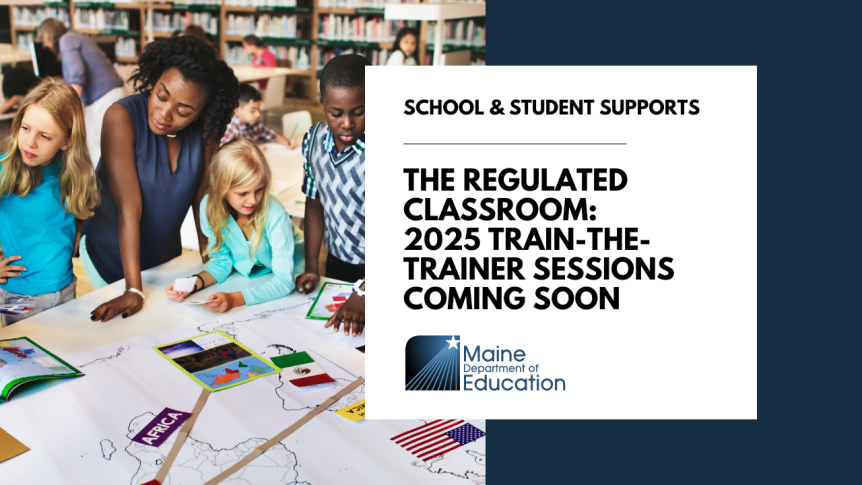
Save the Dates for 2025 The Regulated Classroom Train-the-Trainer Sessions

The Maine Department of Education (DOE) is continuing its collaboration with Emily Read Daniels, M.Ed., MBA, NCC, SEP™, owner and founder of The Regulated Classroom™ (TRC™), to provide a third phase of train-the-trainer professional learning experiences at no cost to Maine educators.

In the fall of 2023, the Maine DOE launched the first phase of these trainings to respond to requests from educators for classroom resources to support building positive classroom culture and addressing dysregulated student behavior. All 600 spaces for the first phase of TRC trainings were booked within weeks. In the spring of 2024, a second phase of TRC trainings for 600 more educators from across the state was announced, and, like the first round, those sessions also filled up quickly. With a considerable number of emails coming from educators seeking opportunities for professional development—and a waitlist of more than 100 participants—this project has been expanded to create more training opportunities for another 600 educators, starting in March of 2025.

Through a somatosensory and Polyvagal-informed approach to cultivating conditions for “felt safety” in the classroom, TRC equips educators with a framework that consists of four core practices, two essential educator capacities, and sensory tools, establishing a safe and connected classroom environment. TRC offers highly-effective tools and practices to incorporate into routines, along with self-awareness and self-care resources that enable educators to recognize and bring regulation to the classroom, supporting engagement, connection, and learning.

To develop leadership capacity and promote project sustainability, the Maine DOE Office of School and Student Supports secured funding from Title II and hired Lead Co-Regulators from each of Maine’s nine Superintendent Regions. These Lead Co-Regulators are facilitating a series of three events this school year, specifically designed to support the implementation and sustainability efforts of educators trained in the framework of TRC. These in-person opportunities will allow participants to share successes and brainstorm strategies to meet any challenges, developing a vibrant community with a strong sense of mattering and belonging for educators. Click here to be included.

Here is what some participants have said about The Regulated Classroom:

  • “[We’re] feeling much more connected as a school community. Students feel safe within their settings when TRC is implemented.”
  • “[The implementation of TRC] is creating more interactive experiences between teachers and students.”
  • “[TRC is] 100% positive [and brings about a] culture of positive change, [plus] lower discipline referrals.”
  • “[TRC is] supportive of our shift toward embracing an integrated trauma-responsive approach. Kids and staff enjoy the practices.”

With more than 94% of Maine educators rating their experience with TRC as “Very Good” or “Excellent”—and many remarking that this is the best training they have ever attended—the Maine DOE is delighted to announce this new series of additional trainings, with an intent to open registrations in early January and then again in mid-July. Proposed dates and times are as follows:

The Regulated Classroom registrations (open week of January 6, 2025):

Locale Previous Trainings Info Dates Max. # of Trainees
1.       Kittery

(York County)

Participants thus far from York County: 126 3/11, 3/12 50
2.       South Paris

(Oxford County)

Participants thus far from Oxford County: 64 3/27, 3/28 50
3.       Scarborough

(Cumberland County)

Participants thus far from Cumberland County: 141 4/10, 4/11 50
4.       Auburn

(Androscoggin County)

Participants thus far from Androscoggin County: 64 5/8, 5/9 50
5.       Damariscotta/ Jefferson

(Lincoln County)

Participants thus far from Lincoln County: 25 5/21, 5/22 50
6.       Skowhegan

(Somerset County)

Participants thus far from Somerset County: 51 6/3, 6/4 50


The Regulated Classroom registrations (open week of July 7, 2025):

7.       South Portland

(Cumberland County)

Participants thus far from Cumberland County: 141 9/9, 9/10 60
8.       Northern Maine locale

(Aroostook County)

Participants thus far from Aroostook County: 30 9/25, 9/26 40
9.       Belfast

(Waldo County)

Participants thus far from Waldo County: 41 10/1, 10/2 50
10.   Ellsworth/Bar Harbor

(Hancock County)

Participants thus far from Hancock County: 36 10/23, 10/24 50
11.   Orono

(Penobscot County)

Participants thus far from Penobscot County: 58 11/4, 11/5 50
12.   Portland

(Cumberland County)

Participants thus far from Cumberland County: 141


11/18, 11/19 50


To learn more about TRC, click here. If you have additional questions regarding the third phase of TRC trainings, please contact the Maine DOE. Administrators are encouraged to reach out to Kellie Bailey, Maine DOE Social Emotional Learning Specialist, at kellie.bailey@maine.gov. School personnel are encouraged to reach out to Sarah Nelson, Maine DOE Student Engagement Specialist, at sarah.nelson@maine.gov.

This opportunity for Maine educators is made possible through Elementary and Secondary School Emergency Relief funding.

Boosting Content Knowledge with Readers’ Theater: Creating Engaging, Leveled Texts Using AI

Join Maine Department of Education (DOE) Arts Integration Teacher Leader Fellow Joshua Chard for an insightful webinar on leveraging readers’ theater to build reading fluency and increase content knowledge in the classroom. This session is perfect for educators looking to incorporate expressive reading to improve students’ oral fluency, comprehension, and confidence.

This session will also highlight how artificial intelligence (AI) can be used to create scripts tailored to various reading levels, ensuring that all students are engaged and challenged appropriately. Teachers will gain practical tips for implementing readers’ theater and utilizing AI tools to customize materials. By the end of the session, attendees will be equipped with dynamic strategies to support diverse learners through engaging, leveled texts.

This webinar is ideal for educators who are new to using AI in the classroom. Don’t miss this opportunity to enhance your teaching toolkit!

For further information or questions, please contact Maine DOE Arts Integration Teacher Leader Fellow Joshua Chard at joshua.chard@maine.gov.


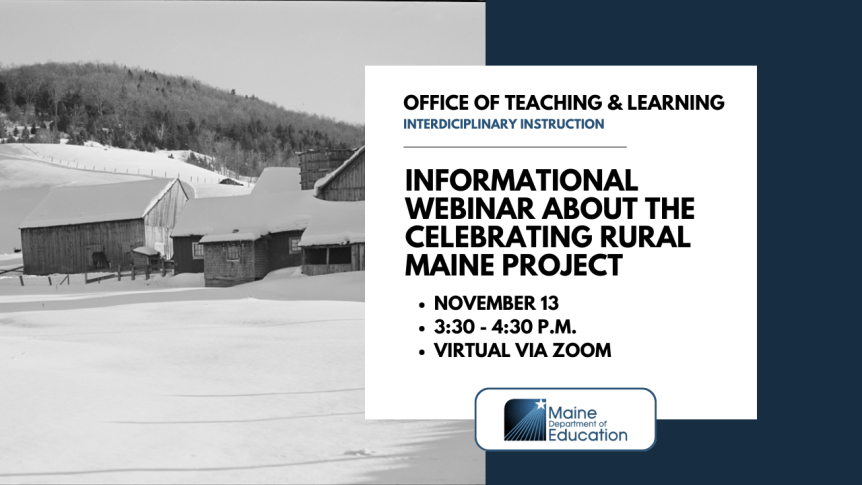
Informational Webinar About the Celebrating Rural Maine Project

Join the Maine Department of Education’s (DOE) Office of Teaching and Learning Interdisciplinary Instruction team for a 60-minute informational webinar about the Celebrating Rural Maine project. It’s scheduled for Wednesday, Nov. 13 from 3:30-4:30 p.m. via Zoom. Educators from grades pre-K-12 are welcome to attend.

The Celebrating Rural Maine project aims to engage rural teachers in a deep examination of Maine’s history with an interdisciplinary place-based approach. The goals of this three-part professional learning series are to:

  • Connect teachers with the Library of Congress’ rural interdisciplinary collections and other supporting organizations to situate local narratives in the larger human experience.
  • Support teachers in the design and implementation of works of public value that connect rural students to their community.

The theme for the first year of this project, slated to run from December of 2024 through the fall of 2025, is “The Geography of the Place We Now Call Maine”. Educators who participate will have an opportunity to connect with content experts, master teachers, and colleagues to explore Wabanaki and African American studies, outdoor learning and innovative teaching models, and climate education. Regina Holland, project manager at the National Council for History Education, will be a guest speaker.

Please click here to register for the Nov. 13 webinar. If you cannot make the live webinar, it will be recorded and posted to the Celebrating Rural Maine project webpage.

This series is hosted by the Maine DOE in partnership with the National Council for History Education. It is funded through the Library of Congress’ Teaching with Primary Sources (TPS) program.

For more details about the Celebrating Rural Maine project, please contact Maine DOE Interdisciplinary Instruction Specialist Jaime Beal at jaime.beal@maine.gov.

About the Teaching with Primary Sources Program

Since 2006, the Library of Congress has awarded Teaching with Primary Sources (TPS) grants to build a nationwide network of organizations that deliver educational programming and create teaching materials and tools based on the Library’s digitized primary sources and other online resources. Each year, members of this network, called the TPS Consortium, support tens of thousands of learners to build knowledge, engagement, and critical thinking skills with items from the Library’s collections.

Maine DOE Launches New Project to Expand the Impact of the Rethinking Responsive Education Ventures (RREV) Initiative

The Maine Department of Education (DOE) recently launched a new project, designed to continue the work of the Rethinking Responsive Education Ventures (RREV) initiative. The ongoing goal is to promote systemic change in Maine schools through innovative solutions to various educational challenges.

This new project, RREV Research & Design (R&D), will expand the impact of the original RREV project, which began when the Maine DOE was awarded $16.9 million from the U.S. Department of Education’s Rethink K-12 Education Models Grant. Maine was one of 11 states to receive funding and used it to provide equitable access to high-quality remote learning opportunities for all Maine students through innovative learning models.

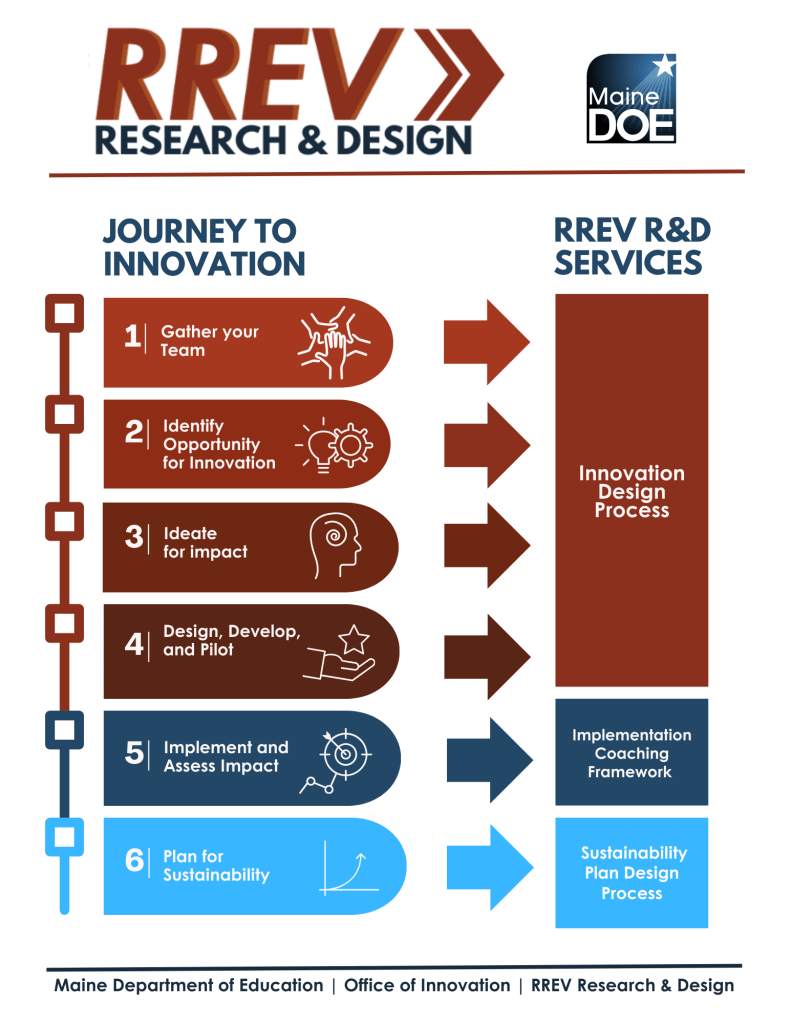
RREV R&D will provide the resources, tools, and processes developed during the original grant period to help schools identify challenges and design meaningful and unique solutions at the local level. This might include anything from creating an outdoor learning environment on school grounds to offering new subjects to students to helping students explore future work opportunities and connect more deeply with the greater community.

State Statute allows schools to design and implement innovative systems, and the Maine DOE’s RREV R&D team is available to support schools throughout that process. The RREV R&D team can help current RREV awardees who are still championing the innovative work at their schools, as well as schools that are new to the process and looking to explore it for the first time.

Please visit the RREV – Innovation Research and Design webpage for more information about how to collaborate with the RREV R&D team. You may also reach out to Elaine Bartley, RREV R&D Project Director, at elaine.bartley@maine.gov.

RREV Innovation Process

Reminder: Deadlines Approaching for Early Learning Mini-Grant and Other Professional Learning Opportunities

The Maine Department of Education (DOE) Early Learning Team is sending a reminder of the following opportunities with deadlines approaching soon:

Kindergarten Transition Mini-Grant Opportunity: This technical assistance program focuses on bringing students, families, schools, and communities together through high-quality transition to kindergarten plans. See the original newsroom article for more information about this mini-grant opportunity and/or watch the recorded information session. Register for the opportunity here.

Maine DOE Early Learning Team office hours are offered on the first Thursday of every month. Find more information about the schedule and the link to join office hours here.

For more information or questions regarding any of these opportunities, you may email Marcy Whitcomb, Maine DOE Public Pre-K Consultant, at marcy.r.whitcomb@maine.gov.

Join Maine DOE Civics Teacher Leader Fellow for a Q&A Session with the National Constitution Center!

Join Breanna Bellefontaine-Krupski, the Maine Department of Education (DOE) Civics Teacher Leader Fellow, in the Office of Teaching and Learning, as she hosts the National Constitution Center’s Education Team in a webinar exploring resources the Constitution Center has available for civics teachers.

The session is geared toward middle and high school civics teachers in Maine. The team at the National Constitution Center will highlight available resources on civil dialogue, elections, and opportunities for teachers to invite experts digitally into their classrooms via their Scholar Exchange Programs. The National Constitution Center is a non-partisan organization dedicated to helping teachers educate students about government by providing them with rich resources about our constitutional founding and the three branches.

Please join us on Wednesday, October 23 at 4 p.m.. The link to join can be found here (no need to register in advance).

For further information, reach out to Breanna Bellefontaine-Krupski at breanna.krupski@maine.gov.


The Promoting Stronger Connections ECHO© Series Starts This Week: An Opportunity Open to All Maine Educators

The Maine Department of Education invites Maine educators to attend the Promoting Stronger Connections ECHO© series with once-monthly sessions starting on October 9. Made possible by the Bi-Partisan Safer Communities Act Stronger Connections grant and a statewide Title II funding opportunity, there is no cost to participate in this program, and it is open to all school-based personnel throughout Maine.

Through MCD Global’s partnership as a formal ECHO© hub with the University of New Mexico, participants will experience high-quality ECHO© services that strictly adhere to the evidence-based model, ensuring fidelity and excellence. The ECHO© series provides for problem-solving in real-time, thanks to Maine educators sharing case studies. After each case study, subject-matter experts and participants provide relevant recommendations and immediate answers to pressing issues. The series also features didactic learning opportunities, which are short, focused segments on the most urgent topics affecting Maine’s educators. Participants will leave the individual sessions with implementation tools and strategies to promote mental health and wellness or “Stronger Connections”.

Register here: https://app.smartsheet.com/b/form/e778af70c5234feca95df61019eb799a

Scheduled sessions take place on five selected Wednesdays, starting at 3:30 p.m.

DATE Topic Presenter
Oct. 9 Regulation and Classroom Management Emily Daniels, founder and author of The Regulated Classroom®
Nov. 13 Resilient Systems Courtney Angelosante, Maine PBIS Coach
Dec. 11 Restorative Practices Stacey Barlow, Maine DOE Restorative Practices Specialist
Jan. 8 Radical Self-Care and Wellness Kellie Bailey, Maine DOE Social Emotional Learning Specialist
Feb, 12 Establishing Bi-Directional Empathy Heather Rockwell, RSU 67 Director of Curriculum and Academic Achievement


The Promoting Stronger Connections ECHO© series creates a virtual learning environment that empowers educators in Maine by providing them with the knowledge, skills, and support necessary to foster resilient learning environments. The program focuses on enhancing educator preparedness and response by equipping them with practical strategies and best practices for managing classroom behaviors, addressing trauma, and responding to crises. The series of sessions will promote emotional and mental well-being by establishing a collaborative network of educators and mental health professionals and offering a forum for presenting de-identified cases for review and recommendations by colleagues and subject matter experts, including Greg Marley, Emily Daniels, Courtney Angelosante, several local superintendents and principals, and Maine DOE specialists.

What our Maine school-based participants are saying about ECHO:   

“I am better able to understand the trauma responses that children exhibit at school. I understand that children are often not in control of their own behavior, and they need adults to help them learn the lagging skills.”

“I gained a toolkit of strategies to use with challenging behaviors. We are implementing PBIS in our district, and I feel the ECHO sessions will help me implement that more effectively with students who present challenging behaviors.”

“It helped me remember to connect and consult with others—even across the state. There are people who will help.”

“I became more aware of resources available in the community and gained greater confidence in my abilities to navigate complex situations. Collaborating with a team of experienced colleagues boosted my confidence in my practice.”

This series is made possible thanks to the Bi-Partisan Safer Communities Act Stronger Connections grant and a statewide Title II funding opportunity. For questions related to the project, contact Julie Smyth, Director of the Office of School and Student Supports, at julie.a.smyth@maine.gov.  For questions regarding the ECHO© series, contact Lori Fecteau at lfecteau@mcd.org .


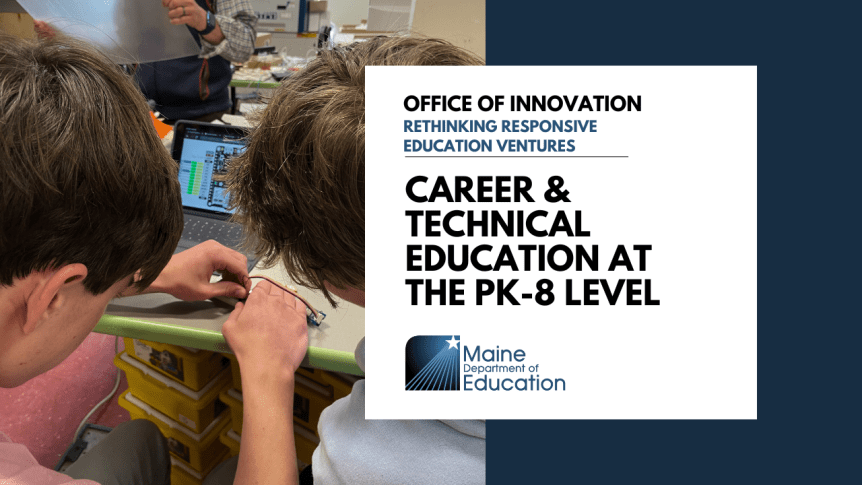
See Innovative PreK-8 Career and Technical Education (CTE) in Action!

Are you a PreK-8 educator interested in providing more hands-on, minds-on learning that is focused on offering your students a look into possible careers and connecting them to their community? If so, check out a Learning Tour at St. George Municipal School on Friday, Oct. 25 from 9 a.m. to 2 p.m.

In August of 2020, the Maine DOE was awarded $16.9 million from the U.S. Department of Education’s Rethink K-12 Education Models Funding. Maine was one of 11 states to receive funding and used it to launch the Rethinking Responsive Education Ventures (RREV) project, a multi-pronged solution with a primary goal of generating innovative remote learning models to provide equitable access to high-quality remote learning opportunities for all students. The RREV Research & Design (R&D) team is continuing the momentum of this work by offering Learning Tours and fostering peer-to-peer professional learning.

St. George Municipal School (PreK-8) was a RREV awardee. Through its innovative pilot, the school has been exploring the benefits of career and technical education for the last few years. CTE is typically only available at the high school level, so those involved have been creating their curriculum along the way! On Oct. 25 at the Learning Tour, you will get the opportunity to see their new Makerspace building, observe the learning in action, and talk to teachers and students.

This Learning Tour space is limited to 10 additional Maine educators. If you are interested in joining us on this tour, please reach out to Elaine Bartley, the RREV R&D Director, at elaine.bartley@maine.gov.

To learn more about the RREV awarded innovative pilots, please click here. There will be other Learning Tours available throughout this school year.  You can find the list of upcoming tours on our website.

Information Session: Using MOOSE Applied Ethics Modules to Support your Classroom

Looking for ways to use Maine’s Online Open-Source Education (MOOSE) modules in your classroom? Would you like support in incorporating personal development and interpersonal skills into your learning environment? The MOOSE platform offers a PreK-12 learning progression of modules focused on Applied Ethics that might be just what you need.

Created by Maine educators for Maine students, these modules aim to help learners of all ages cultivate self-awareness, relationship-building skills, and empathy, while also becoming responsible decision-makers.

In this one-hour session, you’ll explore how the principles of Applied Ethics are integrated into the MOOSE modules and how you can foster a learning environment where rich, engaging, and respectful questioning and dialogue thrive. You’ll have the opportunity to experiment with how to use the modules with your learners and discover additional educator resources.

The session will be on Tuesday, October 15, from 3:00 PM to 4:00 PM via Zoom. You can register for this event by clicking here.  The session will be recorded and sent to anyone who registers, even if they can’t attend in person.

For more information, you can contact MOOSE Team Leader Stephanie Connors (stephanie.connors@maine.gov) or MOOSE Project Manager Jennifer Page (jennifer.page@maine.gov).