Register for the Second Annual Maine Inclusive Education Conference on April 8

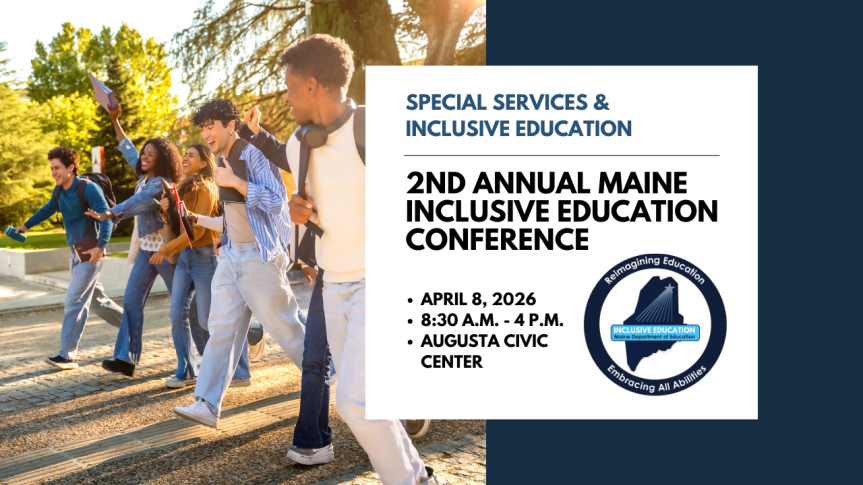
Registration is now open for the second annual Maine Inclusive Education Conference, scheduled for Wednesday, April 8, 2026, at the Augusta Civic Center.

This year’s conference theme is, “Reimagining Education: We Are Better Together!” The event will provide school communities (i.e., educators, administrators, families, and students) with the tools necessary to collaborate to support every student—particularly those with disabilities—to ensure that all students have the support they need to build inclusive, meaningful futures.

Hosted by the Maine Department of Education (DOE) Office of Special Services and Inclusive Education, in collaboration with the University of Maine at Farmington, the conference will feature keynote speaker Paula Kluth. Kluth is a consultant, author, advocate, and scholar who works with teachers and families to provide inclusive opportunities for students with disabilities and to create more responsive and engaging schooling experiences for all learners. She is the author of more than 15 titles, including Universal Design Daily, 30 Days to the Co-Taught Classroom, Don’t We Already Do Inclusion?, and You’re Going to Love This Kid!: Teaching Autistic Students in the Inclusive Classroom.

Please gather a team of your school colleagues and join the Maine DOE in Augusta this spring! The cost of the day-long conference (8:30 a.m. to 4 p.m.) is $185 for early-bird registration and $210 after March 1, 2026. Lunch will be included.

You may register for the second annual Maine Inclusive Education Conference here.  

Are you engaged in inclusive work in your school or community? If so, the Maine DOE welcomes you to share your experiences at the conference! Please contact Tracy Whitlock, Maine DOE Special Projects for Inclusion Coordinator, at tracy.w.whitlock@maine.gov to learn more.

Two-Part Professional Learning Series: Designing High-Quality ILAP Language Goals for Multilingual Learners

Are you looking for a clearer, more confident approach to creating effective language goals for multilingual learners? If so, consider participating in a two-part virtual series, led by Maine Department of Education (DOE) Teacher Leader Fellow Rebecca Carey. Participants will learn how to strengthen their practice surrounding Individual Language Acquisition Plans (ILAPs) by engaging in a clear and collaborative process for creating meaningful, measurable language goals that support and monitor student growth, connecting directly to classroom learning

Every multilingual learner must have an ILAP—a required, school-based plan designed to reflect and support their language development needs. High-quality ILAPs include well-crafted language goals that are measurable, instructionally relevant, and aligned to students’ learning contexts.In these sessions, participants will:

  • Learn effective approaches to developing high-quality language goals.
  • Engage with a variety of WIDA resources to support language goal development.
  • Explore collaborative pathways and approaches for ILAP development.
  • Draft, refine, and receive feedback on language goals with guided support.

These sessions are intended for English for Speakers of Other Languages (ESOL) teachers, directors/coordinators of multilingual programs, and general education teachers who support multilingual learners. Each session includes one hour of structured learning, followed by 30 minutes of guided workshopping, discussion, and sharing. Participants who attend both sessions will receive three contact hours.

This two-part virtual series will be held from 3:30-5 p.m. on:

  • Monday, January 12, 2026
  • Tuesday, January 13, 2026

Registration is required. Please register here.

The Teacher Leader Fellows program is a part of the Maine DOE Office of Teaching and Learning. For more information, please contact Jane Armstrong, Maine DOE ESOL State Specialist, at jane.armstrong@maine.gov.

School Interest Form Available for Third Annual ‘I Belong’ Youth Summit

The Maine Department of Education (DOE) Office of Special Services and Inclusive Education, in collaboration with the Transition Maine Regional Transition Collaborative Fellows, invites you to save the date for the third annual “I Belong” Youth Summit, to be held at Central Maine Community College in Auburn on May 21, 2026, from 8 a.m. to 2 p.m. Information regarding registrations for middle and high schools will be released soon. A school interest form is now available for those planning to bring students to the event: Access the School Interest Form here.

The “I Belong” Youth Summit invites schools from across Maine to join a transformative initiative designed specifically for transition-aged students with disabilities. This dynamic gathering goes beyond traditional career fairs to offer meaningful exploration, skill-building, and work-based learning opportunities tailored to each student’s interests and abilities. Check out this article about the second annual “I Belong” Youth Summit.

By participating in this event, you will become part of a statewide movement to reshape post-secondary pathways for all Maine students with disabilities. Your involvement creates ripple effects of opportunity:

  • Students discover career paths they may never have considered, building confidence and practical skills for their future.
  • Educators gain valuable resources, evidence-based practices, and direct connections with industry partners.
  • Businesses develop tomorrow’s workforce, while fulfilling community engagement goals.

Help your students find where they belong in Maine’s future workforce. The “I Belong” Youth Summit provides a student-centered environment for youth to explore career pathways at their own pace, connect with potential employers, and envision new possibilities for their lives after school. Together, we can create a more inclusive, opportunity-rich future for Maine’s students with disabilities.

For more information, please contact Tracy Whitlock, Maine DOE Special Projects and Educator Supports Coordinator, at tracy.w.whitlock@maine.gov.

Maine DOE Highlights Resources and Opportunities for Dyslexia Awareness Month

As part of the Maine Department of Education’s (DOE) mission to promote the best learning opportunities for all Maine students, the Maine DOE remains committed to supporting schools by offering resources that meet the needs of all families, students, caregivers, educators, and school systems.

In recognition of Dyslexia Awareness Month in October, the Maine DOE invites schools, families, and communities to explore resources designed to:

  • Build awareness and understanding of dyslexia and its characteristics.
  • Emphasize the importance of early screening, intervention, and appropriate support.
  • Guide effective instruction for striving readers, including students with dyslexia, across all grade levels and learning environments.

Together, we can increase knowledge, foster awareness, and ensure that every student receives the support they need to thrive as readers and learners.

Learn More About Dyslexia

The following organizations provide reliable, research-based materials regarding dyslexia to dispel myths, strengthen understanding, and highlight the importance of early identification and intervention:

Maine DOE Dyslexia Advisory Group

The Maine DOE’s Dyslexia Advisory Group meets four times per year and includes educators, administrators, parents, and advocates who work collaboratively to increase awareness and improve support for striving readers, including those with dyslexia.

The advisory group is currently accepting applications to expand membership and representation. Maine residents interested in serving are encouraged to complete this short application form by December 12, 2025.

For additional information, resources, or support in increasing dyslexia awareness in your school or district, please contact Danielle Saucier, Maine DOE Inclusive Education Literacy Specialist and Dyslexia Coordinator, at danielle.m.saucier@maine.gov.

Professional Learning Series: Developing Individual Language Acquisition Plans (ILAPs) for Multilingual Learners with Collaboration and Instructional Planning in Mind

Are you new to Individual Language Acquisition Plans (ILAPS) or looking to strengthen your team’s approach? Do you serve a small multilingual learner population and want a practical framework that ensures compliance with state and federal guidelines and promotes student growth? If so, consider attending a two-part virtual series that the Maine Department of Education (DOE) is hosting to offer a clear, collaborative process for developing ILAPS that reflect each student’s language profile, strengths, and instructional needs.

An ILAP is a required, school-based plan for every student identified as a multilingual learner. An effective ILAP clarifies educator roles, targets timely and individualized supports, and honors students’ identities and assets to foster growth, engagement, and belonging. Led by Maine DOE Teacher Leader Fellows Rebecca Carey and Melissa Frans, this series will help participants to learn how to design ILAPs that meet state and federal requirements, while advancing equity, access, and belonging through intentional instructional planning and partnership.

Format:

Participants must attend both sessions of this series. Each session includes one hour of structured learning followed by 30 minutes of collaborative sharing and discussion. Registration is required. Please register here.

Session Topics:

Intended Audience:

English Speakers of Other Languages (ESOL) teachers, directors/coordinators of multilingual programs, and general education teachers who support multilingual learners may find this series beneficial. Participants will develop actionable, collaborative approaches to ILAPs aligned with WIDA Standards and supportive of instructional planning.

Schedule:

This two-part virtual series will be held from 3:30-5 p.m. on:

  • Wednesday, November 5, 2025
  • Thursday, November 6, 2025

Participants who attend both sessions will receive three contact hours.

The Teacher Leader Fellows program is a part of the Maine DOE Office of Teaching and Learning. For more information, please contact Jane Armstrong, Maine DOE State ESOL Specialist, at jane.armstrong@maine.gov.

ADMINISTRATIVE LETTER: Legal Requirements to Provide English Language Acquisition Services to Students Who Are Multilingual Learners (Revised October 9, 2025)

Administrative Letter: #2
Policy Code: IHBEA
TO: Public School Administrators
DATE: August 22, 2019, Revised September 15, 2021, Revised June 21, 2023, Revised October 9, 2025

SUBJECT: The legal requirements for providing English for Speakers of Other Languages (ESOL) services to students who are multilingual learners

Please note that “multilingual learners” is used with reference to students who were previously known as “English learners (ELs).” Federal language still uses “English learners (ELs)” to refer to “multilingual learners.”

Topics included in this letter:

  • Identification of Students Who Are Multilingual Learners
  • Exit Criteria from ESOL Services
  • Monitoring and Reentry into Multilingual Learner Status
  • Delivery of ESOL services
  • Administration of WIDA ACCESS and WIDA Alternate ACCESS (if applicable)
  • Enrollment of Immigrants and International Students
  • Rights of Students Who Are Multilingual Learners to Education
  • Students Who Are Multilingual Learners and Special Education

Identification of Students Who Are Multilingual Learners
It is a federal requirement that all students who are multilingual learners be identified within 30 days of enrollment from the beginning of the school year. For students enrolling at the start of the school year, parents/guardians must be notified of their child’s English learner status within the same 30-day period. After the start of the school year, school administrative units (SAUs) must notify parents/guardians within two weeks of their child’s identification.

Each SAU must provide the Maine Department of Education’s (DOE) Language Use Survey to the parent/guardian of every student, pre-kindergarten through grade 12, enrolling in the SAU for the first time. The Language Use Survey must be included in the SAU’s enrollment packet or online enrollment system. If a student changes schools within an SAU, a new Language Use Survey is not required.

The Language Use Survey is available for download in English and 29 of Maine’s most commonly spoken languages. Parents/guardians are entitled to complete the Language Use Survey in their preferred language. SAUs must provide translation/interpretation services upon request.

The purpose of the Language Use Survey is to identify students who might be multilingual learners. The Language Use Survey decision tree provides guidance on its use. If any question is answered with a language other than English, the student should be administered an English language proficiency screener. (Please note that Sign Language is not a qualifying language for multilingual learner status; however, if a student uses Sign Language and an additional language other than English, the student may be eligible for multilingual learner status.) See Multilingual Learner Identification for information about the required screeners and identification thresholds, by grade level.

Students who were screened for multilingual learner status but who did not initially qualify may be re-screened at any time if a potential need for ESOL support becomes apparent.

Exit Criteria from ESOL Services
A multilingual learner who demonstrates proficiency on the state’s annual English language proficiency assessment is eligible for exit from ESOL services. In Maine, the annual English language proficiency assessment is the WIDA ACCESS or, for multilingual learners with the most significant cognitive disabilities eligible for alternate assessments, the WIDA Alternate ACCESS. Information about both of these assessments can be found on Maine DOE’s English language proficiency assessment page, located here: English Language Proficiency Assessments | Maine Department of Education.

In Maine, an overall Composite Proficiency Level (CPL) of 4.5 on WIDA ACCESS qualifies multilingual learners for exit from ESOL services. Multilingual learners with the most significant cognitive disabilities, eligible for participation in alternate assessments, can be exited from ESOL services with an overall CPL of 4.0 on the WIDA Alternate ACCESS.

In rare instances, multilingual learners qualify for a domain exemption on the WIDA ACCESS or WIDA Alternate ACCESS based on a disability as documented in the student’s Individualized Education Plan (IEP). In these instances, the SAU must submit a Less Than Four Domains request to the Maine DOE. The Maine DOE will ensure the correct Do Not Score code is entered for the student domain(s) in WIDA Assessment Management System. The student’s state ID will also be submitted to WIDA/Data Recognition Corporation for calculation of an overall CPL and the development of an Individual Student Report. The Less Than Four Domains request can be located on the English language proficiency assessment webpage: English Language Proficiency Assessments | Maine Department of Education > Special Forms Request.

Monitoring and Reentry into Multilingual Learner Status
Per federal guidance, SAUs must monitor the performance of former students who are multilingual learners for at least two years after exiting. If, during the two years of monitoring, or at any time thereafter, a former student who is a multilingual learner shows a potential need for continued ESOL support, that student must be rescreened with the WIDA Screener Online to determine multilingual learner status. If a student scores below the state-defined identification threshold, the student must be reentered into multilingual learner status, must receive ESOL services, and must take WIDA ACCESS or WIDA Alternate ACCESS, if applicable, until exiting.

Delivery of ESOL Services
An SAU is required to determine the components of an effective English language acquisition program tailored to the needs of each student, which may include, but is not limited to, tutoring, additional classroom support, materials, sheltered instruction, professional development for content area teachers, or other strategies per the Office for Civil Rights December 1985 Title VI policy memorandum, Title VI Language Minority Compliance Procedures.

The Maine DOE requires the English Language Acquisition Service Provision for a student who is a multilingual learner to be provided or overseen by a 660 ESOL-endorsed teacher. (See 34 Code of Federal Regulations C.F.R. Section 100.3 (b)(ii)). All students who are multilingual learners must be provided with English language support services that enable them to meaningfully access the curriculum to meet grade-level standards. English language development and content area knowledge are to be acquired simultaneously rather than consecutively. In other words, English language proficiency is not a prerequisite to participate in grade-level, content classes. If students who are multilingual learners receive services that remove them from content area classes (such as a newcomer program or pull-out services), any academic deficits that result must be remedied so that the student remains on track with their non-multilingual learner peers academically.

English language support services are to be provided in a way that minimizes the isolation of students who are multilingual learners from the general student population and encourages students who are multilingual learners to participate in all aspects of the school program, including advanced coursework, career and technical education, gifted and talented programs, and extracurricular activities. Students who are multilingual learners are entitled to ESOL services until exiting by demonstrating English language proficiency on WIDA ACCESS or WIDA Alternate ACCESS, if applicable.

Administration of WIDA ACCESS and WIDA Alternate ACCESS
The annual English language proficiency assessment for all students identified as multilingual learners in kindergarten through grade 12 is required by federal law under the Every Student Succeeds Act (ESSA) of 2015. Participation in state assessments is also required under state statute; it is part of annual ESEA application assurances for Title funds. Participation is also included in the school approval process for public schools, including charter schools, and private schools with 60% or more publicly funded students.

In Maine, the required English language proficiency assessment is WIDA ACCESS. A small percentage of multilingual learners with the most significant cognitive disabilities, found eligible for participation in alternate assessment through the IEP team process using state guidance resources, participate in WIDA Alternate ACCESS. The Maine DOE defines English language proficiency as a composite proficiency level of 4.5 on WIDA ACCESS and 4.0 on WIDA Alternate ACCESS.

The Maine Multilingual Learner Identification and Placement Guidance Document, updated annually, outlines all training requirements for test administrators of WIDA ACCESS and WIDA Alternate ACCESS. Federal peer review requirements outline specific standards for test administration training across state assessments, and, therefore, these training requirements for test administrators of English language proficiency assessments are mandatory. It is not required that test administrators be an ESOL-endorsed teacher; however, only an ESOL-endorsed teacher is qualified to design, oversee, and implement an English language support program, which includes the interpretation of WIDA ACCESS and WIDA Alternate ACCESS results.

Enrollment of Immigrants and International Students
Title VI of the Civil Rights Act of 1964 prohibits discrimination based on race, color, or national origin, among other factors, by public schools. SAUs are required to enroll children regardless of citizenship or immigration status per Plyler v. Doe. This applies equally to students who are immigrants and international students attending a Maine public school as an exchange student or tuition-paying student.

All students, including those who are immigrants and international students, must be screened for multilingual learner status. Any student who is identified as a multilingual learner, regardless of citizenship or immigration status, is entitled to ESOL services and must be administered WIDA ACCESS or WIDA Alternate ACCESS, if applicable, annually. International/exchange students are not exempt from Title I required state academic assessments. In Maine, recently arrived multilingual learners who have been enrolled in a U.S. school for fewer than 12 months are exempt from one administration of the state’s English language arts assessment only. See the Maine Comprehensive Assessment System website for further questions and information.

SAUs are not permitted to discourage the enrollment of children who are undocumented immigrants by asking about their immigration status, denying enrollment to those with international birth certificates, or denying enrollment to children whose parents decline to provide their social security numbers or race and ethnicity information. Federal regulations allow schools to ask for children’s social security numbers to be used as student identifiers; however, they should inform parents of the purpose and that disclosure of such numbers is voluntary. Schools may not deny enrollment if parents refuse to provide a child’s social security number. SAUs may require proof that a child lives within SAU boundaries, which may include lease agreements, utility bills, or other documents; however, schools may not ask parents about a child’s immigration status to establish residency. SAUs may require proof of a child’s age, but they may not bar enrollment because a child has an international birth certificate or no birth certificate. 

Rights of Students Who Are Multilingual Learners to Education
The Civil Rights Act of 1964 remains the foundation of the legal rights of a student who is a multilingual learner. Lau v. Nicholsconfirms that all students who are multilingual learners are entitled to meaningful access to the curriculum.  

Although the 2015 U.S. Department of Education ‘Dear Colleague’ guidance on English learners has been rescinded, the civil rights protections underlying that guidance remain fully in effect. Under both federal law (Title VI of the Civil Rights Act of 1964 and the Equal Educational Opportunities Act of 1974) and the Maine Human Rights Act, SAUs have an obligation to ensure that multilingual learners have meaningful access to the SAU’s educational programs and services. Failing to provide appropriate language assistance services or to remove barriers to program participation may constitute discrimination on the basis of national origin and language, which is prohibited under the Maine Human Rights Act. SAUs are accountable for implementing policies, practices, and supports that guarantee equitable access to instruction, comparable participation in academic and extracurricular programs, and timely communication with families in languages they can understand.

If a parent refuses ESOL services, this must be documented, but parental refusal does not release the school or SAU from its responsibility to provide meaningful education to students who are multilingual learners. If a student who is a multilingual learner cannot make academic progress without ESOL services, the student has a right to ESOL services, even if a parent refuses. Parental consent is not required to administer an English language proficiency screener or WIDA ACCESS or WIDA Alternate ACCESS, if applicable. Under state law, SAUs are responsible for administering WIDA ACCESS to all students who are multilingual learners, regardless of parental consent (20-A M.R.S. §6209 (1-A)).

Students Who Are Multilingual Learners and Special Education
Students may qualify for, and have legal entitlement to, both ESOL and special education services. There are specific guidelines for both ESOL and special education that are to determine students’ eligibility for each type of service. Depending on a student’s disability and IEP, universal testing tools or accommodations may be needed to measure English language proficiency. When evaluating a student who is a multilingual learner for disabilities, screening must be linguistically and culturally appropriate. It is advisable to measure a student’s skills in the student’s primary language to clarify whether challenges are due to a learning disability or English language development.

Students who are multilingual learners should not be placed in a special education program unless their IEP determines this placement is appropriate to access specially designed instruction. Multilingual learner status is not a disability and is not covered by the Individuals with Disabilities Education Act (IDEA) or Maine Unified Special Education Regulation (MUSER). The Maine DOE ESOL Team and Office of Special Services and Inclusive Education have collaborated to develop a policy and resource guide on Identifying and Serving Students Who Are Multilingual Learners with Disabilities. This resource can be used by school teams when making determinations about a student’s status and program of services.

For students who are multilingual learners with IEP teams, the U.S. Department of Education has provided the following guidance:

“When an EL student is determined to be a child with a disability—as defined in IDEA, or an individual with a disability under the broader definition of disability in Section 504—the student’s EL and disability-related educational needs must be met. For EL students, in addition to the required IEP team participants under IDEA, it is essential that the IEP team include participants who have knowledge of the student’s language needs. It is also important that the IEP team include professionals with training, and preferably expertise, in second language acquisition and how to differentiate between the student’s needs stemming from a disability or lack of ELP.”

Students who are multilingual learners with learning disabilities are eligible for exit from ESOL services when they demonstrate English language proficiency by achieving an overall composite proficiency level of 4.5 on WIDA ACCESS or an overall composite proficiency level of 4.0 on WIDA Alternate ACCESS, if applicable.

If you have questions or would like further information about serving students who are multilingual learners, contact Jane Armstrong, Maine DOE ESOL State Specialist, at Jane.Armstrong@maine.gov.

If you have questions regarding WIDA’s English language proficiency assessments, contact Mechelle Ganglfinger, Alternate and English Language Proficiency Assessments Coordinator, at Mechelle.Ganglfinger@maine.gov.

If you have questions regarding students who are multilingual learners and eligible for special education, contact Erin Frazier, Director of the Maine DOE Office of Special Services and Inclusive Education, at Erin.Frazier@maine.gov.

Maine Student Leader Nathan Prest Honored with 2025 FosterClub Outstanding Young Leader Award

The Maine Department of Education (DOE) is proud to celebrate Nathan Prest, a student leader and advocate, for being named a 2025 FosterClub Outstanding Young Leader. This national recognition honors exceptional youth with lived experience in foster care who are creating positive change in their communities.

Presented annually by FosterClub, a leading national nonprofit supporting youth in foster care, the Outstanding Young Leader Award celebrates individuals who demonstrate extraordinary leadership, resilience, and advocacy.

Prest received the award for his tireless work supporting youth in Maine through leadership and advocacy, particularly around transition supports and eligibility through age 22 for students with disabilities. His efforts are rooted in a deep commitment to belonging, resilience, and empowering others—especially those navigating both the foster care system and the transition to adulthood.

Prest is a current member of the Executive Student Transition Committee (ESTC), a youth-led advisory group of the Transition Maine initiative under the Maine DOE Office of Special Services and Inclusive Education. Transition Maine works to support students with disabilities as they move from high school into adult life, including employment, post-secondary education, and independent living. Prest’s voice has been central to shaping the program’s statewide direction and impact.

“We could not be more proud of Nathan and his accomplishments,” Connor Archer, Transition Maine Project Consultant, said. “Nathan’s commitment to inspiring others is remarkable, and his resilience in doing so has helped reshape many important initiatives when it comes to helping our students with varying abilities and challenges transition from high school into adulthood successfully. In 2025 alone, Nathan has presented at several conferences and summits, representing the strong presence that Transition Maine has not only here in Maine but across the country.”

“Nathan is an important and wonderful member of the ESTC, and we are so proud of him receiving this amazing award,” Xavier Pettis, Chair of the ESTC, said. “His work with youth advocacy and his own lived experience bring tremendous joy and excitement to everything he does with us. We are all excited to work alongside him in this journey as a leader and human being, as he grows and evolves over these next few years!” 

About Nathan Prest

Prest’s journey in foster care began at just four days old. After living with a foster family and then his grandmother, who became his primary support system until her passing, Prest returned to his former foster family, who eventually adopted him. Despite early life challenges, he graduated from Bonny Eagle High School, a milestone he once thought unreachable.

Today, Prest is a passionate advocate for youth with disabilities, including those living with autism, like himself. He speaks at youth summits and conferences, where he shares his story to encourage others to dream big and persist. He’s currently writing a book about his experiences and hopes to one day launch a business that supports others who are navigating similar journeys.

The Maine DOE congratulates Prest on this national recognition and thanks him for his ongoing leadership, both in Maine and beyond. His work embodies the core values of Transition Maine—empowerment, advocacy, and resilience—and we are proud to have his voice helping to shape a more inclusive and supportive future for all Maine students!

Learn more about the award and this year’s recipients here. You can also read Nathan Prest’s bio on FosterClub’s website.

Stepping Forward: How St. George School Transformed Its CDS Transition into a Whole-Community Win

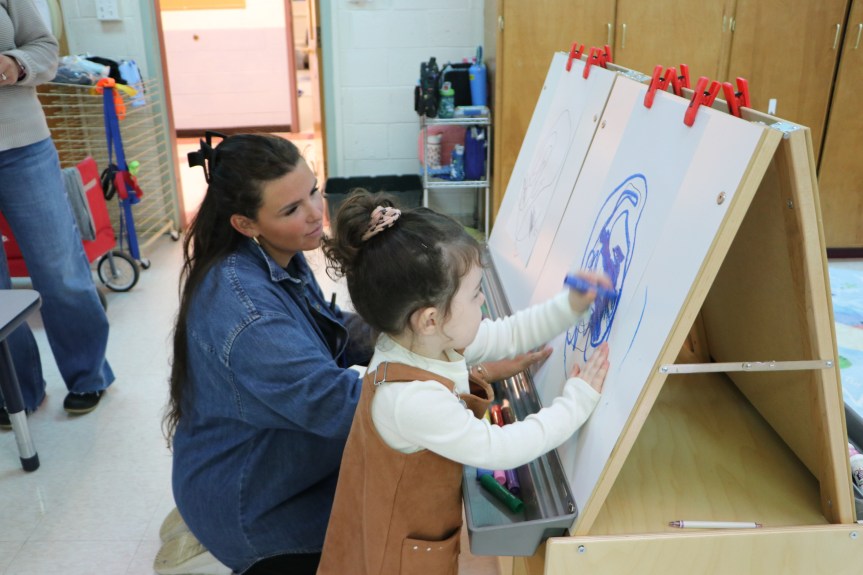
(Pictured: St. George Early Childhood Special Education teacher Alexis Tozier with a student in the 3-K classroom.)

When St. George School signed on to be part of Cohort 1 of the transition of Early Childhood Special Education services for children ages three through five from Child Development Services (CDS) to school administrative units (SAUs), staff did so with the belief that early support creates lifelong success. What they didn’t expect was just how quickly and powerfully this transition would transform not only the lives of children but the entire school community.

Originally planning to launch a program for four-year-olds during the 2024-2025 school year, St. George’s staff realized mid-year that there was a significant need for more localized Early Childhood Special Education services for three-year-olds, as well—including occupational therapy, speech, and individualized instruction. So, the team at St. George acted quickly.

“We had the space,” Dr. Jessica Berry, the school’s Special Education Director, said. “In January, we figured out how to build a three-year-old classroom.” 

The school provided transportation for families and integrated the children into the school community. It was, as Early Childhood Special Education teacher Alexis Tozier, who helped to set up the 3-K program, called it: “fun chaos.”

“It was so incredible to see those kiddos come back this fall,” Tozier said. “They knew the school; they knew the routines. [I’m] not saying they were flawless, but they were ready to go.”


In addition to St. George’s 3-K classroom, Dr. Berry also helped to pilot a new “Zero to School” program, a separate community-wide effort available through support from the John T. Gorman Foundation. The Zero to School program integrated well with St. George’s ongoing special education transition and helped to expand community “Child Find” efforts to identify and support students even before they turn three. 

The two new programs, Zero to School and the 3-K classroom, helped St. George to work with the surrounding community to build relationships with families early—sometimes, before their children are even enrolled in school.

“We started by asking, ‘How do we get to know these little kiddos in our community who aren’t in school yet?’” Mallory Tripp, a parent, school board member, and strong advocate for early childhood programming, said. “We showed up at [the] St. George Days [town event] with bounce houses and popsicles to meet families and let them know the school is here for them.”

Those outreach efforts became the foundation for a more connected, supported community. Throughout the year, St. George hosted family events nearly every month—including a back-to-school bash and parent nights where caregivers could ask questions, make connections, and even talk to a pediatrician in a no-pressure setting.

“It was just a learning space,” parent Laura Vanevery said. “No judgment—you didn’t feel like you were bothering anyone. It was exactly what I needed as a new mom.”

Many families shared that the CDS-to-school transition gave their children—and themselves—what they had been missing: community, routine, and support.

“My son was getting kicked out of daycares because he couldn’t express himself,” Vanevery said. “He came home frustrated; I was frustrated. But, once he started at St. George, he had structure, routine, peers. He came home tired—in a good way. He was calmer. And, he loves going to school. He feels safe here.”


Another parent, Kaylie Lee, described how her son, Riker, began receiving in-home services through CDS and continued to really blossom when he joined St. George’s 3-K classroom this year.

“Bethany [Yovino] from CDS said, ‘He’s doing well, but he needs peers his age.’ The amount of development we’ve seen since starting school—he has come very, very far,” Lee said.

Even families that didn’t go through the full CDS transition were impacted by the more recent expanded community offerings. Selina Staples’ son graduated from CDS services just before turning three but still participated in Zero to School’s weekly summer programming and St. George School’s week of summer camp, which was made possible through a Maine Department of Education (DOE) Kindergarten Transition grant.

“That summer program helped him transition, and now he’s more than ready,” Staples said.

Staples described how she was able to attend the program with her son until he felt comfortable enough to go off on his own with friends, leading up to pre-K this year, where he was more than confident in a space he now considers his own.

From the principal to the classroom teachers, St. George’s staff proved that compassion, flexibility, and teamwork are the backbone of success.

“You have to be flexible,” Tozier said. “Needs vary, and working as a team is the only way to make sure every child gets what they need.”

And while Tozier described the mid-year shift to running a three-year-old classroom as unexpected, Dr. Berry had no doubt that Tozier could handle it.

“She won’t say it for herself, but she will do whatever it takes to make sure a child feels safe and loved—and not just the child, the whole family,” Dr. Berry said. “That’s what Alexis does every single day. This program works because of people like her.”

Principal Jess McGreevy agreed.

“We were lucky to have the space and the people. It let us move quickly, and that made a huge difference,” McGreevy said.

For Tripp, one of the most compelling reasons to join the CDS transition was the long-term academic benefit for students.

“When kids get support early, they’re not just more confident; they’re more ready to learn. Our kindergarteners now show up ready to go. And, by the time they’re in third or fourth grade, they need less intensive services because we started early,” Tripp said.

At its heart, St. George’s approach to early childhood education is about community, connection, and equity. By bringing early intervention services directly into the school, hosting events that welcome families of all backgrounds, and maintaining close partnerships with local CDS providers like Yovino, St. George ensures that every child starts school included, supported, known, and ready. In doing so, the school has become a model for what’s possible across Maine.

“It’s the staff here that is key,” Vanevery said. “They’ve made my child feel safe, and that’s what every child deserves.”

PreK Classroom

St. George School and the Maine DOE Office of Special Services and Inclusive Education contributed to this article, written as part of a series highlighting the ongoing efforts of CDS and public schools in providing comprehensive educational services to Maine’s children with special needs. To submit a good news story to the Maine DOE, please fill out the good news submission form.

Registration Open for 15th Annual Maine PBIS Conference

The Maine Department of Education (DOE) and the Maine Positive Behavioral Intervention and Supports (PBIS) State Team are excited to announce that registration is now open for the 15th Annual Maine PBIS Conference, which will take place on Thursday, November 13, 2025, from 8:30 a.m. to 4 p.m. at the Augusta Civic Center. Early-bird pricing is available through October 15, 2025.

This annual event brings together educators, school and district leaders, and student support professionals from across Maine to celebrate their progress and deepen their practice in building positive, equitable school climates where every student can thrive.

This year’s conference will feature a keynote address from Dr. Steve Goodman, a nationally recognized leader in schoolwide systems of support. Dr. Goodman’s keynote is titled, “Better Together: Integrating Academics and Behavior Support in MTSS.”


Dr. Goodman is a research specialist at the University of Connecticut, a partner with the Center on PBIS, and a co-investigator with the Integrated Multi-Tiered Systems of Support (MTSS) Research Network. He previously served as director of Michigan’s MTSS Technical Assistance Center and currently serves on state, national, and international advisory boards for the implementation of MTSS.

With more than 65 publications and extensive experience working with educators across the nation and in ten other countries, Dr. Goodman will bring powerful insights into how schools can integrate academic and behavioral supports within an MTSS framework to ensure the success of all students.

About the Conference

For 15 years, the Maine PBIS Conference has provided a space for educators to share successes, learn from one another, and explore new strategies to improve student outcomes. Participants gain tools and inspiration to enhance their PBIS implementation and foster school cultures grounded in safety, support, and belonging.

Educators are encouraged to register early and join colleagues from across the state for this day of professional learning, collaboration, and celebration.

Please visit the Maine PBIS Conference website to register or learn more about how you can contribute to the conference’s success.

With questions, please contact the Maine PBIS team at pbis@maine.edu.

Stepping Forward: The Importance of Partnerships in RSU 13’s Transition of Early Childhood Special Education Services

Pre-K students at RSU 13’s Thomaston Grammar School (photo credit: RSU 13)

When John McDonald took on his role as superintendent of RSU 13 more than a decade ago, a goal of his was to establish a pre-K program to serve young children in the community. A grant of about a million dollars and a partnership with Penquis kickstarted that work, but the process was not seamless. McDonald noted that over the years, classroom numbers fluctuated, and budget woes resulted in some cutting back of services. There was, however, a very positive outcome of this effort.

“Ultimately, I ended up with a school board who really understood the benefit of having universal pre-K,” McDonald said.

That mindset presented an ample opportunity for RSU 13 when McDonald learned of the planned transition in Maine of Early Childhood Special Education services for children ages three through five from Child Development Services (CDS) to school administrative units (SAUs) by July 1, 2028. He said he “jumped” at the chance to become a part of Cohort 1 in the 2024-2025 school year, recognizing that this effort would ultimately help his overall student population and special education referrals.

“I just felt like it was a good fit for us and fit right in with our philosophy and our goals,” McDonald said.

A supportive school board invested money in RSU 13’s local budget to support the CDS transition. Now, McDonald is proud to say that RSU 13 offers universal pre-K, with a pre-K classroom available to every school in the district. He said he recognizes that this progress would not have been possible without the strong partnerships that RSU 13 had already established with CDS, Penquis, and the local YMCA.

“On our own, we all have limited resources, and—let’s face it—budgets are tight,” McDonald said. “But we want to provide the best possible educational community that we can for these kids. These partnerships are really all-important, in terms of being able to share resources, share information, share expertise.”

Pre-K students at RSU 13’s South School (photo credit: RSU 13)

“We all went into this with our eyes open, recognizing what the needs are,” Gail Page, Site Director of CDS Midcoast, said. “We knew what we needed to do in order to meet the needs of children. We were all very clear about what our mission was.”

Page said that prior to this transition, there was not enough programming available to meet the needs of local children. Over the past year, however, Page said huge steps of progress have occurred. For example, local children who were receiving tele-speech services are now receiving in-person speech services. Page works closely with Janet Corcoran, RSU 13 Special Education Director, and they do their best to address the needs of every child.

“Our work has really proved that this can be done, and it can be done well,” Page said.

“We’re trying to build something new, and whenever you’re trying to build something new, there are always going to be hitches and things that didn’t go the way you planned—but I think it has gone really well,” Corcoran said.

Corcoran noted that in her close work with Page, she is able to provide honest feedback—and the two work together to determine the questions that they want to ask leaders at the state level, as they continue to improve operations. Despite any hurdles, Corcoran said the universal pre-K model is essential, as it allows students who are receiving Early Childhood Special Education services to interact with and learn from their general education peers.

Corcoran said ultimately, the goal is to graduate students out of special education services, leading to better educational outcomes overall.

“Early intervention is the key,” Corcoran said. “The earlier you can get to students and provide those services, the less likely they’re going to need them long term.”

Pre-K students at RSU 13’s Ash Point Community School (photo credit: RSU 13)

Corcoran also highlighted that what public school offers—social workers, school psychologists, speech and occupational therapists, etc. on-site—is hard to meet elsewhere. Perhaps one of the best outcomes of the transition in RSU 13 thus far has been the reaction from local families.

“I get feedback all the time from families about how appreciative they are that we offer classes and services for these really little kids,” McDonald said. “There are lots of working families where both [parents] work. Child care is very expensive, if it’s even available in this area. They are just so, so appreciative of this.”

RSU 13, CDS Midcoast, and the Maine DOE Office of Special Services and Inclusive Education contributed to this article, written as part of a series highlighting the ongoing efforts of CDS and public schools in providing comprehensive educational services to Maine’s children with special needs. To submit a good news story to the Maine DOE, please fill out the good news submission form.