Maine DOE Podcast Highlights Calais Schools Implementing BARR to Strengthen Relationships and Student Engagement

Maine Has More Than 70 Schools Implementing the Building Assets Reducing Risks Model (BARR), With Additional Funding Available for More Schools to Implement the Program

On the latest episode of the Maine Department of Education’s (DOE) “What Holds Us Together” podcast, Education Commissioner Pender Makin talked with Calais Elementary School Principal Sue Carter and Calais Superintendent Mary Anne Spearin about their experiences implementing the Building Assets Reducing Risks (BARR) model in their district. BARR combines relationship-building and the use of real-time data to strengthen student engagement, wellbeing, achievement, educator wellbeing, and connections across the school community. Listen here.

Calais Elementary School began implementing BARR this school year in fifth and sixth grade through a statewide grant opportunity provided by the Maine DOE through federal funds. More than 70 schools across Maine are now BARR schools, with additional funding available for schools that want to implement BARR in the next school year.

Makin spent the day at Calais Elementary School to experience the successes the school is having with BARR firsthand and taped her podcast onsite with the school leaders. Read more about her visit here.

“I’m so grateful that you hosted us today from the Department. We brought a team and we got to visit all of the classrooms. We also got to sit in on some of the BARR activities, including what’s called U-Time. When I asked ‘What is U-Time?’ she said, ‘Well, it’s an activity that we do where we learn a little bit more about ourselves and about our classmates.’ And it was just so well said. And then we also got to sit in with a group of teachers having a conversation that’s called a small block conversation, where they were discussing students in this particular case, who are appearing to be thriving across the board who are high academic achievers, and they discussed each student in terms of possibilities, ways to be more challenged, and also any concerns that might otherwise have gone unnoticed,” said Makin during her podcast intro.

Makin asked Carter what she and educators are experiencing through their BARR implementation.

“We started BARR at the elementary school in September. We applied for the state-provided program and it has really grown and become part of our school, culture, and climate,” said Carter. “Recently, we looked at our attendance. We usually don’t look at attendance until it’s a problem, and [now we] identified some kids that have been out seven days, taking the opportunity to send a letter home to say, ‘Hey, your kids missed seven days. We don’t want them to be truant, how can we help to make sure that they get to school?’ The data is inputted every week. You talk about and see that data over time.”

Spearin implemented BARR while she was an administrator at the middle/high school and provided a longer-term view of the BARR experience.

“The Calais Middle/High School adopted the program in 2016. I’m a true believer in the program. We originally brought it on because the main focus was grades and the transition into ninth grade. For us, it really made a difference when we could see the number of failures in our coursework had changed significantly in the first year and then changed again the next year. And then as time went on, it went into more of the behavioral and checking in with the students and making sure they had trusted adults and really working on how they created a culture within the ninth-grade cohorts,” said Spearin.

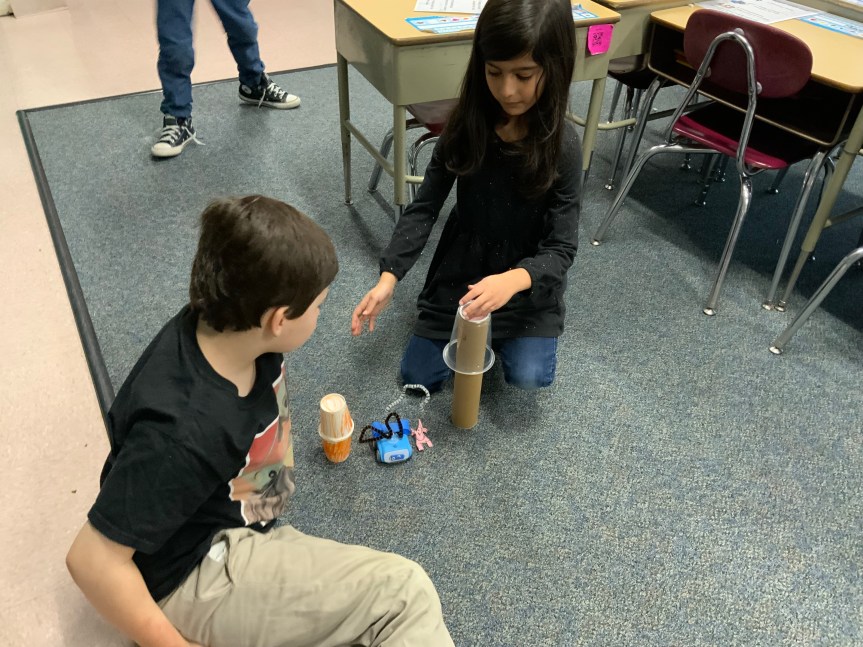
While at the school, Commissioner Makin had the opportunity to participate in a sixth-grade U-Time activity called “What’s on your plate?” Every U-Time is different, and in Carly Davis’s sixth-grade class, it was all about self-discovery. Sixth graders and DOE team members were each given a paper plate, which they folded in half.  On one side were the participants’ responsibilities, and on the other were the things they did in their free time. After making the plates, Davis engaged the students through a series of discussion around having a balanced plate, which portions are taking up too much time, which portions they love, which portions they wish they had less of, and so forth. On the back of the plates, students wrote one thing they wished they could add or take away from their plate.

Students learn about one another through these activities, about themselves, and teachers about their students in a deeper way. Teachers also share these valuable insights at their block meetings so the entire teaching team has that information. Block meetings happen weekly, with teacher cohorts discussing not just academic-related data but every student’s strengths, passions, and personal goals. This opens a broader, more positive discussion around the whole student. The team works off a spreadsheet that builds a picture of each student by reviewing a variety of in-school factors, including progress in class, attendance, and behavior. The team also discusses factors outside the school, such as extracurricular interests, personal health, issues with other students, or troubles at home. All this data collection allows the team to flag challenges early and work together to solve problems. Importantly, teachers track not just problems but student strengths to identify achievable goals to get or keep students on track for success. For students coping with the toughest situations in and out of school, BARR’s model requires a weekly Community Connect meeting that involves more specialized staff, such as the school nurse and school psychologist along with school administration.

“The other piece that’s really important about BARR is we always talk about the kids who are struggling or you know, not doing so well. But today we actually talked about four kids who were doing very well,” said Carter. “So it identifies those kids and we talked about those kids as well, which I think you need to have a balance, and the program forces you to do that. [The teachers] are very, very committed to it.”

Makin asked Carter if she is seeing any changes in student outcomes or differences in school culture now that she is more than halfway through her first year of implementing BARR.

“I would say so. Last week, the kids had posters that they wrote on about what BARR has done for them. [And they wrote] it helped me be aware of myself, it helped me to be more friendly, it brought me joy, it taught me empathy. So absolutely, every person, adult and student, is able to vocalize what they are gaining from BARR without having to think about it,” said Carter. “There’s not any way that can’t carry over to outside of school as well because it’s in them. It’s a part of them, and they’ll take that with them and as they move on to middle school, which is very important. It will help them be successful there as well.”

Makin asked what Carter and Spearin would say to other school leaders considering BARR.

“From the superintendent role and perspective, I would say that I am 100 percent in support of BARR. I loved it as a building administrator and as a team member. I saw the changes that it made for our freshmen students coming in. It supports our students. It gives them additional resources because it forces you to bring in resources from your community,” said Spearin. “The other part is the fact that teachers are out there alone and this forces time together. It forces them to look at the kids as our kids, not my kids. It also forces them to really look at the positives. It forces them to look at the challenges and to come up with a community solution to what’s going on with those students in the positive times and in the challenging times. And so it really does give the teachers the ability to have a team to work from and it also allows them to sit and look at the positives that are coming from all the work that they’re doing. We do not have enough time built into the day to do that unless you have a program that really encourages that.”

Makin asked how activities like U-Time, the regular data collection that educators are engaged in, and the conversations in block times create better grades and fewer failures in ninth grade.

“We had kids who would be looking at not doing their homework. You had an entire team of teachers saying I know that the basketball season is coming up and this is really important to this kid. Who knows this kid well enough to be able to go have that conversation about what they need to get that work done so that their grades don’t drop below the athlete eligibility piece? Or I know this student and they’re really having some challenges at home. Who knows a student well enough and has a connection to be able to reach out [to them]? We even had liaisons with the community that came in and we could then open those conversations up with them as well,” said Spearin. “Instead of a student that went through eight different periods in a two-day time and nobody had the opportunity to reach out and say, we know there’s something going on, how do we support you? And it wasn’t doing the work for them. It was saying what do you need to be successful?”

Applications are now open to all willing and qualified public schools that would like to become a BARR school. Click here to apply. Applications are due by March 22, 2024, by 5 pm EST. The Maine DOE will cover all costs of implementing the program for schools new to BARR for the 2024-2025 school year.

The Maine DOE used American Rescue Plan funding to create a competitive BARR grant to help schools invest in the model.

Calais Elementary School Strengthens Relationships Through BARR

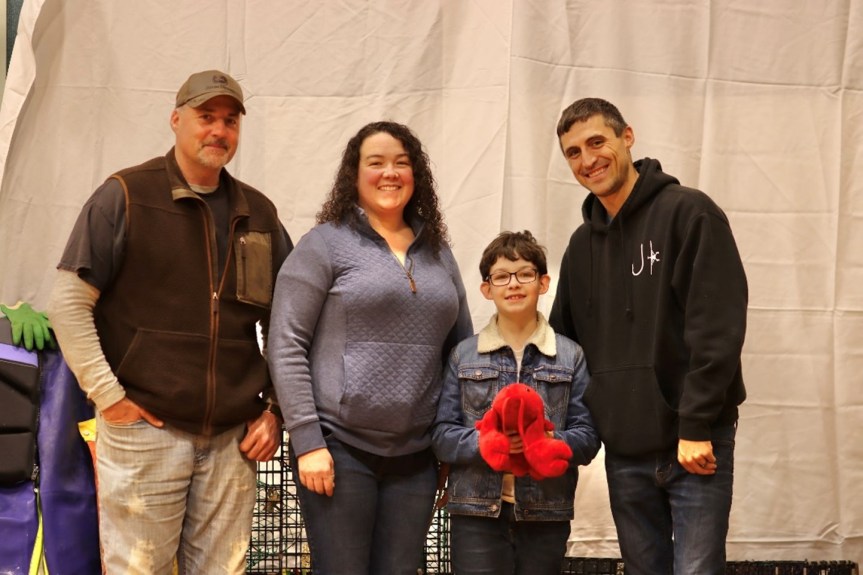
(A Calais Elementary Student celebrates what he’s learned through BARR)

Nestled in the tight-knit community of Calais, Maine, is Calais Elementary, a pre-k through sixth-grade school full of enthusiastic students and dedicated teachers. Calais Elementary is one of more than 70 Maine schools using the Building Assets Reducing Risks (BARR) education model, and this week, Maine Education Commissioner Pender Makin visited to experience BARR in action.

“We started BARR at the elementary school in September,” Principal Sue Carter said. “We applied for the state-provided program, and it has really grown and become part of our school, culture, and climate.”

The BARR framework combines relationship building (staff to staff, staff to student, and student to student) and real-time data to strengthen engagement and wellbeing for all students. By building solid relationships with students and fellow educators, teachers work together to support the whole student.

At Calais Elementary, they are implementing BARR with fifth and sixth-grade teams. Fifth and sixth grade teachers hold weekly block time to discuss student strengths and what they need to thrive. Teachers also engage students through weekly U-Time activities.

“U-Time is the classroom activity part of the BARR Structure where educators and students in their classrooms dedicate a little bit of time to building relationships, deepening their knowledge of themselves as learners, as individuals, and really helping to understand one another,” said Makin.

Commissioner Maiken and Chief Innovation Officer Page Nichols sit at a school table working on their BARR U-Time activity.
Commissioner Makin and Chief Innovation Officer Page Nichols working on their “What’s on your plate?” U-Time activity.

While at the school, Commissioner Makin had the opportunity to participate in a sixth-grade U-Time activity called “What’s on your plate?” Every U-Time is different, and in Carly Davis’s sixth-grade class, it was all about self-discovery. Sixth graders and DOE team members were each given a paper plate, which they folded in half.  On one side were the participants’ responsibilities, and on the other were the things they did in their free time. After making the plates, Davis engaged the students through a series of discussion around having a balanced plate, which portions are taking up too much time, which portions they love, which portions they wish they had less of, and so forth. On the back of the plates, students wrote one thing they wished they could add or take away from their plate.

Delilah, a sixth grader at Calais Elementary, described U-Time as a class where you learn “about your classmates, the people around you, your teachers, and you.”

Jackie, a fellow sixth grader, said that in U-Time, she has learned “to help people if they are going through a hard time, and that if you see someone crying, you should go over there to talk to them.”

“It really sparked a lot of conversation,” said Commissioner Makin. “I could see how it was creating relationships within the classroom, building trust and knowledge of themselves and others.”

Students learn about one another through these activities, about themselves, and teachers about their students in a deeper way. Teachers also share these valuable insights at their block meetings so the entire teaching team has that information.

For example, after the “What’s on Your Plate?” exercise, Davis brought a few of the sixth grader’s plates to a block meeting. “[Davis] talked about the two plates, what they said, and that was put down,” Principal Carter explained, “and we will come back around to that in our next block meeting.”

Block meetings happen weekly, with teacher cohorts discussing not just BARR-informed data but every student’s strengths, passions, and personal goals. This opens a broader,

Six educators sit in a classroom facing the front of the class. They are BARR teachers holding a Block Meeting.
Calais Elementary’ s BARR teacher cohort uses recess as an opportunity to hold Block Meetings.

more positive discussion around the whole student. The team works off a spreadsheet that builds a picture of each student by reviewing a variety of in-school factors, including progress in class, attendance, and behavior. The team also discusses factors outside the school, such as extracurricular interests, personal health, issues with other students, or troubles at home. All this data collection allows the team to flag challenges early and work together to solve problems. Importantly, teachers track not just problems but student strengths to identify achievable goals to get or keep students on track for success. For students coping with the toughest situations in and out of school, BARR’s model requires a weekly Community Connect meeting that involves more specialized staff, such as the school nurse and school psychologist along with school administration.

“BARR really does give the teachers the ability to have a team to work from,” said Superintendent Mary Anne Spearin. “It also allows them to sit and look at the positives that are coming from all the work that they’re doing.”

At this week’s block meeting, the team spent most of their time discussing highly successful students. These students can often receive less attention than students exhibiting behaviors or academic performance requiring intervention. Those students still get the support they need, but BARR focuses conversations on all students.

“To see that data over time is pretty amazing,” remarked Principal Carter. “No other programs that we had held us to that level of accountability.”

“BARR offers two things you don’t usually see in other programs and that is a curriculum that you could work from and the data to prove that the curriculum is working,” said Superintendent Spearin.

Calais Elementary is not the only Calais school utilizing BARR. In 2016, Spearin implemented BARR for ninth graders at Calais Middle/High School.

“It really made a difference. We could see the number of failures in our coursework had changed significantly in the first year and then changed again the next year,” recollects Spearin. “From the superintendent’s role and perspective, I would say that I am 100 percent in support of BARR. When I speak to people, I tell them they should consider the BARR method. It is just crucial to the things that are happening in our world right now. Everybody needs somebody.”

An educator from Calais Elementary school holding up a poster that says "my students have taught me joy"
One of Calais’s BARR teachers.

When Commissioner Makin asked Principal Carter if she would recommend BARR to other schools, she enthusiastically responded, “Absolutely!”

“Every person, adult and student, is able to vocalize what they are getting from BARR,” Principal Carter told Makin. “There’s no way that can’t carry over outside of school because it’s in them. It’s a part of them, and they’ll take that with them when they move on to middle school.”

Interested in joining Calais to become a BARR school? The DOE is offering additional funding for schools to become BARR schools. To learn more, please attend the DOE’s March 14th webinar.

 Click Here To Register for the Thursday, March 14th BARR Webinar at 3:00 PM ET.  

Applications are now open to all willing and qualified public schools that would like to become a BARR (Building Assets, Reducing Risks) school.  Click here to apply. Applications are due by March 22, 2024, by 5:00pm EST.

The Maine DOE will cover all costs of implementing the program for schools new to BARR for the 2024-2025 school year. (Note: if you are already a BARR school with an existing contract, your costs will be covered for the 2024-2025 school year as well, and you do not need to reapply.)

The Maine DOE used American Rescue Plan funding to create a competitive BARR grant to help schools invest in the model.

Mt. Blue High School Eases the Ninth Grade Transition with BARR

(Through BARR, Mt. Blue High School students McKylee and Kenzee developed a strong bond with their ninth-grade counselor and BARR Coordinator, Anna Peterson, that continued into their sophomore year.)

For five years, Mt. Blue High School in Farmington has used the BARR (Building Assets Reducing Risks) model to ease ninth graders into high school. As a result, they have seen increased attendance, lower failure rates, and stronger bonds between educators and students and among educators.

“Freshmen have always been a demographic of students who have struggled,” said ninth-grade Earth Science teacher Kerry Schlosser, “I think BARR leads to just an additional level of support. Especially when you go from middle school to high school, it’s such a vulnerable year, a vulnerable time.”

The ninth-grade educator team at Mt. Blue know their students deeply. They greet them by name in the hall, know who their best friends are, and their dreams for the future. BARR helps facilitate those strong relationships.

Mt. Blue High School is one of more than 70 schools across Maine implementing BARR. Last summer, the Maine Department of Education (DOE) provided an opportunity for any school in the state to become a BARR school and join schools like Mt. Blue that have been experiencing incredible success through BARR.

BARR is a model that combines relationship building (staff to staff, staff to student, and student to student) and real-time data to enable schools to strengthen academic outcomes and wellbeing for all students. By building strong relationships with students and fellow educators, teachers can work together to support the whole student.

Educator teams meet in Block Meetings, where they discuss each student individually, focus on their strengths and connections to school, share personal knowledge and observations (e.g., a student’s mental health, family life, goals, etc.) and analyze benchmark data (e.g., grades, attendance, behavior, etc.).

Schlosser explains how Block Meetings work at Mt. Blue.

Mt. Blue's Community Connect meeting is where educators and school community members meet to discuss at-risk students. Mt. Blue educators and school community members sit around a conference table talking about BARR with laptops in front of them.
Mt. Blue’s Community Connect meeting is where school community members meet to discuss at-risk students.

“We have a Big Block at the end of the week where we discuss students as a big team with the administrator, school counselor, and social worker. Then, at the beginning of the week, we have our Small Block meeting, where we as teacher teams and then discuss students and small interventions there,” she said.

Students whom educators identify as at risk are discussed in Community Connect meetings, which involve greater school community members including school resource officers and administrators. At Mt. Blue, they hold weekly Community Connect Meetings, which include Peterson, the ninth-grade Assistant Principal Greg Henderson, school social workers Angelica Levy and Jack Turner, school nurse Vicky Gerstenberger, special education building coordinator Mike Hanson, and school resource officer Matt Brann. During their meetings, the Community Connect team develops strategies to intervene and limit poor behaviors before they result in a suspension.

Makylee, a sophomore, feels that the support she got through BARR in ninth grade set her up to have better relationships with her sophomore teachers.

“Teachers talk and have meetings. They let each other know how you are as a student, so you don’t have to go in as a fresh start,” she shared. “Then, your bond just increases to grow.”

These positive relationships with educators are built during I-Time. Much like Block and Community Connect Meetings, I-Times can vary from school to school. At Mt. Blue, each ninth-grade teacher has twenty freshmen they see during multiple I-Times. I-Times involve everything from relationship building activities to life skills development. Most importantly, these I-Times allow students to meet and bond with peers and teachers, and students are able to bond on a deeper level.

“Not only did your teachers get to know you, you got to know them, and you bonded as a class and a community,” Makylee said.

Before investing in BARR, Mt. Blue saw consistently high suspensions and low attendance rates.

“The year before BARR, suspensions were through the roof, and there were a lot of different behaviors,” remembers Joel Smith, the Mt. Blue Principal. “Hearing that BARR had an impact on academics, attendance, and behavior, that was appealing…especially the behavioral component, and we’ve seen a difference since then.”

Since starting BARR, Mt. Blue’s suspension rates have gone down, their attendance is up, and the failure rate was below five percent in the first semester of the 2023-2024 school year.

“Our failure rate, since implementing BARR, has gone down each and every year,” said Smith.

Mt. Blue BARR Students sit in a science classroom at long black lab desks, facing the front of the room where a teacher sits in front of a laptop talking to them.
Dr. Patricia Millette teaches her ninth-grade I-Time students about using critical thinking to decipher manipulative advertisements.

Outside of the data and inside the classroom, educators are experiencing those positive trends firsthand and they are sustained past freshman year. Sophomore English teacher Meadow Sheldon, who has been teaching at Mt. Blue since before BARR was implemented, sees a real difference in her post-BARR sophomores.

“They work hard, and they can advocate for themselves,” Sheldon conveyed. “They have an understanding of what [their grades]  mean and ask for help more than students have in the past.”

What’s more, students feel better about being at school. Quinn, a freshman, found school unappealing up until this year. Now, he is an honor student who is close to his teachers.

“It feels like the school actually treats me like a person instead of like a kid,” he said.

Peterson is immensely proud of the ninth-grade team’s work with BARR.

“I love the way that we take care of every ninth-grade student. We notice if their grades are slipping if they’re absent, or if there is a problem,” he said.

Smith and Peterson hope to see the BARR model extended to the entire high school someday.

“We are looking at opportunities whenever possible to implement the BARR model,” said Smith.

Interested in becoming a BARR school? Attend this BARR webinar coming up:

Applications are now open to all willing and qualified public schools that would like to become a BARR (Building Assets, Reducing Risks) school. Click here to apply. Applications are due by March 22, 2024 by 5:00pm EST.

The Maine DOE will cover all costs of implementing the program for schools new to BARR for the 2024-2025 school year. (Note: if you are already a BARR school with an existing contract, your costs will be covered for the 2024-2025 school year as well and you do not need to reapply.)

The Maine DOE used American Rescue Plan funding to create a competitive BARR grant to help schools invest in the model.

Belfast Alternative Ed Program Partners with Local Paper for Student Mentorship Experience

(Pictured: Emma Witham, a student at BCOPE, RSU 71’s alternative high school program)

Belfast Community Outreach Program in Education is RSU 71’s alternative high school program, which was funded by a grant from the Office of Substance in 1990.

The program began in a small rental space down the street from Belfast Area High School. In 2002, the district built the program their own building, which was designed by students. The campus includes a 4000 square foot building equipped with four classrooms, a full kitchen, a band room, an organic garden and a greenhouse. The program currently serves 33 students 16 of which have a parent or sibling who has attended there.

“Over the years, we have worked with many community partners,” said Helen M. Scipione, BCOPE Teaching Principal. “One of our most recent partnerships is with Village Soup, The Republican Journal, which is our local weekly newspaper. The editor, Jim Leonard, did an article on BCOPE last year and he was so impressed with what he experienced, he offered to mentor a student reporter. We quickly took him up on his offer.”

Emma Witham, one of BCOPE’s current students is a gifted writer and she accepted the challenge. Emma’s mother, Krystal, and her sister, Abby both graduated from BCOPE. Her twin sister, Ava, also attends BCOPE now.

Emma recently had her first article published and it is not only the history of BCOPE, it is her experiences with alternative learning.

“We are extremely proud of Emma and BCOPE and we’d like to share it with you,” said Scipione.

In Emma’s words, “I have been honored for who I am at BCOPE and it’s an experience I’ve never had before. I am extremely grateful for BCOPE.”

Read the full article here in the Village Soup.

“I can honestly say that we are eternally grateful for our community of learners that spans 34 years,” added Scipione.

This article was submitted by BCOPE. To submit a good news story to the Maine DOE, use our Good News Submission Form.


Five Maine Education Programs Highlighted in National Webinar on Educational Innovation

In December, five Maine educators leading school innovations and working towards systemic change to create powerful outcomes for Maine students were featured in a webinar hosted by The Regional Education Laboratory (REL) Northeast & Islands with nearly 100 educators from across the country present.

The goal of the webinar was to deepen understanding of different types and purposes of educational assessment within the context of implementing an educational innovation. These educators shared a variety of data sources they used to establish evidence of efficacy as they worked toward systemic change.

Students Laughing - outdoor learning
Students from Portland Public Schools

Portland Public Schools

The first team of educators to present in the webinar were Brooke Teller and Katie West of Portland Public Schools. They shared assessment tools to measure the desired outcomes of increased exposure and engagement for all students, teacher joy, knowledge and commitment to outdoor and experiential learning, and a greater awareness and understanding of Environmental Literacy Practices and Indigenous Worldview. They have a district-wide innovation for 3,200 K-5 students. By examining student field journals, conducting interviews, and surveys, these innovators were able to begin to capture the impact of their innovation on not just students but the larger community. 

“We’ve been doing interviews and collecting anecdotes and stories because we know how powerful a story can be,” said Brooke Teller of Portland Public Schools.

Falmouth Middle School

Katie Coppens of Falmouth Middle School shared their Rethinking Responsive Education Ventures (RREV) Pilot: The Navigator Program. The goal of this innovation is to foster empathy and responsibility for the community by immersing students in the natural, cultural, and historical elements of the community and to use these as a foundation for the study of science, social studies, and other subjects across the curriculum. The People & Places of the Presumpscot unit was the first step in creating district-wide place-based programming. Katie shared creative pre and post unit assessments that demonstrated student growth. 

“When you think of the Presumpscot River what word comes to mind?”

word cloud comparison

“This simple snapshot is a measurement that shows the impact this place based unit has on student understanding and connection to the Presumpscot River,” Katie Coppens, Falmouth Public Schools.

Agnes Gray Elementary School

MSAD 17Outdoor Learning in the Oxford Hills was the focus of Sarah Timm’s presentation. As a result of capturing outcomes of increased engagement and motivation, improved student behavior, and academic achievement, the program began the second year of implementation by moving from one elementary school in the district to all 8 elementary schools in the district. The success of the innovation with the elementary schools has informed their decision to provide outdoor learning opportunities to preK-12 students. 

“We are collecting data about how student behavior in the woods compares to student behavior on metal and  plastic playground equipment.”  Sarah Timm, Outdoor Learning Coach describes one data measure at Agnes Gray Elementary school a school with a forest playground for students. 

Maine Indian Education Schools

Gen Doughty, the RREV Leader for the Maine Indian Education Schools, has been supporting the implementation of Extended Learning Opportunities, Place-Based and Project-based learning in order to increase meaningful student participation and to strengthen connection to the community. It only makes sense that as their innovative pilot focuses on a shared way of life, culture, customs, and traditions, that they assess educational outcomes in a way that aligns with Wabanaki Culture. Gen shared that while they originally tried to measure connection to community and culture through surveys but it wasn’t meaningful information. That led Gen and her team of educators to the challenge of examining how the Wakanaki culture would go about a quest for knowledge. That led to the use of storytelling through small and large talking circles which provided a much deeper understanding of how to respond to student needs.

“The school is a place where many gather , not just a place for our students, our families are involved and we have community meetings and different sorts of activities that happen for our entire families to join in with our students.” Gen Doughty.

The Maine Demartment of Education (DOE) encourages all schools and districts across the State of Maine to learn more about RREV innovative educators and their pilot programs through the RREV website and the online RREV collaborative platform known as EnGiNE. It is through EnGiNE that we hope to continue the momentum to change students’ lives through innovative and responsive educational programs.

Madawaska Shows the Power of Summer Learning Opportunities, Apply for 2024 Funding Today

Last summer, elementary school students throughout Madawaska were provided project-based extended educational learning opportunities with a focus on celebrating the region’s French-Acadian heritage.  

After the 2022-2023 school year, Principal Christian Arnold began working with her team to collaboratively develop thoughtful interdisciplinary lessons and exposure to project-based learning and real-world application, critical thinking skills, and social emotional benefits that emerge from confident learners. During a visit by the Maine Department of Education (DOE), staff observed an engaging lesson focused on preparing students for a field trip later in the week to Maine’s Acadian Village.

Throughout the read aloud, students made text to real life connections, shared personal anecdotes, and leaned in to learn more about their region’s rich cultural history. Directly following the read aloud, students and educators enjoyed ployes while listening to local French-Acadian fiddle music. Throughout their family style meal where butter and local maple syrup was plentiful, students and educators eagerly shared stories from their own personal experiences which illustrated how this delicious French-Acadian staple has connected their families and greater community for generations. Woven throughout the discussion were brief vocabulary lessons in English and French.

Madawaska’s four-week American Rescue Plan (ARP) funded summer and enrichment programming supported three certified teachers with three Ed Techs and a dedicated Family Engagement assistant.  Attendance was a key focus and was a successful effort with about 20 students participating on a daily basis. Each student had a learning objectives/goals folder used to share with parents and track their progress. 89 percent of students met their growth goals as determined in STAR, and all students showed growth or maintained end of year scores as determined by DIBELS. Madawaska determined that their numbers were comparatively small, but the program was dynamic! 

In her end of summer newsletter, Principal Arnold shared “the kids came in as timid students and left as motivated scholars.” 

Funding is available to bring summer programming to your school community!

The 2024 ARP Summer Programming and Enrichment grant application deadline is March 29, 2024, at 5 PM EST. Please reach out to ARP Summer Programming Coordinator Jackie Godbout jackie.godbout@maine.gov with questions. 

Windsor Elementary School Explores Maine Seaweeds with a Little ‘Kelp’ From Their Friends

Windsor Elementary School educators Kristel Anuszewski and Jana Diket recently collaborated with Maine Sea Grant, Chef Andrew Wilkinson from North Coast Seafoods, and other Maine businesses to bring seaweed to the classroom and cafeteria.

Since the fall of 2023, both educators have been engaged in professional learning and other efforts to bring the sea inland to their community. Why seaweed? Seaweed farming and harvesting is considered to be “regenerative” and “sustainable” as it requires zero input for growth, no chemicals, fertilizers, or pesticides are needed–only providing benefits for the ecosystem and human health. It plays an important role in combating climate change by dampening wave energy and protecting coastal shorelines, absorbing carbon dioxide from the atmosphere, reducing the effects of ocean acidification by raising the PH, and supplying oxygen to ocean waters. Seaweed is also locally sourced, delicious, and one of the most nutrient-dense foods on the planet.

Seaweed farming and wild harvest also help diversify Maine’s marine economy. It’s a great opportunity and source of income for fishermen and others during the winter season, enabling year-round employment opportunities.

On January 16th, 2024, Windsor Elementary students explored and identified a variety of seaweeds that grow in the Gulf of Maine, and engaged in pressing and other art-related activities. These activities were followed by culinary arts on January 18th with Chef Andrew and his delicious “Seaweed-ish Meat(less)balls,” containing sugar kelp from Maine’s waters. Students also explored a variety of products like seaweed salad and kelp burgers, donated by Atlantic Sea Farms (Biddeford, Maine), as well as a variety of “wild” harvested seaweed products like kelp crunch, seaweed tea, seasonings, generously donated by Maine Coast Sea Vegetables (Hancock, Maine).

Soon after trying the meatballs with Chef Andrew in the morning, Isaiah, an initially skeptical 6th-grader, raised his hand and shared “I didn’t think I would like them, but I really do; may I change my choice for lunch?!”

Although this event primarily engaged 6th, 7th, and 8th graders, all students were offered this option for lunch on January 18th. Windsor School Chefs Missy Parsons and Kara Bailey served up Seaweed-ish Meatballs with pasta and marinara. Chef Ron Adams of Maine Farm and Sea Cooperative, and Chef Mike Flynn, the Director of Student Nutrition Services, Somerville, Maine, stopped in with some Maine marinara with tomatoes sourced from Maine growers– delicious! There was also a special meal option, a kelp burger, served to faculty.

Prior to this collaboration, Anuskewski and Diket introduced their students to seaweed curriculum and activities, and kindergarten through 8th grade students all helped decorate the hallway in preparation for the events. Fish and seaweed adorned the walls, fabric hung from the ceiling with silhouettes of sea-life, creating a magical “seaprise” and experience for all. An intertidal ocean mural with seaweed and other creatures was also on display, built by the 7th and 8th grade students.

Diket plans to continue this work by installing a saltwater tank in her classroom, and both teachers plan on taking students on a field trip to the sea in the spring.

Keri Kaczor, Maine Sea Grant, shared, “It is wonderful to see educators and food service staff at Windsor Elementary collaborate to provide high-quality, hands-on science, art, and nutritional experiences for their students. It’s also a gift to have Maine’s seaweed industry and Chef Andrew generously commit their time, expertise, and products to this effort.”

For more information, please reach out to Kristel (kanuszewski@svrsu.org) or Jana (jdiket@svrsu.org).

This story was submitted by Windsor Elementary School through our Maine DOE Good News Submission form. To submit a story, please fill out the form here.

Photography and Poetry Gallery at Lyseth Elementary School

Walking into the bright atrium of Lyseth Elementary School in Portland, you are met by giant black-and-white photographs of the 20 students in Leigh Quigley’s 4th-grade class. Hanging from the skylight are even more pictures, pictures that students took after learning photography elements like composition, light, and focal point from professional photographer Liz Bieber. Proud adults gather around, taking pictures of student work. As you walk to the end of the atrium, framed images of students and the poetry they wrote, the conclusion to a poetry unit designed to build empathy, understanding, and community within the classroom, hang on the wall in neat rows.

The unit began as a single-focus poetry unit where students were exposed to classic and modern poets and forms and then transferred their learning to create original poetry that captured their voices. After a visit to the Bowdoin Museum of Art, student’s curiosity and excitement transformed the single focus into a multidisciplinary unit that included original photography. Students added knowledge and skills around photography to their poetry knowledge and applied those skills by taking candid and studio pictures of their peers that would accompany their poetry. Once photos were taken and poetry was written, students created frames, chose pictures, and typed their poems, which included different fonts and effects that emphasized certain words and phrases.

4th-grade student Patrick explained his choice of purposely using lowercase letters to “make it different than the others.”

The final products were mounted in the atrium, where they would be a prominent addition and visible to every member of the school community.

“I really like taking pictures and writing poetry,” 4th grade student Grace shared. “The hardest part was figuring out what to write, but I used a poem we read before for inspiration.”

Mrs. Quigley noticed an increase in student engagement but also grew professionally herself. “Working with them every day opened my eyes to new ways of thinking. They provided a fresh take on the subject matter through their unique interpretations.”

This project gave students an opportunity to share their voices, but it also has had ripple effects throughout the school. Lyseth principal Sara Goodall shared that “kids, families, and staff are asking and excited to learn more” and that “less than a week after it opened, Lyseth is exploring a photography club.”

The student voice in their poetry, the choice of which photos to use to illustrate their poetry, the community gathering to celebrate,  and the ripple effects it has caused throughout the school are concrete examples of the school’s core value of “we all belong here at Lyseth.”

This story was a collaboration between the Maine Department of Education’s Interdisciplinary Instruction (II) Team and Lyseth Elementary School. If you are interested in collaborating with the Maine DOE’s II Team to showcase your school’s interdisciplinary instructional work, reach out to Kathy Bertini at kathy.bertini@maine.gov. You can also submit Maine school highlights to Maine DOE’s Good News Submission Form.

Celebrating Women in CTE: Meet Welding Student Emma Koch from Rumford

The Maine Department of Education, in collaboration with Career and Technical Education (CTE) schools throughout Maine, is celebrating CTE month this February by highlighting some of the amazing women who have found their path in life through career and technical education. We hope their stories inspire you the way they have inspired us. (Here are the other stories featured in February: Danica Wooster, Madison Jackson, Amanda Baker.)

Emma Koch is currently in her senior year at Mountain Valley High School in Rumford, Maine, and in her second year at Region 9 School of Applied Technology where she participates in the metal trades program. The two-year program combines the hands-on use of machine tools and equipment with different types of welding and fabrication of metals through lab exercises and a variety of projects.

“Originally I wanted to do lathe work and carving but they only had building construction which wasn’t what I was looking for,” explained Koch. Instead, she took a chance with metal trades to try their lathes and precision machining.

“Going into it, I was hoping to become proficient in machining but soon realized that was not for me, so I shifted to the other end of the shop where the welders were,” said Koch.

After a short time in the booth, she realized she had a natural knack and love for stick arc welding, and that love soon spread to TIG (Tungsten Inert Gas) welding.

“It’s been fun to watch Emma become a welder,” said Region 9 Metal Trades Instructor Curtiss Hallock. “It didn’t take long for her to discover that machining was not for her – she was pretty clear about that by lunchtime of her first day of machining.  It really validated her innate talent as a welder.”

As the only female in her class, Koch explains that the trades have always been largely dominated by men, making them quite an intimidating environment for women to try and be a part of. Looking past all that, Koch explains that she was actually excited to get into welding because her Pepere was a welder, and both her brothers-in-law knew the craft as well. “I was excited to be able to show them up,” she added.


Koch continues to develop her craft and aspires to continue being a high achiever in her program. “Last year, I passed my flat stick welding test, and I am hoping to pass my vertical test this winter,” she said. Passing this test will give her American Welding Society (AWS) certification.

“She raises the bar for everybody in the shop,” added Hallock. “But many of her natural strengths are the ones that can be hard to learn:  focus, determination, and drive.  She’s really good at blocking out distractions.  She stays with a project until it’s done.  She’ll be an outstanding welder if she chooses to pursue that path, but if not those skills will make her successful no matter what she chooses to do.”

As for the future, Koch has yet to figure out exactly what she wants to do but she has a plan to get the process started. “I know I want to go to college,” she said. “I’ll be starting at Central Maine Community College in Auburn next year to play soccer and iron out my future plans.” Koch says she is planning on participating in the upcoming statewide Skills USA competition happening next month in Bangor. This is the first time Region 9 has participated since COVID.

“We are very proud of Emma for being open to trying new experiences which has helped her discover a passion for welding,” said Region 9 Director Brenda Gammon.

When asked what advice she had for current and future CTE students, especially young women, Koch said, “The most important thing is to hold your ground and be open to their advice and help, but don’t let them believe that ‘girly’ stereotype we are given; we are strong, we are powerful, and we can do the trades just as good as anyone.”

Emma and her dad.
Emma and her dad.

Step Inside Hancock County Technical Center

Hancock County Technical Center (HCTC) opened its doors to the Maine Department of Education (DOE) on Valentine’s Day to provide a glimpse of what a day looks like within its walls. Upon arrival, the smell of baked scallops drifted down the hallway from the culinary program at work preparing a special meal for staff. The office was buzzing with the anticipation of another day of learning, with students and staff discussing college plans, transportation routes, and what they are looking forward to as the season changes. HCTC offers programs such as biomedical research, various types of automotive and technical specialties, early childhood education, health careers, hospitality and tourism, law enforcement, and more. Sophomores, juniors, and seniors from all over Hancock County have the opportunity to learn from specialists in their field of interest, with Director Bill Tracy and his dedicated staff there to oversee their endeavors.

Sabrina, a biomedical research support student, explained that she was drawn to the program after a 6th-grade field trip to HCTC opened her eyes to the possibilities available. After a 7th-grade STEM unit utilizing microscopes to investigate onion cells ignited her love for research, she knew that was the path she wanted to go on. HCTC’s biomedical program opened the doors for her to fully explore the field.

As a result of support from her HCTC educators and the Bridge Program, a dual enrollment opportunity that allows students to participate at HCTC while simultaneously taking college credits at their participating high school, Sabrina was accepted to the Aspirinaut High School Summer Internship Program at Vanderbilt University Medical Center in Tennessee. Sabrina is also participating in an ongoing collaboration with Jackson Labs to give her even more exposure to the worlds of scientific and medical research. Sabrina says she has learned a lot from her experience with HCTC and it helped fuel her passion. “This is what I was meant to do,” she said. She also observed from the professionals she interacts with that a career can be more than a job, realizing that, “your work can be your career and be emotionally satisfying.”

Hancock County Technical Center also boasts award-winning educators. Recent Milken Educator Award recipient Meghan Stubbs teaches early childhood education, working with students considering the classroom as their career. An in-house preschool started by Ms. Stubbs provides interactive, hands-on experience for her students while also providing a service to the community. The classroom boasts a full preschool room experience, complete with early childhood level tables and chairs, a “centers” area, and colorful student-created décor.

Her students are quick to point out what makes her an excellent role model and mentor. One of her third-year students, Isabell says, “She has a different way of teaching and gears it toward how we want to learn.”

She said if she could use one word to describe Ms. Stubbs it would be “passionate”. That passion was easy to see as Meghan led a class discussion about ADHD in children and adults.  Meghan led a class discussion on how to identify potential behaviors, as well as strategies for working with all learning types in the classroom. What stood out in this discussion was how open the dialogue was between Meghan and her students, with many sharing personal stories of their own experiences with students with ADHD.  Not only were her students learning the content, but they were able to articulate how that information would be relevant for them in their future classrooms. In Meghan’s classroom, everyone has a voice and is invested in how they can use that voice to impact their own lives and the lives of others.

It doesn’t take long to see what an impact CTE is making in Ellsworth. Instead of learning concepts in the abstract, students at HCTC are doing medical research, teaching children, preparing and serving meals, and so much more. Hancock County Technical Center is an important part of preparing Maine students with the skills needed to turn their passions into careers.