Unraveling Roots: Cultivating Genealogy as an Instructive Journey

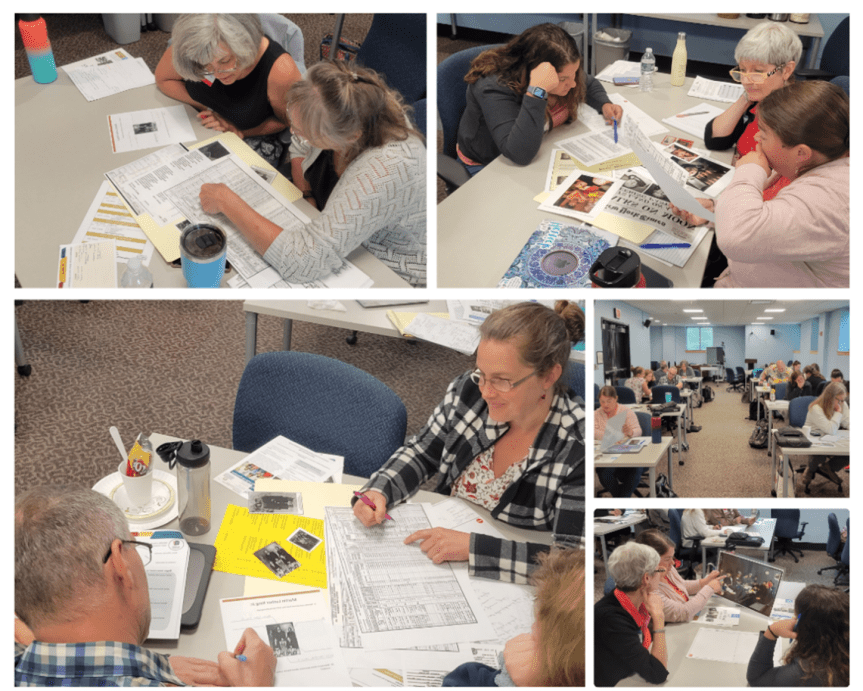
At the end of June, a group of teachers met to learn about using genealogy to teach inclusive history with Dustin Axe, the Youth Genealogy Curriculum Coordinator with the New England Historic Genealogical Society (NEHGS).  This workshop kicked off the American Ancestors pilot that supports teacher planning for inclusive historical inquiry projects using genealogy.  During the next school year, teachers in this pilot program will participate in monthly virtual meetings to deepen their understanding of this work and to collaborate with each other. Twice a year, teachers will meet with NEHGS in one-on-one meetings that are personalized to their instructional needs.  There will also be a monthly professional learning community led by the Maine Department of Education for teachers to collaborate and share their work.

As many teachers know, teaching genealogy can be challenging.  By focusing instruction on critical research and thinking skills, teachers learned how to empower students to make personal connections to history by connecting to the process of historical inquiry instead of the product.  As one teacher commented, “I loved all the resources available online for schools and the multiple levels of scaffolding that were available. [Dustin] did an excellent job at making this accessible to all learners regardless of their circumstances, but also gave us a framework for research/investigations that can be applied to any topic.” According to NEHGS, research finds that genealogy can help students’ well-being and connect them to their communities when it is done well.  The free resources from NEHGS support high-quality genealogical practices.
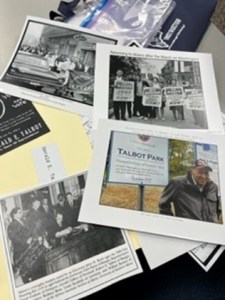
One strategy to make genealogy more accessible is to look at the lives of other people, particularly those who have impacted their community. NEHGS developed several case studies of key figures in American history, as well as important Mainers, like Gerald Talbot and Samantha Smith. Rooted in inquiry-based practices, the skills and processes learned by doing genealogical research can help students learn about important events for communities that place more value on the collective. In this way, many of the resources provided by NEHGS can help teachers develop inclusive lessons that can meet the requirements of state mandates regarding Wabanaki and African-American studies and the history of genocide including the Holocaust.  “I had not considered using genealogy with my students, but I now see that it can be a good way to connect to my students and for them to connect with history,” remarked a teacher after the workshop.

For more information about the American Ancestors program, check out www.AmericanAncestors.org/Family-History-Curriculum or contact Dustin Axe at dustin.axe@nehgs.org

The Maine DOE encourages all schools and districts across the State of Maine to learn more about interdisciplinary instruction on our website or by contacting the Interdisciplinary Instruction Team Coordinator at Kathy.bertini@maine.gov


Share Your Good News! Maine DOE Seeking to Highlight ESSER Federal Emergency Relief Funding Projects

The Maine Department of Education (DOE) is looking to share stories of school administrative units (SAUs) using Federal Emergency Relief Funding to positively impact their students and school communities.

The Maine DOE is administering a questionnaire to collect information about these projects in order to create stories that will be shared broadly through the Maine DOE communication efforts. Sharing good news about the use of Elementary and Secondary School Emergency Relief (ESSER) funding increases transparency and visibility, giving the public insight into the purpose and impact of these funds.

Find the questionnaire here: Federal Emergency Relief Funds Highlights

If you have any further questions or need clarification, reach out to Maine Department of Education Communications and Outreach Coordinator Rachel Paling at rachel.paling@maine.gov.


Build Academic and Social Emotional Skills with SpiritCorps Maine (Funded Through ARP Grant)

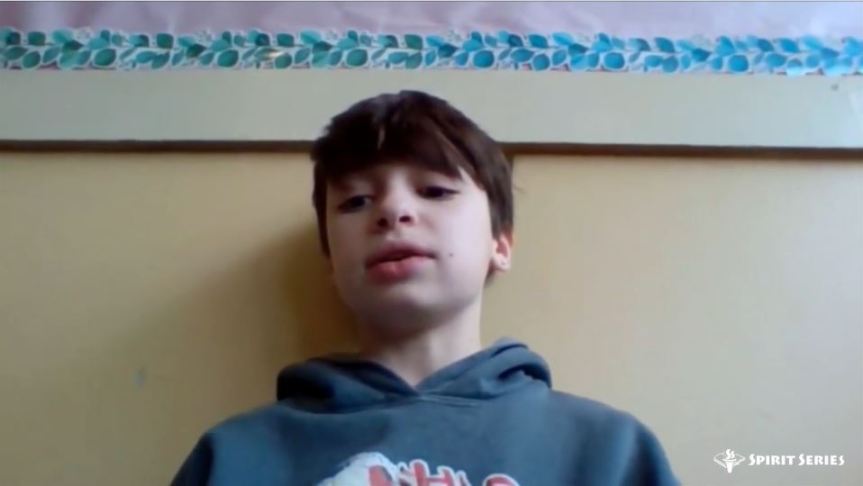
Through a partnership with Spirit Series, the Maine Department of Education is offering SpiritCorps, a three-week, project-based, narrative writing and self-discovery program designed for students from 7th to 10th grade. First-time participating schools receive 100% funding through January 1, 2024, thanks to a federal ARP grant. Openings for the fall remain available on a first-come, first-served basis!

The SpiritCorps experience–as students identify, craft, record on video and share with their classmates personal stories of Courage, Conscience or Compassion–is often profound, building self-efficacy and strengthening connection at a moment when mental health crises and alienation plague our youth.

Here are some examples of the power of the SpiritCorps experience:

Powerful data collected last year by SpiritCorps shows strong academic and social-emotional gains, as do comments like these from students who have felt the influence of this program on their lives:

“I learned that my story is important and interesting… It helped me learn that other people are struggling with the same things I am and made me feel less alone.” – Bobby, 8th Grade, ME

Doing SpiritCorps, I’ve learned what it actually means to be compassionate and courageous not just for myself, but for others as well.” – Sara, 10th Grade, ME

“This gave me the chance to really open up around my pain… It helped me let go, just a little, which means a lot to me. Thank you SpiritCorps!” – Randy, 8th Grade, ME

And partner teachers say this about the impact of SpiritCorps:

“I would absolutely recommend SpiritCorps to any educator. It was easy to use, fun and so well organized. It was great! It was so easy from an educator’s perspective to integrate this curriculum into my classroom…And it was a masterclass in self-reflection.” – Scott Arritt, Gr. 7 & 8 ELA, Durham Community School

“By providing an authentic audience and utilizing the peer feedback process, kids who do not consider themselves writers find that their voice has value and their stories are worth telling. And kids who love to write get expert advice on how to hone their craft. Time after time, our students produce their best writing of the year, hands down, during the SpiritCorps program.” – Sarah Abbott, Gr. 5-9 ELA, Noble Flex

“For those who engaged deeply in the process, writing stories about real compassion for themselves or others, this experience was truly a “gift to themselves”. I saw students forgiving a parent for hurting them and forgiving themselves for how they hurt themselves with their own thoughts. A truly powerful gift. A bonus to this experience is how it helped them see their classmates in a different light.” – Patti Forster, Gr. 10 ELA, Camden Hills Regional High School

To learn more, watch our brief video Introduction to SpiritCorps. For further information and/or to schedule an engagement at your school, email Dr. Christina O’Neal, Director of Program Partnerships for SpiritCorps, at coneal@spiritseries.org.


Students Rewrite Their Stories in Biddeford ELO Program

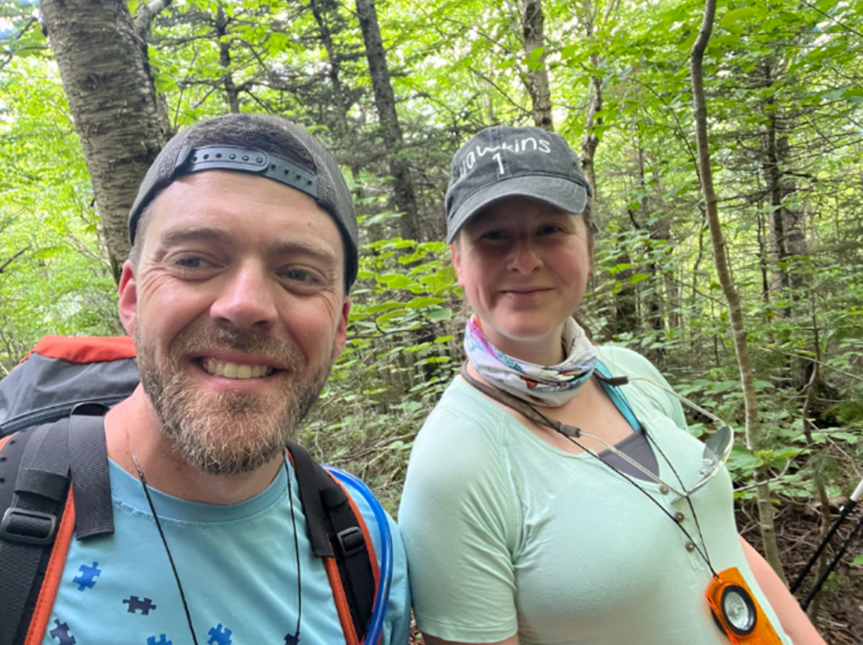
“Our main goal of this project is exposure and exploration,” says Extended Learning Opportunities (ELO) Coordinator Andrew Burnell. Burnell co-leads the ELO program at Biddeford High School’s Alternate Pathways Center (APC) alongside Tabatha Frawkins. Burnell and Frawkins work as a team to provide students with various career exploration opportunities including site visits, guest speeches, and the school’s ELO course. “We are a team and successful because we are such a cohesive team!” says Burnell of his work leading the program with Frawkins.

During the ELO course, students learn about five potential tracks including directly entering the workforce, military, college, trades, and service or travel opportunities. They are also taught important elements of “adulting” such as budgeting, doing taxes, and writing resumes and cover letters.

Students in the ELO program have gained volunteer experience by assisting in classrooms at Biddeford Primary School, Biddeford Intermediate School, and the John F. Kennedy Kindergarten Center. Some students have also been able to develop their leadership skills through a weekly leadership program where they work on communication, empathy, self-reflection, determination, and problem-solving.

Burnell says the best part of his day working as an ELO Coordinator is connecting with students. “Shifting students’ stories about themselves from negative to more positive, learning about students’ strengths and what their goals are, and being part of a community that believes in our students are all highlights of our days and work at APC,” said Burnell.

Co-led by Burnell and Frawkins, APC’s ELO program is helping students build strong and meaningful connections while exploring career paths and writing a positive story for themselves. Burnell says, “the ELO program is only strengthening our students’ [stories] and providing them opportunities they may not have otherwise experienced.”

Extended Learning Opportunities (ELOs) are hands-on, credit-bearing courses outside of the traditional classroom with an emphasis on community-based career exploration. These opportunities are personalized for students and help them explore options for their professional lives. They help students engage in learning through instruction, assignments, and experiential learning. The Maine Department of Education (DOE), along with state-wide partner Jobs for Maine Graduates (JMG), have made a concerted effort to provide working models, support, and funding opportunities for Maine schools to set up ELO programs within their school communities. To learn more about Maine’s initiatives with extended learning opportunities, visit: https://www.maine.gov/doe/index.php/learning/elo or reach out to Maine DOE ELO Coordinator Rick Wilson at rick.wilson@maine.gov.


Gardiner Area High School Improves Student Engagement in Earth Science Class Through Outdoor Learning

Gardiner Area High School is one of 45 Maine schools that have received an award through RREV, or Rethinking Responsive Education Ventures. Supported by the Office of Innovation at the Maine Department of Education, the RREV initiative is a U.S. DOE grant that provides Maine educators funds to implement innovative, cross-disciplinary learning opportunities to be incorporated into curricula. This grant has allowed schools like Gardiner Area High School to redesign instruction that leads to improved learning experiences for students.

Gardiner Area High School directed their RREV funds to their freshman Earth Science class. Prior to the start of the pilot, teachers reported that students were demonstrating increased incidences of social and emotional issues, declining grades, and significant disengagement. Spearheaded by 2023 Kennebec County Teacher of the Year, Sharon Gallant, the goal of this pilot was to reverse the disengagement by having students in the Earth Science class spend 75% of their class time outdoors. When asked about the idea behind the pilot Gallant said, “I have always known what outdoor learning can do.” Adding that as incoming freshmen, students end up spending a lot more time in the classroom than they had previously. Sharon felt that increasing the time students spent outside engaged in hands-on learning would remedy these issues. After beginning implementation, the feedback from students was resoundingly positive, with subsequent improvements in learning. Sharon described her experience with the implementation of the pilot as “amazing” adding that “it has totally changed my teaching style, and what I know to be great teaching.”

The freshman Earth Science class has navigated many challenges in implementing this pilot, from unexpected weather patterns to tracking mud through the halls after class, but with these challenges came widespread support and improved engagement from students and teachers alike.

Gallant remarked that since implementing this class structure she has been able to teach practical applications of Earth Science, incorporating knowledge that was once “taught at home,” such as what poison ivy looks like, and how to start a fire. Additionally, this class has provided students with a connection to the natural world that was not previously there for many of them, as well as offer indispensable hands-on learning and problem-solving opportunities. From rushing rivers to 10-degree snowy fields, to rock-covered hills, this freshman Earth Science class has had some unique classrooms, to say the least.

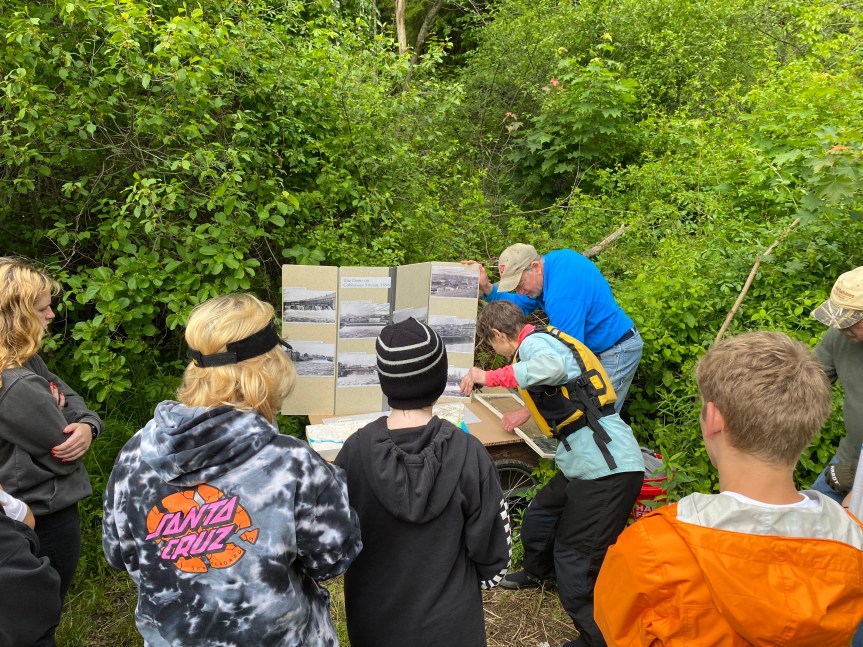
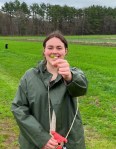
After one year of pilot implementation, the RREV team attended one of the outdoor science classes to see the implementation process in action. On this day, the science class was taking place on the Cobbosseecontee Stream and students were to catch, record, and release migrating alewives. An instructor helping to lead the alewife capture noted that their migration was slowing down as spring was progressing, and the science class had been conducting their observations for several days at this stream. The slowing migration was borne out in students’ study on the day of the RREV team’s visit, as the students only caught and recorded one alewife and one elver that day. “That’s real science” remarked Gallant, “Some days you get hundreds of alewives, some days you get one.” 

When the class came to an end, the RREV team accompanied them back to the road where their transportation was. Elaine Bartley – the RREV Project Director – recounted her conversation with a student on the walk back. Elaine asked the student whether they liked outside classes or not, to which the student responded something to the effect of “I’m more of an inside person.” Elaine followed up, “So you would rather be inside learning from a book?”

“Well, if I really want to learn it then I have to be doing it,” replied the student.  This interaction between Elaine and the student emphasizes the ways that Gardiner Area High School’s outdoor education integration pilot has reimagined the ways that students can learn, and redefined what can constitute a classroom.

It is with the help of the RREV grant that awardee schools like Gardiner are able to provide enhanced learning opportunities and experiences for students, and has allowed educators at Gardiner to address the ubiquitous student need for learning through doing in a unique and meaningful way.

RREV is an initiative of the Maine Department of Education, funded by the Education Stabilization Funds through the US Department of Education’s Rethink K-12 Education Models, that bolsters Maine educators’ innovative efforts to support their students with agile, effective, and resilient learning experiences that improve learning outcomes for all students.  

The Maine DOE encourages all schools and districts across the State of Maine to learn more about these innovative educators and their RREV pilots through the RREV website and the online RREV collaborative platform known as EnGiNE. It is through EnGiNE that we hope to continue the momentum to change students’ lives through innovative and responsive educational programs.

Orono Middle School Students Embrace their Culture with Classmates and Community

(Pictured: Students and their families pose for a photo at the culture festival)

Highlighting the diversity of students is crucial to fostering a sense of belonging, both in schools and in the wider community. To accomplish this, and to enjoy delicious foods from across the world while doing it, students at Orono Middle School  held a cultural festival to celebrate their different backgrounds. The event was organized by middle school teacher, Jessica Archer, who recently was recognized as Penobscot County’s 2023 Teacher of the Year for her innovative teaching.

The origins of the cultural festival began with Archer’s desire to deepen her understanding of the culture and experiences of her students, especially those from outside of the country. Recognizing the need for a greater understanding of her students’ diverse backgrounds, she interviewed many of them, asking each student questions about their culture and background. At the end of each interview, she asked, “What do you want people to understand about your culture?” That question elicited several responses from students who felt that their classmates did not understand them because they did not know more about their culture. Archer then asked the students if they would like to participate in an event celebrating their unique cultures which, in her words, led many of her students’ faces to “light up” with joy.

Inspired by her students’ answers during their conversation, Archer decided to write a story about each student’s background from their point of view. After sharing the drafts with her students and their families to ensure accuracy, Archer published the stories, along with pictures, to display on a school bulletin board. The board displayed a map of the world, with strings connecting each of her students to their country of origin. Archer also recognized a greater need to spread awareness around her students’ cultural backgrounds beyond her classroom and with the rest of the school’s student body. After speaking with two of her students who celebrated Ramadan and wished their peers better understood the holiday and their culture, Archer helped them to create an informational bulletin board and place it in the school’s foyer.

The after-school culture festival Archer organized was a success and attended by nearly 40 participants who learned from the eight families from different parts of the world. Students and their families from or with ties to Ukraine, France, Jordan, South Africa, Guatemala, Israel, Turkey, and Myanmar gathered to celebrate their culture, experiences, and of course, delicious food.

Students’ dishes included Middle Eastern Za’atar bread and traditional Ukrainian Potato Varenyky, a dish like dumplings. But the event also represented much more than just a culinary adventure. In addition to food, families also shared visual and audio representations of their culture. Students and families who participated felt the event was valuable in helping foster a better understanding of different cultures represented within the school and community. Alex, one of the parents who participated in the event wrote that the culture festival “offers a unique opportunity to discover the variety and richness of the Orono immigrant families’ cultural and gastronomical backgrounds.” Khawla, another parent, wrote, “the cultural festival at schools is an excellent way to build a strong foundation for diversity in the community by bringing people together from different cultures, religions, regions, and backgrounds to get to know each other, share ideas, food, and mind in a spirit of peace, unity, and togetherness.”

The event taught valuable lessons to students and families alike on the diversity of their community. Sophia, one of  Archer’s students who participated in the event said, “people make assumptions about people from other countries. It is important that we learn about each other and ask questions before making assumptions and judgments.” Archer hopes to expand the event to include families other schools throughout RSU #26 next year to continue sharing and celebrating the diverse backgrounds of her students.

This story was drafted by Maine DOE Intern Ryan Hafener in collaboration with Jessica Archer as part of the Maine Schools Sharing Success Campaign. To submit a story or an idea, email Rachel Paling, Maine DOE Communications and Outreach Coordinator at rachel.paling@maine.gov.

Yarmouth High School ELO Coordinator Supporting and Empowering Students to Explore Career Paths

At Yarmouth High School, Extended Learning Opportunities (ELO) Coordinator Brittany Brockelbank is supporting students in exploring their career interests. From finding internships and work studies to connecting students with mentors in the community, Brockelbank is helping students engage with their learning while also preparing them for their future careers.  


Working with other faculty and staff at Yarmouth, Brockelbank has been able to expand the school’s ELO program, now offering it to all students from freshmen to seniors.  


“All too often there are barriers or structures that contain students and point them in one direction,” said Brockelbank. “ELOs are an opportunity to empower students to go in any direction they’d like!” 


The school’s ELO program has allowed students to earn academic credit, pursue passion projects, and gain professional experience. Brockelbank says one of her favorites parts of the program is its power to transform students’ educational experiences. Students who were once less interested or engaged with their education have found immense success and enthusiasm for their learning through their ELOs.  


Brockelbank says the best part of her job is the ability to say yes so often when students come to her asking about ELOs they are interested in. This means saying yes to them earning credit, participating in a work study, working as a group, and much more. When discussing her position as ELO Coordinator, she said, “It is refreshing to be in education in a role where the answer is almost always yes, and where I get to learn alongside brilliant students every day.”  


Brockelbank would like to thank the following individuals and organizations for their contributions to Yarmouth’s ELO program: Rebecca Spear from Partners in Education, JMG Specialist Madalyn Shircliff, the Yarmouth Education Fund, the Yarmouth Alumni Association, Allegiance Trucks, HB Fleming, and Autowerks.  


Extended Learning Opportunities (ELOs) are hands-on, credit-bearing courses outside of the traditional classroom with an emphasis on community-based career exploration. These opportunities are personalized for students and help them explore options for their professional lives. They help students engage in learning through instruction, assignments, and experiential learning. The Maine Department of Education (DOE), along with state-wide partner Jobs for Maine Graduates (JMG), have made a concerted effort to provide working models, support, and funding opportunities for Maine schools to set up ELO programs within their school communities. To learn more about Maine’s initiatives with extended learning opportunities, visit: https://www.maine.gov/doe/index.php/learning/elo or reach out to Maine DOE ELO Coordinator Rick Wilson at rick.wilson@maine.gov. 

Caribou 8th Graders Collaborate with Local Historical Society on Student-Created Podcasts

The Caribou Historical Society hosted Caribou Community School (CCS) 8th-grade podcasters recently, to celebrate the unveiling of student-created podcasts with a listening party and ribbon-cutting ceremony. This event was the culmination of a year-long collaborative project between the two groups.

8th graders began this project when MLTI Ambassadors from the Maine Department of Education visited Caribou Community School to teach students how to use WeVideo to create podcasts. From this learning experience, 8th grade teachers Kim Barnes, Heather Anderson, Troy Barnes, Holly Rhinebolt, and Special Education teacher Twyla Learnard met with Christina Kane-Gibson, director of the Caribou Historical Society to see how 8th grade students might be able to help digitize exhibits at the Caribou Historical Society Museum. 

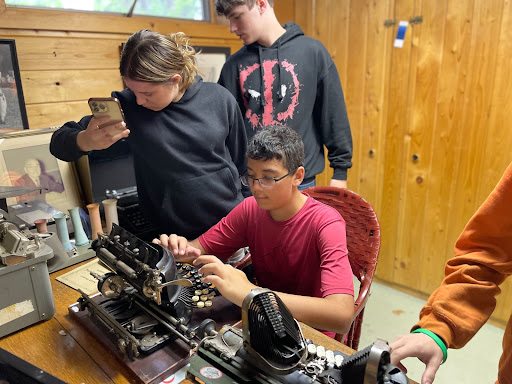
Gibson loaned local school history artifacts for students to examine in their ELA classes. Artifacts included yearbooks, photographs, lesson plan books, report cards, graduation certificates, and even old PA speakers.  As they worked, students generated questions they had about the history of education in Aroostook County in order to interview retired teachers to really learn what school was like thirty to fifty years ago.  Twyla Learnard, Special Education teacher commented on the impact of the inclusion of all students in this project. Learnard said, “I was astonished to see students who typically struggle academically, delve into the podcast project with such enthusiasm. It allowed them to script, write, story tell, and converse adding a whole new dimension to their learning. The project produced incredible educational dividends!” 

Retired Aroostook Teachers assembled at CCS in March to be interviewed. Diane Fitzpatrick, Ellen Cleaves, Phil Caverhill, Margaret Cyr, Ron Willey, Lou Willey, Denise Levesque, John Hedman, and Dwight Hunter served on an interview panel and they answered question students created from their research. Students enjoyed learning about how different school days were from today, how world events, like the Challenger Explosion and 9/11 impacted students in the classroom, but also came to understand that teachers never really retire. The retired teacher panel was definitely a highlight of the year. Teacher Troy Barnes said about the event, “The beauty of the entire event was how the panel was able to encapsulate a wealth of educational experiences and share these in a way that had the students on the edge of their seats with extreme interest. These educators had been out the classroom for some time, but it was evident that they were still teachers at heart.”

From their research and interviews, twenty-five podcasts about various topics from Snow Days in the Ige Age and Lunch and Recess in the Old Days to Title IX: Sports for Girls and World Events in the Classroom were created. Kane-Gibson said this about the project, “It’s so innovative. The students have been working since February to research, write, and record these listener experiences. The podcasts will be accessible by a QR code that visitors can scan with their smartphones.”

These podcasts will continue to be on display for patrons of the museum to enjoy.


Six Maine Students Awarded Martin Mackey Memorial Scholarship

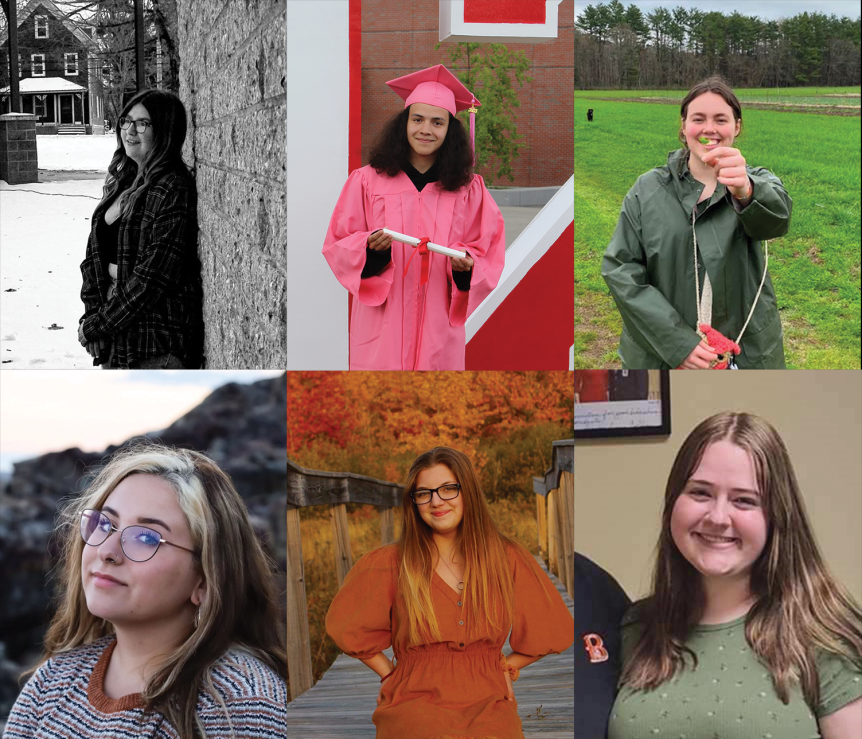
The Alternative Education Association of Maine has selected six students to receive this year’s Martin Mackey Memorial Scholarship. As they graduate from their respective programs, these six individuals have each been awarded $500. With many trials and triumphs throughout their school experiences, each graduate has an inspirational story and passion for their education that makes them a perfect recipient of this award.

Ericka Dunn
Ericka Dunn

Recipient Ericka Dunn is graduating from Houlton’s Summit Academy and will continue her education at Southern Maine Community College with plans to become an elementary school teacher. As a second-year Early Childhood Education student, Dunn has been praised for the effort and care she puts into teaching her class. “Ericka is an honest, hard-working student who is one of the most responsible seniors I have ever met,” said her nominator.

Delany Adams
Delany Adams (right)

Graduating from the Nu Program in Brewer, scholarship awardee Delany Adams has overcome adversity and excelled academically. Through her responsibility with her schoolwork and her impressive attendance record, Adams has been described by her nominator as “a model student for why this program was started.” Adams will be continuing her education at Unity College pursuing studies in animal sciences with hopes of starting an animal rescue one day.

McKayla Geroux
McKayla Geroux

McKayla Geroux is receiving the scholarship after graduating early from Orono High School’s CORE program. While balancing her regular course load, additional college courses, and her job at a local home for developmentally disabled humans, Geroux has been passionate about bringing positivity to her community. “I just want to give as much as I can to others,” said Geroux, who has started a positivity rock garden and created countless fun art projects for her work. After graduation, she plans on attending college to become a dental hygienist.

Leah Hashem
Leah Hashem

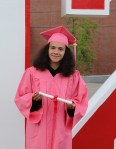
Awardee Leah Hashem is a graduating senior from Noble High School’s Multiple Pathways program. She will be attending the University of Southern Maine and plans on becoming an elementary school art teacher. While working extremely hard to improve her academic skills in her final years of high school, Hashem has been greatly admired by her peers and teachers for her enthusiastic energy and the effort she puts into her schoolwork. “Leah has an ability to experience joy that is one-of-a-kind,” said her nominator. “Her passion and enthusiasm for learning and life is contagious.”

Anna Puckett
Anna Puckett

Graduating from Brewer High School’s Alpha program, scholarship recipient Anna Puckett has been an honors student and a role model for other alternative education students. Puckett has overcome obstacles in her academics and personal life while still maintaining a high standard of grades and attendance. As described by her nominator, Puckett is “a young lady who comes from very humble beginnings and has a very selfless heart for others.” Puckett will be continuing her education at Eastern Maine Community College pursuing studies in social work, as she hopes to one day become a trauma counselor and work with children overcoming traumatic life events.

Dominic Ramirez
Dominic Ramirez

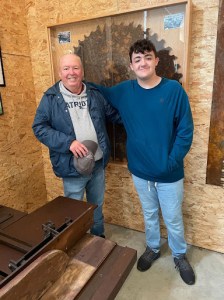
Dominic Ramirez is receiving the scholarship as he graduates from Sanford High School’s alternative education program. After spending many years transferring schools and feeling disengaged from his learning, Ramirez found an excitement and passion for his education when he began his alternative education program, saying it was the best change he has ever made. His time in the program inspired him to consider community college, and he will be attending York County Community College in the fall to study behavioral health.

The Martin Mackey Memorial Scholarship was established by the Alternative Education Association (AEA) of Maine in 2022 after the untimely passing of beloved education colleague and champion Martin Mackey. The scholarship recognizes Mackey’s dedication to education as a career and especially in remembrance of his passion for working with students on Alternative Education pathways. AEA aims to award as many funds as they can raise to as many students as they can each year. In 2022 they awarded $2,000 to one student and this year they decided to split the scholarships among 6 students because of the excellent applicant pool.

To learn more about the Alternative Education Association of Maine visit their website or reach out to Alternative Education Association of Maine President Lenny Holmes at lholmes@bonnyeagle.org.

Noble Middle School Students’ 3D Gaming in Neuroscience Exhibit Showcased at Smithsonian’s National Museum of American History

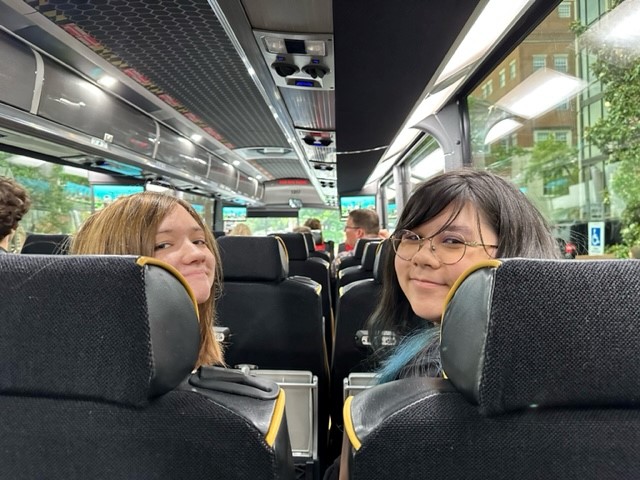
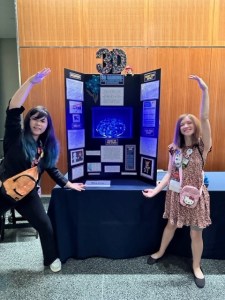
Miela Bui from North Berwick, ME and Laiken Voishnis from Berwick, ME
L to R: Miela Bui from North Berwick, ME and Laiken Voishnis from Berwick, ME

As part of 2023 National History Day (NHD), 48 student-produced exhibits from across the United States were selected to be featured in a live showcase at the Smithsonian’s National Museum of American History on Flag Day, June 14, 2023. The exhibits were created by middle and high school students competing in the 2023 NHD National Contest.

One of the featured exhibits is 3D Gaming: A Mind-Blowing Frontier in Neuroscience, created by Miela Bui and Laiken Voishnis from Noble Middle School in Berwick, Maine. The exhibit explores the groundbreaking use of 3D gaming in neuroscience research and its potential to revolutionize the field. The students’ research sheds light on how 3D gaming can be used to treat various neurological disorders and improve brain function. Miela and Laiken are supported by the EXCEL program’s teacher, Christa Boeykens.

The NHD students whose projects were selected for this showcase by NHD affiliate coordinators addressed topics relevant to their own states’ or local communities’ histories. These exhibits also reflect the 2023 NHD theme, Frontiers in History: People, Places, Ideas.

“I’m honored to be here, seeing this amazing constellation of people showing off their talents and passions. I’m constantly reminding myself I’m part of it,” said Miela Bui. “Honestly, after seeing this amazing competition, I’m inspired to do NHD again, and again, and again… And maybe even become a museum curator in the future! Although, I’m pretty committed to neurological sciences.”

The live showcase was held on June 14, 2023, at the Smithsonian’s National Museum of American History in Washington, D.C. where the students, their supporters, and museum visitors engaged with the student-produced exhibits to learn about the diverse and fascinating stories they tell about American history.

For more information on the NHD National Contest, please visit www.nhd.org.