Students Confront Climate Change with Possible Solutions in 2023 Maine State KidWind Challenge

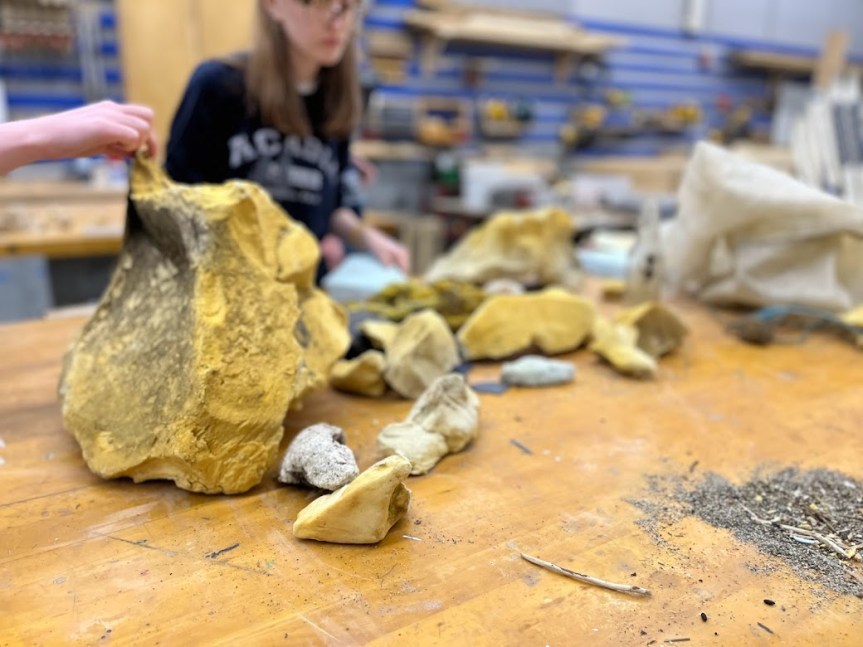
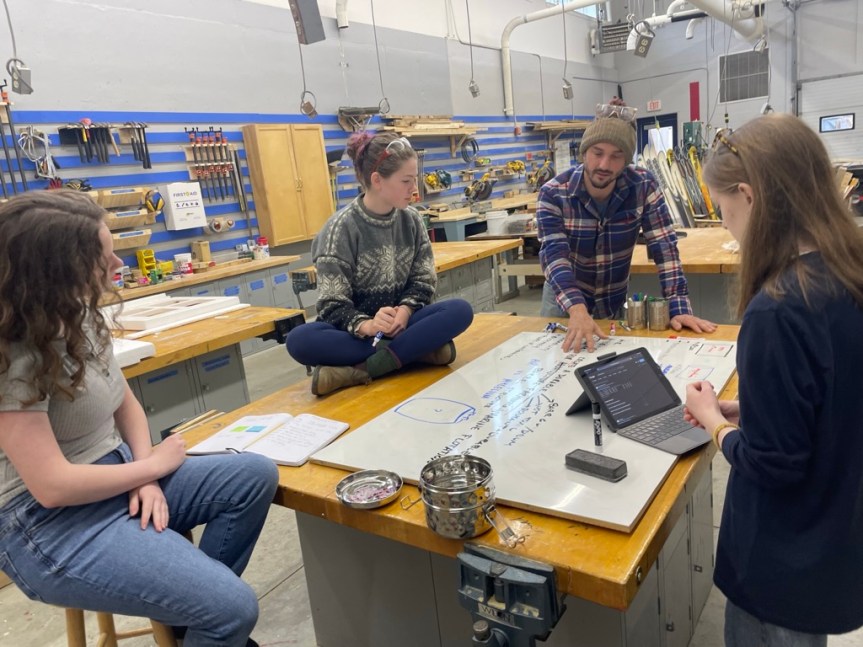
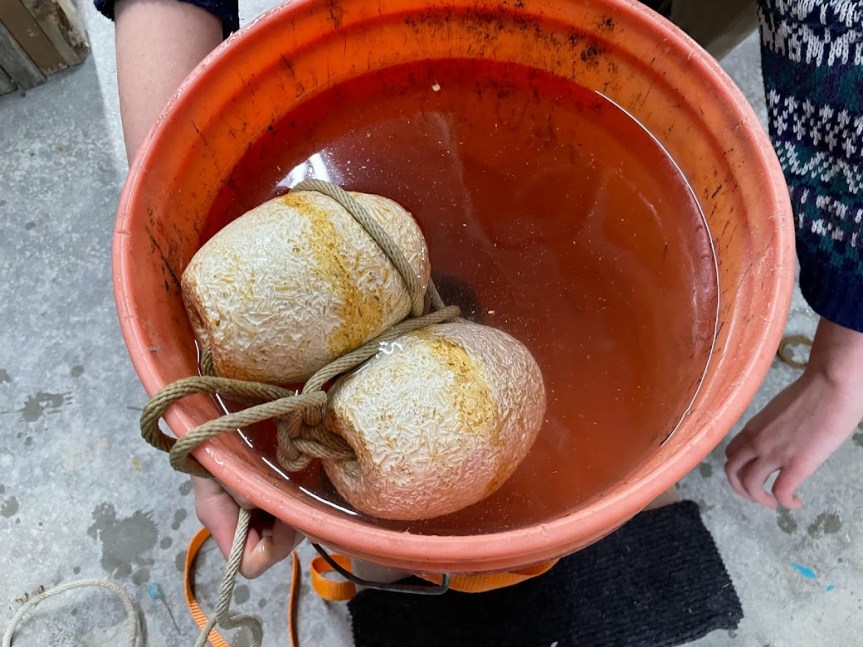
Twenty-one teams filled the Ocean Gateway in Portland as the Maine State KidWind Challenge returned following a three-year hiatus. “KidWind is a hands-on design celebration that engages students through the lens of wind and solar energy. Student teams design, construct and test small scale wind turbines and solar structures at events all over the world.” The national competition, which ballooned in size in 2009, has engaged over 40,000 students across 33 states. For this event, teams from five different Maine public schools brought turbines and presentations that they have been working on for weeks. They presented their materials to a panel of judges, and  their turbines were put to the test in a wind tunnel to see how much power they generate. The results are projected up for competitors to watch as an energy sensor measures the voltage and current output of the turbines.

Retired Portland teacher Gus Goodwin successfully rallied many of the teachers who had participated in the past. The event is one that Goodwin has been championing for years, feeling that it helps students confront climate change with possible solutions. “We’re talking about climate change, but it left the students with a sense of agency… a sense that they can do something,” he told Newscenter Maine. As with many in-person events around the state, the Maine State KidWind Challenge was not quite back to its 2019 participation levels. Winslow Junior High School teacher Ginny Brackett recounted March of 2020 to her current group of four teams when she left her classroom with partially completed turbines. Her students, who were then elementary students, were grateful for the opportunity.

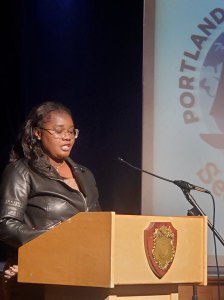
The day opened with a Q&A with Taylor Ward from UMaine’s Advanced Structures & Composite Center and Steve Nolet, Senior Director of Innovation & Technology for TPI Composites, who manufacture wind blades. The students were also presented a keynote from Tagwongo Obomsawin, who shared her own journey from rural life in Western Maine to her current position as the Clean Energy Partnership Program Manager in the Governor’s Energy Office.

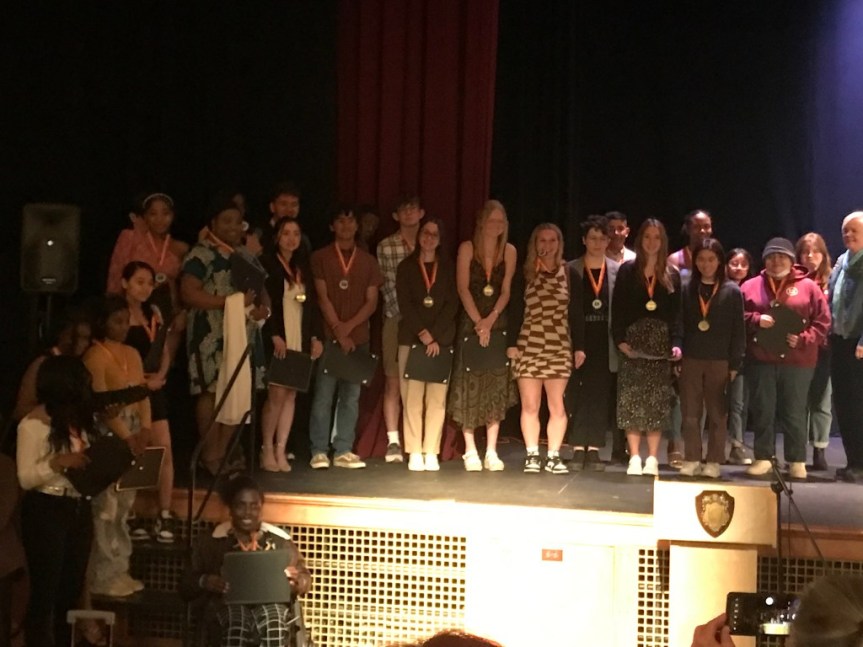
The top-ranking teams, “W Group” from Mt. Ararat Middle School and “West End Whales” from Portland and Casco Bay High School, will be invited to compete at the national KidWind event in May at the University of Colorado. The “NCL Wind Turbines” from Massabesic Middle School were the runners-up and “MTA 1” from Mt. Ararat won the Spirit Award.

Prior to the event, Mt. Ararat Middle School STEM teacher Sandy Bickford appeared on MLTI’s Teaching with Tech podcast episode and she highlighted the KidWind Challenge as her favorite project to work on with students. “It’s a lot of work, it’s a lot of steps, it’s a lot of teaching, but… it’s relevant.”

The KidWind Challenge highlights many of the best qualities of STEAM learning. The teams of students who gathered at the Ocean Gateway exemplified the type of engagement in a project and resilience in problem-solving that many educators strive to introduce into their classrooms.


Students Showcase Their Expertise at Annual SkillsUSA Championships in Bangor

(Pictured: A student operating heavy equipment in a simulator as part of the Heavy Equipment contest at SkillsUSA)

Career and Technical Education (CTE) is growing in Maine, and it was all the more evident at the SkillsUSA Maine State Championships held in Bangor recently. Students enrolled in the many career and technical education (CTE) programs found in schools across Maine gathered in Bangor for an exciting two-day event where they got the chance to showcase the skills they have mastered. (See Maine DOE’s 2023 CTE Infographic to learn about CTE expansion in Maine.)

SkillsUSA is a national career and technical student organization serving more than 395,000 high school, college, and middle school students, and professional members enrolled in training, trade, technical, health, and skilled service occupations. Maine’s Chapter hosts an annual Championship event each year where students get the opportunity to showcase their skills by competing in various contests that allow them to show off what they know.

Contests include everything from wedding cake decorating to firefighting, computer programing, auto tool identification, everything in between, and then some! There were over 70 different contests that students participated in over the two-day event that columnated with an awards ceremony at Bangor’s Cross Insurance Center.

For many of the students, coming to SkillsUSA is an incredible accomplishment that they take a lot of pride in, and this year was extra special because they got the chance to share it with family and friends for the first time in a few years. The event, held at United Technologies Center (UTC), Eastern Maine Community College, and Cross Insurance Center, was held in person and the public was allowed to attend for the first time since before the height of the COVID-19 pandemic.

The exciting event bustled with groups of students, educators, instructors, and administrators, as well as TV news crews, family members, and supporters observing, snapping pictures, and taking videos of students while they competed.

Braden Luce competed in the Welding Sculpture contest along with twelve other students this year. Braden is enrolled in school at both Madomack Valley High School and Mid-Coast School of Technology where he participates in the welding program. He says he loves the program because of the hands-on aspect of it. Braden tells us that he looks forward to school every single day and is even disappointed when school gets closed on snow days.

Ahna Higgins competed in the Job Interview competition where she placed third earning a bronze medal. “I am very satisfied with my work in this competition because it helped me create connections in my technical center and become more confident in my interviewing skills,” she said. Ahna is a student at Somerset Career and Technical Center (SCTC) and Skowhegan Area High School. Last year she was enrolled in SCTC’s Certified Nursing Assistant Program and this year, her senior year, she has been part of the Early Education and Teaching program.

Higgins describes the work she does at SCTC as very fulfilling. “I get to spend my time in class doing things that really matter to me like working with children and learning about their development,” she said. “While preparing for SkillsUSA I also got the opportunity to prepare myself for an interview in the Education field,” she added. In the fall Higgins is planning to attend the University of Maine at Farmington to major in Elementary Education.

The Maine Department of Education congratulates all of the students who competed in SkillsUSA this year! We extend a special thank you, as well, to Maine’s Career and Technical Education schools for their continued dedication to providing quality career and technical education pathways to students across Maine.

Find the names of award recipients from the 2023 SkillsUSA Championships here.

Find more pictures from the conference, including the awards ceremony on the SkillsUSA Facebook Page.

See more media coverage of this event at the following links:

To learn more about SkillsUSA, check out Maine’s website here. To learn more about Career and Technical Education in Maine visit the Maine Department of Education’s website.

Sacopee Valley High School ELO Coordinator Making a Big Impact on Students’ Career Paths

“The best part of my day is working directly with my students,” said Elizabeth Sanborn, Sacopee Valley High School’s Extended Learning Opportunities (ELO) Coordinator. “It is a lot of fun helping them discover their interests and then create opportunities for them to explore careers.”

Sanborn is invigorated by the students’ excitement and commitment to their experiences with extended learning opportunities. The new initiative also helps reinvigorate schooling and reconnect the students, the school, and the community, especially following the health restrictions that felt like they separated schools and communities during the height of the COVID-19 pandemic.

Some of Sanborn’s recent successes include helping a student make a connection with a local tattoo artist to learn more about the career, including how to run a successful business. Another one of her students got the opportunity to interview several registered Maine guides and is currently studying for his own test in the spring. “He attended a three-day training class back in January and sent in for his Maine guide license just last week,” said Sanborn.

Here are some more student success stories, directly from students:

“I decided to do an ELO to make connections in the law field before going to college for law next year,” explains Abigail Sanborn, a Sacopee Valley senior. “This past semester I was partnered with a local civil law firm, where I went twice a week for an hour. I got to participate in simple drafting of documents, acting as a witness for estate planning, and got to interview several clerks, judges, and lawyers. During this second part of the year I am doing day trips to the Cumberland County District Attorney’s where I’m job shadowing different prosecutors. I am also exploring other avenues of law by doing ride-alongs; I wasn’t expecting to like police work, but that is what ELO’s are for. It’s an experimental opportunity for students to determine what they like and don’t like. Mrs. Sanborn has been a huge part in helping me find these opportunities and is always willing to find you experiences that you may not think of!”

“My ELO journey has been sort of complicated, but Mrs. Sanborn has been the best at getting me where I want to be,” said Elise Hermance, an 11th grader at Sacopee Valley High School. “I started off knowing I wanted to be a dog trainer and breeder. I sat in on a few classes up in Conway, NH. I came back to Mrs. Sanborn after going around three times and told her that this wasn’t for me. I know I want to do something with animals, but I am not sure that dog training is for me. I then did a job shadow at the Sacopee Valley Veterinary Clinic with a vet tech and it was so fun. They were all so nice to me. Now I am applying for a volunteer position at the Animal Rescue League of Greater Portland. I am so excited to have this opportunity in my life. Not just the job shadowing and knowing what I want and don’t want to do but the fact that I have learned so many different skills. I know how to reach out to people that I don’t know. None of this could be possible without Mrs. Sanborn!”

“It is amazing to be able to help a student fulfill a lifelong dream that they weren’t sure how to navigate before Sacopee Valley High School had this program at our school,” said Sanborn.

Sanborn has started to make some great connections with area businesses and hopes to continue that work throughout the year. “We have a lot of industry professionals who are excited to work with our students, and it really will be a win-win situation for all involved,” she added.

Sanborn would like to extend a huge thank you to Dr. Chris Parent at Sacopee Valley Family Dentistry, Bonnie Gould of Heritage Law, Tasha Berouty at Hallow Point Tattoo, and Wendy McGary and Ashley Blanchard at Sacopee Valley Elementary School, just to name a few!

Students Compete in Marketing & Hospitality Skills at Annual Maine DECA Conference

Maine DECA (formerly Distributive Education Clubs of America) held its annual Career and Development Conference in Auburn at the Hilton Garden Hotel on February 28th. DECA is an association of marketing, hospitality, finance, and entrepreneur students.

During the Conference, 30 students from Oxford Hills Regional Technical Center competed in marketing and hospitality categories and FOCUS training conducted leadership activities and team-building exercises.

Maine Department of Education Maine School Safety Center’s Wendy Robichaud was one of five judges that helped out at the conference.

“Even though it was a snow day, these students still showed up,” said Robichaud. “Congratulations, to these amazing students!”

How East Grand School is Helping to Prepare the Next Generation of Maine’s Workforce

As the Extended Learning Opportunities (ELO) Coordinator for East Grand School (RSU 84), Angela Cowger works with students to create meaningful experiences for students that build a long-lasting framework for the school’s ELO program.

“We are bringing awareness to students, parents, teachers, businesses, and community leaders about what ELOs are as well as working with them to provide varied, high-quality ELOs to students,” said Cowger. “Our goal is to develop an integrated, sustainable, and effective ELO program with a focus on career exploration, meaningful paid work experience, and work readiness skills that prepare students to be the next generation of innovators and small business leaders.”

Cowger says the best part of her day-to-day work is definitely the time she spends with the students. “It is rewarding to see students’ sense of pride and accomplishment when contributing to a community project, work placement, or other hands-on learning,” she said. “The growth and learning students gain from these ELO experiences are exceptional.”

Some recent successes include the experience of East Grand senior Phoebe Foss who is working on an ELO with the local town office on the Danforth Livable Community Program project. She is helping get the program off the ground, by coordinating and providing technology, social, nutrition, and other services. Phoebe is helping to facilitate these services as well as bring awareness about the program to social media and other local communication sources so the community can benefit from the much-needed opportunities and resources for its aging population.

Another student, Alan Emery is gaining hands-on experience and a more in-depth understanding of what it means to become a registered Maine guide, which he aspires to become after high school graduation. Alan recently participated in a week-long trip at a remote northern Maine wall tent moose hunting camp where his chores included working with two camp cooks with meal preparation, serving, and cleanup, fetching water daily from a stream for washing dishes and for hot showers, collecting and cutting firewood to use in the camp wood stoves in the dining and sleeping tents. He also assisted with breaking down camp and packing it away.

“Having Alan involved with our remote Maine moose camp not only provided great exposure and training but also opened the door to future possible employment for him,” said local businessman and registered Maine Guide Dave Conley of Canoe The Wild, who mentored Alan during the experience. “This training was invaluable and something that can’t be learned in a classroom.”

East Grand School is currently in the process of designing and implementing a k-12 Small Business Pathway, connecting Career and Life Readiness, Economics, and Guiding Principle standards at each grade level. The ELO program helps them launch the grades 9-12 work readiness portion of the Small Business Pathway.

“We are looking forward to working with local businesses to further students’ work readiness and entrepreneurial skills, as well as helping students collaborate with community leaders to solve community challenges,” said Cowger.

Cowger also says they already have several business leaders and community partners to thank, including Kiley Henderson at County Physical Therapy, Dave Conley at Canoe The Wild Maine Guide Service, Ardis Brown at the Danforth town office, David Apgar at the Snow Farm, and Sam Henderson and Greg Miller at Northern Maine Realty.

“These businesses and their leaders have been fantastic to work with and we are so thankful for them,” added Cowger. “We have received several optimistic responses as well as offers to connect with students in the future from local businesses. The support has been very positive! We are looking forward to many successful partnerships in the future.”

Extended Learning Opportunities (ELOs) are hands-on, credit-bearing courses outside of the traditional classroom with an emphasis on community-based career exploration. These opportunities are personalized for students and help them explore options for their professional lives. They help students engage in learning through instruction, assignments, and experiential learning. The Maine Department of Education (DOE), along with state-wide partner Jobs for Maine Graduates (JMG), have made a concerted effort to provide working models, support, and funding opportunities for Maine schools to set up ELO programs within their school communities. To learn more about Maine’s initiatives with extended learning opportunities, visit: https://www.maine.gov/doe/index.php/learning/elo or reach out to Maine DOE ELO Coordinator Rick Wilson at rick.wilson@maine.gov

Technology Collaborations and Integration with MLTI and Caribou Community School

When eighth-grade teachers Kim Barnes, Heather Anderson, Holly Rhinebolt, and Troy Barnes wanted to provide students with learning opportunities that would spark curiosity and engagement in their students, they knew just who to contact.  The Maine Department of Education’s Maine Learning Technology Initiative, or MLTI 2.0, answered the call.   

On Monday, February 6th, MLTI ambassadors visited Caribou Community School to provide workshops for students on topics including virtual reality using Cospaces, google slides animations, green screens, and podcasting with WeVideo.  Two neighboring districts, Fort Fairfield and Woodland were also invited to attend.  

Kim Barnes, ELA teacher, shared, “Our whole theme this year in grade 8 has been to reconnect and re-engage students in their learning and this is one way to accomplish that.”  Math teacher Troy Barnes adds, “This is a great opportunity for the kids because it’s not a traditional school day.  It’s taking their interests and expanding it, giving them the opportunity to work outside of traditional environments.”  

Students spent the morning attending a rotating schedule of 40-minute sessions where MLTI ambassadors Rob Dominick, Jonathan Werner, Martha Thibodeau, and Kathryn Meyer presented an overview of their topics. The afternoon was reserved for students to practice what sparked their interest and MLTI ambassadors were on hand to help as students practiced honing their new skills. 

“The MLTI 2.0 program is such an incredible resource for teachers trying to integrate more technology into their classroom.  The ambassadors, first and foremost, are teachers so they are fantastic to collaborate with because they know how best to complement what we are already doing,” Social Studies teacher Heather Anderson shared and Holly Rhinebolt, science teacher, added how 8th graders are also working on integrating a new space STEM program and that these workshops will really complement what she’s been working on.  

This is the 2nd year, Caribou Community School teachers and MLTI ambassadors have worked to provide this day for students and the skills they have learned will definitely be utilized in the months to come.  

“Their learning today is going to lead to a community project where we partnered with our Caribou Historical Society.” Kim Barnes said. “Students will be creating podcasts for the exhibits that are located there so the community will be able to hear our students tell stories of the past.” The teachers all agreed that they hope to be able to continue and expand these workshops in the years to come.

MLTI Caribou Visit with students

‘Casco Teaches’ Introduces High School Students to the Teaching Profession

This article was contributed by Matt Bernstein, a ninth grade Humanities and Social Studies teacher at Casco Bay High School in Portland and Maine’s 2023 Teach of the Year.

“The key to productive and equitable teaching is consistent patience and understanding, which creates a welcoming environment that encourages a growth mindset that carries on outside of the classroom.” I wish I could write that those wise words are mine, but they are, rather, the teaching philosophy statement of Sophia Chouinard, a junior at Casco Bay High School (CBHS) who spent the first week of January, along with 17 of her peers, learning about becoming a teacher in the Casco Teaches intensive.

The school I teach at, Casco Bay High School, is part of the EL Education national network. EL Education is a national nonprofit that partners with K-12 districts and schools across the country to offer resources and professional development in the work to create equitable schools of opportunity for all students. One EL practice is intensives. At Casco Bay High School, every January and April, we pause our classes to engage in intensives. Intensives, which happen at a number of different schools in the EL Education national network, are one week, elective courses that ask students to engage in in-depth study, all day, for five days. Intensives offer students an opportunity to learn deeply about a compelling and important topic that may not otherwise appear in the curriculum. Intensives are designed and co-run by teachers. Since students select their intensive, the courses are open to anyone in 9th through 12th grade and offer a unique opportunity for students to work across grade levels. Intensives, as you might guess from the name, are intense for both teachers and students, but through this intensity come some of the most impactful and joyous learning experiences of the entire school year.

This January, I had the great opportunity to co-lead, alongside our inspiring principal, Derek Pierce, a new intensive called Casco Teaches, which sought to introduce students to the world of teaching and to the concept of teaching as a future profession. We began our week asking students to reflect on the inspirational educators that have taught them and memorable lessons they have experienced throughout their education. Using these stories to guide us, the cohort began answering two of our guiding questions: What makes a great educator? And, what makes a great lesson? Students identified a host of qualities that impact them positively, ranging from educators that they can tell really care about their students and are passionate about their subject matter to the importance of making learning joyous and creative. Students then paired their personal reflections with a variety of texts – in article and video format – about core practices that support high quality teaching and learning and that create supportive and transformational school communities.

After a day of “Education 101”, our students took to the field, observing in local classrooms. In total, we had 18 students, in 10 different schools, volunteering, learning, and helping out across the district. Students were participating in classes with students from pre-K to high school. We were tremendously fortunate to have wonderful teachers who opened their classrooms to our students and gave their time to share wisdom about teaching. 

CBHS senior, Molly Neuner, working with a student in a 1st and 2nd grade ESOL classroom as part of her participant observation during the intensiv

After two days in the field, our students returned to CBHS ready to put their learning into action. We introduced students to lesson planning and reflected on all the ways that we, as educators, can support student engagement and learning. After this, it was time for students to dive in and start planning their own lessons. Each student wrote a lesson plan on a topic of their choice for a 50-85 minute block. Then, students selected a 20 minute chunk of their lesson to teach to their peers on our final day. The range of topics covered was astounding. One student led a lesson about kindness and empathy while another introduced the anatomy of hammerhead sharks. One lesson led us through an analysis of the poetry of Mary Oliver, another showed how to change a tire, and a third pushed us to discuss how we can reduce bias in education. The lessons not only showed how much the students had learned in a brief period of time, but also opened up a beautiful window into their personal passions and interests.

All in all, the Casco Teaches intensive was a tremendous experience and we were thrilled to learn that it made many students consider teaching in the future. Indeed, 75% of students in the intensive reported that the experience made them more interested in being an educator some day. Jo Ellis, a sophomore, captured this when she said, “The intensive definitely showed me how rewarding a job in education can be and made me really want to pursue that.” Students wrapped the week by sharing their teaching philosophy statements with the rest of the school community. Lucinda Viola, a junior, wrote, “The key to great teaching is creating a safe space for students to make mistakes, build relationships, and better themselves while feeling safe, seen and understood.” As can be seen, there is a lot we can learn about great teaching from our students and, after spending a week with the future generation of teaching, I am filled with hope.

View more about what the week of Casco Teaches looks like here. 

Belfast Area High School ELO Program Sparks Student Interest in Community Jobs

Belfast Area High School in RSU 71 began implementing an Extended Learning Opportunities (ELO) program at the beginning of the school year, and so far, they already have 15 students starting out at a variety of places throughout the community – a veterinary hospital, the fire department, a hair salon, the police department, and the county District Attorney’s office to name a few.

For ELO Coordinator Solomon Heifets, this feat has been one of the biggest success stories in and of itself – just getting the program up and running and getting students connected out into the community.

More recently, Heifets and one of his students experienced one of the best things yet when it comes to extended learning opportunities. As part of an internship set up with the local veterinary hospital, Heifets, the student intern, one of the doctors, and the office manager had a check-in meeting.

“I could hardly imagine a more glowing review,” said Heifets. “The doctor and office manager are thrilled about their intern and are going out of their way to provide her with the best learning experiences they can – teaching her surgical techniques, how to do lab work, how to explain things to the pet owners, and how to manage an office. They are even coaching our student as she works on her college applications,” he added. This type of day-to-day work with students and community members is one of the best parts of the job for Heifets.

Another component of Belfast’s ELO Program is a final project that every student completes. The final project applies what students have learned in an authentic way.

“I feel like this is actually helping me figure out what I want to do with my life, and showing me that I have a lot of options,” said ELO student Kara Richards.        

Looking toward, Belfast Area High School is planning a college and career fair and expects to have more than 30 presenters attend. Heifets says that many of the career presenters are also interested in recruiting interns and employees, and he is looking forward to the many ways in which the event will help expand their ELO program.

“As more and more students and community members get engaged with this program, I can already see some big project ideas emerging, and I look forward to the positive impact we will make in our community,” said Heifets.     

Belfast Area High School and RSU 71 extend a huge thank you to the following local businesses and organizations: Little River Vet, Belfast Fire Department, Belfast Water District, Waldo County District Attorney’s Office, The Penobscot Marine Museum, and all of the people who have opened their doors and hearts to their students.   

Anyone interested in hosting a student intern can contact Solomon Heifets at sheifets@rsu71.org or (207)213-7932.

Extended Learning Opportunities (ELOs) are hands-on, credit-bearing courses outside of the traditional classroom with an emphasis on community-based career exploration. These opportunities are personalized for students and help them explore options for their professional lives. They help students engage in learning through instruction, assignments, and experiential learning. The Maine Department of Education (DOE), along with state-wide partner Jobs for Maine Graduates (JMG), have made a concerted effort to provide working models, support, and funding opportunities for Maine schools to set up ELO programs within their school communities. To learn more about Maine’s initiatives with extended learning opportunities, visit: https://www.maine.gov/doe/index.php/learning/elo or reach out to Maine DOE ELO Coordinator Rick Wilson at rick.wilson@maine.gov.

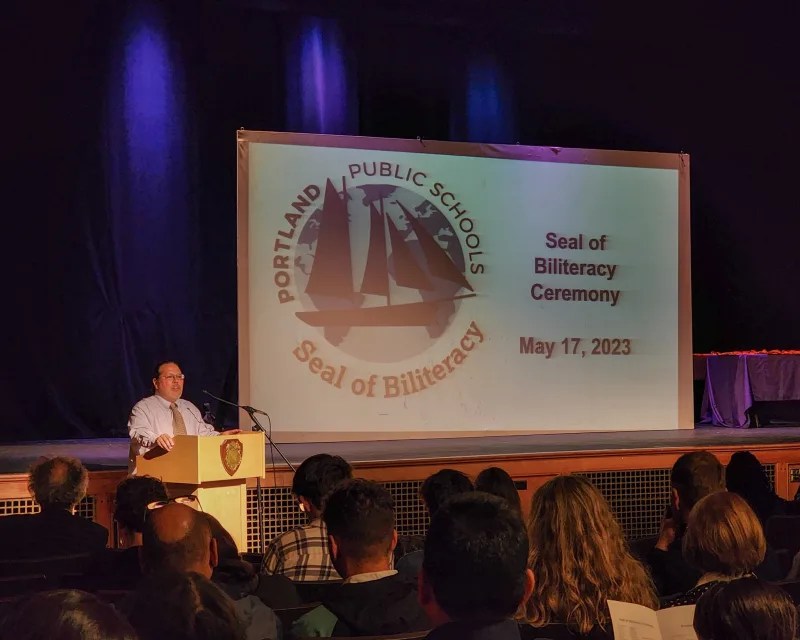
Warsaw Middle Schoolers Put Courage to the Test with SpiritCorps

“I learned that I could face my fears if I put my mind to it,” one Warsaw 7th grader concluded as ELA teacher, Jake Marcoux, took his classes on a journey of self-discovery during their 3-week personal narrative writing and storytelling project celebrating Courage with SpiritCorps.

KEMPTON COURAGE – SPIRITCORPS.mp4 from Spirit Series on Vimeo.

Students engaged in a rigorous 5-step writing process to craft their stories of Courage. And they were supported along the way by their teacher, peer Story Partners, program videos and materials, as well as an adult SpiritCorps Story Coach. These trained program volunteers provide each student approximately one hour of personalized feedback to help them create their very best work. The best thing about SpiritCorps,” said another Warsaw 7th grader “is knowing that adults are out there helping children.”

The project culminates with students recording their story on video, then sharing and celebrating these with classmates and family, for an average of 2 hours of viewing time and 40 views for each 3-4 minute video.

In partnership with the Maine DOE, we can offer SpiritCorps to students statewide. Thanks to a federally funded grant, participating schools are given 100% scholarship in the first year. We would love to work with you and your students!

If you would like the SpiritCorps experience at your school, please email Dr. Christina O’Neal, our Director of Program Partnerships, at coneal@spiritseries.org.

Building Community Through Extended School Programming at Georgetown School

Small rural schools are often faced with the challenges of how to support working families who may need before and after care for their children. Before and after care sometimes provided through the YMCA, or other organizations, are not always accessible to families, making drop off and pick up times difficult. In some cases, rural schools lose students to other schools who have consistent care programs. In Georgetown we heard this challenge presented many times from multiple families. The goal was to find a solution that made sense for families.

Last year, Georgetown School, with the support of Georgetown Island Education Foundation, a nonprofit organization that raises funds for education in Georgetown, began offering free after school clubs to students. The first step was to find a program coordinator, someone that could administratively organize the sign ups and rally adults interested in offering unique opportunities for students at Georgetown. Sarah Mancini, a local community member, was interested in charging the venture of after school clubs.

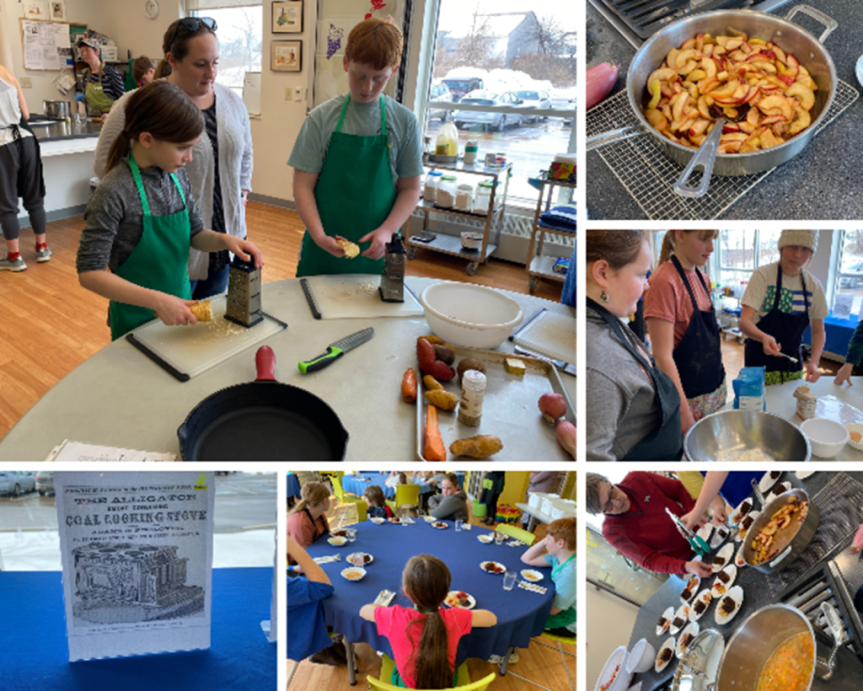
Beginning in November, GCS offered nine different clubs free for students in grades PreK-6. From learning how to survive in the wild, to archery and a regular after school homework club, the news of clubs began to spread in the community. More and more community members came forward and offered to volunteer their time to work with kids after school. This helped increase the offerings of after school clubs, traditionally run by just school employees.

“I feel so lucky to live and work in a place where community members consistently donate their time to work with the kids at Georgetown School,” said Sarah Mancini.

By June, students had access to regular weekly clubs Monday through Friday, many of which were run solely by community volunteers. Over the course of last year, we provided after school clubs to 78% of our student population.

This year, Georgetown School is continuing to offer after school clubs for all students. This fall, students have had offerings of 8 different clubs that have served around 75% of the school population. Weekly, students have access to a regular homework club and after school gym time. GCS also offers special clubs such as theater club, gift making, soccer club, arts etc.., garden club, and archery.

While after school clubs were providing a much needed community connection for students, they ultimately were not solving the problem of before and after care for students. Principal Nina Willette and after school program coordinator Sarah Mancini, sat down this summer to try to problem solve how to help. With the help of AOS98 Schools, the school found a way to utilize school employees, and a donation system, to offer daily before and after school programming for students. What has evolved from simply attempting to solve a problem in the community has become something independently beautiful. With the help of Jordan Lang, a local community member and parent, and Sarah Mancini, the school is able to provide families with a monthly sign up for before school programming beginning at 7:30am, and after school programming ending at 5:30pm.

The school aims to keep the cost as low as possible for families, enough to pay employees who provide a creative, loving, and community building space for students to be together before and after school. A less structured environment than clubs,
programming allows kids the time to be together, something that has been greatly lost these last few years of the pandemic. Kids have creative choices and lots of outdoor play time. So far, in the months of September, October and November, before and after school programming has served roughly 17 families in the community.

Donations are essential to providing programming to the students in our community. Principal Willette and Sarah Mancini are actively searching for other funding sources that will allow before and after programming to be free of charge to students and families who may need or benefit from this service.

“We are thankful to those community members who have generously donated towards ensuring this program is successful. We know that schools and children are the foundation of our communities,” said Principal Willette. “Our hope is to continue to provide this much needed service to families in Georgetown for years to come.”