Maine Students Present Research and Engineering Projects at 75th Annual Maine State Science Fair

Celebrating its 75th year, the Maine State Science Fair (MSSF), organized by The Jackson Laboratory (JAX) and Maine Mathematics and Science Alliance (MMSA), took place virtually on April 3, 2021. 157 students representing 23 schools in 8 Maine counties tuned in to present virtual research or engineering projects to a panel of judges and attend events. High school students from across the state competed for prestigious state titles and over $1 million in scholarships and awards.The winners were announced during a virtual award ceremony on April 3 at 3 pm ET. The event was headlined by keynote speaker Dr. Nirav Shah, director of the Maine Center for Disease Control.In his remarks, Dr. Shah encouraged the students to communicate their science clearly to non-scientific audiences. “Just as important as learning the tools of science are learning the tools of science communication,” Shah said. “The principal that I always keep in my mind [when answering a scientific question] is you shouldn’t tell them how to build a clock, you should tell them what time it is, because that’s what they are really interested in.”

“This year’s Maine State Science Fair was an inspiring showcase of the STEM talent being fostered in Maine high schools,” said Michael McKernan, Program Director for STEM and Undergraduate Education at The Jackson Laboratory and a co-Director of the Maine State Science Fair. “Students presented projects that were both highly creative and also relevant to pervasive issues in Maine.”

Linh Nguyen, a senior at Deering High School in Portland, studied how carbon nanotubes could be used as an inexpensive remover of arsenic in drinking water systems, including private wells where arsenic contamination is prevalent. Vetri Vel, a senior at Bangor High School, improved his fall-detection software which uses a thermal-imaging detector of his own creation. Vel’s system could be deployed in the homes of elderly people, living alone, to reliably and automatically detect falls and send a call for help. Ashton Caron, a senior at Nokomis High School in Newport, used GPS collars and chemical studies of pasture grass nutrition to study grazing patterns in cows. This could help Maine farmers better plan pasture rotations to sustain both the cows and their pasture resources.

The Grand Award winners were:

1.     First Award – Linh Nguyen, 12th grade, Deering High School. Applications of Carbon Nanotube Based Sorbents for Removal of Arsenic from Polluted Water.

2.     Second Award – Vetri Vel, 12th grade, Bangor High School. Readily Implementable Fall Detection System for the Elderly Using Thermal Image Segmentation and Convolutional Neural Networks.

3.     Third Award – Mateus Nascimento, 11th grade, Brunswick High School. How Animals Talk: Understanding Silk Moth Communication through Detection of Pheromones with an Electronic Nose.

“It has been awe-inspiring to see the achievements of Maine’s students as the Science Fair has grown to involve more schools and educators from across the state,” said Dr. Ruth Kermish-Allen, Executive Director of the Maine Mathematics and Science Alliance (MMSA). “Our young people are creating outstanding scientific research that truly can make a difference in the world, and we are able to recognize those efforts through increased scholarships to diverse higher education options available to MSSF students. The creativity and innovation we see in these complex scientific studies highlights the amazing talents of Maine’s next generation of leaders.”

In addition to the Grand Award prizes, more than $1 million in scholarships, including several full-tuition scholarships, from The University of Maine, College of the Atlantic, University of New England, University of Southern Maine, St. Joseph’s College of Maine, the University of Maine at Augusta, and Husson University were distributed to students who demonstrated creativity, innovation, aptitude and notable scientific potential.

For the first time, several Maine community colleges also offered and awarded scholarships. York County Community College, Central Maine Community College, and Southern Maine Community College each made one partial tuition scholarship. Additional students received awards for various achievements from JAX and MMSA.

The following students received full-tuition four-year Top Scholar awards from The University of Maine, including admission to the UMaine Honors College:

Emerson Harris, Boothbay Region High School

Zoe Stankevitz, Nokomis Regional High School

Ashton Caron, Nokomis Regional High School

Nora Goldberg-Courtney, Maine Coast Waldorf School

Nick Pease, Nokomis Regional High School

Matthew Gilbert, Greely High School

Ogechi Obi, Bangor High School

Grace Hall, Belfast Area High School

Ashly Nyman, Nokomis Regional High School

Carter Rice, Nokomis Regional High School

Quinn D’Alessio, Bangor High School

Maya Elkadi, Bangor High School

The following students received a $20,000 four-year scholarship from the College of the Atlantic, renewable for four years.

Nora Goldberg-Courtney, Maine Coast Waldorf School

Emerson Harris, Boothbay Region High School

The following students received a $5,000 four-year scholarship from the University of New England, renewable for four years:

Grace Hall, Belfast Area High School

Siobhan Duffy, Washington Academy

Emerson Harris, Boothbay Region High School

Maya Elkadi, Bangor High School

The following students received full-tuition four-year scholarships from the University of Southern Maine:

Quinn D’Alessio, Bangor High School

Emerson Harris, Boothbay Region High School

The following students received top merit scholarships from the University of Southern Maine, including a $5,000 award.

Tomas Cundick, Foster Technical Center

Grace Hall, Belfast Area High School

Nora Goldberg-Courtney, Maine Coast Waldorf School

Roland Ladd, Bangor High School

Virginia Weiss, Cape Elizabeth High School

Uyen Nguyen, John Bapst Memorial High School

Simon Socolow, Bangor High School

Siobhan Duffy, Washington Academy

The following students received a $2,500 four-year scholarship from St. Joseph’s College of Maine:

Grace Hall, Belfast Area High School

Uyen Nguyen, John Bapst Memorial High School

The following students received a $1,500 four-year scholarship from the University of Maine at Augusta, renewable for four years:

Nora Goldberg-Courtney, Maine Coast Waldorf School

Roland Ladd, Bangor High School

The following students received a $1,000 scholarship from Husson University:

Grace Hall, Belfast Area High School

Jordan Boyd, Nokomis Regional High School

Cassidy Hodges, Nokomis Regional High School

Ella Donaghy, Medomak Valley High School

Other awards included:

York County Community College awarded a $1,000 scholarship to Amber-Rae Pesek, Hancock County Technical Center.

Central Maine Community College awarded a one semester full-tuition scholarship to Lillian Philbrook, Hancock County Technical Center.

Southern Maine Community College awarded a one semester full-tuition scholarship to Virginia Weiss, Cape Elizabeth High School.

Linh Nguyen, Deering High School, was awarded the $5,000 Cary James Water Ride Scholarship.

The JAX Promising Scientist Award for outstanding research and engineering projects by 1st year students, was presented to:

Mary McPheeters, Falmouth High School

Alexander Benton, Maine Coast Waldorf School

Audrey Hufnagel, Lincoln Academy

Katie Nakai, Brunswick High School

Avery Matthews, Falmouth High School

The Reach Award for students from schools who are new to the Maine State Science Fair, given by the MMSA, was presented to:

The team of Anna Molloy, James Wheeler, Orono High School

The team of Esme Song, Penelope Haydar, Caroline Gentile, Cape Elizabeth High School

The full list of special awards is posted online at https://www.jax.org/mssf

Each category of research project includes three top prizes. The MSSF Category Winners are as follows:

Animal Sciences

1st – Patrick Wahlig, Falmouth High School

2nd – Runzhe Yao, Gould Academy

3rd – Ashton Caron, Nokomis Regional High School

Behavioral Sciences – Psychology

1st – Sciatzy Solis, Medomak Valley High School

2nd – Vy Do, Washington Academy

3rd – Olivia Whitten, Nokomis Regional High School

Biological Sciences

1st – Mateus Nascimento, Brunswick High School

2nd – Simon Socolow, Bangor High School

3rd – Ariel Larrabee, Hancock County Technical Center

Biomedical and Health Sciences

1st – Emerson Harris, Boothbay Region High School

2nd – Coco Xu, Falmouth High School

3rd – McHenna Martin, Hancock County Technical Center

Chemistry

1st – Auburn Putz-Burton, Gould Academy

2nd – Jiaqi Li, Gould Academy

3rd – Grace Leschey and Virginia Weiss, Cape Elizabeth High School

Computer Sciences

1st – Nick Pease, Nokomis Regional High School

2nd – Alex Hardy, Foster Technical Center

3rd – Cuthbert Steadman and Beckett Mundell-Wood, Bangor High School

Data Science

1st – Madyson Redding, Old Town High School

2nd – Maia Pietraho, Brunswick High School

3rd – Jack Nussbaum, Brunswick High School

Engineering

1st – Vetri Vel, Bangor High School

2nd – Brady McQuaid, Brunswick High School

3rd – Jordan Boyd, Nokomis Regional High School

Environmental Engineering

1st – Linh Nguyen, Deering High School

2nd – Maya Elkadi and McKayla Kendall, Bangor High School, Bangor High School

3rd – Frederick Oldenburg and Roland Ladd, Bangor High School, Bangor High School

Environmental Science

1st – Swetha Palaniappan, Cape Elizabeth High School

2nd – Paula Dauphinais and Nancy Dauphinais, Nokomis Regional High School

3rd – Ruth White, Orono High School

Environmental Science – Water

1st – Miranda LeClair, Old Town High School

2nd – Ginny Hunt, Bangor High School

3rd – Quinn D’Alessio, Bangor High School

Materials Science

1st – Ogechi Obi, Bangor High School

2nd – Jinkyu Kim, Gould Academy

3rd – MacKenna Carter, Machias Memorial High School

Physics and Energy

1st – Mia Smith Old Town, High School

2nd – Nuthi Ganesh, Bangor High School

3rd – Will Caron, Bangor High School

Plant Science

1st – Meaghan Caron, Bangor High School

2nd – Nora Goldberg-Courtney, Maine Coast Waldorf School

3rd – Bryce Carter, Hancock County Technical Center

Maine State Science Fair is further supported by Central Maine Power, AV Technik, Society for Science, Maine Technology Institute, Texas Instruments, Maine Space Grant Consortium, IEEE, Hancock Lumber, Fiber Materials, Inc., and Wipfli CPAs and Consultants.

Information for this article was provided by The Jackson Laboratory (JAX) and Maine Mathematics and Science Alliance (MMSA) as part of the Maine Schools Sharing Success Campaign. The Maine Schools Sharing Success Campaign is an avenue for Maine schools to celebrate successes and share innovative ideas, practices, and models that can be adapted and easily implemented by other Maine schools. Stories are not an endorsement of specific materials, services, or practices and are not intended to promote learning programs that are of cost to students, families, or schools. To submit a story or an idea, email it to Rachel at rachel.paling@maine.gov. 

Brunswick Special Ed Teacher Reflects on Making Relationships a Priority During COVID-19 

Carmon Parker, a special education teacher at Harriet Beecher Stowe (HBS) Elementary School in Brunswick has always wanted families to feel connected and supported through her Social Emotional Behavioral programWhen classroom-based learning was paused in March of 2019 at the onset of COVID-19, she really felt these values intensify 

Pre-pandemic photos from the HBS Social Emotional Behavioral program:

Not being able to see her students gave her a sense of helplessness because it meant that it would be that much harder to able to maintain those critically important connections with her studentsLike many teachers and school administrators, Ms. Parker quickly shifted gears to help take the pressure of “keeping up” off her students’ plates and the fear of regression off their family’s mindsShe focused on staying connected in creative ways since they couldn’t physically be together.  

She did this at first by scheduling zoom meetings where she worked with students on mindfulness practices, emotional regulation, and social skills. These meetings were also a time for students and families to ask questions, to help ease anxieties, and constantly reassure and remind students that one day we would all be together again,” said Ms. Parker.  

Along with classroom zoom meetings, they also made scheduled times to include other school community members that students had meaningful relationships with including teachers, administrators, and staff members that students saw on a regular basis around schoolShe even helped organize a birthday car parade for one of the students. I believe this helped us all feel that we were still together, even when apart, recalls Ms. Parker. 

As zooms became the norm and hybrid class schedules started to take shape in schools across Maine, Ms. Parker continued to adapt to the situation too, by making in-person time as productive and positive as possible while also taking advantage of time outside of the classroom to maintain relationships and add an extra layer of learning with her students. 

Thinking ahead during the initial building closures in the springMs. Parker wrote and received a Brunswick Community Education Foundation Grant that allowed her to order calming sensory items for her classrooms (humidifiers, essential oils, sound machines, etc.) which she has used to improve in-class experiences for students in her program. 

In addition, with the support and help from the families of her students, she was able to create safe outdoor learning experiences that helped bolster relationship building, among so many other positive learning and experiential opportunities for her students (and her). Ms. Parker spent many weekends connecting with her students and their families around activities that they could all enjoy together like surfing and skiing. “Her commitment and care for her students during an exceptionally challenging time has helped them to be resilient. They feel safe and supported and Ms. Parker has gone above and beyond to make sure they feel the love,” a parent said.   

In reflecting back on the many changes that came along with the COVID-19 pandemic, Ms. Parker writes that, “the silver linings that have come from this are having more time to connect and build relationships with families, further strengthening relationships with students, and channeling my energies into what and who brings me joy.  

Being apart from my students and team (my best friends) was the hardest thing I’ve ever gone through. It forced me to explore other passions such outdoor activities and photography. Our first day back at school, after 186 days of being apart, I shared pictures with my students of all the adventures I had. With the main message being, they would always be my greatest one. 

Family Engagement Activity – Capture Your Beauty: 

Information for this article was provided by Carmon Parker and a parent of one of her students as part of the Maine Schools Sharing Success Campaign. The Maine Schools Sharing Success Campaign is an avenue for Maine schools to celebrate successes and share innovative ideas, practices, and models that can be adapted and easily implemented by other Maine schools. Stories are not an endorsement of specific materials, services, or practices and are not intended to promote learning programs that are of cost to students, families, or schools. To submit a story or an idea, email it to Rachel at rachel.paling@maine.gov. 
 

Bath Middle School 8th Graders Find Their Passion

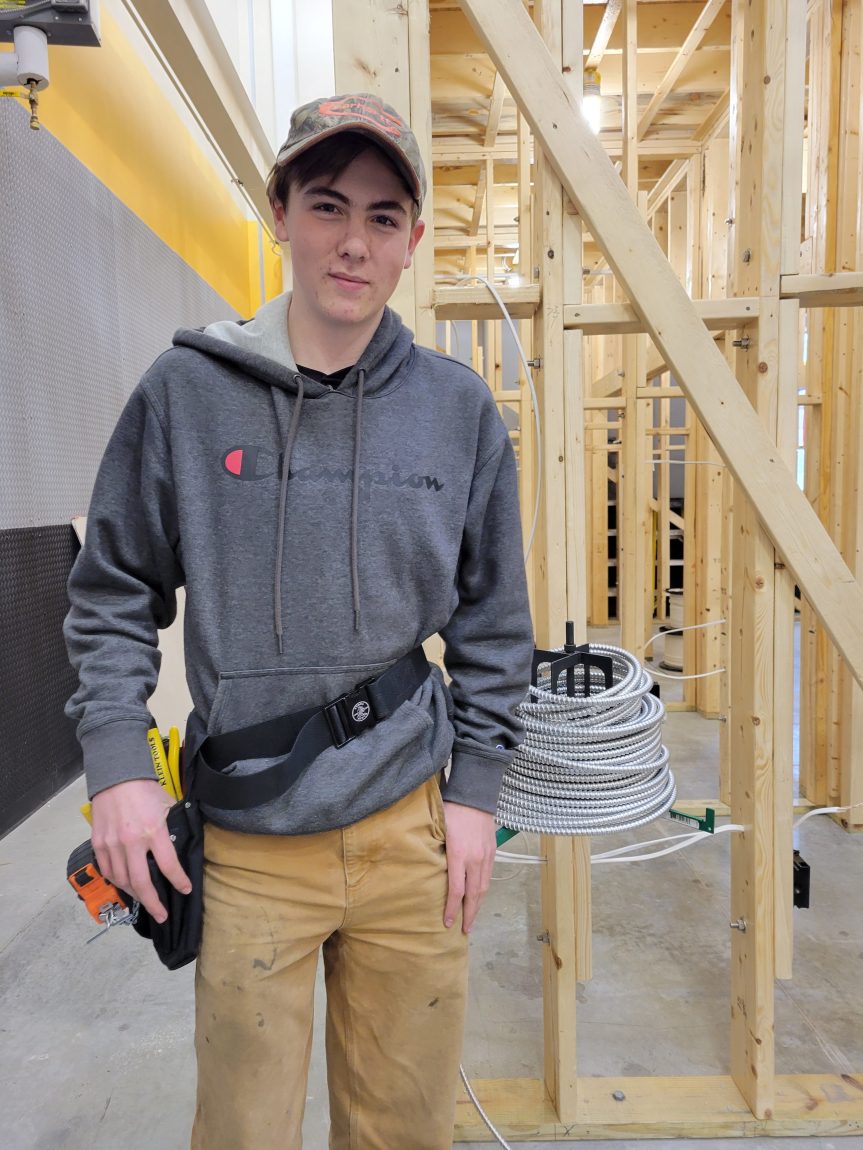
Eighth graders at Bath Middle School (BMS) are preparing for high school with “Journey to Success,” a cross-disciplinary learning initiative (called an “expedition”) with a presentation component. Students were recently asked to identify something they are passionate about and present the topic in front of their classmates.

Pictured above: Sawyer Wright demonstrates his model airplane before his presentation on the aerodynamics of flight.

“Middle school is the transition between ‘everything is possible’ and narrowing your field,” said science teacher Monica Wright, describing the importance of helping students identify their passions so that they can pursue them in high school and beyond. “Before winter break, we helped students make their own ‘interest bracket.’ On one side they put things that they think about often; things that jazz them up. On the other side they put things that make them mad. Going through the bracket helped them articulate things they are passionate about.”

Projects spanned a broad range of topics, and every eight-grade teacher played a role in each student’s success: social studies teacher Tiffany Alexander helped them perform interviews with local experts, tech ed teacher Steve Richard supported hands-on building projects (like setting up wave tanks, house models, and engineering cars), art teacher Jackie Johnson helped them create their displays, and ed techs, like Roman Quinn, offered ongoing support.

Presentations took place on February 25 and 26 in the BMS cafeteria – it was the first time that some students had spent class time together since the pandemic started. Topics included everything from suicide prevention to traditional chip boat design to the aerodynamics of flight. Shealyn Brochu filmed herself dissecting a pig’s heart and demonstrated the inner workings of the organ in her presentation, “How can the heart be cured?” Gaffney McDonough, who had been helping his father with the restoration of a Ford Model A, documented his repair of the car’s signature “ahooga” horn. Belle Watson wrote and recorded a heartfelt song about discrimination.

Despite the breadth of topics, there was one common thread: the students’ enthusiasm and pride in their work.

“Every student put themselves out there,” said Wright. “There were so many moments where they had to let themselves be vulnerable. In the end, their perception about the project went from, ‘This is something I have to do,’ to ‘This is something I’m really passionate about doing.’ Every kid did that, and that’s what’s so important to me.”

Wright said the passion projects could not have been done without the one-on-one support of ed tech Roman Quinn, who joined BMS this year. Quinn discovered a 3D printer in the school’s library and taught himself how to use it so he could help students create unique props for their presentations. For example, when student Brady Wallace wanted to make a presentation on turbochargers vs. superchargers, Quinn helped him locate a design and print a model turbocharger to show his class. Quinn even lent his own car to the passion process when student Jackson Murray wanted to learn how to change a tire.

“I filmed Jackson changing the tire at BMS,” Quinn said. “It turns out that he was born to be in front of the camera – he was so personable. So determined. The whole experience was awesome.”

Quinn, who worked in finance before switching careers, said projects like this make him wish he had become a teacher “right out of the gate.”

“I know what it’s like to watch the clock at work. Now, every day I leave work, I’m still energized. I have just as much fun as the kids, if not more,” he said.

The final step in the eight grade’s “Journey to Success” expedition will come at the end of the year when students present evidence to a panel of judges that they are ready to start high school; a process guided by English language arts teacher Adelle Carter. But these have students already accomplished something that they can carry forever: finding and sharing their passion.

This article was provided by Bath Middle School as part of the Maine Schools Sharing Success Campaign. To submit a story or an idea, email it to Rachel at rachel.paling@maine.gov.
Bangor City Hall Student Art Show Goes Virtual

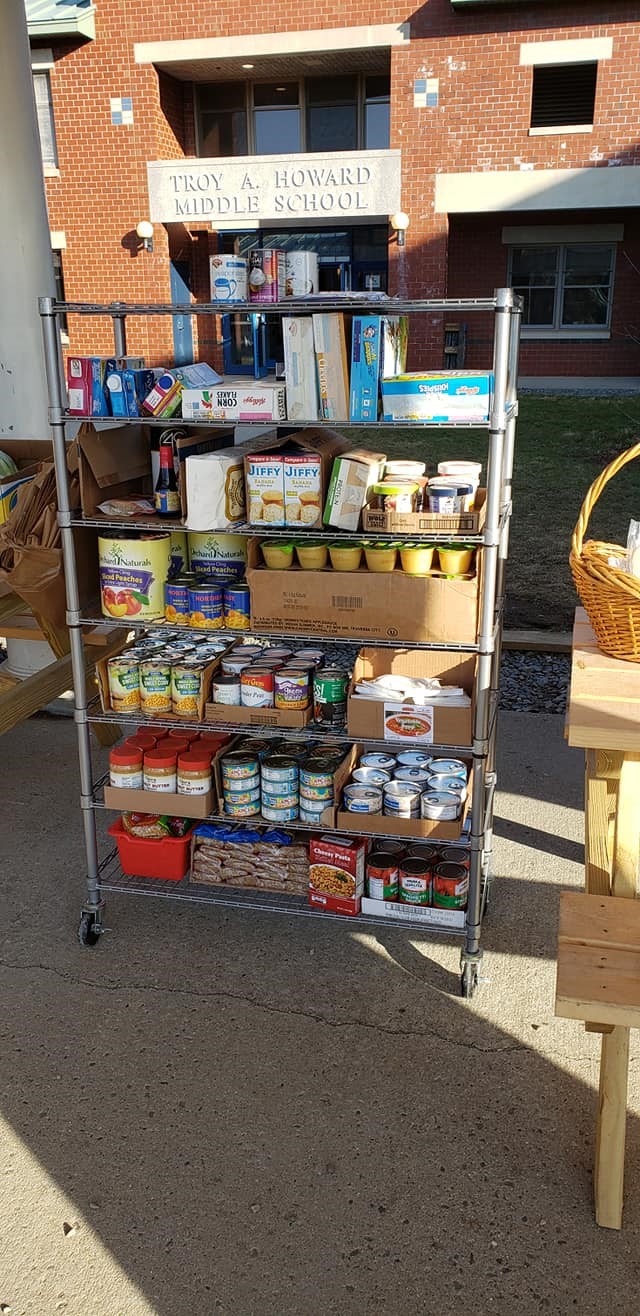
Bangor City Hall is home to four bulletin boards where art created in the Bangor School classrooms is displayed. With limited access to City Hall due to COVID-19 health and safety precautions, the district sought to provide a way to continue to share the great work that their students created by doing a video art show this year. The video allows the community to continue enjoying the student work virtually.

Information for this article was provided by Bangor School Department as part of the Maine Schools Sharing Success Campaign. To submit a story or an idea email it to Rachel at rachel.paling@maine.gov.

Berwick Teacher Selected for National History Day Spring Webinar Series

Ms. Christa Boeykens-Bui, a teacher at Noble Middle School in Berwick, Maine is one of only 120 teachers selected for a National History Day® (NHD) spring professional development program. This course focuses on using online Library of Congress resources to develop and support historical arguments and is a feature of NHD’s membership in the Library of Congress Teaching with Primary Sources (TPS) Consortium.

The teachers chosen for this honor represent NHD’s 58 affiliates across the country and around the world, and the National History Day program in Maine selected Ms. Boeykens-Bui. NHD affiliates include all 50 states and the District of Columbia, American Samoa, Guam, the Northern Mariana Islands, Puerto Rico, and international school programs in China, South Asia, and South Korea.

“The skills and strategies Ms. Boeykens-Bui is developing through this series will benefit her students over the course of their academic and professional careers,” said National History Day Executive Director Dr. Cathy Gorn. “As a Library of Congress TPS Consortium member, NHD is incredibly fortunate to be able to offer this opportunity for teachers, especially now as teachers and students continue to address challenges of non-traditional learning settings required by the ongoing COVID-19 pandemic.”

For several months, Ms. Boeykens-Bui works with her peers around the country and National History Day staff to build knowledge for teaching with online Library of Congress resources. Upon completion of the series, she will have demonstrated the ability to share with her students key strategies for researching, supporting, and presenting historical arguments bolstered by these primary sources.

NHD is a non-profit organization based in College Park, Maryland, which seeks to improve the teaching and learning of history. The National History Day Contest was established in 1974 and currently engages more than half a million students every year in conducting original research on historical topics of interest. Students present their research as a documentary, exhibit, paper, performance, or website.

For more information about the national level program, visit nhd.org. for more information about National History Day in Maine visit  http://www.mcslibrary.org/national-history-day-in-maine/ or contact State Coordinator John Taylor at john.m.taylor@maine.edu or 207-474-7133.

Bangor High School Celebrates Arts in Education Month

Recent changes to the State guidance that provide oversight into the practice of performing arts have allowed Bangle High School Students to return to activities that had been put on hold for the beginning of the school year.

Orchestra and band have started practicing with specialized safety precautions in place. Students use special masks that allow them to play instruments as well as bell covers.

MEDIA RELEASE: Vote NOW for Maine Custodian in the Running for National Custodian of Year

Portland Public Schools’ Ocean Avenue Elementary School (OAES) lead custodian Donna Colello has been chosen as one of the top 10 finalists nationally in Cintas’ 2021 Custodian of the Year contest.

Colello is the only finalist from the Northeast and one of only two women in the top 10. From now through April 16, anyone can vote for Colello at https://www.custodianoftheyear.com/custodian-of-the-year/. Each person can vote once per day.

In its eighth year, the annual Custodian of the Year contest honors custodians for their exemplary work in schools across the nation. The school custodian with the most votes will be named Custodian of the Year and will receive a $10,000 cash prize, along with products and services for their school, a comprehensive training and development package, and enrollment in the GBAC Fundamentals Online Course that teaches cleaning professionals to prepare for, respond to and recover from biohazards in the workplace, from the Global Biorisk Advisory Council (GBAC), a Division of ISSA.

In nominating Colello for the contest, OAES Principal Beverly Stevens described her as outstanding. “Miss Donna works tirelessly every day and always brings a smile to all students and staff,” Stevens wrote. “What started as a job 25 years ago to support herself and newborn child, then flourished into a dedicated and fulfilling career where she goes out of her way to help students build up their self-confidence and help those in need. She’s meticulous in her level of higher cleaning techniques and standards, and takes great pride and care in the work she and her team accomplishes. Donna is an integral part of the Ocean Avenue Elementary community and is the one that both staff and students rely on the most.”

Stevens praised Colello’s impressive work ethic. “Donna is always one-step ahead, knowing not only what to do next, but what is coming up over the next few months. For two years in a row, 100% of the teaching staff rated the building clean and orderly on the climate survey,” Stevens wrote. “She does side-by-side training on best practices for cleaning the school and keeping our equipment maintained. She is passionate about her team and keeping our building healthy, secure, and looking top-notch. Donna is thoughtful, kind, and puts students, staff, and safety at the core of her work. She is an ethical compass, and leads by example. Donna has created and maintained lasting connections to everyone in the Portland Public Schools and city community, including parents and neighborhood groups. Donna’s mantra is: ‘We’re doing it for the kids.’”

“Donna Colello is one of the most respected, hardworking custodians in the district. We are so grateful to Donna for her dedicated service to our students and staff,” said Superintendent Xavier Botana. “She goes above and beyond at Ocean Avenue School and she also is a leader in the district. This past summer, she volunteered to serve on the district’s custodial ‘Tiger Team,’ working to figure out how to best keep our school buildings safe during the pandemic. In our eyes, Donna already is a winner, but I encourage everyone to vote for her to come out on top in this national contest and receive the recognition of which she is so worthy.”

Cintas Marketing Manager Christiny Betsch said in a statement: “With over 2,000 deserving nominations, it was difficult choosing only 10 finalists. This contest shows us that custodians are much more than cleaners. They’re true role models who go above and beyond to have a positive impact on students, faculty, teachers and communities across the U.S.”

The nine other finalists are Christopher Bowman (Ohio); Bobbi Sue Burbey (Wisconsin); Robert Buster (Colorado); Francesco Catalano (Illinois); Charles Harris (Georgia); Mike Heiry (Pennsylvania); Edward Straub (South Carolina); Terry Tackett (Kentucky); and John Wheeler (Florida).

###

South Portland Art Teacher Engages Remote Learners with Collaborative Mural Project

Margaret Burman is the Art Teacher for both the Dyer and Kaler Elementary Schools in South Portland School Department. An experienced educator, Mrs. Burman has been teaching art since 2004, with the past 8 years at Dyer and Kaler.

Pre-Pandemic, Mrs. Burman was teaching art to students in the two different elementary schools in-person using the framework of Teaching for Artistic Behavior, which develops their artistic practice by encouraging them to make choices about the media they want to use, the subject matter they want to express, and by developing their craft in many different kinds of art making. A few years back she created a video explaining her transition to the new teaching style and it is something she is really proud of because it drives her practice and the students have responded really well to it.

Through the current school year, South Portland School District has been in hybrid mode because of the COVID-19 pandemic, and Mrs. Burman has been teaching her students remotely via asynchronous lessons and live virtual classes. To help manage this, she created a Google Slides Virtual Art room where students can access virtual versions of their studios, visit a book nook, and see lessons that have been assigned to them.

“It was devastating for me that I couldn’t be in our art rooms and creating this virtual space became a way of feeling like I had had some control over things,” recalls Burman.

During the switch to hybrid learning, Burman transitioned from using the art rooms located at both schools, which have been repurposed for other classes, to a small office at Dyer Elementary that she has dubbed the Tiny Art Room. This is where she hosts virtual meetings with students and records lessons.

“During our Google meets we go over the lesson/theme for the week, have art making time using their sketchbooks and materials from the art bags that all K-5 students in South Portland were given, and play drawing games like Random Dry Draw, adapted from a dry erase board drawing game that we used to play in the art room.”

With no windows in the Tiny Art Room which was originally surround in blue walls, Burman decided to get permission from the custodial staff and principal to paint them.

“Then I decided that instead of me just painting what I wanted on the walls, I would incorporate the ideas of my students from our Google meets,” explained Burman. Since October she has engaged students to help create the collaborative mural, a project that all of the students in all of her classes, grades K-5 at both Dyer and Kaler, get to participate in.

“I choose one student randomly at the end of every Google meet to direct me in what to paint for the mural,” She explains. “They are the directors; I am just the brush!”

At this point over 250 students have contributed their ideas to the mural, which will not be finished until every single one of her remote students has added their idea. Mrs. Burman has collected feedback from the students as they discuss what they would like to do with the image of this mural when it is finished.

“I think the mural lets everybody have a chance to make a mark on this artwork,” said one student.

“The mural is beautiful! I enjoyed making the squiggly thing. Looking forward to doing another one,” added another.

Some ideas on what to do with the mural when it is finished have been posters, magnets, postage stamps and selling products to raise money for a charity.

Despite not having art classes in-person this year, students have really benefited from doing their art classes remotely because it has given them the opportunity to practice being artists in their own homes and day care programs.

Having been practicing the artistic habits such as stretch & explore, develop craft, envision, express, reflect, observe, engage & persist, and understanding art worlds in the art room with Mrs. Burman for the last 4 years, her students were used to experimenting and exploring the materials and getting ideas and inspiration from the world around them. Doing the work remotely has provided the opportunity for their artistic behavior to spill over into their everyday lives outside of school and has helped foster artistic practice outside of school assignments.

Progress of Mrs. Burman’s Tiny Art Room mural can he found on her Instagram @DyerKalerArt using the hashtag #tinyartroomcollaborativemural.

Information for this article was provided by South Portland School District as part of the Maine Schools Sharing Success Campaign. To submit a story or an idea for the campaign, email it to Rachel at rachel.paling@maine.gov.


Student Artwork Featured at Portland Museum of Art for Youth Art Month

Creative works from art students from around Maine are on display online at the Portland Museum of Art (PMA) in celebration of Youth Art Month.


For almost 30 years, PMA and the Maine Art Education Association (MAEA) have collaborated to bring National Youth Art Month to Maine. The exhibition is designed to underscore the value of art education for all children and encourages support for quality art programs in Maine schools.


“This annual exhibition showcases the incredible work produced by K-12 students throughout the state, representing a wide variety of youth perspectives and artistic practices in Maine,” said PMA in a statement about the exhibit.


During the COVID-19 pandemic, Youth Art Month has gone digital for the first time. PMA said the online exhibition “brings exciting opportunities to share the artwork of Maine’s youth with a wider audience. We hope that the artworks in this exhibition inspire more creativity, spark more conversations, and garner support for more arts education in our schools and in our communities.”

The attached artwork is a portrait by Portland High School sophomore Venice Melcher, titled “Amy.” Here is the artist’s statement:

“I created this portrait of my mom because she creates a lot of change in my life and the lives of others. She volunteers weekly at a local hospice and animal shelter, and has a business where she sells reusable products made from organic cotton, along with being a great mom! I used mixed media, including watercolor and acrylic paints. I used the neurographic technique for my mom’s face, and cut out and glued down little pieces of paper to create the objects surrounding her.”

Digital receptions were held on Saturday, March 13, for the young artists and their families.

To view the artwork, see a listing of student artists, and where they go to school in Maine visit the PMA’s exhibit website: https://www.portlandmuseum.org/yam-2021.

Information for this article was provided by Portland Public Schools as part of the Maine Schools Sharing Success Campaign. To submit a story or an idea, email it to Rachel at rachel.paling@maine.gov.


Maine School of Science and Mathematics’ Student Appointed to State Board of Education as Student Member

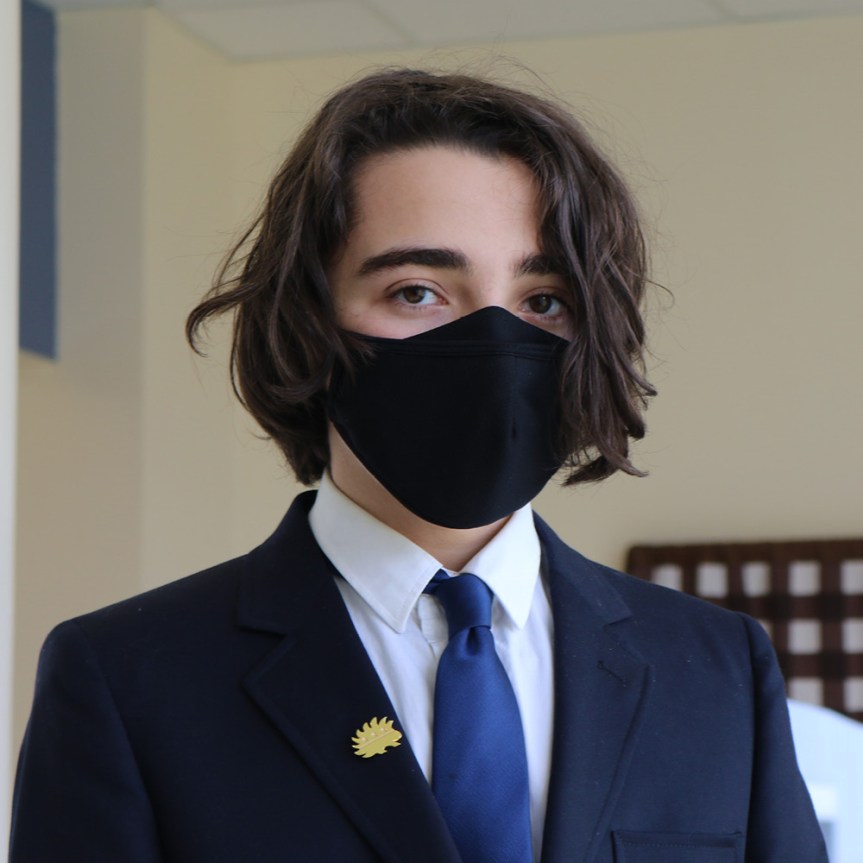
Greyson Orne, a junior at Maine School of Science and Mathematics (MSSM), the state’s first tuition-free, public, residential high school, has been selected as one of two student members on the Maine State Board of Education. The board advises the Commissioner of Education in Maine’s education laws and policies. Orne will also co-chair the Maine Department of Education’s Student Cabinet along with the other State Board Student Member Casey Maddock.

Orne, from Camden, said, “I’m honored to have been selected by Governor Mills for this position, and I’m excited to represent the students of Maine’s second district.”

The Maine Department of Education website explains the Maine State Board of Education has had two student members in non voting positions since 2008. The application process includes a short essay, letters of recommendation from teachers, and a balance of extracurricular activities. Apart from voting, student members have full privileges of the 9 other adult board members. Student members are appointed by the governor and confirmed by the Maine Senate. In February of 2021, Orne testified in front of the Joint Standing Committee on Education before his final confirmation.

Orne believes in student involvement in the education system of Maine and plans to advocate for “advanced education in public schools, especially rural areas with little access to other schooling options.” After high school, Orne plans to apply to the three major U.S. Service Academies to become a commissioned officer in the United States Military. Orne said, “This leadership on the board will allow me to better understand how to lead, work collaboratively with others, and use my presence and voice to advocate for others.”

Although this is the first student from MSSM to be appointed to the board, David Pearson, Executive Director of MSSM, noted “in Greyson’s appointment to the Maine State Board of Education, we see not only a successful individual accomplishment, but a reflection of our wider student population who universally are imbued with a driving desire to make a positive difference in the lives and experiences of those around them.”