Maine Educator Selected by U.S. Department of State for Prestigious English Language Specialist Project

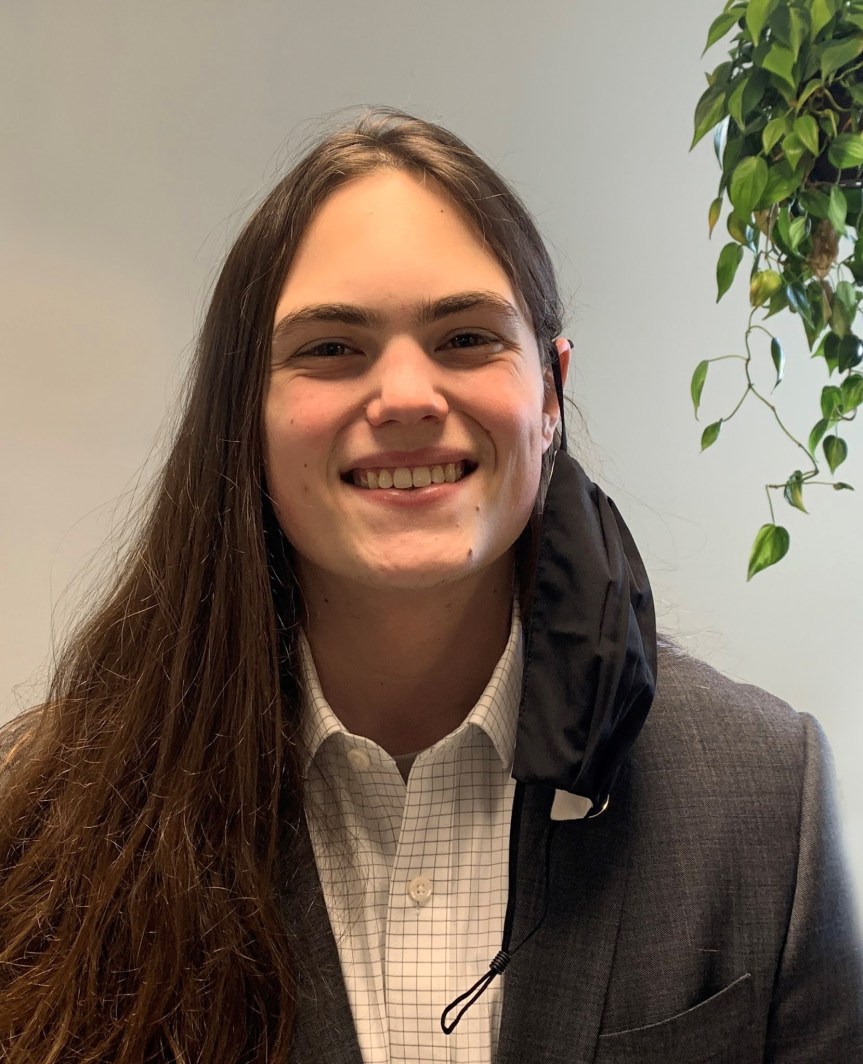
The U.S. Department of State announced the selection of Maine educator Karina Escajeda of Maine for a five-month English Language Specialist project focusing on K4/K5 curriculum design and materials development for a new English immersion initiative in Curacao. She is hosted by a partnership between the Regional English Language Office in Panama, the US Embassy in Curaçao, and the Curaçao Chamber of Commerce. This project will involve researching and drafting curriculum by incorporating local knowledge and curriculum understanding from other countries and best practices given the goals of Curaçao. Escajeda is part of a select group, as her project is one of 150 that the English Language Specialist Program supports each year.

Escajeda is a K-12 ESOL educational consultant with over 20 years of experience teaching, training, presenting, administrating, designing curriculum, and writing reports for K-12 public and private schools in domestic and international environments.  She earned a BA in formal linguistics and Spanish at the University of Southern Maine, TESOL at UCLA, K-12 teacher certification at CSU East Bay, and an MA and administrative credential in K-12 Educational Administration and Leadership at CSU Bakersfield.  She also holds certifications in K-12 ESOL, K-12 Literacy, and K-12 Spanish. She received a Fulbright Distinguished Award in Teaching fellowship to Greece in 2019-2020 to study community-based refugee integration initiatives. She is the program director for Capital Area New Mainers Project, a non-profit in central Maine that supports immigrants and provides educational resources to the broader community.

The English Language Specialist Program is the premier opportunity for leaders in the field of teaching English to speakers of other languages (TESOL) to enact meaningful and sustainable changes in the way that English is taught abroad. Through projects developed by U.S. Embassies in more than 80 countries, English Language Specialists work directly with local teacher trainers, educational leaders, and ministry of education officials to exchange knowledge, build capacity, and establish partnerships benefiting participants, institutions, and communities in the United States and overseas.

Since 1991, the English Language Specialist Program has supported in-country, virtual, and mixed projects in which hundreds of TESOL scholars and educators promote English language learning, enhance English teaching capacity, and foster mutual understanding between the U.S. and other countries through cultural exchange. During their projects, English Language Specialists may conduct intensive teacher training, advise ministries of education or participate in high-level educational consultations, and offer plenary presentations at regional, national or international TESOL conferences. These projects are challenging and those selected represent the best of the U.S. TESOL community. In return, the program provides professional development opportunities to help participants experience different cultures and build skills that can greatly enhance their TESOL careers at home.

English Language Specialists are counted among the more than 50,000 individuals participating in U.S. Department of State exchange programs each year. The Specialist Program is administered by the Center for Intercultural Education and Development at Georgetown University.

For further information about the English Language Specialist Program or the U.S. Department of State, please visit elprograms.org/specialist, contact us by telephone at 202-632-6452, or e-mail ECA-Press@state.gov.

Oak Hill High School Honors Student Nominated for The Congress of Future Medical Leaders

Kyleigh Hyde, a Junior at Oak Hill High School of Wales has been nominated to be a Delegate to the Congress of Future Medical Leaders. The Congress is an honors-only program for high school students who want to become physicians or go into medical research fields and aims to honor, inspire, motivate and direct the top students in the country interested in these careers, to stay true to their dream and, after the event, to provide a path, plan and resources to help them reach their goal.

Kyleigh’s nomination was signed by Dr. Mario Capecchi, winner of the Nobel Prize in Medicine and the Science Director of the National Academy of Future Physicians and Medical Scientists to represent Maine based on her academic achievement, leadership potential and determination to serve humanity in the field of medicine.

Kyleigh is slated to join students from across the country for a two day event in March to hear Nobel Laureates and National Medal of Science Winners talk about leading medical research; be given advice from Ivy League and top medical school deans on what to expect in medical school; witness stories told by patients who are living medical miracles; be inspired by fellow teen medical science prodigies; and learn about cutting-edge advances and the future in medicine and medical technology.

Some of the services and programs the Academy offers are online social networks through which future doctors and medical scientists can communicate; opportunities for students to be guided and mentored by physicians and medical students; and communications for parents and students on college acceptance and finances, skills acquisition, internships, career guidance and much more.

The National Academy of Future Physicians and Medical Scientists was founded to identify prospective medical talent at the earliest possible age and help them acquire the necessary experience and skills to take them to the doorstep of this vital career by offering free services and programs to students who want to become physicians or go into medical science.. For more information visit http://www.FutureDocs.com or call 617-307-7425.

Maine Educators use French Music Competition to Increase Student Engagement, Cultural Knowledge, and French Skills

In its 6th year, “Manie Musicale” has spread nationally and internationally with 950 schools from 47 states and six countries (and counting) participating to select the best French song and music video of the year.

“Manie Musicale” is a yearly competition of songs modeled after the NCAA March Madness basketball tournament in the U.S. Students fill out brackets to try to predict which of sixteen songs will win the “championship.” Once the tournament starts, students vote for their favorite songs in daily matchups to see who wins. Songs include a variety of contemporary Francophone artists from around the world. “Manie Musicale” was inspired by a Spanish version that came first – Señor Ashby’s “Locura de Marzo.”

Stephanie Carbonneau, a middle school French teacher in York and Michelle Fournier, a middle school teacher in Falmouth, started with just their two schools in 2017. Once they realized there was not a national-level competition like this for French, they collaborated to bring one to life, at least on the state level. Carbonneau and Fournier presented at FLAME the following year and opened it up to other schools.

“Manie Musicale” has really exploded in the last 2-3 years especially with the help of Twitter, Instagram and Facebook. A website was also created by Carbonneau and Fournier to assist the voting process as well as to house resources to bring “Manie Musicale” to life in their classrooms. Teachers from around the country now collaborate in the Facebook group with over 1000 members and online to create activities to support using the songs in class as a linguistic and cultural teaching tool.

Students in Carbonneau and Fournier’s classes are encouraged to submit song nominations, but they also consult colleagues in the American Association for Teachers of French (AATF) and social media groups for input. Carbonneau and Fournier carefully screen song lyrics and videos for age- and school-appropriateness, with a focus on promote diversity, inclusion, and tolerance. Last year they partnered with FluentKey, an educational media company out of California, who created interactive quizzes and games based on the “Manie Musicale” video playlist to add even more fun and competition to the event. This year they added a logo designed by a fan and fellow French teacher who uses “Manie Musicale” in her own classes.

There are many teachers who do “Manie Musicale” on their own, but the impact made by this duo and the collaborative following is music to many students’ and teachers’ ears.


Boothbay Region High School Expands STEAM Education Thanks to Generous Donation

Boothbay Region High School will receive $84,000 in science, technology, engineering, arts and mathematics (STEAM) equipment thanks to a generous donation from Paul Coulombe through Boothbay Region Education Foundation.

“What is exciting about STEAM education that is allows multiple pathways and cross disciplinary opportunities for students to engage and enjoy learning, while building on their individual strengths and learning styles,” said Boothbay Region High School Principal Tricia Campbell.

The Boothbay Register recently did an article about the donation where additional details about the donation and STEAM program can be found.

“Thanks to the incredibly generous gift from Paul and Giselaine Coulombe our students will have access to cutting-edge equipment and tools! A STEAM educational program will help to ensure the development of competencies for today’s global workplace. We hope to build and expand programs to include community-based projects and a professional/educational collaborative in the Boothbay Region,” added Campbell.

Information for this article was provided by Boothbay Region High School as part of the Maine Schools Sharing Success Campaign. To submit a story or an idea, email it to Rachel at rachel.paling@maine.gov.

Hall-Dale Music Teacher Goes Above and Beyond to Keep Music Education Going Strong

With only a year of teaching experience under his belt, Hall-Dale music educator David Morris has been adapting his music education program to ensure that students can learn, practice, and perform music all year long, despite COVID-19 restrictions this year.

“David Morris is an old soul; I sometimes forget that he is only a 2nd year teacher,” said Dr. Andrea Freed, a colleague and fellow educator at Hall-Dale Middle/High School. “Last spring and over the summer, he went to students’ homes and stood on their lawns, teaching them music lessons while they were safely distanced on their porches.”

More recently, David arranged an outdoor concert so that his students could safely perform, both vocally and with instruments, all the while David conducted and recorded the concert so that the entire community could hear and enjoy their hard work from the first semester.

In addition to COVID-19 restrictions on schools this year, and tackling the early part of a career in education during a global pandemic, Morris also took on both the middle school and the high school music education program until a replacement arrived in December to fill the position of a long-time music educator who recently retired.

“He is a gift to the Hall-Dale Middle/High School community,” added Dr. Freed.

Information for this story was provided by Hall-Dale Middle/High School as part of the Maine Schools Sharing Success Campaign. To submit a story or an idea, email it to Rachel at rachel.paling@maine.gov.

Six Maine Educators Named in Boston Globe’s Fenway Bowl Honor Roll

The Fenway Bowl has named several outstanding people in the field of education in New England, and we are proud to say that 6 Maine educators have made the list!

In partnership with Cross Insurance, Samuel Adams, and Boston Globe Media, Fenway Bowl checked in with schools and associations across New England seeking the names and stories of educators, college professors, school administrators and staff members who are making a big impact in their community.

Congratulations to the 6 educators in Maine who were named as part of this wonderful recognition:

Michael Davis
Principal
Walton Elementary School, Auburn, ME

Melissa Guerrette
NBCT, 5th grade teacher
Oxford Elementary School

Bill Tracy
Principal
Hampden Academy

Jennifer McGee
Principal
Atwood Primary School

Dr. Flynn Ross
Chair, Teacher Education Dept.
University of Southern Maine

Alison Babb-Brott
Grade 2 teacher
St. George School

Read the full story here!

A huge THANK YOU to all of Maine’s educators, administrators, and staff members who work hard everyday to ensure that students and communities throughout Maine have support, resources, and opportunities to learn and grow. The Maine Department of Education appreciates everything that you do!

Georgetown Central School Adopts Outdoor Teaching with the Help of Juniper Hill School

With the looming restrictions of school reopening in a pandemic this summer, Georgetown Central School created an outdoor education team and invited teachers, staff, community members and parents, to help brainstorm how Georgetown could adjust teaching practices to bring learning outdoors. A school already rich in the tradition of community, outdoor, and project-based learning, we knew that we had to make adjustments to a normal year (when students would participate in hands-on field trips such as digging for clams or studying the migration habits of crabs). In August, two teachers spent four days learning at Juniper Hill School ’s Summer Institute for Educators: Teaching with Nature. Juniper Hill School, a community school for PK-5th grade students, was founded 10 years ago on the foundation of outdoor, nature-based teaching and learning. Anne Stires, the School’s founder, offers year long coaching, professional development workshops, and summer institutes for educators.

Georgetown School began to pivot. With a lot of help from community members, parents and staff, and the guidance and vision of the teachers who attended the summer training at Juniper Hill, we were able to set up roughly twelve outdoor classroom spaces on school property and conservation land beyond the property. A musical garden was formed across from our school’s garden. Swinging reading nooks were created for younger classrooms, and rocks and roots were pulled from land to create a pathway to multiple classroom spaces.

WRITING CLASS, 1st/2nd graders, Georgetown Central School

Using CARES money and writing our title four federal funds application for outdoor education, we were able to supply classrooms with the instructional supplies and tools they needed. We purchased individual swings for students in kindergarten and grades one and two – a quiet space for students to take a break from the mandates of a pandemic education – and an opportunity to escape into the world of literature. We set up outdoor seating areas, using stumps and camp chairs, and purchased chalkboards to bring teaching outside.

As we asked ourselves the question, “How do we do this?” we knew it would be best to reach out to the experts. Anne Stires, from Juniper Hill School, brought outdoor learning professional development workshops to Georgetown Central School such as, “Stepping Outside for the First Time,” “Teaching with Nature: Curriculum,” “Teaching in Winter,” and lastly, “Safety and Risk Management.” From there, teachers have been bringing in more ideas around using the elements of nature to support learning. We have purchased a library collection of professional learning resources directly connected to outdoor education, and built classroom libraries with books that focus primarily on learning in nature and with nature.

In one class, morning meeting takes place outside; calendar and the days of the week are sung as children sit on donated tree stump seats arranged underneath a canopy of trees. An old playground slide is positioned neatly on the hillside leading to the classroom, a welcome experience for students as they make their way to a chalkboard and mud kitchen supplied with pots and pans. Imagination for students in these spaces runs wild and play-based learning has become more evident for the early childhood students. Instead of worksheets with math equations, students jump from sliced tree stump to tree stump adorned with numbers in order.

An experimental year, teachers have been learning first hand how to balance indoor and outdoor learning, especially as we approach the winter months. Simple things have allowed us to take students outside even on colder days. Each student in Georgetown has a warm pair of wool socks, a thermos to bring hot water or tea outside, a winter hat and a fleece neck gaiter (all items gathered by the community or purchased with CRF funds). Outdoor learning in the winter is all about movement. Students study tracks in the snow or other signs of animals that have quietly come and gone without notice on a walk through the playground fields or surrounding woods. An outdoor math class (counting by ones or tens), has students jumping in the snow–making tracks as they jump as far as they can to represent tens and as short as they can to represent ones.

Teachers bring out materials on their individual classroom carts or, in colder months, they will use the jet sleds purchased with CARES money to travel to outdoor classrooms. Outdoor education supplies are kept organized in a shed that is designated specifically for the outdoor classrooms. A walk further into the woods on conservation land, leads students and teachers to a beautiful open pavilion structure we are hoping to enclose, that acts as a shelter in the woods for learning. The timber frame structure was a collaborative effort between the school and school families.

Georgetown School will be continuing ongoing coaching with Anne Stires for the remainder of the year, beginning with our PK-2nd grade teachers. With model lessons, project-based integrated curriculum planning, and feedback sessions, teachers will gain even more confidence and creativity in working with their students outdoors. The ongoing pivot is exciting and rewarding and students and teachers are healthier and happier as a result!

teachers working together outside, smiling
Images taken at Juniper Hill School’s Teaching with Nature: Summer Educator Institute

This story as provided by Juniper Hill School and Georgetown Central School as part of the Maine Schools Sharing Success Campaign. To submit a story or an idea, please email it to Rachel at rachel.paling@maine.gov.


Lewiston Adult Education Computer Training Prepares Students For Future Careers

Computer Support Specialist student Santo Panzo took a moment during November mock interviews for a photo outside the Adult Learning Center at the Longley Multipurpose Center.

Lewiston Adult Education students have completed the first part of Computer Support Specialist training for technology sector jobs. The combination of in-person and distance learning lessons in the fall focused on digital literacy, English skills and work readiness. Successful completion of the program results in a level one Computer Specialist microbadge that can be accepted for college credit and is recognized by employers around the state.

“The students were very motivated and showed a great work ethic. All of them work full time yet were able to participate in and successfully complete this intense program,” English teacher Irina Petranek said.

Student Santo Panzo thanked computer teacher Greg Yates in an email.

“We are more than proud of the opportunity Lewiston Adult Education provided to us,” Panzo said.

On Nov. 20, Panzo and his classmates participated in mock interviews with staff and community members as another preparation for the workforce. Local partners in the interviews included Carbonite, Bates College and RoundTable Technology. Some of the interviews were remote while others were in person with social distancing and mask-wearing.

Computer Support Specialist student Ester Bassa sat for an outdoor photo during November mock interviews at the Adult Learning Center at the Longley Multipurpose Center.

“Lewiston Adult Education is proud to have pioneered in this innovative work. The opportunity to invest in training that results in badges that are recognized for college credit and by local employers is of tremendous benefit to our adult learners,” Lewiston Adult Education Assistant Director Jen Tiner said. “We admire the initiative and persistence that our students demonstrated throughout this program.”

The students’ next step will be taking the National Retail Federation Customer Service and Sales program in collaboration with RSU 16 Adult Education. It will include English classes with a focus on technical writing and speaking skills.

“This class of students reminds us all of the importance of embracing the new ‘global language’ – Information Technology.  A diverse set of students in age, background and origin, they were eager to master the skills of today’s explosion in computer technology,” Yates said.

The Computer Support Specialist Program is funded by the Lumina Foundation and developed in partnership with the University of Maine System, the Maine Department of Labor and the Maine Department of Education.

This story was provided by Lewiston Adult Education Center as part of the Maine Schools Sharing Success Campaign. To submit a story or an idea, email it to Rachel at rachel.paling@maine.gov.

Buckfield Junior Senior High School Teacher Takes on Morning Announcements to Stay Connected with Students

With many schools offering various learning modes through the COVID-19 pandemic, educators and staff alike are going above and beyond to stay connected with their students, both to keep them engaged in learning and to support their wellbeing.

Buckfield Junior Senior High School Teacher Annette Caldwell has been providing morning announcements and news to her school community recently, including the weather and some tips and tricks for staying on track while learning remotely.

While the school was providing learning in a hybrid model, the morning announcements were created by students, with direction and guidance from Annette. More recently, the school has transitioned to a fully remote learning model and Annette has taken on doing the announcements completely. She makes a point to do one everyday for students.

Check out a recent announcement created by Annette in the embedded video below.

“So many of our staff across RSU 10 are going above and beyond,” said RSU 10 Superintendent Deborah Alden.

Lets all take a moment to appreciate and thank our schools, educators, administrators, and staff members for everything they are doing to keep students engaged and learning during this difficult and exhausting time.

Information for this story was provided by RSU 10 as part of the Maine Schools Sharing Success Campaign. To submit a story or an idea email it to Rachel at rachel.paling@maine.gov.

Hannaford Expands ‘Fuel Kids at School’ Pantry Initiative to Maine’s Community Colleges

Hannaford Supermarkets announced today an expansion of its ‘Fuel Kids at School’ pantry initiative to Maine’s community colleges with a donation of $35,000 to establish and expand pantries at all seven community college campuses. The donation will be used for startup and buildout of pantry and storage spaces as well as food costs.

Based on research conducted with Preble Street in Portland, system officials estimate that at least 40% of students enrolled at the colleges are food insecure.

“This generous donation not only helps keep these food pantries stocked, it provides for freezers and refrigerators that will allow these food pantries to provide a range of food options for years to come,” said Maine Community College System President David Daigler. “Our students can’t learn if they’re hungry. These food pantries, many of them student-run, are a critical resource for our students and their families.”

More than $15,000 of the donation will be used to stock food with the remaining funds going toward refrigerators, freezers, and renovations at five of the campuses. (Editor’s note: For a breakdown by campus, please refer to the graph at the end of the release.) The Colleges will work directly with Good Shepherd Food Bank on preparatory and operational logistics, including food safety training and inspections and food purchases.

“By removing barriers and bringing food right to where people already are and through folks they already trust is such a win-win,” said Shannon Coffin, Vice President of Community Partnerships at Good Shepherd Food Bank.

The donation is a part of Hannaford’s $1 million commitment to ‘Fuel Kids at School’ pantry initiative launched in November 2019 to establish 90 school food pantries across the northeast, including 30 in Maine. Since then, all 30 school-based food pantries have been established at Head Start preschools across the state in partnership with Good Shepherd Food Bank.

Watch this video to hear directly from students, college leaders, and community partners about the importance of providing access to food at Maine’s community colleges across Maine:  https://bcove.video/3jVHeHH

This story is part of the Maine Department of Education’s Maine Schools Sharing Success Campaign. To submit a story or an idea email it to Rachel at rachel.paling@maine.gov.