Lincoln Elementary Helps Kick of 5th Annual “Read to ME” Challenge

For the 5th year, schools and community partners across Maine have collaborated with the Maine Department of Education to launch the Read to ME Challenge, a month-long public awareness campaign held in February to promote childhood literacy in Maine. 

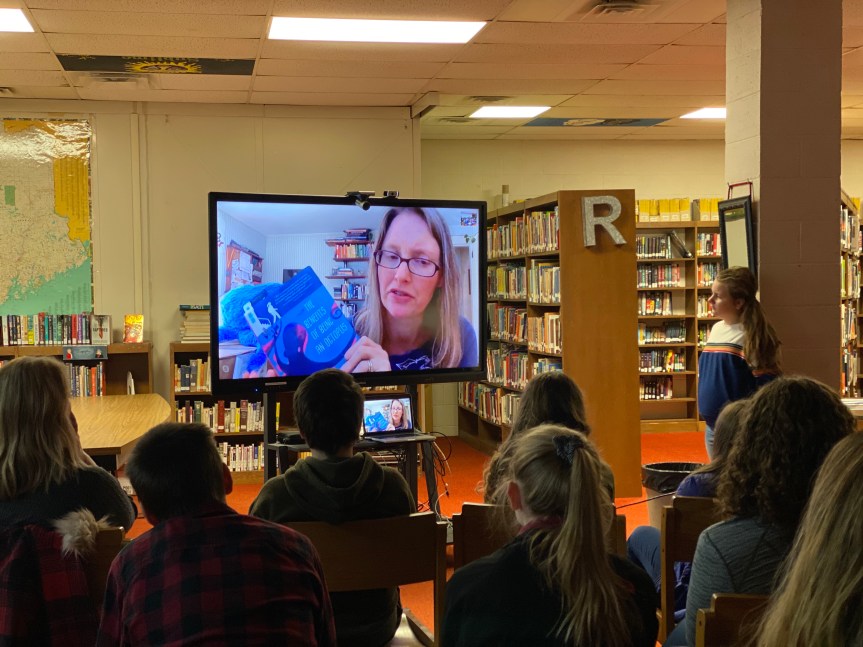
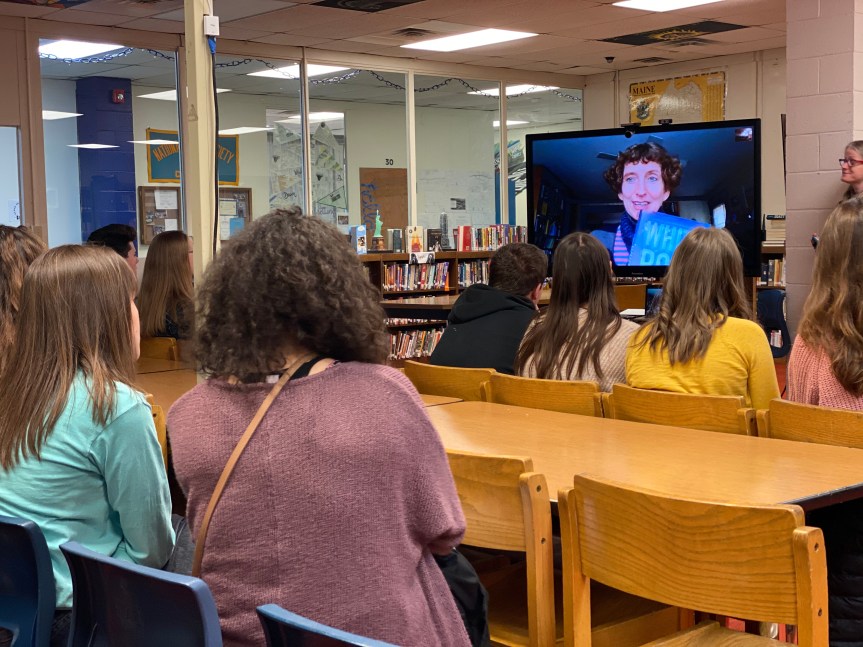
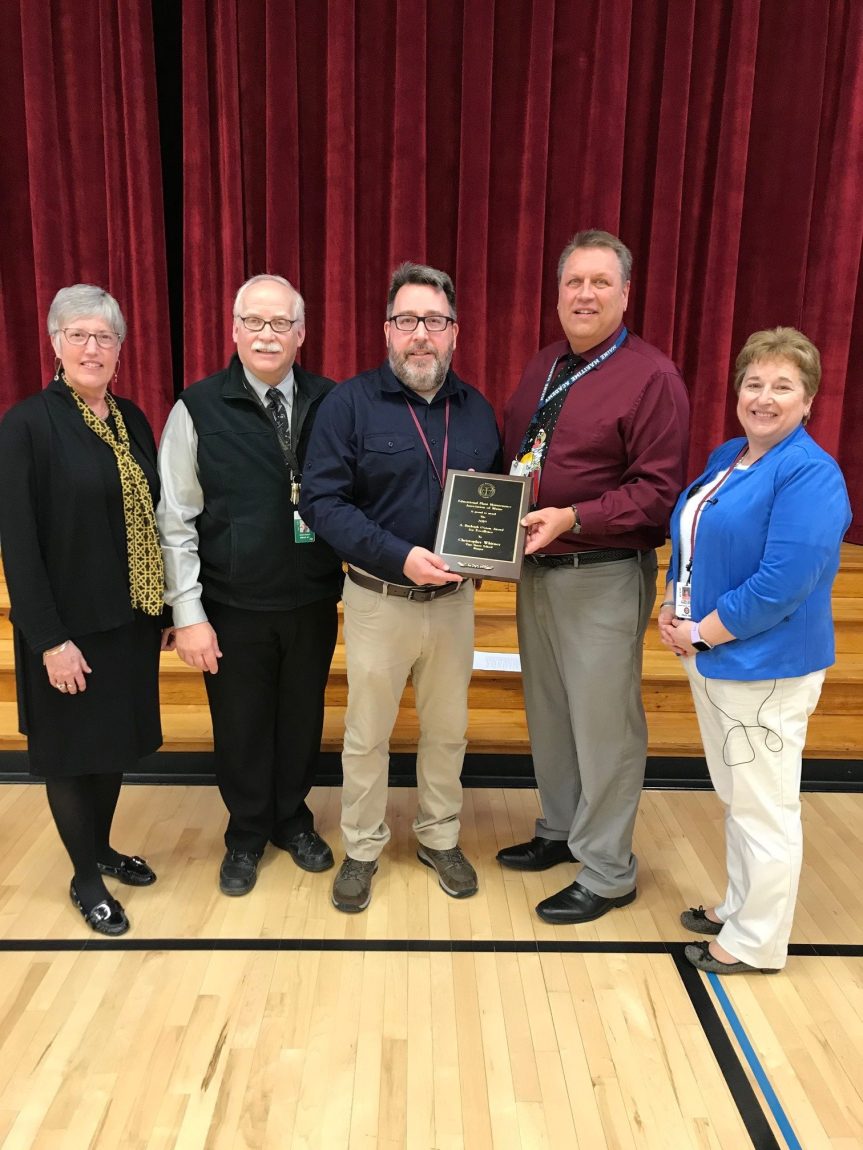
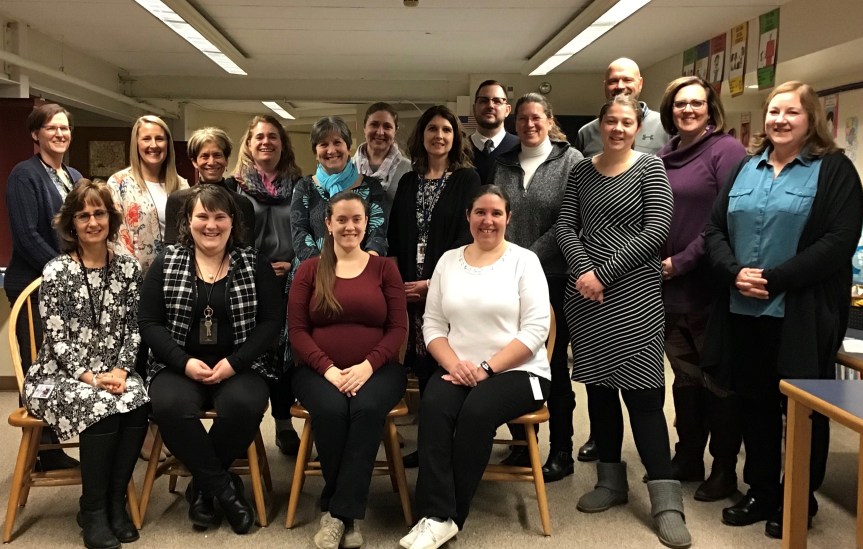
Lincoln Elementary School in Augusta helped kick off this year’s Challenge by hosting Commissioner Pender Makin who read Full, Full, Full of LOVE by Trish Cooke to an assembly of Kindergarten through 2nd grade students. Joining the Commissioner was Lincoln Elementary School Principal Heather Gauthier, Maine Senator Matthew Pouliot, Maine Representative Donna Doore, Augusta Superintendent James Anastasio, Augusta Assistant Superintendent Donna Madore, Augusta Title I Director Theresa Violette, and Augusta School Board Member Staci Fortunato, along with Lincoln Elementary School teachers, staff, community members, and other representatives from the Maine DOE. 

After a warm greeting and introduction from Principal Gauthier, Commissioner Makin read to students and then issued a challenge to Governor Janet Mills and to all of the Commissioners in the Governor’s Cabinet to participate in the 2020 Read to ME Challenge campaign.  This simple but powerful campaign challenges adults to read to children for 15 minutes, capture that moment via a photo or a video, and then post it on social media and challenge others to do the same. Don’t forget to use the hashtag #ReadtoME and tag the Maine DOE at @mdoenews on Twitter and @MaineDepartmentofEducation1 on Facebook! 

Following the reading and challenge, Maine Department of Education staff members Dee Saucier, Lee Anne Larsen, and Mary Hermon, along with Senator Matthew Pouliot, and Representative Donna Doore visited different classrooms at Lincoln Elementary and were among the first to take the Challenge.  

The Read to ME Challenge will run for the month of February, leading up to Read Across America Day on March 2, 2019. Learn more about the Read to ME Challenge on the Maine DOE Website, which includes a heat map of participants and an opportunity to submit your Read to ME story for the heat map! 


Aquaculture me! Hosts Conference to Connect Research, Education, and Industry

Aquaculture me!, an initiative created by Yarmouth educator, 2016 Cumberland County Teacher of the Year, and Miliken recipient Morgan Cuthbert, to get classroom teachers connected to the science and industry of aquaculture, held a professional development conference at the University of Maine’s Darling Center near Damariscotta last week.

Maine Department of Education Deputy Commissioner Dan Chuhta attended the event on behalf of the Department to give brief remarks and to extend a heartfelt appreciation to Aquaculture me! and educators throughout Maine who work hard to provide Maine students with meaningful educational lessons that incorporate scientific practice about the complex systems that affect our communities and environment through aquaculture education.

The workshop gave participants the opportunity to hear from Maine aquaculture researchers, learn about connecting with the community and the industry, in addition to hearing from Maine educators from Cape Elizabeth, Brunswick, and Yarmouth Schools about successful ways to connect Aquaculture to the classroom.

The conference also gave participants the chance to network with one another and have a round-table discussion about Aquaculture education in Maine.

For more information about Aquaculture me! visit their website.

The conference also gave participants the chance to network with one another and have a round-table discussion about Aquaculture education in Maine.

For more information about Aquaculture me! visit their website.

Medomak Valley High School Begins #WhyYouMatter Public Art Campaign

Having attended Alabama’s Chelsea High School’s presentation on their community art project #whyyoumatter at the National Art Education Association Conference in Boston last spring, Medomak Valley High School’s advanced photography teacher, Brooke Holland, and her class have taken on the challenge here in Maine.

The mission of the campaign states, “ #whyyoumatter is a public art campaign that focuses on empowering students while fostering a positive school climate where all people feel supported and valued.”

Holland, with the help of volunteer photography specialist Kyle Santheson, has instructed her advanced photography students in taking black and white photographs of everyone in the school along with their personally written messages of why they matter.

To prepare, staff were given a script with resources to use with their home bases. After viewing inspirational videos about making a difference, students were given time to think about why they matter.

Holland reports, “Within the photo studio, you can hear students and staff helping each other write their statements; whether that is simply articulating their message or giving them the pep talk they need on why they matter.”

These 11X18 posters will affirm and empower our daily interactions and efforts and will, in total, be an impressive display for our district art show this spring. We matter!

This article was submitted by Linda Dolloff Pease, Principal at Medomak Valley High School as part of the Maine Schools Sharing Success Campaign. If you would like to submit a story or share an idea for the campaign email Rachel Paling at rachel.paling@maine.gov.

Camden-Rockport Middle School 7th Grade Project Selected as Model of Excellence

The Camden-Rockport Middle School 7th grade Interdisciplinary fall project, “Learning How to See” was selected as a “Model of Excellence” and is featured in the National Model of Excellence database.

Created in collaboration with Harvard Graduate School of Education, Models of Excellence is a open resource featuring exemplary pre-K to 12th-grade student work. Works chosen for this database are recognized for their high level of integrated curriculum development, instruction, assessment and students final product work.

In a press release issued by Five Town CSD / MSAD #28, special congratulations were given to John Dietter, Hilary Flagg, Sam Zwecker, Sarah Whittam, Beth York and Kristen Andersen for their hard work on this project.

The release also said, “Camden-Rockport Middle School is so proud to have their hard work recognized. The school is on a journey to implement meaningful project based learning experiences for students and this is strong affirmation at the national level!”

Camden-Rockport Middle School 7th grade Interdisciplinary fall project, Learning How to See” can be viewed here.

Information for this article was provided in a press release from Five Town CSD / MSAD #28 Executive Assistant to the Superintendent & Communications Director Trina Schroeder.

Windham High School Robotics Club has a Successful First Year

Submitted by Lanet Hane, Director of Community Connections, RSU14.

Michelle Lane has brought her love of robotics with her to Windham High School. Ms. Lane is in her second year teaching computer science with the district, coming to us from Biddeford. While there, she led the robotics club to a number of successful years.

Ms. Lane was eager to continue her work with students and robotics, and it is out of that desire that the WHS Robotics Club was born.

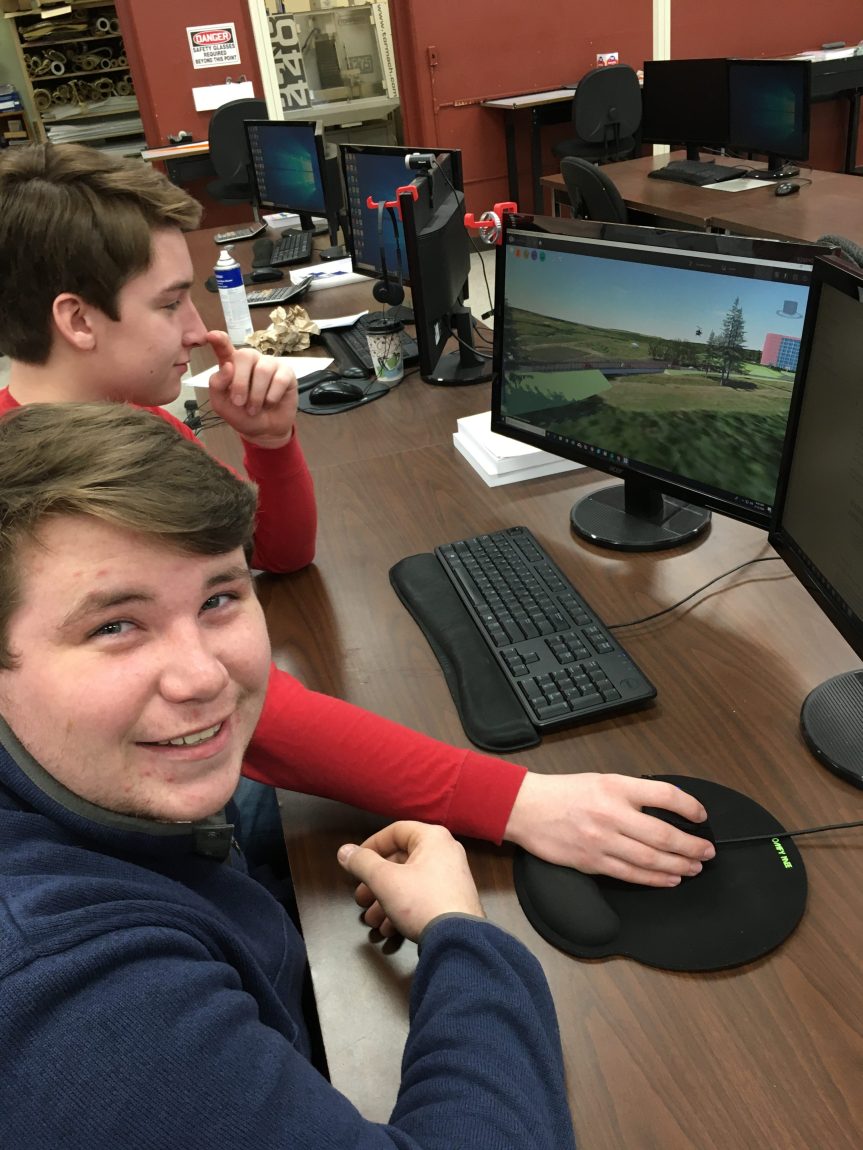
The club consists of a small number of students, grades 9-12, who have a passion for robotics, programming, and computers. Students meet after school twice a week to construct and adapt their robots in the pursuit of victory at their robotics meets.

“We started with building 1 bot and attended a competition at York High School. During that competition the team competed in the individual skills competition and earned enough points to qualify for states. The team received a grant to purchase a second robot kit with a stipulation that we needed to have another robot to compete with by the end of the season.”

The students are currently working on making their second robot operational and hope to utilize it in future meets.

Victoria Lin, a freshman at WHS, says of the club, “At first, it was intimidating. I was very unfamiliar with the tools and how the competitions work. But over time I watched and learned. Before I knew it, I was designing and building a robot! The thing I love about robotics is the logic problems. You don’t need to be a math wiz or some kind of master mechanic, all you need is the motivation to get involved.”

As funding becomes available for additional robots and supplies, Ms. Lane hopes to expand the club to meet the growing need for increased IT and computer science opportunities.

The team has three meets remaining before the state championship in March. The state championship will be held at The Point Community Center in South Portland on March 14th, beginning at 9:30am.

Maine FFA State Officers Attend Maine Agricultural Trades Show

Pictured: Maine FFA State Officers Ava Cameron (Secretary-Treasurer), Graham Berry (President) and Camryn Curtis (Vice President) stand above the many agricultural organization displays for the 2020 Maine Agricultural Trades Show.

Student State Officers of the Maine FFA Association—formerly known as “Future Farmers of America,” with name changed simply to “FFA” to reflect increased diversity in agriculture including horticulture, natural resource management and other areas—participated in the 2020 Maine Agricultural Trades Show at the Augusta Civic Center on January 14th & 15th.

Maine FFA State President, Graham Berry, State Vice President, Camryn Curtis, and State Secretary-Treasurer, Ava Cameron, toured the many displays showcasing organizations and growers involved in Maine agriculture.  Accompanied by their State FFA Advisor, Doug Robertson, from the Maine Department of Education, student Officers were impressed by the extent of agricultural entities and opportunities.  They also attended the Commissioner of Agriculture’s Luncheon, with guest speaker Governor Mills, as well as a legislative reception hosted by the Maine Potato Board, and held a meeting for interested students from prospective Maine FFA chapter Maine Academy of Natural Sciences, Hinckley.

Maine’s State FFA Officer team was pleased to see in attendance at the Trades Show representatives from so many of their active sponsors including the Maine Department of Agriculture, Conservation and Forestry, Maine Agriculture in the Classroom, Farm Credit East, Johnny’s Selected Seeds, Maine State Grange, Hammond Tractor, Maine Beef Producer’s Association, and many others.

Maine FFA provides leadership trainings, competitions and awards to students grades 7 to 12 enrolled in courses related to agriculture and natural resources, including science courses with practical applications through school gardens and greenhouses.  Maine FFA is affiliated with the National FFA Organization, the largest youth leadership organization in the United States.

For more information on establishing a local FFA chapter, please contact:  Doug Robertson, Maine Department of Education, doug.robertson@maine.gov  (207) 624-6744.

Maine Researchers, Teacher Begin Scientific Cruise

Submitted by Barbara Powers, Superintendent of Long Island School.

A unique educational opportunity launches on January 24, when a Maine teacher sets sail for the Southern Ocean as part of a Bigelow Laboratory for Ocean Sciences team. This partnership with the Maine Mathematics and Science Alliance’s “WeatherBlur” education project will bring the experience of an ocean research cruise to students in Maine and beyond.

“Research cruises are tremendously exciting, and sharing that excitement is a great way to interest students in science,” said Senior Research Scientist Barney Balch. “The ocean is endlessly fascinating, and learning about its vital role is essential to understanding life on Earth.”

Marci Train, a teacher at the two-room Long Island School in Casco Bay, will join Balch and several other Bigelow Laboratory scientists in order to engage students throughout the National Science Foundation-funded cruise. The research team aims to investigate how algae in the Southern Ocean may be affecting the future of sea life as far away as the Northern Hemisphere.

Marci Train with students

Throughout the cruise, Train will connect frequently with students in Maine and beyond. She will conduct video tours of the ship to show what a day at sea looks like, post learning materials on the WeatherBlur website, and share photos on social media. She will also assist with scientific operations and help conduct experiments.

“I can’t wait to have a first-hand experience with a scientific research project, and I think it is important for teachers to show their students that you are never too old to learn new information,” Train said. “It is important to get out of your comfort zone and share your own learning experiences with your students.”

Coccolithophores are a common type of algae that help form the base of ocean food webs, and they play a significant role in global chemical and carbon cycles. Balch recently found that they are remarkably scarce in the fertile waters near the equator, and his team aims to learn why during this cruise.

The Southern Ocean and equator are connected by an important ocean layer called “Sub-Antarctic mode water,” which forms at the surface of the Southern Ocean, sinks, and flows to the equator over a 40-year journey. Balch suspects that booming coccolithophore populations in the Southern Ocean are depleting its supply of essential nutrients before Sub-Antarctic mode water flows north, making the water layer sub-optimal for coccolithophore growth by the time it reaches the equator.

While at sea, the team will use satellite imagery to locate eddies rich in coccolithophores, whose chalk shells are so reflective that they can be seen from space. By measuring water properties in these eddies and collecting water to conduct onboard experiments, the researchers hope to uncover how coccolithophores in the Southern Ocean are altering this important source of nutrients before its long journey towards the equator.

“Sub-Antarctic mode water travels far north from where it forms, and it exerts a staggering level of control on much of the global ocean,” Balch said. “If coccolithophores are changing its essential properties, then they could be influencing which species grow in food webs as far away as the equator or even in the Northern Hemisphere.”

The team will use a creative approach to calculate how fast this water layer changes. The ship will follow Sub-Antarctic mode water for more than 1,000 miles on its journey to the Indian Ocean. As they measure the water’s basic properties, they will also collect samples at depth to measure freons, manufactured refrigerants that can be found throughout the environment.

Freons have constantly changed since their invention in the 1950s – a fact that today allows scientists to detect when water was last at the surface and exposed to freons in the atmosphere. Back on shore, a team from the University of Miami will determine which types of freons are present in different parcels of Sub-Antarctic mode water along the ship’s transect.

“Freons are a great timekeeper for the age of water,” Balch said. “We’ll use their time signatures to figure out how long it took a sample of Sub-Antarctic mode water to arrive where we found it, and to understand how quickly the water is changing as it’s moving north.”

The researchers will investigate these questions over 38 days aboard the RV Thomas Thompson. The team will depart from South Africa and return to the island of Mauritius in early March. The Bigelow Laboratory InstagramFacebook, and Twitter accounts will post updates during the cruise, as will the Maine Mathematics and Science Alliance’s Twitter and Facebook accounts.

This cruise is the latest research topic to be explored by WeatherBlur, an online citizen science community funded by National Academy of Sciences, Engineering, and Medicine. The project brings together students, teachers, community members, and scientists, who collaborate to ask questions, design scientific investigations, and bring back data and findings to discuss with each other.

Currently, WeatherBlur engages six Maine schools, as well as two schools from Mississippi and one school from Alabama. Train’s outreach from the cruise will be followed by more than 1,300 students and 26 teachers.

“I think this will be a wonderful opportunity for students to see all the different career options onboard a research vessel, including positions in research and on the crew,” Train said. “It’s important that students are exposed to STEM in action, and I can’t wait for them to be immersed in this experience and see how big scientific questions get answered.”

Saco Middle School Students Partner with their Community to Conserve Local Land

Students at Saco Middle School have teamed up with the Saco Valley Land Trust to conserve an eight-acre piece of land in Saco that runs along the Nonesuch River in what the students are calling the “Conserving Our Community” project.

The project started the first few weeks of school this year as part of a ‘community block’ at Saco Middle School where students are challenged to work on projects that will improve their local community. Community block projects range from creating and pitching a dog park to the city, aiming to increase protected bike lanes, doing compost for the school, or in this case, conserving a local piece of land.

The project started with just seven students who were interested in embarking on an endeavor that somehow protected the land around them. The group, along with their teacher Andrew Fersch, contacted the Saco Valley Land Trust who was eager to collaborate and had their eye on this specific property. Since then the project has evolved and grown as the original group of students have convinced the rest of the 7th grade class to get involved. More recently they have been joined by some of the 8th grade students, growing their group to over 100 students at this point. They are now conducting full school assemblies at every school in the Saco School Department with hopes of getting everyone on board.

Gianna, a student working on the Conserving Our Community Project explains more about it in a written post on the Saco Valley Land Trust Website:

As a team we believe that learning about our community and world is important knowledge to have. It is important to know what is happening in the natural world around us, because it affects us. Every impact to Saco’s ecosystem is an impact on us as well.

One of the perks of owning this land is that it will help make a longer wildlife corridor and trail where (hopefully, eventually) we can connect from Saco all the way to Gorham, though there are still some gaps where roads flow through. If we conserved this land it would make it possible for all the majestic animals of Maine to travel through the woods with no fear of getting hit by a car (and for humans to enjoy open spaces too!).

The students make frequent trips to study the land, capturing their adventures in trail documentaries and they have even written a book, The Secret Wisdom of Saco (PDF), a collection of place-based stories. The project also provides them with a community service learning project where they can advocacy for something they feel passionate about and deeply connected to.

“Children learn what is possible through example. If the community shows them that conservation matters, and that working hard pays off, they’ll carry that message their whole life,” said Andrew Fersch, project adviser and Saco Middle School Teacher.

For more information about Conserving Our Community, including how to donate or get involved, please visit the Saco Valley Land Trust Website.

This story was written by Maine DOE Staff Rachel Paling in collaboration with Saco Middle School as part of the Maine Schools Sharing Success Campaign. If you have an idea or a story for the campaign, email Rachel at rachel.paling@maine.gov.

MSAD 15 Mechanic John Rundin Takes 1st Place at Maine Mechanics Competition and 9th Place in National Challenge

Each year the National Association for Pupil Transportation (NAPT) holds America’s Best Training & Skills Challenge. For 15 years America’s Best program has offered a training and skills challenge for the technicians and inspectors in the school bus industry. In addition to hands-on training relevant to their specific area of expertise, participants have an opportunity to connect with all of the industry suppliers involved in America’s Best. In between all of the training activities, participants demonstrated their technical skills and knowledge as they rotated through written exams administered by ASE and various hands-on stations.

This year John Rundin, Mechanic from MSAD No. 15, who took first place at this year’s State of Maine Mechanics competition at Sugarloaf, competed in this national event representing Maine. John took 9th place overall during this event representing not only Maine but fellow mechanics well.

The Maine Association for Pupil Transportation and the Maine Department of Education extend their congratulations to John and the entire MSAD No. 15 transportation team. Well done John!

Deer Isle-Stonington High School to Celebrate Arts Week

Submitted by REACH Performing Arts Center.

The fourth annual Deer Isle – Stonington High School Arts Week will run January 27-31, culminating in a public dinner and performance on Friday Jan, 31 at 5:15 PM.

In previous years grades 9-12 were split into four teams, each writing and creating a devised theater piece answering an essential question, this year’s Arts Week will have students in grades 8-12 identifying the projects most intriguing to them. They will then be assigned to one group based on their interest, working within that discipline for the entire week.

This year, Arts Week is celebrating the bicentennial of Maine with projects that will focus on the history and culture of our state. Funding for the week is made possible by the REACH Performing Arts Center, and additionally, is funded in part by a grant from the Maine Arts Commission, an independent state agency supported by the National Endowment for the Arts.

Projects include 3D Printing with James Rutter and Screen Printing with Hope Rovelto of Portland’s Little Chair Printing, who have both worked for Haystack Mountain School of Crafts. Mural Making with DISHS Art Teacher Cynthia Pease. A culinary project hosted by Healthy Island Project’s Edible Island exploring native Maine food pathways with Chef Cheryl Wixson. A music through technology workshop run by Mark Churchill. The traditional theater Arts Week theater project with veteran director Jesse Gorden and Opera House Arts’ Joshua McCarey. A filmmaking experience with Current Harbor’s Jamie Watkins, and a week building in the shop with DISHS teacher Steve Zembrusky.

The public event on Friday Jan 31st will begin at 5:15 at the Elementary School Cafeteria with a meal created, prepared, and served by the culinary group led by Chef Wixson. At 6:00, all will move to the REACH Performing Arts Center for presentations by each of the disciplines.

There are no tickets required for any events, though donations will be accepted by the REACH Performing Arts Center to offset the costs of Arts Week.

We hope to see you there!