Thomaston Grammar School Shares their School and Community Success

DSC_0266Submitted by Ainslee Riley, Principal of Thomaston Grammar School

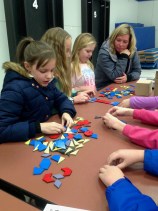
Thomaston Grammar School, located in the Mid-Coast town of Thomaston, is a great place to be. Our K-5 school has approximately one hundred and eighty-five students, with two classes at each grade level.  In addition to having a daily focus on mathematics, literacy, science, social studies, and health instruction, students also have weekly art, music, technology, SEL (social emotion learning), and physical education classes.  Our focus centers around our district goals of proficiency based learning and social emotional learning, which go hand in hand. Teachers have worked together to create appropriate grade level performance indicators that align with our state standards.  The school has also adopted Restorative Practices and Second Step to help us work toward meeting our goals in the area of social emotional learning.

IMG_8524We have a wonderful parent group that works to provide opportunities for our families to come together to have fun in the school community. They sponsor and run big events like our annual Fall Fest and Cookies with Santa weekend events, movie nights, family dances, Trunk-or Treat for Halloween, and more.  They have also brought in organizations like Mad Science of Maine for school wide learning opportunities.  In addition to these events that our parent group provides for our school community, we: have two concerts a year, host a Family Fun Night, hold a Talent Show, celebrate Read Across America week with a week filled with theme days, collect food for our local food pantry and hold a Passing of the Food event, and more.

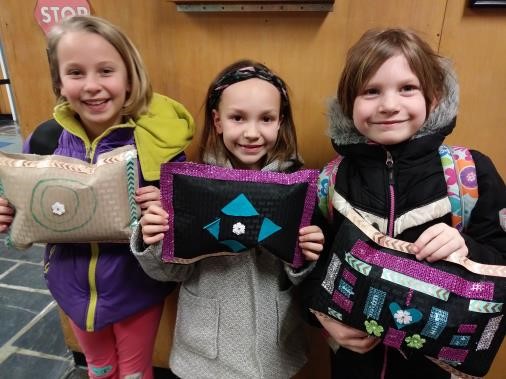
IMG_9238We partner with a variety of organizations that enable our students to have further educational enrichment during and outside the school day. We have partnered with Leaps of Imagination, allowing for art enrichment during the school day for all students in second and fourth grade.  We work with the Strand Theatre, which offers a variety of learning opportunities where we travel to the theatre or they bring in artists to do workshops inside our school.  Our older students have the opportunity to participate in after school art enrichment, after school programming through Youthlinks, and a Big Trek/Little Trek mentoring program.  Through funding from the Georges River Education Foundation, our second grade students and teachers, along with our PE teacher, have been working with an area gym, Hybrid Fitness, to complete an integrated unit on fitness and nutrition.  Our students in third grade have the opportunity to learn to ice skate at the MidCoast Recreation Center, and our students in fourth grade have the opportunity to learn to ski at the Camden Snow Bowl.  Fifth grade students are able to enrich their learning through our school’s fifth grade TGS Common Ground Garden and Outdoor Classroom.  Students in various grades have the opportunity to visit Herring Gut Learning Center, the Botanical Gardens, the Owl’s Head Lighthouse, Tanglewood, Old Fort Western and more, depending on the year, as part of integrated units they are studying.  This year the Georges River Education Foundation also helped to fund a birding unit for our fifth grade students that has involved bringing in a variety of experts to talk and work with our students.

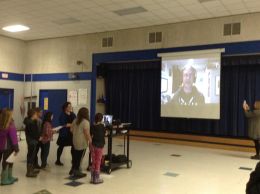
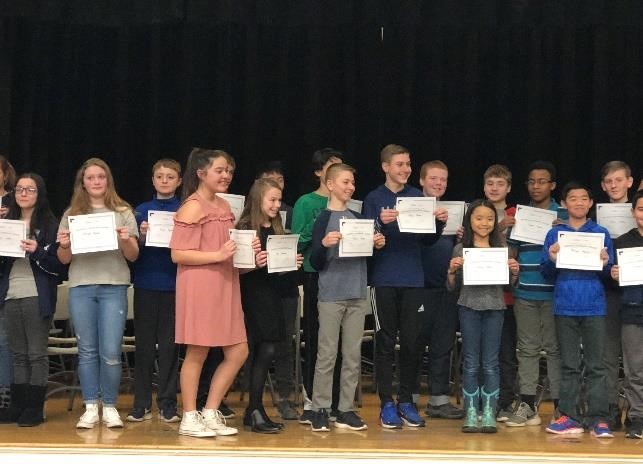
IMG_9325We recognize students at monthly theme-based assemblies. Our assemblies focus on a variety of attributes including, but not limited to, respect, compassion, and perseverance.  There is also a monthly Principal’s Award given to a student who exemplifies all these attributes on a daily basis. Students who are recognized have a special lunch with Principal Riley. Students who receive TGS tickets are recognized at this assembly as well. These are students who go above and beyond our school rules: Be Safe, Be Kind, and Try Your Best. Students who get tickets are also announced daily and earn prizes for receiving multiple tickets. Students are very excited to receive these tickets.

Teachers at Thomaston Grammar School work hard to make learning meaningful and fun for all of the students in our community.

Happenings in Afterschool Programs for RSU#13

RSU 13 Afterschool Programs

Submitted by Sarah Chadwick Rogers, Associate Director of After School Programming, Youthlinks at Broadreach Family & Community Services in RSU 13

At Broadreach’s 21st Century Learning Center, providing afterschool programming for the towns of RSU#13, we are proud to announce that students from grades K-12 participated in their town’s local “Pies on Parade!” event. This annual event raises funds to help hungry Midcoast Maine families through the local Area Outreach Food Pantry.

Pies that the youth baked were enjoyed at our YMCA’s Community Building, which also featured a pie obstacle course, art projects and pie games – designed by students in the afterschool program.

From Early Reading Struggles to Bowdoin College: One Student’s Story in RSU#34

Emma Hargreaves, senior at Old Town High School

Written by Brenda Gardner, Gifted & Talented Teacher and and Dr. Sharon Greaney, Reading Educator. Submitted by Jon Doty, Director of Curriculum, Instruction, and Assessment
 at Regional School Unit #34
.

Reading Recovery is designed to help struggling first graders catch up to their peers in 12 to 20 weeks. Specially trained reading teachers work with students in a one on one setting to meet each child’s individual needs. In RSU #34, about three quarters of these students reach the average of the class by the end of first grade. But we often wonder what happens to these students as they move on. Here is one student’s story.

Emma Hargreaves is currently a senior at Old Town High School and will attend Bowdoin College next year. She remembers being a social butterfly in first grade, always babbling and asking questions but her reading was holding her back. Her mom was worried she wouldn’t be able to catch up. Her parents were happy when she was offered a spot in Reading Recovery. Emma says she doesn’t remember specifics about her lessons, but she does remember how much she adored her one-on-ones with Mrs. St. Louis. Emma says, “I think she taught me how to value progress and how to persevere when a process isn’t linear. Catching up with my peers often felt like two steps forward and one step back. Years later, I know that process is true for almost anything worthwhile, and I am forever thankful to the women who taught me that lesson.”

After a half year of Reading Recovery lessons, Emma says her success went off much like a rocket. She developed a love of reading and advanced to the top reading groups. Emma was identified as gifted and talented. At Old Town High School, Emma has taken all honors and AP classes and is on track to finish with a GPA at or near the top of her class. As president of the National Honor Society, she created a tutoring program to help her peers. Emma is a student leader who has served as a student school board representative as well as student representative to the Chapter 104 advisory committee. She traveled to Washington DC last summer as a representative for Dirigo Girl’s State. She has been published in the Portland Press Herald and Emma says, “Authoring and publishing the work was one of the most scary and rewarding things I have ever done. It was challenging and emotional and I used the same perseverant spirit Mrs. St. Louis and I cultivated way back in first grade to do so.”

Emma concludes that “the potential in everybody exists and the hardship is in its release, not in the question of its presence. Reading Recovery was the beginning of unlocking mine. What I’ve accomplished is much less important than how it has set me up to accomplish more things. Reading Recovery is valuable in its continued and immeasurable effects on its students. Reading Recovery is the beginning of stories of kids like me, and without teachers like Mrs. St Louis, the chapters of those stories would be completely different. You helped me find my voice, and while I can never repay you, I promise to write my life with the lesson you’ve taught me and the confidence you helped unlock.”

Mountain Valley Middle School (RSU 10) – A Safe Place To Learn

Submitted by Cheryl Gurney, Teacher/Assistant Principal at Mountain Valley Middle School

Mountain Valley Middle School in Mexico, is part of Regional School Unit #10, in the picturesque foothills of western Maine. At Mountain Valley Middle School, we strive to provide all students with a safe place to learn where all staff and students follow a code to be respectful, act responsibly, and do what is right, even when no one is watching. We pride ourselves on knowing where we need to grow and we all work toward becoming better students, teachers and learners. In particular, we have worked hard to provide our students with the opportunities to grow in the areas of academics and behavior. By using a Multi-Tiered Response to Intervention Approach we have been able to help our students to develop scholastically, behaviorally, socially, and emotionally.

To promote academic growth, Mountain Valley Middle School staff and students participate in a wide variety of activities and instructional opportunities that are designed to allow learners to fill in gaps and build on foundational skills. Within the first tier of supports, all students participate in an intervention period that is built into the daily schedule four days per week. We call this our Hawks SOAR period which stands for Student Opportunities to Aim for Results. Students receive focused instruction on topics and concepts in mathematics and literacy that have been determined to be weaknesses through disaggregation of EmpowerMe and NWEA data. Students are grouped and re-grouped according to their needs.When they have mastered specific concepts and they move onto new topics to begin the process again. Comparisons of recent NWEA data have shown very promising growth in both reading and mathematics.

Over the last five years, Mountain Valley Middle School has implemented Positive Behavior Intervention and Supports (PBIS) and in particular we have introduced a Bully Prevention program called Stop, Walk and Talk. When a student has a conflict with another student they are encouraged to tell that person to STOP. This warns the other person they are bothering someone and gives them the opportunity to change their behavior. If the behavior does not
change the offended student is asked to WALK away and TALK to the nearest adult to attain help in navigating the situation. The adult then steps into the situation and helps the students to work through the conflict. This program has helped Mountain Valley Middle School students to have a voice and office discipline rates have dropped significantly.

The staff and students at Mountain Valley Middle School are proud to be members of this community! We strive to have a growth mindset and continue to set goals and move toward their attainment. Go Hawks!

Mt-Valley-Middle-School-1777040748-1549904258242.jpg

St. George School Chosen as the School of the Year by the Maine Environmental Education Association

Submitted by Mike Felton, Superintendent of St. George Municipal School Unit

St. George School has been chosen as the School of the Year by the Maine Environmental Education Association (MEEA)! In the award letter to the school, the MEEA wrote, “Your demonstrated commitment to creating authentic learning opportunities for your students and engaging them in their environment as well as your clear dedication to reaching into the community to create real world learning opportunities make St. George School a clear choice for this award.”

The school congratulates and thanks their educators, students, families, community members, local organizations, and Town officials and committees for all they do to make the school-community what it is. In a statement to the community, the school said, “Together, we are stretching people’s imaginations as to what’s possible in public education and redefining the depth and potential of the relationship between school, community, and environment.”

Erskine Academy Wins School Spirit Challenge Tournament of Champions by Raising a Record-breaking 196,969 Pounds of Food

Submitted by Michael J. McQuarrie, Headmaster of Erskine Academy 

Beginning in September, Erskine Academy committed to a challenging mission, once again, to collect food and funds to support the Good Shepherd Food Bank of Maine (GSFB) by participating in WGME13/Fox23’s School Spirit Challenge Tournament of Champions. The School Spirit Challenge (SSC) is a friendly competition between schools to show school pride and spirit, all while helping the community.

The program is designed to promote the school community and good stewardship with students of high schools in central and southern Maine through an eight-week food drive to benefit the Good Shepherd Food Bank and local food pantries.

This was the second time Erskine participated in the School Spirit Challenge, the first being two years ago, an event which was won handily over the other participating schools thanks to the efforts of many students, parents, alumni, businesses, and friends. In 2016, Erskine was the School Spirit Champion for having raised nearly 85,000 pounds of food, an amount exceeding the total raised by the second and third finishers combined.

Always up for a challenge and a worthy cause, the campaign was kicked off during the school’s homecoming in September. In attendance were WGME 13 anchor Jeff Peterson and representatives from the GSFB and the sponsors of this year’s SSC. The morning kicked off with students arriving at 5:30 a.m. for a tailgate breakfast served in exchange for their food donations.

The campaign continued until November 2 and was a more significant success than the Academy ever imagined. The Erskine community pulled together to collect food and monetary donations and to support the many activities of the Challenge.  Events included “Fill the Bus” with returnables,  the Fly Like an Eagle 5K Run/Walk, Trivia Night,  Trunk or Treat,  Open Mic Night, and a dodgeball tournament. Off-campus activities included an EA Parents Food Drive Challenge.  An online appeal went out on social media, and many generous donors gave through the Good Shepherd Food Bank’s virtual food drive.

Though initiated by Erskine’s students and faculty, the school led what was a broader community campaign supported substantially by many area businesses and organizations. Student council representatives will soon visit key contributors as part of their “Gratitude Tour.”

Erskine Academy won the competition by far exceeding its goal of 100,000 pounds. Erskine raised a record-breaking 196,969.25 pounds of food for The Good Shepherd Food Bank, which is over twice the amount that any of the 60-plus competing schools has raised in the five years and ten seasons of this competition.

About this accomplishment, Headmaster McQuarrie says, “The School Spirit Challenge was for a great cause, and through it, our community engaged in collective problem-solving and activism as we made a significant difference in the fight against hunger in Maine.  We demonstrated, and others witnessed, the dynamism of EA’s values—stewardship, leadership, and relationships—at work.  The work ethic, inspiration, and idealism of our young people, in particular, are humbling and heartening.”

Rise and Shine Program Proves Successful at East End Community School in Portland

The following article is from the Dec. 2018 issue of the Maine Educator, it was submitted to the Maine DOE by Dan Nogar, Dean of Students at East End Community School.

At East End Community School in Portland, 75-80% of the students receive free or reduced lunch, student mobility is about 50%—there are almost 150 new students that leave at the end of the year, with that same amount of new kids coming in the following school year. In the middle of November, seven new students started their first days. The challenges in building relationships and getting students to continue to come to school are great. The solutions though for this diverse school are built into the way it educates—the learning model at East End is based on relationships that start at the very beginning of the school day.

“I like starting my day with jump rope, soccer drills, and basketball. It starts my day in a good way. It also gives me energy,” Ali wrote about his experience with the school’s Rise and Shine program.

Rise and Shine offers students as many as 85 choices, from finger knitting to sock monkeys to basketball to STEM and poetry, students choose how to start their day. The schedule is built into the beginning of each school day, so every student gets to participate in some way. Students make their own choices for their activities and then participate in a different one each day of the week for a total of 12 weeks, then new activities are chosen.

The concept seems simple enough—let students choose what they want to do at the very beginning of the school day and they’ll be more successful throughout the day. For Dean of Students and Rise and Shine Coordinator, Dan Nogar, the program allows the school to swing away from a deficit model and what students need help with at the very start of the day and instead focuses on the idea of success for each student.

“No matter what happens in their school day, I can go up to them and ask them about Rise and Shine and we find success. Rise and Shine was never intended to be about intervention, but the days that there is basketball or piano or kickball—the students get here because those are their choices and they don’t want to miss it. We had some of the best attendance in the district last year,” said Nogar.

The program, in its 8th year, has become so successful it was even recognized by the ACLU as something that is closing opportunity gaps among students, saying in its October 2017 report, We Belong Here: Eliminating Inequity in Education for Immigrants and Students of Color in Maine, that Rise and Shine is an example of how “student empowerment in general can serve to improve equity, and of how a school identified a structural obstacle to student success and worked not only to remove that obstacle but to transform it into an asset.”

Nogar admits the success wasn’t instant. There were bumps and the growth now in offerings is due to the continued outreach to the community. Many of the activities offered are led by local community groups or businesses who volunteer their time to share their talents with the students. “I was at the local farmer’s market and I saw a woman making balloon animals, and I thought what a great Rise and Shine that would make. There is so much hand-eye coordination and thinking ahead required with making balloon animals, and the kids don’t even know they’re learning,” said Nogar.

While there are offerings led by those outside in the community, the majority of programs are offered by the educators in the building who all share their talents, and for those who don’t lead a session, they’re helping with one or they’re spending time with a student one-on-one to help build relationships.

“Kids like coming to school,” added Nogar. And that’s a statement hard to beat.

Extensive Dual Enrollment Program at Maranacook Community High School Creates Opportunities for Students

Submitted by Dwayne Conway, Principal of Maranacook Community High School

At Maranacook Community High School, to best support our students and community we have worked to create the most extensive dual enrollment program in the state. Routinely each year, students from Maranacook graduate with an Associates Degree in Liberal Studies from Thomas College before they graduate from Maranacook Community High School. This year 6 students will graduate along this pathway. That means 7 percent of our graduating class will have earned an associates degree before earning their high school diploma.

Beyond the pathway to an associates degree, roughly half the students at Maranacook in grades 9-12 take dual enrollment courses.  Maranacook offers over 100 credits of dual enrollment for students to choose from which saves the community over 1,000,000 dollars a year in college tuition. Maranacook collaborates with 4 partner institutions and our primary partnership is with Thomas college. Through dual enrollment, Maranacook also offers a French Certificate program in conjunction with the University of Maine at Augusta. Students can also pursue dual enrollment credit through collaboration between Maranacook and the Capital Area Technical Center.

Finally each summer, roughly 50 Maranacook students participate in 2 week long summer intensive courses offered through Thomas College. Students choose to do this even though their summer vacation has begun. Students of all ability levels are able to access our dual enrollment program.  We are proud of this support we are able to provide our students.


Katahdin Schools – RSU 89 Shares Successful Outcomes from Recent Initiatives

Submitted by Marie Robinson, PK-12 Principal of Katahdin Schools

I am excited to share the positive initiatives that are a part of Katahdin Schools and making a positive difference for students and their learning. This is my third year as a principal in Maine. Prior to moving to Maine I was a classroom teacher, instructional coach and principal in Philadelphia and its suburbs.

The accomplishments that we have achieved at Katahdin Schools come directly from the hard working, dedicated staff and amazing students that attend our schools. Never before have I had the opportunity to work with such caring individuals who always do what it takes to support one another.

We have been recipients of the 21st Century Grant, which now includes grades 2-12.  Coordinators, Eryn Schmidt and Gail Pocock and their staff have worked tirelessly to build the program and offer a variety of experiences to students from photography to outdoor activities as well as academic support to many students.

Our elementary program has a strong commitment to supporting the whole child. Just this year we have made changes to the schedule to incorporate an increase in recess.  Students start the day with twenty minutes of recess in addition to the thirty minutes of recess they enjoy at lunchtime.  This has proven to be an effective intervention to decrease the number of students who are tardy.  This increase of recess time has also provided opportunities for students to apply problem-solving skills and has led to a decrease in discipline referrals.

Our pre-k and kindergarten programs have begun exploring the powerful impact of outdoor learning. Our youngest learners are spending meaningful time learning their standards outside of the classroom with extremely positive results.  In addition to our youngest learners getting outside, other grade levels are incorporating the outdoors into their learning, which is enhancing their learning.

Katahdin Schools partners with the Good Shepherd and hosts a food pantry for the community once a month. We have been fortunate to be able to support close to 200 community members through this program.

Our middle and high school also enjoy time outside with our newly developed outdoor education programs. Students learn lifetime fitness, as well as, Leave No Trace Ethics and survival skills.

Teachers at all levels have begun to implement place-based learning opportunities with students. These opportunities have allowed students to master the standards while experiencing authentic problem solving and interaction with the community.

RSU 9 – Mt. Blue Middle School Initiates “Strive for Five” Initiative to Improve Absenteeism

Submitted by James Black, Principal, Mt. Blue Middle School

Strive for Five Campaign

The Strive for 5 campaign at Mt. Blue Middle School was initiated after a routine end of the year audit on student data. After my first year as the principal of MBMS I wanted to see what our data, including attendance, said about my first year as principal. We reviewed academic, behavioral and demographic data to see deficiencies and strengths in order to create school wide goals. One area of major concern for me was the attendance data. It showed that our school of 540 students missed a combined total of over 1,300 school days last year. These days did not include sick days, suspension days or parent excused. They only included days in which students did not show up to school and had no reason why.

After some discussions within our student assistance team and a little research on schools that had similar issues we decided to implement a program called Strive for 5. This program has seen success around the country on curbing chronic absenteeism. The basics of the initiative were to challenge students and parents to strive for 5 absences or less throughout this school year. These absences would include planned vacations, doctor/dental appointments and days in which students just do not come to school. It was equally important to have parents involved with this initiative as well. We found throughout our data, we had lots of parents scheduling appointments throughout the school day considering it not a true absence from school. We are slowly making improvements on our attendance

Throughout this year, we have seen a steady decrease in the number of absences despite the school population rising (See Chart A). It has taken a lot of work, including staff and student buy in, but we are now moving in the right direction. Some of the things we are doing to promote good attendance is have posters and signs hung around the building encouraging students to Strive for 5. We also have weekly competitions between communities (Each grade level is broken into two communities) to see which group has the lowest total number of absences on Friday. At our monthly student of the month assembly we recognize all students who have still 5 absences or less and the winning community (90 students) and the most improved community from the prior month (90 students) receive a reward for their effort. We have received lots of positive feedback so far but the proof will be in the pudding as they say. Early indications show things are improving but we still have four and a half months left to go.

Chart A – MBMS Absences

School Year Absences Student  Enrollment
2016/17 568 504
2017/18 610 521
2018/19 548 538