Berwick Teacher Selected for National History Day Spring Webinar Series

Ms. Christa Boeykens-Bui, a teacher at Noble Middle School in Berwick, Maine is one of only 120 teachers selected for a National History Day® (NHD) spring professional development program. This course focuses on using online Library of Congress resources to develop and support historical arguments and is a feature of NHD’s membership in the Library of Congress Teaching with Primary Sources (TPS) Consortium.

The teachers chosen for this honor represent NHD’s 58 affiliates across the country and around the world, and the National History Day program in Maine selected Ms. Boeykens-Bui. NHD affiliates include all 50 states and the District of Columbia, American Samoa, Guam, the Northern Mariana Islands, Puerto Rico, and international school programs in China, South Asia, and South Korea.

“The skills and strategies Ms. Boeykens-Bui is developing through this series will benefit her students over the course of their academic and professional careers,” said National History Day Executive Director Dr. Cathy Gorn. “As a Library of Congress TPS Consortium member, NHD is incredibly fortunate to be able to offer this opportunity for teachers, especially now as teachers and students continue to address challenges of non-traditional learning settings required by the ongoing COVID-19 pandemic.”

For several months, Ms. Boeykens-Bui works with her peers around the country and National History Day staff to build knowledge for teaching with online Library of Congress resources. Upon completion of the series, she will have demonstrated the ability to share with her students key strategies for researching, supporting, and presenting historical arguments bolstered by these primary sources.

NHD is a non-profit organization based in College Park, Maryland, which seeks to improve the teaching and learning of history. The National History Day Contest was established in 1974 and currently engages more than half a million students every year in conducting original research on historical topics of interest. Students present their research as a documentary, exhibit, paper, performance, or website.

For more information about the national level program, visit nhd.org. for more information about National History Day in Maine visit  http://www.mcslibrary.org/national-history-day-in-maine/ or contact State Coordinator John Taylor at john.m.taylor@maine.edu or 207-474-7133.

Bangor High School Celebrates Arts in Education Month

Recent changes to the State guidance that provide oversight into the practice of performing arts have allowed Bangle High School Students to return to activities that had been put on hold for the beginning of the school year.

Orchestra and band have started practicing with specialized safety precautions in place. Students use special masks that allow them to play instruments as well as bell covers.

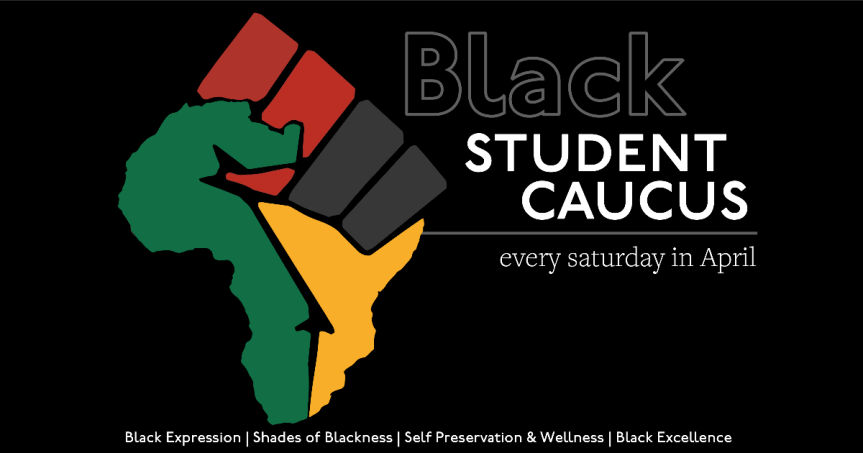
Registration Open for Black Student Caucus Hosted by MYAN

This April, MYAN (Maine Youth Action Network) is hosting a multi-day virtual caucus for Black Student Unions and Black students from across Maine. Each Saturday of the month (four events in total), Black youth in Maine will have the opportunity to collaborate and learn from one another and four incredible keynote speakers.

Each Saturday is dedicated to one of four main topics: Black Excellence, Black Self Preservation and Wellness, Shades of Blackness, and Black Expression.

This space is explicitly reserved for Black student unions and individual Black youth. Participating Black youth currently in middle school, high school, college, and out of school will have an avenue to foster networks and dialogues with each other. We additionally welcome Maine high school graduates from the Black community who are pursuing plans for themselves outside of post-secondary education.

To learn more about this event or to register, visit our website using the button below!

Learn more here or contact MYAN.

April 1st Enrollment Count Report to Open on April 1st, 2021

The Maine Department of Education is asking schools to submit and have their superintendents certify their April Enrollment Count Report. The April Enrollment Count Report is utilized by the Maine Department of Education for the purpose of calculating public school tuition rates.

Please note that, new for 2021, the April Enrollment Count Report will consist of two sets of counts, one for attending counts and one for enrollment counts. Each of these count sets are as of April 1st, 2021. Enrollment counts will be given to all students who are enrolled at your district/school as of April 1st, 2021. Attending counts will be given to all students who are enrolled at and attending your district/school as of April 1st, 2021, this will exclude any of your students that attend a special purpose privet school, a regional program or non-traditional limited purpose school. The attending counts will be utilized for calculating tuition rates in accordance with Title 20-A, §5805, subsection 1.B and the enrollment counts will be used for all other April 1st reporting requirements.

The April Enrollment Count Report will be available for districts to submit and certify, beginning on April 1st with a certify by date of April 15th.

The Maine Department of Education’s data management team will be hosting a webinar where we will be discussing the April 1st Enrollment Count Report and fielding any questions that you may have from 10AM to 11AM on Tuesday April 6th, 2021. Register Here

In order to view this report, you will need access to NEO – Student Data, if you do not have this access please have your superintendent fill out our NEO Access Request Form

April 1st Enrollment Count Report Instructions (PDF)

April 1st Enrollment Count Report Instructions Video (MP4)

If you have any questions, comments or concerns in regards to the April 1st Enrollment Count Report please feel free to contact us at the MEDMS Helpdesk at MEDMS.Helpdesk@Maine.gov or (207) 624-6896.


PRIORITY NOTICE: Maine Department of Education’s Guidance for Pre-Kindergarten/Kindergarten Child Find Screening

Maine Department of Education Rule Chapter 101 includes federally mandated Child Find requirements, including timely screening procedures for incoming Pre-Kindergarten (PreK) and Kindergarten (K) students.  As Maine schools begin preparations for spring, summer or early fall screenings, appropriate precautions should be taken.  In addition to the supports that you would typically provide to families based on their needs (e.g. language, culture, transportation), the following screening guidance is provided for school administrative units (SAUs) and their Collaborative Planning Teams  to inform local procedures. 

Prior to In-person Screening
Maine schools are encouraged to use the time prior to scheduling in-person screening to build relationships with guardians of incoming students through an over-abundance of communication. 

The use of online registration for PreK and K students enables schools to identify the students who will be enrolling in programs in the fall of 2021.  As children are registering, schools could send welcome letters that include guardian surveys to begin the screening process.  Guardian surveys can be obtained or developed by: 

  • Accessing one that is already part of the school’s PreK/K screening tool (e.g. DIAL, ASQ, Brigance, etc.). 
  • Purchasing from available guardian screening tools (see Screening Compendium for examples). 
  • Use available standardized developmental screening tools, including the Ages and Stages Questionnaire (ASQ-3) or Survey of Well Being of Young Children (SWYC) 

Guardian surveys could be mailed or could utilize technology-based applications.  Phone calls to guardians are recommended in order to answer questions guardians may have, provide reminders about returning the surveys, and obtain information about students that would be helpful in planning for any additional supports necessary to assist the child during screening or in-person instruction. Schools may also consider hosting virtual open houses/meetings to help guardians learn about the school, the staff, the guardian survey, and the screening process. As needed, provide translation and interpreter services throughout the entire screening process. 

Once surveys are collected, schools could use available information to prioritize screenings so that students with greater risk can be scheduled for in-person screening first. Once complete, schools should encourage families to share screening results with their child’s primary care providerThe following guidelines should be considered: 

  • If students were served in a public PreK and guardians /teachers had no concerns, screening does not need to be repeated for Kindergarten entry, this applies for those who had vision and hearing screening completed in PreK as well. 
  • If students were served by Head Start, schools should connect with the sending Head Start program to gather information from their screenings.  It is likely those students will not need to be re-screened. 
  • If students have current IEPs, screening is not needed. Transition planning should be occurring, and students will most likely be re-evaluated in the fall and/or can complete other screening requirements (e.g. health screens) later. 
  • Schools may consider seeking guardian releases for screening information, including lead testing, developmental, hearing, and vision screenings that have been conducted by health care providers and/or other private services. 
  • Of the remaining students who need to be screened, use the information from the guardian survey to prioritize students, scheduling students at greater risk first. 

To assist in providing a smooth, safe, and effective in-person screening process, provide guardians with an explanation of how the screening process will work prior to arriving, utilizing short videos which introduce the process, people, and materials.  This will help them know what to expect and will assist them in explaining the experience to their children.  Also, provide guardians with any additional forms that could be completed ahead of time to reduce the time onsite during screening. 

In-Person Screening
When developing a plan for in-person screening, please consider the following guidance for developing a safe screening environment. 

  • Implement the six safety requirements for schools, and in addition, components of the SAU’s Emergency Operations Plan. 
  • Upon arrival, families must complete a symptoms checklist to ensure that the child and guardian have no signs or symptoms of COVID-19. 
  • Have hand sanitizer available at entry points.  The screener, child and guardian must use prior to beginning each session. 
  • Have supplies available to disinfect screening stations between appointments. Have custodial staff available to disinfect common areas when guardians and children may be traveling to reach screening stations. Follow appropriate guidelines for disinfecting facilities as found in the PK-12 and Adult Education Public Health Guidance. 
  • Work with and include your school nurse and school health advisor in the design of your screening process. Consider, if feasible, seeking support from community medical providers. 
  • Organize screenings to minimize exposures by having one screener completing all aspects of the screening with one student, rather than rotating children through stations with a different screener at each station.  If you want to accommodate more than one student at a time, have multiple screeners spread out, each in their own station, but do not have children rotating between stations.  Screening stations should be big enough to allow for the spacing needed to complete the screening while maintaining appropriate distance between stations.  Consider, in good weather, setting up screening stations outdoors. 
  • Ensure adherence to the gathering limits, established in Executive Order 35 FY 20/21. 
  • Limit screening to one guardian (when possible) per child with no other family members (such as siblings). 
  • Stagger the arrival times so that there is time between guardians and students entering the school and moving to their assigned screening locations. Make sure the entrance point for screening is clearly identified. 
  • Clearly mark the traffic flow for entering and exiting screening stations and for leaving the school.  Consider having a minimal number of additional staff on hand to help with traffic flow, as necessary. 
  • Guardians should remain outside of the screening area.  If children are uncomfortable about or unwilling to be separated from their guardian for the screening, it may be necessary to wait to complete the screening until after the school year begins and children have grown more comfortable. 
  • Screening of medically fragile students may need to be postponed until conditions improve, scheduled to avoid unnecessary exposure to others and should be done in consultation with their health care provider. 
  • If your school collaborates with a Head Start or CDS program, consider enlisting assistance from their trained screening staff. 

Other considerations: 

  • Some schools incorporate additional components in screening beyond what is required for Child Find.  Consider reducing screening to only what is essential, and/or receiving this information from the primary care provider. 
  • If screening during the summer proves to be too challenging, consider using the first couple days of the school year as a time to complete this process. 
  • Use of federal funds through the variety of COVID-19 relief packages to pay for additional expenses incurred by schools to complete screening (e.g. technology-based surveys, staff time in the summer to complete screening, etc.) might be allowable.  Please utilize the existing application approval procedures to inquire about this use. 

If you have additional questions, please reach out to Nicole Madore, Early Childhood Specialist, Nicole.madore@maine.gov or Emily Poland, School Nurse Consultant and Coordinated School Health Team Leader, Emily.Poland@maine.gov. 


MEDIA RELEASE: World Language & ESOL Teachers of the Year Announced by FLAME

The Foreign Language Association of Maine (FLAME) honored award recipients at a virtual conference held recently including Maine’s 2021 World Language Teacher of the Year, Maine’s 2021 ESOL Teacher of the Year, and the Student Recognition Award.

Julie Speno
Julie Speno

Maine’s 2021 World Language Teacher of the Year is Julie Speno, a Spanish teacher at Camden-Rockport Elementary School. Julie has taught Spanish for more than 25 years and currently teaches elementary Spanish to K-4th grade students. In addition to teaching, Julie has presented over 200 hours of professional development at FLAME and many other conferences about teaching languages in elementary schools. Julie’s session “Calm in the Classroom” was chosen Best of FLAME 2019 and she was the keynote speaker at the NNELL (National Network for Early Language Learning) summer institute. Julie is especially well-known as the creator and illustrator of El Mundo de Pepita, providing resources for teaching elementary languages to teachers across the country.

The World Language Teacher of the Year award honors a Maine educator who has achieved outstanding results in teaching modern or classical languages. Other nominees for the award were: Traci Sorti, RSU 29; Jonna Bouré, Caribou High School; and Deb Backman, Cony High School.

The Maine English for Speakers of Other Languages (ESOL) Teacher of the Year award was also presented this year for the first time. The new award is co-sponsored by FLAME and the Maine Department of Education and honors outstanding ESOL educators in Maine.

Elena Sullivan
Elena Sullivan

This year’s ESOL Teacher of the Year is Elena Sullivan. Elena currently coordinates Augusta’s K-12 ESOL program and teaches at Cony Middle/High School. She has dedicated 31 years to teaching, both as a Spanish teacher and as an ESOL teacher. Elena’s leadership is evident in her willingness to serve her community and advocate fiercely for language education at the state level as a member of the FLAME Board and incoming president and at the national level in Washington through the Joint National Committee for Languages – National Council for Languages and International Studies. She has forged strong connections with the families of her students, supporting them as they transition to life in Augusta. Focused on equity for English learners, Elena works closely with content area teachers to ensure they are equipped with effective ESOL strategies.

Tommaso Wheeler
Tommaso Wheeler

In addition to FLAME’s Teacher of the Year Awards, they also presented the Student Recognition Award to Thomas Wheeler, a student at Orono High School. Thomas is an exceptional student of both French and Spanish. He jumped into French III as an 8th grader, earned his Maine Seal of Biliteracy in French in 10th grade, and won a silver medal in the Grand Concours, ranking 8th nationally. After completing all possible French courses, Thomas then moved to Spanish. He has already earned a silver medal on the National Spanish Exam and hopes to qualify for Maine’s Seal of Biliteracy in Spanish too. Thomas has a heart for service as well, most notably volunteering with CISV (formerly known as Children’s International Summer Villages), a youth organization to develop peace around the world.

The Maine Department of Education in joins FLAME in honoring the hard work and dedication of these amazing honorees.

For more information about FLAME or the awards, please visit: http://www.maineforeignlanguage.org/

MEDIA RELEASE: Maine Partners with T-Mobile to Provide Increased Internet Access to Maine Students

The Maine Department of Education has partnered with T-Mobile to expand efforts to provide internet access and devices to Maine students through their Project 10Million initiative. If they choose to participate, the program provides mobile Wi-Fi hotspot devices directly to school districts for student use.

“We are thrilled to partner with T-Mobile to continue providing opportunities that allow Maine students to stay connected to their teachers, peers, and school communities,” said Maine Commissioner of Education Pender Makin. “The partnership helps to expand our own Connect Kids Now! initiative which supports Maine schools by providing internet connectivity through the pandemic.”

The Connect Kids Now! initiative began in the spring of 2020 at the onset of the pandemic when it became abundantly clear that technology resources were critical in closing the equity of access gap for continued learning for Maine students. In line with this these efforts, T-Mobile’s Project 10Million initiative provides the opportunity for districts in Maine to participate by signing up and choosing from three tiers of service which they can pass on to students at no cost: up to 100GB per year per device for free, or low-cost options for 100GB per month or unlimited data. Part of the commitment of the partnership will be to provide additional devices from T-Mobile over the next five years. T-Mobile will distribute these devices directly to districts and all student households with at least one student participating in the National School Lunch Program are eligible for the program. The Maine DOE will look to include districts based on economic factors such as Title 1 schools, National School Lunch Program eligibility rates, and distressed county designations. Districts can complete an online interest form to participate in the program.

“Partnering with the Maine DOE helps us identify districts and students that will benefit most from Project 10Million and get them the devices and connectivity required to fully participate in school,” said Mike Katz, executive vice president of T-Mobile for Business. “We are grateful to be a part of the solution that Commissioner Makin and her team have put in place to make sure ALL students can access the resources they need to succeed.”

Districts that are interested in participating in T-Mobile’s Project 10Million can fill out the interest form on the project’s website.


MYAN to Host Virtual Youth Leadership Conference April 15th and 16th

MYAN (Maine Youth Action Network) is hosting its very first virtual youth leadership conference on April 15th and 16th.

The virtual conference is designed by and for middle school and high school aged young people, as well as recent graduates and college-aged youth. Unlike the in-person conferences from years past, this event is free to attend!

Happening across two days – April 15th and 16th – the virtual conference flows between community spaces, interactive workshops, and featured keynotes from storied youth leaders here in the state of Maine. Main conference events last from 10:00am to 2:30pm each day.

The interactive workshops and keynote speakers will connect you to other young leaders and to topics that support your passions, advocacy, leadership skills and interests!

View full Workshop Descriptions on MYAN’s blog, or download the conference agenda and workshop descriptions using these links:

The conference is also a place for young people to meet like-minded youth and start important conversations. Some community focused workshops will focus on building skills or connections to work already happening that might support young people in their lives such as:

Storytelling through music and art, community driven research, spoken word & poetry, self-care strategies, facilitation skills, public speaking, outdoor adventure, Maine youth organizing efforts and much more!

How to register

To register for the conference, click the button below and fill out the registration form! Registration will close on April 6, 2021. MYAN will send you details for how to log in to the conference after you register. The first 50 registrants will be mailed a free conference tee shirt!

Register here

Virtual conference platform

Whova will be used to host the conference virtually! It’s a secure virtual conference platform you’ll use to access workshops and keynotes. More info about how to access the platform will be emailed to all registrants. You can either access Whova from an internet browser or download the app on Apple and Android devices. From there you’ll be able to sign up for specific workshops, make your own profile, access the schedule, and start connecting with other participants!

For further information or questions, contact MYAN: https://www.myan.org/contact-us/


Supporting Maine Educators: A Forum to Bolster Mental Health in Our Schools

Following up on the Save the Date sent out on March 10, the Maine Department of Education is pleased to invite Maine education personnel to attend Supporting Maine Educators: A Forum to Bolster Mental Health in Our Schools on Thursday April 1st from 9:00-3:00. This is a FREE Virtual event – See the agenda

Featuring: John T. Broderick, Jr.,  Dartmouth- Hitchcock Senior Director of External Affairs and Former Chief Justice of the NH Supreme Court; and Joanne P. McCallie, Author and Former Duke, Michigan State, UMAINE and, Auburns Women’s Basketball Coach.

The focus of this forum is to acknowledge the struggles of this past year, celebrate our successes and build resources to support mental health for our school communities. We hope to bring a greater awareness to the importance of mental health, destigmatize mental illness, increase mental health literacy for staff, administrators and community-based agencies, as well as provide practical supports to bolster the mental wellness of students and staff.

This forum will be a six hour event and consist of keynote speakers, with each followed by a related panel discussion comprised of experts from the field, State agencies and community partners, as well as staff and students from Maine schools. This will be a live event and each session will be recorded and available on the DOE website.  This is a FREE event!

Date: Thursday, April 1, 2021
Time: 9:00 AM EST – 3:00 PM EST
Format: Zoom Webinar

For More Information and to Register

Visiting Teachers from Spain Program

Is your school anticipating difficulty in securing a licensed Spanish teacher for the 2020-2021 school year or beyond? Do you want to expose your students to a native speaker and cultural expert? Are you trying to figure out how to staff a Spanish immersion program? Then the Visiting Teacher from Spain Program may be just the answer!

Maine’s Memorandum of Understanding with the Ministry of Education of Spain was created to promote strong cross-cultural ties between the citizens of Maine and the people of Spain and to help address the uneven distribution of qualified instructors of Spanish in our state. Under this agreement, educators from Spain can be brought to teach in Maine schools for a period of up to three years, (a two-year extension may be possible after the third year), depending on the availability of each individual teacher, his or her willingness to stay for an extended period, and the school districts’ interest in extending their visiting teachers’ contracts beyond the initial year.

Visiting International Teachers are licensed to teach in Maine while holding the cultural exchange status described above.

The process of securing a Visiting Teacher from Spain is comprised of a few simple steps. An interested school or public district must first determine that they have a guaranteed position. Teachers on J-1 visas cannot be procured for openings that are uncertain or subject to elimination or change. Next, a detailed application must be completed and signed. New schools or districts also must sign a program contract, indicating a commitment to abide by all of the program’s requirements.

Both documents must be submitted together to Maine DOE by April 15, 2021. Maine DOE representatives will conduct remote interviews with Spanish teachers and select a pool of highly qualified candidates whose skills and backgrounds may fit the needs of Maine schools. The next step is to put their visiting teachers under contract in accordance with any local bargaining unit agreements. Visiting teachers must receive the same salary and benefits that any other teacher would receive, based on their educational attainment and years of experience. Visiting teachers arrive in Maine in mid-August and undergo an intensive pre-service orientation provided by the Spanish Ministry of Education and Maine DOE prior to their arrival in their Maine communities.

Participation by the visiting educator in a strong, year-long novice teacher mentoring program in his or her school or district is a requirement for securing a teacher through this program. The school or district also should find a host family for the first one to two weeks that the visiting teacher is in the community and be willing to assist the teacher with all aspects of getting settled. Again, the application deadline is April 15, 2021. Please secure the approval of your local board of education/sponsor to hire a teacher from Spain before the April 15th deadline.

See the 2021 program brochure for more details.

If you have any questions, please contact April Perkins or Manuel Collazo:

April Perkins
World Languages & ESOL/Bilingual Programs Specialist
Maine Department of Education
23 State House Station, Augusta, ME 04333
Cell: (207)441-9043
Email: april.perkins@maine.gov

Manuel Collazo
Education Advisor
Embassy of Spain, Education Office
General Consulate of Spain in Boston
31 Saint James Avenue, Suite 905 Boston, MA 02116-3606
Email: manuel.collazo@educacion.gob..es
Phone: 617 678 5920
Skype: manuel.collazo_educacion