
On June 3, 2020 Governor Janet Mills issued Executive Order #56, An Order to Further Facilitate the State of Primary and Local Elections Within Public Health Restrictions Due to COVID-19. Included in this order are measures to assist communities in their local school budget processes. Maine School Management Association (MSMA) has developed further guidance and clarification on this Executive Order for School Administrative Units. Guidance for agendas and warrants can be found here, and guidance based on school configuration can be found here. The Executive Order can be read in its entirety, here.
Twenty-four School Administrative Units Awarded McKinney-Vento Mini Grants
The Maine Department of Education is happy to announce that the McKinney-Vento Subgrants: COVID-19 Emergency Mini Grants have been selected. Twenty-four districts applied for the funds and all twenty-four requests are conditionally awarded. Thank you to each of these districts for their thoughtful dedication to identifying and serving students experiencing homelessness in their communities.
The Department is hereby announcing its conditional contract awards to the following bidders:
- AOS 94
- Bangor School Department
- Biddeford School Department
- Brewer School Department
- Ellsworth School Department
- Five Towns Community School District
- Lewiston Public Schools
- MSAD 28
- MSAD 44
- MSAD 51
- MSAD 60
- MSAD 75
- Portland Public Schools
- RSU 1
- RSU 12
- RSU 16
- RSU 23
- RSU 40
- RSU 56
- RSU 57
- RSU 63
- RSU 74
- Sanford School Department
- Westbrook School Department
The Department will be contacting the aforementioned bidders soon to negotiate a contract. As provided in the RFA, the Notice of Conditional Contract Award is subject to execution of a written contract and, as a result, this Notice does NOT constitute the formation of a contract between the Department and the apparent successful vendor. The vendor shall not acquire any legal or equitable rights relative to the contract services until a contract containing terms and conditions acceptable to the Department is executed. The Department further reserves the right to cancel this Notice of Conditional Contract Award at any time prior to the execution of a written contract.
If you have questions about the McKinney-Vento Act or students experiencing homelessness, please contact Amelia Lyons, Migrant and Homeless Education Consultant, at amelia.lyons@maine.gov or 207-557-1787.
Maine Department of Education’s Guidance for Pre-Kindergarten/Kindergarten Child Find Screening
Maine Department of Education Rule Chapter 101 includes federally mandated Child Find requirements, including timely screening procedures for incoming Pre-K and Kindergarten students. While some Maine schools engage in screening for Child Find in late August or early September, many typically screen in the spring of the year. With the current precautions in place to address the transmission of COVID-19, schools that typically screen in the spring have likely postponed in-person screening. In addition to the supports that you would typically provide to families based on their needs (eg. language, culture, transportation), the following screening guidance is provided for school administrative units (SAUs) and their Collaborative Planning Teams to inform local procedures.
Prior to In-person Screening
Maine schools are encouraged to use the time prior to scheduling in-person screening to build relationships with guardians of incoming students through an over-abundance of communication.
The use of online registration for Pre-K and K students would enable schools to identify the students who will be enrolling in programs in the fall of 2020. As children are registering, schools could send welcome letters that include guardian surveys to begin the screening process. Guardian surveys can be obtained or developed by:
- Accessing one that is already part of the school’s Pre-K/K screening tool (e.g. DIAL, ASQ, Brigance, etc.).
- Purchasing from available guardian screening tools (see Screening Compendium for examples).
- Designing one using available tools, such as the CDC’s Milestones.
Guardian surveys could be mailed or could utilize technology-based applications. Phone calls to guardians are recommended to answer questions guardians may have, to provide reminders about returning the surveys, and to obtain information about student behavior(s) that would be helpful in planning for any additional supports necessary to assist the child during screening or in-person instruction. Schools may also consider hosting virtual open-houses/meetings to help guardians learn about the school, the staff the guardian survey, and the screening process. As necessary, provide translation and interpreter services throughout the entire screening process.
Once surveys are collected, schools could use available information to prioritize screenings so that students with greater risk can be scheduled for in-person screening first. The following guidelines should be considered:
- If students were served in a public PreK and guardians /teachers had no concerns, screening does not need to be repeated for Kindergarten entry.
- If students were served by Head Start, schools should connect with the sending Head Start program to gather information from their screenings. It is likely those students will not need to be re-screened.
- If students already have IEPs, screening is not needed. Transition planning should be occurring, and students will most likely be re-evaluated in the fall and/or can complete other screening requirements (e.g. health screens) later.
- Schools may consider seeking guardian releases for screening information that has been conducted by health care providers and/or other private services.
- Of the remaining students who need to be screened, use the information from the guardian survey to prioritize students, scheduling students at greater risk first.
To assist in providing a smooth, safe and effective in-person screening process, provide guardians with an explanation of how the screening process will work prior to arriving, utilizing short videos which introduce the process, people, and materials. This will help them know what to expect and will assist them in explaining the experience to their children. Also, provide guardians with any additional forms that could be completed ahead of time to reduce the time onsite during screening.
In-Person Screening
When developing a plan for in-person screening, please consider the following guidance for developing a safe screening environment.
- Implement components of the Emergency Operations Plan and CDC guidance that address the safety needs and tasks of students, guardians, staff, and volunteers, including the use of Personal Protective Equipment (PPE) or cloth face coverings/masks as able. See Executive Order #49. Students may remove face coverings during the screening as appropriate to the task, but screeners should keep a safe distance between themselves and the student and keep their face covering on as much possible.
- Work with and include your school nurse and school health advisor in the design of your screening process. Consider, if feasible, seeking support from community medical providers.
- Organize screenings to minimize exposures by having one screener completing all aspects of the screening with one student, rather than rotating children through stations with a different screener at each station. If you want to accommodate more than one student at a time, have multiple screeners spread out, each in their own station, but do not have children rotating between stations. Screening stations should be big enough to allow for the spacing needed to complete the screening while maintaining appropriate distance between stations. Consider, in good weather, setting up screening stations outdoors.
- Limit screening to one guardian (when possible) per child with no other family members (such as siblings).
- Stagger the arrival times so that there is time between guardians and students entering the school and moving to their assigned screening locations. Make sure the entrance point for screening is clearly identified.
- Upon arrival, complete a symptoms checklist to ensure that the child and guardian are healthy.
- Have hand sanitizer available at entry points. The screener, student and guardian should use prior to beginning each session.
- Guardians should remain outside of the screening area. If children are uncomfortable about or unwilling to be separated from their guardian for the screening, it may be necessary to wait to complete the screening until after the school year begins and children have grown more comfortable.
- Have supplies available to disinfect screening stations between appointments. Have custodial staff available to disinfect common areas when guardians and students may be traveling to reach screening stations. Follow appropriate guidelines for disinfecting facilities.
- Clearly mark the traffic flow for entering and exiting screening stations and for leaving the school. Consider having a minimal number of additional staff on hand to help with traffic flow, as necessary.
- Screening of medically fragile students may need to be postponed until conditions improve, and should be done in consultation with their health care provider.
- If your school collaborates with a Head Start or CDS program, consider enlisting assistance from their trained screening staff.
Other considerations:
- Some schools incorporate additional components in screening beyond what is required for Child Find. Consider reducing screening to only what is essential.
- If screening during the summer proves to be too challenging, consider using the first couple days of the school year as a time to complete this process.
- ESSR funds through the CARES Act may be used to pay for additional expenses incurred by schools to complete screening (e.g. technology-based surveys, staff time in the summer to complete screening, etc.).
If you have additional questions, please reach out to Nicole Madore, Early Childhood Specialist, Nicole.madore@maine.gov or Emily Poland, School Nurse Consultant and Coordinated School Health Team Leader, Emily.Poland@maine.gov.
Get to Know the DOE Team: Meet Stephanie Stambach
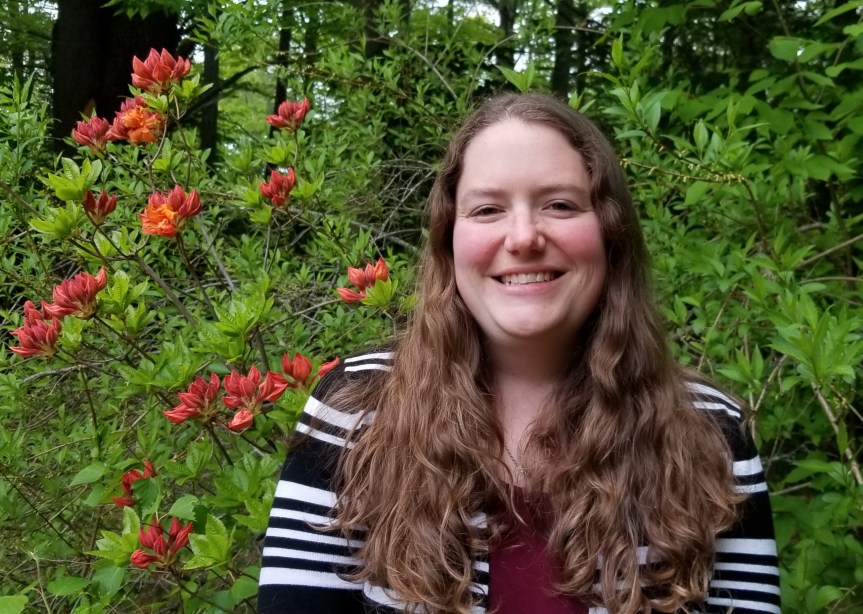
Maine DOE Team member Stephanie Stambach is being highlighted this week as part of the Get to Know the Maine DOE Team Campaign. Learn a little more about Stephanie in this brief question and answer.
What are your roles with DOE?
As part of the Child Nutrition team, I conduct Administrative Reviews of School Nutrition Programs across the state, and also provide training and technical assistance to schools. I oversee the USDA Fresh Fruit and Vegetable Program (FFVP), which is a program that provides fresh produce to elementary and middle schools at no cost. I am involved with awarding schools, assisting with program operations, and providing support as needed. I am also involved in Farm to School work where I coordinate and promote the annual Farm to School Cook-off with my team, and help to coordinate other projects that promote local foods in schools with our Farm and Sea to School Coordinator.
What do you like best about your job?
I really enjoy working with our school nutrition heroes to troubleshoot and find solutions to problems and challenges. I like to take something that seems difficult and break it down so that it is less daunting. Every day I am amazed by the dedication of our school nutrition professionals and their work in feeding the children of Maine! I also work with a great team in Child Nutrition so I am grateful for that.
How or why did you decide on this career?
This is actually a career I never thought existed. I started off as a dietetic intern with DOE in the fall of 2010 and a position opened up in the spring so I took it! At the time I didn’t realize that school nutrition would become a passion of mine and realize the positive impact that school meals have on children and their families. During the pandemic it has become even more apparent the impact that school nutrition programs have in their communities and the tireless work that school nutrition staff do every day.
What do you like to do outside of work for fun?
I enjoy hiking and camping with my family and some of my favorite places are Moosehead Lake and Acadia National Park. One of my other favorite activities is exploring the lighthouses of Maine. My 2.5 year old daughter also keeps me active on a daily basis!
Free Resources to Help Keep Children Safe From Cyber-Crimes
Homeland Security Investigations (HSI) is the investigative arm of the Department of Homeland Security. Among their investigative priorities are cyber-crimes which includes child sexual exploitation. In partnership with the National Center for Missing and Exploited Children (NCMEC) and the Internet Crimes Against Children (ICAC) Task Force, HSI has developed its Project iGuardian. HSI’s Project iGuardian aims to counter a disturbing fact – many online child predators are able to find victims online because children and their caregivers are not aware of how dangerous online environments can be. It is focused on keeping children and teens safe from online predators through education and awareness.
Due to the current public health measures undertaken in response to the COVID-19 pandemic, many school districts across the country have shifted children to virtual learning which results in significantly more time spent online. Such increases in screen time and online access can potentially expose children to greater risk of encountering cyber predators who know how to exploit their vulnerabilities.
In order to protect them, the HSI Offices located in Maine wish to offer material to support schools, students and their families/guardians. While HSI and their local law enforcement partners typically provide education to students and educators in person via Project iGuardian, their agency also offers a variety of tools available on its iGuardian webpage. The sole purpose of this educational material is to keep children safe while using the internet.
HSI also maintains a close working relationship with NCMEC in the fight against child exploitation. Its partners at NCMEC have created the NetSmartz educational outreach program which features information and resources tailored specifically to youth age groups and adults.
These resources can be found below.
- Free Digital Resources – Online Safety for Kids & Families, found here.
- Project iGuardian Resources, Found here.
- 18 videos, each less than two minutes in length, Called Digital Dangers. The videos, created by HSI Nashville, can be found, here.
- HSI press release related to virtual presentations can be found, here.
Should you have any questions, please do not hesitate to contact Homeland Security Investigations, Bangor, Maine, Acting Resident Agent in Charge Loren Thresher at 207-262-4411 or via email at loren.d.thresher@ice.dhs.gov.
Carrie Ricker Arts Teacher Creates Virtual Arts Show to Showcase Student Work
This school year has been anything but typical, forcing teachers and students to teach and learn in new ways. As schools across the globe transitioned from classroom instruction to remote learning it was important to Jen Williams, the Visual Arts Teacher at Carrie Ricker School in Litchfield to keep her artists engaged and creating.
Normally, Williams and her colleagues would have had a large Arts Night at school filled with an art show and spring concerts. Since that could not happen this year, she decided to create a video art show to celebrate her student’s amazing artwork. This video art show showcases not only their art created at school but during remote learning.
See the Carrie Ricker Arts Show Here!
“My hope is that with this art show my students feel proud of their accomplishments and celebrated for their talents,” said Williams. “The arts are such a vital part of education and have kept us all connected through these challenging times.”
This story was submitted by Jen Williams, Art Teacher at Carrie Ricker School in RSU 4 as part of the Maine Schools Sharing Success Campaign. To submit a story or an idea, email Rachel at rachel.paling@maine.gov.
Saco School Department’s Young School Adapts to Distance Learning to Follow Through on Planned Whole School Thematic Unit
Last September, Brad Coupe and the Friends of Wood Island Lighthouse invited Principal of Young School in Saco, Dr. Peter Harrison and staff, to visit the island off Vine’s Landing in Biddeford, and tour the lighthouse.
From that visit, a whole-school, Lighthouse Themed study was planned to correspond with Maine’s Bicentennial and it’s Maritime history. A May field trip to Portland Head Light by all students was to set the stage for this integrated project. In Art classes, students were going to design and build a lighthouse.
Classroom teachers planned lighthouse themed activities in all subject areas and technology would be used to virtually visit and learn about lighthouses. Guest
speakers would share their experiences working and living at lighthouses in Maine.
Teachers planned to connect Young School’s OBOYS (One Book, One Young School) project to the lighthouse theme by having all students receive and read a copy of
the book Keep the Lights Burning Abbie, by Peter and Connie Roop.
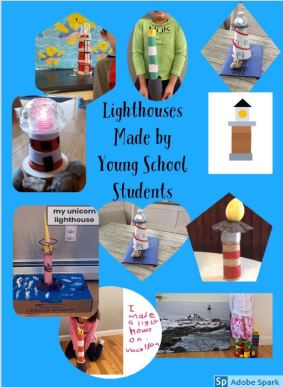
Then in March, a Global Pandemic changed all those plans!
Teachers’ focus turned to “Distance Learning.” Just connecting with students and families became the immediate necessity. Slowly with time, teachers began to be more comfortable with this new way of school and their thoughts drifted back to the abandoned Lighthouse project.
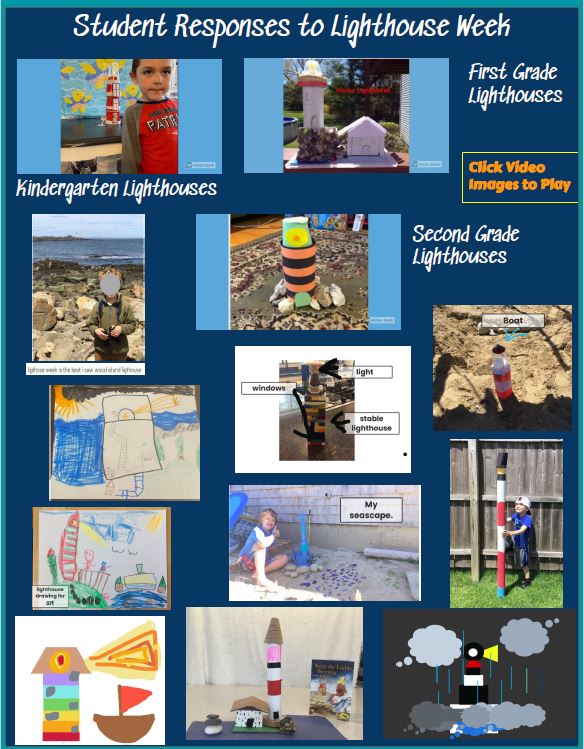
In an effort to help students stay engaged over April vacation, Young School teachers shared a few resources for students to explore if they chose to. Over vacation, Students were challenged to build or create a lighthouse.
Distance Learning Lighthouse Week
Ms. Julia Gordon, K-2 Art teacher, compiled photos staff took while visiting Wood Island into a video for students!
After April Vacation, the original committee members decided to bring the Lighthouse Unit back to life digitally!
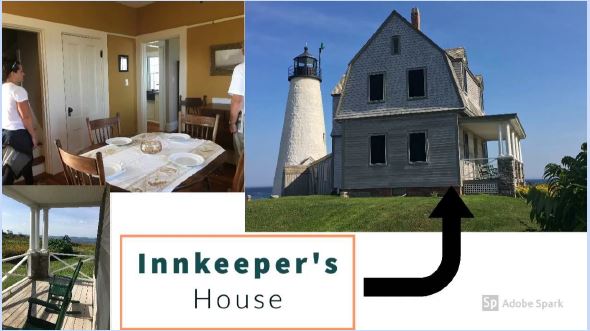
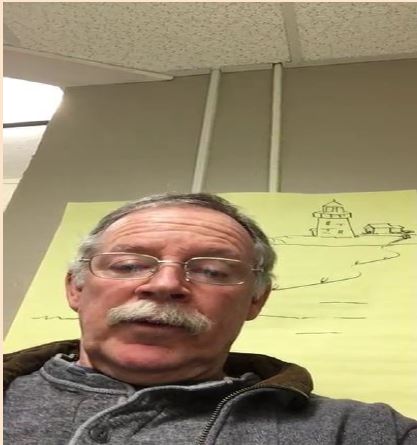
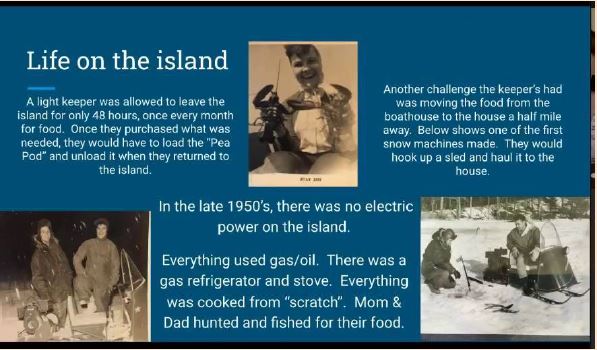
Three Lighthouse Experts Right Here in Saco!
Distance Learning Choice Board Menus
In order to extend learning, teachers created Lighthouse themed Choice Board/Learning Menus that included all subjects and unified arts.
Teachers also used Seesaw to create learning activities for students to complete in conjunction with the choice boards/menus.
See Student Questions and Responses from our Lighthouse Experts
Links that go along with the student responses in the image below:
This story was submitted by Wendy Cannon, Technology Coach, Saco PreK-2 Schools as mart of the Maine Schools Sharing Success Campaign. To submit a story or an idea email Rachel at rachel.paling@maine.gov.
REMINDER: Register for the 5th Annual Read to Ride Summer Reading Challenge
A unique world of remote learning and creative teaching has been the norm in recent weeks, but summer vacation is right around the corner. Summer vacation will be a welcome change of pace for families and teachers, yet the importance of summer reading will be as critical as ever. Educators and families have worked tirelessly to engage and challenge students. Making reading a part of the student experience this summer will be invaluable to a successful return to classrooms in the fall.
Once again, this year, the Maine Department of Education is collaborating with the Freemasons of Maine to sponsor the Read to Ride Summer Reading Challenge for students in grades PK-8. The Maine Freemasons have generously donated 48 bikes with helmets as prizes for the Read to Ride Summer Reading Challenge. During the first four years of this initiative, thousands of Maine children completed the challenge of reading 500 minutes during summer vacation. Maine DOE hopes to see this number grow even higher during the summer of 2020.
Any school with students in the PK-8 grade span may register to participate. Participating schools will collect documentation from students who have completed the challenge. They will hold school level drawings to select two students whose names will be entered into the state level drawing to be held on September 25, 2020. Schools are encouraged to participate in this challenge, to coordinate it with any other summer reading challenges/programs they offer, and to consider soliciting their own local level prizes for students who complete the challenge. Find details and the link to register your school at the Read to Ride Challenge website.
Summer slide can be prevented or greatly reduced when students continue to read on a regular basis. By encouraging children to read for enjoyment from a variety of resources and to explore topics of interest, they continue to practice applying the skills they have learned, build their vocabulary, and widen their knowledge of the world. For students who are not yet reading independently, or just beginning to read, reading to and with parents is equally beneficial.
Questions may be directed to Maine DOE’s Elementary Literacy Specialist, Danielle Saucier at danielle.m.saucier@maine.gov.
Task Force on Kindergarten Language Readiness for Children Who are Deaf and Hard of Hearing Public Meeting 6/4 at 1pm
The Task Force on Kindergarten Language Readiness for Children Who are Deaf and Hard of Hearing is meeting virtually on Thursday, June 4 starting at 1pm.
The meeting is open to the public. Contact Karen Kusiak karen.kusiak@maine.gov for a link to the meeting.
Maine DOE Update – May 29, 2020
From the Maine Department of Education
Reporting Items
New Webinar: 2020-2021 Special Education Exit Report
To assist those who are responsible for the important task of reporting Special Education Exits to the Maine Department of Education, the DOE Data Team will be holding a topical webinar about the Special Education Exit Report on Wednesday June 3rd, from 2 pm to 3 pm. | More
New Webinar: 2020-2021 NEO Maine Schools and School Approval Process
To assist those who are responsible for the important task of reporting district and school organizational data as well as school approval information to the Maine Department of Education, the DOE Data Team will be holding a topical webinar about the Maine Schools and School Approval (Public and Private) process on Tuesday June 2nd, from 11 am to 12 pm. | More
| Visit the DC&R Reporting Calendar |
News & Updates
U.S. DOE Names Two Maine Students as 2020 U.S. Presidential Scholars
Graduation Reporting Phase 1 provides schools the opportunity to review and make any necessary changes to student data. This phase focuses on ensuring accuracy of start and exit statuses for students who are part of the 2020 cohort. The cohort is comprised of any student who entered grade 9 for the first time in the 2016-2017 school year. | More
Requests for Applications for McKinney-Vento Sub-Grant Program
The Maine Department of Education is requesting applications for the Department’s McKinney-Vento Sub-grant program to support the education of students experiencing homelessness. Proposals will be accepted from school administrative units (SAUs) seeking to develop, implement, or expand programs that improve the success of students identified as homeless under the McKinney-Vento Act. | More
6th Annual Count ME In Multimedia Contest Promoting School Attendance, Learning and Community
Count ME In is broadening its annual contest to include multimedia submissions that promote learning and being part of a school community. Students age 6 through high school are invited to create a poster, sculpture, song, poem, story or video for the 2020 celebration in September and October 2020. | More
Innovative Educators Sought for Maine Learning Modules!
The Maine Department of Education invites all interested educators, curriculum leaders, and Maine educational community organizations to join us in designing an a-synchronous library of learning modules in a Maine Learning Results-aligned scope and sequence. These project-based modules will be integrated to ensure that learning is synthesized across traditional subject areas and learning experiences are designed to be mutually reinforcing. | More
Maine AmeriCorps Virtual Recruitment Fair – June 4, 2020
Are you someone who takes the lead? Runs to take on a challenge while others wait for a solution? Do you want to help Maine communities get back up and running after the pandemic? AmeriCorps programs in Maine are looking for the next class of individuals to get things done! Are you ready to accept the challenge?| More
Maine Schools Sharing Success Stories
- Vinalhaven School Goes Virtual for 2019/2020 K-12 Art Show
- Sebago Elementary Creates Virtual Arts Festival
| Submit your Maine School Success Story |
Professional Development & Training Opportunities
PRIORITY NOTICE: DOE Virtual Professional Learning Now Available Through Mid-June!
The Maine Department of Education has posted an updated and robust schedule of virtual professional learning, office hours and meetings through mid-June to support school and district staff with their professional learning needs as they conclude emergency teaching plans and prepare for the possible scenarios we will face in the 2020-2021 school year. | Virtual Meeting Schedule
FREE TRAINING for Comprehensive Emergency Operations Planning: A Framework for Fall 2020
Maine Department of Education is proud to announce that our Maine School Safety Center Team will be hosting a series for all School Administrative Units (SAUs) and their Collaborative Planning Team members to create or review their Emergency Operations Plans.| Virtual Meeting Schedule | More
Combating Child Sexual Abuse, Exploitation, and Trafficking: June Zoom Meeting Series Schedule
Our Maine School Safety Center (MSSC) will be hosting an important series with community experts on addressing sexual abuse, exploitation and trafficking. The virtual series will run through the month of June, each Thursday at 10:00.| More
Professional Learning Opportunity: Identifying Where Your Students are, in Order to Adjust Instruction
COVID-19 has created unique challenges in education as students finish the year with distance learning. The Maine Department of Education, in collaboration of guest presenter Beth Ratway, is pleased to offer two sessions to examine how to look at this “gap”. How do teachers figure out where their students are at and plan for next year? | More
| Visit the Professional Development Calendar |
Latest DOE Career/Project Opportunities
View current Maine Department of Education employment opportunities here
 Maine DOE Newsroom