Maine School Counselors Attend Annual Conference in Boston

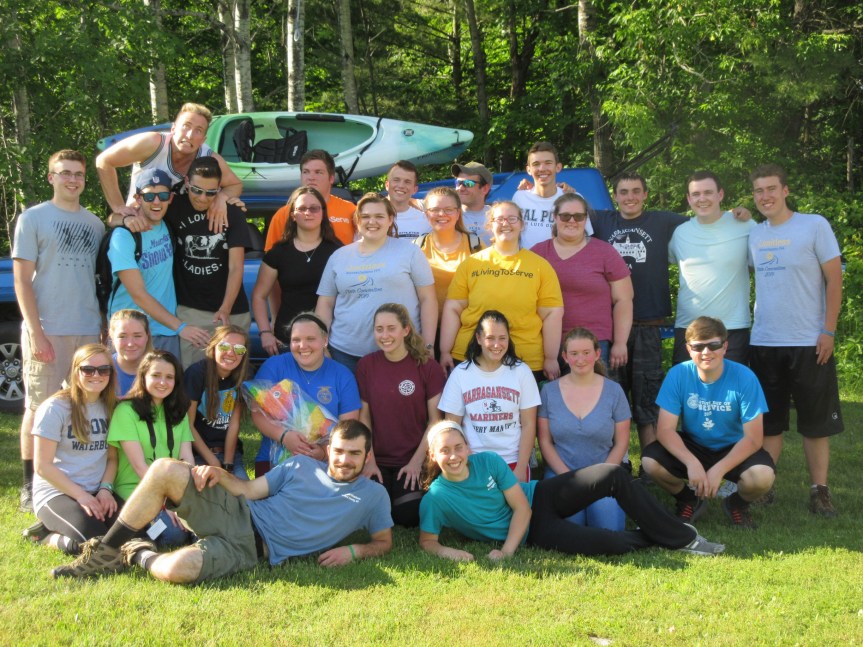
70 school counselors from Maine attended the American School Counselor Association (ASCA) Annual conference in Boston from June 29 – July 2  for an opportunity to network with school counselors from across the country, hear from inspirational keynote speakers, and attend an array of breakout sessions to explore hot topics in the school counseling profession.

Conference participants came back with information about developing and designing the elements of a Comprehensive School Counseling Program, which includes aligning lessons to the ASCA Mindsets and Behaviors Standards, collecting and analyzing attendance, academic and discipline data, and collaborating with district and school staff on multi-tiered systems of support (MTSS).

A wonderful example of Maine’s outstanding school counselors striving to ensure that all students are provided with the programming they need to address social emotional learning, college and career readiness, and academic supports and interventions.

The images below were graciously provided by Bonnie Robbins from RSU 16, Jennifer Simmons from MSAD 5, and Sarah Adkins from the Maine DOE.


Maine DOE Update – July 10, 2019

From the Maine Department of Education


Reporting Items

Maine DOE Data Management Systems Summer Training

The Maine Department of Education Data Team is holding their annual summer training during the first two weeks of August.  The focus of the training this year will be on tips and resources to assist districts with their data reporting and viewing/certifying their reports. The sessions will be focused on sharing resources to assist districts with the data tasks required. | More

| Visit the DC&R Reporting Calendar |


News & Updates

Questions & Answers regarding An Act to Prevent Food Shaming in Maine’s Public Schools

In an effort to support schools and districts as they align their practices and policies in response to the passing of Public Law 2019, Chapter 54, please see the Question and Answer document and resources, below.  | More

Updated Maine DOE Home Instruction Portal Release

In March of this year, the Department of Education (DOE) released the online Home Instruction Portal. Since then, home instruction parents all over the state have begun to utilize the new portal, and have reported that the new process is less burdensome than the former paper-only process, which required double-reporting and greater expense and time due to mailing and requesting proof of receipt. | More

Maine FFA Joins Forces with Other New England States

On June 25-30, 2019, three student State Officers of the Maine FFA Association (formerly known as “Future Farmers of America”) joined 23 of their counterparts from the other New England States for a regional leadership training held for the first time at Northern Vermont University (NVU) in Lyndon. | More

Maine DOE Employee of the Week: Trevor Burns

Student Data Coordinator, Trevor Burns is being highlighted this week as the Maine DOE’s Employee of the Week! Learn a little more about Trevor | More


Maine Schools Sharing Success Stories

| Submit your Maine School Success Story |


Professional Development & Training Opportunities

| Visit the Professional Development Calendar |


Latest DOE Career/Project Opportunities

Maine FFA Joins Forces with Other New England States

On June 25-30, 2019, three student State Officers of the Maine FFA Association (formerly known as “Future Farmers of America”) joined 23 of their counterparts from the other New England States for a regional leadership training held for the first time at Northern Vermont University (NVU) in Lyndon.  Most costs for this event were generously supported by a grant from the AgEnhancement Program of Farm Credit East, along with additional funding by Farm Credit East and by Yankee Farm Credit.  Maine FFA State Officers Graham Berry (President), Camryn Curtis (Vice President) and Ava Cameron (Secretary-Treasurer), were eager to gain leadership skills for the coming 2019-2020 school year.  They traveled to Vermont with State FFA Advisor Doug Robertson, from the Maine Department of Education.  On the way, they had the chance to experience the agriculture of Vermont, including a visit to Shelburne Farms, a 1,400 acre historic agricultural education facility on the shores of Lake Champlain, dating from the 1800s.

The purpose of the training was to prepare State FFA Officers to serve nearly 7,000 FFA members, grades 7 to 12, in the six New England States.  As representatives of one of the largest student leadership organizations in the country, State FFA Officers are expected to organize leadership workshops, conferences and other events for their membership, composed of students studying subjects related to agriculture and natural resources, whether through middle/high school science curricula infused with agriculture topics, or through technical programs in areas such as horticulture, forestry, landscaping, natural resource management, and outdoor leadership.

In Vermont, three National FFA facilitators from California, Kentucky and Oregon led training sessions on areas related to Communication Skills and Workshop Development/Delivery, helping student State FFA Officers begin to create their own workshop sessions to bring back to their home states.  Training logistics were overseen by host Vermont FFA Executive Director Suzanne Buck and Maine FFA State Advisor Doug Robertson.  To complement their formal training, State FFA Officers also participated in hands-on teamwork/leadership training on NVU’s high and low ropes courses, successfully undertaking team and individual challenges.  Students interviewed a local Lyndonville Institute agriculture teacher, observing his students’ projects related to gardening and maple syrup production, and learned more about opportunities in the agriculture industry through guest speakers from Case New Holland Tractors.

State FFA Officers commented on the high quality of their National FFA facilitators, the idyllic setting of NVU, with its excellent food and amenities, and the overall effectiveness of the training program and learning environment.  They left the training with increased confidence and excitement to serve FFA members in the coming year, along with strong personal connections to their New England peers, whom they will next see at events in Massachusetts, Washington, DC and Indianapolis.

Those wishing to learn more about Maine FFA, including the possibility of connecting with an existing FFA chapter or beginning a new one, should contact State FFA Advisor Doug Robertson:  doug.robertson@maine.gov, (207) 624-6744.

Etna-Dixmont School Selected For Program to Grow School-wide Farm to School Initiatives

Submitted by Jane P. Stork, Principal, Etna-Dixmont School.

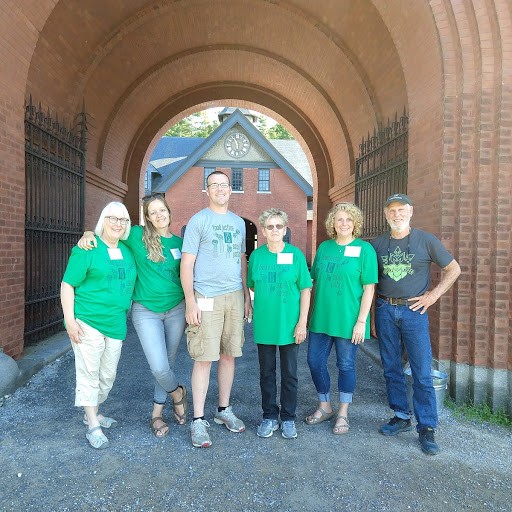
Pictured: Etna-Dixmont Farm to School Team (left to right)  Jane P. Stork, Principal; Caitlyn Barker, fourth grade teacher; Ryan Parker, RSU 19 School Board member and designing and Maine FoodCorps Manager; Colleen Tibbetts, Food Service Manager; Anne Carney, third grade teacher; John Thurston, Maine Farm to School coach. Very Important Members of the EDS FTS Team not present:  Meghan Baker, school social worker; Mark Guzzi, parent and co-owner of Peacemeal Farm with Marcia Ferry; and Dan Soucy FoodCorps Service member.

The Etna-Dixmont School was selected as one of twelve Northeast school teams to attend the 2019-20 Northeast Farm to School Institute. Shelburne Farms and NOFA-VT offer this year-long professional development program through their Vermont FEED initiative to support selected schools in implementing effective, school-wide Farm to School (FTS) programs—programs that create a culture of wellness, improve food quality and access, engage students in agriculture and nutrition education, and strengthen local food systems.

Thirty million students participate in the National School Lunch Program daily. Lunch shaming, rising school lunch debts, and highly processed foods are trending topics about school cafeterias in today’s media. But school meal programs can—and have—improved, and when FTS is part of those improvements, meal participation increases by 17%. FTS connects schools with their local producers and facilitates getting fresh, whole foods on the lunch tray. As more students eat school meals, school meal program revenue increases, and more local food can be purchased, providing all kids with the chance to participate in the local food system.

This year, Congress will be debating reauthorization of the national Child Nutrition Act, also known as the Healthy, Hunger-Free Kids Act of 2010 (CNR). The legislation supports FTS grants to projects like the Northeast Farm to School Institute. The Institute brings selected school teams together for a three-day intensive to build a FTS action plan for their school community. Then, with the support of a coach, they spend the next year putting their plans into action and implementing new programs like farm visits, gardening and cooking activities, serving seasonal foods in the cafeteria, and offering food-based, hands-on science, math, and literacy lessons. Over nine years, the FTS Institute has supported programs at 97 schools and districts, impacting over 102,000 Northeast students.

The twelve teams selected for the 2019-20 Northeast Farm to School Institute were: Academy School, Brattleboro, VT; Berne-Knox Westerlo Central School District, Berne, NY; Etna-Dixmont School, Etna, ME; Innovation Academy Charter School, Tyngsboro, MA; Janet S. Munt Family Room, Burlington, VT; Naugatuck Public Schools, Naugatuck, CT; Providence Public School District, Providence, RI; Robert V. Connors Elementary School, Lewiston, ME; Russell I. Doig Middle School, Trumansburg, NY; Williamstown Middle/High School, Williamstown, VT; Windsor Southeast Supervisory Union, Hartland, VT; Windham Northeast Supervisory Union, Westminster, VT.

The Etna-Dixmont School is fortunate to be situated on over 100+ acres of land that consists of fields, woods and wetlands.  In the spring of 2015, the Etna-Dixmont School received a grant that supported the beginnings of our school garden.  A quarter acre of field next to the school was rototilled and prepped for planting.  Over the last five years, students, staff and community members have helped plant vegetables, wildflowers and cover crop.


Shelburne Farms is a nonprofit organization whose mission is to cultivate and inspire learning for a sustainable future. That means learning that links knowledge, inquiry, and action to help students build a healthy future for their communities and the planet. Through our participation in the 2019-20 Northeast Farm to School Institute and our work with our Maine Farm to School coach, John Thurston, and FoodCorps Service member, Dan Soucy, our goal is to establish a comprehensive and sustainable garden to table program.  We are committed to providing students with the opportunity to participate in project-based learning and to gain a deeper knowledge about how to become a healthy school while becoming responsible and productive citizens.

Maine DOE Data Management Systems Summer Training

The Maine Department of Education Data Team is holding their annual summer training during the first two weeks of August.  The focus of the training this year will be on tips and resources to assist districts with their data reporting and viewing/certifying their reports. The sessions will be focused on sharing resources to assist districts with the data tasks required.

Training Dates and Locations

August 6, Caribou High School, 308 Sweden St Caribou, ME 04736

August 7, Brewer High School, 79 Parkway south Brewer, ME 04412

August 8, Ellsworth Elementary/Middle School, 20 Forrest Avenue Ellsworth, ME 04605

August 12, Cony High School, 60 Pierce Drive Augusta, ME 04330

August 13, Mt. Blue High School, 129 Seamon Rd Farmington, ME 04938

August 14, Mt. Ararat Middle School, 66 Republic Avenue Topsham, ME 04086

August 15, Buxton Center Elementary School, 912 Long Plains Road Buxton, ME 04093

All sessions will begin with registration at 8:30, with presentations beginning at 9.  We will serve a light lunch and will finish no later than 4:00.  Coffee and water will also be provided throughout the day.

Agenda for each session:

The following is the daily agenda for this year’s summer data trainings Please note that these times are tentative and are subject to change. Thank you.

  • 8:30 – 9:00 – Check-in, Meet & Greet, Welcome
  • 9:00 – 9:30 – Why Data Matters – Charlotte Ellis and Paula Gravelle
  • 9:30 – 9:45 – A.C.T. & Data Security – Ryan Cunningham
  • 9: 45 – 10:15 – Web Page, Helpful Resources & What’s New for 2020 – Ryan Cunningham
  • 10:15 – 10:30 – DC&R and Maine Schools/Approvals – Kathy Warren
  • 10:30 – 10:45 – Break
  • 10: 45 – 11:30 – NEO Staff Module & MEIS – Drew Mitchell
  • 11: 30 – 12:45 – Synergy – Michael Mikrut
  • 12:45 – 1:30 – Lunch
  • 1:30 – 2:30 – Graduation/Student Reports– Trevor Burns
  • 2:30 – 3:00 – Behavior/Bullying/RAS – Sarah Adkins
  • 3:00 – 3:30 – Truancy – Gayle Erdheim
  • 3:30 – 4:00 – Closing – Questions, Comments and Concerns

To register for the training, please visit Summer 2019 Training Registration.

If you have any questions, comments or concerns regarding these training sessions, please contact Ryan Cunningham Maine DOE Data Systems Helpdesk Manager at (207) 624-6809 or Ryan.L.Cunningham@maine.gov.

WCC Washington County Educator Profile: Lynn Mitchell

Submitted by Sarah Woog from the The Washington County Consortium. 

Meet Lynn Mitchell, Passamaquoddy Culture and Language Teacher at Calais High School.

Have you ever considered learning Passamaquoddy? If you are not Native, does this question give you pause? Have you ever wondered if learning the Passamaquoddy language and culture is an endeavor you should or could have access to? According to Lynn Mitchell, yes and yes.

Lynn Mitchell is the Passamaquoddy Culture and Language teacher at Calais High School. She’s been teaching Passamaquoddy Culture and Language to Native and non-Native students at Calais for four years. Lynn believes her class bridges divides between Native and non-Native communities, creates a shared experience, and develops empathy and deepens ties between the communities. Lynn isn’t the only person at Calais High School who believes this. Her passion reverberates throughout the school.

Mary Anne Spearin, Principal at Calais High School, recommended I profile Lynn for this month’s newsletter. Mary Anne said, “Her love for all students became apparent during our Blue and White review when Lynn presented her academic awards. She became emotional when referring to the ever strengthening connection between the Calais High School students and staff and the Passamaquoddy culture, traditions, and language, stating it had been a long time coming.” In our divisive times, these connections are so important in our shared quest for a more kind and just world. And Lynn is building more connections, too.

Lynn recently visited a fifth grade classroom in Norridgewock, Maine. She arrived at 10:30 AM and spent the rest of the school day with the class. She taught the young people and teachers about her people, the First People, about their language and traditions, and their existence as people, not as caricatures or mascots. Lynn is clearly committed to creating bridges, and I admire the love with which she builds them.

Lynn teaches with love too. I asked her the best part of teaching and she didn’t miss a beat- the kids. She smiles when she talks about the games she uses to engage them, about the challenges of differentiation, about the student who told her he wanted to be a linguist because of her class. 

Lynn learns with love. She is finishing her coursework in Education at the University of Maine at Machias next year. She told me she’s grateful for the experience, is excited for the credential, but especially appreciates the knowledge and skills she is acquiring that supports her work in the classroom. She loved the coursework that taught her about unit design and lesson planning. Lynn has created the curriculum and content she is using in her classes. The frameworks and planning processes she’s learned have allowed her to offer a course that always has a waitlist.

Two more loves of Lynn: working at Maine Indian Education, and her husband, Dana Mitchell. Lynn is proud of her 32 years at Maine Indian Education. She and her husband were actually married at the Wabanaki Culture Center, where Maine Indian Education is located. Dana also works for Maine Indian Education, at Beatrice Rafferty School, and has his own illustrious career in service to Native students that would require another profile to do justice. Lynn loves that her husband “supports everything I do.” Knowing Dana and Lynn, his support of Lynn is unwavering, but it’s also worth noting that he supports the spirit of her work, and shares her passion for teaching, learning, and building community.

I’ll end here with a quote from Lynn: “It is a passion of mine to advocate for our beloved Passamaquoddy culture and language and to educate not only our children from the reservation, but all children.” Do you share Lynn’s passion for educating children? Do you want to provide your students with increased opportunities to authentically learn about  Passamaquoddy culture and language in your classroom? If so, reach out to Lynn (mrslynn.mitchell@gmail.com), and build another bridge together.

Questions & Answers regarding An Act to Prevent Food Shaming in Maine’s Public Schools

In an effort to support schools and districts as they align their practices and policies in response to the passing of Public Law 2019, Chapter 54, please see the Question and Answer document and resources, below.  

 Food Shaming

  1. What constitutes food shaming?  The law prevents public schools from:
  • denying a reimbursable meal to an otherwise eligible student who requests it;
  • requiring a student to throw away their meal after it has been served to them;
  • requiring a student to perform chores or work as a means of paying for one or more meals or as punishment for not paying for one or more meals;
  • refusing a meal as a form of or as part of a disciplinary action; or
  • openly identifying or otherwise stigmatizing a student who cannot pay for a meal or has payments due for a meal.

Grades

  1. What grade levels are impacted by this new law?

The law applies to all grade levels in a public school that provides students meals eligible for reimbursement under a program administered by the United States Department of Agriculture, therefore any grade enrolled in the public school.  The law does not apply to private schools.

Seniors

  1. Can schools prohibit seniors from participating in graduation functions/activities if the student has meal debt?
  2. When Seniors have balances at the end of the year, whether it is for meals, books, or computers, we do not pass out the cap and gown until the balance is paid.  Can we still do that?
  3. Our district charging policy has been that to receive graduation tickets or their cap and gown, seniors must have their lunch balance cleared up. Additionally, we have withheld open campus privileges or a superintendent’s agreement if there is an outstanding lunch balance. Will this still be allowable?

The law prevents openly identifying or otherwise stigmatizing a student with a meal debt.  If the only reason a student is being prohibited from an activity is because of a meal debt, it would constitute identifying or stigmatizing a student.  If the prohibition is potentially based on one of a list of factors (owed books, uniforms, other debt) including a meal debt, it might not constitute identifying or stigmatizing a student, since there are multiple reasons for which a student is denied.  School administrative units are encouraged to consult with legal counsel about their specific policies.

Communication

  1. Are the cashiers allowed to tell the students when they are charging or close to charging?

A public school’s communications about a student’s meal debts (charging) must be made to the parent or guardian of the student rather than to the student directly except that, if a student inquires about that student’s meal debt, the school may answer the student’s inquiry.  A public school may ask a student to carry to the student’s parent or guardian a letter regarding the student’s meal debt.  A student with a low balance still has funds on their account and is not in debt, therefore it is allowable to communicate with a student about their low balance.

  1. Are we allowed to let the children know that they are getting low on their account?

A student with a low balance still has funds on their account and is not in debt, therefore it is allowable to communicate with a student about their low balance.

  1. Most software schools are using automatically say “Please wait, low balance,” when a student uses their PIN. which is identifying the student, where others can hear it. Would that still be acceptable?

A student with a low balance still has funds on their account and is not in debt, therefore it is allowable to communicate with a student about their low balance.

  1. If a student directly asks about balance information what is our answer? What if they are 18 years old?

If the student inquires about his/her meal debt, the school may answer the student’s inquiry. This applies to a student enrolled at the public school, regardless of age. A student may be asked to deliver a notice to parents/guardians about the debt, but should not be approached unsolicited about the debt.

  1. Can we post a sign at the register telling students they can ask what their account balance is?

Yes. If the student inquires about their meal debt, the staff may answer their inquiry. Otherwise communication must be made directly to the parent/guardian, regardless of the age of the student.

A La Carte

  1. Our school policy says that if you owe money you cannot purchase a la carte items and there is no charging of a la carte items.  This policy has helped to keep our lunch debt down some. Are we still going to be able to say no to the extra items if they don’t have money?

Yes. This law applies to reimbursable meals only. If your local policy does not allow a student to charge a la carte items, a public school may discreetly notify a student that they do not have funds on their account to purchase the a la carte item(s).

  1. Charging for ala carte is not allowed so when the student is told that in line in front of other students, is that considered lunch shaming?

No. This law applies to reimbursable meals only. If your local policy does not allow a student to charge a la carte items, a public school may notify a student discreetly that they do not have funds on their account to purchase the a la carte item(s).  Efforts to make this policy known and well publicized should be made to avoid the situation and potential for embarrassment.

Alternate Meals

  1. Can Schools implement an alternative meal (with all components) until the debt is paid?

No, the student must receive the same reimbursable meal as the other students. Provision of an alternative meal could openly identify or stigmatize a student.

  1. Our school provides a bag lunch to students with a negative balance before the lunch period so that it looks like a lunch brought from home. Can we keep doing this?

No, the student must receive the same reimbursable meal as the other students.

Outstanding Debt

  1. What are we to do with the outstanding lunch balances? How do we encourage parents to be responsible?

Public schools should follow their policy or procedure for collecting payments from families. This policy/procedure should be shared publicly so parents are informed of the process.

  1. Can we send outstanding debts to a collection agency?

Yes.

  1. What happens when everyone owes and refuses to pay because they know they do not have to, in order to get a meal?

The school nutrition program should make efforts to collect meal payments as identified in their local policy.

  1. Who will pay for the unpaid balances?

The school nutrition program should make efforts to collect meal payments as identified in their local policy. Once the debt is determined to be uncollectable, such as after a student leaves the district or graduates, it is considered bad debt and is not an allowable expense of the Federal school foodservice program or any other Federal program. The debt would need to be paid by non-Federal funds, such as the general fund and the debt would become the responsibility of the public school at this point.

OTHER

  1. What is the State’s plan to provide funding for the lunch bills that won’t get paid?

The law was identified as an unfunded mandate and passed by a 2/3 vote by the Legislature.  Funding will need to be addressed at the local level.

  1. Does this apply to all meals, breakfast, lunch and snack?

This law applies to all programs that provide student meals eligible for reimbursement under a program administered by the United States Department of Agriculture. This includes the School Breakfast Program, National School Lunch Program and Afterschool Snack Service.

  1. Is there guidance available on how to handle unpaid meals?

The law requires the Department of Education to develop guidance for school administrative units relating to the collection of student meal debt, including, but not limited to, best practices and information on how to create an online system for the payment of student meal debt.

The Maine DOE has guidance available online, and  The USDA has guidance and resources available online, including a guide book.


Student Written Song Brings Together Three Maine Communities

Submitted by Connie Carter, Operation Breaking Stereotypes.

Students from Indian Island School, Leonard Middle School, and Orono Middle School partnered with Operation Breaking Stereotypes to break stereotypes about the three communities and to work together to connect the towns in positive and productive ways. Their result was to write a song that connects the three communities and highlights positive aspects of each town. Their hope is that the song will inspire people to look beyond stereotypes to the power of working together.

Operation Breaking Stereotypes is a non-profit committed to facilitating the ongoing quest for knowledge and social justice through short-term exchanges between middle and high school students in Maine and New York City.


Employee of the Week: Trevor Burns

Student Data Coordinator, Trevor Burns is being highlighted this week as the Maine DOE’s Employee of the Week! Learn a little more about Trevor in this brief question and answer:

What are your roles with DOE?

I am the Student Data Coordinator. I maintain student enrollment information to make sure there are no data anomalies within the system as well as to ensure all is accurate and correct. I also handle some reports done by the field throughout the year. Some of those reports include Graduation reporting, Quarterly Attendance reporting, October EPS reporting and Adult Education EF-M-39.

What do you like best about your job?

I enjoy seeing and learning more about the school system I grew up in myself. I am learning lots of things about schools and districts that I had only heard about growing up through my district of RSU 57. I actually didn’t know where most districts were even located in the state prior to starting at the MDOE.

How or why did you decide on this career?

I had just graduated from the University of Farmington with a degree in Actuarial Science. Looking for an internship; I had signed up for the Margaret Chase Smith Internship program, where they had selected me for a Data Analyst role. After spending some time in the internship, I had learned that I really enjoyed working with Data. Actuaries are known to work with and around data similar to data analysts, but the data analyst role focuses more primarily on the things I like; Data.


Updated Maine DOE Home Instruction Portal Release  

In March of this year, the Department of Education (DOE) released the online Home Instruction Portal. Since then, home instruction parents all over the state have begun to utilize the new portal, and have reported that the new process is less burdensome than the former paper-only process, which required double-reporting and greater expense and time due to mailing and requesting proof of receipt.

Many have also provided valuable feedback about what was confusing, or concerning, from a parent perspective. As a result, the DOE revisited the online forms to make some technical improvements, and has released an updated Home Instruction Portal as of July 9, 2019. If you submitted your Notice for 2019-2020 prior to this date, please be assured that it is still properly filed, and there is no need to repeat the submission.

If you have not yet filed your Notice, please check out the updated online portal. Other ways to file include submitting the revised Notice of Intent to Provide Home Instruction, or other form or letter, to either the Superintendent of Schools in the public school administrative unit where you reside, or to the DOE. You no longer need to file paperwork in both places. You may provide Notice in a different format, provided it contains all required information:

  • Applicable School Year
  • Parent/Guardian Full Name
  • Physical Address, City, Zip Code; and Mailing Address (if different)
  • Child’s Full Name
  • Child’s Date of Birth
  • Indicate First or Subsequent Year of Home Instruction
  • Date Home Instruction Will Begin (if First Year)
  • Assurance (if First Year): FIRST YEAR HOME INSTRUCTION PARENT ASSURANCE :  The home instruction program will provide at least 175 days annually of instruction and will provide instruction in the following subject areas: English and language arts, math, science, social studies, physical education, health education, library skills, fine arts and, in at least one grade from grade 6 to 12, Maine studies. At one grade level from grade 7 to 12, the student will demonstrate proficiency in the use of computers. The home instruction program will include an annual assessment of the student’s academic progress that includes at least one of the forms of assessment described in 20-A M.R.S. § 5001-A (3)(A)(4)(b).
  • Prior Year Assessment (if Subsequent Year)
  • Statement of Intent to Continue Providing Home Instruction (if Subsequent Year): SUBSEQUENT YEAR HOME INSTRUCTION PARENT STATEMENT: I intend to continue providing home instruction and enclose the prior year annual assessment of the student’s academic progress as outlined in 20-A M.R.S. 5001-A(3)(A)(4)(b).
  • Signature
  • Date of Signature
  • A valid email address if parent would like an acknowledgment

As a reminder, the updated process will allow parents to provide first/subsequent year notice “simultaneously to the school officials of the administrative unit in which the student resides and to the commissioner” in one of three ways:

  1. Enter information once annually directly on the new Home Instruction Portal, uploading any required prior year assessment information;
  2. Complete the form or letter on paper once annually and take it, with any required prior year assessments, to the resident superintendent’s office; or
  3. Complete the paper form or other form/letter once annually and mail it with any required prior year assessments to the Department of Education or to the Superintendent’s Office.

Submission using any of the methods described will result in the automatic generation of an acknowledgment to the parent/guardian via email, provided a valid email address is provided.

More information is available at https://www.maine.gov/doe/schools/schoolops/homeinstruction.

Please direct any questions or concerns to Pamela Ford-Taylor at pamela.ford-taylor@maine.gov or 207-624-6617.